The History of Christian Meditation & Contemplation

Discover the Rich Tradition of Prayer 
from Christ to the Present Day

Since the time of Jesus praying in the Garden of Gethsemane and the many mystical visions experienced by the Saints of the Middle Ages, the rich tradition of Christian meditation and contemplation has formed and transformed millions of believers for more than two thousand years. This great tradition is grounded in Scripture, developed over time through the devotion exemplified by countless faithful servants of God, and has been an invaluable tool for Christians today who want to cultivate a closer relationship with God.

On this page, you will learn about the prayer practices, meditation practices, and contemplative experiences shared by some of the greatest spiritual leaders in the history of the Church. Each person in this study has added to our understanding of how believers can come near to God through prayer, reading and meditating upon Scripture, and through the inner movement of the Holy Spirit.

As you go back through the history of the apostolic church, through to the modern era of today, you will see how the saints “prayed without ceasing” (1 Thessalonians 5:17), found God in silence as Elijah did in the “still small voice” (1 Kings 19:12), and experienced the transforming power of Christ through continuous practicing of their faith.
These saints’ lives are not only of historical interest; they are also valuable windows into the spiritual life of ordinary men and women who had an intimate relationship with God. They provide us with a glimpse into the timeless principles of prayer that have always been and will always be relevant for people of faith. Whether you are just beginning to learn about Christian contemplation or are trying to grow deeper in your prayer life, the wisdom of these great saints will lead you to “that peace of God which surpasses all understanding” (Philippians 4:7).
I Century

The Holy Family and Apostles

c. 1 BC – c. 64 AD

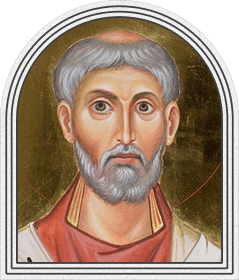
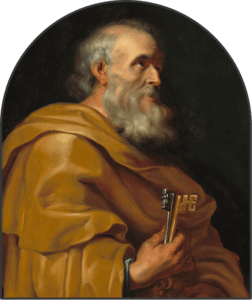
St. Peter

St. Peter stands as one of the most significant figures in Christian history—the apostle whom Jesus called “the rock” upon which He would build His church (Matthew 16:18).

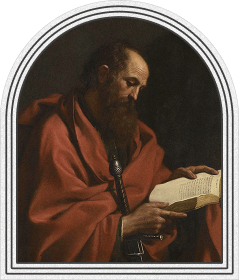
c. 5 – c. 64/67 AD

St. Paul

St. Peter stands as one of the most significant figures in Christian history—the apostle whom Jesus called “the rock” upon which He would build His church (Matthew 16:18).

c. 18 BC – c. 41 AD

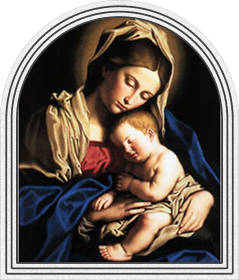
St. Mary (Virgin Mary)

St. Peter stands as one of the most significant figures in Christian history—the apostle whom Jesus called “the rock” upon which He would build His church (Matthew 16:18).

St. Luke the Evangelist

St. Peter stands as one of the most significant figures in Christian history—the apostle whom Jesus called “the rock” upon which He would build His church (Matthew 16:18).

c. 1 BC – c. 64 AD

St. John The Apostle

St. Peter stands as one of the most significant figures in Christian history—the apostle whom Jesus called “the rock” upon which He would build His church (Matthew 16:18).

St. Stephen

St. Peter stands as one of the most significant figures in Christian history—the apostle whom Jesus called “the rock” upon which He would build His church (Matthew 16:18).

Late I - Early II Century

The Holy Family and Apostles

c. 35 – c. 99 AD

St. Clement of Rome

St. Clement of Rome: The Apostolic Father’s Life of Prayer and Divine Order

c. 35 – c. 107 AD

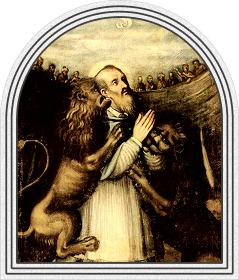
St. Ignatius of Antioch

St. Peter stands as one of the most significant figures in Christian history—the apostle whom Jesus called “the rock” upon which He would build His church (Matthew 16:18).

St. Polycarp of Smyrna

St. Peter stands as one of the most significant figures in Christian history—the apostle whom Jesus called “the rock” upon which He would build His church (Matthew 16:18).

The Didache

Introduction The Didache, translated as “The Teaching of the Twelve Apostles,” is one of the earliest Christian books to have been written independent of the New Testament. Most biblical historians believe that it was created between the years 50 CE to 120 CE. The Didache’s author(s) is unknown, but many biblical historians believe that it […]

II Century

The Holy Family and Apostles

St. Justin Martyr

St. Peter stands as one of the most significant figures in Christian history—the apostle whom Jesus called “the rock” upon which He would build His church (Matthew 16:18).

St. Irenaeus of Lyons

Introduction In the turbulent second century of Christianity, when the young Church faced heresies that threatened to change the Gospel into an irreconcilable form, God raised up for the Church a defender whose weapon was not simply his argument but his ability to form a contemplative vision. St. Irenaeus of Lyons (c. 130-202 A.D.) is […]

Athenagoras of Athens

Introduction Athenagoras of Athens (c. 133 – 190 AD) is one of the earliest apologists and philosophers, and a major figure in Christian history. He began his life by searching for ways to disprove Christianity, but through his contemplation on the Scriptures became a passionate, loving disciple of Jesus Christ. Athenagoras’ transformation from an unbeliever […]

St. Theophilus of Antioch

Introduction St. Theophilus of Antioch (d. c. 185 AD) stands as one of the most intriguing figures among all the second-century Church Fathers. He served as the bishop and Apologist of Antioch, one of the first powerful cities of Christianity. He defended Christianity against the attacks of Paganism, but he also wrote many works developing […]

Melito of Sardis

Introduction St. Melito of Sardis (c. 180 A.D.) is one of the most eloquent early Christian thinkers. Melito was a bishop who delivered homilies written in poetry and demonstrated a deep knowledge of theology, reflecting a person who lived and experienced God through total commitment to prayer, meditation, and mystical contemplation. Although there were many […]

III Century

The Holy Family and Apostles

St. Antony of Egypt

Introduction St. Antony of Egypt (c. 251-356 AD), known today as “Antony the Great” and “the Father of Monks,” became one of the most influential individuals in the development of Christian Spirituality. It was his choice to retreat into the Egyptian desert to pursue God through a life of solitude that began the movement that […]

Clement of Alexandria

St. Peter stands as one of the most significant figures in Christian history—the apostle whom Jesus called “the rock” upon which He would build His church (Matthew 16:18).

Origen of Alexandria

Introduction Origen of Alexandria, a brilliant and controversial figure from early Christian history (c. 184-253 AD), is perhaps the first truly systematic theologian in the history of the church, and an extraordinarily profound contemplative. Origen’s astounding intellect is equaled only by his ascetic and moral practices and mystical experiences of devotion and charity towards God. […]

St. Dionysius of Alexandria

Introduction St. Dionysius of Alexandria (d. c. 264 AD), known as “Dionysius the Great,” stands as one of the most significant yet underappreciated figures of the third-century church. He is known as a great teacher of the early church due to his strong prayers during times of persecution and his pastoral care for the faithful. […]

St. Cyprian of Carthage

St. Peter stands as one of the most significant figures in Christian history—the apostle whom Jesus called “the rock” upon which He would build His church (Matthew 16:18).

St. Gregory Thaumaturgus

Introduction St. Gregory Thaumaturgus (c. 213-270 AD), whose surname means “wonder-worker,”  stands as one of early Christianity’s most extraordinary mystics—a saint whose contemplative life produced miracles, whose prayers moved mountains, and whose mystical encounters shaped theological understanding for centuries. Born as Theodore in Neocaesarea of Pontus, his transformation into Gregory the Wonder-Worker reveals a soul […]

St. Methodius of Olympus

Introduction St. Methodius of Olympus (d. c. 311 AD) stands as a profound theologian and martyr of the early church, known for his deep insights into the mysteries of virginity and the resurrection. His writings express a passionate longing for the pure love between God and the soul, celebrating both the beauty of the risen […]

IV Century

The Holy Family and Apostles

St. Cyril of Jerusalem

Introduction St. Cyril of Jerusalem (c. 313-386 AD), bishop and Doctor of the Church, was considered one of the greatest pastoral mystics and teachers of early Christianity. Living in the very location of Christ’s crucifixion and resurrection, he developed a spirituality through an “in incarnate” understanding of the sacramental mysteries, holy locations and concrete realities […]

St. Ephrem the Syrian

Introduction In the fourth century, Christianity flourished in both the Greek-speaking West and the Syriac-speaking East of Europe. During this time of great spiritual progress, God raised up the voice of St. Ephrem the Syrian (c. 306-373 AD), one of the greatest poets and hymn-writers of the Church. The songs that he composed would be […]

St. John Chrysostom

Introduction Saint John Chrysostom (c. 347-407 AD), Archbishop of Constantinople and one of Christianity’s greatest preachers, earned his title “Chrysostom” (Greek for “golden-mouthed” ) through eloquent sermons that moved hearts and transformed lives. Saint John’s many great public accomplishments were, however, built on top of many years of practicing contemplative prayer, studying the Scriptures, and […]

St. Nicholas

Introduction The life of St. Nicholas of Myra shows us the kind of hidden prayer that is behind so much of his giving as a bishop who has inspired people to celebrate the giving spirit of Christmas for hundreds of years. St. Nicholas lived a life marked by a great deal of charity, and that […]

St. George

Introduction The Roman soldier who would become one of Christianity’s most beloved martyrs lived a life where prayer and action were inseparable. St. George of Lydda (died c. 303 AD) exemplified the biblical truth that “faith apart from works is dead” (James 2:26), while his works flowed directly from a heart anchored in prayer. Though […]

St. Christopher

Introduction A giant who endeavored to serve the greatest king in the world found through prayer that the “greatest king” is Jesus, who teaches us that true greatness is in childlike faith. St. Christopher (died c. 251 AD, though dates vary in tradition) represents the transformation described by Jesus in Matthew 18:3: His transformation from […]

St. Gregory of Nazianzus

Introduction Gregory of Nazianzus (329-390 AD) represents the most poetic and contemplative spirit of the Cappadocian Fathers who had a dramatic impact on a theological landscape during the 4th century in Christian history. He is often referred to with the title “the Theologian.” Only three other saints (John the Apostle, Gregory, and Symeon the New […]

St. Gregory of Nyssa

Introduction Among the Cappadocian Fathers who profoundly shaped Christian theology during the fourth century, was a mystical philosopher named St. Gregory of Nyssa (c. 335-395 AD). He was known to be the most philosophically sophisticated of all the Cappadocian Fathers and was daring in how he would explore the infinity of the soul’s journey into […]

St. Macarius the Great

Introduction St. Macarius the Great (c. 300–391 A.D.) is considered to be a major figure of early Christian mysticism, though also one of its most obscure. Macarius was known as a Desert Father, who spent more than 60 years living in the wilderness of Scetis and developed a profound inner spirituality that placed the heart […]

Evagrius Ponticus

Introduction Evagrius Ponticus (345-399 AD), has been called the “Father of Christian Mysticism,” and is one of the most important figures in the history of Christian thought. He was a gifted teacher and scholar and wrote many works about prayer and asceticism. His writings helped to develop what later became the monastic tradition within Christianity. […]

V Century

The Holy Family and Apostles

St. Cyril of Alexandria

Introduction St. Cyril of Alexandria (c. 376–444 AD), Patriarch and Doctor of the Church, was a great scholar of Christianity and also a staunch defender of the union of the divine and human natures of Christ. His reputation is mainly due to his fierce opposition to Nestorian heresy and his involvement in the ecumenical council […]

Theodoret of Cyrus

Introduction The fifth century was a time of significant turbulence in Christianity. The Church was being torn asunder by widespread controversies over basic issues over who Jesus was, His relationship with God, and how He should be worshipped. Many people were fleeing into the desert to escape persecution over these issues. During this time, God […]

Diadochos of Photiki

Introduction Saint Diadochos of Photiki (c. 400-486 AD), a bishop in Epirus (northwestern Greece) is considered one of the early church’s leading mystics. Although less well-known than his contemporaries, Augustine or Jerome, Diadochos produced an important work titled One Hundred Chapters on Spiritual Knowledge and Discrimination, which serves as a map for the journey of […]

St. Nilus of Ancyra

Introduction St. Nilus (d. c. 430 AD) was a scholar in the school of St. John Chrysostom, who left a comfortable life as a wealthy Roman bureaucrat to live in complete solitude as an ascetic. After moving to a desert region to be closer to God, he founded a monastery near the town of Ancyra […]

Pseudo-Dionysius the Areopagite

Introduction The author of The Mystic and Mystical Theology of Dionysius the Areopagite is an unknown figure in Christian history. Although he lived sometime around 500 AD and claimed to be the same Dionysius of Acts 17:34 who was converted by Paul in Athens, his true identity is a mystery. The fact that this person […]

Isaiah of Scetis

Introduction During the 4th and 5th centuries in Egypt’s extremely harsh desert where many thousand people fled from the noise of civilization to search for God through silence, sand, and solitude, there lived a monk who would have an enormous influence over all the years of Christian monasticism. His name was Abba Isaiah of Scetis […]

St. John Cassian

St. Peter stands as one of the most significant figures in Christian history—the apostle whom Jesus called “the rock” upon which He would build His church (Matthew 16:18).

Mark the Monk

St. Peter stands as one of the most significant figures in Christian history—the apostle whom Jesus called “the rock” upon which He would build His church (Matthew 16:18).

VI Century

The Holy Family and Apostles

St. Caesarius of Arles

Introduction St. Caesarius of Arles (c. 470-543 AD), an influential pastor and monastic reformer during the early medieval period, demonstrated a down-to-earth spirituality, practical wisdom, and tireless preaching that shaped the life of Christians as they transitioned from Roman Gaul to Frankish Gaul. While he may not be as well known as other Church Fathers, […]

St. Gregory the Great

Introduction Saint Gregory the Great (also known as Pope Gregory I) (c. 540-604 AD) had numerous qualities through which he served the world. He served in many different ways, including as Pope, a monastic reformer, author, and spiritual teacher, all the while being a “Doctor” of the Church, a title that is given to the […]

St. Columba

Introduction In the rugged terrain of the sixth-century Irish and Scottish coastline of the Western Isles, where the wind swept across the wild, rolling sea, there lived a monk whose prayer life would become the very light of his age and time: St. Columba (521-597 AD), otherwise known as Colm Cille— “Dove of the Church” […]

St. Benedict of Nursia

St. Peter stands as one of the most significant figures in Christian history—the apostle whom Jesus called “the rock” upon which He would build His church (Matthew 16:18).

Dorotheus of Gaza

St. Peter stands as one of the most significant figures in Christian history—the apostle whom Jesus called “the rock” upon which He would build His church (Matthew 16:18).

VII Century

The Holy Family and Apostles

St. Isaac the Syrian (Isaac of Nineveh)

Introduction Saint Isaac the Syrian (also called Isaac of Nineveh, c. 613-700 AD) is one of the most distinguished mystics of Christianity and one of the most significant spiritual theologians. He lived a life largely undiscovered by historians, but his writings continue to guide contemplatives all over the world today. His deep and radical view […]

St. John Climacus

Introduction John Climacus (c. 579-649 AD), whose name means “John of the Ladder”, lived on the very mountain where Moses met God in the burning bush and received the Law and was one of the earliest monastics to take up the steep road of mystical prayer with Jesus. John spent his life learning and teaching […]

St. Sophronius of Jerusalem

Introduction St. Sophronius of Jerusalem (c. 560-638 AD), also known as the Poet-Patriarch and Sophronius the Sophist, is one of the most significant figures of the seventh century. He was born in Damascus, one of the great centers of Byzantine spirituality and culture, and grew up in a wealthy and educated family who provided him […]

St. Anastasius of Sinai

Introduction A monk, apologist, and Abbot of Saint Catherine Monastery on Mount Sinai, Anastasius of Sinai (c. 630-after 700 AD) lived during a time of great upheaval in regards to the theology of Christ. His contemplative approach combines profound mystical experience with practical pastoral wisdom—making him one of the most versatile spiritual teachers of early […]

St. Maximus the Confessor

St. Peter stands as one of the most significant figures in Christian history—the apostle whom Jesus called “the rock” upon which He would build His church (Matthew 16:18).

VIII Century

The Holy Family and Apostles

St. Germanus of Constantinople

Introduction St. Germanus of Constantinople (c. 634-733 AD) was a bishop of Constantinople during the Golden Age of Byzantine Christianity, when Constantinople was the center of Christendom and the Church’s liturgy was closely linked to his daily prayer life, changing the way Christians will continue to worship for centuries to come. St. Germanus was a […]

St. Andrew of Crete

Introduction St. Andrew of Crete (c. 650-740 AD), one of the most celebrated liturgical poets and theologians in Christian history, stands as a towering figure bridging the late patristic period and the Byzantine Middle Ages. He was born around 650 AD in Damascus, Syria, shortly after the Muslims conquered that territory. Andrew was educated in […]

St. Bede the Venerable

Introduction St. Bede the Venerable, who lived from about 673-735 AD, was a monk and was a significant scholar who was known for his intellect. He was one of the great scholars of early medieval Christianity, and an important contemplative and learned man who dedicated his entire life to liturgical prayer. His commentaries and writings […]

St. John of Damascus

St. Peter stands as one of the most significant figures in Christian history—the apostle whom Jesus called “the rock” upon which He would build His church (Matthew 16:18).

Later Periods

The Holy Family and Apostles

St. Francis of Assisi

Introduction St. Francis of Assisi (1181/1182-1226) became an icon for many Christians and continues to be regarded today as one of the greatest saints. This example highlights how Saint Francis’ life is a complete surrender to God through prayer, meditation, comment, and an unconditional obedience to the Gospel of Jesus Christ . Even though Francis […]

St. Dominic

Introduction St. Dominic (1170-1221), founder of the Order of Preachers, is traditionally viewed as a traveling preacher, a fighter against heresy, and an organizer of a worldwide religious order. But beneath these accomplishments lies a foundation that made it possible for him to accomplish all of them—a life of intense prayer, deep contemplation, and a […]

St. Clare of Assisi

Introduction St. Clare of Assisi (1194-1253) represents an enormous beacon in Catholic spirituality and her life illustrates what suffering through poverty, contemplation and living in God’s spirit means to women today and continues to inspire women nearly 800 hundred years after her death. As well as being the first female author of a Monastic Rule, […]

St. Anthony of Padua

Introduction St. Anthony of Padua (1195-1231), also known as “Doctor of Evangelization,” was one of Catholicism’s most venerated saints. Saint Anthony was famous throughout the world as a helper in finding lost things and is recognized as a patron saint of the poor. Aside from being known for these two great works, Saint Anthony was […]

St. Catherine of Siena

Introduction In an era when women were largely excluded from public theological discourse, an uneducated laywoman from Siena became one of the most influential mystics and theologians in Christian history. St. Catherine of Siena (1347-1380) never learned to read until adulthood and never attended formal schools, yet she was declared a Doctor of the Church […]

St. Joan of Arc

Introduction Saint Joan of Arc (1412-1431), a nineteen-year-old peasant girl who eventually became the leader of the French army, exemplifies the power of Christ’s message of inspiration towards the lives of millions of adherents to Christianity throughout the world with her martyrdom and her valor in defending the people of France. She shows us that […]

St. Teresa of Ávila

Introduction St. Teresa of Ávila (1515-1582) is one of the most influential mystics and spiritual teachers in Christianity. She was a Spanish nun of the Order of Carmelites, a reformer, and Doctor of the Church. St. Teresa has helped many souls by sharing her insights into prayer and the process of spiritual ascent. Her writings […]

St. Ignatius of Loyola

Introduction St. Ignatius of Loyola (1491-1556), founder of the Society of Jesus (the Jesuits), was transformed from a vain warrior seeking worldly glory to one of the most important spiritual teachers in Christianity. His profound prayer life and extraordinary experiences of God brought about a new way of thinking about God and spirituality within Christianity, […]

St. Therese of Lisieux

Introduction Although many flowers have bloomed in the expansive garden of Christian mysticism, few have had such fragile beauty and yet intense aroma like St. Thérèse of Lisieux (1873-1897). A young French Carmelite nun who died from tuberculosis at age 24, and who never left the convent nor performed public miracles, became one of the […]

St. Thomas Aquinas

St. Peter stands as one of the most significant figures in Christian history—the apostle whom Jesus called “the rock” upon which He would build His church (Matthew 16:18).

Explore 
Each Saint’s Prayer Life

Each name listed in this chronological timeline of prayer, meditation and contemplative practices represents a long-standing history of the aforementioned practices. By clicking on a saint or church father, you can learn about:

Their Spiritual Formation

What led to their increased commitment to prayer and how they were drawn into their contemplative journey.

Their Prayer Practice

The methods they employed for meditation, contemplation, and communing with God.

Their Mystical Experiences

How these encounters with divine presence influenced their understanding of God.

Their Theological Insights

What they taught about prayer, their relationship with Christ, and the interior life.

Practical Applications

How modern Christians can learn from and apply their spiritual wisdom today.

As you explore these historical figures, you will notice the similarities between their methods and the variations in expression across different cultures and centuries. You will also discover the one underlying truth that remains constant: God welcomes every believer into a world of intimate communion through a personal relationship with Him through prayer, meditation on His Word, and the contemplative awareness of His presence.

Draw near to God, and He will draw near to you.

James 4:8

I hope that your exploration of the history of the Christian faith will enrich your experience with God through your growing relationship with Him.