


 App Store
  Google Play
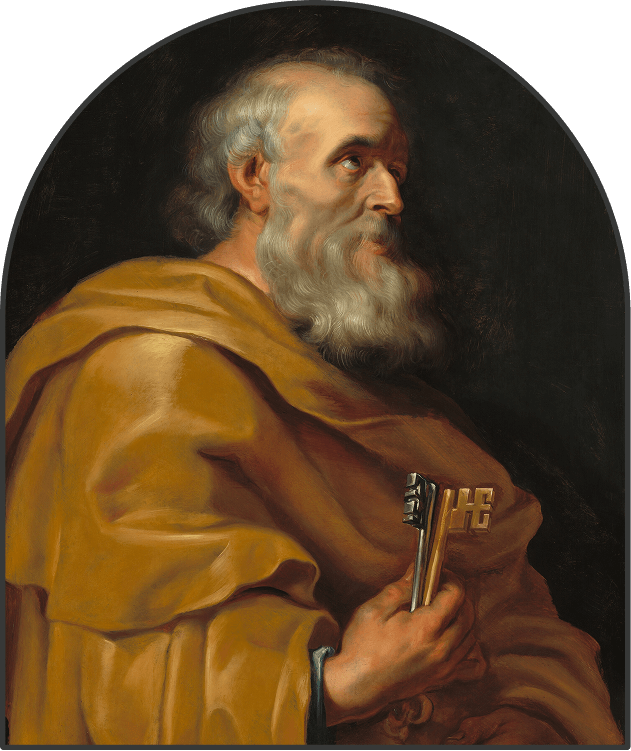
The Prayer Life of Origen of Alexandria: The Scholar-Mystic Who Sought the Divine Word

Introduction
Origen of Alexandria, a brilliant and controversial figure from early Christian history (c. 184-253 AD), is perhaps the first truly systematic theologian in the history of the church, and an extraordinarily profound contemplative. Origen’s astounding intellect is equaled only by his ascetic and moral practices and mystical experiences of devotion and charity towards God. Origen’s life demonstrates that the paths of eminent scholarship and profound spirituality are not adversarial but can be united in loving God with all your heart, soul, mind, and strength.
A Life Born in Prayer and Martyrdom
Origen was born into a devout Christian family in Alexandria, Egypt, during an era of intermittent persecution. His father, Leonides, was also very devout and raised young Origen on daily lessons from the Holy Scriptures. Eusebius, a church historian of the time, states that Leonides would pray over his son as he was asleep, uncovering Origen’s chest reverently and kissing his chest as a temple of the Holy Spirit.
Being raised in a home that was saturated with the Scriptures and prayer formed the basis for the entire development of Origen. He understood that the human being created in the image of God has become the living house in which the Spirit dwells within him or herself; this concept was something that Origen thought about throughout the duration of his career.
At the age of seventeen, persecution began for Origen’s family. His father was arrested and sentenced to death because of his faith, and the seventeen-year-old Origen was filled with great zeal to die as a martyr in support of his father’s faith. Because of this determination, however, Origen’s mother kept Origen’s clothing away from him, as this was the only means by which she could stop him from going to the authorities and joining his father in martyrdom (he would not go outside naked).
Unfortunately, Origen was unable to share in his father’s physical martyrdom, but did write a letter to his father instructing him:
Take care not to change your mind on our account.
His desire to become a martyr—what he would later call “red martyrdom” (literal death) versus “white martyrdom” (daily self-denial)— illustrates his contemplative understanding of the life of authentic Christians as being cruciform, or shaped by the cross.
Following his father’s martyrdom and the confiscation of their family property, Origen earned money to take care of his mother and six younger siblings by means of his teaching. However, during this extremely difficult period of time, Origen was faithful to his daily prayer life and study of the Scriptures, demonstrating that no external conditions could lessen his internal spiritual devotions.
Radical Asceticism: The Body as Prayer
The life of Origen was marked by extreme asceticism; he was well-known for many of his ascetic practices, and many of the practices and virtues of Origen still remain controversial today. For example, Origen supposedly slept on the bare ground, owned only one garment, ate very little, drank no wine, frequently fasted, and spent the majority of the night in prayer and study of the Holy Scriptures. Some accounts suggest he may have literally applied Jesus’s difficult saying about those who “made themselves eunuchs for the kingdom of heaven’s sake” (Matthew 25:12), though this remains debated.
The motivation behind Origen’s ascetic practices was not hatred of the human body (as is stated by some) but a love of God in order to discipline the body’s physical desires, thereby allowing growth in the body of the Spirit. Origen frequently referenced the words of Paul:
I discipline my body and bring it into subjection, lest, when I have preached to others, I myself should become disqualified
1 Corinthians 9:27
In his asceticism, Origen understood the teaching of our Lord Jesus Christ:
If your right eye causes you to sin, pluck it out and cast it from you; for it is more profitable for you that one of your members perish, than for your whole body to be cast into hell
Matthew 5:29
Although we may not agree with all of Origen’s specific practices, we must agree with the primary principle of Scripture, which is that for any authentic spirituality, there must first be discipline of our body to serve our body, rather than allowing our body to be our master.
As an aside, Origen’s extreme asceticism is also believed to have prepared him to die as a martyr. By daily dying to the flesh, Origen prepared himself to be willing to surrender his physical life if called upon. As Paul wrote: “I die daily” (1 Corinthians 15:31). So the ascetic way of living the life of Origen is to be continuously “dying” in order to prepare for the final sacrifice.
This practice of “white martyrdom” has deep roots in Christian tradition, reflecting Jesus’s call:
If anyone desires to come after Me, let him deny himself, and take up his cross daily, and follow Me
Luke 9:23
Origen took “daily” literally, making each day an offering of self-denial and devotion.
The School of Alexandria: Teaching as Contemplative Practice
At eighteen, Origen became the head of the catechetical school in Alexandria. Later, he took the catechetical school in Alexandria, and transformed it into the leading center of Christian theological education. The model of education in the catechetical school as exemplified by Origen was one that integrated high-level scholarly training with spiritual formation. This integration of mental and spiritual education was based on the understanding that education without spiritual formation produces learned fools, rather than wise disciples.
Students of Origen testify that Origen began every teaching session with extended prayer to invite the Holy Spirit to enlighten the mind. Origen understood what Paul taught when he wrote:
The natural man does not receive the things of the Spirit of God, for they are foolishness to him; nor can he know them, because they are spiritually discerned
1 Corinthians 2:14
This practice of extended prayer before studying is based on ancient Jewish traditions and therefore was also an aspect of Origen’s teaching methodology. The Jewish rabbis taught that studying the Torah was an intimate encounter with God Himself, rather than just acquiring knowledge about God, and Origen also treated the study of Scripture as an encounter with the living Word (i.e., Jesus) through the written Word (i.e., Scripture). This belief was considered to be extremely contemplative in nature.
The curriculum of the catechetical school established by Origen included:
- Grammar and logic: Training minds to think clearly
- Geometry and astronomy: Understanding creation’s order
- Philosophy: Examining wisdom traditions
- Holy Scripture: The crown and goal of all learning
But beyond intellectual content, Origen also trained students to pray before studying and to meditate after studying. He also taught students to live out the principles established in Holy Scripture daily for the formation of their lives into the image of Christ. This holistic process involves all three areas of a person: the mind, heart, and will.
Prayer Without Ceasing: Origen’s Treatise on Prayer
Around 233-234 AD, Origen wrote On Prayer (Peri Euches), one of Christianity’s earliest and most profound explorations of prayer. This treatise reveals the depth of his contemplative practice and theological understanding.
The Purpose of Prayer
At the beginning of this writing, Origen addressed an important question. If God knows our needs before we ask (Matthew 6:8), why pray? The answer indicates a very deep level of understanding into prayer and a contemplative wisdom of Origen: When we pray, we do not just inform God of our needs; we are being changed by Prayer to be those able to accept God’s gifts to us.
He writes:
Prayer is the ascent of the mind to God
His definition, which had a major impact on the future of Christian spirituality, indicates that Prayer is a movement toward God and not simply a request for something.
According to Origen, Prayer fulfills several different purposes:
- Union with God: Drawing our souls into intimate fellowship with the Divine
- Spiritual transformation: Conforming us to Christ’s image
- Alignment of will: Surrendering our desires to God’s purposes
- Strengthening against temptation: Fortifying us for spiritual warfare
- Expressing love: Offering our devotion to the Beloved
This understanding of Prayer has its foundation in the scriptures. Jesus regularly went away to pray (Luke 5:16), not to inform God about His life but to have communion with Him. Paul instructed Christians that we are to “pray without ceasing” (1 Thessalonians 5:17)—a lifestyle of continuous God-awareness rather than constant verbal petition.
The Postures of Prayer
Origen began to show that Prayer has a physical part, and worship has to do with our Physical Bodies. He describes a number of physical positions that are appropriate for our praying. Some of these postures are:
Standing: TThis is the primary position for prayer since it reflects the Resurrection and denotes our readiness and attentiveness when praying. As Daniel “knelt down on his knees three times that day, and prayed” (Daniel 6:10), standing expresses readiness and reverence.
Kneeling: Kneeling is appropriate for confession and supplication and shows humility at the Throne of God. Paul wrote of bowing his “knees to the Father” (Ephesians 3:14), demonstrating that kneeling embodies spiritual humility.
Prostration: Prostration is reserved for extraordinary events and signifies total surrender. Jesus “fell on His face, and prayed” (Matthew 26:39) in Gethsemane and demonstrated that prostration is appropriate for a time of intense need.
Hands raised: Paul instructed that “men pray everywhere, lifting up holy hands” (1 Timothy 2:8), to express their openness to receive God’s gifts.
By Origen’s emphasis on our physical posture while praying, this indicates a sophisticated understanding of body-soul unity. We’re not merely souls living in a body; we are embodied souls whose physical positions while praying represent and shape our spiritual condition. How we position our bodies to pray represents our current inner state of spirituality and expresses what will be expressed through our spirit. This integrated approach anticipates the more sophisticated concepts of Incarnational Spirituality, that is, God Incarnate (John 1:14) and redeemed our entire body and spirit.
The Direction of Prayer
In a section most revealing of his contemplative theology, Origen discussed whom we are praying to when we pray. He concluded that Prayer should ultimately be directed to the Father through the Son in the Spirit, a Trinitarian framework for Prayer that has endured in the Christian Church for centuries.
He said, “If we understand the difference between prayer, petition, intercession, and thanksgiving…prayer in the proper sense should be addressed to the Father.” However, because “no one comes to the Father except through Me” (John 14:6), prayer ascends through Christ as mediator.
This reflects Paul’s teaching:
Through Him we both have access by one Spirit to the Father
Ephesians 2:18
Prayer is not a matter of magic, but of joining in the Trinitarian communion. It is only through the Spirit that we can approach the Father through Jesus Christ.
Through Origen’s advanced Trinitarian theology of prayer, we can see that his practice of contemplation led him to an advanced understanding of Theology and the work of Christ, which have direct bearing on our prayer.
Praying for Enemies
Setting aside our differences, Jesus commanded us to “pray for those who spitefully use you and persecute you” (Matthew 5:44). Origen made clear that interceding for our enemies is fundamental to being an authentic Christian witness. He saw this as participating in the prayer of Christ’s dying on the cross:
Father, forgive them, for they do not know what they do
Luke 23:34
By following this radical practice of prayer, our lives will be transformed, and perhaps even the lives of our enemies. Christians pray for their persecutors as a way to:
- Overcome evil with good: Refusing to return hatred for hatred
- Participate in Christ’s redemptive work: Continuing His ministry of reconciliation
- Protect their own souls: Preventing bitterness from taking root
- Witness to supernatural love: Demonstrating divine grace’s transforming power
Origen himself illustrates the practice of the teaching during his persecution by praying for those who tortured him, rather than cursing them.
Praying Always
Origen struggles with Paul’s exhortation to “pray without ceasing” (1 Thessalonians 5:17). How can finite humans continue in a habit of continuous prayer when so much of the rest of life requires the management of other daily duties of life?
He explains this in a deeply contemplative way by stating continuous prayer means always living in a state of awareness of the presence of God; and orienting all activities toward God. Anyone who devotes themselves to the study of scripture, or whoever works honestly, and/or whoever acts justly; are all actually turning these actions into a form of prayer. Just as Paul writes:
Whether you eat or drink, or whatever you do, do all to the glory of God
1 Corinthians 10:31
His interpretation anticipates Brother Lawrence’s later Practice of the Presence of God and the Ignatian principle of “finding God in all things.” Origen recognized that true contemplation will transfigure life rather than withdraw from life. Each moment of time presents an opportunity for communion with God .
He writes,
He who links together prayer with necessary duties and suitable actions and contemplation in the divine presence, practices unceasing prayer, for in all this his life is made up of virtuous acts and contemplation
This integration of action and contemplation; work and worship, provides a sustainable model for Christian living. There is no need to choose between Martha and Mary’s service (Luke 10:38-42) but we can, like Origen, integrate both into unified devotion.
Allegorical Interpretation: Mystical Reading of Scripture
The most distinctive contribution that Origen has made to Christian contemplative practice was his development of the allegorical interpretation of Scripture. Like Philo of Alexandria before him, and Paul’s allegorical interpretations of Sarah and Hagar (Galatians 4:21-31), Origen taught that Scripture contains the following levels of meaning:
The Literal Sense
The historical, straightforward meaning—what actually happened. Origen never dismissed this level (contrary to some critics) but insisted it wasn’t sufficient for full understanding.
The Moral Sense
The ethical application—how the text instructs righteous living. For example, Israel’s wilderness journey teaches believers how to navigate spiritual trials.
The Spiritual (Allegorical) Sense
The mystical meaning—how the text points toward Christ and spiritual realities. This was Origen’s particular focus, seeking Christ throughout the Old Testament.
Origen states in his Commentary on the Song of Songs:
The divine Scripture speaks to us of bodily things, but refers to spiritual realities.
Following Jesus’s teaching that Scripture testifies of Him (John 5:39), Origen sought to find Jesus Christ in every page of the Bible.
While this allegorical approach has often met with excessive criticism, Origen’s approach shows his extremely contemplative instincts and an understanding that since Jesus Christ is the Logos by which all Scripture was minted, all texts of Scripture ultimately point to the revelation of Christ to the ones who have eyes to see.
The Song of Songs: A Contemplative Masterpiece
Origen’s interpretation of the Song of Solomon displays his mystical instincts. Many others have written this type of literature based on the context of the passage. However, where others see a love poem, Origen’s mystical view is the relationship between the believing soul and Jesus Christ. The soul (bride/church) asserts her desires to her beloved (Christ).
He writes:
If a man has fulfilled the role of disciple and has entered on that of friend, he will also desire to become a bride, so that he may have the heavenly Bridegroom no longer as a teacher or friend but as a spouse.
This bridal mysticism, deeply rooted in prophetic tradition (Hosea, Isaiah, Ezekiel) and Jesus’s parables (Matthew 25:1-13), served as the foundation for Christian contemplative spirituality. Today, Christian contemplatives are continuing the “nuptial union” of the distinction of the New Testament—with the inspired writings of Bernard of Clairvaux, Teresa of Avila, John of the Cross, and the many others .
Although, for every scripture and allegory that Origen spoke, we must avoid the temptation to superimpose our understanding of Scripture. While his observation is valid, the ultimate preference of Scripture is to change the mind into the reality for the continuous union with God.
The Spiritual Senses: Contemplating Divine Beauty
Origen expressed spiritual senses – the spiritual connection between our physical senses (sight, hearing, touch, taste, smell) and the way we perceive divine reality – in his understanding of the ministry of Jesus.
He taught that the soul can:
- See spiritual light and beauty (2 Corinthians 4:6)
- Hear God’s voice (John 10:27)
- Taste divine goodness (Psalm 34:8)
- Smell the fragrance of Christ (2 Corinthians 2:15)
- Touch the Word of life (1 John 1:1)
This teaching draws on biblical metaphors of spiritual perception:
- “Blessed are the pure in heart, for they shall see God” (Matthew 5:8)
- “Oh, taste and see that the Lord is good” (Psalm 34:8)
- “He who has ears to hear, let him hear!” (Matthew 11:15)
- “The love of God has been poured out in our hearts by the Holy Spirit” (Romans 5:5)
Origen recognized that the spiritual senses of mankind had become dulled because of sin, and that healing had to occur before they would function properly. Through Prayer, Contemplation, and Moral Purification, the Spiritual Senses were gradually restored.
Later writers of Christian Mysticism were influenced by Origen as they understood that the spiritual senses are awakened through Contemplative Prayer. Gregory of Nyssa, Augustine, Bernard of Clairvaux, and many others continued to develop Origen’s thoughts to show that the Contemplative Prayer, through the Holy Spirit, awakens the dormant ability to meet God.
The Journey of the Soul: Origen’s Mystical Theology
From Origen’s understanding of the progress of the soul, which will impact mysticism for hundreds of years. He viewed the Christian journey as following the path of a soul’s journey from representing God’s image to fulfilling that representation through grace and cooperation.
Three Stages of Spiritual Growth
Emphasizing the wisdom literature in the Bible, Origen identified three stages of spiritual growth:
Proverbs Stage (Beginners): Learning basic moral wisdom, conquering obvious sins, establishing virtuous habits. Like children learning fundamental truths.
Ecclesiastes Stage (Progressing): Recognizing worldly vanity, developing discernment, deepening understanding. Like adolescents questioning and maturing.
Song of Songs Stage (Advanced): Mystical union with Christ, contemplative love, spiritual marriage. Like adults entering mature relationships.
The progression of these stages mirrors the Apostle John’s biblical references to the spiritual education of “little children,” “young men,” and “fathers” (1 John 2:12-14)—different maturity levels requiring different spiritual nourishment.
Origen taught that spiritual growth is gradual, requiring patience and perseverance. As Paul wrote:
Being confident of this very thing, that He who has begun a good work in you will complete it until the day of Jesus Christ
Philippians 1:6
The Ascent to God
According to Origen, prayer is “the ascent of the mind to God”—lifting upwards from the earthly concerns of life to the heavenly realities of life; being focused entirely on God. The upward journey to God consists of:
Purification: Cleansing from sin and disordered attachments through repentance, confession, and moral discipline.
Illumination: Receiving divine light that clarifies understanding, revealing spiritual truth previously hidden.
Union: Experiencing intimate communion with God, what later mystics would call “mystical marriage” or “deification.”
We find a similar pattern of progression used throughout Scripture:
- Isaiah’s vision: He sees his sinfulness (purification), receives cleansing (illumination), and accepts his mission (union) (Isaiah 6)
- Paul’s conversion: He’s struck blind (purification), has scales fall from his eyes (illumination), and receives his apostolic calling (union) (Acts 9)
Origen’s understanding of the development of a believer’s Spirit through prayer and contemplation provides a guide for the contemplative progression and allows us to determine our placement in the journey to God.
Martyrdom: The Ultimate Prayer
It was Origen’s desire to endure Martyrdom throughout his life, as an expression of his Faith in God and an expression of Complete Contemplation and Perfect Conformity to the Passion of Jesus Christ.
As a result of the Decian Persecution (249-251 AD), Origen received his ultimate desire at the hands of the Roman government. Upon his arrest, incarceration, and continued attempts to extract a confession from him, he suffered excruciating pain from chains and an iron collar, the rack, and torture by fire. The intention of Origen’s tormented captors was to induce him to deny Jesus, without killing him, thereby depriving him of being able to die and become a martyr through a quick death.
Although he experienced extreme agony, Origen never denied Jesus or offered the Romans any form of sacrificial service recommended by their gods; he engaged in each act of Torture, as an act of reverent worship, becoming one in each act with Jesus’ passion, affirming the reality of his Faith through his ultimate confirmation as a witness.
Though he survived the torture and was eventually released after the persecution ceased, Origen was physically broken. He died several years later (likely c. 253 AD) based upon injuries suffered during his imprisonment, though he suffered due to a “technical” definition of being unable to be considered a martyr by surviving. However, he was a confessor due to his declaration of faith under the threat of persecution.
In his theology, Origen demonstrated that his extended suffering during the process of being offered martyrdom may have been valued even more than a quick martyrdom because he had taught that both daily and extended suffering and self-denial were equal or greater.
His death exemplified Jesus’s teaching:
Greater love has no one than this, than to lay down one's life for his friends
John 15:13
Origen laid down his life slowly, painfully, in the crucible of prolonged suffering—his final and most profound prayer.
The Prayer of Jesus: Origen’s Christology
The prayer life of Jesus is significantly central to Origen’s understanding of prayer within his theology of prayer. Origen pondered how Jesus prayed, focusing heavily on Jesus’ prayers in the wilderness (Matthew 4:1-11), prior to selecting the apostles (Luke 6:12), at the Transfiguration (Luke 9:28-29), in the garden of Gethsemane (Matthew 26:36-46), and upon the cross (Luke 23:34, 46).
It was from these instances of Christ’s prayers that Origen learned that Christ’s prayer functions to reveal the mystery of the incarnation. If Christ is the son of God, how could He then pray to His Father? Origen answered that Christ prayed using His human nature on behalf of all humanity. However, Christ’s divine nature maintained a perfect communion with the Father. Therefore, Jesus mediates not only His work of salvation, but also prays for, teaches, and helps us to pray.
This understanding of Christ’s prayers influenced Origen’s own prayer life. When he prayed, he recognized that he did not pray solely as an individual, but as a member of the body of Christ, in union with Christ’s eternal and continuous intercessory prayer for His body members. Paul explains:
It is Christ who died, and furthermore is also risen, who is even at the right hand of God, who also makes intercession for us
Romans 8:34
Origen’s prayer life illustrates how human prayer is a divine response to gratitude and veneration of God. Human prayer becomes a dialogue between us as humans and God, as represented by Christ.
Controversies and Contemplation
Origen stirred controversy within the growing Christian church because of his theology of the pre-existence of the soul, universal salvation, and the spiritual body as related to the resurrection. As a result, Origen was condemned by later church councils. However, the controversy surrounding Origen did not come from the particular views expressed by Origen, but rather through the further development of those views by followers of Origen’s teachings.
The controversies surrounding the theological speculations of Origen remind contemporary Christians of the importance of allowing both contemplative practice and theological orthodoxy to be held in tension. While contemplation can result in the acquisition of genuine insights and understandings of God and God’s plans, those contemplative insights must be compared against Scripture and apostolic tradition for validity. John wrote of such necessity when he stated:
Beloved, do not believe every spirit, but test the spirits, whether they are of God
1 John 4:1
Even the theological errors of Origen reveal something important to contemporary Christians: Origen’s theological errors derive from his excessive devotion to God, not his lack of devotion. Origen’s error of universal salvation stemmed from his deep contemplation on God’s endless mercy and love. His ideas on spiritual bodies stemmed from his contemplation of the nature of resurrection. Origen’s errors stemmed from the fact that he devoted his life to coming to know and serve God.
Today’s church has, for good reason, corrected Origen’s most precise theological errors, while still benefiting from his spiritual insights. While Origen’s theological errors occurred because he was deeply devoted to God, the church has welcomed Origen’s legacy of contemplative prayer life, meditation on Scripture, and mystical framework into its own rich spiritual traditions.
Practical Applications from Origen’s Example
Integrate Scholarship and Spirituality
Do not separate intellectual pursuits from spiritual formation. Approach your reading of Scripture as an act of prayer and ask the Holy Spirit for illumination before reading.
Practice Bodily Discipline
Avoiding extremes, recognize that the practice of bodily disciplines cultivates one’s spiritual capacities. For example, fast regularly, sleep simply, and eat moderately.
Seek Christ Throughout Scripture
Look for how Scripture points toward Jesus Christ, especially in the Old Testament. What does the passage reveal about Jesus?
Develop Spiritual Senses
Ask God to awaken the spiritual senses within you. Ask God to heal your interior senses, so you may see His beauty, hear His voice, and taste His goodness.
Embrace Layered Scripture Reading
Don’t just read Scripture strictly at its literal level. Instead, ask questions like: What is the goal for righteous living? What does this passage reveal about Jesus? What does this passage signify?
Practice Continuous Prayer
Live in constant awareness of God throughout your activities each day. Offer your work, conversations, and routine activities as prayer fulfilling Paul’s command to “pray without ceasing.”
Meditate on the Song of Songs
Use The Song of Songs as a means of reflecting on your relationship with Jesus Christ. What does it mean to you that Jesus is your beloved and you are His bride?
Pray the Trinity
When praying, direct your prayers to God the Father and use Jesus Christ and the Holy Spirit to empower your prayer. Understand that your prayers are a participation in God’s trinitarian communion.
Intercede for Enemies
Pray for your enemies, as Jesus instructed us to do. Praying for them protects you from becoming bitter and allows the possibility of turning your enemies into your friends.
Prepare for Suffering
It is not good to solicit suffering for its own purpose, but it is good to prepare yourself for the probability that you may experience suffering as a disciple of Christ. Preparing yourself to deal with possible suffering should include daily self-denial.
Study with Prayer, Pray with Study
Before studying Scripture or theology, pray for God’s illumination and, after studying, pray with what you have learned.
Use Physical Postures
Pay attention to how your body relates to your prayers. For example: While you pray, stand, kneel, bow down, raise your arms or hands, and allow your body to express what is in your heart.
Origen’s Enduring Legacy
While Origen’s views have raised many difficulties, he has had a profound impact on the development of the Christian spiritual life. For example, among his numerous contributions are:
Biblical Commentary: Setting the standard for allegorical interpretation that would dominate medieval exegesis
Prayer Theology: Articulating prayer’s nature and purpose in ways that influenced all subsequent Christian thought
Spiritual Senses: Developing vocabulary for describing mystical experience and contemplative perception
Ascetical Theology: Establishing principles for spiritual discipline and bodily mortification
Christological Mysticism: Showing how contemplation centers on Christ and participates in His eternal communion with the Father
The legacy of Origen continues to this day and can be seen within many theologians and scholars who built upon Origen’s foundations, including Gregory of Nyssa, Augustine, Maximus the Confessor, and Bernard of Clairvaux.
Conclusion: The Scholar-Saint
Origen of Alexandria serves as a reminder that the highest intellectual achievements and the deepest spiritual devotions are not to be viewed as separate paths to God, but rather as harmonious aspects of the loving relationship we have with God. Origen’s life challenges false dichotomies between scholarship and prayer, orthodoxy and mystical experience, mind and heart. He demonstrated how a rigorous study of Scripture performed in a contemplative manner can lead the student into an encounter with God and experiencing the life-transforming truth found in a prayerful study of Scripture.
Most importantly, Origen revealed that being a disciple of Jesus Christ is a journey—learning to move beyond our earthly problems, through Christ, into heavenly realities, through Christ. It is moving from knowing about God, to having direct communion with God as His beloved daughters and sons through our relationship with Jesus Christ.
Origen’s willingness to allow himself to be tortured for his faith in Jesus Christ exemplifies the culmination of years of daily prayer of a contemplative nature and the practice of disciplined asceticism, which have brought him to an incredible love for Jesus so great that no amount of earthly suffering could separate him from Christ. Origen’s broken body, as the result of torturous suffering, became Origen’s last prayer—a living sacrifice, holy and acceptable to God (Romans 12:1).
So as we, too, face challenges of our faith, whether they be doubts about the validity of God’s Word, feelings of spiritual dryness, physical suffering, or cultural opposition to our beliefs, may we take the example of Origen: to be immersed in a study of Scripture, to maintain a disciplined prayer life, to search for Jesus in all our actions, and to trust that the culmination of our life’s journey is found in unification with our Beloved.
As the deer pants for the water brooks, so pants my soul for You, O God. My soul thirsts for God, for the living God
Psalm 42:1-2
May we, like Origen, spend our lives pursuing this holy thirst, allowing it to drive us deeper into Scripture, higher in contemplation, and ultimately into the eternal embrace of the Father, through the Son, in the power of the Holy Spirit—one God, now and forever. Amen.
Our Editorial Standards:
All our content on Christian meditation traditions, prayers, and spiritual practices is reviewed by Dr. Megan Remington, PhD, ensuring theological soundness and spiritual depth.
We draw from centuries of Christian contemplative tradition, citing respected theological sources, biblical references, and established spiritual practices.
Our team understands that spiritual struggles are deeply personal. We approach topics of anxiety, strength, healing, and peace with compassion and biblical wisdom.
We continuously review and update our spiritual resources to ensure they remain relevant and aligned with orthodox Christian teaching.
Each article clearly identifies our writers and reviewers, along with the theological sources and biblical foundations used.
 To guarantee that all of our information is accurate, we ensure that all our sources are reputable. That means every source is authenticated and verified to be backed only by medical science.