


 App Store
  Google Play
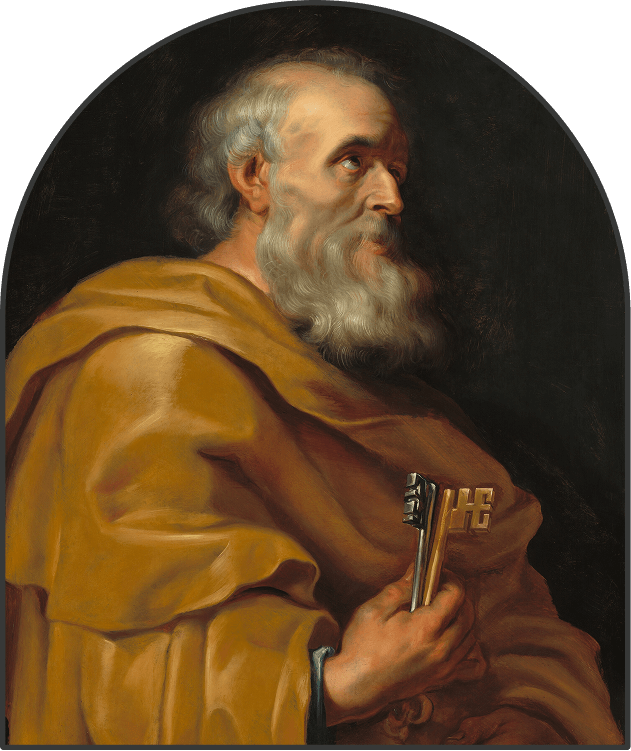
The Shepherd’s Heart: St. Ambrose of Milan and the Mysticism of Pastoral Love

Introduction
In the tumultuous fourth century, when the Church was navigating newfound imperial favor while battling Arian heresy and defining orthodox doctrine, God raised up a bishop whose influence would reshape Western Christianity for centuries. St. Ambrose of Milan (c. 339-397 AD) stands as one of the four great Latin Doctors of the Church, renowned for his theological brilliance, administrative skill, and courageous confrontation of imperial power. Yet beneath the public figure of the fearless bishop and eloquent preacher lived a man of deep prayer, profound scriptural meditation, and genuine mystical sensitivity whose contemplative life sustained and directed all his external activity.
What makes Ambrose’s life even more captivating is that he embodied mystical spirituality within the context of intense political engagement and pastoral responsibility. The desert fathers and monks abandoned the world to live in solitude; however, St. Ambrose was active in ministry as a bishop in a major city while still engaged in mystical spirituality through his constant prayer and meditation. His life demonstrated that contemplation supports action and that deep prayer provides the necessary spiritual foundation for ministry. St. Ambrose’s life also demonstrated that even bishops who are involved in the affairs of the world can maintain a close relationship with God.
Ambrose’s mysticism was completely throughout the Bible, liturgy, and ministry. He contemplated biblical texts (particularly the Psalms and the Song of Songs) and did not view them as ancient history, but rather as living words that speak directly to the soul. His liturgical life shaped how he prayed and how he viewed the world theologically. He applied his mystical insight to pastoral ministry by guiding souls to Christ, defending orthodox faith against heresy, and building up the Church through love. He did not pursue a mystical experience for its own sake, but rather oriented it toward the “one thing necessary” (Luke 10:42)—knowing God and making Him known.
Perhaps most remarkably, Ambrose was never intended for Church leadership. As Roman governor of northern Italy, he entered Milan’s cathedral in 374 AD to keep peace during a contentious episcopal election. Instead, the crowd—recognizing his wisdom, integrity, and Christian commitment—acclaimed him bishop despite being only a catechumen, not yet baptized. Within eight days, he was baptized, ordained through all clerical ranks, and consecrated bishop. This “uncanonical” beginning forced Ambrose into a crash course in theology, Scripture, and pastoral ministry—yet he rose to the challenge magnificently, becoming one of history’s greatest bishops.
From Imperial Governor to Humble Bishop
Aurelius Ambrosius was born around 339 AD in Trier, Gaul (modern Germany), where his father served as Praetorian Prefect—one of the highest imperial offices. His family was Christian and aristocratic, providing excellent education in rhetoric, law, and classical literature. After his father’s death, the family moved to Rome, where young Ambrose continued his studies, preparing for legal and administrative career.
Following family tradition, Ambrose entered imperial service, quickly rising through ranks to become governor (consularis) of Aemilia-Liguria, with headquarters in Milan—then serving as one of the Western Roman Empire’s capitals. He proved himself a capable administrator—just, diplomatic, respected by both Christians and pagans. His future seemed clear: continued advancement in imperial service, perhaps eventually reaching his father’s rank or higher.
But God had different plans. When Bishop Auxentius died in 374, Milan’s Christian community was sharply divided. Auxentius had been an Arian sympathizer, and now orthodox Christians and Arians competed to elect a successor. Violence threatened. Ambrose, as governor, entered the cathedral to maintain order and appeal for peace.
During his speech for peace in the Church, a child (as tradition states) called out to the crowd, “Ambrose, bishop!” and everyone agreed, both Arians and orthodox Christians. Here was a man neither faction controlled, whose integrity was unquestioned, whose administrative gifts were proven. Orthodox Christians trusted he would defend Nicene faith; Arians hoped his inexperience in theology would make him manageable.
Ambrose was horrified at the situation. He was a catechumen (a candidate for baptism) and therefore without an understanding of much more than the basic tenets of the Christian faith. Ambrose never expected to be placed in a position of Church leadership. His immediate reaction to the news of being made bishop was to run away; he continued hiding until Emperor Valentinian I recognized what had occurred and commanded him to take up the task.
Within eight days, Ambrose was baptized, ordained in all orders, and made bishop. His rapid transition into the episcopate was contrary to canonical norms, since normally, a candidate would gradually progress through the various orders and ministries over several years. However, Ambrose’s situation was unique and required such action. The Church recognized God’s intervention in Ambrose’s election, just as it did for Saul when he was anointed king (1 Samuel 10).
Ambrose immediately began to study, read from Scripture, and study the Greek theologians who influenced him in that period of the development of the Church; namely, Origen, Basil of Caesarea, and Athanasius. To prepare himself for his position, Ambrose sold all his property except for what was necessary to provide for his sister Marcellina, who was a consecrated virgin. His asceticism was in stark contrast to the extravagant lifestyle of those in his position.
Ambrose’s conversion experience shaped his spirituality. He could not draw upon years of indoctrination in theology or upon a gradual development of pastoral experience; rather, he had to rely on the illumination of God’s guidance through prayer. Ambrose’s humility was genuine. He recognized his limitations and was constantly dependent on the divine guidance of God. This humility allowed him to serve the Church with grace and to avoid the pride that can lead to arrogance among bishops who advance through the usual channels of the Church.
The Daily Rhythm: Prayer and Administration
As bishop of a major metropolitan see, Ambrose experienced crushing responsibilities: celebrating the Eucharist and conducting daily worship; preaching and catechizing baptismal candidates; offering counsel to those in crisis; directing the administration of the diocese; maintaining relationships with bishops throughout the Empire; preparing theological discussions; defending orthodoxy against heresy; and relating to civil authorities.
How did Ambrose remain contemplative given all these responsibilities? To integrate these activities, several factors contributed:
Liturgical Structure
The Divine Office—fthe set hours of prayer throughout the day and night—provided Ambrose with an overall framework to be contemplative as expressed through the various forms of monastic structure that he greatly admired and promoted. The order was as follows:
Vigils (before dawn): Opening the day with prayer, to God, the first gift of the day (the first moment of awareness), was a way of taking your first fruits and offering them to God.
Lauds (dawn): Praising God, the first moment of the day, for defeating darkness, and Christ being the source of Righteousness and Light.
Terce, Sext, None (third, sixth, ninth hours): Praying at the Third Hour of the day at the same time on each of the following days would maintain continuity throughout the week and allow for continuity in prayer.
Vespers (evening): Giving thanks for the blessings of the day received, and making an examination of conscience for the day.
Compline (before sleep): Committing your sleep to the care of God.
The primary element of each office was the Psalms—the 150 prayers of the Bible Ambrose was well-acquainted with and recited regularly. The Psalms formed Ambrose’s vocabulary, theology, and emotional life; when he was happy, he sang Psalms; when he was troubled, he prayed Psalms of lament; when he was in distress because of his enemies, he recited Psalms of Assurance of the protection of God.
Each day also included one or more celebrations of the Eucharist—the ultimate prayer of the Christian faith and the central act of the Church—was also a time when Ambrose could encounter Christ through this sacrament and became renewed in his relationship with Him, resulting in even greater union with Him. On the Mysteries and On the Sacraments provide evidence of the sacramental understanding of his ministry, where in the Eucharist the bread and wine become the body and blood of Jesus Christ. The process by which Christ could become united with His followers through communion is similar to the way solid food can be assimilated into the body.
Scripture Saturation
Ambrose’s primary focus was on the Scriptures—reading and meditating continually. The overwhelming amount of references to biblical verses in Ambrose’s writings constitute thousands of examples of the way he understood reality and expressed his thoughts in his writing. Ambrose practiced a devotional method of reading called lectio divina, a slow and contemplative reading of a biblical passage. After he finished the reading, he would reflect on what the reading taught him about how to draw close to God and how to approach God with a pure heart.
The Psalms (he wrote many commentaries and homilies), the Song of Songs (interpreted allegorically as a picture of the union between Christ and the Church) and the history of the Patriarchs in the Book of Genesis (where the lives of Abraham, Isaac, and Jacob each illustrate an aspect of our growing relationship with God) were all examples of texts that Ambrose spent considerable time and effort studying. Ambrose’s letters provide evidence of his concern for people as a bishop. He would write to people expressing his desire to support and encourage them in the time of need.
This scriptural saturation meant that Ambrose’s mind operated biblically. When facing pastoral challenges, biblical patterns suggested responses. When preaching, biblical language flowed naturally. When praying, biblical words expressed his heart’s movements. Scripture became his native language.
Nocturnal Prayer
Ambrose, like most bishops and most monks, spent significant time each night praying. After evening Compline and some rest, Ambrose would arise in the early morning and spend extended night vigils praying, reading the Scriptures, preparing sermons, writing letters, and so on. Night was the best time to spend undistracted in prayer, without distractions from the circumstances of life, the day or the time, so as to make a deeper commitment to God.
Jesus prayed all night long (Luke 6:12); Paul and Silas sang praises and prayed from midnight to the morning while in prison (Acts 16:25), and many psalmists declared:
At midnight I rise to praise you
Psalm 119:62
Ambrose was ultimately able to go beyond the ritual’s expectations of the Divine Office and build a greater, more intimate relationship with God. When the world slept, Ambrose conversed with the Lord about his life, his concerns and found through prayer the wisdom, comfort and direction from God.
Contemplative Preaching
Ambrose did not merely provide doctrinal instruction in his preaching; He also shared the fruits of prayer and contemplation with his congregation. He did not simply prepare his sermons with intellectual effort; He prayed for what his congregation needed to hear, how to apply the message of the Scriptures to the specific situation of his followers, and how the truth of the Scriptures would nourish his followers.
In Ambrose’s catechetical instruction material (On the Mysteries, On the Sacraments), he had a mystical interpretation of the sacraments; for example, for him, baptism was not just a washing ritual but the means of death and resurrection. The baptismal ceremony is not a ritual; it is a true death and resurrection with Christ (Romans 6:3-4). The chrismation ceremony (anointing with oil) is not symbolic; it actually conveys the gift of the Holy Spirit to the recipient of anointing oil. Your participation in the Eucharist is not merely commemorative; it is, however, the reality of Christ being present to you today.
In his homilies on the Bible, Ambrose shows the depth of his contemplative thinking; He does not provide a historical account of scripture; He invites the congregation into a personal relationship with the living Word. When He preached about Moses attending to a burning bush, He told the audience to remove their sandals (put away worldly attachments) and draw near to the holy ground.
Pastoral Intercession
Ambrose carried his people constantly before God in prayer—praying for their salvation, their growth, their struggles. Like Paul, who wrote of “the daily pressure on me of my anxiety for all the churches” (2 Corinthians 11:28), Ambrose bore pastoral responsibility as spiritual burden requiring constant prayer.
When facing imperial pressure to surrender a church to Arians, Ambrose gathered his congregation inside for extended prayer vigils—sometimes lasting days. This wasn’t passive resistance but active spiritual warfare, recognizing that “we do not wrestle against flesh and blood, but against… the spiritual forces of evil” (Ephesians 6:12). Prayer was the weapon that ultimately prevailed.
His letters reveal constant pastoral concern—guiding individual souls, encouraging struggling Christians, correcting errors gently, consoling the bereaved. All this required prayer—both for those he served and for wisdom to serve them well.
The Psalms: School of Prayer
The Psalms, the 150 biblical prayers and hymns that make up the Psalter, played an important role in shaping Ambrose’s prayer life. The Psalms represent the foundation for Christian liturgical prayer. Ambrose devoted much of his effort to commenting on twelve different Psalms, and he often referred to other Psalms in his sermons. The Psalms are the most quoted book in Ambrose’s written work from the Old Testament.
So what attracted Ambrose to the Psalms? Several factors played a role:
Complete emotional range. The Psalms contain every type of emotion one could express to God—happiness and sadness, hope and fear, praise and complaints, thankfulness and anger. This gave Ambrose the ability to share with God his totality rather than just his feelings.
Christ-centered. Following Jesus’s own teaching (Luke 24:44) and apostolic interpretation, Ambrose read the Psalms christologically. When the Psalmist suffers unjustly (Psalm 22), Ambrose sees Christ’s passion foreshadowed. When the Psalmist celebrates victory (Psalm 118), he sees Christ’s resurrection. When the Psalmist speaks of God’s anointed king (Psalm 2), he sees Christ enthroned.
Ecclesiological dimension. The Psalms were the common voice of the entire Church’s prayers—not just of an individual. Therefore, when Ambrose prayed the Psalms, Ambrose was uniting his prayer with that of the Church throughout time and space. Accordingly, Ambrose did not just pray as a private person, but as a member of the Body of Christ.
Moral and spiritual instruction. The Psalms offer examples of virtue. They encourage humility (Psalm 131); they celebrate justice (Psalm 15), and they denounce wickedness (Psalm 14). This inspired Ambrose to build a moral imagination and ethical teaching.
Mystical depth. Some Psalms express intense longing for God:
As a deer pants for flowing streams, so pants my soul for you, O God
Psalm 42:1
Others celebrate intimate communion:
I have set the LORD always before me
Psalm 16:8
These provided language for Ambrose’s contemplative yearning.
Ambrose’s commentary on Psalm 1 (the “blessed man” who meditates on God’s law day and night) reveals his understanding of contemplative life. Ambrose saw that the true contemplative is one whose heart has a constant orientation to God while fulfilling their worldly duties. Therefore, the blessed person was not necessarily a hermit, but could have been a bishop, a parent, or a worker.
In his presentation of Psalm 119 (the longest Psalm, celebrating God’s law) sAmbrose illustrates how daily contemplation on Scripture gives believers “food” to sustain their spiritual lives, like Israel received manna in the wilderness, because the psalmist describes God’s Word as “sweeter than honey” (Psalm 119:103). Therefore, daily meditation on Scripture is essential, like bread to the soul.
Ambrose also interprets the Psalms of Ascent (Psalms 120-134), traditionally sung by pilgrims as they made their way to Jerusalem, as representing the ascent of a soul to God. The soul must relinquish sin, attachment to created things, and self before reaching the resting point in the presence of God.
Ambrose’s interpretation of the Psalms further formed his view of the social implications of his time. Throughout the Psalms, the psalmist speaks out against the oppression of the poor and calls for justice. These were not empty words for Ambrose, but rather a divine mandate requiring actions. His ministries to the poor, confronting the emperor with injustice, and living simply all originated from his view on the importance for God’s people to understand that “The LORD hears the cry of the afflicted” (Psalm 34:6) and requires His people to do likewise.
The Song of Songs: Mystical Love
Ambrose wrote extensive commentary on the Song of Solomon (also the Song of Songs and Canticle of Canticles), interpreting this romantic love poetry’s meeting of Christ. This allegorical interpretation of the Song of Songs not only stems from the established Christian tradition of seeing in human erotic love a lesser reflection of God’s love for humankind, but also deeply influenced Ambrose’s thinking. Similar themes emerge from Ambrose’s interpretation:
The Soul as Bride
The Song’s bride searching for her beloved, is used by Ambrose as a type for the soul seeking Christ. “I sought him whom my soul loves; I sought him, but found him not” (Song 3:1)—this describes the contemplative experience of seeking God’s presence. At times, being able to find God can involve a great deal of searching—not just in some cases, but also when God seems to be absent from us.
The promises made to the bride, who longs for her bridegroom to kiss her— “Let him kiss me with the kisses of his mouth!” (Song 1:2)—convey the deep yearning of the soul or bride for an intimate communion with God; she yearns for that direct and immediate meeting that occurs without mediation between themselves. She desires for God to give the “spiritual kiss” of divine grace upon her soul. The kiss is not so much an act of sensuality but is, in fact, a true passion; passion is genuine love and produces eros or desire for God and the overwhelming attraction to Him.
The bride’s declaration “I am sick with love” (Song 2:5) is a reflection of what happens when the divine beauty of God captures the soul. The soul has reached a point of no return after having experienced divine beauty; the soul has tasted the sweetness of God, and she is now unable to be satisfied by anything but the greatness of God. This is the “wound of love,” which is the pain and beauty that render the soul incapable of contentment with anything that does not drive her closer to God.
Christ as Bridegroom
The bridegroom reflects the beauty of the bride, which is indicative of Christ being enamored with the Church He has beautified and sanctified through the sacrifice of Himself. The Apostle Paul writes that Christ
loved the church and gave himself up for her, that he might sanctify her... that he might present the church to himself in splendor, without spot or wrinkle... that she might be holy and without blemish
Ephesians 5:25-27
However, Ambrose took Paul’s statement about Christ and applied it not only to the Church collectively but to the individual soul of the believer. Ambrose believed that Christ is enamored and delighted in all believers whom He has redeemed, finding beauty in them, not as natural beings, but because of their grace-given holiness. The soul is beautiful to Christ because He has made her beautiful by adorning her with virtues, much like a bride is ornamentalized with jewels.
Ambrose learned God’s way of revealing and concealing Himself from the alternating depictions throughout the course of the Song. God delights in encouraging the soul with His comforting presence, then He withdraws His presence in order to produce a longing for Him that does not allow for complacency; the search for God and His will continues until He fully reveals Himself. This pattern is found in many halls throughout Scriptural accounts, such as when Moses entered the cloud of God’s presence while God remained hidden or when Elijah heard the voice of God and did not see God face to face; and when the disciples experienced Christ in person and then He ascended into heaven.
The Mystical Garden
Ambrose saw the garden, vineyard, and orchard depictions throughout the Song as indicative of the development of the soul through divine grace.
A garden locked is my sister, my bride, a spring locked, a fountain sealed
Song 4:12
In this image, Ambrose viewed the soul as a sacred enclosure protecting the living arrangements for God.
We see the bride’s invitation to
Let my beloved come to his garden, and eat its choicest fruits
Song 4:16
Ambrose sees here the soul offering herself entirely to God, inviting Him to possess her fully, to enjoy the fruits of grace that He Himself has grown in her.
The garden also represents the Church, for it is the place that Christ has cultivated through His Word and Sacrament and produced the fruits of the Spirit (Galatians 5:22-23), and through the saints, the Church has a beautiful garden full of diversity. Just as there are different types of flowers in a garden, every Christian is a different plant in the garden and is in need of being cultivated, watered (through the teaching and sacraments), and pruned (through discipline and trials).
Union in Love
The union of love in the Song of Songs culminates in the union of the bride and groom. This union is a mystical marriage of the soul to Christ. Just as husband and wife become “one flesh” (Genesis 2:24), yet retain their individuality, so too does the soul that is united to Christ share in the life of Christ and still has its own personhood.
Ambrose taught that this union starts imperfectly in this world through the sacraments and faith but one day will be completed in Heaven. In this life, we are experiencing the presence of the bridegroom through veils of faith, Scripture, and sacraments. When we get to Heaven, we will know Him “face to face” (1 Corinthians 13:12) and see Him directly without any veils. However, even the state of heavenly vision will not be sufficient to fully satisfy the divine mystery of God; the infinite nature of God will assure the universe of continual discovery.
This nuptial mysticism, known throughout the West since the time of Ambrose when he wrote of the biblical love-poems and how they serve as the legitimate vocabulary to express the divine/human relationship; when the poems are interpreted spiritually instead of carnally, has greatly influenced the Western Christian spirituality of those who have followed Ambrose’s lead, such as Bernard of Clairvaux, John of the Cross, Teresa of Avila, and others.
Sacramental Mysticism: Encountering Christ
Ambrose became acquainted with Christ through both the sacraments of baptism and the Eucharist. His writings, On the Mysteries and On the Sacraments, demonstrate that Ambrose’s sacramental theology is characterized by its high level of development and rooted in a mystical interpretive framework.
Baptism: Death and Resurrection
Baptism is not simply a forum for having one’s sins washed away or as a means of publicly declaring one’s faith; rather, it represents a full and direct experience of dying with and ultimately rising once again with Christ. Romans 6:3-4 states:
Do you not know that all of us who have been baptized into Christ Jesus were baptized into his death? We were buried therefore with him by baptism into death, in order that, just as Christ was raised from the dead by the glory of the Father, we too might walk in newness of life.
In Ambrose’s view, baptism is not only a symbol of an event; it is, in truth, an event.
To fully understand the significance of baptism, one must: contextually view baptism in Ambrose’s writings as a reality through which the candidate is immersed in the waters of baptism, is dead to Christ, has died and no longer has power over sin, and has been released from Satan’s influence. On coming up out of the water, the candidate is resurrected with Christ, and from that moment is a new creation, and God is the father of this new creation, and the Holy Spirit takes residence within him or her. Therefore, Ambrose believed baptism is a real rather than a symbolic event, and also emphasized the fact that baptism occurs in and through the sacraments.
In order to demonstrate this reality of baptism, Ambrose compared baptism to heating a piece of iron in fire. Once the iron is heated to a certain degree, it is completely consumed by the fire, and radiates that heat. Similarly, the individual that undergoes baptism has had the grace of God so affect him or her that they are radiating the divine power of God by the Holy Spirit.
Ambrose also viewed baptism as part of the complete revelation of how God saves humanity. He related baptism to the actions of Noah’s Ark, the Israelites crossing of the Red Sea, and Moses’s striking the rock for water. In these events, baptism is foreshadowed, as at our baptism, we die to ourselves and we have new life through the waters of baptism.
Chrismation: Anointing of the Spirit
Once a person has been baptized, he or she subsequently receives chrismation, or an anointing with holy oil. The use of holy oil is a symbol of The Holy Spirit’s presence, consolation through sweetness, and empowerment through His anointing. For Ambrose, at chrismation, the work of baptism is completed by baptizing the individual.
For Ambrose, the Holy Spirit that descended and rested upon Jesus when He was baptized (Matthew 3:16) is the same Spirit that rests upon every individual that has been baptized, and therefore every individual has been baptized in the manner that Jesus has been baptized, and they have all shared in the prophetic, royal, and ministerial roles of Jesus. For Ambrose, this was not merely symbolic; Ambrose believed that because individuals have experienced the identity of Jesus through baptism and chrismation, they can fully carry out the mission of Jesus and legitimately use the title of “Christian”.
Eucharist: True Presence
Ambrose’s Eucharistic theology is remarkably clear and explicit: bread and wine truly become Christ’s body and blood through consecration. This isn’t symbolic presence or merely spiritual presence but real, substantial presence—the same body born of Mary, crucified under Pontius Pilate, raised on the third day.
He writes:
You may perhaps say: 'My bread is ordinary.' But that bread is bread before the words of the Sacraments; where the consecration has entered in, the bread becomes the flesh of Christ.
The words of consecration—Christ’s own words at the Last Supper—effect what they signify, transforming the elements into what they proclaim.
Ambrose also is struck by the mystery of how something becomes another:
How can something that is bread be the Body of Christ? By consecration. Consecration takes place by whose words and by whose speech? By those of the Lord Jesus... The word of Christ... which is able to make out of nothing that which did not exist, cannot change things which already exist into what they were not before?
Through his use of sacramental realism—the real presence of Jesus in the Eucharist—Ambrose is able to ground his mysticism firmly within reality; Ambrose did not seek out ecstatic vision or other extraordinary means to experience the divine presence of Jesus through any of the sacraments. The most direct and most reliable means whereby he could encounter Jesus is through the sacrament.
Through having received Holy Communion worthily (meaning: with faith, reverence, and being free of mortal sin) Ambrose believes that he receives Christ’s body into his body; Christ’s blood flows through his veins; Christ dwells within him, both physically and spiritually. Ambrose teaches that the final fulfillment of Christ’s promise will be completed in Christians upon receiving him in this sacrament, that is to say:
Whoever feeds on my flesh and drinks my blood abides in me, and I in him
John 6:56
Yet Ambrose also insisted on proper disposition. Those in mortal sin, those harboring unforgiveness, those lacking faith—these should not receive communion until reconciled to God and neighbor. The sacrament brings judgment rather than blessing when received unworthily (1 Corinthians 11:27-29).
This Eucharistic mysticism shaped Ambrose’s entire spirituality. The Eucharist was the sun around which everything else orbited—preparation before Mass, thanksgiving afterward, daily life oriented toward next communion. His prayer flowed to and from Eucharistic encounter; his preaching explained and invited people to this sacramental mystery; his pastoral care aimed at making souls worthy to receive Christ in the sacrament.
Confronting Empire: Mysticism and Courage
Ambrose’s encounters with imperial authority illustrate clearly the strength of an elective life of contemplation. Three examples reveal the ways prayer served as a source of courage to witness power through prophecy:
The Basilica Crisis (385-386)
Empress Justina was the mother of the young emperor Valentinian II, and she demanded that Ambrose return a building in Milan for the use of the Arians. Ambrose refused her request on the basis of the words of Christ, who said:
Render to Caesar the things that are Caesar's, and to God the things that are God's
Matthew 22:21
No doubt, in an effort to intimidate Ambrose, she had troops surround the church and threaten violence against Ambrose and his congregation.
Ambrose called his congregation together in the church to pray, and they began an extended prayer vigil—day and night. The vigil was marked by constant Eucharistic celebrations and hymns sung by Ambrose that he had composed specifically for the occasion. Ambrose and his congregation were practically surrounded by troops and their call for violence; however, Ambrose used the military threat to engage in spiritual warfare by turning to God in prayer. As Ambrose wrote:
We prayed. The Arians too exerted themselves... But the Apostle has taught us that our struggle is not against flesh and blood, but against the spiritual forces of wickedness
Ephesians 6:12
During the vigils, Ambrose introduced the concept of antiphonal singing in which the congregation separated into two choirs and took turns singing verses to a hymn. This practice not only helped to increase the feeling of unity among the congregation, but it also helped to maintain a sense of morale among the people while the vigil continued. The hymns that Ambrose composed (later known as ‘Ambrosian Hymns’) became highly esteemed and were used later in the Western Church’s liturgy.
After days of prayer vigils, with large crowds of supporters, and many of the soldiers hesitant to assault the church or the people gathered in it, Justina ultimately backed down. The continued fervent prayers of the people ultimately overcame the political machinations of Empress Justina. Ambrose viewed this event as a sign of spiritual success and of God’s continued protection over His Church through His people’s ongoing prayers.
The Affair of the Altar of Victory (384)
The Roman Senate was lobbying for the restoration of the Altar of Victory in the Senate chamber after it had been removed by previous emperors who were Christians. Symmachus (a pagan senator) presented an eloquent speech to the Senate in favor of reinstating the altar; however, Ambrose wrote a letter to the Senate, which rebutted Symmachus’ speech and argued that Christianity was the only religion that offered the truth, that the success of the Roman Empire was due to the Christian God, and that it was impossible for Christians to condone the worship of false gods in the Senate.
Unlike the first situation, Ambrose did not have political power behind him to support his position; however, it was his devotion to prayer that had given him the courage to stand against the powerful senators, risk losing favor with the emperor, and to remain true to the principles of Christianity while trusting in God’s promise that
if God is for us, who can be against us?
Romans 8:31
The Massacre at Thessalonica (390)
Ambrose was appalled at the murders of 7,000 innocent civilians ordered by Emperor Theodosius I after the rioting at Thessalonica. Although Theodosius was an orthodox Christian, and politically aligned with Ambrose, Ambrose felt compelled to speak out against such an atrocious act. As such, Ambrose wrote a letter to Theodosius in private, but also wrote a public letter to Theodosius from which Ambrose barred him from receiving the Holy Eucharist until he had completed an act of public penance.
This was a significant event in history because no bishop prior to this time had publicly rebuked the actions of an emperor in this manner. Theodosius had supreme authority; as such, he had the power to have Ambrose banished or even executed. Nevertheless, Ambrose held to his position that all men—including emperors—are subject to God’s laws, that the authority of the Church over moral and spiritual matters is greater than the authority of the emperor over temporal matters.
After several months, Theodosius finally complied and publicly repented. Theodosius then began attending Holy Communion again, only after demonstrating that he had made a sincere repentance. This incident set an important precedent in that it affirmed the authority of the spiritual leader to hold the temporal leader accountable to God.
Where did Ambrose find the strength to confront Theodosius? Ambrose found strength through prayer. Years of communion with God and of absorbing the message of the prophets as they confronted kings (Nathan before David, Elijah before Ahab, John the Baptist before Herod), and through his accomplishments of celebrating the Holy Eucharist with Jesus, who demonstrated great courage to publicly confront the religious and political institutions provided the foundation for Ambrose’s willingness to speak the truth, regardless of the consequences.
The accounts above illustrate that true mysticism does not generate an individual who is silent, who does not act out of concern for others, or who doesn’t find the courage to confront injustice. Instead, they demonstrate that the contemplative life generates a fierce passion for truth and justice, the courage to confront those in power, and the ability to discern true from false.
Ambrose did not find peace through mysticism by acting in isolation from the needs of society or through engaging only in individualistic expressions of his faith. Rather, as he engaged in the practice of prayer and contemplation, he found the spiritual center to take a more active role in the world, and to engage with a greater awareness of the will of God. He relied on prayer, as the Holy Spirit directed him, and sought to apply divine principles to all areas of his life and work.
Hymns: Poetry of Prayer
For centuries, Psalms were the predominant form of worship in the Western Church until Ambrose introduced the practice of congregational hymn-singing. He composed new hymns using Latin that were simple and easy for congregations to remember and sing together. They also contained rich theological concepts.
Ambrose’s hymns had both a poetic and contemplative nature—they expressed theological truths, called worshipers into the mystery of faith, and enabled worshipers to pray as a group. Some hymns have survived and continue to be used in the worship services of Christianity. The following selections include some that Ambrose is credited with writing:
Aeterne rerum conditor (Eternal Creator of All Things)
This morning hymn greets the dawn:
Eternal Creator of all things, Ruler of night and day, Who, lest we should be wearied, Have ordained the changes of time, Now the herald of day, the cock, proclaims the approaching light, The watchman of the night, Distinguishing the hours in the dark.
In this hymn Ambrose takes the order of Creation and demonstrates how it points to Jesus Christ (the Light) and leads worshipers from a daily physical dawn to an awakening of the Spirit, From the crowing of the rooster, as it were (symbolizing Peter’s denial of his Lord) to the opportunity for repentance. Although the hymn is simple enough that a congregation could sing it, it has profound enough meaning for ruminative meditation.
Deus creator omnium (God, Creator of All)
An evening hymn thanking God for the day:
God, Creator of all things, And Ruler of heaven, Who clothes the day with lovely light, And the night with the grace of sleep... Remove from us during sleep Dreams and night's phantoms far away; Repress our ghostly enemy, That our bodies may not be defiled.
In this hymn, Ambrose acknowledges the lordship of God over both day and night, thanks God for providing rest, and requests God’s protection during this most vulnerable state. The hymn teaches people to end each day with prayer, to dedicate their sleep to God, and to ask for His protection against any physical or spiritual threats encountered while asleep.
Veni redemptor gentium (Come, Redeemer of the Nations)
A Christmas hymn celebrating the Incarnation:
Come, Redeemer of the nations, Show forth the Virgin's childbearing; Let every age marvel: Such a birth befits God. Not from man but by the Holy Spirit, The Word of God was made flesh, And the fruit of the womb flourished, The Virgin's honor remaining intact...
This hymn proclaims central Christian mysteries—virgin birth, Incarnation, God becoming man—in singable form. It makes profound theology accessible to ordinary believers, allowing congregations to pray doctrine rather than just learn it intellectually.
Iam surgit hora tertia (Now the Third Hour Rises)
A hymn for the third hour (9 AM):
Now the third hour rises, Which first brought light to the world, When Christ, nailed to the cross, Drew all things to himself... Let us pray with our whole heart That he, the teacher of souls, May guard us from every fall, May look on us with gracious eye...
This hymn links a specific liturgical time (the third hour office) to the history of salvation (Christ being crucified at the third hour), making it clear that the daily prayers of each of us participate in the ongoing redemptive work of Jesus Christ. It also invites the congregation to unite their prayers along with Jesus’ sacrifice and offer themselves to God as Jesus offered Himself.
All of these hymns had multiple uses:
Theological education. They taught doctrine through poetry and music, making complex truths memorable and moving.
Corporate prayer. They united the congregation in one voice, creating community through shared song.
Liturgical structure. They marked different hours and seasons, sanctifying time through song.
Contemplative invitation. They invited worshipers into mystery, not just informing minds but touching hearts.
Spiritual warfare. Singing together strengthened faith and courage (as during the basilica crisis), reminding believers they fight spiritual battles through prayer and worship.
Ambrose’s hymns ultimately provided a basis for the future development of all Western hymnody. He affirmed that congregational singing is a legitimate and valuable avenue of worship, that original hymn-compositions can supplement Psalms, and that theological issues can be poetically expressed without sacrificing precision of meaning. His example inspired later hymnists, including Bernard of Clairvaux, Thomas Aquinas, Martin Luther, Charles Wesley and many others who followed.
Scripture Commentary: Contemplative Exegesis
The output of Ambrose’s theological writings includes a large body of commentaries on Scripture. He wrote commentaries on Genesis, the Psalms, the Gospel of St. Luke, and dozens of treatises on books of Scripture. Additionally, Ambrose wrote hundreds of sermons in which he explicated various biblical passages. Ambrose combined the principles of both literal interpretation and allegorical interpretation when writing commentaries; therefore, both the literal and allegorical meanings are present in his work.
Hexameron (Six Days of Creation)
Ambrose’s commentary on the first chapter of Genesis corresponds with the account of the creation of the world on the six days. Ambrose interprets the way God created the world exactly as he wrote and at the same time, sees the creation of the world as revealing God’s goodness and providing spiritual lessons to all of us through Creation.
Ambrose marvels at the beauty and order of God’s creation:
Consider the magnificence of the sky, the varied courses of the stars, the sun by day, the moon by night, the variety of waters, air, earth... All these God made, and made for you.
This contemplation of nature leads to worship of the Creator.
At the same time, Ambrose sees the allegorical meaning of God’s creation as well. For example, the light which God created on the first day represents spiritual illumination; the firmament separating the waters represents the distinction that Scripture makes between the wisdom of God and the foolishness of men; and the dry land that appears represents the church formed out of the waters of baptism. These allegorical meanings are not arbitrary opinions; rather, they were principled arched contemplative insights; that is, they were truths of spiritual life that were revealed within physical creation.
Commentary on Luke’s Gospel
Ambrose’s commentary on St. Luke’s Gospel provides insight into Ambrose’s heart for pastoral care as well as his mystical sensitivity. For instance, when Luke states that Mary pondered all the things in her heart (Luke 2:19), Ambrose draws the conclusion that the fact of Mary pondering all the things in her heart represents the contemplative life as the divine mystery; therefore, Mary should be a model for all Christians.
When Jesus visited Mary and Martha (Luke 10:38-42), Ambrose interprets Luke’s narrative regarding Martha’s business and Mary’s understanding to illustrate the active and contemplative dimensions of the Christian life properly; thus, both Martha’s works and Mary’s sabbatical time with Jesus are both acceptable—but Mary has selected the better part.
In addition, Ambrose’s treatment of Jesus’ parables illustrates his depth of understanding of the mysteries of God. For example, the parable of the prodigal son conveys to every person of God the merciful and loving Father; the parable of the good Samaritan illustrates God’s mercy and grace for all of mankind and is a foreshadowing of Jesus as the good Samaritan; and the parable of the lost sheep illustrates God’s diligent pursuit of every single lone sheep as represented through Jesus as the good Shepherd.
Allegorical Interpretation
The development of most readers who approach the work of the early Church Fathers often finds their works of alleged—meaning, allegorical exegesis—confusing and often arbitrary or specifically fanciful. For example, why does Ambrose think that the “dry land” created on the third day of creation represents the Church? Why does Ambrose find a connection between the allegorical interpretation of every individual to Christ found in the Old Testament scriptures?
There were many principles that guided Ambrose when he interpreted the scriptures allegorically:
Christological focus. Following Jesus’s own teaching (Luke 24:27, 44-47), Ambrose read the Old Testament as pointing toward Christ. Every narrative, prophecy, and law finds fulfillment in Him.
Spiritual sense serves edification. Allegorical interpretation wasn’t intellectual game but pastoral tool—helping believers encounter God through Scripture, finding guidance for their own spiritual journey in ancient narratives.
Multiple senses coexist. Literal, historical meaning remains true and important. Spiritual meanings supplement rather than replace it. Genesis describes real historical creation and teaches spiritual truths.
Scripture is unified. One divine Author (the Holy Spirit) inspired all Scripture, so connections between different texts, themes recurring throughout, and Old Testament foreshadowing New Testament all make sense.
Tradition guides interpretation. Ambrose didn’t invent interpretations arbitrarily but drew on established tradition—Origen, Basil, Athanasius, and other respected teachers whose allegorical readings he adapted and developed.
To Ambrose, reading and interpreting Scripture was an act of contemplating God through His Word. The reader discerns Jesus through each text and identifies with the biblical characters within the historical event; thus, every reader personally encounters each text. Scriptures were fresh and still because they are infinite, and were eternally feeding continual sustenance to those who read and meditated.
Virginity and Consecrated Life
St. Ambrose wrote extensively in favor of the life of virginity, exemplifying a push toward sanctified virginity and celibacy within the church via three of his works, On Virgins, On Widows, and Exhortation to Virginity. St. Ambrose’s own sister, Marcellina, was a consecrated virgin and a member of the large group of virgins who were living together in the families of the women who chose this lifestyle in the community of Milan. During this time, the formalized institutional cloister or convent was nonexistent in Western Europe.
The virtues of virginity as presented by St. Ambrose:
Imitation of Christ and Mary. Both Jesus and Mary were virgins throughout their lives and lived their lives according to the model of these two persons. We as believers living a life of virginity are repeating the pattern of our lives as Christ as well as our lives as individuals in the service of the Lord.
Eschatological sign. According to the teachings of Christ, the future state of the resurrected life does not include marriage;
they neither marry nor are given in marriage, but are like angels
Matthew 22:30
Virgins live now as all will live then, pointing toward eternal reality.
Spiritual fruitfulness. TThe virgin wife may not bear children in the biological sense; yet she produces spiritual children by influencing individuals with her own and her family’s actions, her after-death suffering, and her intercessory prayer. The prophet Isaiah prophesied:
Sing, O barren one... for the children of the desolate one will be more than the children of her who is married
Isaiah 54:1
Undivided devotion. Through celibacy, the individual may concentrate solely on Christ and not to themselves; — “The unmarried woman… is anxious about the things of the Lord, how to be holy in body and spirit” (1 Corinthians 7:34). This doesn’t denigrate marriage but recognizes that celibacy enables different service.
Participation in angelic life. While remaining fully human, virgins participate in angels’ perpetual worship, their lives centered on contemplating and praising God.
While he praised virginity, Ambrose was also careful to refute several false beliefs:
Denigrating marriage. He believed that marriage was holy and good. The concept of virginity was not superior to the institution of marriage; but rather virginity and marriage each serve different purposes in the church.
Promoting false superiority. Proud virgins are farther from God than humble married people. What matters is the heart’s purity, not merely the body’s technical integrity.
Minimizing virginity’s difficulty. He did not say being celibate was easy. He recognized the challenges associated with being virgin and the genuine need for gracious help from God.
Separating virginity from charity. Virginity in service is not based upon excluded physical virginity; rather, being a virgin means being purely devoted to loving God and thereby all of God’s creatures.
Ambrose’s teaching regarding consecrated virginity greatly contributed to the formation of female monasticism throughout the Western world, and led to many women who followed St. Ambrose’s works to establish formal monasteries that ultimately became the centers of worship, teaching, and service in medieval Europe.
The Mystical Body: Ecclesiology
Ambrose’s mysticism was thoroughly ecclesial—he encountered Christ primarily through the Church, understood individual spirituality as participation in corporate reality, and saw contemplation serving the Body’s building up.
Drawing from Paul’s teaching (1 Corinthians 12, Romans 12, Ephesians 4), Ambrose emphasized the Church as Christ’s mystical Body—organically united to Christ as Head, with individual believers as members serving distinct functions yet sharing one life.
This had several implications:
No isolated Christianity. A Christian cannot exist as an individual apart from the corporate Body of Christ. Even a hermit exists spiritually in communion with the Church through baptism and witnessing to Christ’s Gospel.
Corporate worship primary. The corporate worship of the Church is primary in the worship of the Church. Though the individual’s prayer is important to the individual, the offering of Christ as a sacrament in the Eucharist is supreme when Christians, as the entire mystical body, come together to represent the complete offering of themselves and Christ.
Gifts serve community. The gifts of the Holy Spirit, which are given to the individual, are given for the building up of the Church and not for individual possession.
Mutual interdependence. Christians are mutually interdependent. The preacher needs to have intercessory support; the strong support the weak; and all depend upon each other.
Unity in diversity. Unity does not mean uniformity. The individual members within the mystical body of Christ will function, serve, and have different gifts according to their calling from God, but this will promote and allow for their unity within that body.
Suffering shared. When one member suffers, all suffer with it (1 Corinthians 12:26). This wasn’t metaphor for Ambrose but reality—the mystic’s prayer helps the martyr’s courage; the confessor’s faith strengthens the doubter’s resolve; the saint’s holiness enriches the whole Body.
This ecclesiology allows for the fact that, although the prayer mystic undergoes through the Church’s sacrament and through his/her own meditative experience, these experiences are still grounded in the experience of the Church, and all aspects of St. Ambrose’s mystical prayer experience were shared and should be shared with others, which further develops his and their forceful witness and teaching of the Christian faith.
Augustine’s Conversion: Mysticism’s Fruit
The single greatest influence upon St. Augustine was the ministry of St. Ambrose of Milan. As St. Augustine states in his Confessions, he converted to Christianity partially as a consequence of the ministry of St. Ambrose.
St. Augustine came to the city of Milan, where he worked as a professor of rhetoric, in 384. He was from North Africa, was a man with high ambition and skeptical thought. He belonged to the sect of Manichaeanism (the belief in the evil material world and in dualistic forces of good and evil; therefore, he thought the God of the Old Testament was the creator of evil matter), and he had a mistress and child but lived without peace.
As a professor of rhetoric, St. Augustine attended St. Ambrose’s sermons (seeking to critique St. Ambrose’s use of rhetoric), but instead ended up being attracted to St. Ambrose’s preaching of the Gospel, the beautiful way he expounded the Scriptures through his use of allegory and the great credibly he demonstrated in his preaching converted him.
There are five important aspects of St. Ambrose’s ministry that converted St. Augustine:
Allegorical Scripture interpretation. Augustine had rejected Christianity partly because Old Testament seemed crude—violent God, primitive morality, contradictions with New Testament. Ambrose’s allegorical method revealed spiritual depths, showing how Old Testament points to Christ, how apparent contradictions resolve in deeper reading.
Intellectual credibility. Ambrose demonstrated to Augustine that Christianity is reasonable and that one could uphold the integrity of one’s intellect and remain a Christian; furthermore, the Platonic philosophical ideas that were held by St. Ambrose were compatible with Augustine’s philosophical education.
Living example. Ambrose’s holiness, courage in confronting the Empire, loving pastoral care, and joy in witnessing to Jesus Christ were testimony to the truth of Christianity and what Jesus meant when He said that Christianity “transforms lives.”
The singing congregation. The singing of the congregation of the Church was uniquely impactful for Augustine. Augustine records in his Confessions of how he would weep during the hymns and how the music carried truth into his heart, which words could not penetrate.
After having struggled for some time and finally converting to Christianity on Easter 387, Augustine was baptized by Ambrose. Although Augustine was a brilliant theologian in his own right, the foundational work that Ambrose was able to accomplish was instrumental in St. his conversion from Manichaeanism to Christianity.
The mystical life of Ambrose affected a vast number of people through his ministry. Despite Augustine being the most prominent example of the impact of Ambrose’s mystical life, there were many others who were influenced through the teachings of Ambrose’s ministry. Some of these converts will never be known; however, they will continue to thrive on the legacy and spirituality of St. Ambrose.
Final Years: Preparing for Glory
Ambrose died in Rome on Holy Saturday (April 4, 397), after suffering from a short illness. He was only around 57 years old, considered still relatively young. Still, Ambrose achieved so much during his 23 years as a bishop. The final days of his life show us where Ambrose was going when he died.
As he neared death, Ambrose did not stop working. He was dictating his comments about Psalm 43 when he fell too weak to continue. His close friends, the disciples begged him to rest. But Ambrose was determined to finish the work that God had given him, and he was much like Paul who wrote:
I have fought the good fight, I have finished the race, I have kept the faith,
2 Timothy 4:7
He received Viaticum—the Eucharist for the dying, literally “provision for the journey.” his food was especially appropriate to him who had based his mystical experiences with Christ on the Eucharist. He had received Communion thousands of times and at the end of his life, he received it for his last preparation to see Christ face to face.
Several bishops visited Ambrose, including Simplicianus, who would succeed him as bishop. They found Ambrose at rest with his hands extended in prayer and speaking without using his mouth; he continued praying even when he was too weak to speak out loud, and he died praying, as was consistent with the pattern of his life.
After Ambrose’s death, Augustine was greatly saddened by his loss:
I wept for your servant Ambrose, the man whom I had loved both as the one who had begotten me in Christ through the gospel and also as a friend... How many times, O Lord, have I heard him in his sermons exclaim... 'Narrow is the way that leads to life!
Miracles were reported at Ambrose’s tomb—healings particularly—and he was immediately venerated as saint. His feast day (December 7) commemorates his ordination as bishop rather than his death, emphasizing his episcopal ministry as his defining achievement.
Legacy: The Mystical Pastor
St. Ambrose of Milan is an exceptional example of how a Church leader can be both a contemplative and a worker. His mystical experience includes incorporating mysticism with active pastoral work, contemplation empowers action, prayer empowers witness to God, his ministry includes prayer and active work in the community.
Liturgical enrichment. He introduced many new hymns into the Church liturgy and promoted congregational singing and established forms of Western liturgical worship. These will continue to shape worship in the Catholic Church and, later, the Protestant faith.
Sacramental theology. He is credited with the clear articulation of the real presence of Christ in the Eucharist, Scripture’s teaching of baptismal regeneration, and sacraments being able to effectuate in our lives what they signified in the Scriptures. Therefore he greatly influenced the development of Western theology.
Scriptural exegesis. The commentaries written by Ambrose are an example of how to utilize both literal and allegorical methods of interpreting Scripture, making it possible for a person to read the Scriptures both historically and spiritually, both intellectually and contemplatively.
Church-state relations. Ambrose has also been credited with establishing a new model of how the Church could and should relate to the State. Ambrose exemplifies how to confront imperial power, establishing the precedent that the Church’s prophetic voice had authority over the temporal power of the State, and that bishops are to share the truth with the rulers of their day.
Contemplative pastoral ministry. Ambrose established the model of how to maintain a robust prayer life in conjunction with the active pastoral ministry of a bishop. He proved that an administrator and a politician could maintain a deep prayer life and that contemplation empowers the bishop to carry out his ministry of leadership.
Intellectual engagement. Ambrose showed that there is no conflict between the use of classical learning and the use of Christianity. Christianity does not fear scholarship, but that philosophy serves as an aid to theology when properly used.
Social justice commitment. Ambrose exhibited a commitment to social justice. His strong advocacy for those in need, and his condemnation of oppression, along with his statement that wealth carries responsibility, are fruits of his contemplative encounter with the God who supports those who are vulnerable and cry out for justice.
Conclusion: Prayer and Power
God invites all Christians in today’s world to integrate their prayer with their active ministry. In doing so, you will establish your active ministry in prayer, and the authentic power that you receive from God comes through your relationship with and through communion with God—not from worldly influences.
The life of Saint Ambrose and his ministry challenges the multiple false dichotomies in our culture today:
Prayer versus ministry. For Ambrose, these weren’t opposed but complementary. Prayer empowered ministry; ministry drove him back to prayer. Effective action required contemplative foundation.
Spirituality versus justice. His mystical life generated fierce commitment to justice, courage to confront oppression, clarity to distinguish true from false authority. Contemplation made him more engaged with justice concerns, not less.
Humility versus authority. Though wielding significant ecclesiastical power, Ambrose remained humble—aware of his inadequacy, dependent on God’s grace, subject to Scripture’s authority. True authority flows from genuine humility.
Intellect versus devotion. His sophisticated theology never became dry intellectualism but served and expressed genuine love for God. Rigorous thought and passionate devotion reinforced each other.
Individual versus community. Though maintaining personal prayer life, his spirituality was thoroughly ecclesial—celebrating Eucharist, praying the offices, preaching to congregation, serving the Body.
For pastors and leaders within the Church, Saint Ambrose serves as a vital model. Time and energy spent in meeting administrative responsibilities, counseling, preaching, crisis management, etc., will take every bit of available time and energy. However, pastoral ministry without a foundation of prayer will be the result of human effort that produces earthly success. Ambrose provides evidence that establishing an effective prayer life is mandatory for ministry; without the contemplation that develops from a strong personal prayer life, a bishop cannot lead his people to God.
Most importantly, Ambrose sets forth the premise that holiness is possible, regardless of the context of your life; holiness is possible in any situation: It is not necessary for the monk to find the holy place. Ambrose clearly sets forth in his life and his ministry that you are created to have the capacity for maintaining a strong relationship with God through the Eucharist, through the meditative reading of the Scriptures, and through the sacramental encounter with God, within your context of ministry.
Ambrose provides a living example as to how you can accomplish much with your ministry, as he did with his, when you take the time to develop an effective life of contemplation. Ambrose concluded:
Let us keep silence that our hearts may speak; let us be still, that God may speak to our hearts
This counsel captures Ambrose’s mysticism—creating interior silence amid external noise, listening for God’s voice amid many voices, maintaining contemplative center amid life’s whirl. May his example inspire us to integrate prayer and action, to ground our ministry in contemplation, and to trust that God’s power manifests most clearly through those who know Him intimately.
Lord, teach me to seek You, and reveal Yourself to me when I seek You. For I cannot seek You unless You first teach me, nor find You unless You first reveal Yourself to me.
St. Ambrose of Milan
Our Editorial Standards:
All our content on Christian meditation traditions, prayers, and spiritual practices is reviewed by Dr. Megan Remington, PhD, ensuring theological soundness and spiritual depth.
We draw from centuries of Christian contemplative tradition, citing respected theological sources, biblical references, and established spiritual practices.
Our team understands that spiritual struggles are deeply personal. We approach topics of anxiety, strength, healing, and peace with compassion and biblical wisdom.
We continuously review and update our spiritual resources to ensure they remain relevant and aligned with orthodox Christian teaching.
Each article clearly identifies our writers and reviewers, along with the theological sources and biblical foundations used.
 To guarantee that all of our information is accurate, we ensure that all our sources are reputable. That means every source is authenticated and verified to be backed only by medical science.