


 App Store
  Google Play
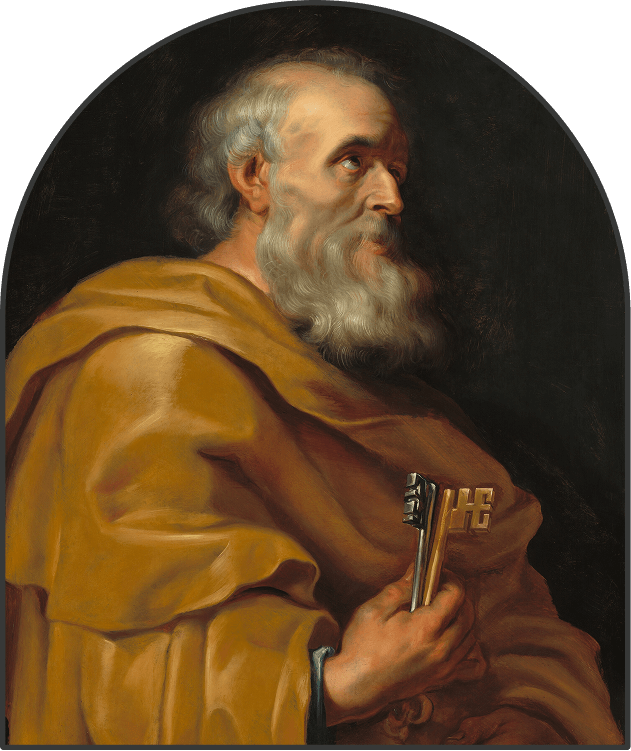
St. Anthony of Padua: The Evangelical Doctor’s Journey in Prayer

Introduction
St. Anthony of Padua (1195-1231), also known as “Doctor of Evangelization,” was one of Catholicism’s most venerated saints. Saint Anthony was famous throughout the world as a helper in finding lost things and is recognized as a patron saint of the poor. Aside from being known for these two great works, Saint Anthony was also a deep spiritual teacher who lived and prayed throughout his short life with a strong commitment to God. Saint Anthony was part of the Franciscan Order, a brilliant preacher, and earned the title of “Doctor of the Church”. He combined the intellectual dedication of rigorous Holy Scripture meditation with an intense love for Jesus Christ in developing his method of prayer. Through his approach to prayer, Saint Anthony paved a pathway of transformation, growth and renewal that remains relevant nearly eight centuries after his death .
From Augustine to Francis: A Journey Toward Simplicity
Anthony’s prayer life began at the intellectual level, being educated according to the rigid structure of the Rule of St. Augustine. He was known as Fernando Martins and was born in Portugal. He entered the Order of Canons Regular at the age of fifteen and spent the next ten years immersed in the formal prayers and theological study. His mind was educated, very well-informed and his approach to prayer was methodical and disciplined. His study of Holy Scriptures was characterized by meditative prayer, reflection and intellectual contemplation of sacred texts, the early Fathers of the Church and all other theological sources of inspiration.
When the relics of the five martyred Franciscans passed through the city of Coimbra in the year 1220, it changed Saint Anthony’s life. Their testimony as witnesses to the spreading of the Gospel through Morocco made a profound impact on Fernando. In hearing of their deaths, he recognized that these martyrs had demonstrated a complete commitment to Jesus Christ that went beyond the ability to think about and discuss with authority. He instinctively recognized that he was being called to a different form of prayer; one that was not only concerned with and rooted in the reading of books but also one that was entirely focused on the way of life, the experience of being in Gospel poverty and practicing evangelical zeal. He left the Order of Augustinians and entered the Order of Franciscans and took the name Anthony and sailed to become a martyr in Morocco.
It was illness and shipwreck that redirected Anthony back to Italy. Once in Assisi, he met Francis. Although the meeting was brief, Francis’s teachings would provide a strong influence over the way Anthony prayed for the rest of his life. The Franciscan emphasis on the contemplation of the humanity of Jesus and his poverty, humility and sufferings became the cornerstone of his mystical experiences with God. While the Augustinian Order had trained him to study and learn about Holy Scripture, Francis taught him how to live Holy Scripture; to become Holy Scripture by actively living it as Jesus the Crucified does .
Meditation on the Word: Anthony’s Scriptural Prayer
Anthony’s most significant contribution to the Christian spiritual tradition was his unique way of meditating on Holy Scripture. He did not write the books of sermons that have survived but instead has a collection of some of his teachings and/or general notes. His preaching and writing was filled with vivid imagery; biblical images, theological reflections and mystical transcriptions that were written from a heart and mind that was completely filled with the Word of God, Holy Bible and the Tradition of the Church. His prayers invoked images and visualizations grounded in the three basic levels of Scriptural Exegesis: Literal, Allegorical, and Moral; and an additional mystical level, Anagogical, which shows the eternal mysteries and realities of God that the Holy Scripture leads us to and reveals to us.
As an example: When Anthony considered the Nativity of Jesus, he did not merely consider the historical fact that Jesus has been born in Bethlehem, but he reflected upon how Jesus was born in his own heart; how the humble stable represented the humility required to receive God into his heart; and how the poverty of the manger mirrored the empty space that must exist within the hearts of those who would receive Jesus into their own hearts. The song of the angels became the harmony of Christ’s virtues represented by the harmonious song of peace in the hearts of those who are at peace with God. The shepherds were persons who guarded their own flock of thoughts and affections within themselves. All of the details carried spiritual meanings; and invited deeper reflections on each other.
Anthony’s contemplative meditation on Holy Scriptures were not limited to pure intellectual exercise. The Word of God penetrated his heart, challenged his emotional attachments, and inspired him to love. He was grieved at the suffering of Jesus on the Cross, rejoiced in the Resurrection and longed to be united with the Beloved of the Song of Songs. Anthony experienced Holy Scriptures as the place of meeting God; Holy Scriptures were not simply a book to study; Holy Scriptures were an audible voice that spoke to him all the time and was the divine presence that is always with each and every one of us.
The Vision of the Christ Child: Anthony’s Mystical Encounters
One of the most famous mystical experiences attributed to Anthony occurred during his stay with a nobleman in Camposampiero, near Padua, Italy. One night, the host peered through a crack in Anthony’s door and was amazed to see him holding a beautiful child who was emanating light. Both looked at each other with great love, and they were having a loving conversation. It was the Christ Child appearing to Anthony as he had been a faithful servant.
After the vision had ended and the nobleman told Anthony what he had witnessed, Anthony asked him not to reveal it until after his death. This request reveals Anthony’s modesty and understanding that mystical experiences are gifts that call us to deepen our love for God rather than to show off. The vision did not mean that he had reached his final spiritual goal, but was a confirmation of the close relationship he had developed with Jesus through many years of faithful prayer.
The above account illustrates a very important aspect of Anthony’s spirituality, which is the emphasis on Christ’s humanity as providing the route to divine communion with God. Like St. Francis of Assisi, Anthony believed contemplating the life of Christ—especially as the vulnerable infant and the crucified Savior—was the best way to attain union with God. The incarnation of Christ is not just a doctrine that we believe in but rather a mystery that we have the opportunity to enter into, to experience in prayer.
There were many other mystical favors in Anthony’s life of which we know relatively little. Contemporaries described him as being repeatedly wrapped in ecstasy while celebrating Mass or preaching. Witnesses reported seeing Anthony levitate while at prayer, becoming so consumed with the presence of God that his physical body appeared to lose its weight. The light on his face was reported to shine with an unusual brightness whenever Anthony spoke about the things of heaven. He never sought to draw attention to these phenomena, viewing them as private blessings rather than public displays.
Contemplative Preaching: Prayer in Action
A unique characteristic of Anthony’s spirituality is how his contemplation seamlessly moved into action. Unlike many mystics who went into hiding from the world in their pursuit of union with God, Anthony’s deepest prayer experiences empowered his outstanding preaching ministry. Contemplation and action did not oppose one another but coalesced into a unified life of prayer-in-action.
Anthony did not prepare his sermons but rather allowed his contemplation to erupt forth as it did in his Mass. Anthony preached for hours at a time to crowds of thousands of people. Each type of person in the audience—nobles and peasant farmers, learned men and simple people, priests and laypeople—were touched by his preaching and moved to tears, made aware of their sins, and inflamed with love for God. The power of Anthony’s words came from his deep union with the Word of God.
The reason for the effectiveness that characterized Anthony’s preaching is that it came forth from genuine contemplative insight rather than clever rhetoric. When he preached about God’s mercy, the people were able to conclude that he had experienced that mercy. When he preached about Christ’s love, the people were able to conclude that he burned with love for Christ as well. When he called for conversion, the people were able to trust that he had allowed the Gospel to convert him prior to challenging others to conversion. Anthony’s preaching was merely an overflow of his prayers; therefore, it is a form of contemplation made audible.
Anthony’s life demonstrates that the integration of prayer and action represents a model for living a spiritual life. He showed that the mystical depths of prayer do not preclude one from engaging in the world but rather give one the impetus to be more active in the world. Thus, Anthony’s prayer and contemplation raised him to the point of ecstasy and infused him with compassion for the sinner, courage to challenge injustice, and energy to tirelessly proclaim the Gospel. The essence of Anthony’s mysticism was incarnational. He encountered God in the world through an awareness of Christ in the world.
Franciscan Prayer: Poverty and Humility
Anthony’s prayer life was thoroughly shaped by Franciscan spirituality, particularly the emphasis on poverty, humility, and conformity to Christ crucified. For Francis and his followers, poverty wasn’t merely external lack of possessions but an interior disposition of complete dependence on God. This spiritual poverty—recognizing one’s absolute need for grace—became the foundation of Anthony’s contemplative life.
In prayer, Anthony cultivated what the Franciscans called “holy emptiness.” He let go of reliance on his considerable learning, his rhetorical skills, his reputation. He approached God not as an accomplished theologian but as a beggar seeking alms, as a child needing a father, as a lover yearning for the beloved. This poverty of spirit created space for God to fill, room for grace to work, openness for the Spirit to pray within him.
Humility complemented poverty in Anthony’s prayer. Despite his gifts and the recognition he received, he maintained a deep sense of his own sinfulness and unworthiness. He preached powerfully against pride, seeing it as the root of all sin and the greatest obstacle to union with God. In prayer, he regularly examined his conscience, confessed his faults, and renewed his dependence on divine mercy. This humility kept his mystical experiences from inflating his ego, grounding extraordinary graces in ordinary self-knowledge.
The Franciscan focus on Christ’s passion also permeated Anthony’s contemplation. He meditated frequently on Jesus’s suffering, seeing in the cross both God’s infinite love and the path of discipleship. To follow Christ meant embracing one’s own cross, accepting suffering as a means of purification and union. Anthony’s willingness to endure the hardships of constant travel, poor health, and intense ministry flowed from his contemplation of Christ crucified. The cross wasn’t just something to think about but a reality to live.
The Angelic Doctor: Anthony’s Theological Contemplation
Though, today, Anthony is often depicted holding a Christ Child or a lily, his official title is“Doctor of the Church” due to his theological brilliance and wisdom. His preaching was loaded with biblical references and he had a great deal of knowledge of the early Church’s Fathers as well as the developing field of theology, but for Anthony, theology was always more than merely an academic pursuit. It was a contemplative experience, a method of prayer that used the heart, or to use the intellect, for purposes of love.
Anthony practiced what would be later defined as “Theological Contemplation.” Anthony viewed using the mind not to dissect divine mysteries; but rather to lovingly penetrate these same mysteries. For example, when Anthony studied the doctrines of the Trinity, the Incarnation, or Christ’s presence in the Eucharist, he did not merely concern himself with having the correct theological definitions; he wanted to taste the doctrine of the Trinity and be transformed by his experience of God and the Incarnation.
Anthony’s theological method of scriptural exegesis also reflects this relationship between intellect and contemplation. He would take one phrase or verse of the Bible and provide a comprehensive interpretation of the phrase while connecting it to the entire biblical text; therefore, revealing how the phrase connects to Christ and how the phrase leads to Christ.
Anthony’s ability to combine intellectual acuity and deep love for God ran counter to how spirituality often portrays the two as opposites. In actuality, a properly ordered mind, which knows humility and poverty, becomes a tool for contemplation. When studying for an academic purpose, a person may have the intent of acquiring knowledge. For Anthony, his theological intellect allowed him to contemplate God.
Prayer and Social Justice: Anthony’s Prophetic Voice
Because of the union between contemplation and prayer, Anthony’s contemplation opened the door for him to not only preach about Christ’s presence in the Eucharist but also to advocate for social justice for the poor. In his sermons, Anthony stated, “You cannot be a disciple of Christ unless you care for the poor.” His prophetic voice was born out of prayer.
During his experience of contemplation, Anthony met a God of justice and mercy and one who stood with and for the poor. He witnessed that Christ’s identification with the oppressed illustrated what the Gospel calls us to; therefore, we must have personal piety and implement social justice. Anthony’s mystical prayer experiences connected him with the suffering of his brothers and sisters rather than providing him with a sense of being above the world. In order to be united with God, we must also be united with our brothers and sisters, especially with those who are most vulnerable.
Anthony’s perception of the relationship between prayer and justice is exemplified through a story. One day, Anthony preached about giving alms and showing mercy to those in need. He stated that a miser would have his heart found not in his chest but among his treasures. When the man died, Anthony found that his heart was among his gold coins, thus teaching that we become what we love. If we love God, then we are with Him; but if we love wealth, we are with it.
Anthony’s integration of mysticism and social justice is an essential thread in our spiritual fabric today. He demonstrated that genuine union with God requires an undeniable commitment to social justice; thus, contemplation that does not produce compassion is defective, just as prayer that does not identify systemic sin is incomplete. Both the grace of friendship with Jesus, which brought Anthony ecstasy, and his commitment to social justice were established through the contemplation of the grace of God.
The Contemplative’s Day: Anthony’s Prayer Rhythms
Although we do not have a detailed account of Anthony’s prayer routine, it is likely that his day was structured around a general pattern of prayer. As a Franciscan friar, he followed a common prayer of the Order, which directed his entire day through liturgical worship and contemplative silence.
The Divine Office or the Liturgy of the Hours, was the common form of prayer and was the foundation of Anthony’s day through joining communities at different periods of the day to pray together. Anthony’s prayers began early with Matins (the morning prayer) and Lauds (dawn prayer), which would continue during the day with Terce, Sext, and None (mid-morning, noon, and mid-afternoon prayers, respectively), Vespers (evening prayer) and Compline (the evening prayer before sleep). Through the continual rhythm of prayer, Anthony kept his consciousness directed toward God and prevented himself from letting the business of the day distract him from his awareness of the loving presence of God in all things.
For Anthony, the greatest life-changing event of the day was the sacrament of the Eucharist (daily Mass). Daily attendance at Mass was not seen as an obligation by Anthony; rather, it was the culmination of his prayerful day of contemplation. At Mass, he became united with Christ and received Christ in the action of receiving the Eucharist. Many witnesses share that during Mass, Anthony often would go into ecstatic states, so that he appeared to be outside of himself because of the intense mystery of Christ’s presence, body, and blood.
In addition to his liturgical prayer routine, Anthony spent an equal amount of time engaged in individual contemplation. Anthony would go to secluded locations to be alone with God: such places could be, in caves, the woods, or silent areas of convents or monasteries. During these times of solitude, his prayerful contemplation consisted of two forms: a lengthy meditation on the Scriptures and examining his conscience through recognition and confession of sins. Anthony would renew his commitment to living in poverty, obedience, and living a “life in Christ” through resting in God’s presence and allowing Himself to be filled with Divine Love.
Though he was regularly making ministry during the hours of his day of prayer, even his active Words of God were performed in a way that he treated as “life-giving.” When he preached, he only spoke the words that the Holy Spirit was guiding Anthony to speak. In hearing the confessions of those who were troubled, he would have attempted to perceive Jesus in each person he encountered, wanting to be a conduit for the love of God. Thus, for Anthony, his entire life was prayer, including the time that he had specifically set aside to be involved in contemplative prayer with God throughout the rest of the totality of his life lived through his continual conscious relationship with God.
Marian Devotion: Praying with Mary
Anthony had a great love for Mary, the Mother of God, during his life there on earth. He believed that she was the greatest example of being open and willing to let God be the guide of one’s life by her obedience in saying “yes” to God. Many of his sermons frequently included references to the role of Mary in God’s plan of salvation, and in her humility and willingness to allow God to use her as a tool for bringing Jesus into the world.
Mary, according to Anthony, embodied the poverty of spirit that makes mystical union possible with God. As a woman without self-will, she made room for God to perform the miracle of the incarnation. Mary considered the Word of God and followed the example of Anthony who had a focus on being a person of prayerful meditation. She also stood beside her suffering son at the foot of the cross.
In all these ways, Mary demonstrated the same path for Anthony’s contemplative life. As a powerful intercessor and guide, responsible for praying for Anthony, Mary taught him how to pray to Jesus. In the famous prayer “If then you ask for miracles,” attributed to Anthony, it was believed to be directed by God’s power through the intercession of the saint, but Anthony was adamant that only God could work miracles. Therefore, when this journey was made by Anthony, he gave all glory to God and gratitude to Mary, who brought Jesus into the world.
Mary was not an abstract theological concept but was accessible to ordinary believers. By providing the framework to help people connect to God through prayer, Mary gave guidance and insight into the mystery of prayer through Anthony’s preaching, and his devotion to Mary modeled the intertwined relationship between the highest level of contemplative life with the simplest form of popular devotion.
Preaching to the Fish: Creation as Prayer
One of the most famous stories about Anthony, often recounted, is his preaching to fish. Legend has it that when the people of Rimini rejected hearing the gospel preached by him, he went to the seaside, where he preached the gospel to the fish in the shallow waters, with the result being that many fish came out of the water to hear him. The fish listened attentively to him as he spoke until he finished and bowed their heads before swimming off, causing the people of Rimini to be so ashamed by the way the fish responded that they ended up converting.
Whether literal or legendary, this event gives great insight into the contemplative life and vision of prayer of Anthony. Just like his father, Francis, who preached to birds and called all creatures his brothers and sisters, Anthony saw the entire created order filled with God’s presence. All of creation responds to the Word of God because the Word brought all into existence and continues to draw all things to himself.
God reveals himself through the immanent goodness of created things, not as an extension of God’s existence but as an expression of God’s love and care for each individual who is created in the image of God. This view has profound implications for one’s prayer life, as there are no defined times and places for praying, but all areas of ordinary life are filled with opportunities to be in a contemplative mindset.
Walking through the woods is a form of meditative reading, as you read God’s second book of revelation on a path for finding God’s relationship to you. Sharing a meal with family and friends is an opportunity for communion, as you share in the presence of Jesus in the midst of the gathering of family and friends. Serving the poor is an opportunity to have a mystical exchange, as you “see” and “meet” Jesus present in the lives of those who are living in disguised form. For Anthony, the mystic did not leave the created world, but rather, the mystic experienced creation in a true and real manner and formed a divine encounter with the Holy Spirit that sustains the created order.
The Final Vision: Anthony’s Death and Entrance into Glory
Anthony’s intense life of prayer, preaching, and ministry burned brightly, but only for a brief time. After thirty-six years of age, he was too frail to continue; his health destroyed by relentless travel, lack of proper nutrition, and the rigors of his work in the ministry. In the spring of 1231, Anthony went into a small cell built on a walnut tree to rest, pray, and enjoy silence.
In his final vision, as he was dying, Anthony saw the Lord Jesus for whom he had worked, heard the Lord’s words of comfort and promise, and felt the love and presence of God through His Spirit, as he was preparing to leave this world. Those who watched Anthony die say that his face was glowing with joy and happiness, and as his last words he was praising God. Anthony died on June 13, 1231, while still a young man, but being mature in holiness.
Anthony’s approach to his death showed the fruit of his contemplative experience. He faced the challenge of leaving this world to go to eternity with serenity and peace because he would finally be able to unite himself completely with the God he had been serving all his earthly life. His earthly mystical experiences were anticipations of the beatific vision that Anthony entered into after he passed from this life to the next. Anthony’s years of meditation, prayer and service had prepared him to enter into this final union with God.
The Church, immediately after Anthony’s passing, expressed its admiration for his holiness by performing miraculous miracles. Thousands of people gathered around the site of Anthony’s tomb to pay tribute to him, and Pope Gregory IX canonized Anthony as a saint just eleven months after his death—making it one of the quickest canonizations in history. Thirty years after Anthony’s death, upon the exhumation of his body, it was entirely decomposed except for the tongue, which was still intact and fresh, indicating God had sealed His approval upon Anthony’s preaching. In 1946, Pope Pius XII declared Anthony a Doctor of the Church—officially acknowledging his incredible depth of wisdom that resulted from his contemplation of the Word of God.
Anthony’s Legacy for Contemporary Prayer
St. Anthony of Padua exemplified a spiritual path that blends contemplative and active spirituality, integrates a deep theological foundation with accessible expressions of devotion, and harmonizes an experience of mysticism through practical service. St. Anthony’s life was short, but intense. It illustrates that profound prayer need not be reserved for those seeking to live in solitary contemplation; rather, it can thrive while one engages in demanding ministry. To achieve a deep relationship with God, one must maintain a consistent and faithful orientation toward God in all circumstances.
St. Anthony’s meditation on scripture provides fertile soil from which to develop a contemporary approach to prayer. In our age of Biblical illiteracy, we must imitate St. Anthony’s example and learn how to nourish ourselves with the word of God by engaging in deep study and contemplation of the scripture, and by going far beyond a superficial understanding of what we read. St. Anthony’s pursuit of multiple meanings within the same biblical text gives witness to this approach, and invites us to dwell with the scriptures, to read them not for the purposes of gaining information, but to experience the transformative power of God’s word in our lives, so as to let it mold our consciousness and to ignite our love for God.
St. Anthony’s integration of intellectual and devotional pursuits challenges the false dichotomy that has plagued modern spirituality, where some emphasize experience and feeling, while deeming theology as dry and irrelevant, while others pursue the academic pursuit of theology, while neglecting devotion. St. Anthony teaches us that both the intellect and the heart must work in concert; furthermore, through rigorous intellectual pursuits, one can also foster a passionate love for God, the best form of theology is that which leads one into contemplation of God, and not simply as an exercise in academics.
St. Anthony’s commitment to the cause of social justice reminds us that mysticism and contemplation contain a necessary call to respond to the suffering of our world through acts of compassion. In other words, mysticism that does not ultimately compel the practitioner to act out of love for others, and prayer which does not speak to challenges presented by injustice, is lacking. To be in union with God, as St. Anthony teaches us, is to be in union with all those whom God loves, and especially, the poor and marginalized. The same prayer that brings us into the presence of Jesus must also enable us to go forth and minister to Jesus within the least, those who are poverty-stricken.
In addition, St. Anthony teaches us how one can develop a profound mystical experience through devotion to God, while also remaining devoted to Christ in the normal, everyday, way. St. Anthony is a Doctor of the Church, and was able to write and teach others about the theological truths, based on his deep connection to the Lord through contemplation, and yet millions invoke his intercession for the patron of lost items, through simple devotional expressions to God; consequently, the democratic mysticism rooted in the spirituality of St. Francis of Assisi will inspire within the heart of every believer an expectation that all can have deep, intimate, and personal relationship with God through their devotion.
Thus, ultimately, St. Anthony invites each of us, through our devotion to the Word of God, through our approach to prayer and the sacraments, while we are ministering to the poor through acts of justice and charity, that through theological studies, one is transformed through contemplation, ultimately to serving others. Anthony assures us that God will always reward even a short time of faithful prayer, as God has the ability to multiply our small acts into a bountiful harvest; and certainly, St. Anthony promises that the same Jesus who was physically present in his arms will embrace us in the depths of our own contemplative prayer and all who seek Him will find Him there, and all who ask for the gift of divine love, according to St. Anthony, will have the gift of divine love, as promised in the Word of God.
Our Editorial Standards:
All our content on Christian meditation traditions, prayers, and spiritual practices is reviewed by Dr. Megan Remington, PhD, ensuring theological soundness and spiritual depth.
We draw from centuries of Christian contemplative tradition, citing respected theological sources, biblical references, and established spiritual practices.
Our team understands that spiritual struggles are deeply personal. We approach topics of anxiety, strength, healing, and peace with compassion and biblical wisdom.
We continuously review and update our spiritual resources to ensure they remain relevant and aligned with orthodox Christian teaching.
Each article clearly identifies our writers and reviewers, along with the theological sources and biblical foundations used.
 To guarantee that all of our information is accurate, we ensure that all our sources are reputable. That means every source is authenticated and verified to be backed only by medical science.