


 App Store
  Google Play
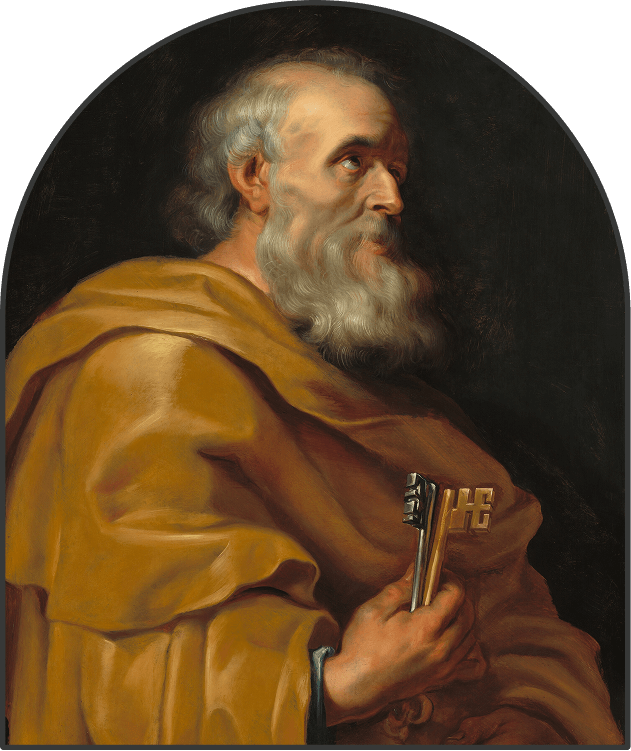
St. Antony of Egypt: The Father of Monks and the Desert’s Mystical Pioneer

Introduction
St. Antony of Egypt (c. 251-356 AD), known today as “Antony the Great” and “the Father of Monks,” became one of the most influential individuals in the development of Christian Spirituality. It was his choice to retreat into the Egyptian desert to pursue God through a life of solitude that began the movement that would ultimately define Christianity—monasticism. Through radical prayer, in addition to a tremendous amount of spiritual warfare, St. Antony ultimately experienced a mystic relationship with God over eight decades.
St. Antony’s writings (primarily preserved in Athanasius’ Life of Antony, along with his own letters from the time) document his contemplative journey—one marked by struggle and victory over spiritual darkness and demonic operations as well as his great experience of Divine communion with God. The prayer life that Saint Antony developed served as the model for Christian monasticism and became the standard for discerning the Spirits, serving as the benchmark for all discerning spirits to continue shaping the mind of Christian contemplation throughout the ages.
The Call to Radical Solitude: Hearing God’s Voice
St. Antony’s path to contemplative living began with a moment of significant spiritual hearing. At 18 or 20 years of age, already orphaned and responsible for his younger sister, he entered a church and heard the Gospel reading:
If you would be perfect, go, sell what you possess and give to the poor, and you will have treasure in heaven; and come, follow me
Matthew 19:21
This reading entered into his heart so forcefully that he immediately understood that God was speaking to him directly. Antony’s experience of hearing scripture as direct speech from God to his soul is perhaps the most fundamental practice of contemplative life. When St. Antony listened to the reading of the Gospel passage, he didn’t just hear some words that someone was reading to him, but rather he experienced the Living Word speaking through the written words of the Gospel. This distinction between hearing casually versus listening spiritually would become part of Antony’s overall approach to prayer. Antony became adept at listening to what God was saying to him personally as he read and listened to the Holy Scriptures.
Within days of reading this Gospel, Antony sold his inherited possessions, keeping only what was necessary to support his sister and, after hearing the Gospel admonition about not worrying about tomorrow, gave away everything he had and entrusted his sister to a local community of virgin women. Next, Antony retreated to the outskirts of the village where he began his apprenticeship in solitude and prayer.
The way in which Antony responded to God’s call demonstrates that he understood that Contemplation required action. Hearing God’s voice requires an obligation to react; perceiving an initial truth necessitates a reaction. Antony could not pursue God while continuing to hold onto material possessions, his socioeconomic standing in society, or any conventional ways of life. He understood that he must strip away everything that could divide his devotion to God, and that he must maintain a singular focus on God.
While Antony did not live entirely alone in his initial retreat, he was on the village outskirts. He learned about living a prayerful, ascetic life through his association with local ascetics who engaged in prayer, fasting, and working with their own hands. This period of training for Antony shows his wisdom; even someone called to a radical lifestyle can benefit from being guided and learning the traditions of the community prior to entering into an unknown place. While the journey to contemplative life is deeply personal, it is developed through tradition and in community.
The Tombs: Confronting Darkness
After completing his initial training, Antony moved to the ancient tombs at the village’s outskirts, entering a radical solitude that would test his resolve and prayer. There, he experienced spiritual warfare on a scale beyond anything he had previously faced. This journey reveals significant teachings about contemplative practice: prayer is a battle, contemplation exposes hidden sins, and darkness often precedes light .
The demonic attacks were remarkable in their violence. Antony was physically assaulted and rendered unconscious by evil spirits taking the forms of wild beasts—lions, bears, leopards, bulls, serpents, and scorpions—intended to terrify him into abandoning his goal. They also filled him with doubt, suggesting his time was wasted, he was needed by his family, and the ascetic life was too hard. They created phantasms of beautiful women to stir up lust and invoked memories of past pleasures to cause guilt and sadness .
Antony’s response demonstrates his method of prayer. He relied completely on God’s power, using the name of Christ, the sign of the cross, and Scripture to repel the attacks. He understood that human will alone could not defeat these forces; only divine power drawn from prayer could prevail .
Antony also practiced discernment, a critical contemplative skill. Demons often appear as “angels of light,” offering seemingly righteous inspirations or quoting Scripture to deceive. Antony tested these by their fruits: if an inspiration produced peace, humility, courage, and love, it was divine. If it produced fear, pride, despair, and division, it was demonic .
The physical nature of these attacks raises questions about evil’s relationship to the material world. Church tradition asserts that demons did physically attack Antony, suggesting the line between physical and spiritual is permeable—a reality often unrecognized by the modern materialistic mindset. Regardless of interpretation, the implication is clear: as one engages in deeper prayer, they will encounter resistance. The contemplative life requires waging battle against powers of darkness that seek to obstruct union with God .
Antony’s perseverance reflected a virtue critical for contemplative growth. Rather than retreating when God seemed distant or demons raged, he kept his commitment. Perseverance during darkness is essential for progress in contemplation .
In time, divine light came to Antony. After being nearly beaten to death, he cried out, and a “heavenly light” filled the tomb, driving the demons away and restoring his health. He asked,
Where were you? Why didn't you appear from the beginning to stop my pain?
The divine voice replied,
I was here, Antony, but I waited to watch your struggle. Now, because you persevered and were not defeated, I will always be your helper and make you renowned everywhere.
This conversation illustrates contemplative wisdom regarding God’s presence. Though God may seem absent during suffering, the divine presence often remains hidden to help us develop strength. The contemplative learns to trust in God based on faith rather than feelings—persevering even when natural instincts suggest otherwise.
The Outer Mountain: Deepening Solitude
After twenty years of struggle in the tombs, Antony moved to an abandoned fort on the outer mountain, seeking even greater solitude. Here he remained for another twenty years, almost completely isolated, receiving bread thrown over the wall twice yearly. This period represents the deepest phase of his contemplative journey, where external warfare largely subsided and interior transformation advanced.
During that twenty years, Antony developed what is now known as the school of pure prayer, in which he focused all of his consciousness on God. As there were only minimal distractions and little human interaction along with limited food supply, Antony was in constant communication with God. Consequently, as a result of long periods of contemplative awareness, the line between day and night blurred into a continual state of awareness, thus everything that Antony did during that time would be considered an act of prayer.
While Athanasius is rather limited in reciting the process by which Antony transitioned back into society, he was able to see that this period in Antony’s life was one of great transformation. Athanasius concludes that Antony, having gone through the process of transformation through solitude, silence, and continual prayer, would come forth after twenty years of solitude, as a man who had been transformed in every way possible. Antony’s face glowed with a rare radiance, and his demeanor radiated peace; in fact, the words that would come from Antony were filled with authority due to his life experiences.
Even though there are few explicit historical references that describe the specifics of two decades of Antony’s life, through his writings about his life, it is possible to conclude that during this time of solitude, he would have gone through three stages of the mystical process, as documented by many writers throughout Christian history: purgation, illumination (receiving divine light), and unity (experiencing communion with God). We would have to assume that during this period on the outer mountain, Antony would have experienced illumination and unity through sustained contemplation and experiencing God directly.
The practice of perpetual prayer that Antony had perfected during this period would involve enlisting one’s consciousness to be constantly aware of God’s presence, rather than simply remembering God’s presence at set times of prayer. This constant awareness of God does not necessitate practicing verbal prayer at all times; instead, one should develop a habitual internal orientation toward God so that his/her consciousness is always aware of the divine presence, regardless of where one is going or what one is doing. Later Christian tradition would codify the various techniques of developing constant awareness of God through the use of the Jesus Prayer in Eastern Christianity; however, it is clear from his own personal experience, that Antony had developed the ideal of continual prayer through direct experience.
While in the outer mountain, Antony’s practice of manual labor would have contributed greatly to his continued contemplation. For minimal reward, he created palm baskets and mats for sale and to stave off idleness. The local monks would go on to make this principle of manual labor and prayer within the monastery standardized practice throughout monastic life. The rhythm of the work would cause the mechanical expression of the hands to engage the body and hold it occupied, while the continuously praying mind would experience a sustained sense of divine security. Continuously connecting physical activity with contemplative activity, the two become inseparable; therefore, without physical activity, there can be no continued active contemplation.
Antony’s method of fasting through continued bread and salt consumption during the day and partaking of only water as his beverage, as well as fasting for days, continued to allow him to engage in a continual process of contemplation. The extreme asceticism that accompanied this fasting was also served as the means to achieve his goals of contemplation: to seek out the destruction of the bodily passions and/or desires that would interfere with prayer; heightened divine sensitivity through physical lack; the ability to identify one’s experience with Christ as he had fasted while in the desert; and to demonstrate that man “shall not live on bread alone” (Matthew 4:4).
Although Antony was an example of extreme asceticism, he would later recommend moderation in all ascetical practices. He acknowledged his own limitations of being too weak to continue engaging in the practice of prayer; thus the practical application of physical deprivation was necessary; however, Antony warned against excessive amounts of fasting and mortification due to their potential harmful effects on one’s health, thus making it more difficult to pray. He was aware that monks could easily go from total deprivation of food to total indulgence in physical comfort within the same period, thus forcing them to develop even greater emotional imbalances.
Reluctant Emergence: Teaching and Pastoral Ministry
Around 305 AD, after forty years of solitude, disciples and seekers broke down the fort’s door, desperate to learn from the holy hermit. Antony emerged reluctantly, transformed by decades of prayer. Athanasius describes him as perfectly balanced—neither wasted by fasting nor fattened by comfort, neither gloomy from isolation nor frivolous from company. His face radiated peace, and his presence manifested the fruits of long contemplation.
This transition from solitary hermit to teacher illustrates that the true purpose of mystical experience is to share it. Authentic union with God is not self-indulgent; it must find outward expression as a channel of grace to the community.
Antony’s teaching method relied on instruction, example, and discernment. He instructed students in prayer, spiritual warfare, and virtue, while his own life of simplicity and humility radiated God’s presence. He taught that demons have no power against those who trust in Christ and that fear gives them strength. He also taught discernment: true visions bring peace and joy, while false ones create fear and confusion.
A key teaching was perseverance. Many enter the monastic life with enthusiasm but abandon it when difficulties arise. Antony taught that a true contemplative holds to their commitment through both consolation and dryness, basing progress on faithful practice rather than feelings.
He also taught that virtues and vices are interconnected. Just as humility leads to patience and perseverance builds wisdom, so too does pride lead to anger, and anger to violence. Therefore, the contemplative must guard the heart closely to prevent vice from taking root.
Antony served not only monks but also ordinary Christians traveling from Alexandria and throughout Egypt. He received all with love, compassion, and patience, never valuing his solitude so much that he refused those seeking help. This balance—maintaining deep contemplative prayer while remaining available to others—became the standard for later spiritual guides.
In his later years, however, Antony often sought to return to solitude. He created a garden to grow vegetables and frequently retreated to his original goal of prayer, ensuring that his communion with God remained the center of his ministry to the world.
The Inner Mountain: Final Solitude
Antony moved to a much more remote place during the latter part of his life—the inner mountain situated near the Red Sea, about five days’ journey from the Nile. He began growing vegetables and created his own hermitage. His last hermitage represents a mature period of contemplation; it is the outcome of all his years of prayerfulness, the experiences in the past to gain wisdom, and the peace of a person who has fought the good fight and now rests safely in God.
The inner mountain allowed Antony to experience complete solitude while also being able to accommodate visits. The disciples who journeyed to see him could receive their instructions, and for people seriously wanting to visit him to receive help, they could make the journey; casual visitors would avoid making the journey because it was difficult to access. Thus, he managed to balance his need for solitude with the duty to serve others.
Antony, at the conclusion of his life, experienced something that no contemplative has ever experienced, complete and unbroken communion with God. Most of the struggles he had faced in earlier times no longer existed in his life. Even though demons would come to attack him, he would not have to struggle with the grace of God and his faith; he could defeat them almost automatically by the power of prayer and the strength of his faith. The inner transformation which Antony had sought out was practically complete; he had built an awareness of always being in God and had made prayer his habitual state, so the presence of God in his life was solid and unbroken.
In this period of spiritual maturity, St. Antony was still very disciplined. He continued the same practice of fasting and prayer every day, as well as working with his hands. He would not have thought that he would be complacent; he knew that he would lose all the spiritual progress he has gained over the years by not being on guard against the demons that will continue to tempt every person until death. The contemplative must continue to believe that while he still has a body, he has yet to win the ultimate victory.
St. Antony, in the last years of his life, taught that joy and peace are indicators of God’s continued working in the person’s life. The demons will try to agitate a person’s peace and create confusion and turmoil. However, when a person is genuinely in touch with God, they will feel a sense of interior joy which cannot be affected by their environment, along with a peace that passes all understanding. Just because a person experiences challenges externally doesn’t mean they won’t experience peace internally.
St. Antony also taught about the discernment between consolations and desolations. Sometimes God will withdraw from his people, in order to test a person’s faith; or to keep the person from relying on feelings instead of God. Therefore, the contemplative must learn to have faith in God even in spiritually dark times, and must continue to pray when their prayerfulness feels empty.
The inner mountain has become a legend while St. Antony was still living. Many stories circulated about the hermit who had conquered all of the demons, had performed miracles, and had achieved unity with God. Many people traveled many miles to see him, to be blessed, and to hear a word of wisdom. Many rulers and kings have written to him asking for counsel and prayers; nevertheless, St. Antony remained humble and attributed all he had received spiritually to God’s grace.
Spiritual Combat: The Desert Warfare
Antony pioneered the Christian theology of prayer as spiritual warfare. Through firsthand experience, he taught that union with God requires a continuous fight against spiritual adversaries. These teachings became foundational for monastic spirituality .
Antony taught that Satan and his angels have limited power. They cannot force sin or violate free will, nor can they enter a soul uninvited. Instead, they rely on suggestion, deception, fear, and illusion to bombard the mind. The ultimate choice to resist remains with the individual’s will, empowered by grace .
Antony identified three sources of thoughts: God, ourselves, and demons. Discernment is essential to distinguish them. Thoughts from God produce courage, peace, and humility. Thoughts from ourselves have a neutral impact. Demonic thoughts create fear, disturbance, pride, and temptation .
Drawing on years of combat, Antony detailed demonic tactics. They start with subtle suggestions, often targeting vulnerable areas like hunger or loneliness. They may appear as “angels of light,” quoting Scripture or feigning holiness, or distort minor faults into major roadblocks to induce despair .
To counter these attacks, Antony provided specific weapons: prayer in the name of Jesus, the sign of the cross, and reading Scripture aloud. Faith in Jesus disempowers demons, while humility neutralizes their primary weapon of pride. Discernment exposes deception before it takes root .
Antony noted that many assaults occur at night through dreams, fears, or memories. He advised contemplatives to recognize these as external demonic attacks rather than personal failings and to avoid engaging with them emotionally .
He also taught that intensified temptation often signals spiritual growth, not failure, as the devil attacks those advancing in faith. However, Antony warned against obsessing over demons, which only empowers them. The contemplative’s focus must remain primarily on God, maintaining only a peripheral awareness of evil spirits .
Antony’s insights shaped the evolution of Christian spirituality, particularly the monastic tradition. Successors like the Desert Fathers expanded his teachings into a sophisticated psychology of warfare, influencing Eastern Christianity’s emphasis on nepsis (watchfulness) and guarding the heart .
Miracles and Mystical Phenomena
Much of the life of Saint Antony was accompanied by various miraculous and supernatural occurrences; however, Saint Antony placed little value on the idea that these events held any importance. While these events are notable, it is important to keep in mind that they illustrate only a small part of how contemplation and profound prayer can relate to and be propitious to extraordinary places of spirituality.
Through his writings, Saint Athanasius recorded numerous stories of miraculous healings that occurred as a result of prayer, his presence or both of them. For example, during the time of Saint Antony, many people were suffering—sick or overshadowed by demons or emotionally disturbed, and they came to Saint Antony for healing. Saint Antony perpetually attributed every miracle to Jesus; therefore, Saint Antony did not take any of the glory for the miracles performed during his lifetime. Saint Antony believed that at times contemplatives become conduits for God’s divine power; however, they are merely conduits; they do not create that power, God alone is the creator.
Saint Antony is believed to have had clairvoyance—having knowledge of future events or being able to perceive what someone else is thinking at that time, and so forth. Because he was so deeply positioned in contemplation, it is only natural that from time to time, the individual who has been in such sustained contemplation would receive spiritual or supernatural insight which could not be gained through their natural faculties. However, Saint Antony cautioned those who are contemplating to never seek the possession of gifts of clairvoyance or to be prideful, should they potentially acquire a gift of clairvoyance.
There were several witnesses who claimed by their accounts to have observed a physical transformation of Saint Antony, in that his face would emanate a light during periods of protracted prayer and when Saint Antony was experiencing profound contemplation. Antony’s luminosity is reminiscent of biblical accounts of divine glory manifesting through humans. His experience illustrates how communion with God can affect an individual’s spiritual and physical appearance.
Antony had numerous visions of angels and demons, heavenly realities and spiritual warfare, and he emphatically stressed careful discernment of these visions. He warned that many visions are demonic deceptions, while some truly convey divine truths. True visions produce humility and peace in the soul; false visions produce pride and fear. The true content of the vision is less important than the fruit of the vision—does the vision increase love of God and love of neighbor?
It has been reported that animals responded to Antony with an unusual degree of tameness. Wild beasts approached him without fear, and he treated them with gentleness. This is reminiscent of the harmony between humans and animals that existed in the Garden of Eden and indicates that holiness restores something of humanity’s original relationship with the created world. The peace of the contemplative person is shared and expressed even to the beasts.
Despite the greater number of miraculous phenomena surrounding him, Antony was not caught up in his own gift of performing miracles. He taught that one’s genuine spiritual growth is expressed through virtue—humility, charity, patience, and perseverance—rather than through performing miracles. Some people with genuine gifts exhibit no virtue; others with great virtue do not demonstrate miraculous powers. The contemplative seeks God, not to acquire experiences or powers.
This approach demonstrated that the contemplative should not have an incorrect view of contemplation. Prayer is not a means for developing one’s supernatural abilities; prayer is a relationship with God and may or may not produce extraordinary phenomena. To focus on the miraculous aspect of prayer defeats the purpose—the ultimate goal is union with God, not an accumulation of mystical experiences.
Letters: Antony’s Written Teaching
Seven of Antony’s written letters have survived, though their authenticity has been questioned. If authentic, these documents give direct insight into Antony’s teachings in his own voice.. Even if the letters are the result of disciples preserving his oral teachings, they represent spiritual wisdom consistent with what we know of Antony.
The letters show that Antony possessed considerable intellectual depth, surprising in a man with no formal education. He wrote of Christological concerns, discussed the nature of the soul, reflected on one’s relationship with God, and examined the relationship of the spiritual realm to the material world. The depth of intellect shown through contemplative practice is evidence that mystical experiences generate theological insight.
Antony also writes about how God created the soul before the fall—rational, spiritual, bearing the image of God. He asserts that the disfigurement caused by sin introduced irrationality, a fixation on the material world, and amnesia regarding one’s relationship to God. However, redemption through Christ restores the original state of the soul and reinstitutes the ability of the soul to see distinct spiritual realities.
Antony’s description of contemplation is synonymous with the soul remembering its origin and true spiritual nature. Because the soul came from God and bears God’s image, it naturally longs for God. The soul gradually forgets its true origin through sin. Thus prayer is a process of anamnesis (recollection)—a process whereby one remembers that which the soul knew all along. The grace bestowed upon the contemplative assists in this discovery and offers the means to reclaim the original awareness of the soul.
Antony further describes different phases of knowledge regarding God. Natural knowledge is gained through the use of rational thought and through observations made regarding creation. Spiritual knowledge is acquired through a process of purification and illumination allowing for the development of an awareness of divine reality. Divine knowledge is a sheer gift of God, and occurs when God illuminates the soul with a direct sharing of divine wisdom. The contemplative must move through the various phases of knowledge consecutively.
Antony’s letters emphasize that authentic knowledge of God is found in moral transformation. While intellectual insight may be helpful, it is superficially dangerous if divorced from the virtue of acting upon the knowledge gained. One can only come to know love by becoming truly loving; one can only learn purity by experiencing pure feelings and emotions. Therefore, the path to becoming a contemplative person is both intellectual and ethical; it incorporates both the mind and the will.
Furthermore, Antony writes about the incarnation as it relates to contemplative life. He believed that life on earth for human beings is only possible through the incarnation of Christ. The divine Word became flesh that men would receive the divine Word.Through prayer and through union with Christ, believers become participators in the divine nature of Christ, and experience a true deification of their humanity. This belief is tied to the spirituality of Eastern Christianity.
The letters reflect the pastoral approach that Antony takes when addressing his readers. He encourages, encourages, and gently corrects, but always directs the reader to the source of his strength, Christ. Although he is addressing theological issues, he maintains a practical approach—how does this impact upon one’s prayer life? How does this doctrine affect one’s way of living? Theology serves contemplation, contemplation serves the totality of life.
Visits to Alexandria: Engagement with the World
Antony frequently took short breaks away from his desert solitude to make two significant trips to Alexander—one for the support of the martyrs during the persecution, and another for supporting Athanasius, the Bishop of Alexandria, against the Arian heresy. The willingness that these short stays reflect is evidence of the reality that although followers of Christ are often in solitude in prayerful places, there are occasions when they must still leave their solitudes, interact with others, and engage the outside world.
The first visit happened while there was persecution occurring in Alexandria under Maximinus Daia (311 CE). During this time, Antony went to the city to visit the imprisoned Christian community and also to attend the executions of the martyrs indicted within the persecution. He went into Alexandria wearing a white cloak to identify himself apart from the other prisoners of war and as a result hoped that this would create a situation where he could be later arrested and subsequently martyred. Due to the influence and power that the authorities believed he possessed, they intentionally avoided attempting to arrest him. After the conclusion of the persecution, he returned to the desert.
Antony’s actions support the understanding that a contemplative person is not indifferent to the suffering and opposition of those around them. The prayers and petitions an individual may make while praying alone in a silent place do not mean that there will not be times when they must step out of their solitude to offer support to their fellow members of the Church who may face death for their faith. To attain a union with God through prayer not only leads to salvation and eternal life with Him, but is also intended to create an increased love of the “neighbor.” Therefore, a contemplative also has the power to sacrifice for another based on a full understanding of the holiness of God as He relates to us and other people.
Antony made his second visit to Alexandria around the year 338, and it was to publicly support Athanasius and the Nicene Christian community in their opposition to the Arian heresy. Antony, who was now an elderly and highly regarded person, gave great authority to the Nicene cause, as many people had recognized the authority of his life and thus were able to trust what he said. During that visit, Antony preached in several churches in and around Alexandria. In his sermons, he publicly condemned the teaching of Arianism and confirmed that Jesus Christ was fully God as well as fully human. The authority that was given to the Christianity of the Nicene community by Antony’s presence was one of the greatest resources used to bolster the position of the Nicene community; in addition, it is a powerful representation of the duty of a contemplative individual to defend and support the truth of God’s Word and the Church when there exists a direct opposition to that truth from the enemy and those whom he may be using in his attacks.
Both of Antony’s visits to Alexandria demonstrate a clear example of the spiritual discernment associated with when a person should leave their solitude. Antony did not discard the focus on his own prayerful contemplation, but there were extraordinary situations that justified his leaving the desert to provide assistance to others through his ministry—a persecution in the Church that could have led to its persecution and destruction and an heretical false doctrine which would undermine the central precepts of the Christian faith.
Finally, Antony’s actions during both of his visits to Alexandria also provide a view of the complete action of God in a contemplative’s life. Though Antony was away from the city and surrounded by a small faith community for so many years as a monk and ascetic in the desert, he moved through the various situations of metropolitan life in a highly dignified and wise manner. He engaged in conversations with philosophers, dignitaries, and individuals of common status—all with equal authority and humility. The nature of his prayer in the desert provided the foundation for his engagement into any situation, with anyone, and in the face of every challenge.
Even though the lives of the saints may not always reflect accurate historical accounts, they do provide examples for followers to emulate. The writings of Athanasius and other early Church leaders have been utilized by historians to create an accurate historical account of the early Christian faith and the early followers of Jesus Christ.
Athanasius and Hagiography
Our primary source for Antony’s life is Athanasius’s “Life of Antony,” written shortly after the saint’s death. This work became immensely influential, almost single-handedly launching the monastic movement’s explosive growth and establishing hagiography as a literary genre. Understanding this text’s nature helps us properly interpret Antony’s spirituality.
Athanasius wrote with clear purposes: to promote monasticism, to provide a model for monastic life, to defend Nicene orthodoxy (implicitly, by showing that Antony supported Athanasius against Arians), and to demonstrate that Egyptian Christianity produced saints equal to any martyrs. The “Life” is thus both historical record and idealized portrait, both biography and instruction manual.
Scholars debate how accurately Athanasius represents the historical Antony. Did Antony really say the sophisticated things attributed to him? Were the demonic attacks as dramatic as described? Did all those miracles actually occur? Some argue Athanasius projected his own theological agenda onto a simpler figure. Others defend the basic historicity while acknowledging hagiographic embellishments.
Regardless of these debates, the “Life of Antony” preserves the authentic core of Antony’s spirituality even if some details are questionable. The emphasis on solitude, prayer, spiritual combat, demonic warfare, virtue, humility, service—these characteristics ring true and align with broader desert tradition. Athanasius may have shaped the presentation, but the essential Antony shines through.
The text’s influence was immediate and enormous. When Augustine read it in Milan, he was deeply moved, contributing to his conversion. Jerome used it as a model for his own hagiographies. Monks throughout the empire looked to Antony as exemplar and father. The desert began filling with hermits seeking to replicate his experience. Monasticism exploded in popularity, transforming Christianity.
This influence demonstrates spiritual hunger in fourth-century Christianity. The age of martyrdom had ended; new forms of radical witness emerged. Antony showed that one could still die to the world through asceticism, still battle evil through spiritual combat, still achieve heroic sanctity through contemplative prayer. Monasticism became “white martyrdom” —bloodless but no less demanding, peaceful but no less heroic.
The “Life” also established patterns for later hagiography: the saint’s divine calling, struggle against temptation, progression through spiritual stages, miraculous powers, humble demeanor, teaching authority, peaceful death. These topoi appear repeatedly in subsequent saints’ lives, sometimes historically accurate, sometimes conventional literary devices. Antony’s story became a template that shaped how Christians understood and narrated holiness.
The Sayings: Wisdom of the Desert
Antony’s wisdom was preserved by the Desert Fathers—the community of hermits who followed his example—through a collection of sayings known as the Apophthegmata Patrum. While some sayings may reflect community wisdom rather than Antony’s exact words, they consistently align with the character portrayed in Athanasius’ Life.
Humility is central to these teachings. When asked what the greatest virtue was, Antony replied,
Humility—the beginning of all good things is to know oneself as one truly is
Another time:
I saw all the devil's traps spread out on the earth, and I groaned, 'Who can escape them?' A voice answered, 'Humility.
This consistent emphasis on humility as the foundation of spiritual life pervades desert tradition.
Other sayings stress perseverance.
Whoever hammers a lump of iron, first decides what he is going to make of it, a scythe, a sword, or an axe. Even so we ought to make up our minds what kind of virtue we want to forge or we labor in vain.
The contemplative must commit definitively to the spiritual path, not dabbling but dedicating oneself entirely.
Simplicity features prominently. Asked how to pray, Antony supposedly said,
There is no need at all to make long discourses; it is enough to stretch out one's hands and say, 'Lord, as you will, and as you know, have mercy.' And if there is war, 'Lord, help!' He knows very well what we need and he shows us his mercy.
Prayer need not be complex or eloquent—sincerity and trust matter more than verbal sophistication.
Discernment appears frequently.
Some have afflicted their bodies by asceticism, but they lack discernment, and so they are far from God.
External practices without interior wisdom lead nowhere. The contemplative must develop discernment—ability to perceive spirits, distinguish good from evil, choose appropriate spiritual practices.
Patience with oneself balances rigor.
God does not allow the same warfare and temptation to this generation as to former generations; for men are weaker now and cannot bear such conflicts.
Antony recognized that spiritual demands must be proportioned to individual capacity. Not everyone can practice desert severity; each must find sustainable path.
The sayings also reveal Antony’s humor and humanity. They show him not as impossibly holy but as real person navigating spiritual life’s challenges, sometimes struggling, sometimes succeeding, always dependent on grace. This accessibility made him not distant hero but approachable father, not impossible ideal but achievable model.
These brief teachings became foundational for monastic spirituality. Later monks memorized sayings, meditated on them, applied them to their own struggles. The sayings functioned as portable spiritual direction, distilled wisdom from decades of contemplative experience compressed into memorable form.
Legacy: Father of Monasticism
St. Antony’s influence on Christian spirituality is beyond measure. While he did not invent christian asceticism—drawing inspiration from earlier hermits—and St. Pachomius is credited with founding communal (cenobitic) monasticism, Antony became the “father of monks” by inspiring the movement’s vast expansion through his exemplary life.
Within 50 years of his death, the Egyptian deserts were populated by hermits and the first monasteries. This ascetic impulse spread rapidly to Syria, Palestine, Asia Minor, and Europe. Wherever the faith spread, monasteries followed, looking to Antony as their spiritual ancestor.
The Eastern church places particular emphasis on this eremitic ideal. The tradition of hesychasm, emphasizing solitude and silence, traces its roots to Antony and the Desert Fathers. Mount Athos, the “great monastic republic,” claims direct spiritual lineage to him, and his icon remains a fixture in Orthodox churches worldwide.
In the Western monastic tradition, though developed largely by St. Benedict, Antony is equally honored. Medieval monks viewed him as a patron, copying Athanasius’ Life of Antony to inspire their own practice. Benedictine monasticism shares core elements of Antony’s teaching: the cell, silence, manual labor, spiritual combat, and constant prayer.
Artistically, Antony is often depicted as an old, bearded man with a staff and a pig—symbolizing the demons he conquered. These images helped cement him as a real, relatable example of holiness rather than a distant legend.
Today, his feast day (January 17 in the West, January 30 in the East) serves as a universal reminder of his teachings on spiritual combat, solitude, and radical gospel living. His influence extends beyond the monastery to lay Christians, teaching that spiritual struggle is real and that temptation must be actively fought. By blending solitude with service, St. Antony illustrated the Christian equilibrium: a life committed to personal holiness that naturally overflows into a desire to help others attain union with God.
Conclusion: The Call to the Desert
St. Antony of Egypt invites all Christians today to enter into the wilderness, not physically but rather an inner wilderness. Through the practice of solitude, we are able to draw near to God without distractions. St. Antony lived a life that demonstrates that one’s experience of true spirituality comes from the withdrawal from the noise and distractions of the world; from time spent in prayer and solitude; and the willingness to face our demons both literally and metaphorically.
In an age of hyperconnectivity and an overwhelming amount of stimulation, St. Antony’s challenge to modern humanity when it comes to solitude is profound. Are you able to unplug for even an hour? Are you able to sit quietly with no distractions? Are you able to confront your true self without the help of entertainment or busyness?
St. Antony says that when one is in the desert, whether external or internal, one will be confronted with things hidden away from view, things usually avoided, and one will encounter who one really is beneath the social mask of society.
St. Antony’s teaching about the fight against temptation continues to be relevant to today’s communities. Although we may not visualize temptation as demons, we do recognize the battle against temptation and destructive thoughts, addictions to electronics, and voices in our heads that seek to rob us of peacefulness and faith. St. Antony’s weapons—prayer, the Holy Scriptures, faith, humility, and discernment—continue to be effective against our modern demons and those that existed in the past.
St. Antony’s constancy encourages the struggler. St. Antony did not experience immediate sanctification, he did not have an experience of continual consolation, and he did not live a life free from doubt and struggle; for decades he fought for holiness, through the darkest of times he persevered, he committed to live a life of holiness when he did not feel like doing so. St. Antony’s life is a witness of the fact that we reach a level of spirituality through a continuous effort to live spiritually faithful over the course of time. Our progress does not happen through immediate breakthroughs or continual emotional highs, but through daily practice of daily living a spiritual life.
St. Antony’s example illustrates the relationship between solitude (prayer life) and service (to others), both what Jesus modeled in His ministry. A contemplative life cannot continue to stay entirely separate from others, otherwise, it fails to demonstrate genuine love for others. On the other hand, one cannot effectively serve others without a substantial amount of time spent in prayer to support and lead them in the ministry of service. Saint Antony lets us see how a contemplative can live a lifestyle that is contemplative and, therefore, has the time and the ability to be available for genuine needs of others and respond to these needs.
Saint Antony’s way of teaching and modeling a life of faith to seek after God proves to every generation that experiencing complete union with God is obtainable. No matter how far removed from Him, the same God exists today that existed when St. Antony experienced Him. God’s grace continues to flow today, just as it did in St. Antony’s life. The same Jesus Christ that St. Antony served calls all of us to serve Him and follow Him. St. Antony states through his life lesson that if we are seeking a relationship with God with our whole heart, if we endure through challenges and remain committed to prayer whether in the light or dark, we will experience the same blessings that St. Antony experienced—God rewards those who diligently seek Him.
St. Antony invites every generation into the desert for the purpose of wrestling with demons, to remain in a state of constant prayer, and make God first. St. Antony also encourages all to continue to search in the desert for the fullness of God’s divine presence through an empty, silent, and surrendered heart. Throughout every generation, St. Antony’s voice continues to be heard with these ageless words:
God knows each person and gives what is appropriate to each. If he had willed, he would have given all people the same gift. But he examines and knows each one's abilities. Give thanks, therefore, to God for what you have received, and don't envy others what they have received, lest perhaps, while envying, you lose even what has been given to you.
It is in this spirit of gratitude and acknowledgment of what God has given us through our gifts that we walk the path of St. Antony into the desert of prayer, seeking the One who has been waiting to transform us into those who have the love for Him that would seek Him in quietness, silence, and surrendered love.
Our Editorial Standards:
All our content on Christian meditation traditions, prayers, and spiritual practices is reviewed by Dr. Megan Remington, PhD, ensuring theological soundness and spiritual depth.
We draw from centuries of Christian contemplative tradition, citing respected theological sources, biblical references, and established spiritual practices.
Our team understands that spiritual struggles are deeply personal. We approach topics of anxiety, strength, healing, and peace with compassion and biblical wisdom.
We continuously review and update our spiritual resources to ensure they remain relevant and aligned with orthodox Christian teaching.
Each article clearly identifies our writers and reviewers, along with the theological sources and biblical foundations used.
 To guarantee that all of our information is accurate, we ensure that all our sources are reputable. That means every source is authenticated and verified to be backed only by medical science.