


 App Store
  Google Play
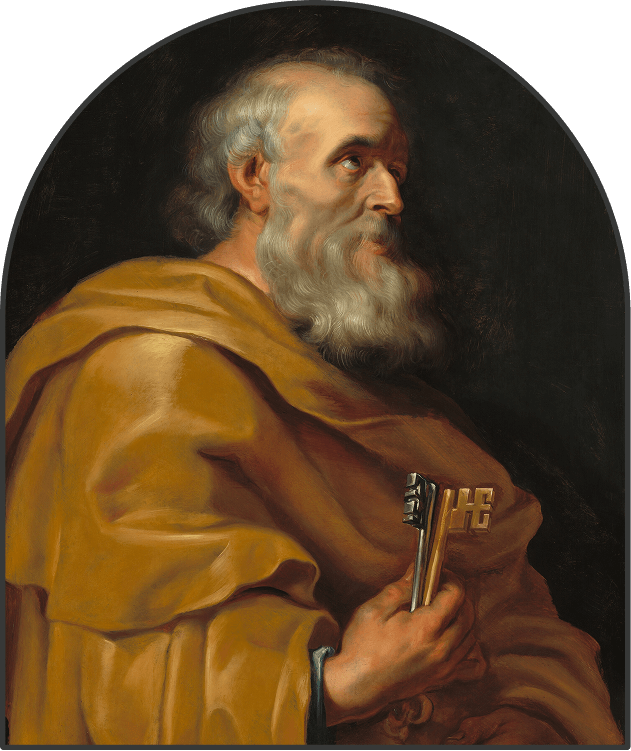
The Prayer Life of Saint Basil the Great: The Bishop Who United Action and Contemplation

Introduction
Saint Basil the Great (c. 330-379 AD), Bishop of Caesarea, monastic founder, theological defender of the Trinity, and social reformer, is a true spiritual giant within Christian history. Combining a strong contemplative spiritual life with a vigorous pastoral ministry, he represents what authentic mysticism is—a life lived in communion with God that meets the practical needs of humanity through the supernatural power of prayer.
Born Into a Family of Saints
His family provided a firm foundation for his faith. He was born into a family whose commitment to Christ was so strong that the church eventually recognized several members as saints. His grandmother, Macrina the Elder, studied under Gregory Thaumaturgus (himself a student of Origen) and preserved her faith through persecution. His parents, Basil the Elder and Emmelia, were known for their piety and works of charity. His older sister, Macrina the Younger, became one of the earliest and most influential contemplatives and spiritual mothers of Christianity. His younger brothers, Gregory of Nyssa and Peter of Sebaste, also became bishops and saints.
From early on, Basil lived in an environment of prayer, devotion to God, and reading of Scripture. As the Bible states:
You shall teach them diligently to your children, and shall talk of them when you sit in your house, when you walk by the way, when you lie down, and when you rise up.
Deuteronomy 6:7
This type of environment creates a legacy of faith; as the Apostle Paul wrote to Timothy: “I call to remembrance the genuine faith that is in you, which dwelt first in your grandmother Lois and your mother Eunice, and I am persuaded is in you also” (2 Timothy 1:5). Basil received more than material wealth or social status; he inherited a rich heritage of prayer and devotion.
Being born into such a family was also a challenge for Basil, as he would have to find his own true faith and not just live on what he inherited, and this journey to find his true faith would take Basil through years of learning, time spent in a monastic community, and ultimately to the achieved integration of contemplation and service to others in his life.
The Temptation of Worldly Success
Basil’s first efforts at trying to achieve success were based on his ambition for worldly pursuits through an education in rhetoric, obtaining the best education and studying in the best rhetorical schools in Constantinople and Athens, where he made the acquaintance of Gregory of Nazianzus (Gregory the Theologian—also a great figure in Eastern Christianity).
During this period of personal academic achievements Basil received many accolades for being so intelligent, but something was missing. The pursuit of life through the practices of logic, intellect, and reasoning cause one to become restless, as written by Saint Augustine:
You have made us for Yourself, O Lord, and our hearts are restless until they rest in You.
Confessions, Book 1
The time spent in pursuit of academics was beneficial, due in part to Basil’s training in rhetoric; this later became a valuable asset to his writings and in preaching of theology. But, there was a truth message in the words of Jesus when He asked: “What will it profit a man if he gains the whole world, and loses his own soul?” (Mark 8:36). A strong desire to succeed through academic achievement produces wise fools rather than wise saints, unless the foundation for that success is established in God through spiritual practices.
The course of Basil’s life began to change through the example and influence of Macrina, who confronted him regarding his spiritual poverty after his return from his academic studies. Her words were an inspiration from many years of prayer and contemplation; the words she spoke produced much conviction in the heart of Basil and sent forth a desire for him to have an authentic encounter with God.
This account illustrates the importance of spiritual friendship and confrontation; the Book of Proverbs reminds us: “Faithful are the wounds of a friend” (Proverbs 27:6). Macrina loved her brother enough to wound his pride so his soul could heal.
The Monastic Quest: Seeking the Desert
Filled with conviction from the challenge from Macrina, and prompted by the Holy Spirit, he sought out a pilgrimage visiting various monastic communities throughout Egypt, Palestine, Syria, and Mesopotamia. His desire was to see examples of radical Christian devotion to God, living in the wilderness, with their entire life focused solely on being in relationship with God.
After spending months in the desert and mountains learning about monks who prayed and sang in the dead of night, memorized entire books of Scripture, lived a life of an extreme degree of simplicity, and who lived in complete poverty with joy despite their physical lack, Basil experienced first hand the meaning of Jesus’ words, “selling all” to follow Him (Matthew 19:21).
Gregory of Nazianzus later described this transformation: “Basil returned from his travels no longer merely a student but a contemplative and ascetic, inflamed with desire to pursue the philosophical [monastic] life.”
In the deserts and mountains, Basil discovered what Elijah, John the Baptist, and Jesus Himself had found—solitude as a crucible for spiritual formation, silence as the womb of divine encounter, and wilderness as the place where God speaks most clearly.
The prophet Hosea records God’s promise: “Therefore, behold, I will allure her, will bring her into the wilderness, and speak comfort to her” (Hosea 2:14). The wilderness strips away distractions, exposing the soul’s deepest hungers and God’s most intimate presence.
Pontus: Creating a Monastic Community
Basil was inspired by what he saw, therefore he went to his family estate in the region of Pontus, which was very remote and mountainous, with the intent to start a monastic community. He was soon joined by his good friend Gregory of Nazianzus, as well as his mother, Emmelia and his sister Macrina, who also started a female monastic community in the area.
Together, while living alongside the banks of the Iris River, Basil developed a new way of practicing monasticism. Rather than the individualism of the hermits in Egypt, Basil’s style of monasticism offered a communal lifestyle that was balanced with prayer, physical activity, and charitable service. This new middle ground between hermit living and being a part of the world would influence the eastern monasticism community.
The Ascetic Life: Prayer and Manual Labor
Daily life in Basil’s monastic community revolved around both prayer and manual labor (among other things). His rules provided guidelines for living a monastic life.
Basil’s rules of life, known as the Longer Rules and the Shorter Rules, reveal Basil’s vision of how to live a monastic life. The center of the life of a monk is prayer; however, the act of prayer must be combined with manual labor (working with their hands), study and various types of charitable services.
The daily rhythm included:
- Night vigils: Rising in darkness for prayer and psalm-singing
- Morning prayers: Welcoming the new day with praise
- Third, sixth, and ninth hour prayers: Sanctifying the day’s divisions
- Evening prayers: Giving thanks as darkness fell
- Compline: Committing oneself to God’s care before sleep
This structured prayer life fulfilled Paul’s exhortation to “pray without ceasing” (1 Thessalonians 5:17) by creating a rhythm that regularly returned attention to God throughout the day.
Between prayer times, monks engaged in manual labor—agriculture, crafts, and various trades. This balanced contemplation with action, preventing prayer from becoming escapist while ensuring work remained worship. As Paul commanded:
If anyone will not work, neither shall he eat.
2 Thessalonians 3:10
Basil insisted that even manual labor could become prayer when offered to God. Whether weaving baskets, tending gardens, or copying manuscripts, every task could be an act of devotion. This integration of work and worship anticipates the Benedictine motto “ora et labora” (pray and work).
Scripture Meditation: The Foundation
A key part of Basil’s vision of monasticism is the practice of remembering Scripture, or meditating upon it, each and every day. All monks not only memorized large sections of the Bible, but also recited the psalms daily while they were praying and studying Scripture as part of their work responsibilities.
Basil himself knew Scripture intimately. His writings overflow with biblical quotations and allusions, demonstrating a mind saturated with God’s Word. He was a living example of what the Psalmist said:
Oh, how I love Your law! It is my meditation all the day.
Psalm 119:97
This constant biblical immersion shaped thinking, speech, and behavior. When Scripture fills the mind so completely, it naturally flows forth in conversation, prayer, and writing. As Jesus taught:
Out of the abundance of the heart the mouth speaks.
Matthew 12:34
The following is the manner in which Basil developed his practice of remembering and meditating upon the Scriptures:
Slow reading: Not rushing through texts but pondering each word and phrase
Memorization: Storing Scripture in the heart where it could be recalled for meditation and spiritual warfare
Rumination: Turning passages over in the mind repeatedly, extracting deeper meaning with each consideration
Application: Asking how each text should shape belief and behavior
Prayer: Responding to God based on what Scripture reveals
This method reflects Joshua’s commission:
This Book of the Law shall not depart from your mouth, but you shall meditate in it day and night, that you may observe to do according to all that is written in it.
Joshua 1:8
The Holy Spirit: Basil’s Contemplative Focus
Basil’s understanding of the Holy Spirit was shaped by two key concepts: his belief that the Holy Spirit is fully God and his experience of the Spirit in prayer. His primary work, On the Holy Spirit (375 AD), located all of his theological training into the affirmation of the divinity of the Holy Spirit. However, the reason for this affirmation was not simply from a conceptual perspective but was based on Basil’s experience as he prayed and reflected on Scripture.
Personal Experience of the Spirit
For Basil, the Holy Spirit was much more than an academic argument or theological concept. The Spirit was alive in him and a part of his everyday life. When he studied the Scriptures, the Spirit was the source of illumination; during episodes of suffering, he found comfort in the Spirit; and the Spirit empowered him to serve and minister to others.
He wrote:
Through the Holy Spirit comes our restoration to paradise, our ascension into the kingdom of heaven, our adoption as God's children, our freedom to call God our Father, our becoming partakers of the grace of Christ, being called children of light, sharing in eternal glory.
This experiential knowledge shaped his theology. He defended the Spirit’s deity not merely from logical necessity but from personal encounter with divine presence. Like Paul, who experienced being “caught up to the third heaven” (2 Corinthians 12:2), Basil’s mystical experiences informed his theological convictions.
The Spirit in Prayer
Basil believed that for prayer to be considered true, it must be accompanied by assistance from the Holy Spirit. He explained how the Apostle Paul said that—”The Spirit also helps in our weaknesses. For we do not know what we should pray for as we ought, but the Spirit Himself makes intercession for us with groanings which cannot be uttered” (Romans 8:26)—Basil emphasized prayer as fundamentally the Spirit’s work within us.
He wrote:
The Spirit perfects rational nature through sanctification...He lights up the mind, and through Himself gives it the vision of God.
For Basil, the Holy Spirit provided a channel for finite beings to communicate with the infinite God. Because of this understanding, Basil learned to change his prayers. Instead of relying on eloquence or fancy structure, he learned to listen to the Spirit within and allow the Spirit to pray through him. Basil experienced what Jesus spoke about:
When He, the Spirit of truth, has come, He will guide you into all truth.
John 16:13
Trinitarian Contemplation
Contemplating the Trinitarian God, Basil was aware that the one God exists simultaneously as three persons: God the Father, God the Son, and God the Holy Spirit. Even though the three persons of the Trinity are distinct, they are also equal to one another.
Basil’s contemplation of the Triune God was an act of worship. This contemplation led him to become more aware of God’s greatness, his love, and the mystery of the Trinity; therefore, the highest form of theology in Basil’s estimation was doxology, or praise to God.
His Trinitarian vision shaped liturgical prayer, reflected in the doxologies he composed:
Glory to the Father, and to the Son, and to the Holy Spirit, as it was in the beginning, is now, and ever shall be, world without end. Amen.
This formula, used by Christians worldwide for over sixteen centuries, emerged from Basil’s contemplative immersion in Trinitarian mystery. His personal prayer life enriched the church universal’s worship.
The Bishop’s Call: Reluctant Leadership
In AD 370, Basil became the Bishop of Caesarea, though he would prefer to have continued living as a monk. Though he fought against it, Basil ultimately accepted the position of Bishop of Caesarea, realizing true obedience to God’s will often involves surrendering one’s desires to obey God. He struggled to continue being a contemplative monk while overseeing a diocese and the challenges associated with providing leadership and guidance in such busy and demanding environments. What means were at his disposal to sustain his prayer life in conjunction with the care of his diocese?
Mature spirituality is reflected in Basil’s way of dealing with this issue. He did not dismiss contemplating God to work within Christ’s Domain or isolate himself in mysticism to avoid the demands of his position, but rather combined the two. Basil developed a dynamic between contemplation and action: actions of ministry are nourished by contemplation; the very hard work of ministering to others, provides a means by which contemplation is validated.
Prayer Amid Pastoral Demands
As a diocesan bishop, Basil was faced with significant challenges:
- Theological controversy: The Arian heresy denying Christ’s full divinity
- Political pressure: Emperors demanding theological compromise
- Social needs: Widespread poverty and suffering
- Administrative complexity: Managing a large diocese
- Personal opposition: Enemies within and outside the church
Stressful time of being bishop, Basil continued to adopt the monastic model for developing a life of prayer. Each night, he went to bed early in order to prepare himself for an early morning of prayer. Daily, he observed the canonical office and prayed during the watch hours to get direction from God concerning information that fell under his authority.
Basil maintained this model of prayer while he dedicated himself to doing pastoral work. His maintaining of this model of prayer, despite the burdens of ministry was a fulfillment of Paul’s admonition to be “Rejoicing in hope, patient in tribulation, continuing steadfastly in prayer” (Romans 12:12). Basil proved that circumstances need not dictate prayer life—the disciplined soul prays regardless of external chaos.
This integration anticipates what later spiritual writers would call “contemplation in action”—the ability to maintain interior communion with God while actively engaged with the world. Basil demonstrated that the busiest servants can be the deepest contemplatives if they prioritize what matters most.
The Basileiad: Contemplation in Action
Basil’s most significant accomplishment as bishop may have been the creation of the Basileiad, a large complex of buildings located just outside of Caesarea. The Basileiad included: a church, hospital, hospice, a place to stay for those who were visiting, housing and job training for the needy, and accommodations for travelers. Basil used the Basileiad as an expression of Christian charity.
Basil’s prayer life played an integral part in shaping the Basileiad; the Basileiad was conceived from his relationship with God. It was through contemplation that he was inspired by the words of our Lord Jesus:
I was hungry and you gave Me food; I was thirsty and you gave Me drink; I was a stranger and you took Me in; I was naked and you clothed Me; I was sick and you visited Me; I was in prison and you came to Me.
Matthew 25:35-36
Basil’s experiences of contemplation further affirmed that true prayer is demonstrated through the action of helping those who are in need, a point made by James: “Faith without works is dead” (James 2:26). The love and mercy that he received through mystical experiences compelled Basil to act on behalf of the suffering.
The joining together of compassion and contemplation became a major tenet of Eastern Christianity. In contrast to the compartmentalization of distinct contemplative orders and active orders in the West, in the Tradition of Eastern Christianity, action and contemplation unite to cultivate both prayer life and the spiritual nature of those who serve others. The virtue of contemplation comes from a heart that is entirely overwhelmed by an awareness of compassion and love for others, and an increase in the depth of contemplation occurs with acts of mercy toward others.
The Basileiad exemplifies the merging of compassion and contemplation during Basil’s life. He did not just pray for the poor; he established institutions to provide for the poor. Basil did not merely contemplate the love of God; he demonstrated the love of God by establishing programs to support those who are less fortunate than him.
Fasting and Asceticism: Disciplines of Prayer
Basil practiced strict fasting and asceticism throughout his life. He ate a simple diet, slept a limited amount of time, wore humble clothing, and sought to impose intentional hardship on his body. Fasting and asceticism were means through which he trained his soul by depriving the flesh of its power and authority over the soul.
Fasting provides the spiritual benefits or advantages that Basil outlined in his homilies on fasting:
The Purpose of Fasting
In his homilies on fasting, Basil explained its spiritual benefits:
Clarifying spiritual vision: Fasting removes the “fog” created by excessive food and drink, enabling clearer perception of spiritual realities.
Strengthening the will: Saying “no” to legitimate appetites trains the soul to resist illegitimate desires.
Cultivating compassion: Experiencing hunger increases empathy for those who hunger involuntarily.
Focusing prayer: The discomfort of fasting keeps attention sharp, preventing drowsiness during prayer.
Preparing for spiritual warfare: Fasting weakens the flesh that serves as sin’s ally.
Basil grounded these practices biblically. Jesus fasted forty days before beginning His ministry (Matthew 4:2). The early church fasted when seeking God’s direction (Acts 13:2-3, 14:23). Daniel fasted while receiving visions (Daniel 10:2-3).
He taught:
Fasting gives birth to prophets and strengthens the powerful; fasting makes lawgivers wise. Fasting is a good safeguard for the soul, a steadfast companion for the body, a weapon for the valiant, and a gymnasium for athletes.
Moderation and Balance
Although Basil was very strict with himself in regard to fasting and asceticism, he encouraged others to exercise moderation in their practices. He warned against competitive asceticism, in which the monks of an order compete to see who can practice the strictest asceticism. Fasting taken to the extreme could lead to pride rather than devotion.
Basil’s counsel to be moderate in asceticism reflects the wisdom of the scriptures. Paul cautioned: “Therefore let no one judge you in food or in drink” (Colossians 2:16). While fasting may be spiritually beneficial to those who practice it, it is not a universal command for all Christians.
Basil did not support either extreme of asceticism; worldly indulgence that causes the dulling of a person’s spiritual sensitivity, or severe asceticism that could cause harm to a person or to create pride. He advocated the theory of the “royal road” to asceticism and suggested practices that strengthen the individual rather than destroy them.
Contemplation and Theological Controversy
Basil spent much of his time as a Bishop engaged in theological debates. Basil had a strong advocate role in fighting for the orthodox view of the doctrine of the Trinity and was a strong opponent of the teachings of Arianism. While the fight for the correct understanding of the nature of God and the Trinity may seem far removed from the contemplation of the spirituality of the individual, they are in fact intricately connected for Basil.
Prayer Driving Theology
It was through contemplative prayer that Basil came to know and understand the orthodox view of the Trinity. Through his experience with God as Three in One, Basil was able to form a clear intellectual formulation of his understanding of God. He knew God the Father, God the Son, and God the Holy Spirit as three distinct persons that he had a relationship with.
Through this experiential knowledge of the Trinity, Basil’s theology carried an authority not obtained through mere logical reasoning. Basil had experienced first hand the truth of the doctrine of the Trinity through his communion with God through prayer. Like John the Apostle, who wrote: “that which we have heard, which we have seen with our eyes, which we have looked upon, and our hands have handled, concerning the Word of life” (1 John 1:1), Basil’s theology arose from personal encounter.
Theology Shaping Prayer
Conversely, correct theology shaped his prayer life. Understanding the Spirit’s full divinity transformed how he invoked the Spirit. Recognizing Christ’s equal deity with the Father shaped how he worshiped. Grasping Trinitarian distinctions enabled more sophisticated communion with the Godhead.
This reciprocal relationship—contemplation informing theology, theology shaping contemplation—demonstrates healthy integration. Mystical experience unguided by doctrine can lead to delusion; doctrine unvivified by experience produces dead orthodoxy. Together, they produce living faith.
Persecution and Suffering: Contemplation in the Crucible
Basil’s episcopate occurred during a time of great persecution, mainly due to conflicts between Christianity and the Arian sect. Because Emperor Valens was sympathetic toward Arians, he pressured orthodox bishops to compromise. Basil refused to yield, facing threats of exile, property confiscation, and violent assault.
The confrontation between Basil and the imperial prefect Modestus reveals his courage. When threatened with confiscation, exile, torture, and death, Basil demonstrated his ability to take solace in the sovereignty of God, replying: “None of these things moves me…Exile cannot touch one who is not limited to any place, who belongs to no particular place but considers all places to which he may come as his own…As for tortures, what hold can they have on one whose body has ceased to be? As for death, it is my benefactor, for it will send me the sooner to God.”
This fearless response demonstrates what happens when contemplation produces unshakeable confidence in God’s sovereignty and eternal perspective. Like the three Hebrew youths facing Nebuchadnezzar’s furnace—”Our God whom we serve is able to deliver us…But if not…we do not serve your gods” (Daniel 3:17-18)—Basil’s prayer life produced courage that threats couldn’t shake.
Physical Suffering and Prayer
Beyond experiencing persecution, Basil endured physical suffering throughout his life due to liver disease and other chronic illnesses, exacerbated by his extreme asceticism. His health deteriorated steadily throughout his relatively short life (he died at approximately 49).
Yet this suffering did not diminish his ability to pray; rather, it intensified it. Basil’s illness, like the “thorn in the flesh” (2 Corinthians 12:7), Basil’s illnesses drove him to greater dependence on God’s grace. Through his suffering, he experienced what the Apostle Paul discovered:
My grace is sufficient for you, for My strength is made perfect in weakness.
2 Corinthians 12:9
His letters from this period reveal deepening mystical awareness. Physical weakness paradoxically produced spiritual strength. Bodily pain refined his soul like gold in fire (1 Peter 1:7). Approaching death clarified what truly mattered.
The experiences of Basil affirm the teachings of mystics throughout history: when one embraces suffering with faith, it becomes one of God’s greatest teachers. It strips away all illusions, reveals all idols, and leads us to the only true refuge—God Himself.
The Liturgy: Corporate Contemplation
Basil greatly influenced Christian worship during his life. One of the lasting impacts of his teaching will always be the “Liturgy of St. Basil,” which is still used in the Eastern Orthodox Church, and is a continuation of his contemplative theology but also provides for corporate mystical experience through the liturgy..
The Anaphora: Ascending to Heaven
The Liturgy’s central prayer (anaphora) provides the path for the worshippers to contemplate from the things of this earth to the things of heaven; the anaphora begins with a thanksgiving for the creation and the memory of the history of salvation, and then leads to a mystical participation in the sacrifice of Christ followed by communion with our resurrected Lord.
Basil’s understanding of worship was that it should engage the complete individual—by using the body through ritual, the mind through theological understanding, the heart through experiencing beauty, and the spirit through a real encounter with God.
The anaphora has a profound statement that conveys the essence of Basil’s contemplative theology:
It is truly meet and right and fitting to praise You...You brought us from non-existence into being...You gave us knowledge of the truth and granted us a foretaste of heavenly enjoyment.
Basil’s words in this passage depict what he viewed as a true understanding of the act of worship. Worship should involve remembering the creation of God, His acts of redemption toward us, experiencing a present intimacy with God, and looking forward to our future glory with Him.
Beauty and Transcendence
The worship of Eastern Orthodox believers has been greatly influenced by Basil’s vision concerning the relationship between beauty and the pathway to transcendence. Both icons and incense along with the chanting of hymns and ceremonial movements provide the believers with a means of engaging in multiple senses in a way that draws them to leave this earthly place and enter into a place of heavenly worship.
Basil believed in the words of the psalmist: “Oh, worship the Lord in the beauty of holiness!” (Psalm 96:9). Basil understood that human beings are embodied souls and, therefore, access the spiritual realm through the physical realm (human nature); that is, God has accommodated Himself to His creation by providing visible, audible, and tangible means by which we can experience His invisible, inaudible, and intangible grace.
The doctrine of the Incarnation validates this principle: “the Word became flesh and dwelt among us” (John 1:14). If God could come to dwell in the body of a finite human being, then icons, bread, wine, incense, and music can also be used by humans to mediate their encounter with God.
Teaching on Prayer: Basil’s Instructions
Basil provided his readers with practical guidance regarding prayer based on over 30 years of personal practice.
Preparation for Prayer
Basil taught that approaching prayer requires preparation:
Confession: Clearing obstacles through repentance. As the psalmist wrote: “If I regard iniquity in my heart, the Lord will not hear” (Psalm 66:18).
Recollection: Gathering scattered thoughts and focusing attention on God’s presence.
Humility: Approaching as a beggar, not a creditor demanding payment.
Faith: Believing that “He is, and that He is a rewarder of those who diligently seek Him” (Hebrews 11:6).
The Content of Prayer
He outlined prayer’s essential elements:
Adoration: Praising God for His attributes and perfections
Thanksgiving: Expressing gratitude for blessings received
Confession: Acknowledging sins and seeking forgiveness
Intercession: Praying for others’ needs
Petition: Presenting personal requests
Contemplation: Resting silently in God’s presence
This comprehensive approach prevents prayer from becoming merely selfish petition or empty ritual. It engages the full range of relationship with God—worship, gratitude, honesty, compassion, trust, and communion.
Obstacles to Prayer
Basil identified common hindrances:
Distraction: Wandering thoughts pulling attention from God
Dryness: Periods when prayer feels lifeless and unrewarding
Laziness: Preferring comfort over the discipline of regular prayer
Doubt: Questioning whether God hears or cares
Pride: Self-sufficiency that sees no need for divine help
His counsel for overcoming these obstacles emphasized:
- Persistence: Continuing to pray even when it feels difficult
- Faith: Trusting God’s promises despite feelings
- Scripture: Using biblical prayers to focus wandering minds
- Community: Drawing strength from corporate worship
- Grace: Relying on the Spirit’s help rather than personal effort
Friendship and Spiritual Direction
Basil and his friendship with Gregory of Nazianzus exemplifies how valuable a spiritual friendship can be. Through their letters, Gregory and Basil offered ideas, strengthened each other with that support, provided each other with a way to encourage one another through their critiques, engaged in theological discussions, and provided one another with an abundance of love and support based on their devotion to Christ.
Gregory described their relationship in Pontus:
We seemed to be two bodies with a single soul...We were the rule and standard to each other, in forming character.
This reflects biblical wisdom about friendship’s value:
Two are better than one.
Ecclesiastes 4:9
As iron sharpens iron, so a man sharpens the countenance of his friend.
Proverbs 27:17
He who walks with wise men will be wise.
Proverbs 13:20
Basil served in this capacity of spiritual director for many people, including his sister, Macrina, and many monastic members. He understood that in order to obtain spiritual growth through contemplation, individuals must have people in their lives who are ahead of them on their journey for careful guidance in order to avoid becoming deceived, or feeling discouragement during those dry periods, and/or celebrating their milestones along the journey of growth.
This principle of spiritual direction has deep biblical roots. Eli guided young Samuel (1 Samuel 3), Elijah mentored Elisha (2 Kings 2), Barnabas discipled Paul (Acts 9:27), Paul formed Timothy (2 Timothy), and Jesus Himself modeled it with the Twelve.
The Final Prayer: Death as Homecoming
Basil died on January 1, 379 AD, worn out from illness, ascetic rigor, and tireless ministry. His final hours were spent in prayer, surrounded by clergy and monastics who had benefited from his teaching.
Gregory of Nazianzus described Basil’s death as peaceful surrender—the culmination of a life spent preparing for this moment. Having lived in constant communion with God, death was not terrifying separation but joyful reunion, not ending but beginning, not loss but gain.
In describing Basil, Paul wrote: “For to me, to live is Christ, and to die is gain” (Philippians 1:21). Having lived for Christ through decades of prayer, ministry, and suffering, dying meant finally seeing face-to-face the One he had known by faith (1 Corinthians 13:12).
Basil’s death was felt throughout the entire Eastern Christian world. Reports have stated that even Jews and pagans were said to have mourned with tears; for they recognized a truly good man had been lost—who, through prayer, benefited many, who used his resources for the benefit of the needs of many, and who provided his followers with a wealth of theological insight regarding Christ’s authority in the development of the Orthodox faith.
Practical Applications from Basil’s Example
Balance Contemplation and Action
Avoid the creation of false dichotomy between serving others through your work and by providing temporary assistance to those who need it. Instead, allow your prayer life to be your source of strength, and your work of service to be the expression of your prayers.
Establish Prayer Rhythms
Create structured times for prayer throughout the day—morning, midday, evening, night. Let these anchor points sanctify all activities between them.
Saturate in Scripture
Memorize the Word of God to help equip you with the means of enabling God’s will to be expressed through your life in all that you do.
Practice Trinitarian Prayer
Work to develop an awareness of the presence of God the Father in your life, as you operate in accordance to the purpose of the Son, through the leading and guidance of the Spirit as a unity of three.
Embrace Ascetic Discipline
Fast regularly (appropriately for your health), simplify lifestyle, discipline appetites. Let physical practices support spiritual goals.
Serve the Poor
Let contemplation produce compassion. Translate mystical encounters into practical charity. See Christ in suffering humanity.
Cultivate Spiritual Friendship
Seek believers who will encourage your faith, challenge your complacency, and walk alongside your journey. Offer the same to others.
Study Theology Prayerfully
Don’t separate intellectual study from spiritual formation. Approach theology as contemplative exercise, seeking personal knowledge of the God being studied.
Participate in Liturgical Worship
Engage corporate worship fully—not as spectator but as participant. Let liturgy’s beauty and structure lift your soul toward God.
Prepare for Suffering
Don’t seek suffering, but recognize it may come. Use present comforts to build spiritual resources for future trials. Let prayer create unshakeable foundation.
Practice the Spirit’s Presence
Invite the Holy Spirit’s illumination, consolation, and empowerment throughout each day. Depend consciously on divine help rather than human strength.
Integrate Work and Prayer
Offer daily work as worship. Whether manual labor, intellectual pursuits, administrative tasks, or creative endeavors—do all for God’s glory.
Basil’s Enduring Legacy
Saint Basil the Great profoundly shaped Eastern Christianity through:
Monastic Rule: Establishing balanced communal monasticism that remains normative in Eastern Orthodoxy
Liturgical Innovation: Creating worship forms used by millions for over sixteen centuries
Theological Clarity: Defending orthodox Trinitarianism and pneumatology
Social Ministry: Pioneering comprehensive charitable institutions
Spiritual Wisdom: Providing timeless guidance for integrating contemplation and action
His influence extends through the Cappadocian Fathers (himself, Gregory of Nazianzus, Gregory of Nyssa), Benedict’s Rule (heavily indebted to Basil), and countless monastics who followed his balanced approach.
Conclusion: The Contemplative in the World
Saint Basil the Great demonstrates that the deepest contemplatives often become the most effective servants. His life refutes false dichotomies suggesting that mysticism withdraws from the world or that active ministry precludes contemplative depth.
Instead, Basil shows that authentic prayer produces compassionate action, while compassionate action drives us back to prayer. That theological clarity emerges from mystical encounter, while mystical encounter requires theological framework. That individual spirituality flourishes within the community, while healthy communities need spiritually mature individuals.
Most importantly, Basil reveals that loving God with all our being—heart, soul, mind, and strength—means integrating every dimension of human existence into unified devotion. We don’t choose between thinking and feeling, working and praying, solitude and community, contemplation and action. Instead, we integrate all into a coherent whole, centered on Christ and empowered by the Spirit.
As we face our own challenges—balancing competing demands, maintaining spiritual depth amid busyness, serving needs that seem overwhelming—may we follow Basil’s example: grounding ourselves in prayer, saturating our minds with Scripture, depending on the Spirit’s power, and trusting that contemplation equips us for whatever God calls us to do.
But seek first the kingdom of God and His righteousness, and all these things shall be added to you.
Matthew 6:33
May we, like Basil, seek first God’s kingdom through consistent prayer and contemplation, trusting that everything else we need—wisdom for decisions, strength for service, courage for trials, compassion for suffering—will follow naturally from that primary pursuit.
For in the end, Basil’s greatest achievement wasn’t his theological writings, monastic innovations, or charitable institutions, but his life itself—a living demonstration that knowing God intimately through prayer enables serving Him effectively through action.
Glory to the Father, and to the Son, and to the Holy Spirit, as it was in the beginning, is now, and ever shall be, world without end. Amen.
Our Editorial Standards:
All our content on Christian meditation traditions, prayers, and spiritual practices is reviewed by Dr. Megan Remington, PhD, ensuring theological soundness and spiritual depth.
We draw from centuries of Christian contemplative tradition, citing respected theological sources, biblical references, and established spiritual practices.
Our team understands that spiritual struggles are deeply personal. We approach topics of anxiety, strength, healing, and peace with compassion and biblical wisdom.
We continuously review and update our spiritual resources to ensure they remain relevant and aligned with orthodox Christian teaching.
Each article clearly identifies our writers and reviewers, along with the theological sources and biblical foundations used.
 To guarantee that all of our information is accurate, we ensure that all our sources are reputable. That means every source is authenticated and verified to be backed only by medical science.