


 App Store
  Google Play
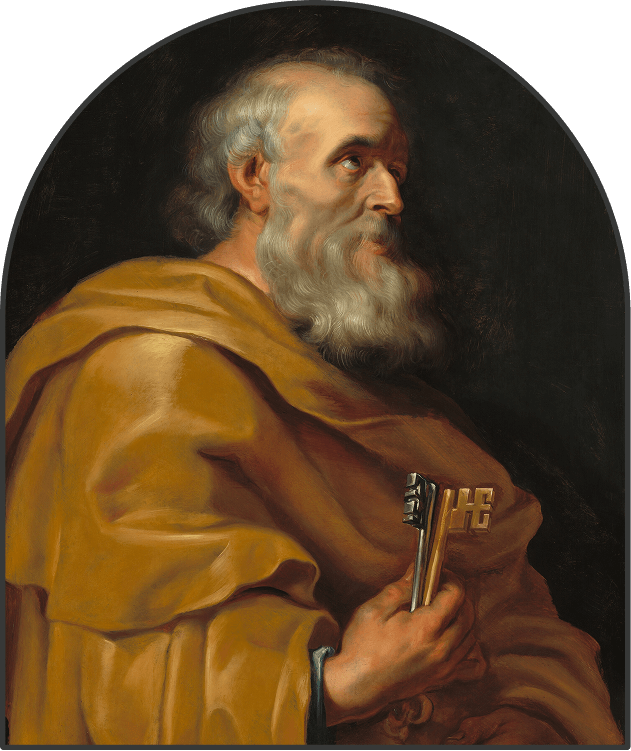
St. Benedict of Nursia: The Father of Western Monasticism and the Hidden Contemplative

Introduction
St. Benedict of Nursia (c. 480-547 AD), commonly referred to as the “Father of Western Monasticism,” is considered by many to be one of the most influential people in Christianity; yet, paradoxically, he is also one of the least well-known (in terms of concrete information). While St. Benedict was the author of the Rule that shaped the course of European civilization for over a thousand years and established monasticism as a form of community-oriented living inclusive of prayer, work, and community, he left behind no autobiography, written theological opinions, or substantial written correspondence.
The majority of what we understand about St. Benedict comes from St. Gregory the Great’s Dialogues (published over fifty years after St. Benedict’s death), which portrays St. Benedict through the lens of hagiography (as a miracle worker and virtuous person). The Rule itself—a small, practical, and highly insightful rule book—reveals a remarkably deep contemplative spirituality that includes a vision of everyday living as being continuously in prayer, communities as schools for divine service, and an ordinary life transformed through obedience, humility, and a search for God. The genius of St. Benedict’s work is not one of creating a new idea, but rather of his ability to take the wisdom of the Eastern desert fathers and adapt it to be used in the form of a sustainable and balanced community-oriented monasticism—that way of life has remained essentially unchanged for over fifteen hundred years.
From Roman Nobility to the Cave: The Great Withdrawal
Benedict was born around 480 AD in Nursia (present day Norcia), Italy, into a wealthy Roman family during the decline of the Western Roman Empire. By the time of his birth, the world around him was collapsing. The world was falling apart, with various tribes invading, ongoing political chaos, economic decline, and societal collapse. It was in this politically and socially unstable environment, where the traditional values of Rome had fallen apart, and where it was difficult to have any sense of how things would turn out.
As a young man, he was sent to Rome to attend school because he was a member of an elite social class. Although Rome was no longer the capital of the empire, it was still considered the cultural and intellectual centre of the empire. While in Rome, St. Benedict received his education in rhetoric, philosophy, and literature (as is the case with the education of the elite members of the Roman aristocracy). He was being prepared to take up a position in either the “administration of the empire” or maybe even in a clerical position in the church. His family connections made it possible for St. Benedict to secure one of these positions.
He was shocked by the moral decay that he saw in Rome. According to Gregory the Great, the city was filled with vice; the traditional virtues of the city had disintegrated along with civic order. Rome was noted for being violent, greedy, and engaged in sexual misconduct, as well as for corruption and political intrigue. St. Benedict, who had not yet reached adulthood, realised that the moral decay of Rome created a spiritually toxic environment for his serious search after God.
Around 500 AD, while he was still a teenager or very young adult, St. Benedict made a dramatic decision. He abandoned his studies, renounced his inheritance, and fled Rome.
He initially settled in Enfide (modern Affile) with his nurse who had accompanied him from Rome. But even this small town proved too populated, too social, too distracting. Benedict craved complete solitude. He slipped away without telling anyone, heading deeper into the wilderness, seeking isolation that Rome’s educational and social world had made impossible.
He found what he sought in a cave at Subiaco, about forty miles east of Rome, perched on a mountainside above the Anio River. Here, in this natural hermitage, Benedict would spend the next three years (approximately 500-503) in radical solitude, served only by a monk named Romanus who lowered food to him on a rope. This period represents Benedict’s apprenticeship in contemplation, his formation in the desert tradition even while remaining in Italy.
The cave symbolized death to the world and rebirth to God. Cut off from society, possessing nothing, known to no one except Romanus, Benedict entered into depths of prayer and self-knowledge that only such radical solitude enables. The silence was total, the solitude complete, the focus absolute. Here he battled his demons, purified his heart, and learned to pray.
The Cave Years: Temptation and Transformation
Throughout his life, from Subiaco’s years in the cave, Benedict experienced the early spiritual formation found among early desert monastics (those who withdraw from the world). The cave years of Benedict’s life represent a cycle of withdrawal from society, the struggle for spiritual perfection and climbing toward the contemplative life through gradual sanctity.
Pope Gregory the Great describes this great inner battle, as seen in the famous episode of Benedict’s fighting against temptation to sexual sin. While Benedict was in the cave and praying, memories came to him of a woman he had seen before; lust developed in his heart for her because of this memory and caused him to want to leave the cave. This compulsion was so strong that he almost escaped from the cave. However, at the critical moment, Benedict decisively acted: he stripped off his rough garment and jumped naked into a pile of thornbushes, rolling around in the thorns until he was covered with wounds. The pain from rolling in the thorns was enough to extinguish the lustful fire burning within him. Gregory reported that after that event, Benedict was never again tempted in that manner.
The literal or figurative narrative does reveal various aspects of Benedict’s spirituality:
First, it demonstrates the reality of spiritual combat—The desert fathers believed that withdrawal from external distractions allowed for greater intensity of internal battle. There is an essential honesty between one’s soul and self when free of external distractions.
Second, it shows Benedict’s decisive response to temptation. He did not wait for temptations to arise gradually, debate with them or entertain the thoughts and images of temptations. When confronted with temptation, he acted decisively and immediately. The principle of decisive action when confronting temptation became one of his greatest teachings. He repeatedly stated that temptation must be “dashed against a rock” before it becomes entrenched in a person.
Third, the story reveals his understanding of the body’s role in spiritual formation. The physical body is not an enemy of the spirit but is to work in conjunction with the spirit to encourage spiritual maturation. Physical injury can be used as a physical means to bring about an end to obsessive thought patterns or dysfunctional compulsions. Benedict’s use of extreme physical conditioning for a spiritual end rather than as punitive action provided individuals with the opportunity for liberation from self-destructive patterns of thought.
For years in the cave, Benedict dealt with all of the typical temptations encountered while striving for a life of contemplation. These would include: isolation, questioning one’s vocation, desire to return to comfort, spiritual barrenness, maintaining vigilance while there is no one from an outside presence providing accountability for it. The inner commitment was what sustained Benedict during the time he spent in the cave.
Over the years, Benedict underwent significant changes. The profound trials of being alone began to dissipate from Benedict’s life. He developed greater tranquility, clarity of thought and realization, as well as building an unshakable foundation of assurance regarding God’s purpose for himself. His interior turmoil began to transform into calmness. Additionally, he learned that amidst the seemingly chaotic world, an inner stillness undergirded all of life. In the midst of all of the distractions in one’s thinking, there is a deep silence within which God communicates with the individual.
Through his experiences in the cave, he also discovered the same truths other desert fathers had learned. By isolating oneself from all external distractions, one is able to arrive at a true understanding of one’s identity by stripping away the false identities created through social interaction. In the cave, without need to impress anyone, no status to maintain and no social role to perform, he discovered who he really was, both his sinful self and the image of God. As a result of his honest and thorough realization of who he was, Benedict was able to know true humility.
The years he spent in the cave were fundamental to the elements of his life that he would teach to all of the monks that he taught after he left the cave. The foundation consisted of the priority of prayer, the need for discipline, the importance of simplicity, the value of perseverance and the conviction that God must be placed above all things.
When his solitude eventually led to the emergence of creating monastic communities, all the three years of contemplation he had undergone would be the basis for the guidance offered to him by Benedict’s wisdom.
The Call to Community: From Hermit to Abbot
Benedict’s time as a solitary hermit ended once he had been found by some shepherds. News about the holy hermit soon spread throughout the surrounding region and people came to him seeking counsel, prayer, and blessings. After the passing of their previous abbot, the monks of the Vicovaro Monastery were in search of an abbot. Although Benedict was initially unwilling to lead the Vicovaro Monastery, due to their persistence, he eventually agreed to their requests.
The obvious happened afterwards. The rulers from Vicovaro opposed Benedict’s strict approach, as they had been accustomed to the comforts of life and were well aware of what was considered right (i.e. poverty and devotion to prayer). Gregory reports that the monks from Vicovaro connived a plot to poison him, but when Benedict made the sign of the cross over a cup of poison, it subsequently shattered (a miraculous occurrence) as proof that the intention of the poisoners was to murder Benedict.
Benedict walked away from Vicovaro with the knowledge that people cannot redefine themselves unless they desire to be defined differently. His experience with the community of Vicovaro showed him some of the most significant lessons he had learned regarding spiritual leaders. The first necessary step to changing someone’s life is the desire to change. A person’s intention to change is the path to reform; therefore, no one can be coerced into wanting to redefine themselves.
Benedict returned to Subiaco and began to form a group of disciples, who were seeking holiness out of a sincere desire for God rather than any obligation or compulsion. Benedict established twelve simplicities of monasticism of twelve monks each and was involved in the administration oversights of all of the individual monks of that day. This method of having small connoted that way, allowed a person to choose from the austere life of hermits to the rising popularity of organized, larger monasticism in Europe.
Once again, opposition arose in the form of a jealous priest named Florentius. Due to jealousy, he attempted to destroy his work through slander and poisoned bread. Instead of choosing to confront Florentius, Benedict withdrew, and in 529 AD, Benedict moved to Monte Cassino. His wise course of action represents the humility that he instructed in his Rule, to suffer an injustice, rather than seeking justice or defending his honour. His choice was to pursue a peaceful existence, rather than attempting to defend or safeguard his honour.
Monte Cassino is located on one of the mountains between Rome and Naples. Today, Monte Cassino serves as a historical landmark for the old pagan Temple of Apollo, which had been destroyed and replaced by the first erected church, where now the Monastery has been built. Monte Cassino served as the final resting place of St. Benedict from 529 AD to 547 AD. During those last years of his life, Gregory the Great became the first of many monks that would later go on to create and to maintain St. Benedict’s philosophy across Europe.
There is yet another dimension to St. Benedict’s journey from solitude to being a leader of communities— St. Benedict never disqualified a solitary lifestyle, nor did he disallow or state that a life of community was more significant than a hermitic existence. Rather, he recognised in his Rule that many hermits would someday return to their hermitic existence after experiencing and testing their faith in community; however, for the vast majority of individuals, communal living is the optimal method of preparing yourself to achieve unbroken unity with God. A life within these communal communities provides the opportunity for individuals to see the faults they have that can be overlooked by themselves; thus, a community of faith functions as an incubator for true transformation and an opportunity for individuals to alter their lives in a realistic manner.
The Holy Rule: A Manual for the Spiritual Life
The Rule of St. Benedict was written by him during the time he lived in Monte Cassino. It is not very large, only 73 chapters, and serves as a manual for anyone wishing to lead a life of solitude as a monk. In the context of Western Monasticism, it represents the beginning point for that way of life. While only briefly mentioning things like when to eat or get dressed, the Rule also contains some very profound insights regarding spirituality and how to achieve a balanced mind.
The first statement Benedict makes with regard to Monasticism is that it is a “school for the Lord’s service”. Therefore this will be understood by a monk as their reason for being in the Monastery—a way of learning how to become closer to God, to learn how to pray, and, ultimately, how to achieve a relationship with the Divine. All other structures of the Monastery, rules and practices, will serve the single purpose of serving God. A Monastery is not an end unto itself, it is a means by which individuals can learn how to live in the presence of God.
The Rule begins with a Prologue that establishes the spiritual foundation. expresses the foundation of the Monastery, spirituality. In this Prologue, Benedict speaks to “you”, or the reader or seeker, as someone wishing to find God, and invites you into a direct relationship with your divine master. The Prologue introduces the monastic way of returning to God through obedience, the undoing of Adam’s Fall, and therefore, the path of spirituality repeats the first steps of a new path.
The Prologue also states that: “We must prepare our hearts and bodies for the battle of holy obedience to his instructions.” Benedict indicates that there is work to be done on the part of the seeker, and that the path to authentic spirituality will not be easy and will involve struggle, effort, and sometimes painful purification. However, he also promises that “as we progress in this way of life and in faith, we shall run on the path of God’s commandments, our hearts overflowing with the inexpressible delight of love.” The beginning stages of this way of life are narrow and difficult, while the ending stages are broad and sweet.
The materials that are included in the Rule are both primary (practical) and secondary (spiritual) aspects of learning about Benedictine Spirituality. Therefore, one can see that the materials included in the Rule are not only for the instruction of the monks, but they also demonstrate the concept of how all mundane activities can be used to demonstrate sanctity and all humility can be a prayer.
The Rule of St. Benedict contains many chapters which require special attention to understand Benedict’s contemplative vision:
Chapter 4: The Tools of Good Works St. Benedict gives us seventy three “tools for working on our soul”. He provides examples of basic commandments (like “not to kill” and “not to steal”), ascetical practices (like “to chastise the body” and “to fast”), and contemplative attitudes (like “to prefer nothing to the love of Christ”). Each of these are not to be understood as arbitrary rules, but as practical wisdom for developing character through removing obstacles to prayer and setting the soul in the appropriate way to experience union with God.
Chapter 7: Humility presents Benedict’s longest spiritual teaching. In this chapter he identifies twelve degrees of humility, beginning with the source of pride, and develops these complete degrees to perfect love. He teaches that the path to humility will begin with external demonstration of humility through the use of the body, and will result in internal transformation through humility. This last degree is humility. Therefore, Benedict understands that virtue will indwell and permeate from the surface to the deepest interior of an individual’s soul.
Chapters 8-20: The Divine Office that structures the daily life of all monks. St. Benedict prescribes the eight times of communal prayer (Vigils, Lauds, Prime, Terce, Sext, None, Vespers, Compline), reminding us of the need to pray throughout the day for God to be present during each activity. As such, this practice became known as “custody of the heart”, the practice of returning to God in repeated interruptions of daily activities.
Chapter 48: Daily Manual Labor During the course of monastic life, monks divided their time between liturgy, private reading (lectio divina), and manual labor. This balance prevented the “idle state” from creating a state of spiritual torpor, as well as preventing the state of spiritual burnout from overwork.
Chapter 58: The Reception of Brothers illustrates St. Benedict’s thought process in discernment, both internal and external. The purpose for this chapter is to show how to best determine whether an individual has a genuine call to monastic life, rather than to escape the difficulties of life, or an idealistic view of monasticism. St. Benedict understood human motivation and the importance of understanding that genuine vocation must always accompany the search for God.
Throughout the Rule, Benedict emphasizes moderation, balance, and sustainability. He explicitly states that he establishes “nothing harsh, nothing burdensome” (Prologue), though by modern standards his prescriptions seem quite demanding. His moderation appears especially in comparison to the extreme asceticism practiced in some monastic contexts—Benedict prescribes reasonable amounts of food, adequate sleep, appropriate clothing. The goal isn’t spectacular austerity but sustainable practice enabling lifelong growth.
Liturgy of the Hours: The Work of God
The Liturgy of the Hours, which Benedict calls Opus Dei or “the Work of God,” is the monk’s primary occupation, while all of the other things he does — reading, manual labor, and administering — all point back to prayer. Benedict recognizes that prayer is not one of many things that a monk does; rather, it is the core element of monastic life.
Benedict established eight hours a day of the Divine Office to provide complete coverage for all 24 hours of a day. The early morning prayers, known as Vigils or Matins, are the longest office and include a lot of psalmody and a lot of readings and hymns. By praying in darkness, we are saying we are watching for Jesus to come back, while people around us are still sleeping.
The morning prayers (Lauds) take place at dawn and are considered the start of a new day. The office for Prime signals the start of a monk’s workday at approximately 6:00 a.m. The offices for Terce, Sext and None (9:00 a.m., noon and 3:00 p.m.) interrupt work for brief but important moments of reconnection with God. Vespers is the final office of the day and celebrates the end of the workday. Compline is the office that prepares the monk for sleep and the beginning of the Great Silence.
Benedict believed that communal prayer is essential to maintaining consciousness of God as we go through our everyday lives, which means that our focus on God will help us keep our attention off our immediate circumstances. He also knew that consciousness of God is a habit that we must constantly practice and develop.
The content of the Hours consists mainly of Psalms. Benedict recommends that each week the 150 psalms be chanted in their entirety. Being surrounded by the psalms makes them part of our consciousness and provides us with the language to speak to God in every human emotion and situation and in terms of the biblical understanding of how we see things.
In addition to the Psalms, the Hours include readings from the Bible and writings of the Church Fathers. This means that the content of the Hours will be continually reinforced by the biblical document and by the writings of the early Church. In addition to the readings, the Hours also contain hymns, which add a musical and poetic dimension to the offices of the Divine Office. The Hours contain prayers of intercession for the Church and the world, and therefore engage with the multiple dimensions of prayer, including verbal, musical, intellectual, emotional, and so on, and create a rich tapestry of prayer.
The communal aspect of the Hours is tremendously important. Monks come together to pray, and their voices are lifted in unity as they offer praise to God. The communal nature of prayer creates a bond between monks and eliminates the isolation that is so often present in our modern society. Benedict understood that praying together cements our commitment to monastic life, protects us from the dangers associated with isolation and offers a model of unity for the Church as Christ’s Body.
At the same time, the Hours prepare monks for personal prayer. Monks who memorise the psalms through the process of repeated recitation will have access to these texts for private prayer and meditation. The communal nature of the Hours establishes a pattern for how to maintain a God-centered life when alone. The Hours support and complement both communal and personal spirituality in their mutual support.
Benedict insists that the monks must pray the Hours attentively. He quotes the psalmist: “Sing wisely,” and “In the presence of the angels I will sing to you” (Chapter 19). Reciting the Hours without engaging mentally or spiritually in the prayers does not constitute authentic prayer. A monk must listen to the words of the prayers attentively and pray with a sincere and intentional alignment of heart and mind. A monk who prays seven psalms with attention and engagement is worth far more than fifty psalms recited mechanically.
Lectio Divina: Praying the Scriptures
Benedict encourages monks to spend a significant amount of time each day reading Scripture and spiritual texts through lectio divina. This method, which was passed down from previous monastic traditions, is an integral part of Benedictine spirituality as a bridge between liturgical prayer and manual labour, as well as between communal and individual meditative prayers.
The purpose of lectio divina is to slow down and become immersed in a text rather than skimming through the material to gain knowledge as one would on informational reading. It allows texts to speak to one personally and to have a transformative effect. Benedict specifies two to three hours daily for this practice during the appropriate seasons and even more during Lent, which illustrates its importance to spiritual formation.
Though Benedict does not outline them in his Rule, lectio divina contains different organic processes through which one can benefit from the text:
Lectio proper is the act of slowly reading and carefully considering each word and phrase, allowing the reader to receive the text in a patient manner.
Meditatio is the process of considering the meaning of what you have read (the literal definition of the word “rumination”) and allowing your mind and heart to think about the feelings and thoughts evoked by the text.
Oratio erupts out of meditatio, as the musings and prayer moments (thanksgiving, petition or intercession) develop out of your meditation on the text.
Contemplatio is the state of resting in God’s presence and simply being with God, as presented in the text.
Benedict places significant emphasis on reading during Lent and, in his Rule, states that each monk should receive a book from the library at the start of Lent and read it straight through, thereby allowing for a deeper engagement with one text. The texts will have a more significant impact on a monk over the course of weeks.
The communal aspect of lectio divina is apparent in the fact that Benedict instructs monks that certain times of the day are designated for reading. While monks are to be reading individually, the communal nature of the practice provides an incentive for mutual accountability and demonstrates prioritisation. During these periods, silence is to be maintained as much as possible, which in turn helps develop an atmosphere of contemplative reading.
Benedict is confident that the act of reading properly will lead to the natural progression of prayer and transformation. He does not provide an elaborate series of methods and instructions for monks to follow. He only provides time and texts and creates an environment conducive to contemplative reading. As a result, sincere seekers will be able to work through the processes of reading and engaging with the text.
Benedict’s teaching continues to be relevant today for modern-day Christians. We are inundated with information and exposed to an overwhelming pace of life. Lectio divina provides an alternative for the contemporary Christian: a slow, meditative, and transformative method of engaging with Scripture. In the current society of quick answers and fast processes, Benedict encourages individuals to spend a significant amount of time daily on practised lectio divina.
Ora et Labora: Prayer and Work Integrated
The motto ora et labora in Benedictine tradition, which stands for pray and work, reflects the integrated vision of Benedict’s life. Thus, all of the monk’s actions must serve a spiritual purpose. Work is not simply a necessity; nor is it something to be avoided during idle times—it is an avenue for sanctification or holiness through the participation of the monk in the act of creative divinity.
Benedict directed that all monks engage in manual labour, regardless of their origins. This means that both former aristocrats and former peasants were to work alongside one another.
Furthermore, monks toiling with their hands included those whose education was limited, while monks with a degree were educated to a greater degree than a majority of feminists would have liked. Benedict’s recommendation for monks to perform manual labour has resulted in several positive outcomes. It has reduced class differences within a community of monks; it has made the monks more self-sufficient; it has provided jobs and productivity for the bodies of monks; and it has provided a contemplative environment for the monk.
The actions of the monk engaged in labour—gardening, cooking, cleaning, and creating crafts with their hands—are both physically demanding, but they also allow the monk’s mind to be removed from the task he is performing during the time he is engaged in labour, allowing the monk to pray without losing his concentration. While a monk is weeding a vegetable garden or sweeping the corridor of the monastery, he is not only engaged in a manual task, but he is simultaneously participating in maintaining the presence of God.
In addition to prescribing manual labour, Benedict encouraged monks to engage in intellectual labour. Monasteries housed libraries and many monks were engaged in copying manuscripts, which preserved both classical and Christian literature through the Dark Ages. Benedict indicated that this type of intellectual labour served a two-prong purpose. First, it provided a source of literature for study and for use in public worship services; and second, it required the monk to concentrate and develop a disciplined tendency to read and study for the sake of serving God’s Church and a larger culture.
By combining prayer and work, Benedict has prevented what has been a major source of division in the world of spirituality. In opposition to those spiritual leaders who played the roles of only contemplative and dismissive of their earthly responsibilities, Benedict clearly states that all work should have its origin in prayer, and that our work should reflect our love of God through how we treat his creation and our community. Conversely, in opposition to those spiritual leaders who are so engrossed in religious activism, and thus disregard the importance of the relationship with God through prayer, Benedict has established that all of our activity must flow out of our communion with God.
Benedict’s schedule is in balance. The monk’s day includes fixed hours for praying to God through the liturgy, significant time for the monk to read, and sufficient time for the monk to engage in manual labour. Seasonal variations impact the ratio of these three categories of monk’s time. Winter’s increased hours of darkness allow for greater periods of rest and reading, while summer’s increased solar hours allow monks to work outdoors to complete the physical components of their manual labour. The flexibility of the yearly schedule reflects the wisdom inherited from the rule: to practice according to the current circumstances, while not compromising the foundational priorities.
The balance of prayer and work as it relates to longevity is quite obviously evident. The longevity of monasteries following Benedictine Rule, for over 1,500 years, is due to the fact that the recommendations provided in the Rule are appropriately adaptable for longevity. Too great a degree of asceticism ultimately leads to the destruction of one’s health. Too much time devoted to prayer leads to a lack of the necessities of life. Too much time spent in productive labour is detrimental to one’s spiritual development, and therefore cannot be sustained over the long term. The Middle Path established by Benedict allows for a lifelong commitment to each man living his life in accordance with God’s will.
In today’s world, it should be clear to the reader that for people who desire to be spiritual, it is essential to integrate both prayer and activity. Far too many people in today’s culture see prayer and activity as being in opposition to one another, rather than complimentary to one another. Benedict teaches that all of the ordinary works engaged in by individuals, when they are accomplished with the correct intention and with regular prayer, allow, by the act of being engaged in ordinary work, for the individual to engage in contemplation. Ultimately, the entire life of the individual becomes focused on prayer when one’s work is offered to God, and when prayer offers direction for the work.
Stability, Conversion, and Obedience: The Benedictine Vows
While the Rule doesn’t use the later Benedictine language of three vows, Benedict’s spirituality centers on three core commitments: stability (stabilitas), conversion of life (conversatio morum), and obedience. These represent not merely external promises but interior dispositions that shape the monk’s entire existence.
Stability commits the monk to remain in the community he has joined, not wandering from place to place seeking better situations or escaping difficulties. This vow addresses the “gyrovague” monks Benedict observed—wanderers moving between monasteries, never settling, avoiding the commitment that genuine transformation requires. The spiritual significance of stability is profound. Running from difficulties prevents the interior work they’re meant to accomplish. The irritating brother who triggers my anger becomes my teacher if I remain and learn patience. The boring routine that tempts me to seek novelty becomes my school if I persist and discover depth beneath surface. Stability forces us to work through problems rather than escaping them.
Stability also creates conditions for contemplative depth. Constantly changing environments fragments attention. Settling in one place, with familiar people and routines, allows consciousness to deepen. The same paths walked daily become occasions for prayer. The same chapel prayed in for years becomes saturated with accumulated devotion. Stability enables roots to grow deep.
Conversion of life (conversatio morum) commits to continuous transformation, to allowing God to reshape character progressively, to never settling for current spiritual state as adequate. This vow acknowledges that becoming Christ-like is a lifelong process, not achieved in initial conversion but requiring daily recommitment. This commitment challenges complacency. The monk who has faithfully practiced for decades might presume spiritual maturity, stop growing, settle into comfortable patterns. The vow of conversion demands perpetual openness to further transformation, recognition that however much progress has been made, more remains possible. Until death, conversion continues.
The vow also addresses the specific dimensions of monastic conversion—embracing poverty, chastity, community life, humility, and all the practices that constitute “monastic” (conversatio) way of life. It’s comprehensive commitment, not merely to pray sometimes but to order one’s entire existence toward God.
Obedience commits to submitting one’s will to the abbot and Rule, to living under authority rather than following personal preferences, to trusting that this surrender of autonomy serves spiritual formation. This most countercultural of monastic vows challenges contemporary emphasis on individual autonomy and self-determination. Benedict’s understanding of obedience has several dimensions. It’s obedience to God primarily—the abbot stands in Christ’s place, the Rule articulates divine will, community norms reflect gospel values. Obeying human authority thus becomes a means of obeying God, making spiritual submission concrete.
Obedience also functions as ascetical practice. Few things challenge the ego more directly than submitting to another’s direction when one disagrees. The monk assigned unpleasant tasks, corrected for faults, or denied preferred activities experiences death to self-will. This dying enables resurrection to new life where God’s will replaces personal preferences. Yet Benedict tempers obedience with wisdom. The abbot must consult the community, especially on important matters, because “the Lord often reveals what is better to the younger” (Chapter 3). Obedience isn’t blind submission to arbitrary authority but mutual discernment within community seeking God’s will together.
These three vows create a framework for transformation. Stability prevents escape, conversion demands growth, and obedience confronts self-will. Together they address the core obstacles to spiritual progress—instability that prevents depth, complacency that stops growth, and pride that resists surrender.
Humility’s Twelve Degrees: The Ladder to Heaven
Benedict’s seventh chapter, on humility, represents his most extended spiritual teaching and reveals his contemplative vision’s depth. Using the twelve points of humility that he identified and based on the writings of John Climacus who wrote The Ladder of Divine Ascent, there are twelve levels of humility that are manifested externally but in time shape the internal character of an individual.
The first degree involves keeping “the fear of God always before our eyes” (Psalm 36:2), to maintain the constant awareness of God’s presence. This fear is not the terror of a slave, but rather awe of the majesty of God. There is nothing hidden from our Creator and the fear of His presence will cause one to refrain from sin. Because how can you do something and have the same confidence in it if God were to see?
The second degree requires “not loving our own will nor taking pleasure in satisfying our desires.” The root of what causes sin is preferring our will over that of God’s will, and the desiring of satisfaction through the things God created versus desiring satisfaction through God who is the Creator. A good monk learns through this step to give up their wants, to accept what they are given versus trying to demand what they want.
The third degree involves “submitting to one’s superior in all obedience for the love of God,” imitating Christ who “became obedient even to death” (Philippians 2:8). This step tests whether or not you truly desire the will of God, or are simply pretending to desire the will of God, but desiring your own will.
The fourth degree maintains patience when obedience brings difficulties, injustices, or injuries, “enduring patiently” without complaint or abandoning the commitment. This addresses the tendency to obey only when it’s pleasant or agrees with personal judgment.
The fifth degree involves confessing “all evil thoughts entering one’s heart and the evil one has done in secret” to the abbot. The act of confession helps to eliminate any secret sin in your life. When sin is hidden, it gives it a hold on your life, and anything that has been exposed will lose its hold on you.
The sixth degree accepts “all that is harsh and difficult” with contentment, considering oneself worthy of any hardship. This step is not self-hatred, but rather realistic self-awareness. At this stage you ask yourself “I am worthy of what I am suffering”.
The seventh degree believes oneself “inferior to all and of less value,” not merely saying this but believing it in one’s heart. This is not simply an empty statement, but the belief that you are genuinely worthy of the least of all in regard to how you see yourself as compared to others.
The eighth degree is “doing nothing except what is endorsed by the common rule of the monastery and the example of one’s superiors.”At this stage, one should never expect to be treated with special privilege or exceptional status.
The ninth degree practices custody of the tongue, “controlling one’s tongue and remaining silent,” unless you are questioned or asked to speak, and not to speak too much. Speaking too much causes a person to be distracted, and many times serves pride instead of charity.
The tenth degree avoids being “easily moved and quick to laugh,” and to have the proper appreciation for the seriousness of life as a spiritual journey. It is not being without joy or happiness, but recognizing that there can be no depth of character unless there is an examination of our ultimate joy and happiness in Christ.
The eleventh degree speaks “gently and without laughter, seriously and with becoming modesty, briefly and reasonably,” and in speaking only in an appropriate situation using a few words.
The twelfth degree manifests humility exteriorly—in bearing, posture, and gaze. The humble monk’s very body expresses interior reality, head bowed, eyes lowered, always mindful of sins and judgment. This isn’t affectation, but a natural expression of genuine humility.
Benedict promises that the monk ascending these twelve degrees arrives at “perfect love of God which casts out fear” (1 John 4:18). As such, the monk who has completed all the twelve steps of humility will be able to achieve perfect loving of God, and from there on, continue to serve in the same manner of loving, not as an obligation, but as a natural expression of their character.
The evolution of one’s character through exterior disciplines to the ultimate transformation is indicative of the spirituality of Benedictine tradition. The transformation of character from the practice of external observances of humility to the internalized character of a humble monk is a continuous process that occurs with the monk during his life of serving God through controlling his tongue, bowing his head, enduring the burdens of others, and accepting the Will of God instead of his own personal will.
Community as School of Love
Benedict brings forth the idea of community versus solitary life through the service of Community (cenobitic) over that of Solitary ministry (Eremitic) monasticism, believing that in most cases, people develop spiritually much better when in fellowship than when alone in isolation. The Monastery serves as a “school for the service of Christ” in which through practical examples of Godly service, one can understand how to love and serve God and their fellow man.
Living in community means living together and serving one another each day, providing an opportunity for developing wisdom in life skills. By living in a way that provides for and nourishes your community (the Monastery), you will learn that many of the qualities one has imagined they possess may be hidden until one comes into contact with the opposite qualities of living with other individuals in the same community.
The life of the monk is structured; thus, all monks must be guided by the rules of life. This rule provides for and encourages others in the Monastery to serve one another out of a love for God and for each other.
For example, the weekly “kitchen service”, in which all monks participate in providing service to their brothers during the meal, then cleaning up the kitchen is an example of serving and being served through humility, developing an attitude of humility in serving others, and expressing a form of practical love through serving others.
Another important way for developing an attitude of love and humility is through caring for the sick. According to Chapter 36, Benedict felt that “the care of the sick must be higher than and above all else, so that the sick may be properly served as if they were serving Christ”. Providing love through visiting the sick room, tending to the needs of those who were unable to care for themselves, and extending patience to the sick is one way of providing “love” in a practical manner, not just as a form of pious action. Thus, caring for the sick goes beyond an effort to simply express love as a nice thing to do.
To complete the process of developing love and humility through mutual correction, Benedict prescribed a method of mutually correcting each other in a loving and compassionate manner. He suggested that when observing a brother acting incorrectly, the brother should gently correct the erring brother, then ask him privately to correct himself if he refuses, and finally, if the previous methods failed, involve the abbot. Through this procedure, there is a balance between dignity and love and serves to build discipline without the risk of discouragement.
The liturgical life of the Monastery is another means through which community is created among the monks. The prayer services create strong emotional bonds, and all the monks pray together eight times each day. When the voices of the monks come together to make their petitions to God through songs and prayers, as they do during the prayers, the community forms as one body praying to one God and being united in spirit with the soul of the community.
Although Benedict emphasized the importance of communal life, he also recognized that monks should have private cells in addition to communal living. He recognized that every monk requires solitude, yet also recognized that many monks require a gradual introduction to solitary life and to become “hermits”.
The balance of community life and solitary life is something that continues to be an important aspect of providing spiritual growth. Many individuals begin their spiritual journey seeking solitude to avoid dealing with the distractions and difficulties of communal living. Conversely, there are those who become immersed in the community and neglect their individual relationship with God. By doing both, individuals can achieve true spiritual growth with the aid of community and the empowerment of solitude.
Benedict’s Mystical Experiences
Unlike many saints, Benedict left no accounts of his interior prayer life, no descriptions of mystical states, no detailed articulation of contemplative theology. Gregory the Great’s Dialogues attributes several miraculous events and visions to him, but these tell us more about Benedict’s reputation than his interior experience. Yet certain episodes suggest profound contemplative depth.
The most famous vision occurred shortly before his death. Gregory describes Benedict standing at his window one night, absorbed in prayer, when suddenly “he saw a light coming down from above that banished all the darkness of night.” In this light, “the whole world was gathered up before his eyes in what appeared to be a single ray of light.” Benedict called to witness a brother who “saw the end of the vision” but not its fullness.
Gregory’s interpretation emphasizes that for one who sees God, creation becomes small. The soul gazing on divine light perceives all created things as limited and finite by comparison. This vision suggests that Benedict achieved mystical contemplation where the soul, illuminated by divine light, sees reality from God’s perspective, perceiving the relative insignificance of what ordinary consciousness considers supremely important.
Another episode involves Benedict perceiving his sister Scholastica’s soul ascending to heaven “in the form of a dove.” This vision of her death, occurring at a distance, suggests either clairvoyance or mystical knowledge granted by God. Such phenomena often accompany advanced contemplation, though Benedict’s Rule wisely doesn’t emphasize or seek them. Gregory also describes Benedict prophetically knowing distant events, reading others’ thoughts, and perceiving spiritual realities invisible to ordinary sight. While hagiographical embellishment may have enhanced these accounts, they suggest that Benedict achieved contemplative depth where boundaries between natural and supernatural, visible and invisible, time and eternity become permeable.
Yet Benedict’s true mysticism appears less in extraordinary phenomena than in his Rule’s wisdom. The text breathes contemplative depth—its understanding of humility’s transformative power, its vision of ordinary life as continuous prayer, its integration of action and contemplation, its balanced approach to spiritual formation. These insights emerge not from speculation but from direct experience of the realities described. Benedict’s reticence about mystical experiences reflects monastic wisdom that such things remain private, that broadcasting spiritual gifts breeds pride, that transformative experiences serve the individual’s formation rather than public edification. The genuine contemplative doesn’t seek extraordinary experiences or boast about them but focuses on faithful practice and character transformation.
The Death and Vision at the Window
Benedict died on March 21, 547 (or possibly 543—dates are uncertain), his death characteristically simple yet profound. Gregory describes him standing in the monastery chapel, arms raised in prayer, giving up his spirit while still praying. He died as he had lived—oriented toward God, maintaining prayer until the final breath.
The vision of the world in a single ray of light, occurring shortly before death, suggests that Benedict’s contemplative life culminated in mystical illumination. After decades of prayer, discipline, and community life, he achieved the vision he had sought—perception of reality from divine perspective, seeing all things in relation to their Creator. This vision validates the contemplative path Benedict established. The Rule’s practices—liturgical prayer, lectio divina, manual labor, community life, humility—aren’t ends in themselves but means toward this ultimate end: seeing God and, in that light, perceiving all else rightly.
Benedict’s vision demonstrates that the path he prescribed actually leads where it promises—to union with God and transformation of consciousness. The burial reflects monastic simplicity. No elaborate monuments, no grand ceremonies, just burial in the oratory he had established at Monte Cassino. The grave’s exact location was eventually forgotten during the devastations Monte Cassino suffered through subsequent centuries. This anonymity would likely have pleased Benedict, who emphasized humility above recognition.
Legacy: Shaping Europe and Christianity
Saint Benedict is a saint who had a profound influence on Western monasticism and on the Christian faith used to create European civilization. Saint Benedict of Nursia was a Christian monk who became a major force behind creating and shaping the development of monastic communities throughout the world during the early Dark Ages and up to the High Middle Ages. Monasteries established in the West by Benedict and the monks who followed his Rule were the primary centers for learning, education, and preservation of the classics in Europe. In addition to maintaining schools of monastic education, most Benedictine monasteries served as centers of learning and intellectual activity throughout the Middle Ages.
Most monasteries in Europe created by Benedict had a principal mission to provide spiritual direction to their members to be more like Christ. However, many Benedictine monastic communities also provided an environment where the habits and monastic life could bloom and to provide an environment where the community could come together in prayer and study. Monasteries created by St. Benedict provided an example to other types of monastic communities and formed and shaped the Western Church as we know it today. Much of what we understand about monastic living is the result of the spiritual wisdom of Benedict and the monastic lives of his followers.
Benedict’s influence on the Western Church is significant in that his Rule became the preeminent monastic rule in the West by the ninth century. By the early twelfth century, most monastic communities established were formed by the monks of the Benedictine tradition. His influence did not stop here; he was also responsible for developing and promoting many practices that influenced many Christian churches in the West and the development of secular knowledge and culture.
Benedictine monasteries pioneered new agricultural systems, restored abandoned fields to cultivation, created large scale water systems to help provide food and water sources for the population at large, and developed models for economic success that would contribute to the growth of medieval Europe. The practice of ora et labora (prayer and work) led to the creation of a new kind of community that combined both elements into one greatly productive unit. By emphasizing that prayer and practical abilities are both necessary for life, they showed the world how to be productive and have faith at the same time.
The practice of hospitality, being receptive to all who you’ll encounter, created a network of safe places for all visitors to travel. They offered hospitality to travelers who were denied shelter, helped those in need and provided a destination for all pilgrims. Monasteries provided safe and dependable housing for those traveling in medieval Europe and laid the foundation for communication, travel, and cultural exchange.
The development of Benedict’s liturgy had a profound impact on the Church. The Liturgy of the Hours, as it became known, created the framework for corporate prayer in the Western Church; the basis for Benedictine prayer was the recitation of the Psalms, a structured cadence of prayer throughout the day, and the commingling of Scripture and worship. Benedictine influence enriched the entire prayer life of the Church.
Benedictine influences persist today through many forms of individual spiritual expression, including the Cistercian Reform which produced a more rigorous observance of the Rule of Benedict by Bernard of Clairvaux and the Carthusians who combined the Rule of Benedict with a greater emphasis on solitary living than did other Benedictine communities. Mystics of the Middle Ages, such as Hildegard of Bingen, gained insight through the contexts of Benedict’s teachings. Movements to renew spiritual life such as Devotio Moderna emerged in the context of and were influenced by the spirituality of St. Benedict.
The Rule of Benedict remains relevant today due to its continued influence on many modern religious orders, both vowed religious and lay oblates, and on thousands of laypersons who associate themselves with a Benedictine monastery. They find ways to apply the sensibilities of the Rule of Benedict to the everyday realities of their lives. Benedict has provided all Christians, both contemporary and ancient, with a timeless message that balances the practices of prayer and work.
Conclusion: The Ordinary Path to God
St Benedict of Nursia calls forth the mystical ordinary path to God—a belief that the journey to God primarily happens through the faithful practice of ordinary disciplines over a lifetime rather than through extraordinary experiences. He provided a framework for establishing a community for both the individual and the community that would allow for genuine, heartfelt transformation of character without the disruption of extreme asceticism.
At a time when spiritual consumerism is on the rise and people are desperate for new techniques, St Benedict reminds us that following God is not about the exotic methods or intricacies; the path to God is achieved only through simple, faithful, and consistent practices: regular prayer, contemplative reading of Scripture, honest work, close relations with others, and humble service. Alone, the ordinary disciplines practiced for years provide more authentic transformation of character than any dramatic method of transformation.
The emphasis of the Rule of Benedict on stability encourages us to look for stability in community rather than abandon them to seek out new or better environments or communities when things become difficult. Instead of always running away from problems, St Benedict emphasizes that staying in place and dealing with difficult situations creates the most fertile ground for a person to experience meaningful transformation.
St Benedict has integrated the traditional principles of ora et labora (work and prayer), thereby eliminating the tension between action and contemplation (contemplation of God). Both elements of St Benedict’s work complement each other; a person can have productive work without a contemplative voice, while a voice of contemplation can only create breeze and smoke without tangible products (the work is called “fruit” of the voice). However, both prayer and work provide the entire spectrum of fullness of life (an integrated approach to accounting for all facets of one’s life).
Benedict defined a school of love—a community where no one can become holy independently of relationally, where an individual’s flaws become revealed and can be transformed through the love of all those who have committed themselves, for the sake of love, to that community. Such a school of love provides a context in which a person can become part of the community—a context through which love becomes concrete, rather than just a sentimental notion.
Most importantly, Benedict’s twelve steps of humility present a pathway that leads from the exterior forms of faithfulness to the internal transformation that accompanies true spiritual maturity. Transformation takes time; the development of internal faith takes time and discipline to retrain the mind, spirit, and body. In the spirit of St Benedict, the internalization of the way of life which he envisioned will take time; consequently, the external manifestation of what it means to have a strong and secure internal foundation will take a great deal of faithful practice.
St Benedict of Nursia is not a historical entity but rather still a dynamic individual present to us today as the Father of Western Monasticism. Through the Rule of Benedict, millions of Christians have found an avenue to go to God. St Benedict, through his lifetime of directing a community that restrained the external and cultivated the internal through a time of rich cultivation, provides the spiritual guidance of a practical, contemplative, and balanced life.
Within the practical means of prayer, community service, reading, and humility are the principles that form the cornerstones upon which all conscientious spiritual seekers can base their lives. St Benedict both clarified and provided insight into the way to experience the grace and blessings of God through the ordinary disciplines practiced every day, and he provided the framework through which the faithful may take another’s faith and share it with another to grow toward the God of St Benedict above anything else. St Benedict’s vision serves as a reminder that ordinary practices of faith will lead countless souls toward the God of Benedict.
Our Editorial Standards:
All our content on Christian meditation traditions, prayers, and spiritual practices is reviewed by Dr. Megan Remington, PhD, ensuring theological soundness and spiritual depth.
We draw from centuries of Christian contemplative tradition, citing respected theological sources, biblical references, and established spiritual practices.
Our team understands that spiritual struggles are deeply personal. We approach topics of anxiety, strength, healing, and peace with compassion and biblical wisdom.
We continuously review and update our spiritual resources to ensure they remain relevant and aligned with orthodox Christian teaching.
Each article clearly identifies our writers and reviewers, along with the theological sources and biblical foundations used.
 To guarantee that all of our information is accurate, we ensure that all our sources are reputable. That means every source is authenticated and verified to be backed only by medical science.