


 App Store
  Google Play
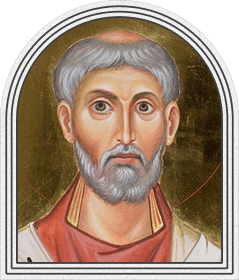
St. Clement of Rome: The Apostolic Father’s Life of Prayer and Divine Order

Introduction
St. Clement of Rome (c. 99 AD) lived during the early days of the church and gave us one of the earliest references outside of New Testament scripture to understand prayer and spirituality in the Early Church. The Fourth Bishop of Rome, Clement, was most likely a disciple of St. Peter and gives us insight into how the apostles viewed prayer and their relationship with God. Though there are no dramatic mystical accounts expressed in his writings, St. Clement’s immense theological understanding of prayer and divine order, along with a view of The Church as a community that is unified through contemplative harmony, indicates his deep spirituality and devotion to Apostolic teaching and the liturgy.
A Link to the Apostolic Age
Clement lived near the end of the era when those who had known Jesus or his apostles (both personally and from first-hand accounts) were still alive. According to Christian tradition, he is identified as the Clement mentioned by St. Paul in Philippians 4:3, and as such, is a direct connection from St. Paul. It has also been suggested that St. Clement knew St. Peter personally and may have been appointed by him as Bishop of Rome during the last years of the First Century.
His close contact with the apostles greatly influenced his spirituality and the way he practiced prayer. He did not need to guess or speculate about how early Christians viewed prayer; he learned it from those who received it directly from Christ himself, and every word he wrote gave testimony—through the atmosphere of prayer—of the devotion of those who had received their prayers through the Apostles.
Clement’s historical context when he was a minister to the Church in Rome also impacted his way of praying. He led the Church through periods of persecution established by Emperor Domitian; Christians were under social disapprobation, experienced economic difficulties or in some situations were subjected to martyrdom. In all these situations, prayer was not a religious or theological concept; it was a lifeline, a place of strength, and a method to keep one’s faith alive during times of trial and persecution. His spirituality was shaped during true suffering and by witnessing to his Faith.
The First Epistle: A Window into Early Christian Prayer
Clement’s First Epistle (c. 96 AD) to the Corinthians (from early letters to churches in which they addressed problems that existed in these churches) gives us a profound understanding of St. Clement’s spirituality. His writing expresses how St. Clement thought about prayer, and how order relates to prayer, and all aspects of life in their relationship with God. Although St. Clement’s letter is not an extensive interpretation of, or a mystical writing, it provides rich theological reflection and examples of the early Church’s communal and liturgical prayers available to them.
The letter opens with a prayer that immediately establishes Clement’s theological vision: “May the Creator of the universe preserve intact the number of his elect throughout the whole world.” Several things are clear from the above statement: First, it indicates a relationship with the Creator. Second, St. Clement is asking the Creator for the preservation of the elect, which displays Clement’s concern as a Pastor for the condition of Christians globally. Third, St. Clement possessed a universal perspective to prayer, as evidenced by this statement.
The author paints a clear picture of how prayer and biblical meditation are one thought process for the Early Church. They did not separate their thoughts about God from their conversations with Him, instead lived with a continuous flow of thought by being in constant conversations with God and prayed with their minds and hearts aligned with the presence of God.
Prayer of Humble Dependence
Clement’s spirituality centres on the human recognition of God’s sovereignty and the acknowledgment that humanity is dependent on God. He teaches that to pray requires that one has the right attitude, and that by doing so brings respect, humility, and trust together before God.
A very powerful example of St. Clement’s view of prayer may be found in one of his most touching and beautiful prayers located near the end of this letter: “We beseech you, Master, to be our helper and defender. Save those among us who are in distress, have mercy on the lowly, raise up the fallen, show yourself to those in need, heal the sick, turn back those of your people who wander.”
There are several important points regarding prayer from this prayer: First, it includes both intimacy with, and acknowledgement of, God’s sovereignty. In addressing God with the title of “Master,” he signifies that He has the authority to help all those who call on Him and the heart to assist those who are assisting Him. Second, it demonstrates that all human needs (lowliness, sickness, straying, etc.) are included in the prayers of St. Clement. His perspective on prayer is “earthy” rather than purely spiritual; he believed God has the power and mercy to assist participants of every need.
Third, in addition to being able to incorporate all of these people and all of their problems into prayer, the structure of St. Clement’s prayer is made up of a succession of imperatives. The reader should conclude that Clement had enough faith to believe he could approach God and assert his concerns with confidence and that he did not approach God presumptuously. Instead, he approached God with boldness—a boldness resulting from knowing oneself as a beloved child of God. To approach God with boldness through prayers such as these requires a contemplative depth and insight into the character of God that allows boldness in approaching God.
Meditation on Divine Order
Clement of Rome may have single-handedly developed one of the most profound concepts on divine order found in all Christian spirituality. He contemplates how creation has such a beautifully ordered harmony that it reveals who God is and provides a model for how we should relate to God and one another through our communality with God while praying together.
Clement spends much time reflecting on the orderly functions of day and night, the seasons of the year, and the orderly movements of celestial bodies within creation. He sees these periodic and orderly movements as evidence of God’s divine wisdom and the power of his stability. “The heavens revolve under his government and obey him in peace,” he writes, amazed at how the universe fulfills its ultimate purpose without discord. The sun, moon, and stars “complete their appointed courses in harmony” according to divine arrangement.
Clement does not simply observe natural phenomena from a scientific point of view, but rather he contemplates creation with eyes trained to see through to the Creator and to perceive in the natural order a window into the divine purpose of creation. In this way his contemplative awareness of the cosmos is an avenue through which he can enter into prayer and encounter God as the One who reveals himself through creation. This sacramental understanding of creation as revelation is central to early Christian spirituality and defines the rich potential for it.
Clement connects the idea of cosmic order to the life of the Church. Just as all created elements function harmoniously when they each do their appointed work, so too does the Church function in harmony when her members fulfill their appointed places and works within the Church. Clement encouraged the Church at Corinth to restore harmony to the congregation by submitting to their rightful leaders to stop their divisions and by returning to the order that God intended for them.
While the emphasis on order in Clement’s thinking may seem to diminish the potential for spiritual freedom in today’s world, this was far from the truth for Clement. He understood that true freedom is found only in submitting one’s will to the will of God; that to know God’s order is to live according to it, and to live according to God’s order is to attain true freedom. A person of contemplation understands that God’s “commands” are the way things are meant to be, therefore to pray for God’s order to be fulfilled in one’s life and the lives of others is to align one’s will with God’s order and receive interior peace that corresponds with the harmony of creation.
Liturgical Prayer and Community Worship
Clement’s epistle contains what may be the earliest liturgical prayers outside of the New Testament. From these prayers we can see how the Roman Church under Clement’s leadership conducted its worship in community, and how the liturgy influenced and reflected the Bishop’s prayer life.
One extended prayer near the epistle’s end demonstrates the characteristics of early Christian liturgical spirituality:
There are a number of key aspects of Clement’s spirituality to point out from this prayer. First, it shows Clement’s intercession for political authorities, as he followed the apostolic exhortation to pray for kings and those in authority. Even during a time when Christians faced persecution from civil authorities, Clement never ceased to pray for the well-being and effective administration of the Emperor.
Secondly, this prayer displays another attribute of Clement’s spiritual practice of theological reflection on the source of all authority exercised by earthly rulers. He does not merely acknowledge the existence of supreme rulers, but rather reflects on their authority as divinely derived, stated “by your infinite glory and power.” It is this contemplative insight—seeing through the worldly reality of supreme rulers to their divine source—which informs and determines how he responds to them.
Thirdly, from the structure and language of the prayer, it is apparent that this prayer was intended to be used within a liturgical setting for use during communal worship. The rhythm, balance, and order of thought all point to a prayer intended for corporate recitation rather than private meditation. Throughout his life, Clement’s spirituality was absolutely ecclesial in nature and formed by and expressed through the corporate prayers of the Church.
Clement’s epistle contains many examples of other prayers with similar liturgical characteristics, such as extended thanksgiving, confessions of divine attributes, and petitions for unity within the Church and an end to the division of the members of the Church. The prayers of Clement provide a look into his entire world of prayer, which was characterized by scriptural language, theological precision, pastoral care, and the reverent approach to God’s mystery.
Scriptural Meditation
Clement’s spirituality reflects a deep commitment to scriptural study. Over 150 citations or allusions to Old and New Testament texts appear in Clement’s epistle, showing the degree to which his mind had been shaped by the patterns of biblical thought. Rather than having a theoretical or academic knowledge of Scripture, he meditated deeply on Scripture, absorbing its contours, so that he might develop a prayer life that was influenced and directed by Bible-reading.
Clement meditated on the example of biblical virtues provided by the lives of patriarchs, prophets, and apostles. The example of Abraham’s faith, Moses’ humility, David’s repentance, and the courage of the apostles provided a source of inspiration for the way in which Clement sought to model his own life after theirs.
Clement’s interpretation of the allegorical and typological significance of the Old Testament passages with regard to Christ and the Church are another example of how his meditation on Scripture reflected his practice of meditation. Because of his understanding of the typological implications of the red cord of Rahab, he saw this example from the Old Testament as a type of the blood of Christ that would be shed to give salvation. This multilayered meditation of Scripture is one of the avenues of contemplative prayer, which allows one to be drawn deeper into the meaning of God’s Word as expressed in the historical narrative of the Bible.
A third way in which Clement allowed himself to draw on Scripture is as the source of his prayers. Like all of the prayers he prayed, Clement’s prayers were formed from quoting biblical phrases, such as the Psalms, the prophet’s prophecies, and the apostolic New Testament writings. The practice of praying through quoting Scripture is now a common method of praying for Christians. It became the central method of devotion for monastic traditions that developed in the Middle Ages and is often referred to as lectio divina (divine reading). Clement demonstrates this practice at the earliest known point in church history of praying the Scriptures to guide us in our prayers.
Clement’s extended pilgrimage into biblical humility illustrates another way in which he practiced contemplative meditation through Biblical reflection. Clement quotes extensively from Job, the Psalms, and Isaiah, allowing these Scriptures to speak for themselves about how lowly humans are in comparison to God. But he did not merely quote the Scriptures; he immersed himself in these apostolic writings, allowing the insights he found in these writings to shape his life. This is an example of how one can engage in contemplative reading and permit God’s Word to transform them instead of just giving them information.
The Virtue of Humility
Humility is the defining virtue of Clement’s spirituality and is found throughout his writings. It is through understanding the greatness of God and the smallness of man that we come to a right relationship with God. This is not an unhealthy self-hate, but rather a true knowledge of ourselves in relation to God.
A very important text to Clement is the book of Job and his proclamation of man as insignificant: “What is man, that you are mindful of him? Or the son of man, that you care for him?” He allows Job’s wonder to become his own, contemplating the mystery that the infinite Creator attends to finite creatures. This contemplation produces authentic humility, not as technique or achievement but as a natural response to perceived reality.
Clement considers Christ to be the ultimate example of humility. While he does not use some theological terminologies like kenosis (self-emptying), he does contemplate Jesus Christ’s descent from glory to humiliation, from the throne of heaven to the cross of earth. His contemplation on the humility of Christ expresses itself in the way Christians pray to God. As Jesus prayed to God—in complete submission, obedience and love of others.
Clement’s writing about humility in the letter to the Corinthian church has many characteristics of the Corinthian Issue. Their prideful competitive desires, and individualism all contributed to their contention with one another. To return to humility—the correct perspective of your position in relation to God’s order—and therefore, your preference for others should be above your own selfish desires and concerns—was the call to the Corinthian church. This is not just a call to be humble, but it is a return to an understanding of ourselves in relation to God’s order and therefore a way to rely upon others in submission to appointed leadership.
The relationship of humility to prayer is central to Clement’s spirituality. Humility in prayer affirms God’s authority, speaks plainly of our own shortcomings and fallen state, acknowledges our dependence on God’s mercy and recognizes that we will always be submitted to God’s wishes. The only way to receive this is to recognize the severe distance between God (the Creator) and man (His creation). The only bridge that fills this space of separation is God’s mercy through Jesus Christ as Saviour.
Peace, Unity, and Harmony
Clement believes that true spirituality consists of peace and unity in all parts of life. For him, divisions in the Corinthian church caused in part by these same factors (i.e., pride, ambition, and self-assertiveness) were deeply sorrowful, because they created much discord in a body that should reflect the unity and peace present in the body of Christ, and the absence of any discord. Peace is an essential element of our connection to God.
He encourages the Corinthian church: “Let us fix our gaze on the Father and Creator of the whole universe and cling to his magnificent and excellent gifts of peace.” This is solid encouragement. It tells us that if we seek to keep our hearts set upon God, in prayer, and holding on to the gift of peace that He has given us, we will come into alignment with the way God has arranged everything in His creation, through God, and will become a part of a unified and harmonious world.
The nature of ecclesiastical peace represents God’s better way of organizing creation and therefore should reflect how we operate within the Church. Just as the universe is free of conflict, with each of the celestial bodies moving in their proper place, free of contention; so too, should the Church remain unified as each member plays their part, fulfilling the role God has given them. Any form of division that is harmful to God’s purpose is also an indication of human disobedience to His divine order.
For Clement, the connection of hope in God’s Name, and emptying one’s heart to know God, leads to an understanding of what it means to have an experience of His presence. His prayer for unity has mystical depth:
This connection is telling. When we come into His presence through contemplative insight then we are inspired to be one with one another.
Clement’s exhortations to the Corinthian church include calls to eliminate the rivalries, to restore the deposed presbyters, to submit to the God-ordained leadership, and to place peace and reconciliation over pride and antagonistic disagreements. These exhortations are also backed by the inner experience of prayers and contemplative prayer.
Intercessory Prayer and Pastoral Care
Clement’s pastoral concern for the Church is readily evidenced by his prayer of intercession for others. He prays not only for his own soul, but also for the whole Church, the rulers of the earth, those who are afflicted with dire needs and circumstances, as well as the entire body of Christ. His prayers reflect the heart of a pastor concerned for those entrusted to him.
The prayers made near the conclusion of Clement’s epistle clearly show how Clement’s contemplative prayer life demonstrates his heart’s desire to bring all who are suffering and in need of mercy before God, so that God might provide for them. These are specifics of those whom Clement was praying for—individuals and situations on behalf of all men.
Clement was also cognizant of the importance of prayer for political leaders and prayed that God would bless them with “health, peace, harmony, and stability.” Praying for political leaders reflects Clement’s understanding of God’s authority, position, and sovereignty over all governing leaders. Since all governing authorities have been established by God’s sovereign permission, Clement’s prayer for their well-being demonstrates his desire to cooperate with God’s purposes in this area.
Clement’s intercessory practice reveals an important spiritual principle: contemplation naturally overflows into intercession. The soul that encounters God in prayer cannot help but bring others into that encounter, holding them in divine presence, pleading for their needs. Authentic mysticism never becomes purely individual but maintains catholic breadth, embracing the whole body of Christ and indeed all humanity.
The pastoral dimension of Clement’s spirituality also appears in his extensive moral exhortation. He doesn’t merely command virtuous behavior but holds up models for contemplation—biblical figures whose lives demonstrate faithful response to God. This contemplative approach to formation assumes that beholding goodness transforms us, that meditating on virtue gradually conforms us to what we contemplate.
Suffering, Martyrdom, and Divine Providence
The suffering, martyrdom, and divine providence experienced by the early church are intimately intertwined with the spiritual thoughts of Clement. He does not fixate on the idea of suffering or martyrdom but uses it to reflect on how God provides for Christians during their most challenging times.
By reflecting on how Peter and Paul suffered and were martyred, Clement uses them as examples of what faithful endurance looks like. Both of these men were examples of how Christians remained faithful regardless of the dire circumstances in which they found themselves.
Clement’s contemplation of the apostles’ martyrdom serves to honour Peter and Paul, provide followers of Christ with a model of faithfulness, encourage believers today to remain faithful even though they face similar trials and reflect on the mystery behind the accepted suffering for the sake of Christ.
The martyrdom of the apostles contained more than just admiration for their strong faith and willingness to endure persecution at the hands of the Roman Empire. Clement believed that through spiritual contemplation of martyrdom, he had gained an insight into the profound spiritual realities that martyrdom reveals. A significant aspect of this understanding is the connection between being united with Christ in death through suffering, the Cross of Christ, and the fact that nothing, not even death, could separate a Christian from the love of God.
Clement acknowledges that God permits suffering to take place in people’s lives: “We have fallen into these things because of our sins and transgressions.” He does not believe that this is a fatalistic attitude; rather, he contemplates the providence of God while wrestling with how suffering fits into God’s ultimate plan.
Therefore, Clement has the confidence that all trials and divisions serve God’s ultimate purposes, even when they are not comprehended at the time. Clement’s faith and trust in God’s mercy produce concrete results as he does not fall into despair or turn away from God because of his trials. He humbly confesses his sins and earnestly prays for God’s restoration and mercy. Clement’s spirituality demonstrates that through contemplative vision, a Christian can respond to suffering with faith and not bitterness, enabling him or her to endure patiently.
The Priesthood of Christ and Liturgical Offering
In addition to suffering and martyrdom, Clement contemplated the priesthood of Jesus Christ and Christian worship as the offering of spiritual sacrifice to God. While Clement’s theology of the Eucharist was not fully developed and defined in the terms typically used today, his understanding that Jesus Christ is the High Priest and the recognition that worship is an offering to God reflect the mysticism associated with Clement’s spirituality.
Clement stated,
Clement understood that the blood of Jesus Christ connects Jesus’ sacrifice on the Cross with the worship of Christ on behalf of believers. The act of prayer and the offering of prayer is an act of participating in Christ’s priesthood, and therefore believers are offered to God through Jesus Christ’s priesthood. This understanding is not merely a doctrinal statement; rather, it is the result of a contemplative reality gained through prayerful meditation on Jesus Christ being eternally the High Priest.
Clement also considered the Levitical priesthood and temple sacrifices of the Old Testament as types or foreshadows of the Christian practice of worship. Having contemplated how the Levitical priesthood, the temple and cultic practices, and the prescribed sacrificial system all pointed to the perfect sacrificial system provided by God through Jesus Christ, Clement’s typological and mystical contemplative approach allowed him to see how God’s purposes have been revealed through history and how the Old Testament and the New Testament Covenant have continuity with each other.
In Clement’s understanding, the Corporation of Worship and the Tradition of Worship combine to be an offering of the “sacrifice of thanksgiving”. Thankfulness provides God a means through which to sustain the world and create a renewed life in believers.
Clement’s spiritual vision reflects the idea that a person can pray and worship and simultaneously live a righteous life. In Clement’s thought, there exists an integrated spirituality whereby prayer and worship, the existence and practice of corporate worship, and the literal ethics of the believer cannot be separated.
Legacy and Influence
Although St. Clement of Rome’s influence on Christian prayer and spirituality cannot be confined only to the textual base of the letter in which are recorded his thoughts, the letter profoundly affected the Church and the development of Christian prayer through the history and church structure as it exists today.
Clement’s early church writings demonstrate a pattern of devotion that formed the foundation of how Christians prayed throughout several centuries. Elements directly from the epistle of Clement appear in many later forms of Christian liturgical texts, which indicates how influential Clement’s formulation of the structure of prayer was in creating a collective prayer experience.
Clement’s prayer structures have been widely copied and form the basis for how Christian prayer is commonly structured. He provides an individual model of how to seek after God through prayer and the collective expression of worship through communal worship.
The nature of God’s order and hierarchy of Church authority greatly influenced the development of future thought and expression on ecclesiastical structures. While some of the characteristics of Clement’s work may be criticised as contributing to the formalisation of charismatics, he provides a protection against chaos by providing a reflection upon apostolic teaching. By contemplating the cosmic order as a reflection of the intention of Christ in the world, he provided a theological foundation for the ordered community.
Clement demonstrates, perhaps better than any other early writer, that there exists a continuity between the apostolic origins of Christian spirituality and the ongoing development and expression of Christian spirituality throughout subsequent developments. He is a direct witness to the original apostles’ teachings and maintains a connection with the early Church’s understanding and belief in the person and work of Jesus Christ.
Clement’s Relevance for Contemporary Spirituality
Clement, Bishop of Rome, provides many gifts for contemporary spiritual seekers. His life illustrates that extraordinary depth of spirit can be achieved without experiencing extraordinary or esoteric means. Clement attained his level of spirituality through a life of faithful prayer, meditation on Scriptures, by building a relationship with an all-powerful God by way of humility and having pastoral concern for others. This all-encompassing spiritual path is available to every follower of Christ, not just the so-called spiritual athletes.
Clement shows us that through his view of divine order, we can respond to the disorganization and fragmentation in our current society. His concept of how the universe functions through cosmic harmony, expressed through the unification of the Church, is counter to the current individualistic and factional nature of our culture. While it is important to view his teaching on divine order through critical insight (to avoid adopting rigid authoritarianism), he still had a valid perception: Authentic spirituality must create peace, unity, and harmony because it aligns with the creative intent of God.
Clement provides the model for the integration of prayer and pastoral care, practical action and contemplative nature, public worship, and private devotion. His approach to spirituality did not identify and segregate his responsibilities towards his fellow men and his relationship toward God but rather identified all parts of his spiritual journey as interconnected. This integration of all areas of the spiritual life into one cohesive and complete whole offers a counterpoint to the growing segmentation of spiritual disciplines seen in our society today.
Clement’s use of the Scriptures in relation to Christian prayer reminds us that our prayers are to be biblically based. Therefore, when one takes the time to meditate upon the Word of God, he will be able to approach God with a spirit of humility, in acknowledgement of our feeble state, and rely on the merciful goodness of God. When faced with the overwhelming distractions of our world today, Clement teaches us the great power of sustained meditation on the Scriptures, which provides a depth of meaning that no amount of spiritual innovation could replace.
Clement’s practice of Christian humility provides a challenge to contemporary expressions of spiritual pride and consumerism. He stresses that we must present ourselves to God with an attitude of reverence and humility, being mindful of the smallness of humanity and the need for God’s mercy. By doing so, we are able to pray more accurately because we will correct our skewed view of who God is and how we approach God in prayer.
Conclusion: The Apostolic Spirit in Prayer
St. Clement, Bishop of Rome, provides the source for all Christian spirituality and sustains the prayer life of the apostolic Church. Though separated from us by almost 2,000 years, Clement’s voice rings out with an extraordinary freshness and continues to call upon all modern-day Christians to return to the foundational practices and ways of thinking that shaped the early Church.
The main components of Clement’s spirituality included: humility before the Creator, meditation on the Scriptures (forming one’s consciousness), liturgical participation in the Church, contemplation on the divine order of creation and God’s plan for us, and intercessory prayer (expressing love). All of these elements built upon one another, providing a unified and supported foundation for an integrated spiritual life.
Clement’s life gives testimony that the mysticism and contemplative practices we think of today did not originate with the asceticism of the Middle Ages, but rather, trace back to the apostolic Church. The Apostolic Church engaged in deep prayer, thought about the mysteries of God, experienced God’s presence and then lived their lives according to how God’s Spirit directed them. Clement witnessed and carried this message to future generations.
Those who desire a deeper prayer life should take note: Clement has provided us with simple practices (to meditate on the words of the Scriptures until our molds are formed into conformity with God’s will, to go to God with humility, to pray for others the same as for ourselves, to be aligned with God’s order of creation in all of our desires, to worship in community as well as in the private realm, to reflect on God’s sacrifice through Jesus and to place faith in God’s provision), all of which when done consistently lead to the opening up of the depths of spiritual reality that no discipline or technique of spiritual sophistication could achieve prior to the times of the Reformation.
Clement encourages us today to drink from the pure waters of the apostolic wells of spirituality, to pray as did those Christians of the earliest era and to think about the ways in which the Church has experienced the Lord throughout the ages. God has not changed since then, thus it is comforting to know that we are in unceasing continuity with the first Christians, experiencing the same power of God’s Spirit through us as they did. In returning to the perspective of Clement, we do not go backward to the past, but rather discover the eternal reality of the truth, which remains new and available to us to transform our hearts into surefire places for God’s presence in our lives.
Our Editorial Standards:
All our content on Christian meditation traditions, prayers, and spiritual practices is reviewed by Dr. Megan Remington, PhD, ensuring theological soundness and spiritual depth.
We draw from centuries of Christian contemplative tradition, citing respected theological sources, biblical references, and established spiritual practices.
Our team understands that spiritual struggles are deeply personal. We approach topics of anxiety, strength, healing, and peace with compassion and biblical wisdom.
We continuously review and update our spiritual resources to ensure they remain relevant and aligned with orthodox Christian teaching.
Each article clearly identifies our writers and reviewers, along with the theological sources and biblical foundations used.
 To guarantee that all of our information is accurate, we ensure that all our sources are reputable. That means every source is authenticated and verified to be backed only by medical science.