


 App Store
  Google Play
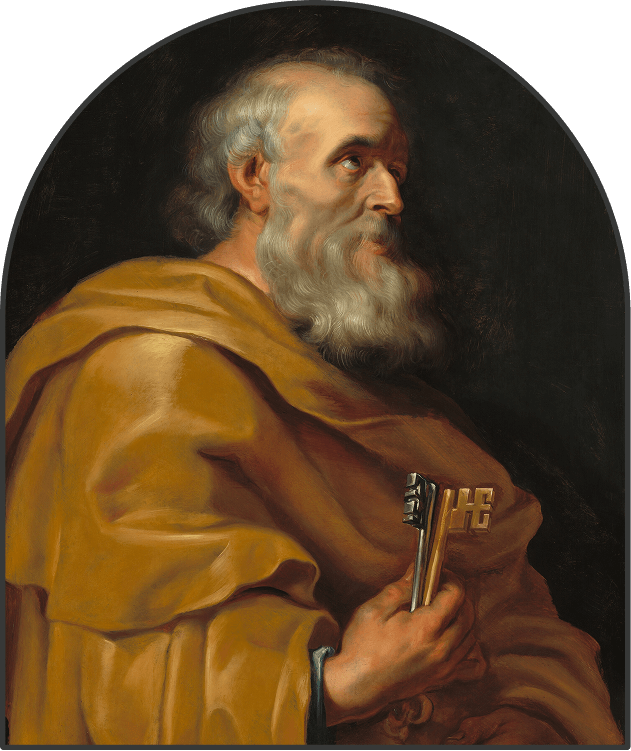
The Prayer and Contemplative Life of St. Cyprian of Carthage

Introduction
St. Cyprian of Carthage (c. 210-258 AD) stands as one of the early church’s most pastoral and practical theologians. Originally a high-ranking Roman official and a wealthy attorney, he underwent a radical conversion to Christianity in the middle of his life. After he was baptized (c. 246 AD), Cyprian became a bishop, leading and protecting many Christians through persecution.
The heart of his prayer life and contemplative practices as a Christian—including how to meditate on Scripture or communicate with God in prayer—was the transformation Cyprian experienced when he was changed from darkness to light .
Conversion: From Darkness to Light
Cyprian’s conversion around 246 AD marked a dramatic transformation that he described in deeply mystical terms. In his letter “To Donatus,” he recounted how he had been trapped in darkness, bound by sins, unable to believe that transformation was possible. Then, through the “second birth” of baptism, light flooded his soul.
He wrote:
A second birth restored me to a new man... In a wondrous manner, doubtful things at once began to assure themselves to me... I perceived that what had first lived in me, being born of the flesh, was of the earth earthly, but that which the Holy Spirit had inspired had now begun to be of God.
The experience of being born again is evident in Jesus’s words to Nicodemus: “Very truly I tell you, no one can see the kingdom of God unless they are born again” (John 3:3). he word “again” indicates how deep a transformation takes place during this second birth.
For Cyprian, this conversion process was not merely about acquiring knowledge but was an experience of God through the Holy Spirit. Cyprian continually reflected on how thankful he was for such an experience. For example, the feelings of gratitude and humility which he had were a constant source of motivation to be devoted to worshiping God .
Daily Meditation on Scripture
Cyprian immersed himself in Scripture daily. He constantly prayed with the Psalms while he was a bishop. The concept of lectio divina, which developed formally later on, was already present in Cyprian’s life as the practice of reading the Bible, meditating on it, praying for guidance, and coming to conclusions through contemplative thought about what the Scripture says.
He embodied the practice described in Psalm 1:2-3:
But whose delight is in the law of the LORD, and who meditates on his law day and night. That person is like a tree planted by streams of water, which yields its fruit in season and whose leaf does not wither—whatever they do prospers.
Cyprian writes about having daily ritualistic prayer as a means of thanking and worshiping God. In addition to having daily rituals, Cyprian also taught how to have a more relaxed experience with what it means to be a follower of Christ. During this time, Cyprian had a daily ritual of having his first prayer time on Sunday mornings and his last prayer time on Sunday evenings, corresponding to the hours of the Lord’s passion and resurrection .
The Prayer of Morning and Evening
Cyprian wrote extensively about the discipline of regular prayer throughout the day. In his treatise “On the Lord’s Prayer,” he described how Christians should pray at minimum in the morning, at the third hour (9 AM), sixth hour (noon), ninth hour (3 PM), at evening, and at night. These times corresponded to events in Christ’s passion and resurrection.
This practice reflected the Psalmist’s declaration: “Evening, morning and noon I cry out in distress, and he hears my voice” (Psalm 55:17). For Cyprian, regular prayer wasn’t mere duty but a loving response to God’s faithfulness. Just as God never ceased caring for his people, so his people should never cease calling upon him.
He taught that morning prayer consecrated the entire day to God, giving thanks for the night’s rest and asking blessings on the day’s work. Evening prayer reviewed the day with thanksgiving and repentance, entrusting the night to divine protection. This rhythm created a contemplative framework that sanctified all of life.
Contemplative Solitude During Persecution
St. Cyprian, along with many early Christians, experienced tremendous suffering as a result of the Decian persecution (250-251 AD). Cyprian went into hiding—a decision some criticized as cowardice. But he used solitude in prayer to gain strength and courage in order to continue leading the church in the face of adversity. While Cyprian physically withdrew from his congregation, the letters he wrote during this time reflected how deeply connected he was spiritually. Cyprian consistently included Scripture in his letters and provided pastoral direction to the church during the persecution.
Cyprian also found strength through his solitude when he prayed and contemplated how he could be a support for the suffering of other Christians. By using examples from Elijah’s experiences, Cyprian could identify with the prophet’s hiding in the wilderness and being able to hear God’s voice. During Cyprian’s solitude, he was able to hear God’s voice speaking to him about his connection to God.
Through this time of solitude, Cyprian was empowered to write about his experience with God’s mystery and drew closer to God .
Meditation on the Lord’s Prayer
Cyprian’s treatise, On the Lord’s Prayer, is one of the finest books about prayer by early Christians. It does not only contain a theological analysis; it also reveals the fruit of the years he spent meditating on the prayer Jesus taught and praying the prayer himself. Each phrase became a doorway into contemplative prayer and intimacy with God .
He taught that when Jesus said, “This, then, is how you should pray” (Matthew 6:9), he gave the entire school of spirituality, not just words. The Lord’s Prayer had all that was needed to enter into communion with God in the right way: worship, surrender, requests, confession, and protection.
Cyprian focused particularly upon “Our Father,” the radical privilege of a child addressing the Creator of the universe within the close relationship of a parental figure. It was not presumptuousness but the adoption given:
The Spirit you received brought about your adoption to sonship. And by him we cry, 'Abba, Father.
Romans 8:15
He meditated on “Hallowed be your name,” the prayer of worship showing that God’s glory was the greatest thing; before asking for anything for ourselves, we must give honor to God for His holiness. This was in keeping with Jesus’ teaching(Matthew 6:33).
Cyprian said of “Your kingdom come” that it applies both at the present and the time to come. He desired that God’s kingdom would reach into the hearts of many at the present time, and that Christ would hasten to the final victory of His reign. While “Your kingdom come” refers to both kingdoms, it kept Cyprian focused upon being engaged in the mission that God had for the present time, and in anticipation of being fulfilled with God’s kingdom at the end of time .
The Eucharist as Prayer
Central to Cyprian’s contemplative practice was the Eucharist, which he understood to be both a sacrifice and a sacrament. Both the act of Eucharist and having community with God became closely associated events in Cyprian’s life. He taught that the Eucharistic celebration is when Christ becomes an offering made present to the Christian church by allowing every individual member of the church to participate mystically in the once-and-for-all sacrifice of Jesus.
His meditation on Jesus’s words—”This is my body… This is my blood” (Matthew 26:26-28)—led him to see the Eucharist as the supreme Christian prayer. Through the Eucharistic celebration, they receive the very life of Christ and the very act of the body of Christ. Thus, through the joint action of the members of the body of Christ (the church), Jesus Christ is embodied in the world today.
Cyprian states:
If Jesus Christ, our Lord and God, is Himself the chief priest of God the Father, and has first offered Himself a sacrifice to the Father, and has commanded this to be done in commemoration of Himself, certainly that priest truly discharges the office of Christ who imitates that which Christ did.
This sacramental mysticism establishes Cyprian’s spirituality upon the objective work of Christ rather than subjective experiences. Cyprian’s contemplation of the Eucharist was centered upon the grace that the believer receives through the material elements in accordance with God’s command.
Prayer in Times of Plague
When the great plague fell upon the city of Carthage, Cyprian revealed the depth of his contemplative life through his response to this calamity. He did not see the calamity as an arbitrary act of God and consequently a random event in history; instead, he saw that God is always providential in our human experience. Everything we have comes from the hand of God, and we are all mortal and will pass into eternity. His writing of On Mortality is a demonstration of how Cyprian allowed the Scriptures, through contemplation, to provide shape in times of crisis.
He reflected on the words of St. Paul regarding living and dying: “For to me, to live is Christ and to die is gain… I am torn between the two: I desire to depart and be with Christ, which is better by far” (Philippians 1:21-23). This does not mean that Cyprian looked upon those who are suffering as being nothing but dead people, but rather viewed death through the resurrection and the victory of Jesus.
Cyprian prayed for the sick and dying. He did not see them as a problem to be ignored, but instead took action and organized care and support for the sick and dying, calling for Christians to show compassion and love for the victims of the plague. His contemplation of God’s Word enabled him to be in full support of all those who were suffering. He is a witness that a deep mystical experience produces love .
He meditated on Jesus’ promise: “Do not let your hearts be troubled. You believe in God; believe also in me. My Father’s house has many rooms… I am going there to prepare a place for you” (John 14:1-2). The assurance which Jesus gives at the time of death enables believers to see death no longer as the end, but as the opening of a new door into eternity in fellowship with Christ.
Unity of the Church in Prayer
Cyprian’s principle contemplation of the unity of the church came through the Holy Spirit. In his belief, the Holy Spirit establishes the unity of the church in bonds of peace. To be disunited within the body of Christ is an absolute spiritual tragedy, as this can be seen from Jesus’ prayer to the Father.
He reflected on Jesus’ words: “Holy Father, protect them by the power of your name, the name you gave me, so that they may be one as we are one” (John 17:11). For Cyprian, this wasn’t mere institutional unity but spiritual reality—the Church’s oneness reflecting the Trinity’s perfect communion.
His famous dictum—”He can no longer have God for his Father, who has not the Church for his mother”—came from a contemplative understanding that as Christians, we cannot live this life without being a part of the family of God .
When schisms threatened the church, Cyprian reacted with both firmness and prayer. Cyprian interceded for those who persisted in their error; he sought to build up unity among the believers, and maintained that righteous prayer must first have unity.
God does not accept the sacrifice of a dissentient person, but commands him to go back from the altar and first be reconciled to his brother, that so God also may be appeased with the prayers of a peacemaker.
Contemplation of Martyrdom
As persecution of Christians grew under Emperor Valerian, Cyprian’s focus on martyrdom grew even closer. It can be seen in the letters and treatises he wrote during this time; he was preparing himself through meditation and prayer to bear witness to Jesus through martyrdom.
Cyprian reflected on Jesus’ words: “Whoever wants to be my disciple must deny themselves and take up their cross daily and follow me” (Luke 9:23). When Cyprian refers to the “daily” cross, he attaches this to the ordinary Christian life in preparation for the literal cross of martyrdom; his contemplative practice was in the course of preparing himself for a self-offering to God.
Cyprian studied the accounts of previous Christian martyrs. The example and courage of these heroes gave Cyprian hope and strength. Their acknowledgment of God’s faithfulness was not an arbitrary acknowledgment but came from their submission to the grace of God. The encouragement Paul received from God’s grace is well expressed:
My grace is sufficient for you, for my power is made perfect in weakness.
2 Corinthians 12:9
Cyprian was ardent in prayer against his fears and did not deny that there would be a time of doubt. Yet, he fully acknowledged that he was guided by God, saying:
So do not fear, for I am with you; do not be dismayed, for I am your God. I will strengthen you and help you; I will uphold you with my righteous right hand.
Isaiah 41:10
The Prayer of Patience
Cyprian produced a work entitled On the Good of Patience, which expresses his thoughts on one of the greatest virtues of the Christian life. In his definition of patience, he describes it as an active waiting upon God to act according to His plan and timing. Therefore, patience is not merely to passively sit back and experience suffering, but to actively submit ourselves before God and His timing and allow Him to determine the proper outcome for extracting maximum benefit from our pain.
In that work, Cyprian recognized the connection to James’ instruction: “Consider it pure joy, my brothers and sisters, whenever you face trials of many kinds, because you know that the testing of your faith produces perseverance” (James 1:2-3). Cyprian also considered how Christ was patient with those who wronged him and that there would be a time of vindication by God for all Christians who suffered unjustly.
His conclusion about patience was also strongly related to the idea of eschatological hope. Therefore, Cyprian’s contemplation on patience was related to the prayers of the martyrs to God for their ultimate justice: “How long, Sovereign Lord, holy and true, until you judge the inhabitants of the earth and avenge our blood?” (Revelation 6:10). Yet he submitted his desire for vindication to God’s perfect timing.
Penitential Prayer
Cyprian’s prayer of repentance—a penitential prayer that included the contents of his prayer book—encompassed teaching about the need for all people who have fallen from the faith because they were being persecuted by pagan powers to repent genuinely before making a true return to God and His Church.
God desires for all people to repent and return. Cyprian emphasized this point by reading Peter’s words on repentance:
The Lord is not slow in keeping his promise, as some understand slowness. Instead he is patient with you, not wanting anyone to perish, but everyone to come to repentance.
2 Peter 3:9
Cyprian’s own prayer included intercession for the lapsed, asking God to restore them while maintaining church discipline. He balanced the Psalmist’s confidence—”The LORD is compassionate and gracious, slow to anger, abounding in love” (Psalm 103:8)—with the call to genuine repentance.
He meditated on the prodigal son’s return (Luke 15:11-32), seeing in this parable God’s heart toward repentant sinners. The father’s lavish welcome encouraged the lapsed to return; the celebration of restoration showed heaven’s joy over every repenting soul.
Contemplative Leadership
Cyprian’s response to criticism or opposition was often to trust God and allow Him to give the right answer. He did not answer them himself but waited. He wrote continual prayer in the name of God to help develop his Christian character.
Cyprian understood that godly authority is based on a relationship with God. So a Spirit-filled leader must have direct and regular communication with God. Many of Cyprian’s letters speak of the need to seek instruction from the Holy Spirit and pray before making any decisions about church issues.
Cyprian’s practice of leadership also incorporated an examination of his own heart. He understood that leaders must remain humble and dependent on God’s grace. He regularly prayed for himself in God’s presence by looking into his heart. He also regularly prayed for every person in his church who faced persecution. He sent letters to each one to provide comfort and encouragement, as indicated by the Apostle’s theme of intercession for others. He recognized that Christians needed both physical assistance and spiritual encouragement .
Cyprian’s practice of preparing his flock for persecution showed that he cared for their physical needs as well as their spiritual needs. Cyprian prayed for believers facing persecution and provided support through letters of comfort and encouragement.
Prayer for the Persecuted
Throughout his ministry, Cyprian maintained constant intercession for believers facing persecution. His letters reassure, encourage, and promise ongoing prayer. He understood that those suffering needed both practical support and spiritual sustenance.
He prayed Paul’s prayer for the Ephesians over his flock: “I keep asking that the God of our Lord Jesus Christ, the glorious Father, may give you the Spirit of wisdom and revelation, so that you may know him better” (Ephesians 1:17). He prayed they would grasp how wide and long and high and deep is Christ’s love (Ephesians 3:18).
Cyprian also prayed for persecutors, following Jesus’s command: “But I tell you, love your enemies and pray for those who persecute you” (Matthew 5:44). This prayer wasn’t easy—it required grace to genuinely desire good for those inflicting suffering. Yet Cyprian understood that Christians must reflect their heavenly Father’s character.
His intercession included prayer for governmental authorities, following apostolic instruction: “I urge, then, first of all, that petitions, prayers, intercession and thanksgiving be made for all people—for kings and all those in authority” (1 Timothy 2:1-2). Even while persecuted by imperial decree, Cyprian prayed for emperors’ salvation.
Meditation on Divine Providence
Cyprian’s contemplative life was based on meditative thoughts and study of the Scriptures regarding God’s providence. He viewed God as ordering every event to work together for good; this belief is not a false hope based on external evidence of goodness, but rather an internal belief based on what God has revealed through His Word in the Bible and in the continued history of God’s actions.
Cyprian based his understanding of God’s plan through consideration of Joseph’s response to his brothers regarding the event in Genesis: “You intended to harm me, but God intended it for good to accomplish what is now being done, the saving of many lives” (Genesis 50:20). Cyprian knew that God’s plan was to bring forth a great deliverance from famine for the benefit of many nations from a time of betrayal by his own brothers.
Cyprian’s understanding of God’s providential care in the midst of suffering enabled him to allow God to accomplish His purpose. Therefore, in the time of crisis, Cyprian kept focused on God’s purposes and trust .
He prayed with Paul’s confidence: “And we know that in all things God works for the good of those who love him, who have been called according to his purpose” (Romans 8:28). This wasn’t naive belief that nothing bad happens but firm trust that God remains sovereign and good through everything.
The Practice of Almsgiving
Cyprian viewed almsgiving as being as important as prayer. He wrote about care for the poor as an essential part of the Christian’s life, rather than being an optional act of charity. In writing his thoughts, Cyprian recognized Christ in the poor.
To Cyprian, almsgiving was also an act of worship through the giver’s generosity. Cyprian understood how Jesus was in the poor and needy: “Truly I tell you, whatever you did for one of the least of these brothers and sisters of mine, you did for me” (Matthew 25:40). Therefore, to serve the poor can be interpreted as prayer—to show a contemplative spirit through the actions of our physical bodies.
Cyprian made great efforts of relief during famine and plague to help meet the needs of the people. He believed that when one has a devotion to God, they need to put it into action by helping themselves and others. Cyprian believed that the mystery of a Christian’s faith was to be expressed as an active and vibrant following of Christ who “went around doing good” (Acts 10:38).
Cyprian taught that giving alms or sharing is a two-way street; the recipient is receiving from the giver’s generosity, while the giver is receiving cleansing of the greed from their heart and developing compassion to help those in need, just as Christ did. This is the same teaching as Jesus: “It is more blessed to give than to receive” (Acts 20:35). By giving alms, we open ourselves to the many gifts of generosity that God has given us .
Vigilance in Prayer
Cyprian emphasized constant spiritual vigilance, warning that Satan prowls seeking to devour believers (1 Peter 5:8). His contemplative practice included watchfulness—alert awareness of spiritual warfare, constant dependence on God’s protection, and immediate response to temptation.
Cyprian taught that the principle weapon Christians have in the war against the enemy is to be prayerful. When Paul wrote “pray in the Spirit on all occasions with all kinds of prayers and requests” (Ephesians 6:18) he meant that a Christian should maintain an “awareness of prayer” daily, not only at formalized times of prayer.
Being vigilant to pray does not mean you should be anxious; rather, it is a reality of having confident faith and being aware that there are spiritual enemies around you. Cyprian was fully aware that the enemies of Christians are real; however, he was also aware that Jesus has already defeated those enemies. Thus, through prayer, we are able to claim Jesus’ victory over attacks.
Cyprian exercised discernment, whereby he tested every spirit and doctrinal teaching against the doctrine left by the Apostles. Cyprian wrote: “Dear friends, do not believe every spirit, but test the spirits to see whether they are from God, because many false prophets have gone out into the world” (1 John 4:1). Cyprian’s contemplation also included theological vigilance in guarding the truth through prayer and study.
Final Preparation for Martyrdom
When Cyprian was arrested, he faced execution with a calm spirit, as he had spent many years of contemplative time preparing himself spiritually for the day of execution. As evidenced by the trial transcript, Cyprian showed a spirit of calm and a firm belief in the Lord, an articulate testimony of his faith, and a readiness to die for Christ.
Cyprian reminded himself that no one should be afraid of those who kill the body, because they cannot kill the soul: “Do not be afraid of those who kill the body but cannot kill the soul” (Matthew 10:28). Death held no terror for one who had contemplated Christ’s resurrection and believed the promise:
Because I live, you also will live.
John 14:19
Cyprian encouraged his fellow Christians and even gave the executioner gold. Cyprian shows his ability to love those who treated him as an enemy and to focus on his friends in that moment of pressure rather than on his own suffering. In the end, Cyprian maintained dignity and compassion.
His last prayer would have been echoing the last words of Jesus: “Father, into your hands I commit my spirit” (Luke 23:46). Cyprian died with a prayer on his lips, as a result of a lifetime of prayerful contemplation, transitioning directly from earthly worship to heavenly worship .
Legacy of Pastoral Mysticism
Through Cyprian, the church sees the model of pastoral mysticism: active and practical ministry tied with a spirit of mysticism. It is a personal devotion that translates into action in service to the community and a spiritual union with Christ through sacrificial love for Christ’s flock.
Cyprian’s spirituality was not esoteric nor individualistic, but based on the Bible, rooted deeply in community, and grounded in active and practical parts of his life as a bishop. As a bishop, he could be a mystic—an administrator can be a mystic. The burden of leadership that comes with shepherding a flock did not preclude him from maintaining a rich prayer life .
Conclusion
St. Cyprian of Carthage declared that when a person experiences true conversion, every aspect of that person’s life is transformed. The Scriptures will shape the soul of a man; prayers will sustain a person during the time of persecution; contemplation will equip a man for martyrdom. His life was an absolutely close parallel to that of a pagan rhetorician turned martyred bishop, demonstrating how a person can experience growth through communion with God through regular prayers, meditative Scriptures, and the sacramental offering of Christ.
May each of you move from darkness to light as Cyprian was by being born again. May each of you continuously meditate on the Word of God day and night, until it becomes your native language! Approach the Eucharist as a mystical union with your Savior sacrificing Himself for you! May each of you have a spirit of peace toward the body of Christ!
May each of you find calm and confidence in your life like St. Cyprian, knowing that “the one who is in you is greater than the one who is in the world” (1 John 4:4), and that nothing “will be able to separate us from the love of God that is in Christ Jesus our Lord” (Romans 8:39).
To God be glory forever. Amen.
Our Editorial Standards:
All our content on Christian meditation traditions, prayers, and spiritual practices is reviewed by Dr. Megan Remington, PhD, ensuring theological soundness and spiritual depth.
We draw from centuries of Christian contemplative tradition, citing respected theological sources, biblical references, and established spiritual practices.
Our team understands that spiritual struggles are deeply personal. We approach topics of anxiety, strength, healing, and peace with compassion and biblical wisdom.
We continuously review and update our spiritual resources to ensure they remain relevant and aligned with orthodox Christian teaching.
Each article clearly identifies our writers and reviewers, along with the theological sources and biblical foundations used.
 To guarantee that all of our information is accurate, we ensure that all our sources are reputable. That means every source is authenticated and verified to be backed only by medical science.