


 App Store
  Google Play
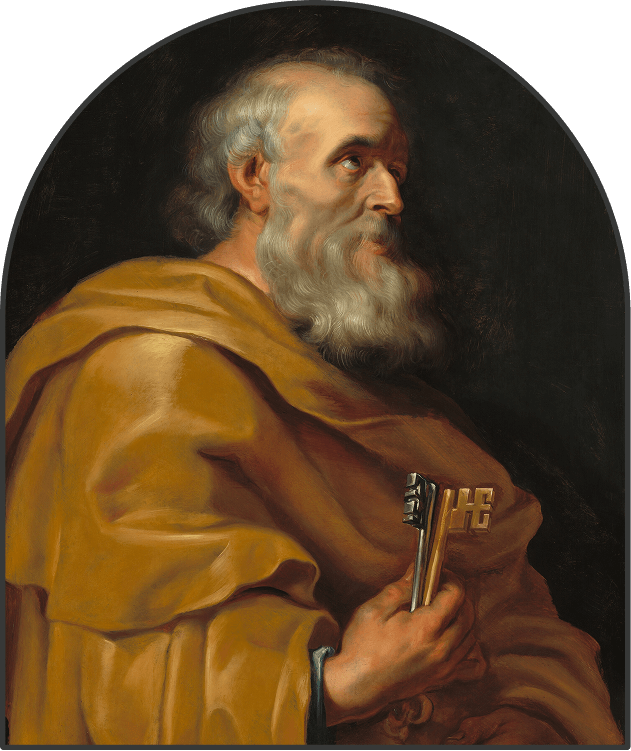
The Prayer and Christological Vision of St. Cyril of Alexandria

Introduction
St. Cyril of Alexandria (c. 376–444 AD), Patriarch and Doctor of the Church, was a great scholar of Christianity and also a staunch defender of the union of the divine and human natures of Christ. His reputation is mainly due to his fierce opposition to Nestorian heresy and his involvement in the ecumenical council of Ephesus (431 AD), but he was also an intense contemplative. He was known for his great precision in theology, which came from many years of prayer and mystical contemplation of the Incarnation, and a reflection on how the mystery of the Word made flesh impacted his understanding of salvation, sacraments, and the Christian way of life. Though he is often remembered for his many disputes with heretics, his life shows that both belief and mystical experience unite to produce true Christianity—the ability to meet and know Christ comes from a right understanding of who He is.
Formation in Alexandria’s Theological Tradition
Cyril was born in Alexandria about 376 AD, the nephew of Theophilus, who served as patriarch of the city. As a child he received a thorough education in Scripture, theology, and the classical schools of thought that existed in Alexandria; his education is rooted in the unique theological tradition of Alexandria, a tradition that includes both Origen and Athanasius.
The Alexandrian tradition emphasized an allegorical approach to the interpretation of Scripture, which sought out the spiritual meaning of a text beyond the literal meaning. Through reflection upon the various levels of depth that existed in Scripture, the Alexandrians viewed each text as an invitation to a spiritual encounter with Christ and thus required prayerful contemplation of the Scriptures. Cyril was educated in this tradition and he continued to develop this contemplative approach to include developing a focus upon a better understanding of the nature of Christ.
Cyril contemplated the teaching of St. Paul in regard to this approach:
The person without the Spirit does not accept the things that come from the Spirit of God but considers them foolishness, and cannot understand them because they are discerned spiritually
1 Corinthians 2:14
Cyril came to see that in order to read spiritual texts, one must read them spiritually; when contemplating, one is led by the Holy Spirit.
Cyril’s theological education also included very intense study of the works of St. Athanasius, who was perhaps the most powerful defender of the divinity of Christ against the Arian heresy. Athanasius taught that salvation requires Christ to be truly God—only God can save, therefore the Savior must be divine. This understanding of salvation became an integral part of Cyril’s theology. Cyril also saw that soteriology comes from Christology. Having the proper belief regarding the nature of Christ leads to having the proper understanding of salvation.
Becoming Patriarch
Cyril was appointed to the position of Patriarch of Alexandria when Theophilus died in 412 AD, making him, at the time, one of the most influential men in the church. He was very young when he became Patriarch, approximately thirty-six years of age, and suddenly thrust into a role requiring administrative skill, pastoral wisdom, and theological acumen.
As Cyril accepted this great responsibility, he viewed the position of Patriarch to be a sacred trust. He meditated deeply upon the charge Christ gave to Peter:
Feed my sheep
John 21:17
As a shepherd, Cyril was responsible for the spiritual well-being of his flock, that is, he was to protect them from false teachers, feed them with the truth, and lead them to Christ.
As a result of this responsibility, Cyril had as much a prayer life devoted to intercession for the whole Church as he did to teaching the Church about Jesus. He prayed for the priests and deacons under his care, for all who suffered persecution and tribulation, and for unity among all Christians. In a manner similar to Paul, Cyril would have said:
Besides everything else, I face daily the pressure of my concern for all the churches
2 Corinthians 11:28
Cyril understood that to lead, one must be holy. A leader cannot shepherd another if he is not continuously shepherding himself. Cyril’s life included a disciplined life of prayer, meditation on God’s Word, and ascetic practices—not to earn salvation by works, but to continue to be open to cooperate with the grace of God so that one is spiritually prepared for ministry.
The Centrality of the Incarnation
For Cyril, the primary focus of his prayer and contemplation was on the mystery of the Incarnation—how the eternal Word of God became man and how He never ceased being God. Cyril devoted an enormous amount of his time to meditating upon this concept contained in the words of John:
The Word became flesh and made his dwelling among us. We have seen his glory, the glory of the one and only Son, who came from the Father, full of grace and truth.
As he devoted himself to this meditation, he began reflecting upon how both the divine nature and the human nature are present in the one Person of Christ, and the implications of this union of divine and human are far-reaching. How one understands this union directly impacts how one views salvation, worship, Mary’s role, and how Christians would exist.
Cyril also meditated upon the following words of Paul:
For in Christ all the fullness of the Deity lives in bodily form.
The entire divine nature—not partial divinity or diminished deity—dwells in Christ’s human flesh. This union is intimate, permanent, and complete. The person of Christ is one, though possessing two natures.
Cyril coined the term “hypostatic union” —union at the level of person (hypostasis) rather than nature. Christ isn’t two persons (divine and human) somehow connected, but one divine person who has assumed human nature. This distinction preserved Christ’s unity while affirming his full divinity and humanity.
His contemplation led him to the doctrine of “communication of idioms” —attributes of both natures can be predicated of the one person. Therefore one can rightly say “God was born” (referring to Christ’s human birth) or “the man created the universe” (referring to his divine power). The person is always one—the eternal Son who became incarnate.
Meditation on Theotokos
When Nestorius, Patriarch of Constantinople, rejected the title Theotokos (God-bearer) for Mary, preferring Christotokos (Christ-bearer), Cyril recognized the Christological heresy implicit in this seemingly minor distinction. This misunderstanding is what drove Cyril to have an intense and consistent “meditation” on the meaning of the Incarnation.
Cyril used Elizabeth’s statement made in Luke 1:43 to support his belief that Mary is indeed Theotokos. If Elizabeth referred to Mary as “the mother of my Lord” (the divine title), then Mary is indeed able to be called Theotokos, i.e., she is the Mother of God who bore God within her womb. To deny this implies that Mary bore only human nature, not the person who is God the Son.
Cyril recognised that Nestorius viewed Christ as existing as two separate individuals—one divine and one human—with very little connection between them. In this light, if Mary were not to be referred to as Theotokos, then the child she was pregnant with was not God. However, in fact, during conception, He is referred to in Scripture as Emmanuel— “God with us” (Matthew 1:23).
In the contemplation of this, Cyril realised that declaring Mary to be Theotokos preserves the true nature of the Incarnation as expressed in the faith of the Church; that the eternal Word does not simply possess a body, but became Jesus and assumed, personally His human nature and made it His. Therefore, from the moment of conception, the child within Mary was and is the Second Person of the Blessed Trinity.
This contemplation regarding Mary was not simply glorifying her but was actually a Christological statement. It also serves to exalt Christ, for the ultimate honour of Mary is to attest to that reality, i.e., that Christ is indeed God.
Cyril contemplated these statements from the perspective of a paradox: Jesus, the infant being nursed at the breast of Mary, is the Creator of the universe and all things within it; the child she held in her arms is the one who sustains all of creation and continues to exist eternally as God.
Prayer During the Nestorian Controversy
The conflict with Nestorius was an intense test of Cyril’s Christian faith and spirituality. A disagreement with respect to Christology became a theological battle of ecclesiastical crisis proportions; it quickly involved the emperor and the various ecclesiastical councils and the political ramifications of the controversy.
As Cyril faced the crucible of the Nestorian controversy, he relied on fervent prayer to guide him. He continued to render his prayer to the Holy Spirit according to the promise:
But when he, the Spirit of truth, comes, he will guide you into all the truth
John 16:13
Cyril trusted that the Spirit would preserve orthodox faith despite human failures and political complications.
Cyril prayed for Nestorius personally as well, hoping to lead him to the truth, not destruction. He realised that his adversary was a brother in Christ; therefore,
Love your enemies and pray for those who persecute you
Matthew 5:44
Even while opposing Nestorius’s theology fiercely, Cyril sought his spiritual good.
Cyril’s prayers during this crisis also were for wisdom in navigating the ecclesiastical politics. The controversy called for both theological clarity and pastoral wisdom, knowing when to hold fast to the truth, on which doctrines can be compromised, and the manner in which to tell the truth, without alienating possible allies among the bishops and others.
While facing such chaos, Cyril relied on Jesus as the source of his unification. Consequently, he reflected on Jesus’ High Priestly Prayer recorded in John 17:21:
that all of them may be one, Father, just as you are in me and I am in you.
True Christian unity is the unity of the Blessed Trinity (Father, Son and Holy Spirit)—Christians are one because they all participate in the divine life of God.
The Council of Ephesus (431 AD)
The Third Ecumenical Council of Ephesus became the climactic event in Cyril’s struggle against Nestorianism and for the truth of the Church. Cyril led the orthodox faction of the Council and continued to proclaim both the title of Theotokos and the doctrine of the true personal union in Christ. The votes from this Council confirmed Cyril’s beliefs and therefore represented both a theological victory and spiritual vindication.
However, the process of the Council was a chaotic combination of political tricks, procedural conflicts, rival meetings, and a schism before restoration took place. Cyril’s example is evidence of the reality that, although defending the truth can seem messy and ambiguous, righteous causes necessarily involve difficulty, and while experiencing spiritual victories through confusion, the individual person must go through complex human emotions.
Throughout the deliberations of the Council, Cyril prayed for God’s direction amid the turmoil. He modeled King Solomon’s prayer:
So give your servant a discerning heart to govern your people and to distinguish between right and wrong
1 Kings 3:9
He required wisdom so that he could navigate between the competing interests of those present at the Council, while still being faithful to God’s Call and to the holy truth.
Cyril’s understanding of the Theotokos, as confirmed by the decision of the Council, evidenced his contemplative devotion to God, as he knew that defense of the title would protect the unity of Christ and affirm that true Christology is a matter of salvation, as well as genuine prayer-informed theology serves the Church, more effectively than mere academic speculations.
Mysticism of Deification
Cyril’s spirituality is formed primarily around the belief in theosis, that is, the idea that God wants each individual to be included in the divine nature through being united with Christ. This does not imply pantheism (that people become God essentially) but rather transformation (that humans share in God’s life through grace).
Cyril reflects on the following scripture:
Through these he has given us his very great and precious promises, so that through them you may participate in the divine nature, having escaped the corruption in the world caused by evil desires.
Through contemplating this verse, Cyril realized that deification is only possible through the Incarnation of Christ. Only because God assumed human nature can humans participate in the divine nature of God. Jesus came to earth so that humans could ascend to heaven; He took on our human nature so that we could share in the life of God; He unites us with the divine by joining our humanity with God’s divinity.
The emphasis of Cyril’s mystical theology is that deification occurs through one’s union with Christ, especially through the Eucharist. Through the Eucharist believers receive the Body and Blood of Christ, and as a result, they share in the life of Christ, progressively becoming more like Him.
As Cyril meditates on the prayer of Jesus:
I in them and you in me—so that they may be brought to complete unity
John 17:23
This mutual indwelling—Christ in believers, believers in Christ—describes deification’s mystical reality. The branch participates in the vine’s life (John 15:5), becoming fruitful through organic connection.
Eucharistic Contemplation
For many years Cyril has contemplated the presence of Christ in the sacrament of the Eucharist, and as a result, he developed an extensive understanding of the Eucharist as both a sacrifice and a meal, and as both an abstract mystical truth and as the actual means of grace to the believer.
Cyril reflects on the words of Jesus:
Very truly I tell you, unless you eat the flesh of the Son of Man and drink his blood, you have no life in you. Whoever eats my flesh and drinks my blood has eternal life, and I will raise them up at the last day
John 6:53-54
In Cyril’s understanding, the Eucharist creates actual union between the believer and Christ, and is not merely a symbol or a spiritual experience, but a real participation in the life-giving flesh of Christ. The consecrated bread is truly the Body of Christ, and the consecrated wine is the Blood of Christ. When believers partake of them physically, they enter into the most intimate relationship with Christ.
Cyril’s contemplation also highlights the transforming power of the Eucharist. Food becomes the flesh of the person who consumes it. If this is true physically, the same can be said for believers; when they consume the Body and Blood of Christ, they become transformed into His likeness and become “bearers of Christ.”
Cyril interpreted the Eucharist to also confirm the resurrection. By consuming the incorruptible Body and Blood of Christ, the believer receives immortality in his mortal body. The same Power that raised Christ from the dead will raise the person who participates in His death and resurrection through the Eucharist.
Cyril’s Eucharistic mysticism is representative of the incarnation. The flesh of bread is capable of being transformed into the Body of Christ because the Word became flesh. Spiritual grace can be transferred to material things because God has entered into a relationship with matter. Salvation must include all of humanity—body and soul—not the soul merely escaping from a physical body.
Scripture as Living Word
Cyril composed numerous extensive biblical commentaries based on his contemplative response to God in each book of the Bible. He viewed the scriptures not merely as an ancient writing to be analyzed; rather, he viewed them as a Living Word to be applied to the lives of people in every generation.
Cyril reflects on the following scripture:
For the word of God is alive and active. Sharper than any double-edged sword, it pierces even to dividing soul and spirit, joints and marrow; it judges the thoughts and attitudes of the heart
Hebrews 4:12
Cyril adopted an allegorical view of the Bible; therefore, when he read the historical accounts of the Old Testament, he saw them as foreshadowing events found in the New Testament. Adam and Jesus are parallel figures who foreshadow one another (Romans 5:14), Moses and the bronze serpent prefigure the crucifixion (John 3:14), and Manna points to the Eucharist (John 6:31-35).
However, Cyril’s allegorical interpretation wasn’t subjective but was guided by the Holy Spirit. He would look for the connections the Holy Spirit intended to reveal, for meanings grounded in the testimony of the scriptures, and for interpretations that arise from the way Christ has revealed Himself to us. When we read the entire Bible with Spiritual eyes and the mind of Christ, we will see that Christ occupies every verse of the entire Bible.
Cyril also used the process of lectio divina to engage Scripture. This method involves four steps: reading; meditating; praying; and contemplating. He would read slowly enough to allow the meaning of a passage to sink into his heart, think about it, and then express his thanks to God through prayer.
Finally, he emphasized the Christological orientation of Scripture. Every text strengthens our love for Christ. Every text describes the person of Christ, either prophetically ( in the Old Testament), directly (in the Gospels), or applicationally (in the Epistles). In this light, we have presented to us Christ as the Living Subject of the Scripture, not just a Historical Figure of the past.
He also emphasized Scripture’s Christological center. Every text, properly understood, reveals Christ—either prophetically (Old Testament), directly (Gospels), or applicatively (Epistles). Christ is Scripture’s living subject, not merely historical figure discussed but present reality encountered.
The Trinity in Prayer
Cyril’s Trinitarian theology influenced how Cyril prayed. He viewed prayer as joining in the infinite communion between Father, Son, and Holy Spirit. Through Jesus, Christians enter into this divine communion by praying with the gifts of the Holy Spirit.
He reflected Jesus’ word:
In that day you will no longer ask me anything. Very truly I tell you, my Father will give you whatever you ask in my name
John 16:23
Praying “in Jesus’s name” means praying through him as mediator, united with his intercession, sharing his relationship with the Father.
How did Spirit enable Cyril’s prayer? Paul elaborated:
In the same way, the Spirit helps us in our weakness. We do not know what we ought to pray for, but the Spirit himself intercedes for us through wordless groans
Romans 8:26
This means that the Spirit within Christians uses them as instruments to pray.
Cyril recognized that prayer involves a relationship. To pray to the Father through the Son with the Spirit is not formulaic; rather it is an opportunity to participate in the beautiful, eternal love that the Father, Son, and Spirit share.
Also, Cyril understood that a correct understanding of the Trinity is important for our effective prayers. If Jesus was not fully God, then we are praying to the Father through a man and not through God. Similarly, if the Spirit of God does not unite us with God’s life, then the Spirit is not God. Therefore, a correct understanding of the Trinity is essential for making prayer sincere.
Mystical Interpretation of Exodus
Cyril wrote extensively about the Exodus story and how it prefigured Christ’s Salvation. He believed that the Passover lamb was a foreshadowing of Christ and that Paul had demonstrated this in 1 Corinthians 5:7 by saying:
For Christ, our Passover lamb, has been sacrificed
1 Corinthians 5:7
The blood of the Passover lamb protected the Israelites from death as does the blood of Christ, by which believers are protected from the consequences of their sins.
Cyril thought that the crossing of the Red Sea should be considered a symbol of baptism. Paul wrote in 1 Corinthians 10:2 that:
They were all baptized into Moses in the cloud and in the sea
1 Corinthians 10:2
Similarly, passing through the sea represented dying to one’s former self and rising to a new self. All Christians are baptized and, therefore, experience this reality through the sacrament of baptism.
Cyril likened the manna from Heaven to the Eucharist. Jesus Himself explains this connection:
I am the bread of life. Your ancestors ate the manna in the wilderness, yet they died. But here is the bread that comes down from heaven, which anyone may eat and not die
John 6:48-50
The Eucharist is greater than the manna.
Cyril’s mystical understanding of the Exodus narrative shows how the Old Testament prepares us for the New Testament. The Old Testament provides types that point to antitypes, and the Old Testament and New Testament are a continuation of the same story centered in Christ.
Prayer and Ascetic Discipline
Although he had significant responsibilities as patriarch of Jerusalem, Cyril lived an ascetical lifestyle, including fasting, vigils and simplicity, not to earn God’s grace, but in order to prepare himself spiritually for the responsibilities of ministry.
Cyril was aware of the athletic imagery used by Paul:
I strike a blow to my body and make it my slave so that after I have preached to others, I myself will not be disqualified for the prize
1 Corinthians 9:27
In essence, a spiritual discipline helps protect the minister from giving in to temptation.
He believed that asceticism should support prayer. Fasting creates an appetite for the Spirit, while vigils provide an opportunity for sustained focus on God. Living a simple life provides the ability to focus on the things that matter most.
However, Cyril cautioned that there are many pitfalls of asceticism, especially when practiced out of pride or when it becomes the primary focus of one’s life. Asceticism is not intended to punish the body but rather to prepare the soul for a deeper union with God. Therefore, discipline serves love.
As Cyril practiced spiritual disciplines, he exemplified the principle that physical discipline can help the development of one’s spirituality. In 1 Timothy 4:8, Paul wrote:
Physical training is of some value, but godliness has value for all things, holding promise for both the present life and the life to come
1 Timothy 4:8
Bodily discipline will serve the development of spirituality but it is not the basis of the spiritual life.
Contemplation of Mary
Cyril’s contemplation concerning Mary reflected a great deal of thought concerning her role within the history of Salvation. He did not regard Mary as a goddess or a co-redemptress, but as a woman who was extraordinarily blessed by her willingness to cooperate with God’s plan.
Cyril considered the Annunciation (Luke 1:26-38) where Mary said:
Let it be to me according to your word.
This statement represents the perfect example of faithfulness and obedience. Mary trusted and obeyed God, which allowed Mary to become the earthly mother of God. Eve did not trust or obey, but Mary did.
Cyril also contemplated the statement of Elizabeth, where she recognized Mary as:
Blessed is she who has believed that the Lord would fulfill his promises to her!
Luke 1:45
Mary’s faith enabled the Incarnation in a certain sense—not that God depended on her absolutely, but that he chose to work through her faithful response.
He also contemplated Mary’s perpetual virginity, seeing it as a sign of complete consecration to God. Her virginity symbolized undivided devotion, singular focus on divine purposes, and total availability for God’s use. She was living in a temple, holy vessel, ark of the new covenant.
Yet Cyril always directed Marian contemplation toward Christ. Mary’s greatness derives from her Son. Her blessedness flows from bearing him. Her honor comes from her relationship with him. She points beyond herself to Jesus, saying with her life what she said at Cana:
Do whatever he tells you
John 2:5
Prayer During Political Turmoil
During the political upheaval in Alexandria during Cyril’s time, there were heavy tensions between Christians and Jews as well as among opposing Christian groups and also between Church authority and the authority of the emperor. The turmoil required that Cyril pray constantly for guidance as to how to handle the dangerous situations he faced through political and ecclesiastical authority.
Jesus Christ reminded Cyril and all of His followers:
I am sending you out like sheep among wolves. Therefore be as shrewd as snakes and as innocent as doves
Matthew 10:16
A minister needs both to have wisdom and integrity, which means he/she cannot be naive nor should the minister compromise himself/herself, but must be a person full of holiness, wisdom, and moral purity.
Cyril faced criticism for his role in the violence in Alexandria, especially regarding the Jewish people and the philosopher Hypatia. Although his true involvement and responsibility are still debated by historians, the events that followed show how complex ministry can be; good works are often pursued by means that are flawed; the political pressures that often exist when exercising spiritual leadership.
In this time of political turmoil, Cyril prayed that God’s will be done above all else rather than political party lines. He reflected on the words of Jesus, who stated:
My kingdom is not of this world
John 18:36
While serving the Church on earth, Cyril continually kept a heavenly perspective.
The Unity of Christ’s Person
Perhaps one of Cyril’s most significant contributions during this time was clarifying the notion of Christ’s person, namely, that Christ is one person—a divine Son—but at the same time has two natures; one divine and the other human. This doctrine was developed and clarified due to the Nestorian controversy related to Christology and is known today as orthodox Christology as determined at the Council of Chalcedon (451 AD).
Cyril believed that it is essential to maintain both Jesus Christ’s unity as God, and the two natures of Christ; however, Nestorius believed in that so much that he separated the person. Conversely, Cyril believed that if we emphasize too strongly the reality of the unity of the person of Christ one would confuse the two natures (Apollinarianism).
He meditated on Philippians 2:5-8, and concluded that when Christ emptied Himself (kenosis), it was the divine Son who assumed a human body. The person is still the same; the Word of God who has now taken on the form of man, or servant. An individual has to become an individual servant of God, but that does not mean that he/she is no longer God.
Cyril described the person of God the Word as having “one incarnate nature” (mia physis). The word physis was ambiguous and could mean either a single entity or two entities; hence, later theologians refined the meaning to be that Christ was one person (hypostasis) who had two natures (physis).
Cyril intended his contemplation of the unity of Christ’s Person to serve a soteriological purpose. If we perceive Christ as being a divided person, then we cannot know of Christ’s unified actions—miracles are divine actions, while his suffering was a human action. However, the Scriptures portray a person who performed miracles and suffered and is completely both God and man, and therefore is the complete Saviour of mankind because He is the ultimate and complete Saviour.
Meditation on the Passion
Cyril constantly contemplated Christ’s Passion and saw it as one of the acts that God performed. It was important to note that although God cannot suffer (divine nature does not suffer), the divine person of Christ can suffer because of His human nature. Thus, the divine impassibility is maintained while expressing the essence of Christ’s experience of suffering.
Cyril reflected on how, according to Isaiah 53:4-5:
Surely he took up our pain and bore our suffering, yet we considered him punished by God, stricken by him, and afflicted. But he was pierced for our transgressions, he was crushed for our iniquities; the punishment that brought us peace was on him, and by his wounds we are healed.
Cyril recognised that Christ’s suffering provides for salvation because He is God incarnate. Had He been a man without God, He could never have died for the salvation of all mankind. Had He been only God, He could never have truly suffered. But as God and man, Christ’s suffering has infinite value because of His indissoluble union with divinity.
Cyril understood the mystery of divine suffering. How could He be subject to pain and death? The answer was that He cannot; however, Christ’s divine person is connected with His suffering human nature, and so the one who suffers is, in essence, a divine Person, and the suffering takes place in His human form.
Cyril’s meditation on Christ’s Passion shaped his view of the way in which Christ provides Redemption from sin. Not only did He teach the truth and demonstrated His love by His example; He also accomplished a proper salvation through His death. Christ’s Cross is not just an example of moral behavior; it is the effective sacrifice for sin, with Christ the God-man having submitted Himself to the punishment for humankind’s sins.
The Indwelling Spirit
Cyril wrote extensively on the Holy Spirit, contemplating how the Third Person of the Trinity indwells believers and transforms them into Christ’s likeness. He meditated on Jesus’s promise:
But the Advocate, the Holy Spirit, whom the Father will send in my name, will teach you all things and will remind you of everything I have said to you
John 14:26
His contemplation emphasized the Spirit’s role in deification. The Spirit dwelling within believers communicates divine life, transforming them progressively into the image of Christ. This isn’t mechanical process but organic growth—like branches abiding in the vine, drawing life from it (John 15:5).
Cyril described that the Holy Spirit’s seal signifies that we have been accepted by God. Ephesians 1:13-14:
And you also were included in Christ when you heard the message of truth, the gospel of your salvation. When you believed, you were marked in him with a seal, the promised Holy Spirit, who is a deposit guaranteeing our inheritance.
He also contemplated the Spirit’s work in making Christ present. Jesus promised that the Spirit would testify about him (John 15:26), glorify him (John 16:14), and lead believers into truth (John 16:13). The Spirit doesn’t promote himself but reveals Christ, enabling genuine encounter with him.
Cyril’s understanding of the Holy Spirit supports his understanding of Christ because, to have a proper understanding of the Trinity, we must have a proper understanding of the Son (one person) of Christ and His two natures as divine and human. Therefore, we may experience God’s salvation through an understanding of how the three persons of the Trinity are related to one another.
Prayer for Enemies
Through the many heated disputes between Cyril and others in the church on theological issues, Cyril was committed to praying for the enemies he disagreed with and who persecuted him, as Jesus commanded:
But I tell you, love your enemies and pray for those who persecute you, that you may be children of your Father in heaven
Matthew 5:44-45
Through constant meditation on God’s Word, Cyril constantly made the effort to love others wholeheartedly and pray for their hearts as God instructed us in the command of Jesus. Despite the difficulty of the task at times Cyril trusted that God would transform not only his heart but the heart of those he wished to destroy.
There was no doubt that now, as in the past, Cyril had a natural inclination to hate and retaliate against those who persecuted him, and his friend Nestorius was an example of that. Nestorius persecuted Cyril’s beliefs by attacking his theological position and by calling into question his motives for what he believed. Not only did Nestorius have support in the church, but many more enemies spread untruths and worked to undermine Cyril’s authority.
While many of us would feel justified in taking vengeance against an enemy and hating an enemy, Cyril recognized that God’s love for us must produce a supernatural love for all, regardless of how “deserving” of love we believe they are, as Christ commanded. In prayer for others, Cyril prayed for the conversion of his enemies by praying that God would illuminate their understanding and soften their hearts.
Cyril learned through contemplation that praying for your enemies will change you. When you intercede for someone out of love for God, then hatred for that individual will melt away. Instead of wishing evil upon someone for their own good, when we pray for their wellbeing we cannot hope to cause harm to them.
Cyril recognized that while both types of warfare take aim at individuals, the purpose of theological warfare should be the opposite of that of spiritual warfare. Cyril could and did vehemently oppose Heresy/False Teaching, yet desired the salvation of all false teachers. Error must be opposed while love must be extended toward the person. Thus, it is necessary to oppose errors while loving people, which although difficult to maintain, is nonetheless a necessity.
Contemplative Writing
Cyril wrote long, contemplative expositions of Scripture that included commentaries, homilies, and letters to help the church grow spiritually. His desire was to love the church through serving it by way of his writings, not for academic reasons or to “win” arguments against others.
Cyril sought to incorporate intense study with prayerful meditation of God’s Word into the writing process. He believed that the study and meditation of Scripture must be done according to the will of the Holy Spirit in order to gain a proper interpretation. Cyril had a continual focus on Paul’s instruction:
Do your best to present yourself to God as one approved, a worker who does not need to be ashamed and who correctly handles the word of truth
2 Timothy 2:15
Handling Scripture correctly required both intellectual effort and spiritual sensitivity.
Cyril believed that ultimately the goal of any written work must be to touch the heart and spirit of an individual, therefore he sought to communicate the revelation of Christ and not only doctrine. Not only did Cyril want his readers to experience the doctrine of Christ through understanding and agreement, but he also wanted them to have a personal encounter with the person of Christ, and to have their lives transformed by the revelation of Christ.
The Mystical Body
Cyril’s reflections on how being one with Christ created a deep understanding of Church history, doctrine and practice led him to develop a new way to view what it means to be in community as followers of Christ. As an example of this type of community, he thought of the apostle Paul:
Now you are the body of Christ, and each one of you is a part of it
1 Corinthians 12:27
Cyril’s reflection has given us a new way to understand the Church, as being more than just an organization, an established societal institution, but as being a real spiritual community and as an entity in the eyes of God. Instead of being an individual, believers are all tied to each other and to Jesus Christ.
Eucharist creates and gives rise to our communion with the Church. All who partake of one bread become one body (1 Corinthians 10:17). The sacrament doesn’t just unite individuals with Christ but unites believers with each other through him.
Cyril also spent time contemplating the way diversity is part of the community’s common purpose. Each member of the body is different from the others, with unique functions, but all work together to maintain the body’s health. He thought of Paul’s analogy of the body being one yet made up of many:
Just as a body, though one, has many parts, but all its many parts form one body, so it is with Christ
1 Corinthians 12:12
Cyril’s view of the Church has practical consequences. A schism wounds Christ’s body, therefore, a division goes against what is essential to a Church. While we can have diversity within the Church, we must all be one in faith and love.
Final Years and Death
Cyril’s final years (mid-430s to 444) included continued writing, pastoral ministry, and working toward reconciliation with theological opponents. After the Council of Ephesus’s turmoil, he pursued reunion with Eastern bishops who had initially supported Nestorius.
His prayers during this period sought healing for the Church’s wounds. He meditated on Jesus’s high priestly prayer:
that all of them may be one, Father, just as you are in me and I am in you. May they also be in us so that the world may believe that you have sent me
John 17:21
Cyril died in June 444, his legacy contested but ultimately vindicated. The Council of Chalcedon (451) affirmed his essential Christology while refining his language, establishing orthodox doctrine of Christ’s person that remains Christianity’s standard.
His contemplative life, though often overshadowed by controversies, represents profound mysticism united with theological precision—prayer shaping doctrine, devotion informing theology, and love for Christ producing passion for truth.
Legacy of Christological Mysticism
Saint Cyril of Alexandria has left the Church with an understanding of what it means to be a Mystic, built around the Person of Christ. To contemplate the Incarnation, to meditate on how divinity and humanity meet, and to comprehend how Christ’s hypostatic union brings about the deification of man through union with Christ.
St. Cyril’s life illustrates how theological precision supports spiritual health: proper beliefs about Christ permits one to know Christ; orthodoxy and true devotion complement one another and do not conflict with one another.
Conclusion
St. Cyril of Alexandria shows how contemplation of Christ’s person shapes our understanding of salvation, sacraments, and Christian existence. As a Scholar in Alexandria, a Patriarch, Defender of the Orthodox Doctrine of Christ, he took a path of ever-deepening fellowship with Christ, the Incarnate Word, and of gradually increasing clarity about the mysteries of faith.
St. Cyril invites us to marvel at the Incarnation: that God became man, that divinity united with humanity, that the Eternal Word became flesh – the Incarnation should inspire wonder and meditation in our lives. In his challenge to us, St. Cyril teaches us that Christology (the study of Christ) is not merely abstract theology but is Practical Necessity for Salvation.
Like Cyril, let us meditate on the unity of Christ—One Divine Person with Two Natures (the Humanity of Christ and the Divinity of Christ), One Person with Divinity and Humanity without Confusion. As we prepare to take the Eucharist, let us approach the Eucharist as the Mystical Encounter with His Life-Giving Flesh. By receiving Him, we become like Him.
Let us strive towards deification by becoming united with Christ—not becoming God in essence, but becoming participants in His Divine Nature by Grace, and progressively becoming more like Him as we grow in the knowledge of God. Let us understand that it is because of right belief that we worship God correctly; that it is through Orthodoxy that we become devoted to Him; and that theology flows out from us as a continuation of our Prayer Life.
Let us pray for the unity of the Church and intercede for those who oppose us; let us search for the Truth rigorously yet humbly. As we read Sacred Scripture, may we read it with the desire to see Christ on every page, to hear the voice of Christ speaking to us in the words of the Old Testament.
And may we join Cyril in confessing: One Lord Jesus Christ, the only-begotten Son of God, begotten of the Father before all ages; Light from Light, true God from true God, begotten not made, consubstantial with the Father; through whom all things were made. For us and for our salvation he came down from heaven, and by the Holy Spirit was incarnate of the Virgin Mary, and became man.
To the Father, who sent his Son for our salvation; to the Son, who became incarnate for our deification; and to the Holy Spirit, who indwells us and transforms us—one God, blessed Trinity—be glory, honor, and worship, now and forever. Amen.
Our Editorial Standards:
All our content on Christian meditation traditions, prayers, and spiritual practices is reviewed by Dr. Megan Remington, PhD, ensuring theological soundness and spiritual depth.
We draw from centuries of Christian contemplative tradition, citing respected theological sources, biblical references, and established spiritual practices.
Our team understands that spiritual struggles are deeply personal. We approach topics of anxiety, strength, healing, and peace with compassion and biblical wisdom.
We continuously review and update our spiritual resources to ensure they remain relevant and aligned with orthodox Christian teaching.
Each article clearly identifies our writers and reviewers, along with the theological sources and biblical foundations used.
 To guarantee that all of our information is accurate, we ensure that all our sources are reputable. That means every source is authenticated and verified to be backed only by medical science.