


 App Store
  Google Play
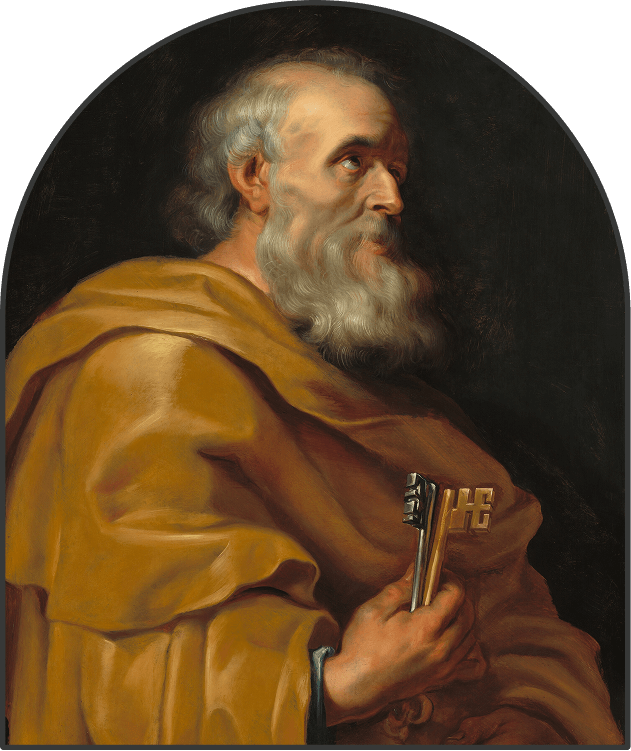
The Prayer and Mystagogical Vision of St. Cyril of Jerusalem

Introduction
St. Cyril of Jerusalem (c. 313-386 AD), bishop and Doctor of the Church, was considered one of the greatest pastoral mystics and teachers of early Christianity. Living in the very location of Christ’s crucifixion and resurrection, he developed a spirituality through an “in incarnate” understanding of the sacramental mysteries, holy locations and concrete realities that took place in salvation history.
The Catechetical Lectures written by St. Cyril reveal a mystically contemplative mind who understood prayer as actively participating in the divine mysteries through wedding the liturgy into a mystical communion with our Lord Jesus Christ. These teachings directed many lives from darkness into light through the grace of baptism.
Growing Up in the Holy City
Cyril was born in or near Jerusalem around 313 AD, shortly after Constantine’s legalization of Christianity. Many Christians outside of Jerusalem merely read about the city of Jerusalem and have no idea what it was like to walk on the same earth that Jesus walked on, to see where the prophets preached and to live where the Christian church was born on Pentecost. St. Cyril was able to experience these things physically through his privileged upbringing.
As Cyril writes:
How lovely is your dwelling place, LORD Almighty! My soul yearns, even faints, for the courts of the LORD; my heart and my flesh cry out for the living God
Psalm 84:1-2
For St. Cyril, the church in Jerusalem was not only a court of the Lord, but was the dwelling places of the Lord, where the faithful gathered together to worship God.
The emphasis of Cyril’s spirituality was based upon the idea that God works through material realities at specific places, therefore it is important to note that Christianity is a historical religious tradition based in reality. The sacraments provide a way for God’s presence to be experienced by the material reality of our physical being, thereby creating an opportunity for a mystical encounter with God through the physicality of water, bread, wine, oil, touch and word.
Baptismal Preparation as Contemplative Journey
Cyril’s ministry was based upon the preparation of catechumens or those preparing to be baptized through the teachings of his famous Catechetical Lectures. He would give eighteen pre-baptism catechetical instructions and five post-baptismal mystagogy teachings. Cyril’s teachings were not simply to convey knowledge but also to spiritually form the catechumens for the mystical encounter with Jesus Christ through the sacraments.
Baptism is viewed by Cyril as the spiritual birth of the Christian. The transformation that takes place in a child’s life or a catechumen’s life is from death to life, from darkness to light. Cyril focused his thoughts on Jesus saying to Nicodemus:
Very truly I tell you, no one can see the kingdom of God unless they are born again
John 3:3
The sacrament of baptism produces this rebirth through the sacramental use of water and the Holy Spirit.
Cyril’s way of teaching was to prepare his students with careful teaching in the areas of Christian doctrine (teaching) but also with pastoral love. Therefore, while he taught about the truths of Christian doctrine he also assisted his students in thinking of how to enter into a relationship with God. St. Cyril’s purpose was not just to have educated minds about God but to help them experience God.
Cyril meditated on Romans 6:3-4 when he wrote:
Or don't you know that all of us who were baptized into Christ Jesus were baptized into his death? We were therefore buried with him through baptism into death in order that, just as Christ was raised from the dead through the glory of the Father, we too may live a new life
Romans 6:3-4
For Cyril, baptism was not merely a sign of a person’s faith but was a mystical act, a participation in the death of Jesus Christ and therefore was part of the process of becoming one with Jesus Christ through. Cyril’s meditation on the relationship of baptism and the purpose of God looking at a person’s life shaped his preparation of those to be baptized. This preparation allowed Cyril to create an environment in which the catechumens were able to receive what God wanted to give to them when they received the sacrament of baptism, not just to receive what they were trying to understand.
Contemplation Through Exorcism
Prior to their baptism, all the catechumens participated in the ‘exorcism’ process. Cyril saw this exorcism as part of ‘spiritual warfare.’ The significance of ‘turning to God’ involved breaking Satan’s power over someone. If a catechumen wanted to come to Christ, they first needed to reject everything that was evil and submit themselves to their Creator.
Cyril spent time thinking about how Christ cast out demons and how the church performed exorcisms before a person was baptized. He contemplated Jesus’s authority:
When evening came, many who were demon-possessed were brought to him, and he drove out the spirits with a word and healed all the sick
Matthew 8:16
Cyril also reflected on the importance of being filled with the Holy Spirit soon after the cleansing of the soul. Just as a house must be cleaned before receiving honored guests, so the soul requires cleansing before the Spirit’s indwelling. He meditated on Jesus’s parable:
When an impure spirit comes out of a person, it goes through arid places seeking rest and does not find it. Then it says, 'I will return to the house I left.' When it arrives, it finds the house swept clean and put in order
Luke 11:24-25
His contemplation led him to emphasize that exorcism alone isn’t sufficient—the cleansed soul must be filled with the Holy Spirit, otherwise worse possession may follow. Baptism completes what exorcism begins, filling the emptied house with divine presence.
The Prayer of Renunciation
What most people see as a ceremonial act of renouncing Satan during the pre-baptismal rituals was a very real prayer for catechumens. The catechumens faced west (the symbol for darkness) and publicly stated, “I renounce you, Satan, and all your works, and all your pomp, and all your worship” to the whole universe as a commitment to turn towards Christ and away from Satan.
Facing west (darkness), catechumens changed direction from Satan and went towards Christ by facing east (Light). This physical reversal from darkness to Light is significant to Cyril because it is a visible representation of the person’s spiritual movement from sin toward righteousness in Christ. Cyril saw the action of facing east as a heart’s response to God.
Cyril meditated on Joshua’s challenge:
Choose for yourselves this day whom you will serve... But as for me and my household, we will serve the LORD
Joshua 24:15
Baptism requires choice—conscious, deliberate, costly. Renunciation acknowledges that one cannot serve two masters (Matthew 6:24); choosing Christ means rejecting Satan.
After renouncing Satan, catechumens turned east (symbol of light) and declared commitment to Christ. This turning represented conversion—literal turning from one direction to another mirroring spiritual turning from sin to righteousness. Cyril saw this physical movement as mystical reality—the soul reorienting its entire existence toward God.
Mystagogy: Unveiling the Mysteries
Cyril provided a teaching method to the newly baptized or mystagogical catecheses in how to connect their understanding with their baptismal rites. Cyril deduced that mystagogical catecheses functioned the same way as the ancient mystery religions revealed the truth to their initiates.
The term ‘mystagogy’ means, ‘leading into mystery.’ This does not suggest a way to solve a mystery; instead, it helps to articulate and clarify the experience from the perspective of the person initiated into the mystery. Cyril provides the new Christians with a further understanding of their baptism and a continued, infinite revelation of the significance of the mysteries of our faith.
Cyril thought about 1 Corinthians 2:14, where Paul stated:
The person without the Spirit does not accept the things that come from the Spirit of God but considers them foolishness, and cannot understand them because they are discerned spiritually
1 Corinthians 2:14
After their baptism, children receive the Holy Spirit of God and then have understanding and appreciation of the mysteries of initiation into the Christian church.
Cyril’s mystagogical catecheses indicated additional meanings behind the person being baptized. For example, water is seen to represent death, life, burial, and resurrection. The process of three times plunging the newly born is in recognition of Christ’s three days in the grave and the three-fold name of the Father, the Son, and the Holy Spirit. Emerging from the water signifies the resurrection of the one being baptized into new life in Christ.
Each part of the liturgy of the church has meaning associated with it. It shows the anointing is a representation of the Holy Spirit; white is a representation of purity; and the candle is a representation of Christ as the light of the world. Some individuals may understand these elements, if only they take the time to open their eyes and listen to their hearts.
Contemplation of the Eucharist
Cyril’s Eucharistic teaching contains mystical theology at its core. His explanation of transubstantiation transcends intellectual understanding; he leads believers into a contemplative encounter with Christ in the consecrated bread and wine.
As Cyril reflects on Jesus’ phrase, “This is my body… This is my blood” (Matthew 26:26-28). According to Cyril’s belief, the Holy Spirit transforms bread and wine into the body and blood of Christ in the same way the Holy Spirit overshadowed Mary at the time of conception (Luke 1:35).
Cyril’s mystagogical catechetical instruction emphasized receiving the Eucharist with reverence and faith. Cyril instructed believers to receive the consecrated bread in their hands, “forming a throne for the King,” and to consume it slowly and carefully, treasuring it down to the last crumb.
Cyril’s meditation of the body and blood of Christ’s Eucharist informs his understanding of the series of events:
By partaking of the Body and Blood of Christ, you become of the same body and blood with Him. For thus we become Christ-bearers, since His Body and Blood are distributed through our members.
This type of participation is not a symbolic one, but a real union between the believer and Christ as a result of their consumption of the body and blood of Christ. The believer, through consuming the body and blood of Christ, becomes a temple of Christ’s body and is transformed into His image. Cyril expressed this meditation in regard to the teachings of Paul:
Because there is one loaf, we, who are many, are one body, for we all share the one loaf
1 Corinthians 10:17
Cyril’s Eucharistic mysticism is completely and totally incarnational. As the Word of God became flesh in the womb of Mary, so does bread become flesh on the altar. As Christ’s body is incarnate and saves, so does His Eucharistic body nourish believers with eternal life. The same Christ born in Bethlehem is physically present to us in the Eucharist.
The Prayer of Epiclesis
Cyril’s meditation and reflection on the epiclesis—invoking the Holy Spirit for the consecration of the elements—was not an act of magic to invoke power from God, but was rather an expression of hope in the fulfillment of God’s promise.
He meditated on the transformation of material objects by the Holy Spirit as seen in the example of how the Spirit of God overshadowed Mary, causing her to conceive the body of Christ, when the Spirit descended upon Jesus in the form of a dove and the Holy Spirit coming to the apostles at Pentecost, the same way the Spirit transforms the elements from bread and wine to body and blood of Christ at the request of the Church.
Cyril meditated on the Spirit’s creative power from Genesis:
Now the earth was formless and empty, darkness was over the surface of the deep, and the Spirit of God was hovering over the waters
Genesis 1:2
The Spirit who brought creation from chaos brings Christ’s presence from ordinary elements.
Cyril’s meditation on the epiclesis brings us to a deeper understanding of the sacraments. The sacraments are not the result of human effort, but are God’s gracious gifts through faith. While the Church provides the elements for the sacraments—bread, wine, and water, it is only through the divine will of God that the elements are transformed. Cyril’s understanding that the Church provides the material for the sacraments, but only God through the Holy Spirit makes these elements holy provided believers with the belief of humility and awe in worship and reverence for God.
Meditation on the Holy Spirit
Cyril devoted a complete catechetical lecture to the Holy Spirit, indicating his extensive contemplation of the Third Person of the Holy Trinity throughout the Old and New Testaments. Cyril’s contemplation included how the Holy Spirit was involved in Creation, inspired the prophets, gave power to the judges of the Old Testament, anointed the kings of Israel, and ultimately, dwells within the followers of Christ.
Cyril told his listeners of Jesus’ promise regarding the Holy Spirit:
But the Advocate, the Holy Spirit, whom the Father will send in my name, will teach you all things and will remind you of everything I have said to you
John 14:26
TCyril believed that the Holy Spirit continues the presence of Christ through teaching and providing guidance to believers leading them to holiness.
Cyril believed it was essential to understand the Holy Spirit as not simply an impersonal force of nature, but a Person of the Holy Trinity equal to the Father and Son, therefore deserving worship and glory. Cyril meditated on the Scriptures that show the oneness of the Holy Trinity, the essence of the Holy Trinity, and how the Father, the Son and the Spirit are three persons but one essence of God.
Cyril’s meditation led him to understand that the Christian life is fundamentally pneumatic and lived through the power of the Holy Spirit. The Holy Spirit guides us in the knowledge of God, and transforms us. Without the Holy Spirit, Christianity would simply be morality and empty rituals, but through the Spirit, we are empowered to participate in the divine life of God.
Cyril taught that when a person is baptized and given the sacrament of chrismation (anointing with holy oil), he would receive the Holy Spirit not as a future hope, but as a present reality. The indwelling of the Holy Spirit within the believer transforms the believer from a person who goes to the temple to a temple in which the Holy Spirit dwells, from a person who searches for God to a person who bears God.
Prayer in Holy Places
Cyril’s ministry in Jerusalem gave him the experience of prayer at some of the most sacred places in Christianity: the Church of the Holy Sepulchre located over Calvary and the tomb, the Mount of Olives, and different places associated with Jesus and His ministry.
Cyril believes that while God is not geographically confined to any particular area, there are areas in which God allows Himself to be seen specifically. The burning bush was simply a bush until God spoke from the bush (Exodus 3:2-4). Jerusalem was simply a city until God chose it as His dwelling place (1 Kings 11:36).
In contemplating the holy locations, Cyril does not have a superstitious reverence for the locations themselves. Instead of superstitiously revering the places themselves, he meditates upon the historical events which took place in them. At Calvary, he meditates on the suffering of Christ; at the tomb, he meditates on the Resurrection; and at the Mount of Olives, he meditates on the return of Christ.
Cyril’s contemplation here is in accord with the Scriptural precedents as the children of Israel would remember the Exodus as they experienced it in locations along the way. The prophets received their visions while on top of mountains. Jesus taught in various locations, which became holy to all who followed Him. Cyril simply continued to use the geographical location of Jesus’ ministry as a way of contemplating the historical events that took place.
Nonetheless, Cyril cautions that while geographical locations are good aids for developing strong devotion to God, it does not mean that God is more present at a specific location that He is in other locations. The One God of a unified catholic Church is worshipped and glorified in every part of the world through the people of that Church. Holy places help believers develop their devotion to God; however, geographical locations are not required as a location of authentic prayer to God. The believer’s genuine prayer is directed to God through his or her heart in which the Holy Spirit dwells (1 Corinthians 3:16).
Contemplation of the Cross
As Cyril lived in the place where Holy Christ was crucified, he came to have an extremely strong spiritually-based on Christ’s cross. Cyril considered the cross to be a cause of great humiliation; he viewed the death of God’s Son Jesus Christ by punishment as death by the law and, at the same time, saw the salvation of the world was brought to human beings by way of His cross. The cross, he believed, exemplified the power of God at the moment of weakness, and that ultimately from that moment, salvation came to the entire world.
Cyril thought that Paul’s words about the cross influenced the way he viewed all of life. Paul said:
May I never boast except in the cross of our Lord Jesus Christ, through which the world has been crucified to me, and I to the world
Galatians 6:14
The event of the cross is alive today and for all time. For believers, they have been crucified with Christ to put to death sin and to live for God.
Cyril taught that the cross represented victory over all creation and the world. The most humiliating events around the world brought the most glorious moments of exaltation and the confusion of strength birthed the ultimate weakness—the release of all divine power through the cross. Cyril looked to the cross to shed light on the way to understand a true Christian life. Through his teaching, believers must experience and follow Jesus’ teachings, which require believers to take their cross daily (Luke 9:23), to endure their own suffering, as a way to share in his sufferings, and to view their trials in life as a means of conforming them to the death of Christ (Philippians 3:10).
The cross represents Christ-to-be, and it serves as a pattern for all who follow Him as disciples.
Cyril pointed out the power of the cross for protection. To Cyril, the act of marking one’s self with the sign of the cross was not a superstitious act but rather an act of faith calling on the victory of Christ. He taught:
Let us not be ashamed to confess the Crucified. Be the Cross our seal made with boldness by our fingers on our brow and in everything; over the bread we eat and the cups we drink, in our comings in and goings out, before our sleep, when we lie down and when we awake, when we are traveling and when we are at rest.
The Prayer of the Church
Cyril’s spirituality reflects a thorough understanding that the church has an ecclesial (church) relationship to the prayer of all believers. Cyril viewed prayer as corporate worship and did not think about prayer as being an individual devotion.
He considered Jesus’ promise:
For where two or three gather in my name, there am I with them
Matthew 18:20
Corporate worship makes Christ present in unique ways, the gathered community experiencing his presence powerfully.
Cyril viewed the liturgy or service of worship as an action performed by both the priests and the congregation (or people) combined. Each individual had a specific role to play: the priest (or cleric) led, the congregation responded, and together they offered praise to God as an act of worship.
Cyril’s reflection of ecclesial prayer also included his view that the whole church, including those living on earth and the angels and church who have died, were participating in a common act of worship. Cyril thought of all the faithful, or saints, as being part of the communion of saints organized in such a way that all members of this communion would gather in constant worship with one voice.
Cyril often assigned his thoughts to reading Hebrews 12:22-23:
But you have come to Mount Zion, to the city of the living God, the heavenly Jerusalem. You have come to thousands upon thousands of angels in joyful assembly, to the church of the firstborn, whose names are written in heaven.
This vision meant that every liturgy joined heaven’s eternal worship. When the Church sang “Holy, holy, holy,” it echoed angelic praise (Isaiah 6:3). When believers prayed the Lord’s Prayer, they joined Christ’s eternal intercession. Corporate worship transcended time and space, uniting earthly and heavenly realms.
Fasting as Spiritual Discipline
Cyril, like all church fathers, practiced and taught Christians to fast regularly. Cyril understood fasting, particularly during Lent, was a period of preparation to prepare for the upcoming baptisms of the new members of the Church. He did not understand fasting to be a means of earning salvation through works, but he recognized it as a necessary means of developing a certain spiritual discipline and of opening the soul to the power and grace of the Holy Spirit.
Cyril spoke specifically about Jesus’ words concerning fasting:
When you fast, do not look somber as the hypocrites do, for they disfigure their faces to show others they are fasting. Truly I tell you, they have received their reward in full. But when you fast, put oil on your head and wash your face, so that it will not be obvious to others that you are fasting, but only to your Father, who is unseen; and your Father, who sees what is done in secret, will reward you
Matthew 6:16-18
Cyril wanted Christians to fast and look forward to fasting, as a gesture of their love for God rather than simply doing it because they have to fast or are being punished for sin by fasting. Fasting is an opportunity to discipline the body and to develop a bond between the person fasting and the poor, who involuntarily fast because of their poverty.
In his teachings on fasting, Cyril not only discussed the act of fasting concerning food, but also taught about fasting concerning all other sinful acts against our brothers or sisters. If one is fasting physically, without striving for a moral transformation while fasting, the fast will bear very little fruit or glory. As in Isaiah 58:6, we can ask:
Is not this the kind of fasting I have chosen: to loose the chains of injustice and untie the cords of the yoke, to set the oppressed free and break every yoke?
Isaiah 58:6
Cyril’s approach balanced discipline with wisdom. Excessive fasting that damages health or springs from pride misses the point. The goal is moderation enabling prayer and charity, not severe deprivation for its own sake.
Meditation on Scripture
Cyril’s lectures overflow with biblical citations, revealing a mind saturated in Scripture. His contemplation centered on God’s written Word as primary means of knowing divine truth.
He meditated on Paul’s instruction to Timothy:
All Scripture is God-breathed and is useful for teaching, rebuking, correcting and training in righteousness, so that the servant of God may be thoroughly equipped for every good work
2 Timothy 3:16-17
Cyril practiced typological reading—seeing Old Testament events as prefiguring New Testament realities. Adam prefigured Christ (Romans 5:14), the Passover lamb anticipated Christ’s sacrifice (1 Corinthians 5:7), the bronze serpent foreshadowed the crucifixion (John 3:14-15).
His scriptural contemplation wasn’t arbitrary interpretation but seeking the Spirit’s intended connections. He understood that Scripture possesses unity—one divine author (the Holy Spirit) speaking through many human authors, creating coherent message culminating in Christ.
Cyril also emphasized Scripture’s sufficiency. While Church tradition helps interpret biblical texts, Scripture itself contains everything necessary for salvation. He wrote:
For concerning the divine and holy mysteries of the Faith, not even a casual statement ought to be delivered without the Holy Scriptures.
The Gift of Tears
Cyril wrote movingly on how the Holy Spirit produces in a believer tears of contrition, which he viewed as evidence of grace at work and a soul awakened to its true state. Tears of contrition reflect a longing for God, tears for the return of Christ, based upon the following statement of our Lord found in Matthew 5:4:
Blessed are those who mourn, for they will be comforted
Matthew 5:4
This mourning includes grief over personal sin, sorrow over the world’s brokenness, and longing for Christ’s return—all producing tears of holy yearning.
Cyril taught that tears wash the soul, cleansing accumulated guilt and purifying the heart. He contemplated the sinful woman who washed Jesus’s feet with tears (Luke 7:38), seeing her tears as more effective than water for spiritual cleansing.
Cyril recognized the difference between godly sorrow that produces repentance, as Paul wrote in 2 Corinthians 7:10:
Godly sorrow brings repentance that leads to salvation and leaves no regret, but worldly sorrow brings death
2 Corinthians 7:10
Godly sorrow turns one toward God in hope; worldly sorrow turns inward in despair.
Cyril reflected on how contrition gives way to joy; he reflected on how, just as God offers His forgiveness to all Christians, we will appear before Him with the realization that without Jesus’ substitution we are not worthy of that forgiveness. A contrite heart produces both Godly sorrow and joy—joy in knowing of God’s grace through Jesus Christ.
Prayer During Persecution
Cyril saw and experienced many challenges and difficulties as he lived through very turbulent times in church history, including Arianism and the political interference of Emperor Theodosius I regarding church affairs and three exiles. It is his experiences that gave him such a strong prayer life and reiterated his faith in God throughout all of the turmoil in the Church at the time.
He regularly reflected upon Jesus’s promise:
Blessed are you when people insult you, persecute you and falsely say all kinds of evil against you because of me. Rejoice and be glad, because great is your reward in heaven, for in the same way they persecuted the prophets who were before you
Matthew 5:11-12
In prayer, Cyril was able to find a balance of having a strong conviction about the faith, as well as praying for those against him. Cyril did not allow his experience of being in exile to deter him from being hopeful or trusting in God’s provision on behalf of those who were in opposition to him; instead, he returned to his position in Jerusalem without resentment and was eager to resume his pastoral duties.
Throughout his years of contemplation, Cyril often focused on the various ways in which Christ had been rejected and further knew that any suffering he would endure could not compare to that Jesus endured while on the earth. Conversely, the believer should take great comfort and continue living by faith because of the privilege granted to us to share in even a little bit of what Jesus suffered (Philippians 3:10).
Cyril sought God in prayer and interceded on behalf of God’s people in the Church during times of crisis. The Church was going through chaos due to false teachings, and orthodox clergy were experiencing severe persecution, and even emperors were having political agendas involving the Church. Through prayer, Cyril had faith that God was in complete control, but he realized that God only acted on some of the needs of that time through faithful prayer.
Contemplation of the Resurrection
The resurrection was a significant moment in Cyril’s life, and so it has influenced much of his spirituality. When he thought about how the resurrection confirmed the veracity of Jesus’ claims; vindicated His followers’ claims; as well as guaranteed that all who believed upon Jesus would also be raised, he realized how this event became central to his own spirituality.
He reflected upon Paul’s words:
And if Christ has not been raised, our preaching is useless and so is your faith... But Christ has indeed been raised from the dead, the firstfruits of those who have fallen asleep
1 Corinthians 15:14, 20
Cyril emphasized that resurrection wasn’t spiritual metaphor but physical reality. The same body crucified was raised glorified. The tomb was literally empty. Disciples touched the risen Lord, ate with him, and conversed with him. Christianity stands or falls on historical resurrection.
Cyril’s contemplation also included the implications of the resurrection. If Jesus rose from the dead, then at His death, the power of death was defeated. Therefore, because the tomb of Jesus is empty, so too, will the tombs of all believers eventually become empty upon their resurrection. If Jesus is alive and in heaven, then all the promises He made to people are trustworthy because He is able to fulfill those promises.
During his contemplation, Cyril also recognized that baptism is a means through which believers mystically participate in the resurrection of Jesus Christ. When an individual is baptized by immersion in water, this is a symbol of their death to sin and burial with Christ, and when one comes out of the water, it represents the resurrection of Jesus Christ. Just as Jesus experienced death and resurrection, so too, will all believers.
The Ascension and Christ’s Return
From the Mount of Olives where Jesus ascended, Cyril contemplated Christ’s departure and promised return. He meditated on the angels’ words:
This same Jesus, who has been taken from you into heaven, will come back in the same way you have seen him go into heaven
Acts 1:11
While meditating upon Christ’s ascension, Cyril realized that the absence of Christ’s physical body from each believer’s physical location was not to their detriment, but rather, when Jesus Christ physically ascended, the resulting distribution of His presence throughout the world by the Holy Spirit was beneficial.
Cyril taught that the ascension wasn’t loss but gain. Christ’s physical presence was limited to one location; his spiritual presence through the Spirit is universal. He meditated on Jesus’s promise:
But very truly I tell you, it is for your good that I am going away. Unless I go away, the Advocate will not come to you; but if I go, I will send him to you
John 16:7
His eschatological contemplation included meditation on judgment. Christ who ascended will return as Judge, evaluating every person’s life. This truth motivated holiness—living in light of coming accountability, preparing diligently for the Master’s return (Matthew 25:1-13).
Yet Cyril’s eschatology emphasized hope more than fear. For believers, Christ’s return means salvation’s completion, suffering’s end, and joy’s beginning. He prayed with the early Church:
Maranatha—Come, Lord Jesus!
1 Corinthians 16:22; Revelation 22:20
Teaching as Contemplative Ministry
In Cyril’s understanding of teaching, this is a ministry that offers people a way to connect with God through spiritual contemplation. The lecturing that underscores his catechesis was more about a way to care for souls rather than an academic exercise. A key to the success of Cyril’s catechetical lectures was the spiritual dimension of providing shalom (peace) for each of his learners by directing them toward Jesus by revealing the mysteries of God and nurturing each learner’s faith in God.
He meditated on Jesus’s commissioning:
Therefore go and make disciples of all nations, baptizing them in the name of the Father and of the Son and of the Holy Spirit, and teaching them to obey everything I have commanded you
Matthew 28:19-20
Teaching is integral to discipleship, not optional addition.
Cyril understood that for him to teach effectively, he would require accurate knowledge of God’s Word, along with a reliance upon the anointing of the Holy Spirit. Teaching was the overflow of the years of prayer, spiritual reflection, and living out in faith, prior to the presentation of the teaching material. He taught with authority because of his personal experiences.
His contemplative approach meant he taught from overflow. Years of prayer, meditation, and lived experience preceded his instruction. He offered not merely learned information but wisdom gained through communion with God—teaching that bore authority because grounded in authentic encounters.
The Practice of Almsgiving
Cyril discerned the connection between prayer and charitable acts towards those who are poor in order to encourage us as Christians to be charitable. When we aid the poor and less fortunate, we are working with the Lord and serving Him directly. He would recite:
Truly I tell you, whatever you did for one of the least of these brothers and sisters of mine, you did for me
Matthew 25:40
This very passage along with his reflections, led him to the conclusion that almsgiving was an act of worship, or offering to God by serving those who were created in His image. Therefore, when we give to the poor and needy, it should not be thought of as some way of doing good deeds, but rather as an obligation to act out of mercy toward those that are less fortunate than we are. In other words, we should see our acts of charity toward those that are poor not as something out of pity (i.e., condescending), but rather as an affirmation of the common humanity and the dignity that is given to them.
Cyril taught that almsgiving was a means of purifying the soul and making atonement for our sins. While he did not believe that one’s being a good person would earn them salvation, he affirmed that true faith will produce good works as a result of the evidence of God’s grace in a person’s life. Just as Christians had a question to answer from James’s letter to the early church so too, Cyril asked himself and Christians:
What good is it, my brothers and sisters, if someone claims to have faith but has no deeds? Can such faith save them?
James 2:14
Cyril taught that almsgiving included forgiving debts, or pardoning debtors. Christ taught:
Forgive us our debts, as we also have forgiven our debtors
Matthew 6:12
You cannot expect to have forgiveness unless you are forgiving, and you cannot expect to obtain mercy unless you give mercy.
Cyril’s emphasis on the relationship between worship and charity challenged complacency in Christianity. Participating in the sacraments, without compassionate usage of goods and services in the world is hypocritical. Therefore, practicing sacramental devotions without serving others is empty and meaningless, as authentic mysticism produces justice and mercy.
Prayer for Catechumens
As bishop, Cyril maintained constant intercession for catechumens preparing for baptism. He prayed for their spiritual protection during vulnerable time of transition—no longer fully in the world yet not yet fully in the Church.
He meditated on Paul’s imagery:
I gave you milk, not solid food, for you were not yet ready for it
1 Corinthians 3:2
Catechumens were spiritual infants requiring gentle nurture, patient instruction, and protective prayer.
He interceded for catechumens to ensure their completion of baptism although they were struggling with many potential roadblocks, such as demonic attacks, disbeliefs of family members, personal doubts and spiritual temptations from this world. He believed that the demonic realm would fight the hardest to stop them from converting, and because of this, intercessory prayers became vital.
Cyril prayed for newly baptized believers asking the Lord to give strength to their faith, deeper knowledge of Him, and prevent them from returning away from Him. He understood that the initial enthusiasm of newly baptized Christians would wane with the passage of time. Therefore, continuous prayerful support and support from the Church was essential to ensure the newly baptized would walk in a right relationship with God. Through these prayers and guidance, Cyril wished to maintain a continued connection with all catechumens and newly baptized Christians.
Vigilance in Prayer
Cyril urged all to maintain constant vigilance through prayer in the spiritual realm. He was focused on the areas of temptation, understanding the warfare within the spiritual realm, and being prepared for Jesus’ return. He meditated on Jesus’s repeated command:
Watch!
Mark 13:37
This vigilance involved examining conscience daily, confessing sins promptly, and maintaining alertness to temptation. Cyril understood that spiritual complacency invites disaster—the soul must remain awake, attentive, and responsive to God.
hrough a consistent and deliberate examination of one’s conscience, by confessing one’s sins in a timely manner, and, being conscious to the presence of temptation.
Cyril recognized that if a Christian becomes complacent, they invite danger into their lives, which is why a believer needs to remain vigilant and aware of who is “distracted” by the things of this world. When individuals practice watchfulness, they may become proud or think they are above being tempted. But the humble recognizes he is vulnerable, and stays vigilant. Paul warns us:
So, if you think you are standing firm, be careful that you don't fall!
1 Corinthians 10:12
Cyril’s vigilant spirituality wasn’t anxious fearfulness but wise caution combined with confident trust. Believers watch and pray (Matthew 26:41), maintaining alertness while resting in God’s protection.
The Luminous Christ
Cyril looked upon Christ as “the light of the world” , and he reflected upon Christ’s words:
I am the light of the world. Whoever follows me will never walk in darkness, but will have the light of life
John 8:12
Cyril prepared for the Easter Vigil Liturgy at his ministry in Jerusalem demonstrating through the use of the Easter Vigil Liturgy the transition from the darkness of death and entering the light of the resurrection. The great candle represents the light of Christ, which was lit in darkness. As the other candles are lit by this great candle spreading throughout the temple and ultimately every part of the church becoming illuminated, all represent the mystery of Christ trampling over the darkness of death.
As Cyril reflected upon the light of Christ, this image led him to understand how God is to have an eternal existence through His presence in the believers of Jesus. In the same vein, believers are also”children of light” (Ephesians 5:8), called to “walk in the light” (1 John 1:7), and commissioned to “let your light shine before others” (Matthew 5:16).
Additionally, Cyril meditated on the properties of light; performing four functions for humanity: revealing the sins of the believer; enabling the mind to see; warming the heart of the believer ; and by the act of being in Christ, delivering humanity from the evil one through His presence.
Legacy of Sacramental Mysticism
St. Cyril of Jerusalem provides a legacy of a sacramental mysticism for the Church, whereby people will meet God through the material, as one’s discovery of Christ through the sacraments will result in transformation through the power of prayer, the Word, and the sacraments.
The catechetical approach of St. Cyril impacted Christian formation for centuries as an example of how one can teach in a contemplative manner and provide a new and deeper understanding of the mysteries of the faith through the lenses of sacred scripture.
Conclusion
St. Cyril of Jerusalem showed how the locations of what we believe shape our understanding of how we “encounter” God, through the material of the sacraments. While serving the Church in the Holy City, he taught that through the incarnate faith of Christ, God meets humanity in the physical, and therefore, through the purposes of our salvation, the material objects and processes in the historical life of salvation through Jesus Christ strengthen one’s prayer life.
As we aspire to deepen our spiritual lives, may we seek to see the sacraments not as mere rites, but as mystical encounters with Jesus Christ, Who is fully present to us in the sacraments at baptism, Eucharist and through the anointing of the Holy Spirit. As we engage in our relationship with God with the understanding that God created and uses physical means to work with the people of the world.
As we continue to strive to deepen our experience through the Holy Spirit, let us prepare our hearts and souls diligently through prayerful contemplation and sacramental participation and through a sincere desire to increase our understanding of the mysteries. Cyril calls us to participate in the Eucharist in the spirit of mystical communion in Christ; in doing so, we become what we eat; we are the carriers of Christ, the temple for Christ, and members of His Body.
Let us also invoke the power of the Holy Spirit to strengthen us to rely on God’s divine strength rather than our own strength. May we live in such a way that we embrace a cross-centered spirituality, boldly proclaiming the victory of Christ, taking up the practice of the cross on a daily basis, and viewing our shared suffering to be participating in Christ’s Passion. Let’s maintain a life of dedicated and sincere prayer so we remain alert to the return of Jesus and serve faithfully while He is away. Let us all join in the sacrament of the Church; worshiping on earth and glorifying God through our worship, united in heaven with the praises of Jesus Christ and the Holy Spirit now and forever.
To the Triune God who meets us in mysteries, who transforms us through sacraments, and who will bring to completion the good work begun in baptism—be glory, honor, and worship, from generation to generation. Amen.
Our Editorial Standards:
All our content on Christian meditation traditions, prayers, and spiritual practices is reviewed by Dr. Megan Remington, PhD, ensuring theological soundness and spiritual depth.
We draw from centuries of Christian contemplative tradition, citing respected theological sources, biblical references, and established spiritual practices.
Our team understands that spiritual struggles are deeply personal. We approach topics of anxiety, strength, healing, and peace with compassion and biblical wisdom.
We continuously review and update our spiritual resources to ensure they remain relevant and aligned with orthodox Christian teaching.
Each article clearly identifies our writers and reviewers, along with the theological sources and biblical foundations used.
 To guarantee that all of our information is accurate, we ensure that all our sources are reputable. That means every source is authenticated and verified to be backed only by medical science.