


 App Store
  Google Play
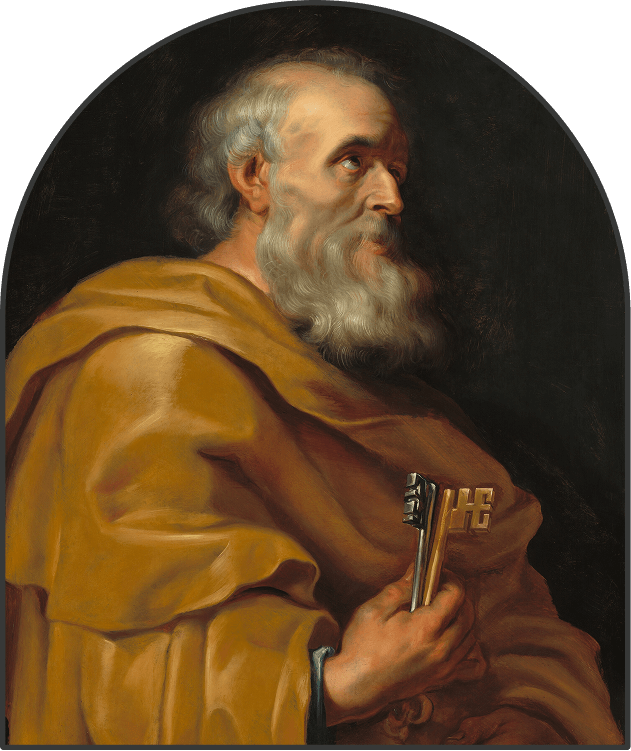
St. Dionysius of Alexandria: The Great Teacher’s Life of Prayer Through Persecution and Pastoral Care

Introduction
St. Dionysius of Alexandria (d. c. 264 AD), known as “Dionysius the Great,” stands as one of the most significant yet underappreciated figures of the third-century church.
He is known as a great teacher of the early church due to his strong prayers during times of persecution and his pastoral care for the faithful. He was the head of the renowned Catechetical School of Alexandria and later bishop during decades of tremendous persecution, plague, and crisis. Throughout that tumultuous time, St. Dionysius prayed intensely for his church and all who suffered. His profound prayer life reflects his spiritual growth, the result of suffering endured in prayer and devotional activities .
St. Dionysius’ prayer life shows how contemplation deepens one’s understanding of their relationship with God. Through contemplative prayer, we learn to perceive spiritual realities beyond the text. While many view God as a source of knowledge, through contemplation we come to know that God is love. Thus, contemplation provides avenues of holy communion between human beings and the Creator.
The Student of Origen: Formation in Alexandrian Contemplation
As a student of Origen, St. Dionysius espoused the Alexandrian contemplative tradition expressed in the Catechetical School of Alexandria. Through this formation, St. Dionysius learned to read the scriptures according to four levels of understanding: literal, moral, allegorical, and spiritual (mystical) .
This multi-layered hermeneutic was more than academic exercise; it was a contemplative practice training the mind to perceive spiritual realities beneath textual surfaces. By meditating on biblical texts until they yielded deeper meaning, one could encounter Christ and the soul’s journey toward God. Through this study, the believer learns to taste, smell, touch, hear, and see spiritual realities—the “spiritual senses” that awaken when the soul is purified .
Dionysius learned to view prayer as an ascent through stages of purification, illumination, and union (deification). He understood that the spiritual life begins with the struggle against sin (purification), advances to contemplating divine truth (illumination), and culminates in union with God, transforming the soul into the divine likeness .
He also embraced rigorous asceticism, not as an end in itself, but as a means to free consciousness from bodily distractions, creating interior space for prayer. Discipline of the body was essential for focused contemplation .
Crucially, Origen taught Dionysius that theology itself is a form of prayer. Intellectual work, properly oriented, participates in the soul’s movement toward God. Thus, study and theological reflection became acts of devotion, integrating thought and prayer into a single spiritual pursuit
Persecution and Prayer: The Decian Crisis
In 249 AD, Emperor Decius launched the first empire-wide persecution of Christians, and Dionysius—recently appointed bishop of Alexandria—faced immediate crisis. His response illustrates how deep contemplative prayer during extreme trials shaped his pastoral choices.
Initially, Dionysius remained in Alexandria to continue his ministry despite the danger. He recounted being seized by soldiers but released through the intervention of peasants celebrating a wedding—an event he attributed to divine providence discerned amidst chaos .
Eventually, Dionysius retreated to the Libyan desert, a decision some criticized as cowardice. However, he explained that he withdrew only after receiving divine guidance in prayer, believing his preservation would better serve the church than immediate martyrdom. This willingness to follow divine direction over heroic ideals demonstrated mature spirituality .
In the desert, cut off from his congregation, Dionysius entered a period of enforced contemplative retreat. Stripped of normal episcopal functions, he deepened his prayer life, maintaining liturgical hours in solitude and interceding for his scattered flock. Through prayer, he remained spiritually united with his people, holding them before God .
The persecution forced Dionysius to contemplate profound questions: Why does God permit suffering? How should Christians respond to state violence? Through prayer, he developed a nuanced understanding that honored martyrs while recognizing that preserving one’s life for ministry was also a legitimate form of witness .
He also wrestled with the balance of divine justice and mercy regarding those who had lapsed under torture. While rigorists argued that apostasy was unforgivable, Dionysius perceived through prayer that divine mercy extends even to those who fail under pressure. He concluded that the church should restore the repentant, reflecting a contemplative vision of God as a merciful Father rather than merely a stern Judge .
The Plague and Providence: Contemplating Suffering
In the Roman Empire, a catastrophic epidemic in the 250s claimed millions of lives and caused great upheaval in society. Alexandria, a city in Egypt, was severely afflicted, suffering among many people. The manner in which Dionysius responded to this tragic event gives insight into how he viewed suffering and God’s providence through his prayer life. He described the devastation caused by the plague in a surviving letter saying:
Most of our brother Christians showed unbounded love and loyalty, never sparing themselves and thinking only of one another. Heedless of danger, they took charge of the sick, attending to their every need
While pagans turned away in fear of being around plague victims, Christians cared for both their fellow believers as well as any pagans who needed help, many times contracting the plague and dying themselves.
Dionysius, in contemplation, viewed the plague as a visitation from God, but not only as a punishment from God. In the contemplative tradition that Dionysius inherited from Origen, suffering can serve multiple purposes: It can serve to purify a person, to test them, to conform them to the passion of Christ, or to prepare them for greater glory. Although the plague caused much destruction, it might serve as a means to draw people to God, refine the Church, demonstrate Christian charity, or serve a purpose beyond human comprehension. Such contemplation on the providence of God in the midst of catastrophe requires spiritual maturity.
Dionysius does not offer simple explanations or false reassurances, but rather wrestles with the mystery of suffering. While acknowledging the pain of suffering, Dionysius weaves together this knowledge with a trust in God’s ultimate goodness and wisdom, presenting the delicate balance of facing the harsh realities of existence while placing faith in God’s love.
Death was widespread during the epidemic, and Dionysius intensified his intercessory prayer, pleading for mercy, petitions for healing, and prayers for those who were dying. His intercession did not simply ask God to save people from suffering but rather to honor those who were suffering by uniting their suffering with the suffering of Christ, and committing them to God, whether they survived the epidemic or not. Thus, pastoral ministry during the plague became a means of contemplative practice for Dionysius. During his prayerful visitation of sick people, comforting family members of the dead, and burial of the deceased, he saw in desperation and dying an opportunity to offer Christ to others and offer the death of those he buried as a sacrificial offering to God in union with Christ’s death. The interdependent works of Dionysius’ active ministry and contemplative prayer enriched one another.
The Baptismal Controversy: Discerning Through Prayer
As the controversy surrounding the Baptism of heretics continued in the mid-250s, Dionysius found himself in a dilemma regarding the validity of baptismal administration performed by a heretical priest. Stephen of Rome, the Bishop of Rome, defended the validity of baptisms performed by heretical ministers, while Cyprian, the Bishop of Carthage, insisted on re-baptizing those entering the Church. Dionysius did not side with either party immediately, but instead spent an extended period of time praying and reflecting upon the controversy, seeking divine wisdom to discern the truth. Dionysius recognized that while reason and authority can help to resolve questions of theology, these questions require contemplation and the interpretation of spiritual wisdom through prayer.
Dionysius’ letters provide evidence that he engaged in contemplative discernment concerning the baptismal issue. He stated that he reviewed both sides of the controversy, he weighed evidence provided by Scripture, he considered the pastoral ramifications of differing opinions, and he sought to find the position that was in harmony with divine truth and mercy. The tone of his letters is irenic; Dionysius wanted reconciliation, not victory. Therefore, the prayer-based character of his letters reveals his humility, patience, and charity.
Dionysius ultimately sided primarily with Stephen’s position: that a baptism with right intention and a Trinitarian formula is valid regardless of the fidelity to the Catholic faith by the Minister who performed the act; he offered his support in a kind manner to those who held opposing views. This sense of moderation displayed the contemplative wisdom that Dionysius possessed regarding the limits of human understanding, his humility to recognize that his understanding of truth may not be complete, and his charity towards those who disagree with him.
The controversy surrounding baptism lead Dionysius to contemplate the essence of baptism. Baptism has meaning and importance as a result of the actions of the minister, the words that were spoken, and the faith of the person being baptized, or the grace that is given to the person through the sacrament. Through contemplation on the subject, Dionysius came to realize that the power of baptism originates from God, and not from the human worthiness of an individual, therefore, the sacrament works ex opere operato (by the very fact of performing the work), the sacraments produce what a man himself cannot produce.
The fruit of sacramental theology on the spirituality of Dionysius causes him to believe that God is working through sacraments, and therefore, prayer and worship do not require the minister or the worshipper to be free from sin. Therefore, God’s grace meets the worshipper in his weakness, and God’s strength perfects the worshipper’s weakness. Thus, the truth of God meeting man in his weakness allows the worshipper to persevere in prayer even when spiritual dryness sets in, and generates an assurance that God is present and is acting even if one has no emotional feelings associated with the act of prayer and worship.
The baptismal controversy has taught Dionysius of the limitations of certainty in the contemplation of theological matters; not all theological questions can be answered with an answer that is legitimate; in other words, there will not be a single answer to every disagreement of theological matters available to humans through human wisdom. The humility in being able to acknowledge the limitations of one’s own understanding of theological matters reflects the development of an integral property to the growth in spiritual contemplation and development of theological knowledge of the human person.
Chiliasm and Eschatological Contemplation
Dionysius was involved in a theological debate with a bishop from Egypt named Nepos who taught that Jesus Christ would physically reign on earth for a period of one thousand years (known as chiliasm). Some early Christian thinkers, including Dionysius himself, referenced this in their works, including Revelation chapter twenty, to support their argument that the chiliasm perspective is not a biblical position.
Dionysius used the combination of biblical data and his spiritual wisdom to refute the idea of chiliasm. He had a complete and thoughtful response to the views held by Nepos and the chiliasts based on his study of Nepos’ writings and discussions he had with them, which he documented in a writing he called On the Promises. Dionysius believed that Revelation’s millennial kingdom should be understood as a spiritual, rather than a literal, one.
By using the Alexandrian allegorical method of biblical interpretation, he applied the method to Revelation from a contemplative viewpoint. In interpreting Revelation, Dionysius did not see the apocalyptic images as literal. Rather, he sought to interpret them spiritually. For example, the thousand years refers to the believers who are now spiritually reigning with Christ, the first resurrection refers to regenerating through baptism, and the Holy City represents the union of the believers’ souls with God.
The interpretation of the spiritual meaning of Revelation came about through Dionysius’ ongoing contemplation of the book. He did not think of the book as a book of prophecy concerning future events but thought of it as a mystical vision of the current spiritual realities of the Church. Revelation reveals what was once hidden, that Christ is once again reigns in heaven, and that believers are already experiencing resurrected life now and that heaven and earth are unified in sacramental worship.
The meaning of the Resurrection and the Kingdom is known to all who are in the true Church. That is why, to the degree that the Resurrection and the Kingdom of God have been established, Christians already share in eternal life. For this reason, prayer is participation in heavenly worship, liturgy is the joining of the earthly and heavenly assembly, and contemplation is experiencing and penetrating the barrier that separates time and eternity. “Realized eschatology” (Dionysius did not used this phrase to describe it) increased the present spiritual experience of Christians while still allowing hope for the final consummation of the present work of God.
Dionysius opposed the chiliasm view of Christianity for more than theological reasons. He believed that the view of chiliasm led the Church to focus too much on material expectations and not enough on spiritual reality. Thus, he had a contemplative heart for the Church and sought to encourage Christians to put their focus on their interior transformation and the union of their souls with God, rather than on a future material kingdom of God on earth.
Letters as Contemplative Practice
Dionysius wrote many letters to fellow bishops about various subjects relating to the Church to the extent that we have partial copies of these letters recorded in Eusebius’ Church History and other writings. In addition to providing insight into the mind and heart of Dionysius, his letters show that for him, letter writing was a contemplative practice. For Dionysius, letter writing served as an opportunity to engage in theological reflection as he expressed spiritual counsel to others and developed an awareness of his communal presence, even if separated geographically.
Dionysius demonstrated in his letters several practices of a contemplative life. First, Dionysius established before he dealt with any specific subject the proper posture of prayer and thanksgiving to God and calling upon God’s assistance through the Holy Spirit. This practice assured that all forms of administrative and sometimes controversial correspondence would always be grounded in prayer.
Second, Dionysius demonstrated, within his letters, that he was practicing the continual contemplation of the Scriptures. Most letters contain frequent quotations and references to the Scriptures throughout the communication. This does not mean that writing is an exercise in building a theological base but rather an example of the extent to which the Scriptures influenced the thought of Dionysius and the way he thought about and interpreted reality. The Scriptures were not an external source but had become the language through which he expressed himself and interpreted his surroundings.
Third, Dionysius continued to engage in contemplative reflection on the totality of theological issues. Rather than simply stating a theological position, he thoroughly considered all the issues relating to that theological issue, he looked at the issue from all possible angles, considered the evidence supporting the issue and sought to discover the truth.
God gave to Dionysius the gift of contemplation and the spirituality to use the gift in formulating the most clearly, accurately and precisely stated theological position available at the time. Thus, Dionysius’ letters reflect his spiritual humility because they are written from the perspective that no single theological position captures the complete picture of God’s revelation and therefore can be easily exploited or taken out of context.
Dionysius also continued to cultivate a contemplative view of the world and practiced his contemplative understanding in the area of prayer. Because he believed that God was the Father, Son and Holy Spirit in a continual relationship of love, he believed, in a sense, that every time he prayed to God the Father through Jesus Christ, in the Spirit, he was joining his prayers into the love shared between the three divine persons and that when he prayed, he was sharing in the dynamic love that constituted God’s being.
Trinitarian Controversy and Contemplative Theology
Near the end of his life, Dionysius became embroiled in Trinitarian controversy—ironically, accused of both Sabellianism (denying distinction between Father and Son) and subordinationism (making the Son inferior to the Father). His response to these charges reveals how contemplative practice shapes theological formulation and how theological precision serves contemplative truth.
The controversy began when Dionysius opposed Sabellian modalism in Libya, emphasizing the Son’s distinctness from the Father. But his language alarmed some who thought he was dividing the Trinity into separate gods. Others thought his emphasis on the Father as source made the Son inferior or created. These accusations reached Rome, where Bishop Dionysius (sharing the name) summoned the Alexandrian bishop to explain himself.
Dionysius’s defense demonstrates contemplative balance. He acknowledged that his language had been imprecise, that in opposing one error he had perhaps opened himself to misinterpretation from the opposite direction. This humility about theological formulation reflects mature spirituality—recognizing that human language struggles to express divine mystery, that various formulations capture different aspects of truth.
He explained his Trinitarian theology carefully: the Son is eternally generated from the Father, not created; the Father and Son are distinct persons yet one in essence; the Son is subordinate to the Father in order of procession but equal in divinity. This balanced articulation attempted to honor both unity and distinction, both equality and ordered relationship within the Trinity.
This theological precision emerged from contemplative meditation. Dionysius had pondered the mystery of Trinity through prayer, liturgy, and scriptural study. His formulations weren’t merely logical constructions but attempts to express what he had perceived through spiritual vision—that God is both one and three, both transcendent unity and immanent communion.
Mentoring the Next Generation
As head of the Catechetical School before becoming bishop, and as episcopal mentor afterward, Dionysius shaped the next generation of Alexandrian Christian leaders. His pedagogical method reveals how he understood contemplative formation, how prayer and study interweave in Christian education.
He taught his students rigorous exegesis—careful attention to textual details, knowledge of languages and contexts, awareness of interpretive traditions. But this scholarly discipline served contemplative purpose: penetrating textual surfaces to encounter the living Word revealed in written words. Exegesis became form of meditation, intellectual work transformed into prayer.
Dionysius also modeled how to engage theological controversy charitably. He taught his students to understand opponents’ positions fairly, to acknowledge truth wherever found, to correct error gently. This irenic approach reflected contemplative virtues—humility, patience, charity—and protected against the spiritual pride that often accompanies intellectual accomplishment.
He emphasized the inseparability of orthodoxy and orthopraxis—right belief and right practice. Theology isn’t merely abstract truth but lived reality; doctrine shapes devotion; contemplation must issue in transformation. His students learned that the goal of theological study isn’t merely knowing about God but knowing God, not merely understanding doctrines but being united with divine truth.
He also taught discernment of spirits—ability to distinguish divine inspiration from human imagination or demonic deception. This crucial contemplative skill required both experience and instruction. Dionysius shared his own experiences of divine guidance, described how to test interior movements, warned against false mysticism.
His legacy appears in the next generation of Alexandrian leaders who continued the contemplative tradition he embodied—men who combined scholarly rigor with spiritual depth, theological precision with mystical vision, active ministry with contemplative prayer. Through them, Dionysius’s influence extended far beyond his lifetime.
Liturgical Prayer and Sacramental Mysticism
As bishop, Dionysius presided over the liturgical life of the Alexandrian church, and his spirituality was profoundly shaped by sacramental worship. Though we lack detailed descriptions of his liturgical practices, his letters reveal deep appreciation for how corporate worship mediates divine presence.
The Eucharist held central place in Dionysius’s spirituality. Here Christ becomes present under sacramental signs, heaven and earth meet, the Church participates in the eternal sacrifice offered once on Calvary. Celebrating Eucharist wasn’t merely ritual performance but mystical encounter, moment when the veil between visible and invisible grows thin.
Presiding at Eucharist required contemplative preparation. Dionysius would have engaged in special prayer and fasting before celebrating, examining his conscience, purifying his heart. The bishop mediating divine mysteries must himself be as pure as possible, a polished mirror reflecting divine light.
The daily cycle of prayer—morning, midday, evening, night—structured Dionysius’s contemplative rhythm. These liturgical hours punctuated the day with regular returns to God, preventing immersion in activity from drowning out awareness of divine presence. Even amid crisis and controversy, he maintained this prayer discipline.
Dionysius also recognized the mystical dimension of suffering Christians’ witness. Those who endured persecution without apostasy, who cared for plague victims at risk of their own lives, who maintained faith through trials—these were liturgical acts, living sacrifices offered to God. The entire Christian life becomes worship, every action potentially sacramental.
The Great Teacher’s Legacy
St. Dionysius was referred to as “the Great” by his contemporaries due to his intellectual and spiritual status. St. Dionysius left several important legacies for the Christian contemplative tradition.
Dionysius’ example illustrated how the mystical aspects of contemplative living sustain pastoral care during times of crisis by providing him with courage and wisdom as he faced unusual and difficult situations; his experience showed how the combination of action and contemplation can work together.
Dionysius modeled how to engage in theological debate with a contemplative spirit; he consistently exhibited humility for both his own limitations as well as charity toward his opponents, and demonstrated how to maintain a strong commitment to truth while demonstrating pastoral care for his opponents. His method of dealing with theological disputes was quite different from the brutal polemics that were frequently found in doctrinal disputes.
He preserved the contemplative heritage of Origen without engaging in the unbalanced speculative approach to spirituality as demonstrated by Origen. He adopted the idea of spiritual exegesis from an Alexandrian spiritual tradition, maintained the Alexandrian doctrine of the spiritual senses, and viewed prayer as an opportunity for spiritual ascension. However, he embraced these concepts in a way that was more balanced and orthodox than Origen.
In addition, he provided a model of a balanced approach to justice and mercy for church discipline with respect to the lapsed. His understanding of God as a merciful Father provided the foundation for pastoral care; he provided space for repentance, allowing for the restoration of those who sin, even those who have committed grave sins.
St. Dionysius’ correspondence and letters provide some of the most insightful looks at Christian spirituality during the third century. They provide examples of how educated, theologically thoughtful leaders actually prayed and lived out their faith, and reveal not only the theory of prayer but the lived spiritual experience of prayer.
While not as well-known as Origen or Athanasius, St. Dionysius can be seen as a bridge between the two prominent figures of Alexandrian Christianity. He adapted and adopted the contemplative heritage of Origen and developed it, shaping the environment in which both Athanasius and the Cappadocian Fathers were formed. Through his own reflections, his influence provided a way for Eastern Christianity to maintain its mystical depth even as it embraced theological development.
Conclusion: Prayer Through the Storm
St. Dionysius of Alexandria extends an invitation to Christians today to participate in a tested-by-fire spirituality, having had prayer refined through suffering and that contemplation should sustain rather than withdraw from difficult times. His life serves as a testament to how mystical depth and practical leadership are not in conflict but complementary forms of how one who prays in depth serves effectively.
He reminds us that through contemplative practice, we find the foundation on which we can stand during life’s storms of persecution, pestilence, controversy and division. He relied upon prayer to enable him to persevere through the difficulties of his day—not the kind of prayer that would remove his difficulties, but a type of prayer that enabled him to face his difficulties in faith.
St. Dionysius’ example challenges us to examine ourselves for the false dichotomies in Christianity today (action vs. contemplation, scholarship vs. devotion, theological precision vs. spiritual experience) and how he demonstrated the integration of what we often separate (the rigorous and the mystical). Dionysius integrated intellectual labor with spiritual labor, exemplifying to us that deep prayer and deep doctrinal understanding are linked.
The circumstances faced by St. Dionysius—persecution, pestilence, heresy, schism—are different in specifics than the situations encountered today but have similar underlying themes. Today’s Christians face different persecutors, different pestilences, and different theological controversies. However, the foundational principles used by St. Dionysius are still available to us. We can utilize the following resources to build our spirituality: the meditative study of Scripture; the corporate worship of God; the contemplative discernment of God’s will; intercessory prayer for others; and sacramental mysticism.
In addition, St. Dionysius serves as an example of how to engage in theological disputes with humility and love. Many of the areas of disagreement today involve issues surrounding baptism, church structure and government, end-times issues; Trinitarian language. St. Dionysius demonstrated to us how to engage in these kinds of disputes contemplatively—examining the theological issues, listening to your opponents with charity; seeking the truth with humility; and maintaining communion with those with whom one disagrees.
St. Dionysius reminds us that prayer becomes deeper through adversity. It is through adversity that he experienced many of the mystical insights that emerged during his most profound disappointments.
St. Dionysius the Great invites us to embrace the contemplative tradition from Alexandria. The rigorous work of exegesis serving the development of spiritual vision, the doctrinal precision facilitating our higher call to prayer/intimacy with God. St. Dionysius is calling us to continue to maintain prayer throughout life’s storms; to recognize that when we face adversity, we can use the trials we experience to deepen our intimacy with Christ; and trust that God’s providence still works through us even in the catastrophic moments of life. In his example is found the ultimate source of prayer for the Church: not from the classroom but from the prayer hall—a communion with God in the darkest moments of life, with the assurance that God’s light shines through the darkness, cannot die, cannot be sickened and cannot be extinguished by the trials of life.
Our Editorial Standards:
All our content on Christian meditation traditions, prayers, and spiritual practices is reviewed by Dr. Megan Remington, PhD, ensuring theological soundness and spiritual depth.
We draw from centuries of Christian contemplative tradition, citing respected theological sources, biblical references, and established spiritual practices.
Our team understands that spiritual struggles are deeply personal. We approach topics of anxiety, strength, healing, and peace with compassion and biblical wisdom.
We continuously review and update our spiritual resources to ensure they remain relevant and aligned with orthodox Christian teaching.
Each article clearly identifies our writers and reviewers, along with the theological sources and biblical foundations used.
 To guarantee that all of our information is accurate, we ensure that all our sources are reputable. That means every source is authenticated and verified to be backed only by medical science.