


 App Store
  Google Play
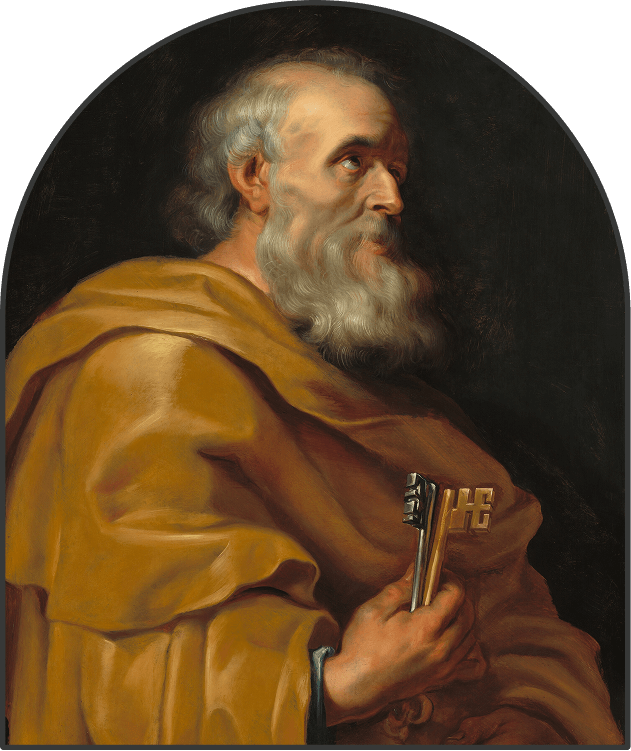
The Harp of the Spirit: St. Ephrem the Syrian and the Mysticism of Sacred Poetry

Introduction
In the fourth century, Christianity flourished in both the Greek-speaking West and the Syriac-speaking East of Europe. During this time of great spiritual progress, God raised up the voice of St. Ephrem the Syrian (c. 306-373 AD), one of the greatest poets and hymn-writers of the Church. The songs that he composed would be sung for centuries into the future.
St. Ephrem is known as “the Harp of the Holy Spirit.” He wrote thousands of hymns of sacred poetry, which were simultaneously profound expressions of theology, passionate prayers, and works of beautiful art. His life reveals a mysticism that is expressed through poetry, rather than through systematic writings or philosophical speculation. By means of poetry, Saint Ephrem experienced divine truths through imagery and metaphor. He made use of verse and rhythm to pray, and he approached God through beauty as well as through logic.
What makes St. Ephrem particularly significant in the history of the Church is that he represents an apostolic tradition in the Church; his tradition is very different from that of the Greek and Latin fathers, although equally valid and founded upon the Sacred Scriptures and apostolic tradition. The theological language, the liturgical forms, and the spiritual practices of the Syriac Christian Church evolved independently from those of the Western Christian Church. Like St. Ephrem, other teachers of the Syriac Christian tradition followed the example of St. Ephrem, to be a bridge between Semitic and Hellenistic Christianity. St. Ephrem was a reminder to the Church that divine truth is capable of being sung about as well as argued about. Also, that mystery can be experienced through the application of poetry as well as through the application of philosophy.
St. Ephrem spent his entire life on the Eastern Front of the Church. He lived in Nisibis (modern-day Turkey) and Edessa (today’s Turkey and Syria), both of which are cities that have been threatened by the impending invasions of the Persians from the East and the Christians of the area faced sporadic persecution. This existence along the border and continual threat of persecution influenced the manner in which he lived his spiritual life. St. Ephrem was very conscious of the fact that life was fragile and that, therefore, he could not depend on any earthly security. He was always prepared to either flee his home for refuge from an invading army or to die for his faith. Instead of creating a sense of anxiety, his precarious existence gave him greater trust in God and more intense focus on the eternal.
Ephrem frequently wrote hymns comparing the transient nature of Earth to permanence of heaven and comparing temporal suffering to eternal glory.
St. Ephrem’s decision to write poetry as the primary means of expressing his theological thoughts is one of the things he is perhaps most known for. Although he was capable of writing prose (as evidenced in his Biblical commentaries), he recognized that the language of poetry can be better suited to the expression of the divine mysteries than the use of the language of reason alone. The use of logical reasoning alone is not sufficient to understand divine mysteries. The understanding of divine mysteries requires a use of contemplation and imagination. For example, the truth of the Holy Trinity is not a philosophical concept to be reasoned but as a giver of revelation to be experienced in worship. The revelation of the Incarnation is beyond the capacity of reason to explain but is a reality to be experienced through the contemplation of poetry. While St. Ephrem’s poetry is not a movement away from truth towards the pursuit of beauty, St. Ephrem recognized that there are some divine truths that are only expressed through beauty.
Early Life: Formation in Faith
St. Ephrem was born about 306 AD in Nisibis, a major city in Mesopotamia (modern-day Turkey between the Tigris and Euphrates Rivers). It was part of the Roman Empire but close to the border of Persia. His parents were Christians, perhaps converts since Christianity was still relatively new in the area where he lived. There is some tradition that indicates his father was even a pagan priest before his conversion, although there is no solid evidence for this claim.
St. Ephrem’s life during his youth is somewhat clouded in obscurity, as he rarely wrote on himself. Later legends developed many colorful accounts of his youth, such as he was a very wild and rebellious boy, who was falsely accused of stealing things or perhaps he converted to Christianity following a vision. The majority of the scholars on St. Ephrem’s life do not support these colorful accounts. They feel that these legends are developed out of a hagiographical attempt to produce a conversion story similar to St. Augustine’s. It is more reasonable to think that St. Ephrem was raised as a Christian, and continuously developed a deep faith through family formation and Church instruction.
Regardless of how St. Ephrem’s faith developed, he did have a serious influence during his early adulthood from St. Jacob (James) of Nisibis, his Bishop. St. Jacob was an ascetic and miracle worker who attended the Council of Nicaea in the year 325 AD, where he defended the orthodox trinitarian faith against the heresy of Arianism. Under St. Jacob, St. Ephrem acquired an insight into the Bible, developed an understanding of the Church’s liturgical traditions, and received a solid foundation in the distinctive theological and spiritual practices of the Syriac Christian tradition.
Ephrem may have joined the “Sons of the Covenant” (bnay qyama)—an ascetic movement unique to Syriac Christianity. These weren’t monks in the later Western sense (formal monasticism hadn’t yet developed in Mesopotamia) but consecrated Christians living in their own homes or small communities, dedicated to prayer, fasting, celibacy, and service. They attended Church services, participated in liturgy, but also maintained distinctive ascetic practices and served as teachers, singers, and ministers to the poor.
This formation under Jacob and within the Sons of the Covenant shaped Ephrem’s entire spirituality. He learned that Christianity isn’t merely intellectual assent to doctrines but total life commitment—disciplining the body through fasting and vigils, purifying the heart through prayer and penitence, serving neighbors through charity and teaching, and worshiping God through liturgical participation.
The Siege of Nisibis: Faith Under Fire
In Ephrem’s early adulthood, he witnessed the devastating effects of the Persian Empire invading his home city of Nisibis. The Persian Empire, ruled by Zoroastrian kings, sought to expand its territory into the Roman Empire and established Nisibis as a strategic border fortress. Thus, it was subjected to multiple sieges from the Persians in 338, 346 and 350 AD, all of which took their toll on the Christian population. Supplies diminished, disease thrived, siege engines pounded on the walls and thousands died. Nevertheless, the Christians in Nisibis retained their faith and continued to gather for worship, celebrate the Eucharist and sing hymns in the presence of death. Ephrem took an active role in this collective testimony and may have already begun to write hymns to bolster the resolve of the Christian believers.
The siege of 350 was especially traumatic for the citizens of Nisibis. The Persians diverted the flow of a river to flood the city in an effort to weaken its fortifications, forcing the citizens into a situation of starvation and imminent defeat. Tradition states that the aged Bishop Jacob climbed to the battlements of the citadel and, empowered by prayer, he was able to inspire the Persians to renounce their desire to conquer Nisibis. The Christians believed that their deliverance was the result of prayer, whether by divine intervention or otherwise.
These events profoundly influenced all aspects of Ephrem’s faith and spirituality:
Fragility of earthly security. Ephrem learned that cities are defeated and empires collapse, giving him a more intense view of eternal realities and the unshakable nature of the heavenly kingdom “cannot be shaken” (Hebrews 12:28).
Power of communal prayer. The power of communal prayer is greater than military might and achieves deliverance through God’s intervention, courage through worship and hope through liturgies.
Value of sacred song. Hymns were not meant for entertainment, but rather as spiritual instruments or weapons that maintain faith during critical times and provide a means for Christians to participate in spiritual battle. “Our struggle is not against flesh and blood” (Ephesians 6:12)—Nisibis’s true defense was prayer, not walls.
Reality of spiritual battle. Behind Persian military threat stood spiritual forces opposing God’s kingdom. Christians fought not just human enemies but “principalities and powers,” not just for territorial control but for souls.
Pastoral importance of teaching. The teaching role of the pastor is extremely important in times of crisis. During a time of crisis it is critical that Christians have a solid understanding of the Scriptures and good doctrine. Ephrem fulfilled his role as a teacher and hymn-writer, which strengthened and prepared the believers in Nisibis for their times of suffering.
Following the death of Bishop Jacob (probably around 338), Ephrem likely served in the capacity of teacher and hymnist under the subsequent bishops of Nisibis, but he never held the office of priest or bishop. As a deacon, he continued to serve in this liturgical role, which opened up many opportunities for ministry, including reading the Scriptures during the service, leading the singing, preaching occasionally, etc., without being burdened with full pastoral responsibilities.
Exile to Edessa: New Beginning
In 363 AD, the circumstances surrounding Nisibis changed completely. Emperor Jovian, seeking peace with Persia following the disastrous campaign of Emperor Julian, had to surrender Nisibis to the Persians. The Christians of Nisibis were faced with a choice: stay under the Persian King and risk persecution, or flee into Roman territory and start a new life. Ephrem, with the vast majority of the Christians of Nisibis, chose to go into exile and abandon his home after living there for the previous 57 years.
Ephrem fled to Edessa (known today as Urfa, Turkey/Syria) a prominent Mesopotamian town located safely within the Roman Empire. The emotional toll of forced migration cannot be overstated; at the age of 57, he left behind everything he had always known, became a refugee, and started a new life. In God’s providence, this relocation served a much greater purpose.
Edessa possessed a large Christian presence, and it also had a highly respected theological school. Ephrem joined with the people of Edessa and became their most considerable teacher and worker, writing hymns, teaching Scripture, refuting the heresies, and beginning what later became known as the “School of the Persians” (referring to the refugees who fled to Edessa) or “School of Edessa,” a leading center of education in the early days of the Syriac Christian Church.
Ephrem was very productive during the decade he spent in Edessa (363-373). Because the military threat from the Persians was behind him, he was able to devote all of his efforts and time to teaching, writing and praying. Most of the works that have survived were written during this period; hundreds of hymns, numerous commentaries on the Bible, and treatises refuting heresy. He became the most influential voice of Christianity in Edessa, forming the liturgy, forming the orthodoxy and training the next generation of Syriac Christian teachers.
Although Edessa presented to Ephrem new opportunities, it also provided Ephrem with many new challenges. Edessa had many forms of heretical teachings: Arianism (the denial of Christ’s full deity), Marcionism (rejection of the Old Testament), Gnosticism (the hatred of matter) and the teaching of Bardaisan (an important philosopher whose orthodoxy is in question). Ephrem wrote numerous works against the various heretical teachings with which he was confronted, but he primarily used hymns as his weapons against heresy.
Ephrem understood that many times heresy spreads through catchy tunes. False teaching often spreads through attractive melodies, and people pick up the false doctrine by hearing and repeating them. Ephrem directly countered that by creating faith-filled and memorable songs, written in the same melody as the heretical songs. If people were going to sing, let them sing about truth! Ephrem’s hymns became the primary means of catechesis, or the construction of theology through the vehicle of worship.
Ephrem’s strategy of using hymns was extremely effective. His hymns spread throughout the world of Syriac-speaking Christianity; they were translated into other languages such as Greek, Armenian, Latin, etc. He wrote hymns that were used in the liturgies of the Church, becoming the preferred expression of the orthodox Christian faith for centuries. He literally out-sang the heretics and proved that beauty united with truth is far greater than either one alone.
The Poetic Medium: Theology in Verse
Ephrem’s distinctive contribution is using poetry as the primary theological medium. Ephrem did not have the ability to write in prose; he used poetry specifically as the medium to communicate his theological beliefs. He understood that it is through poetry that he was able to paint theological truths and mysteries that are beyond human understanding.
Ephrem used poetic devices and elements when writing of God, Christ, and salvation. He did not limit himself only to one method of presenting mystery but presented the mystery through many different angles; this was by using differing allegory, metaphor and imagery in his hymns, however they are not to define theology.
Several characteristics mark his poetic theology:
Imagery and Metaphor
Ephrem used imagery and metaphor, rather than precise definition, to approach the mystery from different angles by using a plethora of allegories and metaphors rather than trying to simply define.
Concerning Christ, Ephrem wrote Christ in allegorical images, he did not define Christ in philosophical terms: Christ is the Sun of Righteousness; the pearl of great price; the bread of heaven; the bridegroom; the passion; and the Lion of Judah. Each description gives insight to the truth of who Jesus is, and also there is no one description that encompasses all the truths of Christ; the collection of images gives insight to Christ in an infinite way—almost like viewing Christ through different angles of a kaleidoscope.
Ephrem’s style of communicating mystery mimicked Sacred Scripture—particularly the Psalms and prophets. In Sacred Scripture, God is described by the metaphorical images of rock, shepherd, fortress, father, judge, husband, potter, warrior, and king. With each of the images, God reveals an aspect of Himself. However, God’s nature is infinite, therefore God is beyond human categorization.
Paradox and Antithesis
In Ephrem’s eyes, paradox is the basis of mystery. Ephrem would often use paradox in his hymns, which involved the use of both extremes being presented next to one another—stating that in paradox exists a truth that cannot be explained by mere logic: God is both fully man and fully God; God is fully immortal; God is fully mortal; God is both the Creator and the creature; God is both finite and infinite. Mary is described as both a virgin and a mother. The Eucharist is described as both bread and the body of Christ; both wine and the blood of Christ. None of these statements are contradictory to logic, but are paradoxes.
Ephrem’s hymns utilized the practice of antithesis; examples of this device are found within his hymns, where Ephrem would use two opposite words or phrases as polar opposites; for example:
He was small and He was great, He was humble and He was exalted, He died and He gives life, He descended to Sheol and He ascended to heaven.
This stylistic device isn’t mere poetry but a theological method—acknowledging that divine reality holds together what seems to us incompatible, that God’s ways exceed our understanding (Isaiah 55:8-9).
Typology and Biblical Interconnection
Ephrem understood that the common thread found running through both the Old and New Testaments is the reality that the Old Testament is constantly foretelling about the New Testament. Ephrem taught that every event that occurred in the Old Testament serves as a “type” (a prophetic pre-figuration or fore-telling) of an event that will occur in the future; therefore, the common thread runs from creation to the consummation of the New Testament.
As an example of this, Adam’s sin through disobedience was reversed by Christ’s obedience as the New Adam; Eve’s sin of disobedience was undone by Mary’s obedience as an example of faithful obedience; the tree of knowledge became the tree of the Cross. The manna from heaven in the desert types the Eucharist, or the Holy Communion, which is the fulfillment of the Old Testament type; the bronze serpent that was lifted up by Moses (John 3:14) served as a type or foreshadowing of Christ being lifted up on the Cross. Jonah’s being in the belly of the whale for three days served as a type or foreshadowing of Christ being buried for three days.
These are not random connections made by Ephrem. Ephrem recognized that God was the creator of history and that it was God who through His providence had arranged the patterns in such a way that they would serve as the basis for the revelation and unfolding of God’s redemptive plan, culminating in His final revelation through Jesus Christ. In order to fully recognize how God has progressively revealed His salvation plan, we must be able to read the Scriptures contemplatively, thereby giving us the ability to see the continuity of God’s redemptive activity throughout the history of the created order from beginning to end.
Rhythm and Repetition
The use of various rhythmic and repetitive patterns, poetic devices, and the implementation of refrains were not just ornamental devices to create beautiful choral music; but were theological tools for Ephrem. Ephrem recognized that the repetition of hymns reinforces the teaching/elements of a growing relationship with God, therefore, it assists the worshippers with memorization of hymns and, through the encouragement of rhythm created the reading of the hymns consistent with the overall order of God’s covenant promise and fulfillment.
By taking all of these aspects—communal singing, poetic construction, and emotional connection together—Ephrem’s hymns brought unity to the worshipping congregation; they sounded as one voice glorifying God, while at the same time each individual became a part of the singular Body of Christ. Paul taught that Christians should address “one another in psalms and hymns and spiritual songs, singing and making melody to the Lord with your heart” (Ephesians 5:19). Ephrem’s hymns facilitated exactly this—corporate worship that both expressed and created unity.
Emotional Engagement
While it is important to teach true doctrine, Ephrem recognized that we must engage our hearts in addition to our minds with the truth of God. Ephrem’s hymns invoke the feeling of awesomeness, wonder, thanksgiving, repentance, yearnings and joys—Ephrem’s hymns do not just instruct and teach—they change our hearts.
Ephrem’s poetry reflects the same passion found in the Bible with regard to emotional engagement—like Psalm 42:1:
As a deer pants for flowing streams, so pants my soul for you, O God
Psalm 42:1
Jesus wept over Jerusalem (Luke 19:41). Paul desired to depart and be with Christ (Philippians 1:23). The poetry of Ephrem demonstrates this emotional desire to connect with God through worship.
Hymns on Paradise: Contemplative Vision
Among Ephrem’s most profound works are his Hymns on Paradise—fifteen hymns contemplating the Garden of Eden, humanity’s original state, the Fall, and the promise of return through Christ. Ephrem’s Hymns on Paradise provide insight into the height of his mystical vision.
Paradise as Symbol and Reality
Ephrem understands Paradise to be not only the historical place where Adam and Eve lived, but also present reality (where God resides with saints), and hope for future restoration (for all creation) as promised through Jesus Christ.
Paradise pertains concurrently to:
Historical: The garden that God constructed “in Eden, in the east” (Genesis 2:8) was the location where humanity began.
Mystical: The Church, most notably through her sacraments and Eucharistic worship, offers believers a foretaste of the fruit of Paradise— “You have come to Mount Zion and to the city of the living God” (Hebrews 12:22).
Eschatological: The promise of a renewed creation— “new heavens and a new earth in which righteousness dwells” (2 Peter 3:13).
This multi-faceted view of Paradise is consistent with the method of aka, a term used in Syriac exegesis: To enjoy the literal meaning and to explore the spiritual and symbolic implications of Scripture—past experiences of God’s grace point to the present act of grace and ultimately lead to the “glory of God.”
The Tree of Life
Ephrem engages in considerable meditation on the tree of life found in Paradise (Genesis 2:9). In doing so, he arrives at many significant symbols pertaining to the Church, believers and Christ:
Christ Himself: The Tree of Life is Christ who gives eternal life— “I am the way, and the truth, and the life” (John 14:6). Those who “eat” Him (through Eucharist and faith) live forever.
The Cross: The Tree of Life from which Adam was removed now serves as the intersection through which Adam may once again return to Paradise. Adam’s disobedience lost him access to one tree; through Christ’s obedience, we have regained access to the other.
Scripture: God’s Word is the Tree of Life yielding fruit in season— “Blessed is the man… [whose] delight is in the law of the LORD” (Psalm 1:1-2).
The Church: The community of believers is a Tree planted by streams of water (baptism), bearing fruit (virtues), whose leaves heal nations (Revelation 22:2).
All of these descriptions are not separate entities; they are facets of one reality: Jesus Christ. Jesus is revealed through the Scriptures, physically present in the Church and sacrament, and displayed in the ultimate access to Paradise given through the Cross.
The Four Rivers
The four rivers of Paradise (Pishon, Gihon, Tigris, Euphrates, Genesis 2:10-14) are used by Ephrem as symbols of the grace of God flowing to all creation:
- The Four Gospels: Each Gospel is a river that supplies the world with water from Jesus—the Gospels together provide the entire world with the knowledge of who Jesus is.
- Four Cardinal Virtues: The four cardinal virtues (prudence, justice, fortitude and temperance) are the fruits of the four rivers of Paradise. As we drink from the virtues (through faith) our souls are transformed.
- Four Directions: God’s mercy (the four rivers of Paradise) flows northwards, southwards, eastwards and westwards: “from the rising of the sun to its setting the name of the LORD is to be praised” (Psalm 113:3)
- Sacramental Grace: The waters of baptism and the wine of Eucharist are the rivers of Paradise, available to believers through the redemptive work of Jesus.
Adam’s Fall and Christ’s Victory
Ephrem provides insight into Adam’s Fall from a psychological standpoint. Adam didn’t fall because of logical arguments, rather his Fall was influenced by his pride (“you will be like God,” Genesis 3:5), to sensual desire ( “the fruit was good for food and… a delight to the eyes,” Genesis 3:6), and to presumption (acting independently of God’s command).
In contrast, Jesus illustrated the opposite actions to those exhibited by Adam. Adam was proud, while Jesus was humble, “taking the form of a servant” (Philippians 2:7). Where Adam grasped at divinity unlawfully, Christ “did not count equality with God a thing to be grasped” (Philippians 2:6). Where Adam disobeyed, Christ obeyed “to the point of death, even death on a cross” (Philippians 2:8).
Ephrem gives emphasis to Mary in this relationship. While Eve listened to the lies spoken by the serpent, Mary accepted the truth spoken to her by the angel. Through Eve’s disobedience, death entered into the world; but Mary, through her obedience, brought forth the incarnation of Jesus which is life. Ephrem’s presentation of Eve’s and Mary’s parallel experiences illustrates the redemptive work of God through Jesus reversing the results of the Fall.
Paradise Regained
The ultimate revelations pertaining to Paradise are found in Ephrem’s Hymns on Paradise are that Paradise is restored; Paradise’s gates have been opened by Jesus for all believers. The day of Jesus’ crucifixion, a thief crucified with Jesus entered Paradise (Luke 23:43).
Even today, believers are given the opportunity to experience a component of Paradise through the sacraments of the Church. The sacrament of baptism provides believers with entry into Paradise and the sacraments of the Eucharist provide nourishment from the tree of life.
At the second coming of Christ, a complete restoration to Paradise will take place:
God himself will be with them as their God. He will wipe away every tear from their eyes, and death shall be no more
Revelation 21:3-4
Paradise will expand to encompass all creation—not just a garden but “new heavens and a new earth” (Revelation 21:1).
For Ephrem, Paradise does not simply provide escape; rather, it provides insight into the origin of man from God, the purpose of creation and its end. By meditating on Paradise, humans remember their creation in the image of God, cry over the separation from God, rejoice over their salvation through Jesus Christ, and anticipate the ultimate restoration through Jesus.
Hymns on the Nativity: Incarnational Mysticism
Ephrem wrote Hymns on the Nativity which portrays Jesus as being born with deep insight and wonder. When read or sung in churches during Christmas time they contributed to the shaping of the Christmas liturgy in the wider church.
The Marvel of the Incarnation
In all his writings of Hymns on the Nativity, he continually expresses amazement at the paradox of the Incarnation – that God took on human form, that He made His entrance into time and history, that He was the Creator Who created the universe, and yet He entered the world as a baby.
The Power that governs all dwelt in a small womb, The Sustainer of all creation was sustained by Mary's milk, He who set the stars in place sought His mother's breast, The Word who spoke creation into being was speechless as a babe.
These paradoxes do not develop logically, but demonstrate how wonderful this mystery is. Ephrem does not explain how God became a human being, but he affirms that it happened, and calls for us to worship Him. In other words, when one encounters something that is a mystery, they should not seek to understand it, but rather they should respond in worship.
Mary: The Burning Bush
Ephrem frequently thought of Mary’s conception of Jesus as being a fulfillment of the image of the burning bush in Exodus 3:2. Just like the burning bush that was on fire and not burned up was the vehicle of God’s fire when God spoke to Moses, so also, through Mary, God carried His fire (the Son of God in her womb) and Mary was still a virgin and did not suffer any loss of virginity even though she gave birth to Christ.
The burning bush also confirms Ephrem’s doctrine of Mary’s perpetual virginity. Ephrem states that Mary conceived by a virgin birth, that she remained a virgin after the birth of Jesus (even though she was married and gave birth), and he interprets the Bible’s references to Jesus’ “brothers” as being cousins or Joseph’s children from an earlier marriage.
The burning bush is also significant because it teaches us that matter can bear the divine presence. Matter can and will be transfigured by God’s presence and, thus, the creation of order validates created order, demonstrates that matter can mediate spirit and anticipates the time in the future when God will be “all in all” (1 Corinthians 15:28).
The Humble King
Ephrem contrasts the greatness of Jesus’ divinity with the humility of His humanity, as evidenced by He being born in a cave and placed in a manger and being swaddled and having to receive human care from the shepherds (the lowest class in society). Ephrem portrays the King of Glory as being a helpless babe and the Creator of the universe as needing the care of separate created beings and requiring the protection of another human being.
In Ephrem’s picture of Christ’s humility, he gives us insight into the love of God. God does not remain distant from mankind requiring homage to Himself, but instead, He comes to our level and identifies completely with our human nature (according to Ephrem with the one exception of sin), and He identifies with the lowly. Jesus taught His followers that greatness in the Kingdom of God equates with servanthood (Mark 10:43-45). His humble entrance into the world is just a model of this coming greatness.
The hymns also note who recognized Christ at His birth: shepherds (representing Israel’s faithful poor), Magi (representing Gentile seekers), Mary and Joseph (representing the Church)—while Herod (worldly power) sought to destroy Him. This pattern continues: the humble receive revelation, the proud miss it; the poor inherit the kingdom, the rich go away empty (Luke 1:52-53).
Bethlehem and Bread
Ephrem notes that “Bethlehem” in Hebrew means “house of bread.” Therefore, when Jesus was born it was certainly significant that a child being born to Mary was born in the “house of bread” and that He was laid in a manger, a feeding trough.
Jesus is “the bread of life” (John 6:35); therefore, his birth foreshadows that He would one day provide nourishment to the entire world by being the Bread of Life for all humans.
The incarnate Word lies where animals feed, but He is food for human souls. The Bread from heaven (John 6:51) appears in the house of bread. The One who will say “Take, eat, this is my body” (Matthew 26:26) is first laid in a feeding trough. From birth to Last Supper to Eucharist, the pattern holds: Christ gives Himself as food, sustaining those who partake of Him.
Light in Darkness
One of the favorite images found in Ephrem’s Nativity hymns is light and darkness. Thus, in the winter months, during the days of the shortest amount of light will be the time when Christ was born, so the light enters into the deepest darkness of the world during the winter solstice. Ephrem quotes John’s Gospel when Jesus said, I am the “light of the world” (John 8:12), “true light, which gives light to everyone” (John 1:9), the One who makes “night bright as day” (Psalm 139:12).
The metaphor of light and darkness is more than just poetic language; it expresses a deep theological truth. The coming of Christ brought to an end the spiritual darkness that existed in the world prior to the Incarnation of Christ and provided the insight necessary for the understanding of God’s character. Therefore, Christ’s coming brings to light what had previously been hidden and it establishes a new day that will never end. Those who follow Christ “will not walk in darkness, but will have the light of life” (John 8:12).
In Ephrem’s Nativity hymns there are consistent references to Christ being born at night, and this is important because it illustrates that the light chose to enter the world in the midst of darkness. The darkness of the world at that moment represents how God reaches out to us and how God’s mercy penetrates into our darkest times of darkness and despair. This gave hope to Christians who were being persecuted or were in despair: that even when everything seems dark, God’s light shines forth.
Hymns on Faith: Defending Orthodoxy
Ephrem expressed his beliefs in many hymns in defense of Nicene orthodoxy, an expression of faith that was also a way to respond to those who promoted conflicting views of the Christianity in his day with their heretical views. He defended his view of Christ fully human against the Arian heresy that denied Christ was fully God, and he wrote about Christ’s total divinity and how the power of Christ to forgive sins (which can only be done by God) demonstrates Christ’s divinity.
Against Arianism
Arianism holds that Jesus is not the eternal son, but rather the highest created being, who is not co-eternal with God. Arianism teaches that Jesus was created at the beginning of time and is in a sense of greater importance to God than any other created being; He may share many of the qualities of the Father but does not possess the fullness of the nature of God. Therefore, since Arianism teaches that Jesus is not truly divine, He cannot provide salvation to anyone because only God has that ability.
In defending Nicene orthodoxy, Ephrem states emphatically that Christ is fully divine:
He is God from God, Light from Light, Begotten, not made, of one Being with the Father, Through Him all things were made, Without Him was not anything made.
(This echoes the Nicene Creed’s language, which Ephrem helped propagate through song.)
Ephrem advocates that through Christ alone, since He created all of creation and has authority over creation, forgives sin (only God can forgive sins), raises the dead and is able to receive worship (worship can only be offered to God), and that through these actions of Christ, we can assess the fullness of His divine nature.
Ephrem also points to the prophecies of the Old Testament as evidence that Jesus would come to bring salvation:
Behold, your God... will come and save you
Isaiah 35:4
Jesus fulfills this—therefore He is God. Thomas confesses, “My Lord and my God!” (John 20:28), and Jesus accepts this worship, which He wouldn’t do if not truly divine.
Against Apollinarianism
Apollinarianism holds that God is the only true source of creation, therefore Apollinarians believed that Jesus was only a divine being and, since they deny the existence of a human soul in Jesus, deny Jesus’ full humanity. Gregory of Nazianzus, an early church father, and Ephrem both agree that, “What is not assumed is not healed.” Thus, since Jesus did not take on the complete and full nature of humanity in order to redeem it, there exists no means by which all of humanity can be redeemed by Jesus.
Ephrem expresses that Jesus has a full human nature in the hymns he wrote, when he states:
He was truly conceived, truly born, Truly nursed, truly grew, Truly hungered, truly thirsted, Truly wept, truly suffered, truly died.
Every aspect of human experience (except sin) was embraced by Christ. He had human body, human soul, human mind, human emotions, human will—all united to divine nature in one person. This enabled Him to redeem every dimension of human existence.
He also illustrates this truth by expressing how Jesus was tempted to sin in Matthew 4:1-11. If Jesus had not taken on human nature (body, soul and will), He could not have been tempted; thus temptation would have had no purpose or meaning. However, He “was tempted as we are, yet without sin” (Hebrews 4:15).Thus, there is evidence that Jesus had a full human nature; therefore, He experienced real temptation and made the right choices while perfectly aligning with His divine nature.
The Mystery of One Person
Ephrem does not stop with an explanation of Jesus’ dual natures. He thinks about how these two natures are fused together into one person. Ephrem marvels at the mystery of how Jesus can be fully God and fully man, and he is in awe that they never become confused or separated in any way.
Ephrem presents a variety of analogies that demonstrate and illustrate the mystery; however, none are completely satisfactory.
Fire and Iron: When iron is thrust into fire, it becomes fiery—glowing, hot, penetrating—yet remains iron. Similarly, Christ’s humanity is permeated by divinity yet remains truly human.
Soul and Body: When we see a human being, there exists a real union between the human body and the immaterial soul. Therefore, we do not refer to that person as two separate persons, but rather as a single person. Therefore, Jesus is also an illustration of having two complete natures.
The Burning Bush: Moses saw a bush burning. The bush was not consumed by fire. Just as the bush was not destroyed by the fire, so Jesus remains in full union with God without being destroyed by the creation.
These illustrations demonstrate the difficulty we have with understanding how God can merge two realities: The reality of God and the reality of the human being. Ephrem is in agreement with others that our understanding of the incarnation will far exceed our finite abilities to grasp it. All we can do is stand in faith and profess the truth of God’s word found in Scripture, while humbly admitting we cannot comprehend or express the fullness of that truth.
The Eucharist: Mystical Food
Ephrem’s theology related to the Eucharist is highly realistic; He believes that, through consecration, bread and wine actually become Christ’s body and blood. This idea is conveyed through His hymns with pictures such as:
Fire and Spirit in the womb of Mary, Fire and Spirit in the river of baptism, Fire and Spirit in our Eucharist— In the bread is His body, In the wine is His blood.
There are a number of themes within Ephrem’s teaching regarding the Eucharist:
Real Presence
The consecrated elements are not just symbols, they are the real presence of Christ. He is truly present in the Eucharistic elements in the same body which was born of Mary and crucified under Pontius Pilate, and raised on the third day. He says in His hymn:
Contemplate the Body and Blood placed before you, The Body that was laid in the tomb, The Blood that flowed from His side— These are now on the altar before you.
Ephrem’s real presence view is a result of Incarnational logic. If God could unite spirit and matter by becoming a man, and if the Word could take on flesh by becoming material, then bread and wine could become the body and blood of Christ. Through the Eucharist, Christ is continuing to make Himself available to us through material means.
Participation in Divinity
The Eucharist is more than a spiritual benefit; it’s a way of actually participating in God’s divine life. Ephrem states:
He gave us His Body to eat, That we might become His body, He gave us His Blood to drink, That we might become of His blood.
Ephrem’s bold language relating to the “wonderful exchange” expresses this idea: By eating Christ’s flesh, we are made to be His flesh and by drinking His blood, we share in Christ’s life. Paul teaches that “we, though many, are one body, for we all partake of the one bread” (1 Corinthians 10:17). Ephrem develops this idea further than Paul, and states that we are not only to be united with each other when we partake of the Eucharist, but we are to become organically one with Christ.
Medicine of Immortality
Ephrem refers to the Eucharist as “Medicine of Life.” “antidote against death”, and “bread of immortality” based on a number of different biblical and early Christian sources. This title corresponds with Jesus’ statement:
Whoever feeds on my flesh and drinks my blood has eternal life, and I will raise him up on the last day
John 6:54
Through communion, we eat from the true tree of life (Christ), and regain immortality, by reversing the effects of the Fall. The first Adam ate from the tree of knowledge of good and evil and died, and believers in Christ eat from the true Tree of Life, which restores to them as much or more than Adam’s dining upon the tree of knowledge of good and evil taken away from Adam. The Eucharist gives us a foretaste of the messianic banquet (Matthew 8:11) and the wedding feast of the Lamb (Revelation 19:9), in which the redeemed will eat and drink at Christ’s table, in the Kingdom (Luke 22:30).
Fire That Doesn’t Consume
Once again, Ephrem draws on the image of the burning bush (Exodus 3:2-4) to illustrate how the Eucharist is the “Fire clothed in bread, Flame wrapped in wine.” This fire completely cleanses, while at the same time it does not destroy, completely transforms, yet it will not consume. This fire divinizes us without destroying or annihilating our humanity.
He cautions us that approaching unworthily brings judgment (1 Corinthians 11:27-29)—the Fire that heals the pure burns the impure. Yet for those who approach with faith and repentance, this Fire is “sweet,” “life-giving,” “joy-bringing.” The same sacrament brings different effects depending on the recipient’s disposition.
Mystery Beyond Comprehension
Despite Ephrem’s vivid language, he clearly acknowledges that the mystery of the Eucharist is beyond our capacity to totally comprehend. He states in one of his hymns:
Who has seen grapes become blood on the vine? Yet behold blood in the chalice! Who has seen wheat become flesh in the field? Yet behold flesh on the altar! This is the Lord's doing, It is marvelous in our eyes
echoing Psalm 118:23
Ephrem teaches that the appropriate response to such a mystery should not be to demand an explanation and be skeptical but, rather, to respond with believing wonder. We should simply accept Christ’s words:
This is my body... This is my blood
Matthew 26:26-28
If God says it, it is true, regardless of whether we understand how it happened.
Prayer Life: The Contemplative Pattern
Ephrem does not have a systematic approach to prayer in his writings. His hymns and prose works reveal both the method of his contemplative practice and what he teaches as to how to pray.
Liturgical Prayer
Ephrem, as a deacon, would be fully involved in the liturgical life of the Church, thus he would have been celebrating the Eucharist (assisting the priest), and praying the daily braces (the written prayers of set hours of the day) based on the liturgical year. In this way, his daily prayer life had structure.
The liturgy of the Church in Syria was very poetic, employing great use of hymns and poems. Ephrem made numerous contributions to this very rich tradition of liturgical poetry, writing hymns for each season and feast of the liturgical year. His hymns were not only a method of expressing himself artistically but also served as liturgical texts meant for congregational singing to enhance worship together.
Scripture Meditation
Ephrem had memorized many Scriptures. He constantly meditated on the Scriptures. Thus, Ephrem’s hymns demonstrate the presence and use of bible imagery, language, and allusions. He practiced what later became known as lectio divina, (the slow, contemplative reading of today’s Scriptures) beginning with a manuscript, then meditating on the material read, and finally moving into a phase of prayer in awareness of Scriptural intent and God’s will.
He commented on the Scriptures, using two different ways to approach the text: He studied the letter of the text, and then searched for the Spiritual Sense of the text—particularly through typological references to the Old Testament and how they related to Christ. He reads the Scriptures with an Old Testament historical lens, but views them also as the Living Word of God that speaks to him in the present, calling him to respond as God wills, and changing him through to be like Christ.
Ascetic Discipline
As either a part of the Sons of the Covenants, or having been associated with the Covenant Sons, Ephrem practiced asceticism by being very strict about fasting months at a time, sleeping minimally every night, keeping a celibate life, and living a simple life, as these practices are to enable the believer to open themself to God through prayer and provide space in the inner man/woman for God and to rid the heart of physical distractions/hindrances.
Ephrem strongly taught that when combined, fasting and prayer make prayer fruitful; thus he stated that:
Prayer and fasting are like two wings that lift the soul to God. Prayer alone is like trying to fly with one wing.
Fasting does not earn the grace of God (grace will always be a gift), however, fasting does help prepare a person’s heart to be able to receive grace, much like tilling soil prepares it to receive seeds.
Tears and Compunction
Ephrem highly valued the gift of tears: tears of prayer, to God, for one’s own sins, for the lostness of every soul, for one’s own hunger to be restored:
Let tears be my sacrifice, Let weeping be my offering, Let compunction be my incense, Ascending to You, O Lord.
Ephrem does not believe that tears are a substitute for being genuine in prayer. Therefore, tears are a very spiritual gift from God. Our tears are a visible sign of the inward sorrow of our hearts for having offended the Holy God. As the Psalmist wrote:
My tears have been my food day and night
Psalm 42:3
Ephrem knew that tears were a form of prayer so deep that words cannot be expressed.
Unceasing Prayer
Ephrem used the injunction of the Apostle Paul to “pray without ceasing” (1 Thessalonians 5:17), to teach that unceasing prayer must first be achieved through remaining in contact with God by being aware of the presence of God at all times. Unceasing prayer does not mean verbally praying all of the time (which would be impossible due to necessities). Rather, unceasing prayer is achieved by being inwardly in communion with God whether awake or asleep.
He recommended brief ejaculatory prayers throughout the day— “Lord, have mercy,” “Glory to You, O God,” “Blessed be Your name.” These brief cries maintain connection when extended prayer isn’t possible. They’re like breathing—constant, necessary, often unconscious yet sustaining life.
Solitude and Silence
Ephrem devoted himself to moments of solitude while serving during the liturgical life of the Church, and he may have maintained a “cell” or cave outside Edessa where he could regularly seek God through long periods of prayer.
Like Jesus, who “would withdraw to desolate places and pray” (Luke 5:16), Ephrem knew that God allowed public and church ministry to be productive only when that minister served God in solitude.
Silence isn’t mere absence of sound but active listening, receptivity to God’s voice, creating space where divine whisper can be heard. Elijah heard God not in wind, earthquake, or fire but in “a low whisper” (1 Kings 19:12). Such whispers require silence to hear.
The Virgin Mary: Theological Poetry
Among the earliest and most complete forms of Marian theology in Christianity, Ephrem’s hymns on the Mother of God have had a profound impact on the future development of both Eastern and Western Mariology by establishing many of the themes and images that would become standard.
The New Eve
Ephrem greatly increased upon the earlier parallels proposed between Eve and Mary. Eve believed the serpent, while Mary believed Gabriel. Eve’s act of disobedience brought death to the world, while Mary’s act of obedience brought life into the world. Eve was the mother of all living things, whereas Mary is the mother of the true life (Jesus) and spiritual mother of all those who will be reborn through Him.
As seen above, this parallel (which Ephrem poetically elaborated upon) supports the notion that God’s redemptive work is a restoration of human beings to that which was lost at the Fall. The similarities abound in both cases but are negated by the reverse effects—garden (Eden/Nazareth), tree (knowledge /crucifixion), woman (Eve/Mary), fruit (forbidden fruit/Christ), death/life.
Perpetual Virginity
Ephrem taught emphatically regarding the perpetual virginity of Mary—before, during, and after the birth of Christ—as being not only a matter of her sexual purity (although it was), but of her having been completely dedicated to God and of her having played an important role in the plan of salvation, as well as her having given birth through divine miracle.
Like the burning bush that burned yet was not consumed by it, the image of Mary’s virginity speaks of her being the bearer of divine fire, yet remaining a virgin at the same time. Just as the burning bush was a miraculous sign that pointed to a greater mystery, so, if God can be incarnate, He can be born through the Virgin Mary.
Theotokos: Mother of God
Ephrem commonly called Mary Theotokos (Greek: God-bearer, Mother of God). This title will be important for Christology, because Mary did not bear a man who later became divine but the one and only God and a Man—Jesus—at the moment of His conception. To deny the title Theotokos could imply a division between the two natures of Jesus, one divine and one human. Yet, the Scriptures and the orthodox view of faith confess that there are two natures and that there is one person who exists in both natures: Mary is the mother of this one person.
Mary’s Humility
Ephrem emphasizes Mary’s humility. He presents her astonishment regarding the announcement of Gabriel. He also stresses her question: “How will this be?” (Luke 1:34), her surrender “Let it be to me according to your word” (Luke 1:38). She doesn’t presume divine favor or boast of her selection but humbly accepts God’s will.
Mary’s humility provides the model for all faithful Christians. Mary inspires us to say “yes” to God, to trust His promise even though we may not understand when and where it will happen, and to place our plans at His disposal. Mary’s fiat becomes the “yes” for every Christian’s necessary prayer.
Mary and the Church
Ephrem depicts Mary in the same way that she is depicted in Scripture as the physical mother of Jesus and first bearer of Christ to the world. The Church also bears Christ to the world, as well as to each of us. Just as Mary was the out-of-sight place where Christ was Incarnate, so too is the Church; she is the spiritual home of Jesus Christ in the world. In addition, as Mary fed Jesus through her breast, the Church feeds all who believe in Him through the Word and the Eucharist.
Thus, the ecclesial aspect of Mary’s devotions helps prevent our honoring Mary alone; by doing so we also recognize that through her, God accomplished the miraculous work of Incarnation and that the Church continues that work through her. Mary’s virginity, Theotokos, and sinlessness (this is only implied, not explicitly stated, by Ephrem) were given to Mary to serve in the mission of the Church.
The Final Service: Famine Relief
The last year of Ephrem’s life, (372-373), proves that his contemplation results in action, and that his mystical union with God causes him to extend practical love by producing charity for the experiences of others. In 373, a severe drought caused a famine in Edessa and surrounding areas that resulted in many starving and a select few becoming wealthy through illegal deeds or capturing market monopolies of grain at exorbitant prices, or hoarding vast supplies to sell and profit through increased demand.
Ephrem had spent many years concentrating on prayer and meditation, as well as seeking after the things of God. When the famine occurred, he came forth to organize a program for feeding the hungry. He brought shame upon the wealthy hoarders and brought them to account before God by having them donate their extra supplies of grain to the numerous families who were starving. He organized the supply and distribution of grain, and the creation of shelters to care for the needy refugees coming into Edessa from the country, as well as personally caring for the sick and dying.
His actions do not suggest that Ephrem suddenly abandoned contemplation in order to pursue activism; contemplation produces action. His years of praying the Psalms, which proclaim repeatedly the poor and condemn oppression, had created a conscience within him to care for those in need. Likewise, his meditation on Scripture, which continues to command all people to care for the vulnerable, compelled him to perform acts of love and compassion. His Eucharistic communion with Jesus, who identifies with the hungry (Matthew 25:35), led him to extend his compassion to Christ in the suffering.
There are many aspects of his ministry that demonstrate Ephrem’s spiritual maturity:
Prophetic courage. He publicly admonished the wealthy hoarders by calling them to account before God. It took courage to challenge those who had power to hurt him and to speak the truth to them.
Practical organization. Not only did he pray for the hungry, but he also organized an efficient and effective program to help them by obtaining the resources necessary to support the project, achieving fairness of distribution, and setting up procedures to follow. The meditative aspect of contemplation can never make someone impractical; it should do just the opposite.
Personal service. Despite being in his sixties, and having a very influential reputation that would have allowed him to administer from a distance, he personally cared for the sick, bandaged the wounds of the afflicted, and consoled the dying. The love of God calls for service in person, rather than through a distance.
Temporary withdrawal, permanent return. After the famine had ended and the community had established sufficient resources to continue with their own food supply, Ephrem returned to his place of solitude. He did not desert his time of contemplation; rather, he left to fulfill an extremely important service, and then he returned to his commitment.
This last act of service dramatically illustrates the connection between Ephrem’s mysticism and mission in life. He did not spend his life in pursuit of prayer to escape his responsibilities; instead, he spent his time in prayer to prepare himself for his responsibilities. Therefore, when the crisis occurred, he was able through the wisdom of God, the courage of God and the impetus of doing something to be effective in his call to action. Once the crisis ended, he returned to the ministry of contemplation, which is the “one thing necessary” (Luke 10:42).
Death: The Poet’s Final Hymn
St. Ephrem died on June 9, 373 AD after suffering from disease acquired while caring for victims of the local famine. Tradition says he died while writing his last hymn, literally singing his way into eternal life; his Harp of the Spirit rang out to his last breath.
If we believe the story that St. Ephrem was composing his last hymns at the end of his life, we know the last hymns he wrote during his life were filled with trust in Christ, hope in resurrection, and the peace of trusting in God. Just as he would have lived through his life in faith, so, too, did he die: with faith in God’s mercy, by confessing Christ with his mouth, and with a heart full of words of praise to God through the art of poetry.
From this point on, St. Ephrem was venerated as a saint by the Church. St. Ephrem was canonized as a Doctor of the Church—a teacher whose doctrine is sound and whose universal influence is felt by all) and his feast day is celebrated on June 9 in the Western Churches and January 28 in the Eastern Churches.
The number of hymns written by St. Ephrem ensured that he would have a lasting impact on the Christian world. His hymns were copied and translated into many languages throughout the Christian world. The Syrian Christians considered St. Ephrem to be their greatest teacher. Many of St. Ephrem’s works were translated into Greek, allowing him to influence the development of Byzantine theology. St. Ephrem’s works were translated into Latin by Western medieval scholars, and the hymnographic model of many Western hymns owes a great deal to St. Ephrem.
Legacy: Poetry as Theology
St. Ephrem the Syrian has left an invaluable legacy to Christianity. His legacy is the demonstration that theology can be expressed in songs, that mystery can be approached through poetry, and that doctrine and devotion go together.
Hymnographic tradition. St. Ephrem developed a hymnographic tradition, establishing the idea that congregations could sing original compositions at liturgies, that theology should be able to be sung, and that hymns should be used as a vehicle to teach doctrine.
Typological exegesis. St. Ephrem’s typological exegesis, the interpretation of Old Testament Scriptures as foreshadowing the New Testament, influenced the way Christians interpret the Scriptures for centuries.
Marian theology. St. Ephrem developed the theology of the Virgin Mary, most notably, the idea of Mary as the New Eve, Theotokos, and the perpetual virginity of Mary, shaping both the Eastern Church and the Western Church’s traditions regarding Mary.
Poetic theology. St. Ephrem successfully demonstrated that metaphor and imagery can be as valid as precise philosophical arguments for conveying a truth, that poetry is as legitimate a medium for theology.
Integration of contemplation and action. The life of St. Ephrem clearly displays that years of contemplation through prayer prepare an individual for a crisis ministry; that a mystical experience of God drives a person to take action on behalf of others; and that the most effective ministers of Christ during crisis are contemplatives.
Incarnational mysticism. St. Ephrem’s consistent focus on the Incarnation of Christ, the Word made flesh, and the descent of the divine into and through material things is what distinguishes St. Ephrem’s brand of mystical theology from all other forms of mystical theology.
Conclusion: The Singing Church
St. Ephrem the Syrian calls Christians of today into the practice of mysticism, through the beauty of God’s presence in our lives, by articulating his theology through poetry, and by offering prayer through singing. These aspects of St. Ephrem’s life provide a challenge to several assumptions held by the Church today.
That theology must be purely rational. Ephrem teaches that theology does not need to be rational. He proves through his life that the imagination, poetic metaphor, and symbol can convey truth as validly as the rigor of logic and philosophy, and that often an avenue into the mystery of God is not by way of rationality.
That mysticism is individualistic. His hymns were composed for congregational singing, his mysticism expressed corporately, his contemplation serving the Church’s worship and teaching.
That contemplation withdraws from world. His decades of prayer prepared him to serve effectively during famine, his mystical vision generated practical charity, his communion with Christ drove him to serve Christ in the suffering.
That beauty and truth are separate. Ephrem demonstrates their unity—that beauty serves truth by making it attractive, that truth finds proper expression in beauty, that worship engages aesthetic sense as well as intellect.
That liturgy and life are separate. His integration of liturgical prayer, scriptural meditation, and daily living shows that Christian existence is liturgical—offering all of life as worship, finding God in beauty, serving Christ in neighbor.
For contemporary worship, St. Ephrem provides a significant model for present worship. Congregational singing is not entertainment or just an emotional experience; it is one of the most effective means to form into the image of God. Congregations sing through the Body of Christ (the Church), creating a corporate prayer life of many voices brought together to sing.
For contemporary theology, St. Ephrem is a challenge to those who place too much reliance on the logic and rationality of theology. While we need well-reasoned, logical understanding of theology and doctrine, we must recognize the limitation of rational discourse to express certain aspects of God. There are certain dimensions of truth that propositional statements cannot accurately convey, and only a contemplative approach can unlock the mystery of God.
St. Ephrem demonstrates to all Christians that through prayer, we are transformed; our whole life becomes the table of sacrifice; our love of God becomes our service to the neighbor. The Harp of the Spirit calls us as individuals to give our entire lives in service to God through our songs; through the beauty of our songs and the beauty of our lives we are to create beauty for God, who is the creator of all that is good, true, and beautiful.
Blessed is he who has carried his cross and followed You, Lord. Blessed is he who has put on his wings and soared above the world's vanities. Blessed is he who has made his vows and kept them faithfully. Glory to You, O Lord, who have made us fit to sing Your praises!
St. Ephrem the Syrian
Our Editorial Standards:
All our content on Christian meditation traditions, prayers, and spiritual practices is reviewed by Dr. Megan Remington, PhD, ensuring theological soundness and spiritual depth.
We draw from centuries of Christian contemplative tradition, citing respected theological sources, biblical references, and established spiritual practices.
Our team understands that spiritual struggles are deeply personal. We approach topics of anxiety, strength, healing, and peace with compassion and biblical wisdom.
We continuously review and update our spiritual resources to ensure they remain relevant and aligned with orthodox Christian teaching.
Each article clearly identifies our writers and reviewers, along with the theological sources and biblical foundations used.
 To guarantee that all of our information is accurate, we ensure that all our sources are reputable. That means every source is authenticated and verified to be backed only by medical science.