


 App Store
  Google Play
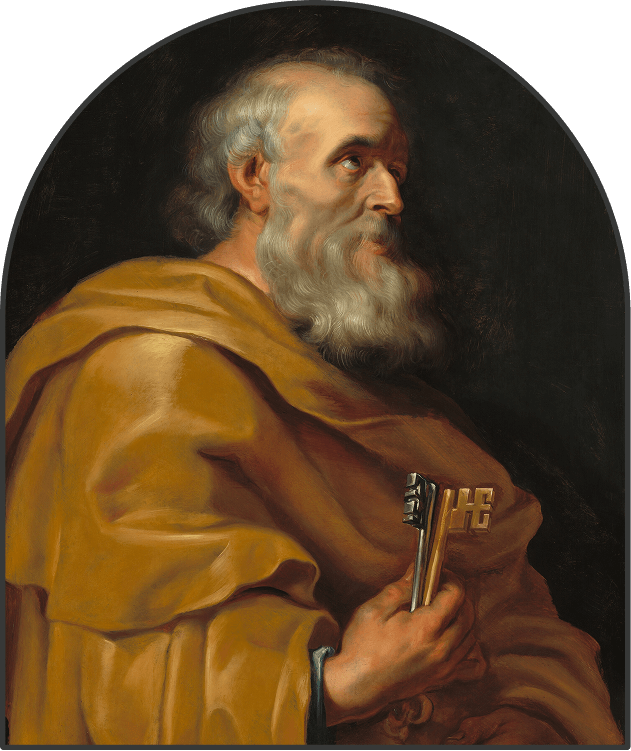
St. George the Martyr: Prayer, Courage, and the Crown of Life

Introduction
The Roman soldier who would become one of Christianity’s most beloved martyrs lived a life where prayer and action were inseparable. St. George of Lydda (died c. 303 AD) exemplified the biblical truth that “faith apart from works is dead” (James 2:26), while his works flowed directly from a heart anchored in prayer. Though historical details of his life are sparse, the consistent testimony of early Christian tradition reveals a man whose courage in martyrdom was forged through intimate communion with God.
The Soldier’s Foundation: Prayer as Spiritual Armor
During the time of the Roman Emperor Diocletian, St. George served as a tribune in the Roman Army, while also practicing his faith as a Christian in a time when Christians were persecuted. Due to his courage in Christ, St. George practiced his Christian faith while still serving the Roman Empire. His habit of prayer was hidden from public scrutiny, and thus St. George’s prayer life was viewed as an active pursuit similar to that of Daniel, who prayed three times a day despite an edict from his king (Daniel 6:10).
The Apostle Paul wrote a letter to the Ephesians regarding the spiritual warfare that Christian soldiers face, and he encouraged them to “Put on the whole armor of God, that you may be able to stand against the schemes of the devil” (Ephesians 6:11). For George, this armor was donned daily through prayer. Before buckling his physical sword, he took up the “sword of the Spirit, which is the word of God” through Scripture meditation and “praying at all times in the Spirit” (Ephesians 6:17-18).
Early accounts describe George as a man who rose before dawn for prayer, following Christ’s example of seeking solitary places while it was still dark (Mark 1:35). In the quiet hours before military duties began, George would commune with his true Commander, acknowledging that “unless the LORD builds the house, those who build it labor in vain” (Psalm 127:1).
Hidden Discipleship: Interior Prayer Under Persecution
During the early 4th century, many Christian men serving in the Roman Army found themselves with a dilemma. In St. George’s case, he was required to make a public appearance as a participant in military ceremonies, while his heart belonged fully to Jesus. St. George’s commitment to Jesus and active prayer life were a requirement for him to survive spiritually in an environment that could have resulted in a less than wholesome spiritual condition.
Jesus taught His disciples how to pray secretly:
When you pray, go into your room and shut the door and pray to your Father who is in secret. And your Father who sees in secret will reward you
Matthew 6:6
For George, this “room” was often the chamber of his heart. While in the military, St. George was able to keep this connection to his inner man, where he could constantly be connected to God, regardless of his location or activities.
George’s continual connection to God and his awareness of God whilst performing his duty as a leader in the Roman Army, were consistent with the Apostle Paul’s exhortation to “pray without ceasing” (1 Thessalonians 5:17). George understood that his prayer life was not confined to a certain time during the day; instead, he maintained a continuous relationship with God during his time in service, leading his troops, and serving on military councils by way of informal prayers and ongoing awareness of God’s presence in his life.
The Crisis: When Prayer Meets Persecution
To every Christian living in the Roman Empire, and especially George, the day had arrived when Emperor Diocletian issued an edict decreeing that all Christians in his Empire must sacrifice to the false gods or suffer death. For George and many of his fellow martyrs, this represented the moment of truth. As such, George had built up a foundation of years of hidden prayer, by which he was prepared for the public revelation of this faith in God.
When confronted with this edict from the Emperor, George’s response followed in the same manner as that of many Old Testament believers:
Our God whom we serve is able to deliver us... But if not, be it known to you, O king, that we will not serve your gods
Daniel 3:17-18
George’s response illustrated a conviction formed through years of meditation on the faithfulness of his God.
When George received the Emperor’s edict, he did not impulsively react by taking a rash action. He sought the will of the Lord by spending an entire evening in prayer and supplication for God’s guidance concerning the Emperor’s edict. His prayers echoed Jesus’ prayer for self-preservation, but then St. George surrendered his will to that of God’s by praying:
Not as I will, but as you will
Matthew 26:39
George focused on Biblical passages that had previously brought hope and faith to many martyrs while he was praying through the night. He thought about the words of Jesus:
Do not fear those who kill the body but cannot kill the soul
Matthew 10:28
He was also likely thinking about St. Stephen, the first martyr, who prayed whilst being stoned (Acts 7:59-60). Likewise, he may have drawn from the words of the Apostle Paul:
For to me to live is Christ, and to die is gain
Philippians 1:21
Public Confession: Prayer Made Visible
George acted the day after his night of prayer. He went to the emperor and made a public confession of his faith in Christ, giving away his wealth to the needy just as Jesus had instructed to “lay up for yourselves treasures in heaven” (Matthew 6:20).
George’s public confession was the visible result of his prayer life. The same word that Peter said to the Sanhedrin:
We must obey God rather than men
Acts 5:29
The words George spoke before the emperor were spoken by the Holy Spirit. Jesus promised:
When they deliver you over, do not be anxious how you are to speak or what you are to say, for what you are to say will be given to you in that hour. For it is not you who speak, but the Spirit of your Father speaking through you
Matthew 10:19-20
The visible demonstration of the fruits of contemplative prayer for George was that for years he had been contemplating the passion of Christ, and now he was being called to make that passion a part of who he was. Through years of contemplating Scripture, George had changed his knowledge of Jesus into his conviction about Jesus and through his conviction to his courage for Jesus.
Torture and Prayer: The Mystical Union with Christ’s Suffering
Multiple tortures were suffered by George for many days, according to early church writers. During George’s tortures, prayer became the most intimate act of sharing with Christ in His passion and becoming united to Him as a result of his tortures. The suffering of George became a prayer in that it united him with the crucified Lord.
Paul wrote:
I want to know Christ—yes, to know the power of his resurrection and participation in his sufferings, becoming like him in his death
Philippians 3:10
For George, to share in the passion of Christ was not to be taken as a mere metaphor; it was actuality. Each blow, each wound was an opportunity to pray with Christ and to pray for the very persecutors who were inflicting the torture. It was echoing Jesus’ prayer at the crucifixion:
Father, forgive them, for they know not what they do
Luke 23:34
Additionally, the mystical union with Christ’s suffering was not passive submission but rather was to be the birth of an act of love. George recognized what Jesus had taught:
Greater love has no one than this, that someone lay down his life for his friends
John 15:13
His martyrdom was indeed the greatest form of prayer: it was a total offering of himself to God and it was the ultimate demonstration of love for those who killed him.
After each of his tortures, George would spend the little time he was allowed for respite by praying. George prayed for his torturers to be converted, and for the strength of other Christians, and for the ability to bear witness faithfully in this extreme suffering. Those prayers show the depth of spiritual maturity George attained through years of prayer and meditation on Jesus’ command to “love your enemies and pray for those who persecute you” (Matthew 5:44).
The Contemplative Vision: Glimpsing Glory
Many historical accounts state that during his imprisonment, George was granted several visions of heavenly glory and from those visions, George was strengthened for martyrdom. Although the details of each vision may vary from account to account, the core of the information remains the same: God allowed George a glimpse of the glory that awaited him.
This kind of experience agrees with the biblical tradition of such occurrences. For example, while Stephen was being stoned, he “gazed into heaven and saw the glory of God, and Jesus standing at the right hand of God” (Acts 7:55). Paul was “caught up to the third heaven” and heard “things that cannot be told” (2 Corinthians 12:2-4). These mystical visions did not serve to build the individual up but rather to give strength to the individual to be a good witness and to endure suffering.
George may have reflected on the promises from the conviction of what he experienced through contemplative prayer while he was in prison. He may have reflected upon the words of Jesus to the condemned thief:
Today you will be with me in paradise
Luke 23:43
He would have certainly reflected upon the promise of those who remained faithful:
Be faithful unto death, and I will give you the crown of life
Revelation 2:10
The contemplative experiences George endured while imprisoned did not remove him from reality, but they helped anchor him deeper into the eternal truth. Just as Moses “endured as seeing him who is invisible” (Hebrews 11:27), George fixed his eyes on the unseen realities that prayer had made real to him.
The Witness of Other Converts: Prayer’s Ripple Effect
The effect of George’s martyrdom and suffering was felt by others. Reports state that as a result of George’s display of peacefulness and courageous witness in times of trials led many individuals, even some of his torturers and the Empress Alexandra, to convert to Christianity.
George’s ability to draw so many people to him as well as Christ came from his faithful dedication to prayer. Jesus had told His followers that:
If I be lifted up from the earth, I will draw all people to myself
John 12:32
George lifted up his prayers both before his martyrdom through prayer and his physical lifting through the cross or wheel during the time of his martyrdom, leading to many conversions.
The people who became followers of Christ because of George’s witness realized that George’s courage was derived not from philosophical beliefs of stoicism or training through military force but rather through an intimate relationship with the living God. Furthermore, they had realized as the psalmist had said:
Some trust in chariots and some in horses, but we trust in the name of the LORD our God
Psalm 20:7
Because George prayed continually, he gained a trust that went beyond his human strength.
Jesus had given the example about the principle of dying and being resurrected to give an abundant harvest (John 12:24). George’s life of constant prayer had set the roots of faith and had culminated in his death.
The Final Prayer: Commending His Spirit
At the moment of execution—traditionally believed to be beheading on April 23, 303 AD—George offered his final prayer. Like Stephen, who prayed “Lord Jesus, receive my spirit” (Acts 7:59), and like Christ Himself who cried “Father, into your hands I commit my spirit” (Luke 23:46), George entrusted his soul to God.
The final prayer of George was the ultimate culmination of many prayers. Each time George prayed and offered each day to God was a rehearsal of surrender to God. Each time he accepted suffering as the will of God and in resisting any temptation to compromise was a preparation for the final act of faith in surrender.
The peacefulness of George at the time of his death was a witness of the closeness of his relationship with God. George did not have fear during the time of his death:
Even though I walk through the valley of the shadow of death, I will fear no evil, for you are with me
Psalm 23:4
The time George spent with God through prayer had prepared George for that final valley.
The Martyr’s Crown: Prayer’s Eternal Reward
The Book of Revelation gives an eternal reward of life to all martyrs, thus George received the crown of life (Revelation 2:10) during his martyrdom and received inheritance in heaven from prayer life (1 Peter 1:4).
Martyrdom was viewed by Christians of the early church as the highest level of liturgy. Martyrdom is total self-offering made to God, uniting the believer to His sacrifice. The last time George experienced martyrdom was his last and most complete prayer, leading to all previous prayers when he became part of the “great multitude that no one could number” of the multitude who had “washed their robes and made them white in the blood of the Lamb” (Revelation 7:9, 14).
From the time of death, the witness of George has grown because of the love of God in the hearts of His people. However, for Christians the experience of martyrdom is the witness of the transformation prayer has made on a person’s life into a vessel of divine courage. People have come to honor George so highly because his life was so tightly intertwined in Christ, pointing everyone clearly beyond George himself and into Christ.
Lessons for the Christian Life Today
For most of us who follow Jesus, the likelihood of martyrdom is minimal, but we can learn from the example set by George. They exemplify the importance of prayer in developing faith to endure and thrive in Crisis.
Hidden preparation for public witness: George’s years of secret prayer prepared him for his public confession. Our daily devotions, unwitnessed by others, build the spiritual strength needed for moments of testing. As Jesus taught, what we cultivate in secret bears fruit in public (Matthew 6:6).
Interior prayer amid daily duties: George was always aware of the Lord’s presence while he served as a soldier. Therefore, during your work, family obligations, and other day-to-day routine tasks, you have the ability to establish a practice of continuous prayer; all that you do can be an offering to our God (Colossians 3:23).
Scripture as foundation: The courage exhibited by George was rooted in the years of meditation on the Word of God. In the midst of crisis, the Word of God provided George with an understanding of his suffering and the promises from Him that would carry him through.
I have stored up your word in my heart, that I might not sin against you
Psalm 119:11
Prayer in decision-making: Before George confessed Christ, he spent a night praying and seeking God’s will. When making important decisions, we should spend time in the presence of God, where we can discern the Lord’s direction and receive strength for obedience to Him.
Suffering as prayer: While we may not experience torture, there are many instances of suffering in the lives of Christians. George’s example shows us that when we unite our suffering with the passion of Christ, we can experience transformation of suffering from simply enduring it to that of being a redemptive offering to the Lord (Colossians 1:24).
Praying for enemies: By praying for the enemies of George, we are following Jesus’ command to love our enemies. This supernatural act of love will only come through prayer, which transforms our heart into the heart of God (Matthew 5:44-45).
Contemplating eternal realities: George focused on Heaven and the promises of God rather than on earthly threats. As we frequently meditate on the idea of eternal life, the Risen Christ, and the Kingdom of God, we will develop the perspective to see suffering as merely temporary and therefore not worthy of our attention (2 Corinthians 4:17-18).
Consistent daily practice: In George’s example, we see that extraordinary courage did not appear overnight; it was born out of the normal routine of faithfulness in daily life. Through morning time with God through the Word and developing a continual awareness of His presence, George developed the spiritual strength that held him under persecution.
The Pattern of Biblical Martyrs
George’s prayer life and martyrdom fit within the broader biblical pattern of faithful witnesses. Like Abel, whose blood cried out to God (Genesis 4:10; Hebrews 11:4), George’s death spoke more eloquently than words. Like the prophets whom Jesus honored (Matthew 23:29-31), George counted the cost and chose obedience. Like John the Baptist, who prepared the way through faithfulness unto death (Mark 6:27-29), George’s witness prepared hearts for receiving the gospel.
Most significantly, George followed Christ Himself, who “learned obedience through what he suffered” (Hebrews 5:8) and whose prayer life—marked by early rising (Mark 1:35), all-night vigils (Luke 6:12), and intimate communion with the Father (John 17)—culminated in the ultimate self-offering on the cross.
Practical Steps to Develop George’s Prayer Discipline
Here are some practical steps we can take to develop a prayer life that sustains us, as George:
Early morning prayer: Rise early to spend uninterrupted quality time with God. Jesus “rose very early in the morning, while it was still dark” to pray (Mark 1:35). Beginning your day in prayer grounds the day in the presence of God.
Memorize Scripture: Memorize scriptures that build faith to remain steadfast during times of trial. These include Psalms of delivery from adversity, scriptures of the promise of eternal life, and Jesus’ teaching on persecution:
Let the word of Christ dwell in you richly
Colossians 3:16
Practice the presence of God: Develop an awareness of God’s presence during all your hours and daily tasks by saying short prayers and repeating Scripture phrases silently, or just reminding yourself God’s presence exists everywhere you go. As you establish this routine, you will live according to the principle of “praying without ceasing” (1 Thessalonians 5:17).
Meditate on Christ’s passion: Think of the crucifixion and how it provides you with strength and courage in your suffering and trials.
Let us run with endurance the race that is set before us, looking to Jesus
Hebrews 12:1-2
Pray for those who oppose you: Whether your enemies or those who frustrate, torture, or irritate you, pray for those who are creating problems. This prayer provides you with an opportunity to allow your heart to be transformed and to allow God to work redemptively through your life (Romans 12:14-21).
Count the cost: Ask God in prayer whether you will be able to stand firm if you are persecuted for your faith. Honest examination of this before the Lord will reveal specific areas in your life that need to be strengthened and also give you an opportunity to grow in your dependency upon Grace in Him (Luke 14:28).
Fast regularly: George disciplined himself in this area; fasting increased sensitivity to the Spirit of God and provided the strength necessary to choose God over comfort (Matthew 6:16-18).
Participate in communal worship: George most certainly worshipped together with other Christian believers in church and shared the Lord’s Supper. Therefore, people grow in the faith when they participate in corporate worship (Hebrews 10:24-25).
The Contemporary Relevance
Martyrdom remains a current reality for many Christians around the world, particularly in China and Muslim majority countries, and George’s experience serves as an encouragement for modern-day martyrs being imprisoned, tortured, and killed in the name of Christ. Their courage is based on the same foundation of intimate relationship with God in prayer, which helped to instill God’s promises into their hearts more than the present reality of suffering.
For all Christians, not just those facing life-threatening persecution, George’s life is a powerful reminder that we also suffer various forms of martyrdom, like being socially ostracized due to our biblical convictions, having career limitations because of our moral stands, and being rejected by family when we choose to follow Jesus Christ. Our intimacy with God and regular prayer will provide us with the strength and power to stand against the forces of evil that wish us to perish, and help us remain faithful to Him.
Moreover, spiritual warfare remains constant reality. Paul’s description of spiritual armor (Ephesians 6:10-18) applied to George’s literal military service but applies equally to every believer’s spiritual battles. Prayer remains our essential weapon, sustaining us against “the cosmic powers over this present darkness” (Ephesians 6:12).
The Soldier Saint’s Legacy
St. George is considered the archetypal soldier saint in Christianity, and through his example and legacy of faith the entire world has been inspired to seek the courage to fight back against evil and stand firm in the faith until the Lord Jesus Christ returns. George is also a patron of numerous military orders around the world.
The legacy of St. George is a powerful testament to the truth of the end of an ethnic cleansing—the courage demonstrated by St. George enables other believers to engage in spiritual warfare, to have victory over the evil forces, through prayer, like the dragon he is often pictured killing, and through the perseverance required of all who follow Jesus (1 John 5:4).
The example of St. George also echoes the same challenge faced by every modern-day Christian:
There is salvation in no one else, for there is no other name under heaven given among men by which we must be saved
Acts 4:12
Conclusion: The Prayer of the Soldier’s Heart
St. George’s life demonstrates that heroic witness flows from hidden communion. His martyrdom was spectacular, but it grew from years of unseen faithfulness—rising early to pray, maintaining interior awareness of God throughout military duties, meditating on Scripture’s promises, and cultivating love for God that subordinated all earthly loves.
For modern believers, George’s example issues both comfort and challenge. The comfort: God provides grace sufficient for whatever He calls us to endure (2 Corinthians 12:9). The challenge: such grace flows to those who seek Him diligently in prayer (Hebrews 11:6).
George would have resonated deeply with Paul’s words:
I can do all things through him who strengthens me
Philippians 4:13
Not I can do all things through my courage, my strength, or my discipline—but through Christ who strengthens through prayer, grants endurance through communion, and transforms ordinary soldiers into extraordinary saints.
The call George answered echoes still:
Be watchful, stand firm in the faith, act like men, be strong
1 Corinthians 16:13
For George, standing firm meant kneeling often—kneeling in prayer before rising to face dragons both literal and spiritual.
George’s life asks modern believers today:
What dragons do you face daily, that will require the same level of courage from prayer?
What actions must you take to show up before you step into the workplace today?
What testimony will you have if your prayers are as diligent and devoted as those of our soldier and saint, St. George?
And how do you expect to conquer the evil in your life without the prayers that lead to salvation and victory over the world and every evil held in the power of the enemy?
The prayer of a righteous person has great power as it is working
James 5:16
St. George proved this truth, and his prayers echo still, calling Christians to lives of courage rooted in contemplation, witness grounded in worship, and martyrdom—whether by blood or by daily dying to self—sustained by intimate communion with the God who gives the crown of life.
Our Editorial Standards:
All our content on Christian meditation traditions, prayers, and spiritual practices is reviewed by Dr. Megan Remington, PhD, ensuring theological soundness and spiritual depth.
We draw from centuries of Christian contemplative tradition, citing respected theological sources, biblical references, and established spiritual practices.
Our team understands that spiritual struggles are deeply personal. We approach topics of anxiety, strength, healing, and peace with compassion and biblical wisdom.
We continuously review and update our spiritual resources to ensure they remain relevant and aligned with orthodox Christian teaching.
Each article clearly identifies our writers and reviewers, along with the theological sources and biblical foundations used.
 To guarantee that all of our information is accurate, we ensure that all our sources are reputable. That means every source is authenticated and verified to be backed only by medical science.