


 App Store
  Google Play
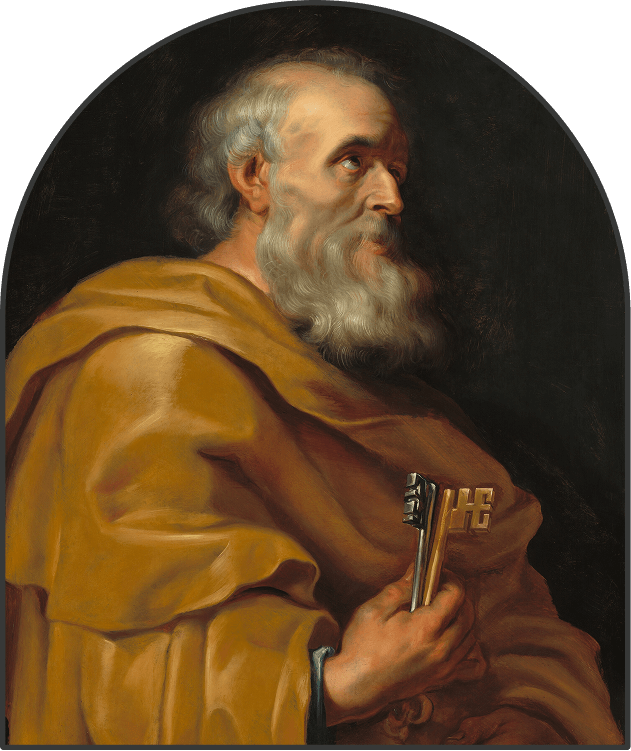
The Liturgical Mystic: The Prayer Life of St. Germanus of Constantinople

Introduction
St. Germanus of Constantinople (c. 634-733 AD) was a bishop of Constantinople during the Golden Age of Byzantine Christianity, when Constantinople was the center of Christendom and the Church’s liturgy was closely linked to his daily prayer life, changing the way Christians will continue to worship for centuries to come. St. Germanus was a courageous defender of icons, a brilliant theologian, and a mystic—one whose spiritual contemplation of God and divine mysteries are seen as an expression of the Church’s sacred worship .
Early Formation in Prayer
Germanus was born into both a privileged and tragic world. His father, a senator, was executed in a political upheaval, and as a result, Germanus, at a young age, was made a eunuch, purposely done to preclude him from holding any political power. However, what human malice intended for harm, God intended for good:
You intended to harm me, but God intended it for good to accomplish what is now being done
Genesis 50:20
Since Germanus could not seek worldly ambition, he turned all of his focus to God. He entered monastic life, dedicating himself to daily prayer with an intensity born of having nothing else to hold on to. He learned the ancient rhythms of Christian prayer, to pray The Divine Office, which sanctified every hour, the Jesus Prayer, which kept the focus of his heart directed towards God, and reading Scripturally as a way to sustain spiritual life and understand God’s heart .
Germanus was formed during a time of much richness in Byzantine spirituality, a time when the teachings of many of the Desert Fathers and the Cappadocian Fathers, along with Pseudo-Dionysius the Areopagite were coming together to create a complete and comprehensive mystical theology. Germanus learned from all these sources to understand that prayer is not simply about asking God for something, but is also about being united with God; prayer is not merely words, but is also meant to transform us into God’s image.
The Sacramental Vision
Germanus viewed all that is visible in the physical world as an opportunity to view and understand the invisible divine mysteries of God. His understanding of this sacramental principle is grounded in the teaching found in Scripture, that “since the creation of the world God’s invisible qualities—his eternal power and divine nature—have been clearly seen, being understood from what has been made” (Romans 1:20).
For Germanus, the height of understanding of this sacramental principle could be seen primarily in the divine liturgy of the church. Each and every element involved in Christian worship–from the architecture of the building to the vestments worn by the clergy, from the movement of the liturgy to the hymns and prayers used in worship–are all vehicles through which intermediate means are experienced and interact with God’s ultimate heavenly reality.
When Christians come together to worship on Sunday morning and such, they are participating in, and are a meaningful part of, an ongoing eternal church worship that takes place before the Throne of God:
Day and night they never stop saying: 'Holy, holy, holy is the Lord God Almighty, who was, and is, and is come
Revelation 4:8
His masterwork, On the Divine Liturgy (also called The Church History and Mystical Contemplation), was one of the first books that systematically presents a mystical view of the divine Eucharistic liturgy of the church. In this book, Germanus takes the reader through the divine liturgy by identifying and revealing the spiritual meaning of the actions taken, the prayers offered, and the symbols used.
The Church Building as Prayer
Germanus taught that contemplative prayer actually begins the moment you enter the church building. The very building is actually called a teacher or three-dimensional sermon and is considered to be the ‘gateway’ to understanding the sacred mystery of God. He also taught that the church building encompasses multiple realities at once. It is both the earthly heaven—God’s dwelling place—fulfilling the promise He made to His people:
I will dwell among them and walk among them, and I will be their God, and they shall be My people
2 Corinthians 6:16
The sanctuary is symbolic of paradise, and the Garden of Eden, where God made man’s first communion with God. The altar represents the throne of God, and also the tomb of Christ, where His body was laid. The altar table represents three events at the same time: it is the place Abraham prepared to sacrifice Isaac, it is the place Jesus’s Last Supper took place, and it is also the place of the Marriage Feast of the Lamb described in Revelation.
When Germanus entered the church, it was not just another building for him. He considered entering the church to be entering a “holy” space in which earth had met heaven, within which he encountered the living God. This vision is contained within Jacob’s vision when he awoke from his dream of the ladder reaching to heaven:
Surely the LORD is in this place, and I was not aware of it...How awesome is this place! This is none other than the house of God; this is the gate of heaven
Genesis 28:16-17
Every church building, in Germanus’ mystically idealized view, is a “gate” to heaven.
The Liturgy as Mystical Participation
Germanus’ understanding of the Divine Liturgy is a mystical participation in the living reality of Christ within heaven. When the Church celebrates the Eucharist, it is not to merely “remember” the death and resurrection of Christ but to enter into it as a current reality and has real-world ramifications above and beyond those of this life.
This understanding is rooted in Scripture. Jesus commanded, “Do this in remembrance of me” (Luke 22:19), but the Greek word anamnesis means more than simply to have a mental image; it means re-enacting, to make real.
Paul writes that “whenever you eat this bread and drink this cup, you proclaim the Lord’s death until he comes” (1 Corinthians 11:26). It can be seen that the relationship between what Christ did in the past, what the Church does today, and what Christ will do in the future as a continuum of history is fulfilled through the Divine Liturgy.
For Germanus, to celebrate the Divine Liturgy is to ascend spiritually into heaven and stand before the throne of God. As the priest prayed the anaphora (the Eucharistic prayer), the earthly congregation joined with the angelic hosts in worshiping God. Germanus taught that the distinction between earth and heaven became gossamer-thin. The words of the Sanctus— “Holy, holy, holy is the Lord of hosts; the whole earth is full of his glory” (Isaiah 6:3)—were not mere poetry but experienced reality.
He also taught that in order to pray the Liturgy, one must be continuously aware of the mystery , and not merely praying at random without thought or feeling. Preparation of the heart to pray includes a pure intention and an awareness of the belief in the reality of the mysteries that are celebrated; thus, one must develop through daily prayer and ascetic struggle.
The Mystery of the Incarnation in Worship
The core of Germanus’s mystical theology is the Incarnation, which is the amazing fact that “the Word became flesh and made his dwelling among us” (John 1:14). According to Germanus, the whole of liturgy emphasized and demonstrated an aspect of this mystery; every single aspect of worship was a reminder of the paradox that God became man, but was still fully God.
The vestments of the priest represent the clothing of Christ’s humanity that cover Christ’s divine nature, according to Germanus. Christ’s entrance into the world is represented in the processional entrance, where the Gospel Book is carried. The reading of scripture stands for Christ teaching in the synagogue, and the Great Entrance with gifts is Christ’s journey to the cross. The consecration is the mystico-representation of both the crucifixion and resurrection.
Thus, in addition to being a source of knowledge of Christ, worshippers were also able to experience Christ through the mystical approach and the Incarnation, which allows for grace to flow through matter. In addition, that which is visible can convey that which is unseen. Therefore, icons, incense, vestments and items used in the Divine Liturgy have been validated by their use as instruments of a spiritual purpose.
Through his mystical contemplation of the Incarnation, Germanus believed that all Creation was in some way, theophanic, and could reveal God. As the psalmist wrote:
The heavens declare the glory of God; the skies proclaim the work of his hands
Psalm 19:1
However, the Church’s worship provided the opportunity for the focused manifestation of God’s glory in a more explicit, direct, personal and transformational way.
The Defense of Holy Icons
Germanus’s mystical understanding of the Incarnation gave him a strong reason to defend icons during the Iconoclastic controversy, a major crisis for the Byzantine Church in the 8th century, when Emperor Leo III began destroying icons and persecuting those who venerated icons. When Leo III started destroying and persecuting, Germanus, the Patriarch of Constantinople, staunchly defended holy images.
Germanus’s defense of icons was based not only on political and traditional statements, but on the basis of his contemplative theology. Icons, according to Germanus, were not idols but rather windows into heaven, which allowed the prototype (the saint represented) to be present to the worshipper. The veneration of an icon will allow respect to be transferred from the material object to the spiritual object represented by the material object.
The basis of Germanus’s understanding of icons was based on the Incarnation, for if God took on human flesh and came into our midst, then matter has been eternally validated to convey the divine presence. “The Son is the image of the invisible God” (Colossians 1:15), and therefore images act in the same principle—conveying invisibility into visibility and spirituality into tangibility.
Germanus taught that when we see an icon of Christ, we are not worshipping paint and wood but rather entering into a relationship with the living Christ through the visual image. The icon functions as a tool of prayer, as it gathers our attention and opens our hearts to divine grace. This has a biblical basis: in the Old Testament, when the Israelites looked upon the bronze serpent Moses lifted up, they were healed (Numbers 21:9). Thus, the visible image became a means of God’s power .
Germanus defended icons so courageously that he eventually was forced to resign as patriarch. After retiring to his family estate, Germanus spent his final years in prayer and writing and died around 733 AD. His theological position of reverencing icons was subsequently vindicated by the Second Council of Nicaea in 787 AD, which officially confirmed the legitimacy of icon veneration and recognized the depth of Germanus’s mystical theology.
The Theotokos in Prayer and Contemplation
Germanus had a unique devotion to the Theotokos (the Virgin Mary, Bearer of God). He was a prolific hymn-writer, and the litany of hymns he composed/adapted for Mary through his writings still exist in many Orthodox liturgical hymns today. His devotion and love for Mary was not a naive sentimentality, but a major part of his mystical theology.
Mary epitomized all God’s responsive callings with perfect receptivity, total surrender, and absolute fidelity. Her fiat,— “May your word to me be fulfilled” (Luke 1:38)—represents the ideal of a contemplative prayer—the soul offering itself completely to God’s will and action.
In addition, Mary was the very first tabernacle of God; she was the first temple/church; and she served as the prototype for all holy spaces. Mary carried within her womb the incarnate Christ, in being thus her body is the one place where heaven and earth converge, as also do God and man. As Germanus contemplated Mary, he was also contemplating the Incarnation of God living among His people:
The virgin will conceive and give birth to a son, and they will call him Immanuel (which means 'God with us')
Matthew 1:23
Germanus is attributed to writing the hymn, “It is truly meet to bless you, O Theotokos” (Axion Estin), one of the most beloved prayers of Eastern Christianity. Many people in Eastern Churches still pray this hymn today. This particular prayer combines precise theological understanding with great mystical devotion and reverence for Mary, “more honorable than the Cherubim and more glorious beyond compare than the Seraphim”; this is not exaggeration but rather is a truth found in the mystical realm of God—she who bore the Creator exceeds all other creatures in holiness and dignity.
Germanus’s devotion to Mary represents his understanding of the Church. Mary represents the pattern of the Church—both the Church and Mary carry Christ to the world; and both Mary and the Church present Christ by being open and receptive to God’s Holy Spirit. Therefore, to contemplate Mary is to contemplate the mystical identity and call of the Church in Christ.
The Mysticism of Light
The symbol of divine light appeals to many Byzantine mystics, including Germanus, who found great meaning in how extensively Scripture employs the motif of light. As we read, for example, “God is light; in him there is no darkness at all” (1 John 1:5). Christ declared, “I am the light of the world”(John 8:12). The righteous “will shine like the sun in the kingdom of their Father”(Matthew 13:43).
Both through the use of physical light and in the minds and hearts of those participating in the Eucharistic prayers, Germanus viewed light as a symbol of God’s presence in the liturgy. For example, he noted that candles lit the church and lamps burned in front of icons; that in the morning, Matins, light streamed in through windows, and priests wore white vestments in the context of baptism and feast days. Although all of these sources of lighting point to things spiritual, such as God’s uncreated divine nature and the soul’s illumination through the grace of God, Germanus recognized that the true meaning of these elements is to communicate through the liturgy how we, as we participate in its celebrations with pure hearts and focused minds, gradually receive God’s divine illumination in our lives.
The basis of Germanus’ theology of light was when “Jesus was transfigured before them. His face shone like the sun, and his clothes became as white as the light” (Matthew 17:2). In that moment, Christ revealed the divine glory that was always His but normally hidden from human eyes. The liturgy functions similarly—revealing the divine glory that permeates all reality but is usually veiled from our perception.
Prayer and Ascetic Struggle
While Germanus is mostly mentioned for his liturgical mysticism, he also had a prayer life that was grounded within the parameters of traditional monastic disciplines, such as fasting, vigils, and the ascetic struggle against passions. Germanus recognized the important distinction that so many modern Christians fail to see; mystical experience and moral transformation are one in the same.
Without holiness no one will see the Lord
Hebrews 12:14
Similarly, following the teaching of the Desert Fathers, Germanus taught that the passions —disordered desires and emotions—cloud the soul’s vision and block authentic contemplation of God. Through the vices of pride, anger, lust, gluttony, and others, the heart becomes filled with discord, and this creates noise in one’s heart, preventing the true perception of divine things. Conversely, as stated by Jesus,
Blessed are the pure in heart, for they will see God
Matthew 5:8
To this end, Germanus would practice rigorous fasting, not as punishment for the body, but rather as an opportunity to train his body. Specifically, by disciplining the physical body, the individual will gain control over physical appetites and create space for spiritual hunger and appetite for God. In his letter to the Corinthians, Paul wrote,
I strike a blow to my body and make it my slave so that after I have preached to others, I myself will not be disqualified for the prize
1 Corinthians 9:27
Additionally, while fasting directs the soul to hunger for God, it also teaches the soul how to seek after the Lord above all else:
Man shall not live on bread alone, but on every word that comes from the mouth of God
Matthew 4:4
He also spent long hours in prayer and going through the daily rounds of monastic offices. For many centuries, the Psalms have formed the backbone of this kind of prayer. The Psalms, through constant use, formed his heart and soul and shaped his language to express every spiritual state, whether it is praise, lament, confession, thanksgiving, or even longing. Therefore, Germanus taught that ascetic practices are not the intended goal but are to be viewed purely as disciplines to prepare for experiencing love and communion with God.
The Mystical Interpretation of Scripture
In the same manner that the Church Fathers taught that “spiritual eyes” would see mystical truths deeper than the literal meaning of Scripture, Germanus provides readers of the Holy Scriptures with the ability to view the words of Scripture for what they are: spirit-inspired writings with layers of meaning beyond historical truths. It seems evident that Jesus’ interpretations of the Old Testament Scriptures and St. Paul’s typological reading of Israel’s history—with Jesus being the type of all the Old Testament references—will result in much the same conclusion.
For example, the Exodus from Egypt, while historically factual, has a spiritual significance: baptism is our exodus from slavery to sin; the baptismal font is our Red Sea; the heavenly manna in the wilderness is represented by the Eucharist; and the Promised Land is symbolic of the Kingdom of God. St. Paul, in essence, supports this concept best when he states:
These things happened to them as examples and were written down as warnings for us
1 Corinthians 10:11
Germanus made particular use of the Psalms and the Song of Songs when making mystical interpretations of the Scriptures. Through mystical interpretations, every psalm and prayer of the Psalms pass through Christ. And thus, when the psalmist writes, “My God, my God, why have you forsaken me?” (Psalm 22:1), we hear Christ on the cross. When we sing, “The Lord is my shepherd” (Psalm 23:1), we see our relationship with Jesus, the Good Shepherd.
The Song of Songs is perhaps the most mystical of all the Old Testament books that describe divine love:
I am my beloved's and my beloved is mine
Song of Songs 6:3
This phrase captures this mutual-love relationship within the context of the prayerful and contemplative life; the bride searching for her beloved emphasizes the soul’s deep longing for God. The use of the mystical language of love provides a correct vocabulary for mystical union and spiritual contemplation.
This spiritual reading of the Scriptures is not mere allegory or speculation: it results from the direct and Spirit-led interpretation of the Holy Spirit. Jesus said ,
When he, the Spirit of truth, comes, he will guide you into all the truth
John 16:13
The same Spirit that inspired the reading of the Scriptures inspires the reader, opening the depth of meaning far beyond the historical and strictly literal understanding of the text.
Hymnography as Contemplative Prayer
Germanus, both a mystic and a hymnographer, was indeed a gifted composer of religious poetry to be sung in church. His hymns turned theology into prayer; doctrine into worship; contemplation into artistic creation. He offered the ordinary believer a new way of approaching the mystical truths of faith, presenting the deeper truths of theology to the people of his day through beautiful and easy-to-remember verse.
One of the purposes of Byzantine hymnography was to teach theology to the many Christians at that time who could not read, but to engage the aesthetic sensibilities of people who wanted to worship God. The most important purpose was to produce the basis for writing contemplative prayer: the rhythm of the words and the poetic style helped the person praying focus their mind and open their heart to God’s mysteries.
The hymns of Germanus are often meditations on the paradoxes of Christian faith, such as God’s becoming man without ceasing to be God; the Virgin giving birth to God while still being a virgin; Christ dying yet conquering death; the finite containing within it the infinite. These paradoxes can be held in wonder but not rationally understood and then lead us beyond the limitations of our reason into mystery.
The hymn, “It is truly meet” (Axion Estin), which we have referred to earlier, is a good example of the way Germanus wrote contemplative hymnography. While the words are simple enough for a child to memorize, they contain depths that no theologian has ever exhausted. Repeated each day in the liturgy, the hymn has become the means through which the believer perceives the unique role of Mary in salvation history and the mystical identity of the Church.
Each time a Christian sang these hymns daily, weekly, or yearly through the liturgical year, it gradually changed their consciousness. The truths they sang about became absorbed into their being and, eventually, changed how they thought, felt, and viewed reality. This is the power of liturgical formation—a truth is not just learned in one’s intellect but through the body’s active participation, it becomes a part of who that person is.
The Eschatological Dimension
Germanus’ mystical vision was also fundamentally eschatological, in that it looked forward to the end and to the full establishment of God’s Kingdom. Each liturgy was a foretaste of the heavenly banquet, a time of participation in the eternal worship of the age to come, as Revelation states:
I heard what sounded like a great multitude, like the roar of rushing waters and like loud peals of thunder, shouting: 'Hallelujah! For our Lord God Almighty reigns
Revelation 19:6
Because of his eschatological awareness, Germanus’ mysticism did not lead him to an escapist and individualistic faith. Contemplative prayer is not a retreat from the world; it is an anticipation of the renewal or transformation of this world. Germanus’ spirituality was deeply rooted in the tension of eschatology that exists in Christianity—the Kingdom is present through Christ but is waiting for its full appearance; Christ is present now through God, but we are waiting to see God face-to-face and be in direct relationship with him.
Paul expresses this same eschatological tension:
Now we see only a reflection as in a mirror; then we shall see face to face. Now I know in part; then I shall know fully, even as I am fully known
1 Corinthians 13:12
In Germanus’ understanding, the liturgy is like a mirror that reflects all of the heavenly realities that will be fully revealed in the age to come but is still a limited view of what is to come.
This understanding encourages prayerful urgency in the life of a Christian. With each time a Christian celebrates the Eucharist, they are preparing for the Wedding Feast of the Lamb; with each time they contemplate God, they are preparing for the ultimate face-to-face contemplation of God; and with each act of worship they practice, they are preparing for the constant worship in heaven. In the same way, the book of Hebrews states,
You have come to Mount Zion, to the city of the living God, the heavenly Jerusalem. You have come to thousands upon thousands of angels in joyful assembly
Hebrews 12:22).
Spiritual Fatherhood and Guidance
As a patriarch and bishop, Germanus exercised spiritual fatherhood over those he guided in the contemplative life. He understood that mystical prayer is deeply personal, but it is not solely individualistic. Germanus recognized that spiritual guidance is an important part of understanding how to pray as a mystic, which is why we need teachers, guides and the wisdom of the Church’s tradition. The Book of Proverbs warns us:
Where there is no guidance, a people falls, but in an abundance of counselors there is safety
Proverbs 11:14
Germanus taught that new beginners in prayer need to learn how to repent and to be purified, based on the teachings of St. John Climacus and the earlier mystics who wrote about the same principles. To begin the contemplative path to God, we must begin by examining ourselves honestly, and confessing our sins to God.
If we claim to be without sin, we deceive ourselves and the truth is not in us. If we confess our sins, he is faithful and just and will forgive us our sins and purify us from all unrighteousness
1 John 1:8-9
Germanus also placed great importance on regular participation in the sacraments, particularly confession and communion, which are not just rituals, but rather places where we encounter Christ and where we are changed. The Eucharist is especially important because it is “the bread of life” (John 6:35) that nourishes us for the contemplative journey.
In addition to the importance of regular participation in the sacraments, Germanus emphasized how essential it is to cultivate humility. Without humility, an experience of mystical prayer can lead to pride and delusion. He taught his spiritual children to attribute all good to the grace of God, to accept correction, and to look at themselves as the least of all people. Paul expresses the same understanding:
By the grace of God I am what I am
1 Corinthians 15:10
The Unity of Liturgy and Life
For Germanus, there was no separation between liturgical worship and daily life. The same kind of mystical awareness that you develop in church should also be present in your everyday life. So when Paul said to “pray without ceasing” (1 Thessalonians 5:17), he was indicating that you should always be aware of God’s presence in all of your daily routines.
Germanus believed and taught that laypersons who worked to earn a living in everyday life could still practice a “contemplative” lifestyle by being in constant prayer and offering their work to God through prayer or meditation. A farmer who plows a field, a merchant who is conducting business, and a mother raising children can all make their regular daily activities “prayer,” using an awareness of God and the intention to offer their work to God.
To develop this awareness of God during daily activities took practice. So, similar to what eventually became the Jesus Prayer in a more systematized form, Germanus suggested using short prayers throughout the day—they could be repeated multiple times a day. In doing so, we develop a habit of “continual prayer,” always invoking God’s presence, such as by saying, “Lord, have mercy upon me” or “Glory be to the Father and to the Son and to the Holy Spirit,” or simply by breathing the name “Jesus.”
He also encouraged seeing Christ in each other, especially those who are poor or who suffer. Jesus taught,
Whatever you did for one of the least of these brothers and sisters of mine, you did for me
Matthew 25:40
So even when we serve our neighbors, we should see that we are serving Christ Himself in every person.
Peter wrote that as believers, we are “participants in the divine nature” (2 Peter 1:4). The goal in all of this is to be transformed into Christ’s likeness through the power of the Holy Spirit.
Lessons for Contemporary Christians
St. Germanus of Constantinople offers an abundance of wisdom from his mystical viewpoint that can be applied today to deepen your own relationship with God:
1. Discover the Mystical Depth of Worship
When you go to church, do not merely go out of habit or as an obligation. Understand and see the liturgy as a gateway to the Trinity, as an encounter with the living Christ. There are many avenues into contemplation through worship, if you have an expectant attitude.
2. Let the Church Year Shape Your Prayer
By celebrating the church year (Advent, Christmas, Lent, Easter, and ordinary time), we are shaped spiritually and develop a rhythm of learning about God’s mysteries during the many different seasons of the church year.
3. Use Sacred Art Contemplatively
Sacred art (icons) is meant to help you develop your prayer life, and help you in praying. An icon is a “window” or a portal into the heavenly realities, providing you with focus and an opportunity to open your heart to the saints they represent.
4. Embrace the Incarnation
All of Germanus’ mysticism comes from the reality of the Incarnation—God coming into the flesh. Take time to meditate on this. It shows us that matter is good; our bodies are holy; and therefore, creation has the potential to be filled and to manifest the divine presence. Thus, this author believes in the validity of the sacramental practice.
5. Pray with the Psalms
Use the Psalms as your prayer book. The Psalms are ancient prayers; saints for thousands of years have used the Psalms. The more you pray the Psalms, the more your heart will be shaped and they will provide you the language to speak about your heart’s spiritual state.
6. Cultivate Ascetic Discipline
Preparation is required for mystical prayer. Therefore, put regular fasting into your regular routine following your church’s teachings, develop a disciplined prayer routine, and work to eliminate any sinful habits. Remember,
Without holiness no one will see the Lord
Hebrews 12:14
7. Honor the Theotokos
In his devotion to Mary, Germanus embodies perfect obedience to God’s will. As she models the Church’s vocation, she is not an idol to be honored. Instead, she represents an example of perfect obedience as our way to God.
8. Seek Spiritual Guidance
Remember that you are not alone in your quest to lead a contemplative life. You can enlist the help and support of a wise spiritual director and Christian community, and learn from the Church’s tradition.
Conclusion: Living Between Heaven and Earth
St. Germanus has shown the way to participate fully in the real presence of God in our lives, through the Church’s liturgy. The Church provides all who are baptized into the Church the same grace and access to the same mysteries that St. Germanus experienced.
He has shown that heaven is not far away from us, but very close, and the only thing that separates heaven from earth is a thin veil, which will become transparent every time we gather to worship; every time we pray attentively; and every time we participate in the Eucharist. St. Germanus taught us that it is possible to live a life of prayer continually when we ask the Holy Spirit to guide us in all areas of our life.
St. Germanus exemplifies the idea of living life between heaven and earth in an authentic Christian mystic manner. To have a contemplative life filled with unspeakable miracles and love for others, you must first commit yourself to God and to your service to others, using the gift of God’s grace. In so doing, you will receive the same transformation St. Germanus experienced. It’s about learning to see, as Germanus did, that “the whole earth is full of his glory” (Isaiah 6:3).
As we pray, “Your kingdom come, your will be done, on earth as it is in heaven” (Matthew 6:10), you too are participating in that same miraculous mystery that captivated the heart and soul of St. Germanus, namely, the heavenly manifestations of God’s glory coming down to the earth.
May St. Germanus’s example inspire us to approach worship not as routine obligation but as mystical encounter, not as mere tradition but as living participation in eternal realities. And may we, like him, discover that the Church’s liturgy is nothing less than the gate of heaven, where we stand with angels and archangels and all the company of heaven, worshiping the One who was and is and is to come.
Our Editorial Standards:
All our content on Christian meditation traditions, prayers, and spiritual practices is reviewed by Dr. Megan Remington, PhD, ensuring theological soundness and spiritual depth.
We draw from centuries of Christian contemplative tradition, citing respected theological sources, biblical references, and established spiritual practices.
Our team understands that spiritual struggles are deeply personal. We approach topics of anxiety, strength, healing, and peace with compassion and biblical wisdom.
We continuously review and update our spiritual resources to ensure they remain relevant and aligned with orthodox Christian teaching.
Each article clearly identifies our writers and reviewers, along with the theological sources and biblical foundations used.
 To guarantee that all of our information is accurate, we ensure that all our sources are reputable. That means every source is authenticated and verified to be backed only by medical science.