


 App Store
  Google Play
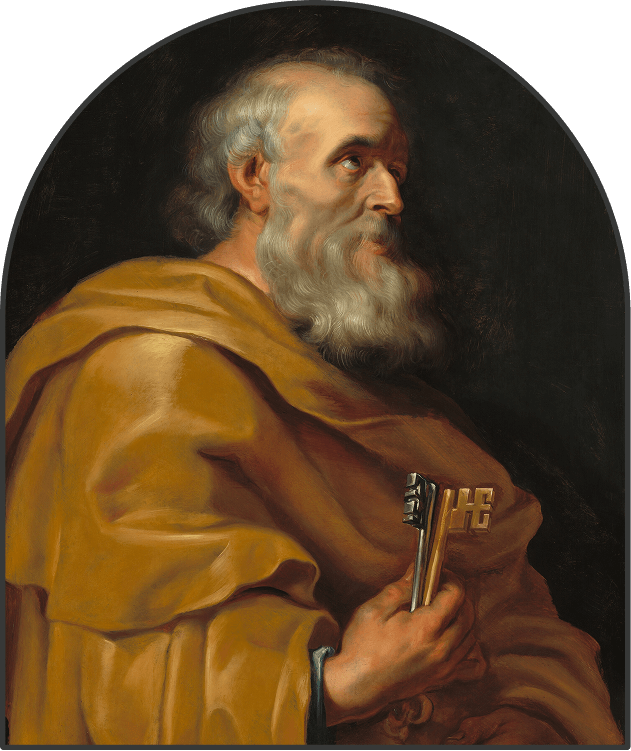
The Mystical Journey: St. Gregory of Nyssa and the Life of Moses

Introduction
Among the Cappadocian Fathers who profoundly shaped Christian theology during the fourth century, was a mystical philosopher named St. Gregory of Nyssa (c. 335-395 AD). He was known to be the most philosophically sophisticated of all the Cappadocian Fathers and was daring in how he would explore the infinity of the soul’s journey into God. A younger sibling of St. Basil and very close associate and friend of St. Gregory of Nazianzus, St. Gregory of Nyssa’s ability to tie together rigorous theology with soaring mystical vision would serve as the undergirding for centuries of Christian spirituality.
While St. Basil put into practice how to form monasticism and St. Gregory Nazianzen defended trinitarian orthodoxy, St. Gregory of Nyssa focused on identifying the depth of mystical theology and how the soul experiences a gradual transformation.
What sets apart St. Gregory of Nyssa’s mysticism from all other mystic systems is his concept of epektasis, or never-ending progression toward the infinite. Epektasis describes that since God is eternal and infinite, the soul’s advance into God will never cease. There will always be new desires to continue growing closer to Him; the more of God’s beauty we observe, the more we will desire. The more we taste the “sweetness of God” the more we will develop desire, and every additional experience of God’s presence exposes us to previously unexplored depths of happiness, peace, and joy.
St. Gregory of Nyssa wrote The Life of Moses, which contains not only a Biblical commentary but also a roadmap for the soul to climb up into God in a mystical manner. St. Gregory uses an allegorical interpretation of Moses’ life to define three stages of spiritual growth:
- Initial conversion (light)
- Progressive purification (cloud)
- Mystical union (darkness)
The path from active seeing to God’s providence, to direct experience of God’s presence, to total immersion in God’s presence and light beyond all concepts, has laid the foundational stone for developing mystical theology within Christian doctrine. In the hands of St. Gregory, Moses’s life becomes the life of the Christian and all others going through the Exodus from slavery to freedom and Sinai as the mountain of contemplation all believers must climb.
Formation in Piety and Learning
St. Gregory of Nyssa was born around 335 AD in Caesarea, Cappadocia, to a remarkable Christian family. St. Gregory’s grandmother Macrina the Elder learned the Christian faith from St. Gregory the Wonder-worker (Thaumaturgus). After the maternal demise, St. Gregory’s parents, Basil the Elder and Emmelia, were widely recognized for their total devotion and commitment to Christ and God. St. Gregory’s brother St. Basil is considered to be one of the greatest theologians and leaders of Christianity. He was also said to have created the monastic life. St. Gregory’s elder sister Macrina would go on to be noted as an ascetic teacher whose spiritual insight helped both of her brothers.
Surrounded by this exceptional family and environment, St. Gregory experienced his first stages of contemplative spirituality. Everything related to prayer was so much a part of daily life for St. Gregory’s family, it was almost as necessary as breathing. The daily rhythm was established with: reading the Bible or other forms of scripture; engaging in deep theological discussions; and practicing whatever virtues were learned during family prayer time. In this context, St. Gregory was led to absorb not only doctrines, but also to have lived a life focused toward God.
St. Gregory was provided with an exemplary classical education with thorough training in rhetoric, philosophy, and literature, but was greatly impressed and shaped by the Platonic forms of learning that led him to become a good Christian theologian and a contemplative.
St. Gregory chose to pursue a traditional secular life; he married (his wife Theosebia is only referred to minimally), and engaged in rhetorical skills for his occupation, and other worldly pursuits. Shortly thereafter, his sister Macrina drastically changed his direction in life. When St. Gregory took the opportunity to visit his family estate around 371, it was Macrina who challenged St. Gregory regarding his worldly ambitions. After their parents had passed away, Macrina created a monastic community and lived in absolute simplicity, giving herself completely to the discipline of praying. St. Gregory describes in detailed passion and emotion how that visit awakened in him the contemplative calling he had within, and through his writing Life of Macrina, he portrays her as his mentor in the spiritual discipline.
Shortly thereafter, St. Gregory became a bishop after being consecrated by his brother St. Basil, who at the time was the Archbishop of Caesarea. Reluctantly accepting this position as a Bishop of Nyssa, St. Gregory felt greatly unqualified to fulfill the responsibilities of a bishop. St. Gregory did not possess the same strong administrative skills as his brother; subsequently, St. Gregory found himself involved in many ecclesiastical politics and was briefly deposed by Arian opponents. However, those pastoral encounters drew St. Gregory deeper into prayer and into his contemplative spirituality, whereby he could gain comfort and renewal through continued communion with God.
The Influence of Origen and Platonic Thought
To understand Gregory’s type of mysticism, we need to know two major influences: Origen (c. 185-254) and the philosophy of Plato. Gregory extensively drew from both of them while correcting their errors and incorporating them into the orthodox Christian framework.
Origen’s Spiritual Exegesis
Origen developed the spiritual or allegorical exegesis of the Scriptures, interpreting each biblical narrative as a spiritual allegory that explains the journey of the soul to God. The Exodus represents not only a historical event but also a mystical reality—the journey of the soul from Egypt (sin and ignorance) through the Wilderness (purification) to the Promised Land (which is an inner resting place in God).
Gregory adopted Origen’s allegorical method, but he was somewhat more cautious in doing so than was Origen. Gregory maintained the literal, historical meaning of Scripture and that deeper spiritual meanings also exist within Scripture. Therefore, while Moses actually led the Israelites out of Egypt, the historical event was indicative of the universal spiritual pattern of the journey every soul must take from slavery to freedom.
Gregory also adopted Origen’s understanding of how spiritual senses develop in the soul (i.e., the understanding that there are faculties of the soul to perceive spiritual realities similar to the way physical senses perceive material realities). Just as we have physical eyes to see colors and physical ears to hear sounds, we also develop the spiritual capacity to see the beauty of the divine through the development of spiritual vision, and the capacity to hear God’s voice through the development of spiritual hearing. In other words, contemplatives encounter God not through physical senses, but through the development of their spiritual faculties.
Gregory rejected some of Origen’s more controversial teachings, including his doctrine of pre-existence of souls and his teaching of apokatastasis (the notion that eventually even demons will be saved through universal restoration). Gregory taught that souls are created with the body (not pre-existent) and believed that although God’s mercy is extended to all, the freedom of each individual to choose or reject God must also be upheld.
Platonic Philosophy
Gregory made extensive use of Platonism, especially related to Plato’s distinction between two categories of reality:
The sensible world—material, changing, perceived by physical senses, characterized by becoming, multiplicity, and participation in Forms.
The intelligible world—spiritual, eternal, perceived by intellect, characterized by being, unity, and the Forms themselves.
Plato saw the material realm as merely an inferior copy of the intelligible realm. Therefore, true philosophers turn from the shadows of the sensible world to the spiritual realm of the intelligible world; or, in other words, Plato explains that true philosophers turn from opinion (or belief) to knowledge (certainty), from what appears to be true to what is actually true.
Gregory adapted these categories to make them distinctly Christian:
Creation is good. Unlike Platonism, which sometimes disparages matter, Gregory affirmed (following Genesis 1) the truth that God created the material world and everything in it very good, that matter is not made up of evil or illusory things. Rather, according to Gregory, every created thing comprises a good thing, though limited in the fullness of being.
Contemplation ascends. Gregory did affirm the belief that in order to spiritually progress, every soul must be elevated from the realm of creation (the material and visible) into the realm of spiritual and invisible, and ultimately risen or ascended to God. As Paul states:
The invisible things of him from the creation of the world are clearly seen, being understood by the things that are made
Romans 1:20, KJV
God transcends Forms. To Plato, the Form of the Good was the highest form of all existence; in Gregory’s understanding, God exists beyond all existing Forms. Gregory did not see God (as Creator) to be the highest being in a hierarchical system of created beings but saw God as that which exists and gives life to all that lives.
The goal is communion, not absorption. In the Platonic worldview, an individual person is absorbed into the divine essence when united with it. In contrast, Gregory stated that when a person becomes united with God, he/she is perfected. Thus, true nature as the image of God is restored, and he/she becomes more fully the essence of that being than he/she would be without getting into communion with God.
Incarnation validates matter. The incarnation of God as man ( “And the Word was made flesh” (John 1:14)) validates that material things (or matter) can possess and bear the presence of God. Furthermore, through the act of incarnation, God entered into the world of the senses, and this serves as the basis for Christian mysticism rather than a basis for a historical abstraction or idealism.
Although the philosophical categories of Origen and Plato allowed Gregory to develop a conceptual framework for articulating mystical experiences, these categories were always subdued and subject to biblical revelation and the teachings of the Church. Philosophy served theology; reason served faith; and the concepts of philosophy were always designed to draw people beyond the philosophic concept itself and into an encounter with the incomprehensible mystery of God.
The Life of Moses: Map of Mystical Ascent
Gregory has written a major work on The Life of Moses. While this work is presented as commentary on the Old Testament, Gregory intends it primarily to provide a mystical theological understanding of the aspects of Moses’s life as paradigms for every Christian’s journey toward God. Gregory identifies three major stages (or experiences) that correspond to the journey of the Christian to union with God.
Stage One: Light (The Burning Bush)
The Beginning of the First Stage finds Moses staring in awe at a burning bush while surrounded by flames (Exodus 3:1-6). The burning bush burns brightly but yet is not consumed. The burning bush is a symbol of God’s presence. God, through the burning bush and through the voice of God calling to Moses, signifies that God transforms all creation and all things in creation through him and through his presence without destroying them. Moses hears God’s voice calling him by name to come before him as God commands that Moses take off his sandals; Moses stands on the holy ground, holy because God is there.
According to Gregory, this first stage correlates with Moses’s first time experiencing God; he now recognizes God’s presence. The first stage contains several significant characteristics:
Divine initiative. God calls Moses; Moses doesn’t seek God first. This reflects scriptural teaching:
We love because he first loved us
1 John 4:19
Grace precedes and enables human response.
Light and vision. Moses sees the burning bush—a visible theophany. Initially, spiritual experience often involves light, clarity, consolation. God grants “milk” to spiritual infants (1 Corinthians 3:2).
Purification begins. “Remove your sandals” signifies putting off earthly attachments. The contemplative life requires simplification, detachment from what prevents full attention to God.
Commissioning. God sends Moses to liberate Israel. Contemplation and action aren’t opposed—mystical encounter leads to mission. Those who meet God are sent to serve others.
Fear and resistance. Moses initially resists God’s call, claiming inadequacy. This natural, authentic encounter with Holy God produces awareness of unworthiness. Isaiah cried,
Woe is me! For I am lost; for I am a man of unclean lips
Isaiah 6:5
This first stage emphasizes God’s transcendence made accessible through created symbols. The bush mediates God’s presence without itself being God. Moses sees and hears—encountering God through created means. This corresponds to cataphatic theology—speaking positively about God’s attributes revealed in Scripture and creation.
Gregory identifies this stage with the soul leaving “Egypt” —abandoning sinful life and beginning journey toward holiness. The plagues on Egypt represent God’s judgment on sins that enslave us. Passover represents Christ’s sacrifice that liberates. Crossing the Red Sea represents baptism—passing through water from slavery to freedom, from death to life.
The beginning of spiritual life is the experience of illumination. That’s why Paul can say,
who said, 'Let light shine out of darkness,' has shone in our hearts to give the light of the knowledge of the glory of God in the face of Jesus Christ
2 Corinthians 4:6
Stage Two: Cloud (Mount Sinai)
The second stage of the journey corresponds to Moses’ ascent of Mount Sinai. The people at the base of the mountain see lightning and hear thunder, but Moses enters the cloud of God’s divine presence (Exodus 19-20, 24) — what is hidden is there and powerful. A major aspect of the higher way of contemplation is:
Hiddenness. God’s presence is no longer seen clearly but known through faith. The clarity of initial conversion gives way to obscurity requiring deeper trust.
Purification. The cloud cleanses perception, purging false concepts of God, stripping away spiritual consolations the soul had come to depend on.
Mediated encounter. Moses meets God in the cloud—present yet hidden, near yet incomprehensible. This stage emphasizes God’s transcendence over all created categories.
Progressive sanctification. The giving of the Law in the cloud represents God’s ongoing instruction. The soul learns divine ways, growing in holiness and wisdom.
Community dimension. Moses receives covenant for the people—his contemplative encounter serves communal good. Personal mystical experience benefits the whole Church.
According to Gregory, the experience of God in the cloud represents the soul’s journey through the wilderness; it’s the long process of reforming the soul after the manumission from slavery and prior to the entry into the Promised Land. Through the wilderness of life, God tests our faith, reveals our character, and purges our attachments. Israel bothered the Lord as they complained, were disobedient, and made idols — yet throughout all, God continued to be faithful to the Israelites by providing for them with water from rocks and manna while guiding them through the night with a pillar of fire.
This second stage can also be thought of as the “illuminative way” of later mystics. At this point, an individual is developing, improving, and increasing in virtue, wisdom, and knowledge, while also experiencing an increasingly higher awareness of God. However, just because the initial bright clarity of the conversion experience has faded, it does not mean that the journey is coming to an end. It is true that when the journey begins to slow down, many people give up, but those who are faithful will continue to move forward and develop a deeper love relationship with the Lord.
The cloud of light in the second stage of the journey represents not only great mystery but also the doctrines of our faith. The mysteries of our faith are things that we continue to confess; we know they are true, yet we do not comprehend them sufficiently to give them grammatical expression. The cloud encourages us to be humble before God. From the cloud, we see and experience many things about God. What we know about God are all true, yet we can only see them partially; we are all aware of various aspects of God’s nature and continue to experience them through the various stories of the Old and New Testaments in our relationship to Him.
Stage Three: Darkness (The Cleft of the Rock)
The third and highest stage of the journey corresponds to Moses’ request to see God’s glory. God responded,
You cannot see my face, for man shall not see me and live
Exodus 33:18-23
God put Moses in the cleft of the rock in order to cover Moses with His hand while His glory passed by so that Moses could see God’s back only.
For Gregory, seeing God’s back is the entrance into divine darkness — this stage is distinctly different than the first two stages because the experience of God in the third stage is absolute transcendence.
Absolute transcendence. God isn’t hidden in the cloud but beyond all manifestation. The darkness isn’t obscurity but excess of light—divine brilliance too bright for creaturely eyes to bear directly.
Going beyond concepts. The soul transcends all images, concepts, and categories. Prayer becomes wordless, imageless, contentless—pure faith reaching toward God who infinitely exceeds all human comprehension.
Unknowing as highest knowing. Gregory boldly declares that “not knowing” God is actually truest knowledge of Him. We know that God surpasses knowledge. This is apophatic theology—knowing through unknowing, seeing through darkness.
Infinite progress. Because God is infinite, the soul never exhausts the journey. Each advance reveals greater depths. This is epektasis—perpetual progress into inexhaustible Mystery.
Beatifying yet unsatisfying. The soul experiences profound peace and joy yet simultaneously desires more. Like Moses seeing God’s “back,” we glimpse divine glory yet long for fuller vision. This longing isn’t frustration but blessed yearning driving eternal progress.
Gregory has written beautifully,
This truly is the vision of God: never to be satisfied in the desire to see him. But one must always, by looking at what he can see, rekindle his desire to see more. Thus, no limit would interrupt growth in the ascent to God, since no limit to the Good can be found nor is the increasing of desire for the Good brought to an end because it is satisfied.
The teaching of Gregory represents a revolutionary shift in the understanding of the perfection of God. In the past, the perfection of an individual was viewed as static. Gregory teaches that perfection is never statically possessed; it is perpetually increasing as we pursue God’s infinite perfection. In the Bible, Paul teaches, “forgetting what lies behind and straining forward to what lies ahead” (Philippians 3:13)—perpetual reaching toward Christ who always exceeds our grasp. It’s also the Beatitude’s promise: “Blessed are those who hunger and thirst for righteousness, for they shall be satisfied” (Matthew 5:6)—yet paradoxically, this satisfaction increases rather than eliminates hunger.
Gregory saw this as the very reason Moses died looking over into the Promised Land at Mount Nebo (Deuteronomy 34:1-5), because even at death, more remained to be seen.
The third stage may be equated to what later mystics will refer to as the “unitive way” of living. Yet to Gregory, the “union” with God is not a final completion; it is the ever-deepening communion of love between God and humanity. The soul that is in union with God does not go into the Father and lose its individuality, rather the soul in the “unitive way” will continue to commune with God in unending love, ever growing in the depth of love of God for all eternity.
Spiritual Senses: Perceiving the Invisible
Gregory developed in-depth teachings about “spiritual senses,” the ability of the soul to experience spiritual realities. Like our five bodily senses (sight, hearing, touch, taste, smell), we develop another five spiritual senses to have an experience of God.
As an established doctrine of Origen taught that contemplatives “experience” God through their spiritual senses and not through hallucinations or imaginations. Contemplatives genuinely experience spiritual realities by having their spiritual senses awakened.
Spiritual Sight
When we open the eyes of our spirit, we start to see the beauty of the divine and the glory of God as revealed through spiritual realities that we could not see with the physical eye. The apostle Paul speaks of “the eyes of your hearts enlightened” (Ephesians 1:18). The psalmist declares,
O taste and see that the LORD is good
Psalm 34:8
The process of developing spiritual sight involves progressive stages. Initially, we see God’s work of creation and the beauty of His created order, pointing us to the ultimate Creator. As we grow in our ability to have spiritual sight, we recognize God’s presence within the pages of the Bible, through the sacraments of religion, and throughout the liturgical seasons of the Church calendar. Finally, those with advanced contemplative skills can see God directly, but they still need to rely upon their faith for that vision until they reach the beatific vision when “we shall see him as he is” (1 John 3:2).
Gregory points out that we must purify the heart and soul to develop spiritual sight and experience the fullness of God through that sight.
Blessed are the pure in heart, for they shall see God
Matthew 5:8
Sin clouds our view of God, but through sanctification, we can clarify our spiritual vision of God. The more we are transformed into the image of Christ, the more clearly we will see the spiritual realities of God’s creation.
Spiritual Hearing
Spiritual Hearing is when the soul learns to hear the voice of God, not with the physical ear but from deep within the heart. In Exodus, God spoke to Moses from a burning bush. In 1 Kings, the prophet Elijah heard the “still small voice” (1 Kings 19:12). Mary heard Gabriel’s message. The sheep hear the Shepherd’s voice (John 10:27).
To develop spiritual hearing, we must pay attention to the words of the Bible because those words still contain the voice of God. Gregory wrote,
God's voice is now transmitted to us through the divine Scripture.
But it also involves interior listening—discerning God’s will, recognizing promptings of the Holy Spirit, distinguishing divine inspiration from mental chatter or demonic suggestion.
Spiritual hearing involves listening to what the Lord is saying to us in our inner being, discerning God’s will for our lives, recognizing the promptings of the Holy Spirit from those of our own minds, and distinguishing Holy Inspiration from our thoughts or demonic suggestions.
To engage in spiritual hearing requires an awareness of the absence of distractions and the ability to silence the internal noise.
Be still, and know that I am God
Psalm 46:10
In silence, we can hear what noise drowns out.
Spiritual Touch
Spiritual Touch describes the experience of the soul being touched by the love and presence of God, often referred to as the “embrace” or “wound of love.” TThe Song of Solomon describes how the bride yearns for her beloved and longs for his touch. St. Paul speaks of “the love of God poured into our hearts by the Holy Spirit” (Romans 5:5)—an experiential touch of divine love.
Through the Spirit, we are touched by the love of God. When God writes his law on our hearts with his finger (Jeremiah 31:33), he establishes an identity for us as his sons and daughters. Christ made the lame and sick healthy when he laid hands upon them (Mark 1:41). Christ’s Ascension, through the Holy Spirit, empowers the Church to continue what he began on earth (Acts 1:8).
Gregory said that God truly touches the soul of a person with his presence and that the touch produces lasting transformations. Just as coal becomes more fiery, through the fire, the soul becomes charged with divine life when touched by God (Isaiah 6:6-7).
Spiritual Taste
The psalmist invites, “O taste and see that the LORD is good” (Psalm 34:8). Jesus referred to himself as the “living bread” (John 6:51). Peter describes having “tasted the goodness of the word of God” (Hebrews 6:5).
Through Spiritual Taste, we can experience the sweetness of God, the contentment of being with God through the scriptures, and find the experience of reading the scriptures pleasurable rather than tedious. The contemplative individual will learn that union with God brings about more profound levels of contentment than any other earthly pleasures.
Whom have I in heaven but you? And there is nothing on earth that I desire besides you
Psalm 73:25
The development of spiritual taste can be experienced through the reception of the Eucharist, in that the reception of Christ by the Eucharistic minister imparts the friendship of Christ through the intrinsic experience of God’s divine presence to the person receiving the sacrament. Gregory connected the experience of the sacrament of the Eucharist to the spiritual aspect, in that participation in the Eucharistic meal prepares the soul to receive Christ through the process of contemplation.
Spiritual Smell
Scripture tells us of the “the aroma of Christ” (2 Corinthians 2:15), the “fragrance of the knowledge of him” (2 Corinthians 2:14). The bride in Song of Solomon is drawn by her beloved’s perfume (Song of Solomon 1:3). Mary’s anointing fills the house with fragrance (John 12:3).
The experience of Spiritual Smell involves the ability to recognize God. Spiritual smell identifies holiness and allows the person to discern the fragrance of sanctity, thereby identifying evil or sin through the “stench” (smell) of sin and recognizing spiritual corruption produced by outwardly pious acts.
According to Gregory, developing all of the above Spiritual Senses is essential to be successful in the spiritual life. Without developing these senses, we cannot see the invisible spiritual realities we are seeking. With the development of Spiritual Senses, invisible spiritual realities are more vibrant than visible physical ones; that is, God is more real than anything we perceive with our physical senses. These faculties of perception develop through spiritual practices that include prayer, meditation on Sacred Scripture, participation in the sacraments of the church, and the use of ascetic discipline. We can think of these as the development of spiritual faculties by analogy with the development of physical muscles. Just as physical muscles intensify through use or practice, so also the intensity of spiritual faculty grows through the process of practice itself. As we become more adept at “practicing the presence of God” (to use Brother Lawrence’s phrase), we will find we are better able to “discover” the presence of God.
Divine Darkness: The Apophatic Summit
Gregory’s teaching on divine darkness as the highest mode of contemplation was unique to his teaching on mysticism. This statement may appear to be contradictory when asking how it is possible to experience “darkness” and at the same time experience “vision.” However, Gregory is insistent that the experience of darkness encountered at the pinnacle of mysticism is derived from the overwhelming abundance of divine light which exceeds the capacity of human beings to behold.
Gregory expresses this teaching through the biblical example of Moses entering “the thick darkness where God was” (Exodus 20:21). Initially Moses saw burning bush—visible theophany. Then he entered cloud on Sinai—God hidden yet present. Finally he requests to see God’s glory directly, but God responds that no one can see His face and live (Exodus 33:20). This progression models the contemplative journey from light to cloud to darkness—from cataphatic (affirmative) theology through increasing apophaticism to pure apophatic contemplation.
Gregory writes:
The true vision of God consists in this, that the one who looks up to God never ceases in that desire. For he sees that God is infinitely distant from all created reality... Thus, one must always look up and never cease to draw near. Every arrival becomes the beginning of a new longing... Here the soul's great love of beauty draws her constantly onward from hope to hope, and at each step she is set aflame by her desire for what is yet beyond.
This darkness has several characteristics:
Conceptual emptiness. The will to understand and to know God results in the individual “losing” all ideas, categories, or concepts that the person has associated with God. Since God infinitely transcends the finite creation, one experiencing divine darkness recognizes God is infinitely greater than all created things and is, therefore, the ultimate mystery of existence.
Wordless silence. Every human’s prayer to God comes “from” words, consequently, prayer becomes a type of stillness, where one becomes “silent” before God; where the mind’s thoughts of God exchange their imaginations for the naked, incomprehensible vision of God’s presence.
Unknowing knowledge. Though many people know of God’s greatness, it is not an unknowing of God. Therefore, this is not ignorance, but an acknowledgment of the greatness of God beyond the human capacity to comprehend.
Infinite desire. Though this darkness will not replace desire, it is the process that increases the desire for more. As the contemplative continues to encounter God’s beauty, so too does their desire to experience more divine beauty increase.
Joy in seeking. Contemplatives receive a great joy from the act of seeking God, rather than receiving a satisfaction or a possession of God’s glory. The act of seeking God becomes a source of continual discovery of the infinite divine beauty, mystery, and grace, making each experience another beatifying discovery.
Presence in absence. It is often thought that when experiencing this darkness, we cannot find God or that God has departed, when in fact, God was just too much for our finite state of being to receive. When looking at the sun, the overwhelming light makes everything dark in terms of appearance.
Gregory presents the unique teaching that there is no final resting place in seeking God, as such, one does not arrive at an ultimate point of destination, but rather, an infinite wealth to explore. Heaven is not a terminating point of discovery but, rather, the start of exploring infinite divine beauty.
The pastoral implications of this teaching are tremendous. We will never reach a point in our spiritual growth in which we will not be able to experience the love and grace of God, nor will we ever become bored with our spiritual growth. Due to the fact that God is infinite, we can never exhaust God or become bored with our spiritual growth, because new discoveries of divine beauty, deeper experiences of God’s love, and further exploration of God continue to be possible infinitely.
Furthermore, the experience of spiritual dryness or the experience of God appearing to be absent from us does not necessarily indicate a regression in our spiritual growth. Oftentimes, the silence and absence experienced by the contemplative are in fact, signs of deeper intimacy with the divine. What appears to be an absence of God may actually be his great presence that is outside the capacity of our finite experience.
Gregory teaches us to trust the dark night of the soul and continue to seek God, even when we cannot see God. We continue to desire God, even when we do not experience the joyful fulfillment of God. This darkness is not a punishment but rather, an invitation to go beyond all of the constraints that exist for us relative to our spiritual limitations and to trust in divine grace when our understanding cannot go further than our current sense of intelligence.
Epektasis: Infinite Progress
Epektasis is a Greek word that translates directly as “stretching forward” or “straining ahead” . Gregory connects epektasis with Philippians 3:13 where Paul describes “forgetting what lies behind and straining forward to what lies ahead”. Gregory believes this attitude of epektasis is not only momentary but is the perpetual attitude that every person should strive for—the continual effort of a person toward God (Who is infinitely more than anyone can ever comprehend or attain).
The teaching of epektasis develops logically from the idea of the infinite God. If God is an infinite being and a person’s soul is finite, then a person’s soul can never exhaust the infinite heights of God. Each time a person advances into an understanding of God or a deeper experience of God’s mystery, there will always be additional depths to explore. Likewise, for every time a person experiences God’s love, there are again infinite amounts of love remaining to experience. For every time a person sees a glimpse of God’s beauty, they will wish to have a more complete vision of God’s beauty.
Gregory illustrates epektasis from his study of the Song of Solomon where he interprets this song allegorically as a dialogue between a person’s soul (bride) and Christ (bridegroom). In this dialogue, the bride is constantly seeking the bridegroom, finding Him but then seeking Him again. The bride is never completely satisfied with her current encounter but has a desire for more complete communion with Him. However, Gregory points out, the bride’s “dissatisfaction” with the current moment does not lead to frustrations but to sacred and blessed desire for spiritual progress.
Gregory states,
The soul that looks up toward God and conceives that good desire never ceases to approach ever closer by constantly being drawn forward... She goes forward continuously and forever, ever arriving at new beginnings. She never arrives at the limit of her desire, for she sees at every stage that much greater things lie ahead
Let us now consider several implications of the teaching of epektasis:
Perfection is dynamic, not static. We don’t arrive at perfection and stop growing. Rather, perfection means growing perpetually—each stage surpassed by higher stage, each achievement becoming launching point for greater advance.
Satisfaction and hunger coexist. The soul is genuinely satisfied by encountering God— “blessed are those who hunger… for they shall be satisfied” (Matthew 5:6). Yet this satisfaction paradoxically increases rather than eliminates hunger. Having tasted divine sweetness, the soul craves more.
Eternal progression. Even in heaven, the journey continues infinitely. The beatific vision isn’t static gazing but dynamic exploration—seeing God “face to face” yet perpetually discovering new depths, forever advancing into inexhaustible Mystery.
Present incompleteness isn’t failure. We needn’t be discouraged by sensing how far we have yet to go. The journey is infinite—there’s always more. Present limitations don’t mean we’re failing but that we’re engaging with infinite God.
Hope sustained forever. Because the journey never ends, hope never gives way to mere possession. We always live in expectation—not anxious waiting but joyful anticipation of greater wonders ahead.
Love’s nature revealed. True love never reaches satiation point where desire ceases. Rather, love intensifies with intimacy—the more we know the beloved, the more we long to know. Infinite love for infinite God naturally produces infinite desire.
The teaching of epektasis significantly influenced the development of Eastern Christian mystical theological thought as it is understood today—in the writings of Maximus the Confessor, John Climacus, Gregory Palamas, and others. Conversely, Western Christianity has been mostly influenced by the theology of Augustine and generally views heaven as a place of rest from all efforts to pursue God. Gregory’s view of eternal progress appeals to those who may prefer an active, always moving towards perfection rather than a process which stops at a predetermined place.
Psychologically speaking, epektasis is related to the spiritual depression that can accompany a realization that one has still far to go on the journey of pursuing God. If the goal of a journey is to arrive at a predetermined endpoint, then knowing how much distance remains to be travelled can create feelings of disappointment. However, if the goal is to pursue God throughout an infinite journey, every step forward is a success. A person moving towards an infinite God will receive joy from all moments of life within that journey of discovery; he/she will rejoice in the continuation of that infinite journey towards the Lord.
The Song of Songs: Mystical Love
Gregory wrote an extensive commentary on the Song of Songs, reading this biblical love poem as an allegory describing the love of the soul (bride) for Christ (bridegroom). The allegorical interpretation of the Song of Songs by Gregory is not arbitrary, but rather reflects the truth that human erotic love serves as an icon or image of our love for the divine—the divine-human love is infinitely more than the human love. Gregory, in his comments about the Song of Solomon, views the bride’s love journey as the soul’s ascent into mystical union with God. It begins with an awakening to the beauty of God, and a longing for Him and continues with alternating experiences of God’s presence and absence, praise of Christ’s glory, and ultimately the longing to be fully in communion with God.
Emerging themes:
The Wound of Love
Gregory interprets this to mean that divine eros has awakened a deep desire for God within the soul, that the heavenly beauty of God has infected the soul and now that the soul is poisoned by God it cannot find rest until it finds itself with God. This “wound” is the work of the Holy Spirit that pours the love of God into the hearts of believers (Romans 5:5), allowing the believer to recognize that “whom have I in heaven but you? And there is nothing on earth that I desire besides you” (Psalm 73:25). Once a soul has been wounded by the love of God, the soul can no longer be satisfied by lesser loves; every lesser love becomes insipid in comparison to the sweetness of Divine Love.
Seeking and Finding
The bride seeks her beloved through the streets of the city, asking the watchmen:
Have you seen him whom my soul loves?
Song of Solomon 3:3
Although she finds her lover, he withdraws himself again and she seeks him once more. The pattern of presence, absence, seeking, and finding is repeated throughout the Song.
This cycle represents Gregory’s experience as a contemplative. Sometime the presence of God comforts and strengthens the soul by allowing the believer to experience a tangible sense of God’s reality. Then God may withdraw, not abandoning, but exercising or giving the soul the chance to truly desire to seek Him. The absence of God’s presence creates a deeper longing for God. Since through absence the desire for God is deepened, the soul pursues God for God and not simply for benedictions or enjoyment.
In the beginning, there may be many consolations from God. God is courting the soul. But as the soul grows, the felt experience of God’s presence wanes. The soul grows up to trust God through faith rather than through experience. The process of purification enables the soul to love God for Himself and not through the gifts or feelings that come from Him. In this way the mature contemplative loves God with equal fervor, in both darkness and light, and in both absence and presence.
Praise of the Beloved
In the Song the bride and groom spend time praising each other’s beauty in elaborate metaphors— “Your eyes are doves,” “Your hair is like a flock of goats,” “Your neck is like the tower of David” (Song of Solomon 4:1-4).
For Gregory, this is a picture of the soul praising Christ through the meditation on His perfections, admiring His divine attributes and recognizing His goodness, mercy, power, and beauty. Each attribute and perfection becomes a subject of meditation for the soul and a source of love and admiration.
The bridegroom’s praise of the bride also images Christ rejoicing in the beauty of the soul—not a natural beauty, but a beauty given to her as a gift of grace. The beauty of the soul to Christ is because of the grace of Christ; for, in becoming virtuous, her beauty is adorned as a bride with precious jewels. This reflects what Paul teaches in Ephesians 5:25-27 about Christ who sets the Church apart as Holy and Beautiful.
The Marriage Chamber
The climax of the Song is union—bride and groom together in the marital chamber. Gregory sees the union of body and spirit; that is, that the bride and the bridegroom become one. As Gregory sees this, it is a mystical union; this is an intimate communion with Christ and therefore the consummation of divine love for God and humanity.
Yet Gregory maintains that this union is no pantheistic absorption. At the same time the bridegroom does not lose his identity in the bride nor does the soul lose its identity in God. Rather, there is a union in love where each retains its own separate identity, while in love they are united to each other in the most intimate way. While the bride cannot become the bridegroom, the soul cannot become God, but when they unite in love, they commune together in the most intimate way possible.
This union is both a present experience (through contemplation) and a future hope (at its fullness in heaven). This is the meaning that Paul gives in Ephesians 5:31 where he states that “two shall become one flesh,” and then he states, “This mystery is profound, and I am saying that it refers to Christ and the church.” Human marriage images Christ-Church union, which in turn images individual soul’s union with Christ.
Gregory’s Song of Songs commentary demonstrates that Christian mysticism isn’t cold intellectual exercise or dry theological speculation but passionate love relationship. The language is erotic because divine love generates eros—intense desire, passionate longing, overwhelming attraction. Yet this eros is purified and elevated—not diminished or denied but redirected toward proper object (God) and fulfilled in supernatural communion.
The Beatitudes: Ladder of Virtue
In his treatise On the Beatitudes, Gregory interprets Jesus’s sermon (Matthew 5:3-12) as progressive stages in spiritual ascent. Each beatitude represents a higher step on the ladder of virtue, leading from initial poverty of spirit to final persecution for righteousness—from emptying oneself to being filled with God.
When we look at the Beatitudes as a means of contemplation and not merely a set of ethical ideals or examples of people blessed by God, we understand they are a guideline for the spiritual journey. Each Beatitude describes a virtue to be developed along the path and contains the promise of a blessing that the virtue will bring:
“Blessed are the poor in spirit.” Realizing we are spiritually poor and in great need of God; surrendering pride and self-sufficiency. “The kingdom of heaven is theirs” —God fills those who acknowledge their emptiness.
“Blessed are those who mourn.” Having true remorse and grief over sin (both personal and collective), having within us a compunction to find remorse for offending the very holy God. (2 Corinthians 7:10). “They shall be comforted” —God consoles those whose hearts break over what breaks His.
“Blessed are the meek.” Those who are gentle, humble, slow to anger, not violent, who have chosen to submit their own way for God’s way. “They shall inherit the earth” —paradoxically, those who claim nothing receive everything.
“Blessed are those who hunger and thirst for righteousness.” IThose who hunger and thirst for God’s will; those who desire to be conformed to God’s will, and righteous by passionate purging of their soul through these virtues will experience great satisfaction; and yet as St. Gregory teaches us, true satisfaction always will produce more thirst and hunger (epektasis).
“Blessed are the merciful.” hose who show compassion as God shows compassion; those who forgive as God forgives; those who love their enemies, as Christ loved us when we were in our worst rebellious state (Romans 5:8). “They shall receive mercy” —and the amount of mercy we give to others will equal the amount of mercy we will receive from God (Matthew 7:2).
“Blessed are the pure in heart.” By purifying the inside of ourselves from all uncleanliness, not only our actions, but our motives, thoughts, and desires, “they shall see God” with a pure heart, and therefore through a purified vision they become truly contemplative.
“Blessed are the peacemakers.” By creating peace with God, mankind, and as well as with one’s own heart. “They shall be called sons of God” —imitating the Father who reconciles all things.
“Blessed are those persecuted for righteousness.” Those who are willing to endure suffering for the sake of following God and having the courage to accept a lack of understanding or the opposition of others. “Theirs is the kingdom of heaven” —the same promise as the first beatitude, completing the circle.
Gregory saw progression in our relationship to the Beatitudes. He saw that recognizing our spiritual poverty creates sorrow (mourning), confessing our sin and having spiritual sorrow for what was produced by this was to create gentleness (meekness), which also intensifies our thirst for righteousness (hunger), which in turn produces mercy, which produces a pure heart, which through the pure heart allows us to be part of the peacemaking of Jesus, which through peacemaking often leads us into persecution, allowing us to see how to become spiritually poor.
This thought of the spiritual progression in the Beatitudes also maps the spiritual journey to the divine. The contemplative begins with self-emptying (poverty of spirit), experiences purgation (mourning), develops humility (meekness), intensifies desire for God (hunger/thirst), extends divine love to others (mercy), achieves interior purification (pure heart), participates in Christ’s reconciling work (peacemaking), and often faces opposition (persecution)—which deepens humility and begins the cycle at a higher level.
Therefore, the Beatitudes serve not only as a roadmap to the divine, but also as a guideline for virtues to be developed and divine blessings to be experienced; but we can’t achieve these things on our own—it’s a gift given to allow us opportunity for cooperation with God’s power—which is the reason Paul encourages us in Philippians 2:12–13 to “work out your own salvation with fear and trembling, for it is God who works in you”.
Prayer and Liturgy: Encountering the Trinity
Gregory of Nyssa’s teachings reflect a life centered on worship and prayer. His writings do not provide instruction on the mechanics of prayer, as do later spiritual writers, but they assume a life of prayer as the foundation of his works in his various theological writings.
Numerous aspects of Gregory’s spiritual life can now be inferred today:
Liturgical Prayer
As a bishop, Gregory would celebrate the Divine Liturgy of the Eucharist regularly, which holds an essential place in Christian worship. This is reflected in Gregory’s treatise On the Lord’s Prayer, in which he clearly expresses a deep spiritual conception of the Our Father as the prayer taught by Jesus. Each petition is explored— “hallowed be thy name,” “thy kingdom come,” “give us this day our daily bread,” etc.—for its theological and mystical implications.
Gregory taught that the Lord’s Prayer offers the entire curriculum for spiritual life. He pointed out that the title “Father” expresses God’s Fatherhood to us and indicates that through grace we are adopted into the family of God. “Hallowed be thy name” recognizes the holiness of God in the commitment of the Christian to living a holy life. “Thy kingdom come” expresses eschatological hope while inviting God’s reign to be established in our midst even now. “Give us this day our daily bread” asks both for physical sustenance and for Eucharist—the Bread of Life. “Forgive us… as we forgive” links divine mercy to human mercy. “Lead us not into temptation” recognizes our vulnerability while trusting God’s protection. “Deliver us from evil” cries out for rescue from Satan’s power.
Gregory’s homilies on the Psalms also demonstrate that he prayed the Psalms regularly, and prayed the Psalms as one of the most essential elements of Christian liturgical worship. The Psalms encompass the entire spectrum of human emotions in our relationship to God—praise and lament, confidence and doubt, joy and sorrow, trust and questioning. Always praying the Psalms continually shapes and forms the emotional and spiritual lives of believers as well.
Contemplative Silence
Silence was a value in Gregory’s life—the highest possible value. Gregory wrote about it as the place where Moses entered the darkness of God and where all words fail—pure silence before incomprehensible Mystery. He indicated that the silence is not an absence of communication but a much more profound form of communion, whereby the soul is simply present to God’s presence.
He taught that as prayer matures, it simplifies. Beginners need many words, elaborate meditations, concrete images. Advanced contemplatives move toward fewer words, simpler attention, eventually reaching wordless silence—not empty silence but pregnant silence filled with divine presence. This silence isn’t achieved by willpower or technique but received as grace. We practice silence (creating external quiet, stilling interior noise), but the deep silence of mystical contemplation is a divine gift granted when and how God wills.
Sacramental Encounter
Gregory emphasized that the Eucharist (communion) was the most direct and intimate encounter with Jesus Christ. He illustrates this in his work, Catechetical Oration, in which he describes the initiation process of a Christian—baptism, confirmation (chrismation), and communion. Gregory teaches that in Eucharist, the bread and wine truly become Jesus’ Body and Blood, and receiving communion unites believers to Christ as intimately as food assimilated into our physical body. This isn’t merely symbolic but mystical reality—Christ truly present, truly received, truly uniting Himself to communicants.
For Gregory, the Eucharist provides essential nourishment for the contemplative journey. We cannot ascend to God by our own power; we need divine life infused. The Eucharist provides this—Christ’s own life entering ours, transforming us from within, providing strength for the ascent.
Scripture Meditation
Gregory authored numerous biblical commentaries, including The Life of Moses, The Song of Songs, The Beatitudes, On the Lord’s Prayer, and various Homilies on the Psalms and Ecclesiastes—all based upon his long practice of meditation on holy Scripture. Gregory practiced lectio divina, which is a slow, reflective reading of Scripture that involves the four stages of reading, meditation, prayer, and contemplation.
When reading Scripture, Gregory approached it as if he would hear the voice of God. For him, the Bible is not simply an ancient work of literature or moral instruction but the living Word where the Logos still speaks. Through prayerful reading, Gregory was able to hear God addressing him personally, revealing divine mysteries, inviting deeper communion.
Gregory was particularly drawn to biblical texts that depict mystical encounter—Moses on Mt. Sinai, Elijah at Mt. Horeb, Isaiah’s vision in the Temple, Paul’s ascension into the third heaven, and John’s vision on the Isle of Patmos. The biblical mystics serve as a model for us regarding what is possible to the human soul through a contemplative vision. They do not reveal any new form of spirituality; rather, they show that the contemplative vision is a restoration of biblical spirituality.
Creation and Contemplation: Seeing God in All Things
Gregory teaches that creation itself provides context for contemplation. God’s “invisible attributes… have been clearly perceived… in the things that have been made” (Romans 1:20). The visible world points beyond itself to the invisible Creator. Learning to see creation rightly is learning to see God.
In his treatise On the Making of Man, Gregory meditates on humanity created in God’s image and likeness (Genesis 1:26-27). This isn’t just theological anthropology but contemplative reflection on human dignity and destiny.
The image of God. Even after the Fall, humans retain God’s image—rationality, freedom, creativity, capacity for relationship, spiritual faculties enabling knowledge of God. Sin damages but doesn’t destroy the image.
The likeness of God. This represents humanity’s destiny—progressive transformation into divine likeness through grace. We’re created in image to become likeness—actualizing potential through cooperation with grace.
Contemplation of humanity. Contemplating human nature rightly—its origin in God, its fallen condition, its redemption in Christ, its destiny for deification—becomes avenue for contemplating God. As Pascal would later write, “Man infinitely surpasses man” —humanity points beyond itself to transcendent Source and Goal.
Body and soul unity. Against Platonic dualism despising body, Gregory (following biblical anthropology) insists humans are embodied souls or ensouled bodies—psychosomatic unities. The body isn’t prison but integral part of human nature, destined for resurrection.
Microcosm reflecting macrocosm. Gregory sometimes describes humanity as “microcosm” —miniature cosmos uniting material and spiritual dimensions. Contemplating humanity provides insights into creation’s nature and purpose.
Gregory also contemplated other aspects of creation—the beauty of nature, the order and harmony of the universe, and the diversity of creatures. Each revealed divine attributes: wisdom in design, power in creation ex nihilo, goodness in making things beautiful, love in sustaining all things. This sacramental vision—seeing God through creation—doesn’t substitute for contemplating God directly but prepares for it. Like a ladder’s lower rungs enable reaching higher ones, contemplating creatures leads to contemplating Creator. Paul describes this progression:
For his invisible attributes... have been clearly perceived, ever since the creation of the world, in the things that have been made
Romans 1:20
The Resurrection: Foundation of Hope
Gregory wrote about physical resurrection in On the Soul and Resurrection, based on his experiences that he shared during a deathbed conversation with his sister Macrina, as well as through his other writings. Gregory says that all of God’s teachings are based on the hope and anticipation of Resurrection.
Several convictions ground his teaching:
Christ’s bodily resurrection. Jesus rose physically, not just spiritually. The disciples touched Him (John 20:27), watched Him eat (Luke 24:42-43), witnessed His ascension (Acts 1:9). This establishes bodily resurrection’s reality.
Our future resurrection. “If Christ has not been raised, your faith is futile” (1 Corinthians 15:17). But He has been raised, and “those who belong to Christ” will be raised at His coming (1 Corinthians 15:23). Our bodies will be transformed “to be like his glorious body” (Philippians 3:21).
Identity and transformation. The resurrection body maintains personal identity (it’s our body raised) yet is transformed (glorified, spiritual, immortal). Paul’s analogy of seed and plant illustrates—continuity yet radical transformation (1 Corinthians 15:35-44).
Universal scope. Gregory inclined toward universal restoration (apokatastasis)—hope (not certainty) that eventually all creation will be reconciled to God. While humans can reject God indefinitely, Gregory hoped that divine love would eventually win every heart, that God’s purpose to “reconcile to himself all things” (Colossians 1:20) would succeed.
Resurrection transforms present. Hope of resurrection changes how we live now. Bodies destined for glory deserve respect now. Death isn’t ultimate threat when resurrection is assured. Present suffering gains meaning when seen as “light momentary affliction… preparing for us an eternal weight of glory” (2 Corinthians 4:17).
For contemplative spirituality, resurrection hope is essential. It assures that the journey continues beyond death—we don’t lose progress made in earthly life but carry it forward. It promises that God’s work in us will reach completion— “he who began a good work in you will bring it to completion” (Philippians 1:6). It validates the body as destined for glorification, not elimination.
One of the most beautiful examples of this hope was demonstrated during Gregory and Macrina’s deathbed conversation. Macrina faced death with peace from her belief and trust that Jesus had overcome death and from her belief and trust that she would be resurrected into her new body and that she would have the privilege of having a clearer vision of God. Her peaceful death bore witness to the power of faith—the contemplative who has lived their life preparing to see God is made into the resurrected state by God.
Sister Macrina: The Hidden Teacher
The mystical theology of Gregory could never be fully understood without including the influence of his sister, Macrina. She was Gregory’s guide in matters of the spirit and his first challenge to the allure of worldly ambition. She exemplified contemplative depth which inspired his theological work.
Macrina (c. 327-379), the oldest child in a family of ten siblings, turned down marriage after losing her fiancé and chose to remain a virgin devoted to God. After the loss of their father, she convinced their mother to convert the family estate into a monastic community whose members would live a simple lifestyle, study the scriptures, pray together, and provide for the needs of the poor.
While visiting Macrina in 371, Gregory found himself chastened for placing professional success as the top priority in his life, while forsaking his spiritual call. Macrina posed questions about what was truly important, what would survive beyond death, and whether he would experience the satisfaction of his heart’s deepest desire through worldly recognition. By asking these penetrating questions, Macrina sparked Gregory’s dormant desire for God and ignited his enthusiasm to pursue the spiritual path.
Gregory later wrote Life of Macrina, where he portrays Macrina as an individual of exemplary Christian character and philosophical wisdom. Gregory recounts Macrina’s last days, showing how she faced death calmly and peacefully while offering her final prayers and blessings to the members of her monastery who were gathered around her bed. Her ability to calmly accept death serves as a testimony of her ability to live a holy life and her experience of contemplative intimacy with God, which allowed her to approach death not as terror or threat but as a homecoming.
In On the Soul and Resurrection Gregory presents Macrina as his teacher. He explains, with philosophical precision and deep spirituality, the Christian understanding of the hope of resurrection and eternal life. Whether this conversation occurred exactly as recorded or represents Gregory’s reflection after her death, it establishes Macrina as a theological authority—a woman teaching a bishop, a layperson instructing a cleric.
This demonstrates a very important aspect of mysticism within Christianity: that holiness supersedes hierarchy. Thus, anyone who experiences contemplative depth possesses the ability to teach others, regardless of whether they have been formally ordained, or if they hold any academic credentials. Macrina is an excellent example of someone who possesses great spiritual wisdom even though she did not receive a formal education or hold any official ministerial position; rather, Macrina’s life of contemplation qualified her to guide and teach all people, including her own brother.
This points out that even though women have been excluded from the formal role of teaching within the Church, throughout its history women have had and continue to have the experience and wisdom of being mystics and mystical theologians. The Church has always honored women of holiness such as Mary Magdalene, Mary of Egypt, Catherine of Siena, Teresa of Avila, and Thérèse of Lisieux in their spiritual authority when denying them a role within the Church.
Gregory’s honor to Macrina serves to challenge any spirituality that devalues women, ignores their experience and wisdom, or assumes that only men can experience the depths of contemplative spirituality. From the beginning of Christianity, women have had great experiences of mystical spirituality and great teachers and mystics, and are not limited by being women, but through their own unique gifts, insights, and abilities, which they bring to the spiritual life.
Legacy: The Mystical Doctor
St. Gregory of Nyssa bequeathed to the Church a deep mystical theology that has had significant influence upon the Christian contemplative tradition for the past sixteen centuries.
These include the following:
Infinite progress (epektasis). Understanding of perfection in spiritual terms means to grow, not to arrive; that the infinite journey toward God never ends, and that each moment of arriving becomes a new beginning.
Divine darkness. The teaching of apophatic contemplation, whereby the soul enters into a darkness beyond all concepts of understanding, where God is experienced through an absence of experience and by an act of faith that goes beyond the possible vision of God.
Spiritual senses. A teaching concerning the interior faculties of the human soul for the purpose of perceiving spiritual realities, and a description of how contemplatives “experience” God.
Mystical exegesis. A teaching that the Scriptures, especially the life of Moses and the Song of Solomon, have an allegorical meaning concerning the spiritual journey of the soul, and are also an example of a roadmap of the ascension of the contemplative toward the Father.
Trinitarian contemplation. The teaching that the experience of God as a Christian mystic is always a Trinitarian one, meaning the encounter with God the Father happens through the Son and in the Holy Spirit.
Body-affirming mysticism. Against a dualism that regards matter as evil, St. Gregory teaches that the human body is good and created for resurrection and will eventually bear a divine presence.
Progressive transformation. St. Gregory describes a threefold progression of the spiritual journey—Light, Cloud, and Darkness, beginning with a conversion experience and continuing through stages of Purity and then into a Unification with God.
Integration of theology and spirituality. St. Gregory emphasizes that theology emerges from prayer and that the “why” of contemplative depth takes precedence over the “what” of doctrine.
Conclusion: The Endless Journey
St. Gregory of Nyssa welcomes contemporary Christians to experience mystical infinity: to continue to grow towards an unlimited God throughout eternity, to journey toward the unknown God, with every conclusion providing a fresh perspective.
Gregory presents an ongoing experience of God, as God is infinite, and the journey toward God, therefore, will always be infinite and, thus, should bring a joyful anticipation of continued possibilities for adventure and discovery.
Gregory’s teaching illustrates that genuine mysticism is Orthodox, because it is based on Scripture, adheres to the teaching tradition, and has been made visible through the creedal faith of the Church. Gregory points out that the two components of Mystical Experience, that of Contemplative and Doctrinal, are not in conflict with one another; but, rather, both components are a part of the same shared vision. Therefore, true vision and the knowledge of God will be guided by the knowledge of God through the correct understanding of God.
Gregory teaches that one’s contemplative journey consists of both an exhalation and a desire; the deeper the desire grows, the closer one climbs to God. But at the same time, as one takes this ascending journey, the deeper their desire goes, the deeper they plunge into the darkness of the unknown God.
So, through this dual path of exhalation and desire, the Christian who desires to know God has hope in the knowledge that their journey toward God is never-ending. As one continues to see and love God, more will awaken to a greater desire for God and an ever-increasing hunger for His divine goodness.
This truly is the vision of God: never to be satisfied in the desire to see him. But one must always, by looking at what he can see, rekindle his desire to see more.
This vision is the indefinite invitation; it calls all who desire God to journey toward the untold endless beauty of God and, therefore, their journey toward love and knowledge will be infinite—the journey toward God is infinite.
May his teaching inspire us to embrace the journey’s infinity with joy rather than discouragement, to find blessing in holy yearning that never ceases, to trust the darkness as divine presence too bright for creaturely eyes, and to press forward continually, “straining toward what lies ahead” (Philippians 3:13)—advancing forever into the God who infinitely exceeds every advance, loving eternally the Love who infinitely surpasses every love.
The one thing truly worth seeing is invisible to the eyes—that eternal beauty whose attractiveness words cannot express... The one who looks up toward God never ceases in that desire.
St. Gregory of Nyssa
Our Editorial Standards:
All our content on Christian meditation traditions, prayers, and spiritual practices is reviewed by Dr. Megan Remington, PhD, ensuring theological soundness and spiritual depth.
We draw from centuries of Christian contemplative tradition, citing respected theological sources, biblical references, and established spiritual practices.
Our team understands that spiritual struggles are deeply personal. We approach topics of anxiety, strength, healing, and peace with compassion and biblical wisdom.
We continuously review and update our spiritual resources to ensure they remain relevant and aligned with orthodox Christian teaching.
Each article clearly identifies our writers and reviewers, along with the theological sources and biblical foundations used.
 To guarantee that all of our information is accurate, we ensure that all our sources are reputable. That means every source is authenticated and verified to be backed only by medical science.