


 App Store
  Google Play
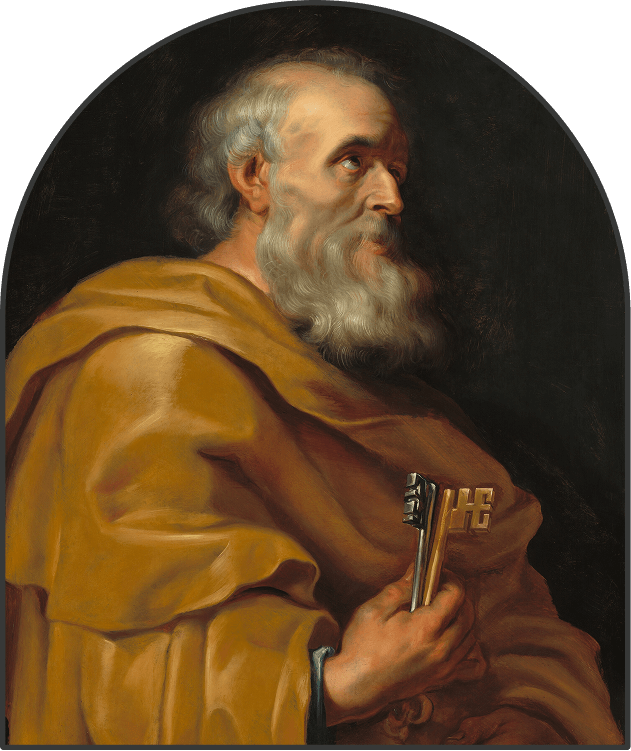
The Prayer and Mystical Vision of St. Gregory Thaumaturgus

Introduction
St. Gregory Thaumaturgus (c. 213-270 AD), whose surname means “wonder-worker,” stands as one of early Christianity’s most extraordinary mystics—a saint whose contemplative life produced miracles, whose prayers moved mountains, and whose mystical encounters shaped theological understanding for centuries. Born as Theodore in Neocaesarea of Pontus, his transformation into Gregory the Wonder-Worker reveals a soul that walked intimately with God, conversed with heavenly beings, and wielded spiritual authority through deep communion with Christ.
The Student Seeking Truth
Gregory began his spiritual journey through philosophical education. Like many intellectuals of his day, he was a student of Rhetoric and Law, searching for the ultimate truth through the lens of human wisdom. Ultimately, he made his way to Caesarea in Palestina around 233 A.D. and met Origen, perhaps the most prominent Christian teacher of the period.
Gregory’s seeking heart displayed the promise given by Jesus:
Ask and it will be given to you; seek and you will find; knock and the door will be opened to you
Matthew 7:7
Gregory’s study of Christianity was more than an academic exercise, but rather an attempt to find true spiritual reality with the totality of his being. The yearning in Gregory’s heart for God prepared him to have mystical experiences during his ministry.
Through Origen, Gregory learned that the true philosophy is to love divine Wisdom—Christ Himself. He discovered that instead of simply seeking knowledge, this would serve as a spiritual pilgrimage and that he would become a contemplative of the ultimate truth. Through studying the Scriptures, Gregory became enlightened to the fact that “knowledge puffs up but love builds up” (1 Corinthians 8:1), and that the fear of the Lord is the beginning of wisdom (Proverbs 9:10).
The Vision of the Apostle and the Virgin
The most celebrated mystical vision in Gregory’s life occurred shortly prior to his consecration as bishop. Gregory of Nyssa recorded the tradition that Gregory received from God an extraordinary theological vision in the middle of the night—a vision that ultimately shaped the theology of the Trinity in orthodoxy.
In this vision, Gregory saw a radiant elderly man whose identity was clearly that of the Apostle John. An extremely beautiful woman who represented our Blessed Mother, the Virgin Mary, accompanied him and initiated John into revealing the mystery of true faith, specifically regarding the doctrine of the Trinity, to Gregory.
Gregory wrote down exactly what he heard as John’s statement of belief in the form of a small creed that accurately expresses the relationship of the Father, Son, and Holy Spirit in “pristine theological” terms. After waking, Gregory wrote down the exact words of John’s statement. The divinely inspired statement that resulted from this experience ultimately became a significant component of the doctrine of the Trinity in the Eastern Church.
In addition to Gregory’s mystical vision, Gregory of Nyssa described the same vision that John of the Apocalypse experienced while on the island of Patmos where he saw through divine vision (Revelation 1:9-20) . In the same way, Paul also had an experience that culminated in his being caught up to the third heaven and hearing inexpressible things (2 Corinthians 12:2-4). God chose to reveal theological truth not merely through intellectual study but through mystical encounter.
The vision clearly demonstrated that authentic mysticism and orthodox theology are two sides of the same coin and therefore do not exist in opposition. In addition, the mystical visions of St. Gregory Thaumaturgus brought doctrinal clarity to the confusion that existed regarding the doctrine of the Trinity.
Meditation on the Trinity
Prior to having his apocalyptic vision, Gregory dedicated himself to meditating on the mystery that is the Trinity—one God with three distinct persons—perfectly united in essence, all at the same time. Far from being merely “abstract speculation,” this meditation revealed how Gregory was able to express his prayerful adoration of the incomprehensible reality of God.
In his prayers to the Blessed Trinity, Gregory reflects on the baptism of Jesus wherein God revealed His triunity—when God spoke from Heaven, Jesus was standing in the Jordan River, and the Holy Spirit was descending in the form of a dove (Matthew 3:16-17). He contemplated the apostolic blessing:
May the grace of the Lord Jesus Christ, and the love of God, and the fellowship of the Holy Spirit be with you all
2 Corinthians 13:14
Gregory recognized that to meditate on God in a Trinitarian sense was not to solve a theological riddle but rather to enter into a personal relationship with the Living God. When he prayed “Father,” he acknowledged that God is the eternal source of light. By calling upon God as “Son,” he entered into communion with the “Word Incarnate” ; and finally, through calling upon the Holy Ghost, he acknowledged the sanctifying presence of God within him.
Gregory’s meditation on the Trinity ultimately encompassed all of his relationship with God. Through prayer, Gregory believed he was entering into the continual discourse between the Father, Son, and the Holy Spirit within the divine life of God into which believers are welcomed through adoption. Paul also proclaimed this good news, stating that God sent His Spirit into the hearts of believers:
Because you are his sons, God sent the Spirit of his Son into our hearts, the Spirit who calls out, 'Abba, Father'
Galatians 4:6
The Prayer That Moves Mountains
Gregory’s nickname “Thaumaturgus” translated from Greek is “wonder-worker,” signifying that his prayers performed miracles. These miracles were manifestations of God’s power manifested in human-life situations, as a product of his on-going prayer life and close personal relationship with God.
The most notable account is the story in which Gregory was faced with the challenge of having to build a church, however, a mountain was occupying the space he wanted to build in. Gregory spent the night in prayer, and in the morning he commanded the mountain to move in the name of Christ. By morning, the mountain had moved to allow Gregory to build his church.
This miracle directly fulfilled Jesus’s promise:
Truly I tell you, if you have faith as small as a mustard seed, you can say to this mountain, 'Move from here to there,' and it will move. Nothing will be impossible for you
Matthew 17:20
Gregory was not presumptuous in his faith, but rather had developed a strong confidence in the promises of God, which had developed over many years of prayer and meditation.
Other miracles attributed to Gregory included drying up a lake that was causing a dispute between neighbors, stopping the flood of a river through prayer, and numerous healings. These signs were to validate Gregory’s ministry, as Jesus promised:
And these signs will accompany those who believe: In my name they will drive out demons... they will place their hands on sick people, and they will get well
Mark 16:17-18
Yet Gregory never sought to perform miracles for the sake of performing miracles; they flowed from his close communion with God and were therefore a manifestation of the kingdom of God coming into contact with the world today through a life yielded to the purposes of God.
Contemplation in Solitude
Prior to accepting the position of the Bishop of Neocaesarea, Gregory had spent many years in contemplation by being alone. He followed the same example as Christ, who would withdraw to the desert to be alone for prayer (Mark 1:35). Gregory did not consider this time in solitude as an escape, but as an opportunity to grow spiritually in-depth in preparation for engaging in public ministry.
Gregory’s training in solitude followed what was later to become the systematic views of the Desert Fathers. During this time Gregory spent many extended periods in silence, fasting, praying and meditating on the Scriptures. He was able to differentiate the voice of God from that of others, identify spiritual warfare and rely totally on the grace of God instead of upon himself.
This form of contemplative training is a pattern that God has established, through examples of Moses’ forty years in Midian before leading the Children of Israel into Canaan; Elijah’s time spent at the brook Cherith before facing Ahab; and Paul’s three years in the wilderness of Arabia after his conversion before engaging in public ministry. The pattern God uses to prepare leaders for public ministry is hidden years of prayer, which are followed by visible years of ministry after God has thoroughly prepared them through their time with Him.
The Psalms were one of the primary sources of meditation and contemplation that Gregory engaged in during his years of solitude. As he prayed the words of David,
One thing I ask from the LORD, this only do I seek: that I may dwell in the house of the LORD all the days of my life, to gaze on the beauty of the LORD and to seek him in his temple
Psalm 27:4
This singular focus and views on the beauty of God became a significant aspect of his contemplative life.
Prayer Against Demonic Powers
Gregory also had an emphasis in spiritual warfare through prayer. Many different accounts have recorded Gregory’s authority in the spiritual realm over demons, those whom he had discernment concerning their activities and being able to set free those who became oppressed by demons.
One very noteworthy account relates to a priest of a pagan temple who had been tormented by demons after the closure of the temple as a result of Gregory’s preaching. Gregory wrote a very frank note, “Gregory to Satan: Enter,” as a reply to the priest. The demons returned and acknowledged that the authority of God through Christ Jesus was extended beyond the movements of demons.
The authority that Gregory displayed over Satan came through his contemplative life, through communion with Christ, who has “all authority in heaven and on earth” (Matthew 28:18). Gregory didn’t battle demons through elaborate rituals or formulas but through simple faith in Christ’s victory. He embodied James’s instruction:
Submit yourselves, then, to God. Resist the devil, and he will flee from you
James 4:7
Gregory’s training in contemplation included his meditation upon the victory that Christ secured over Satan. Gregory prayed through Colossians 2:15:
And having disarmed the powers and authorities, he made a public spectacle of them, triumphing over them by the cross.
Through this prayer, Gregory incorporated the authority and victory of Christ and applied that authority against the oppression of demons.
Converting a Pagan City Through Prayer
When Gregory assumed the office of bishop of Neocaesarea around 240 AD, the city had only seventeen Christians remaining. When Gregory died thirty years later, there were only seventeen pagans left living in Neocaesarea. Gregory’s efforts to convert the people from paganism to Christianity were primarily achieved through prayer, preaching, miracles and the demonstration of Christ’s love.
Gregory did not convert the city to Christianity through the use of political persuasion, but he employed the use of spiritual weapons for his warfare. He regularly interceded for the conversion of the people of Neocaesarea. He acknowledged the spiritual need of his city as he envisioned Paul’s vision of the Macedonian man beseeching him to “Come over and help us” (Acts 16:9), seeing his city’s spiritual need as a similar divine call.
His contemplative life produced boldness in proclamation. Like the early apostles who “spoke the word of God boldly” after prayer (Acts 4:31), Gregory’s intimate communion with God gave him confidence to confront pagan error and proclaim Christ fearlessly.
He also demonstrated Christianity’s transforming power through love in action. During plagues and disasters, Christians cared for the sick—both believers and pagans—while pagan priests fled. This practical love, flowing from contemplative devotion, testified powerfully to the gospel’s truth.
Meditation on Scripture
Gregory’s writings demonstrate his deep familiarity with the Scriptures. His course of study during his time with Origen taught him to read the Scriptures contemplatively for the purpose of discovering the spiritualized meaning of the Word, rather than simply interpreting the words literally, as would be the process of most people. Under the perspective of Gregory and Origen, the allegorical or typological interpretation of Scripture considers all matter concerning Christ having been pre-figured through the Old Testament.
This perspective is evident in how Gregory contemplated the sacrifice of Abel, the ark of Noah, the near-sacrifice of Isaac by Abraham, the brazen serpent of Moses, and the kingdom of David, to come to a conclusion that all these events, through contemplation, pointed to Christ. Gregory adopted this form of contemplative reading of the past events of world history to relate to and understand Scripture and be moved into a living encounter with the Logos, the God who spoke through the prophets and the redeemer of mankind through the incarnation of the Word.
Gregory practiced what Jesus taught the Emmaus disciples:
And beginning with Moses and all the Prophets, he explained to them what was said in all the Scriptures concerning himself
Luke 24:27
Every Scripture ultimately spoke of Christ when read with spiritual eyes opened by the Holy Spirit.
His meditation wasn’t arbitrary interpretation but prayerful seeking of the Spirit’s intended meaning. He balanced literal and spiritual senses, historical and Christological readings, always submitting his understanding to the rule of faith handed down from the apostles.
The Prayer of Thanksgiving
One characteristic aspect of Gregory’s spirituality was his understanding of thankful praise to God. Through the act of giving thanks, Gregory understood that God would continue to give him grace through Christ. By thanking God, we recognize what God has done for us, and to be thankful was also understood as another form of contemplative prayer.
He meditated on Paul’s instruction:
Rejoice always, pray continually, give thanks in all circumstances; for this is God's will for you in Christ Jesus
1 Thessalonians 5:16-18
The phrase “in all circumstances” indicates that a person should give thanks regardless of the situation they find themselves in; that a person should give thanks because of who God is and His consistency and faithfulness.
Gregory was willing to give thanks in the midst of persecution and trials, so that, even when in hiding from Roman authorities, he was thanking God while he acknowledged Jesus as the Son of God, and praising God while he was opposed by the pagans. This did not denote that Gregory was denying his circumstances, but rather that he was revealing his faith that God, even in times of trouble, was still good and in control.
Gregory’s prayers of thanksgiving or eucharistia impacted his entire view of worship. To Gregory, the Eucharist was on one hand the model for all prayer, and on the other hand, the highest form of gratitude for Christ’s redemptive work on the cross.
Contemplation of Christ’s Incarnation
Meditating on the incarnation (the fact of God’s becoming a man) was also at the core of Gregory’s mystical experiences. Gregory spent a considerable amount of time reflecting on how God connected Himself to humanity in the person of Jesus. He meditated on how infinite God entered into the finite, and how the eternal God was born at a specific time.
This contemplation drew from John’s profound declaration:
The Word became flesh and made his dwelling among us. We have seen his glory, the glory of the one and only Son, who came from the Father, full of grace and truth
John 1:14
Gregory meditated on every word and phrase in that verse and discovered theological and devotional treasures.
Unlike Gnostic teaching and practice, Gregory’s meditations reaffirmed the truth that Jesus took on a tangible, physical body and that, through the physical Jesus, we can know God through a tangible, physical way.
Gregory also taught that because of God becoming man in Jesus, we can expect Jesus to transform and resurrect material things into avenues of God’s grace, in as much as Jesus Himself was God in human form, so, through God’s grace working through Jesus (the material), we can experience transformation by God and eternal life through the resurrection of Jesus.
Prayer for Unity
Gregory prayed fervently for the unity of the Church, knowing full well that division within the Church caused pain to the Holy Spirit and had a negative impact on the Church’s mission. In fact, Gregory spent a great deal of time praying for believers to be united, just like Jesus prayed for His followers to be united, in the book of John’s high priestly prayer, “that all of them may be one, Father, just as you are in me and I am in you. May they also be in us so that the world may believe that you have sent me.”
While unity is a visible manifestation of the presence of God, Gregory understood that it is more than merely an organizational structure; it is a mystical experience that takes place when one experiences the divine life of God in the same manner that God the Father and God the Son are united.
During theological controversies, Gregory approached the issues with both clarity and charity, standing firmly for orthodoxy and holding the love of God in his heart for the people who have gone astray. He understood Paul’s admonition to “speak the truth in love” (Ephesians 4:15), balancing doctrinal precision with pastoral compassion.
Gregory’s understanding of the Trinity allowed him to pursue the goal of unity within the Church because, like the unity of the Father, the Son, and the Holy Spirit, the many members of the Church should be united to form one body, just as Paul taught in 1 Corinthians 12:12-27.
The Practice of Fasting
Gregory lived an ascetic lifestyle, which included fasting regularly. He did not do this from a hatred of his body but, rather, as a spiritual discipline that would cause him to focus on God more than on food. Through fasting, Gregory learned to find his sustenance in God’s Word first before he found his physical nourishment.
He meditated on Jesus’s teaching:
Man shall not live on bread alone, but on every word that comes from the mouth of God
Matthew 4:4
Fasting cultivated this dependence, creating physical hunger that mirrored and intensified spiritual hunger for divine presence.
Gregory’s fasting also prepared for spiritual warfare and breakthrough. Following Jesus’s teaching that some demons only come out through prayer and fasting (Matthew 17:21, in some manuscripts), he combined these disciplines when confronting particularly strong demonic opposition.
Yet his asceticism wasn’t harsh or joyless. He fasted with thanksgiving, seeing temporary physical deprivation as opportunity for a spiritual feast. He embodied Paul’s paradox:
sorrowful, yet always rejoicing; poor, yet making many rich; having nothing, and yet possessing everything
2 Corinthians 6:10
Mystical Knowledge of Hearts
Multiple accounts describe Gregory’s ability to know people’s hidden thoughts and secret sins—a charismatic gift that flowed from contemplative sensitivity to the Holy Spirit’s promptings. This gift, called “discernment of spirits” (1 Corinthians 12:10), served pastoral ministry by bringing hidden things to light for healing.
One story recounts a woman who walked up to Gregory with a baby and claimed that her husband who had died was, in fact, the biological father of the child. The man accused by the woman of being the father of the baby denied his capability of being the biological father of the child. Gregory prayed and then called upon the Holy Spirit to reveal the truth, and lo and behold, the deceased individual testified that he did not father the child, but pointed out who the father of the child was. Through prayer and in authority, Gregory brought to light that which had remained hidden.
Gregory did not possess these powers because he was some type of sorcerer or magician; but because he had yielded himself to the Holy Spirit. Gregory reflected Jesus’ knowledge of the hearts of men; John’s Gospel illustrates such a characteristic:
He did not need any testimony about mankind, for he knew what was in each person
John 2:25
Gregory had partaken in this type of insight through his union with Jesus for the purpose of ministering to others freely.
Gregory was very cautious in using his gift; he did not expose anyone’s sin without good cause, but rather always sought to restore someone who was around him. His contemplative communion with the merciful heart of God directed the manner in which he exercised his authority—sometimes very firmly and other times gently but always to achieve restorative justice.
Prayer During Persecution
While Gregory was shepherding his flock through the Decian persecution in Pontus, he and his followers fled to the mountains. Gregory’s prayers during this trial demonstrated a deep, abiding faith in God’s ability to protect them. One account describes how Roman soldiers were within feet of Gregory and his followers, yet they did not see them. This is testimony to the divine concealment that God invoked in response to Gregory’s prayer.
This miraculous way of concealment recalls several instances from the Old Testament. The Egyptian army, for example, could not see Israel’s camp as they fled (Exodus 14:19-20), Elisha’s enemies struck with blindness (2 Kings 6:18), Ultimately, Jesus was also able to pass through a hostile crowd unscathed (Luke 4:30). Gregory’s prayers drew upon God’s protective ways throughout the ages to defend and shelter His people.
As much as Gregory had absolute confidence in the Lord’s defense of him, he was not foolish. Instead, he took every reasonable precaution available to him in this time of persecution. He understood that faith does not mean putting God to the test (Matthew 4:7). Throughout the entire period of this persecution, Gregory was prayerfully attuned to the Spirit’s leading, which enabled him to understand when to hide, when to remain firmly rooted, and when to speak up boldly.
When the time came that the persecution had ceased, Gregory returned home to rebuild the broken-down communities devastated by the Roman army. His prayers during this time emphasized restoration of faith, healing of those traumatized by the persecution, and reinforcement of the faith that had been shaken by the pressures of persecution. He mimicked the words of Paul, who said:
Besides everything else, I face daily the pressure of my concern for all the churches
2 Corinthians 11:28
Contemplation of Divine Mercy
Gregory’s mystical experiences with God were absolutely filled with his awe for God’s mercy. Gregory spent much time contemplating how the mercy of God and the justice of God come together within the cross of Christ, and how God, as a holy God, extends His love to all who have sinned and are unholy, as well as how the grace of God is always greater than any judgment for sin.
Gregory meditated upon Ephesians 2:4-5:
But because of his great love for us, God, who is rich in mercy, made us alive with Christ even when we were dead in transgressions—it is by grace you have been saved.
These words were not merely a doctrinal statement for Gregory, but rather, they were an experience for him. The experience of God’s transformative power through His mercy changed Gregory’s life, moving him from mere philosophical speculation to a true experience of faith.
Consequently, Gregory’s prayers for the pagans of Neocaesarea came out of his own wondrous experiences of God’s amazing mercy. Rather than seeing the pagans as the enemy that he needed to defeat, Gregory saw them as slaves to sin that Christ came to free. In his intercessory prayers for the pagans, Gregory sought for the pagans to be awakened to the truth, to be released from their bondage to the deceiving forces of demonic spirits, and to have the same experience of God’s mercy that he himself had received.
This merciful mysticism also shaped the way that Gregory handled pastoral relationships with those for whom he had been given pastoral care. He handled the weak and doubting believers gently, while he treated the rebellious firmly, yet with hope for their repentance and restoration to fellowship with the body of Christ. Gregory had embraced and internalized God’s self-revelation to Moses:
The LORD, the LORD, the compassionate and gracious God, slow to anger, abounding in love and faithfulness
Exodus 34:6
The Vision of Heavenly Realities
All of Gregory’s mystical experiences included visions of heaven—not to escape from what he was supposed to do on earth, but to receive revelations and glimpses of heaven as he fulfilled the ministries entrusted to him on earth. From Gregory’s visions, the spiritual nature of visible reality became clearer, as well as the cosmic aspect of Christ’s redemption and the ultimate victory that awaits God and His faithful people.
The vision Gregory received of John and Mary showed him that the saints that have departed this life are still actively involved in the purposes of God, that heaven and earth are joined together as they intercede on behalf of one another, and that the Church that enjoys triumphant victory is aware of the existence of the Church Militant, which is the Church on earth actively engaged in spiritual warfare. The knowledge that the angels and saints are aware and praying for them gave Gregory great courage during difficult times and helped him to understand that he wasn’t working alone, but rather surrounded by “a great cloud of witnesses” (Hebrews 12:1).
Gregory’s contemplations of the worship scenes in Revelation portrayed heavenly beings who are constantly singing praises to God, emphasized to him that earthly liturgies are a way of participating in God’s eternal praise, whereby the Church Militant on earth joins in union with the angels and saints to give glory to the Lamb. From this perspective, liturgical gatherings, which had often become “routine,” were now recreated as opportunities for people to encounter heavenly realities.
Prayer for the Sick
Gregory’s miracles included many recorded healings that came about through prayer. Gregory was not a magician performing miraculous works but rather, he prayed expectantly, full of faith, believing Jesus’ promise:
And I will do whatever you ask in my name, so that the Father may be glorified in the Son
John 14:13
His healing ministry followed apostolic pattern—laying on hands, anointing with oil, praying in Jesus’s name. James’s instruction guided him:
Is anyone among you sick? Let them call the elders of the church to pray over them and anoint them with oil in the name of the Lord. And the prayer offered in faith will make the sick person well
James 5:14-15
Yet Gregory also accepted the fact that everyone who is in fact sick or ill cannot expect to be healed immediately or in the same way. Some will receive an instantaneous healing; others restored gradually. Some appear to be healed; still others endure faithfully, even when they maintain their illness.
Gregory trusted that God alone knows what is best, even when He doesn’t answer prayers or requests on our timeline or at all. His contemplation helps him balance the faith necessary to pray for miracles on the one hand and acceptance of the mystery of God’s sovereignty on the other hand. While Gregory prayed boldly and with confidence for God to restore the sick to full health, ultimately, he submitted all things into God’s wise and sovereign will.
As Paul learned through his “thorn in the flesh” (2 Corinthians 12:7-10), Gregory learned that sometimes God’s grace is more glorified through weakness than through miraculous deliverance.
Teaching Others to Pray
As Bishop, Gregory is a teacher for both Clergy and People about Contemplative Prayer. Gregory’s teachings were not limited to Doctrine, but included Devotion. His view of the Christian faith was as an Apprenticeship—learning through another by the way that person says or behaves rather than simply listening to someone lecture.
Simplicity was the foundation of Gregory’s teachings on prayer. To Gregory, it was not important if your prayer was long and beautiful. All that mattered is that it was sincere. This is illustrated in the example of the Tax Collector with his short prayer— “God, have mercy on me, a sinner” —as model prayer (Luke 18:13). Authentic prayer flows from humble heart rather than impressive words.
Persistence in prayer is another of Gregory’s teachings. He studied Jesus’s parables about the friend at midnight (Luke 11:5-8) and the persistent widow (Luke 18:1-8) to see that the only benefit of continuing to pray is to align our hearts with God’s purpose; the goal is not to change God’s mind, but to strengthen our faith by waiting on the Lord.
Gregory encouraged contemplative silence, which means doing more than just speaking to God; it also means listening to God. “Be still, and know that I am God” (Psalm 46:10) requires quieting internal noise, setting aside anxious thoughts, and opening oneself receptively to divine presence. Gregory taught this practice by example, spending long hours in silent communion.
The Creed as Contemplative Prayer
The creed Gregory received through vision became the foundation for contemplative meditation. Each phrase offered an entry point for deeper prayer: “One God” invited adoration of divine unity; “Father Almighty” prompted reflection on divine power and care; “the only-begotten Son” led to contemplation of Christ’s unique relationship to the Father.
He understood creeds not as mere doctrinal statements but as prayer frameworks—summaries of truth to be believed intellectually, confessed publicly, and contemplated spiritually. Praying the creed meant letting each article sink from mind to heart, from knowledge to experience, from belief to worship.
This approach transformed theology into doxology, doctrine into devotion, statements into celebration. Gregory demonstrated that orthodoxy ( “right belief” ) and orthopraxy ( “right practice” ) unite in authentic Christianity—truth believed deeply transforms how we live and pray.
Preparation for Death
Recently, Gregory had placed great emphasis on meditation over his last few years of life about both death and resurrection, and he based his contemplation upon Paul’s confident statement:
For to me, to live is Christ and to die is gain
Philippians 1:21
Because Gregory had seen that which is true in heaven and enjoyed experiencing mystic union with the risen Christ, he didn’t fear death.
Gregory prepared for his own death by appointing successors, completing his unfinished ministry, and providing his people with final instructions, because he wished to leave them prepared for that which they would face without him. Like Paul when he was writing his letter to Timothy (2 Timothy 4:6-8), Gregory faced his own death with absolute assurance because he had fought the good fight, completed the race, and had kept the faith.
Gregory eventually died in 270 AD, and it was said that he passed away peacefully as a faithful servant had fallen asleep in Christ’s embrace, only to awaken in the presence of his Master. Gregory’s life of prayer culminated in his ultimate prayer—surrendering his spirit to God, while passing from earthly worship into heavenly worship without skipping a beat.
Legacy of Wonder-Working Mysticism
St. Gregory Thaumaturgus is a legacy for the church of mysticism, blending a depth of theology with the ability for miraculous miracles. St. Gregory Thaumaturgus has a rich legacy of blending two types of Christian spirituality through mystical experiences, rather than relying solely on theological studies or theological lectures.
The mystical spirituality blends theological study with theological teaching to become a supernatural fruit of the Spirit, which is not for the provision of honor for one’s self, but rather for the promotion of God’s kingdom.
Gregory’s spirituality is a challenge to both Cessationism (miraculous works are believed no longer to exist) and Sensationalism (miraculous works are to be sought for their own sake). Rather than presume upon God’s power, Gregory believed it to be available to him; therefore, as such, he prayed with expectant faith, all the while humble submissive to God’s divine sovereignty.
Conclusion
St. Gregory Thaumaturgus provides insight into how deep contemplation is a means of opening avenues for God’s divine power. St. Gregory also illustrates how deep mystical vision provides clarity to one’s theology. St. Gregory reveals that deep intimacy with God provides power to the individual and cities. St. Gregory’s journey from philosophy to miraculous bishop illustrates the growing degree of complete surrender to the divine purpose and the full relationship to the divine love.
In addition to encouraging the church to pursue knowledge of God through experience, St. Gregory also encourages us to pursue knowledge (or experience) of God—not study of fire. He challenges us to pray boldly and expect to receive from God and live in the realm of God’s supernatural (normal) kingdom as described in Scripture.
May we all emulate St. Gregory Thaumaturgus as he continues to pursue truth with the whole of our being until the time that we encounter truth as the person of God. May we continue to contemplate the mystery and wonder of the Trinity, and by doing so behold the mystery of God’s love eternally given and to be us.
May we continue to intercede continuously for souls which are lost, and believe that through prayer, God may transform entire cities. Let us cultivate a depth of contemplative spirituality through solitude and silence. Let us humble itself to receive mystical receptivity while testing all that we experience by apostolic doctrine.
Let us gently exercise spiritual authority; always looking to redeem rather than condemn. Pray with St. Gregory’s faith, knowing that “nothing will be impossible” for those who believe (Matthew 17:20), knowing that the God who moved mountains for Gregory’s prayer remains the same yesterday, today, and forever (Hebrews 13:8).
To the Father, Son, and Holy Spirit—one God who works wonders through his servants—be glory forever and ever. Amen.
Our Editorial Standards:
All our content on Christian meditation traditions, prayers, and spiritual practices is reviewed by Dr. Megan Remington, PhD, ensuring theological soundness and spiritual depth.
We draw from centuries of Christian contemplative tradition, citing respected theological sources, biblical references, and established spiritual practices.
Our team understands that spiritual struggles are deeply personal. We approach topics of anxiety, strength, healing, and peace with compassion and biblical wisdom.
We continuously review and update our spiritual resources to ensure they remain relevant and aligned with orthodox Christian teaching.
Each article clearly identifies our writers and reviewers, along with the theological sources and biblical foundations used.
 To guarantee that all of our information is accurate, we ensure that all our sources are reputable. That means every source is authenticated and verified to be backed only by medical science.