


 App Store
  Google Play
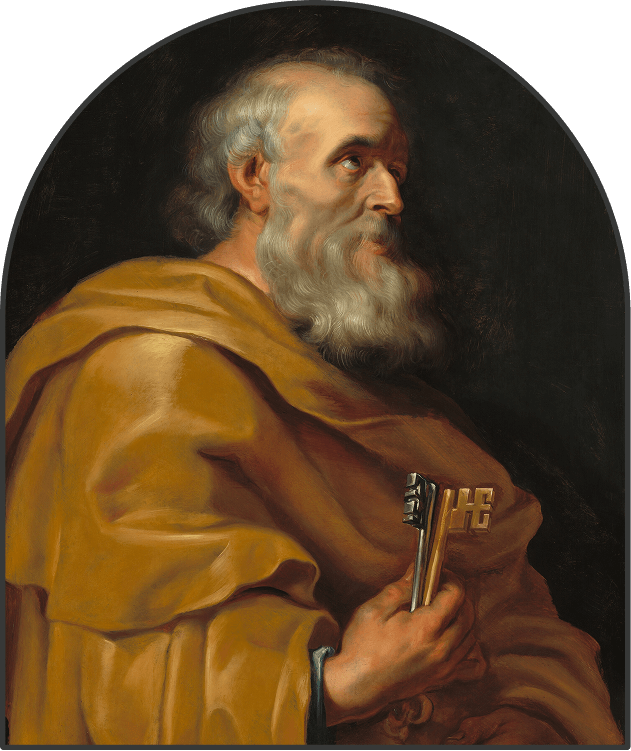
The Prayer Life of Saint Gregory the Great: The Contemplative Pope Who Served the World

Introduction
Saint Gregory the Great (also known as Pope Gregory I) (c. 540-604 AD) had numerous qualities through which he served the world. He served in many different ways, including as Pope, a monastic reformer, author, and spiritual teacher, all the while being a “Doctor” of the Church, a title that is given to the greatest teachers of the Christian faith. Saint Gregory is considered one of the most prominent Christians in history. He is often regarded as a reluctant leader in the Church during some of its most difficult times. He had a rich prayer life, filled with the teachings of God’s Word, and he wanted to share his experience with the entire Church.
Through the example of Gregory’s life, it can be seen that contemplation does not exempt one from being able to be effective in serving the needs of the world, but rather, by being able to contemplate on God through prayer, and through prayer, we can use the gifts of God we have to be fruitful in service to God and others. The mystical nature of one’s relationship with God and the insight received through that relationship can be exchanged for the knowledge gained through previously administering the gifts we receive from God. The person who sits at the feet of Jesus while praying like Mary can also be called to serve like Martha. Gregory established himself as a person who had a powerful desire to live in solitude with God, as well as being a person who took on the often-unrequired responsibility of providing administrative services to the Church.
Born into Prayer: An Aristocratic Foundation
Gregory was born in Rome in approximately 540 AD to a wealthy Christian senatorial family. He had many connections within the Church through family members, such as Pope Felix III, and many other clergy members and religious women from the family line. Therefore, Gregory was raised within an aristocratic Christian family with many resources available to him for both educational and material purposes. However, one of the most important aspects of growing up in this Christian household is that prayer was a part of the family, as well as service to God and others being important parts of the family.
One of the most significant influences in Gregory’s early life was his mother, Silvia, who was later honored and recognized as a saint. He was raised in a family with sincere devotion, and as a result, he understood how this type of family formed the way a child views God. While the wealthy Romans lived in a villa, to the Romans of that time, it was a culturally and socially refined environment, since it was not only established to provide the Romans with a “home,” but was also established to help educate Gregory in God as well.
Many of the privileges Saint Gregory enjoyed through his upbringing, such as:
Education: He received the best available classical and Christian education, studying Latin literature, rhetoric, law, and theology
Resources: His family’s wealth would later enable him to to establish monasteries and to support charitable works of service to the Church.
Connections: His aristocratic network facilitated his eventual ecclesiastical leadership
Spiritual formation: Growing up in a genuinely devout household shaped his understanding that authentic Christianity integrates faith and practice, contemplation and action
Although, being privileged can lead one into tension as well. Gregory’s circumstances of education and social status indicated he would have had a brilliant secular career (the same as many secular leaders of his day), but he chose not to pursue that course of action.
The Reluctant Administrator
In his early thirties, Gregory held high civic office as Prefect of Rome (c. 572-574 AD)—essentially the city’s mayor during a period of plague, famine, and barbarian threats. This position demonstrated his administrative genius and leadership capacity but left him spiritually unsatisfied.
The Yearning for Solitude
Despite worldly success, Gregory felt increasingly drawn toward monastic life. The administrative duties, political intrigues, and constant demands left him hungry for silence, prayer, and contemplation. Like Augustine before him, Gregory discovered that worldly achievement cannot satisfy the soul created for God.
He later wrote of this period:
I was held back by many secular cares, and bound by the chain of my administrative office. After I had tasted the sweetness of divine contemplation, how bitter all secular business became to me!
This testimony reveals someone who had experienced contemplative prayer’s depth and found everything else hollow by comparison. Once tasting the “sweetness of divine contemplation,” worldly success became “bitter.”
This echoes the psalmist’s testimony:
Oh, taste and see that the Lord is good
Psalm 34:8
Those who genuinely taste God’s goodness find earthly pleasures insipid—not because earthly things are evil but because divine reality infinitely exceeds them.
The Monastic Conversion
Around 574 AD, after his father’s death freed family resources, Gregory made a radical decision. He transformed the family palace on Rome’s Caelian Hill into a monastery dedicated to Saint Andrew, distributed his remaining wealth to the poor, and entered monastic life as a simple monk.
This choice scandalized many. From society’s perspective, Gregory was throwing away extraordinary potential—wealth, power, influence—for prayer and obscurity. But from Gregory’s perspective, he was finally pursuing what truly mattered: seeking God in contemplative solitude.
His decision reflects Jesus’s parable: “The kingdom of heaven is like treasure hidden in a field, which a man found and hid; and for joy over it he goes and sells all that he has and buys that field” (Matthew 13:44) and Gregory fulfilled that illustration in selling everything to get the field in which he could find the treasure of contemplation.
The Monastery: Years of Formation
Gregory spent approximately six years (574-580 AD) as a monk in the monastery he had founded. These years of intensive prayer, Scripture study, and contemplative practice formed the spiritual foundation that would sustain his later public ministry.
The Monastic Rhythm
Gregory embraced the full monastic discipline:
Liturgy of the Hours: Praying the Divine Office seven times daily plus night vigils—essentially punctuating every few hours with corporate prayer.
Lectio Divina: Slow, contemplative reading of Scripture, particularly focusing on Job and the Song of Songs.
Manual labor: Working with his hands in gardening, manuscript copying, or other tasks
Fasting: Rigorous dietary restrictions that would permanently damage his health
Silence: Speaking rarely, guarding words as precious currency
Simplicity: Living with minimal possessions in a small cell
Obedience: Submitting to the abbot and the Rule, dying to self-will
This structured life created optimal conditions for contemplative prayer. The regular rhythms prevented spiritual drift; the silence enabled interior attention; the simplicity eliminated distractions; the obedience crushed pride.
The Illness: Excessive Asceticism
Gregory’s ascetic practices were so severe that they permanently damaged his digestive system. He suffered chronic stomach problems, frequent illnesses, and physical weakness for the rest of his life. In hindsight, this excessive asceticism was a mistake—Gregory later counseled moderation for others, recognizing that destroying the body through extreme practices can hinder rather than help spiritual progress.
Yet even this error contributed to his spiritual formation, teaching him through personal experience the need for balance. His lifelong physical suffering also united him mystically with Christ’s passion. Like Paul’s “thorn in the flesh” (2 Corinthians 12:7), Gregory’s chronic illness kept him humble, dependent on grace, and sympathetic toward others’ sufferings.
Scripture Meditation: The Foundation
Gregory’s time spent in the monastery was primarily taken up with the study of Scripture. He memorized large portions of the Bible, meditated on the Scriptures for long periods and developed an initial understanding of the allegorical interpretation of Scripture, which later gave rise to his written works.
Gregory approached the Scripture in a contemplative manner—not as an academic form of study but rather through contemplation. Gregory used contemplation to pray the Living Word of God. While Gregory was concerned about the information that was found in the Bible, Gregory was more importantly concerned about building a relationship with God through prayer. Instead of simply asking, “What does this mean to me?” , Gregory was also asking, “How does this change my life?”.
The Book of Job had a profound effect on Gregory, which later resulted in his writing of the Moralia in Job, a compendium of allegorical commentaries on Job; the interpretation of the Book of Job as being illustrative of the individual soul’s journey through suffering to God, and the causing of anguish to the Church while in this world.
Like the Book of Job, Gregory was also deeply influenced by the Song of Songs; Like many of the mystics before him (Bernard of Clairvaux, Origen). Gregory interpreted the Song of Songs as being illustrative of the relationship that exists between Christ and the believer as bridegroom and bride.
The Mystical Encounters
Though Gregory usually did not give any specific details about his mystical experiences (due to the hiddenness aspect in the practice of Christian monasticism), the writings of Gregory give some insight into the depth of the contemplative experiences he encountered while in the monastery.
Gregory had experiences that later mystics would refer to as:
Infused contemplation: Prayer that transcends discursive thought, moving into simple awareness of divine presence
Spiritual sweetness: The experience of God as good contrasted with the void that is the pleasure of the world.
Divine light: The experience of spiritual illumination which reveals the truth or knowledge of the spiritual realm not attainable by mental reason.
Ecstatic rapture: The experience of the union of the soul of man, separated from his physical body, and absorbed in the union with God.
Gregory understood all these experiences to be a gift from God and not merely something he had created by his own efforts.
The Interrupted Contemplation: Called to Service
Gregory’s tranquil life as a monk was ended by Pope Pelagius II’s ordination of him as deacon and appointment as papal legate (apocrisiarius) to Constantinople in 579-580 AD. This was an involuntary assignment for Gregory and required him to leave his beloved monastery.
The Tension: Mary and Martha
Gregory’s shift from the monastery to public service created great inner turmoil that would remain with him for the rest of his life. He saw himself in the biblical personages of Mary and Martha (Luke 10:38-42):
Mary symbolizes a contemplative life by sitting at Jesus’ feet and concentrating on prayer and intimacy with God.
Martha symbolizes the active life by serving the physical needs of people with good works.
Gregory wanted to be Mary but was compelled to be Martha. But instead of choosing one way of life over the other, Gregory chose to unite both Mary and Martha’s ideals of life—keeping his contemplative heart while undertaking public service.
He later wrote:
There are some who utterly abandon the contemplative life and give themselves wholly to service...But there are others who...abstain from all activity and give themselves entirely to the pursuit of contemplation...But the perfect lead a kind of mixed life.
The “mixed life” of active and contemplative life was one of Gregory’s gifts to Christian spirituality. Gregory illustrated that the tension between Mary and Martha could be creative and that contemplation is support for action and vice versa.
Constantinople: Diplomacy and Study
As the pope’s representative to Emperor Justinian in Constantinople (579-586), Gregory had to be an effective diplomat, theologian and politician—the very skills he hoped to avoid by becoming a monk.
However, even amid the demands of this position, Gregory was able to apply the principles of contemplation.
Rising early for prayer: He prayed in the morning by talking directly to God for a long time before doing any work.
Scripture study: He studied the Scriptures every day.
Theological writing: He developed the Moralia in Job while acting on behalf of the pope, dictating to scribes while performing his diplomatic duties.
Spiritual conversation: He attracted a handful of fellow monks to gather for prayer and mutual support and to encourage one another in the contemplative experience of God.
Gregory became aware that while his external circumstances had changed significantly, he was still able to experience the peace of contemplation inwardly. He realized this would require even more effort and discipline than in the protection of the monastery.
The Papacy: Contemplation Under Extreme Pressure
Gregory was elected Pope in 590 AD after returning to Rome and for a brief time continuing as a monk. Although Gregory was reluctant to become Pope and attempted to escape the city, he ultimately was compelled to serve and would lead the church as pope for fourteen years (590-604 AD) during a period that included the plague, starvation, political strife, and disputes over doctrine.
“The Servant of the Servants of God”
Gregory took the title Servus servorum Dei ( “Servant of the servants of God” ) as a pope and subsequent popes have retained this title. This was not merely a show of humility, as the title suggests; this was an expression of Gregory’s pastoral theology that if you wish to lead others you must serve them, that if you have authority, you must be willing to give yourself, and that if you have power, you should demonstrate your greatness by preparing for the tasks before you.
Gregory’s view of the way to exercise authority was the result of his contemplation. In his prayers, Gregory encountered Christ as the Suffering Servant (Isaiah 53) and learned that in the kingdom of God greatness is achieved through humble service (Matthew 20:26-28). His union with the mystical Christ allowed him to take on the servant position of his life.
The Administrative Burden
As Pope, Gregory’s responsibilities were overwhelming:
Temporal governance: With imperial authority collapsed in the West, the church filled the vacuum—Gregory essentially governed Rome and its surrounding territories
Theological controversies:Addressing the various heresies, clarifying doctrinal issues, and resolving disputes.
Pastoral oversight: Supervising bishops across the West, correcting abuses of pastoral care, and ensuring appropriate liturgical practices.
Diplomatic relations: Representing the Church in dealing with the Lombard invaders, establishing relationships with the Eastern Emperors, and managing the complexities of the political environment.
Charitable works: Dealing with providing for those affected by the plague and offering financial assistance during times of famine.
Liturgical reform: Developing what we now refer to as “Gregorian chant” and reforming Roman liturgy.
Financial management: Providing financial oversight of the vast number of properties owned by the Church and ensuring the Church is welfare-oriented.
Correspondence: Managing to write literally thousands of letters to emperors, hermits, bishops, and laypeople regarding theological issues and pastoral concerns.
The workload created by Gregory’s responsibilities left him feeling physically drained and spiritually tortured. Gregory felt as if he had lost the tranquility that had once given him peace while a monk.
The Grief of Lost Contemplation
Many of Gregory’s letters and writings from his papal years reflect his heart-wrenching lamentations for the loss of his monastic life, which in the following words, full of deep grief:
I am so distracted by the many concerns of my pastoral office that my mind is forced to scatter itself...When my mind has gathered itself together in an effort to concentrate, it is driven hither and thither by the tumult of affairs...I who once enjoyed the liberty of the cloister am now imprisoned in the bonds of my position.
Gregory felt this deep sense of grief as real and he experienced much suffering in his transition from the tranquil environment of monastic contemplation to the chaotic environment of papal duties. However, it was in the place of his suffering that he was given the grace to make himself one with the suffering of Christ, to offer to God a grateful heart through his suffering.
Maintaining Prayer Amid Chaos
Gregory remained true to his daily prayer routine in the encirclement of chaos. His daily routine of prayer included:
Dawn prayer: Rising before dawn and praying for an extended period, before being consumed with the day’s responsibilities.
The Liturgy of the Hours: Praying the Divine Office throughout the day whenever possible, sometimes abbreviated but never completely abandoned.
Scripture meditation: Reflecting on biblical passages every day, sometimes while doing other things that were pressing.
Spiritual reading: Reading patristic writings and lives of saints for nourishment
Examination of conscience: Reflecting on his day with God, remembering his shortcomings and praying for renewed dedication to fulfilling God’s responsibilities related to his pastoral office.
Mass celebration: Offering the Eucharist daily and making the Eucharist the focal point of his spiritual life.
Brief prayers throughout the day: Constantly turning to God in the midst of activities—what later would be called “arrow prayers”
Gregory realized that the demands of the papacy were not conducive to creating a deep, rich spiritual life of contemplation. However, he discovered that it is possible to maintain a life of contemplation within the constraints of the papacy—there is no way he could maintain the intensity that exists in a monastic environment. However, he learned to continue to pray regularly as a result of the change of lifestyle that if he could no longer do it in a monastic lifestyle, then he could continue to develop a habit as a pope.
The Pastoral Rule: Contemplative Leadership
Gregory’s masterwork, Pastoral Care (Regula Pastoralis), contains his reflections of his life as a Christian and how that affected his pastoral decisions as both overseer (keeper) of his community, but as ultimately Christ was both of these. The Pastoral Care combines both contemplative spirituality and practical pastoral wisdom. It became the main book for all clergy, and remained influential through all of Medieval Christian history.
The Qualifications for Leadership
Pastoral Care has a list of important qualities that Gregory believed that all shepherds (pastoral leaders) had to exhibit. These important qualities include:
Deep prayer life: The only way a shepherd (pastoral leader) can lead people to God, is by knowing God intimately himself. Only those who are in close personal relationship with God can lead people closer to Him.
Self-knowledge: Such awareness allows leaders to be humble: by not arrogantly thinking they are better than the person they lead, and also not being so self-conscious that they cannot serve others.
Humility: Pastoral leadership is a servant ministry to your people and, as such, should include a servant attitude and lack of pride. Pastoral leaders are not to dominate but lead in humility.
Discernment: A pastoral leader must be able to see God’s movements around them and lead their flock accordingly.
Balance: Not considering people in abject fear, or laxity, creating balance in leadership.
Theological knowledge: A pastoral leader must understand sound doctrine to prevent error.
Practical wisdom: A pastoral leader must be able to apply eternal principles to everyday life situations.
Gregory’s contemplative spirituality is reflected in his list of qualities necessary for a good shepherd, especially in self-awareness, humility and discernment, because these qualities are developed primarily through contemplation.
Teaching According to Circumstances
Gregory’s pastoral theology has the unique aspect of teaching each person according to their unique circumstance—what works for someone in their spiritual development stage may, in fact, be detrimental to someone else at the same developmental stage. Gregory believed that a good shepherd (pastoral leader) should have the following approach to teaching:
Different temperaments: Recognizing that introverts and extroverts, the intellectually inclined and the practically minded, require different approaches
Different spiritual stages: What benefits beginners might harm those advanced; what challenges the mature might crush the weak
Different circumstances: Poverty and wealth, sickness and health, success and failure each present unique spiritual opportunities and dangers
Different sins: Each vice requires its own particular remedy; one prescription doesn’t fit all spiritual illnesses
Gregory’s approach was a result of his contemplative ability to see each person’s situation and how they could benefit from a good shepherd’s direction. Gregory’s approach also mirrors Jesus’ different approaches, as in how He chose to address the woman at the well, the rich young ruler, Peter, and Thomas.
The Mixed Life: Integration
The Pastoral Care also shares Gregory’s theology on the mixed life, integration, between contemplation and action. Pastoral leadership has to live in both roles—Mary and Martha. Gregory teaches that pastoral leaders must continue to spend time in prayer, so as not to lose balance in their pastoral roles:
Those who are placed in positions of authority should strive to maintain both lives—that of Mary and that of Martha. They should not wholly abandon the repose of contemplation, nor should they entirely give up the labor of active ministry.
This integration requires:
Protecting time for prayer: Create a time and place to engage in contemplation despite the demands of everyday life.
Offering work as worship: As you fulfill the administrative expectations of your pastoral office, your tasks can and should be considered acts of worship
Maintaining spiritual practices: Continue the spiritual disciplines that act as anchors to one’s life and will help maintain a constant flow of energy from God.
Finding God in service: Recognize that the people you serve are actually the body of Christ—and find joy in that service.
Regular retreat: Take time to retreat periodically and recharge spiritually.
Interior stability: Live in inner peace despite a chaotic external environment.
Although Gregory did not always practice the mixed life perfectly, his struggles with attaining greater contemplative depth serve as an encouragement to others who may experience similar tensions.
The Dialogues: Stories of Holiness
The Dialogues are a collection of the stories of saints and miracles from Gregory’s time. While some modern readers have trouble accepting these stories as credible, for Gregory, they revealed the deeper spiritual realities that were not visible to the natural, but rather, could be perceived through the contemplation of God.
The Life of Saint Benedict
In Book II of the Dialogues, Gregory gives us the primary source for the life of St. Benedict of Nursia, who is considered the father of Western monasticism, and established the Rule of St. Benedict which would shape the faith of Christendom throughout Europe. Gregory reveres the life of St. Benedict, and shows his love for contemplation in his writings.
St. Benedict had an experience where he perceived “the whole world was gathered up before his eyes in what appeared to be a single ray of light.” St. Benedict’s ability to see everything in creation from God’s perspective is a clear example of how contemplative prayer reaches that height where the particulars fade into obscurity, because God occupies the greatest part of our consciousness.
Gregory saw St. Benedict to be similar to him, in that both men were called to contemplative solitude, and who were engaged in ministering to the needs of the people.
Miracles and Contemplation
Gregory has included many miracle stories as part of his Dialogues—miracles such as healing, exorcisms, prophecies, resurrections from the dead, etc. Most modern readers question the validity of these stories, but for Gregory, they verified the existence of the deeper spiritual realities that exist beyond our ordinary way of looking at the world around us, but that can be perceived through our relationship with God through contemplative prayer.
Gregory believed that:
The supernatural pervades the natural: Miracles are not violations of nature, but rather reveal a deeper reality that ordinarily is hidden from view.
Saints perceive spiritual dimensions: Contemplative prayer opens eyes to what always exists but remains unseen by most
God acts constantly: Miracles aren’t rare divine interventions but continuous divine activity we usually don’t notice
Prayer accesses power: Union with God enables participation in divine power for healing, deliverance, and transformation
Gregory’s Dialogues illustrate his life experience with God’s reality, however, how he lived this reality may differ from a modern reader’s experience. Nevertheless, the reader will have a better understanding of Gregory’s worldview, and his conviction that our reality is greater and stranger and more wonderful than we realize.
The Moralia in Job: Contemplative Commentary
Gregory wrote a massive commentary on Job during his papacy and entitled it Moralia in Job; it is considered the most profound work of both theology and mystical theology by Gregory. Moralia in Job has 35 books and is divided into three parts:
The Three Levels of Interpretation
Following patristic tradition, Gregory read Job on three levels:
Literal/Historical: The historical story of Job and his suffering, and restoration.
Moral: How Job’s experience teaches Christians how to face suffering with faithfulness and virtuous living.
Mystical/Allegorical: How Job prefigures Christ in His suffering/Paschal; and also how Christ’s body is experiencing the same trials.
The multiple layers of the Moralia in Job reflect Gregory’s contemplative way of interpreting Scripture. The more surface meaning, while true, is not the most important; the most important is the depth of spiritual realities revealed by reading Moralia in Job in this way, similar to how icons reveal Christ. The numerous ways St. Benedict suffered would ultimately prepare him to achieve glorious union with God, and Moralia in Job has examples of how every disciple may achieve the same.
Job as Model of Contemplation
Gregory saw Job as exemplifying contemplative endurance:
Maintaining faith despite God’s apparent absence: When God seems silent or hostile, continuing to trust
Praising God amid suffering: “The Lord gave, and the Lord has taken away; blessed be the name of the Lord” (Job 1:21)
Wrestling with divine mystery: Job’s questions and protests demonstrating authentic prayer, not superficial piety
Receiving divine revelation: God eventually speaking from the whirlwind, revealing His glory
Achieving deeper knowledge: Job’s testimony: “I have heard of You by the hearing of the ear, but now my eye sees You” (Job 42:5)
This progression—from faith through trial to deeper vision—maps the contemplative journey Gregory himself experienced and guided others through.
Contemplation and Suffering
A central theme in the Moralia is suffering’s role in spiritual maturity. Gregory taught that:
Suffering purifies: Like fire refining gold, trials burn away spiritual impurities
Suffering humbles: Exposing our weakness and increasing dependence on grace
Suffering conforms to Christ: Participating in Jesus’s passion unites us mystically with Him
Suffering reveals hidden grace: Discovering divine strength previously unknown
Suffering prepares for glory: Present affliction producing eternal weight of glory (2 Corinthians 4:17)
This theology emerged from Gregory’s personal experience—his chronic illness, his administrative burdens, his frustrated longing for contemplative solitude. He transformed his pain into contemplative offering, discovering Christ in suffering itself.
The Homilies: Preaching from Prayer
Gregory’s surviving homilies on the Gospels and the Book of Ezekiel show how he was an inspired preacher whose inspirational homilies reflected his private, personal prayer—these writings were not intellectual exercises, but rather they were an overflow of his personal encounters with God through prayer.
Ezekiel’s Vision
Gregory’s Homilies on Ezekiel, which he gave during the Lombards’ siege of Rome, present an understanding that the prophet’s vision depicted both the actual sufferings of the Church as well as the mystical ascent of the individual soul towards God.
One example of this mystical theology is Gregory’s exposition of the prophet Ezekiel’s first vision (Ezekiel 1): his depiction of the four living creatures, the wheels, and the throne. Each one of these represents a different aspect of the contemplative life:
The living creatures represent different aspects of contemplative life—strength, illumination, humanity, divine transcendence.
The wheels signify how contemplation and action turn and support one another respectively.
The throne is the ultimate destination of longing for God—“The Lord is our God, and we will serve him alone.” It represents our desire to rest in the presence of God in heaven.
The voice is a picture of God’s way of communicating to us in our prayer.
These understandings of Ezekiel and his vision were not arbitrary—which is true for all the allegorical interpretations of Scripture, but Gregory’s understanding of these visions were the result of Gregory’s contemplative insight into Ezekiel’s text, through the inspiration of the Holy Spirit.
Gospel Homilies
Gregory’s Forty Gospel Homilies give practical guidelines for the spiritual life, and are firmly grounded in the depth of his contemplative experience. Gregory takes well-known Gospel stories such as the parable of the Good Samaritan, the Prodigal Son, and Martha and Mary and exposes them to us on a deeper spiritual level.
His treatment of Mary and Martha (Luke 10:38-42) is particularly poignant. He wrote:
Mary chose the better part, which shall not be taken from her. Martha's service is good, but Mary's contemplation is better...Yet both are necessary. Contemplation without action is incomplete; action without contemplation is empty.
Gregory found this balance between action and contemplation—living through the difficulties he experienced.
Gregorian Chant: Prayer in Music
Though the extent of Gregory’s actual involvement is debated, tradition also credits Gregory with “Gregorian Chant,” which is the name of the form of the music that would dominate the harsh secular world for centuries.
Music as Prayer
Gregory understood that:
Music elevates the soul: Melody lifting hearts toward heaven
Singing unites community: Multiple voices harmonizing in unified praise
Beauty reveals God: Sacred music manifesting divine beauty
Repetition deepens attention: Chanting the same texts repeatedly imprinting them on consciousness
The body participates: Breathing and voicing making prayer physical
Gregory understood that through a focused contemplation of the divinity of God, through music, and the music being presented through the characteristics of music, that through the use of musical sound and rhythm (not just melody), we come into contact with the very essence of God and are able to experience communion with God.
The Chant’s Characteristics
Gregorian chant’s qualities serve contemplative worship:
Simplicity: A melody without accompaniment and no complex harmonies
Serenity: Chants have a calm flowing rhythmicity producing peacefulness
Scripture: Predominantly biblical texts, especially Psalms
Flexibility: Adapting to liturgical seasons and particular celebrations
Beauty: The aesthetic value serves the text, but does not overshadow it
The above conditions create an ideal environment for a contemplative prayer during the celebration of the liturgy—they are beautiful enough to draw our eyes, souls to God—they are simple enough to help us concentrate properly during our prayers.
The Final Years: Longing for Home
The last years of Gregory’s life were filled with physical suffering, but were also marked with an increasing wisdom and spiritual wisdom. Due to the physical effects of long years of ascetic living and to continued health issues, Gregory’s body was gradually weakening; however, his spiritual wisdom and experience of God was also increasing.
The Intensified Longing
As Gregory’s death was drawing near, he felt an intense longing for heaven. In the latter part of Gregory’s life, he wrote with growing frequency about eternity and called this time on earth “exile” from our true fatherland.
This longing reflected Paul’s testimony:
I am hard-pressed between the two, having a desire to depart and be with Christ, which is far better
Philippians 1:23
Gregory longed for that perfect union of God through the presence and the beauty of God experienced only through the beatific vision.
Even in his suffering for the fulfillment of this longing, Gregory could offer this longing as prayer, by offering God the temporal experience of suffering in exchange for eternal glory.
The Final Contemplative Insight
Gregory wrote, shortly before his passing:
The contemplative life begins in this world but is perfected in the world to come. For the fire of love which begins to burn here is set aflame with greater intensity when we see Him whom we love.
In recognizing this insight, Gregory understood that our experience of contemplative union, here, is still imperfect — “seeing in a mirror, dimly” (1 Corinthians 13:12). Full contemplative union awaits resurrection, when we shall see “face to face.”
Death: The Contemplative’s Rest
Gregory died on March 12, 604 AD, after being pope for fourteen years. His body, after the hardships of being sick, and carrying the burdens of leading and assisting others, was finally set free, and rested. His soul now achieved the union with God that he sought during all the years of his papacy.
His death completed the writings he had previously written about those who had lived contemplatively during their lives, stating that:
When this present life is over, those who have dedicated themselves to contemplation in this world will find that contemplation continues forever in the next, and those who loved action more than contemplation will discover that they must now simply behold what they previously served.
As a result of his experience and teachings, Gregory lived his life as a mixed life. With his death, Gregory’s actions ceased, and his contemplation began.
Practical Applications from Gregory the Great’s Example
Embrace the Mixed Life
Don’t choose one or the other. Begin to integrate both. Allow prayer to inform your actions, and permit your actions to lead you back to prayer.
Protect Time for Prayer
Create intentional space for the practice of contemplation, regardless of how much time you have. Use the example of Gregory rising very early to pray before the day required his attention.
Offer Work as Worship
Look at your “administrative” duties, or household tasks or professional obligations as acts of devotion offered to God and that you are fulfilling by way of community service for the betterment of those near you.
Practice Lectio Divina
Engage in the Word of God using a slow, prayerful and contemplative approach. Read the Word of God for the purpose of changing the way you live, not just so that you obtain information—focus on certain scriptures that speak to the current situations in which you find yourself.
Maintain Spiritual Practices Despite Chaos
In stressful situations, use simple prayer to sustain, keep going. Even if you don’t have time for your daily devotion, find creative ways to pray without abandoning your overall devotional life.
Accept Unwanted Duties
Make every effort to obey the demands of your responsibilities, even though you may not have wanted them in the beginning; at the same time, continue to live in interior freedom. Remember, your true identity is in God, not in who your earthly lot is.
Integrate Mary and Martha
When you find yourself torn between prayer and service, remember that both are equally essential. Follow the example of Gregory.
Lead from Prayer
In all your leadership, lead from your intimate relationship with God; if you don’t know the Lord, you can’t effectively guide others to Him.
Adapt Guidance to Individuals
Be mindful that different people need different styles of spiritual direction; the form of guidance that is beneficial to one person might be harmful to another.
Find God in Suffering
Let whatever physical, spiritual, mental pain or disappointment you may have encountered throughout life become a motive for offering to God in contemplation to allow those negations to bear witness to the love of Christ.
Long for Heaven Without Escaping Earth
As you cultivate your desire to be united with God in heaven, continue diligently to carry out and fulfill your obligations of daily life and community service.
Study Contemplative Writers
Read Gregory and other mystical writers. Seek and allow those who have passed on to guide you in your quest for God.
Legacy: The Last of the Roman Fathers
The Catholic Church honors Gregory as one of the four great Doctors of the Western Church (alongside Ambrose, Augustine, and Jerome) and one of only three popes called “the Great” (with Leo I and Gregory VII).
His influence shaped:
Medieval papacy: He established models of government for the Papacy and gave it a spiritual leader role.
Monasticism: He promoted the Benedictine model of monasticism and a contemplative view of life.
Liturgy: He created the Roman Rite and Gregorian chant.
Pastoral theology: His Pastoral Care writings were meant to be a definitive guide for clergy in their caring for their congregations.
Biblical interpretation: He gave an allegorical method of interpretation that greatly shaped the way Medieval Christians understood the Bible.
Spiritual theology: He combined the biblical concept of both “contemplation” and “action” into a single approach to the Christian faith.
Missionary work: He sent St. Augustine of Canterbury to evangelize in England to proclaim the Good News of Jesus Christ.
Gregory’s writings have provided spiritual nourishment for many generations throughout the Middle Ages, Renaissance, and beyond, and they continue to inform and inspire Christians today.
Conclusion: The Contemplative Servant
Saint Gregory teaches that both contemplation and action coexist in the life of a mature Christian. Rather than choosing one or the other, a mature Christian practices both in their lives.
Saint Gregory lived out this concept imperfectly during his lifetime. He faced the struggles and problems associated with integrating the two concepts. However, he continually longed for the peace found in a life of “mixed life.” His example teaches us that the “mixed life” is not easy, natural, or comfortable, but requires daily acceptance of God’s will in our lives.
The integration of contemplation and action results in great fruits. Saint Gregory’s contemplative approach allowed him to express his spiritual insight and administrative gifts in ways that pure contemplation or pure activity could not have provided. Gregory has mystical experiences with God through prayer, which bestowed divine wisdom to help guide and direct the Church through many difficult periods of time.
The greatest lesson we learn from Saint Gregory is that our identity as a Christian does not depend upon the roles we play in our lives, either as a monk or a pope, as a contemplative or an administrator; rather, our identity is identified through our intimate relationship with God through prayer. As we develop our relationship with God through prayer, God reveals to us who we are as His beloved child, and as a result of that relationship, we become who God is calling us to be through Christ, through the Holy Spirit.
But seek first the kingdom of God and His righteousness, and all these things shall be added to you
Matthew 6:33
May we, following Gregory’s example, seek first God’s kingdom through contemplative prayer. May we maintain this priority even when pulled toward a thousand urgent demands. May we discover, as Gregory did, that time spent with God is never wasted—that contemplative depth produces practical effectiveness, that mystical union empowers earthly service, and that those who lose their lives in prayer find them more abundantly in service.
And may we learn, as Gregory learned through suffering, that the contemplative life begun on earth will be perfected in heaven—that every prayer we offer, every moment of divine communion we experience, every taste of God’s sweetness we receive anticipates the eternal contemplation awaiting all who faithfully persevere.
For now we see in a mirror, dimly, but then face to face. Now I know in part, but then I shall know just as I also am known
1 Corinthians 13:12
Until that day, like Gregory, we pray, we serve, we long for home, and we trust that the God who called us to the mixed life will grace us with strength sufficient for each day’s demands—until administrative duties cease, earthly struggles end, and contemplation becomes our eternal joy.
Servus servorum Dei—Servant of the servants of God. May this be our calling, our prayer, and our offering, until we hear the Master say:
Well done, good and faithful servant...Enter into the joy of your lord
Matthew 25:21
Our Editorial Standards:
All our content on Christian meditation traditions, prayers, and spiritual practices is reviewed by Dr. Megan Remington, PhD, ensuring theological soundness and spiritual depth.
We draw from centuries of Christian contemplative tradition, citing respected theological sources, biblical references, and established spiritual practices.
Our team understands that spiritual struggles are deeply personal. We approach topics of anxiety, strength, healing, and peace with compassion and biblical wisdom.
We continuously review and update our spiritual resources to ensure they remain relevant and aligned with orthodox Christian teaching.
Each article clearly identifies our writers and reviewers, along with the theological sources and biblical foundations used.
 To guarantee that all of our information is accurate, we ensure that all our sources are reputable. That means every source is authenticated and verified to be backed only by medical science.