


 App Store
  Google Play
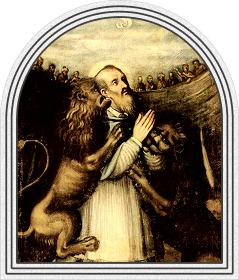
The Prayer and Mystical Life of St. Ignatius of Antioch

Introduction
St. Ignatius (A.D. 35–107) was one of the first witnesses to Christian mysticism, writing letters that reveal a heart full of love for Jesus Christ. He was the 3rd bishop of Antioch, and a direct disciple of St. John the Apostle. Ignatius had such a deep relationship with Christ that his prayer life was based entirely on this union with Him, especially through suffering and martyrdom.
A Heart Consumed by Christ
One of the essential aspects of Ignatius’ writing is his intense love for Christ that consumed him. In one of his famous quotes, he said, “My love has been crucified.” This expresses his personal connection to Jesus as more than a mere theological statement. He had experienced Christ in a very profound way that rendered all other attachments insignificant.
Ignatius understood the depth of Paul’s statement: “For to me, to live is Christ and to die is gain” (Philippians 1:21). This was not a mere theological statement to him; rather, it was the foundation of his contemplative existence.
Contemplation Through Suffering
Ignatius viewed the process of contemplative prayer through the lens of his acceptance of martyrdom. On his way to Rome, guarded by soldiers who would eventually execute him, Ignatius wrote letters to the Church in Rome, expressing his desire to accept martyrdom. He pleaded with them:
Allow me to be food for the wild beasts, through whom I can reach God. I am God's wheat, and I am being ground by the teeth of wild beasts, that I may be found pure bread of Christ.
Ignatius’ imagery was deeply connected to Jesus’ statement:”Very truly I tell you, unless a kernel of wheat falls to the ground and dies, it remains only a single seed. But if it dies, it produces many seeds” (John 12:24). The depth of Ignatius’ meditation on Christ’s sacrificial love made him desire to conform perfectly to Christ’s passion.
Through meditation, Ignatius was able to view suffering not as something to be avoided but rather as a way to deepen his relationship with Christ. As Paul wrote: “I want to know Christ—yes, to know the power of his resurrection and participation in his sufferings, becoming like him in his death” (Philippians 3:10). Ignatius lived this verse with radical intensity.
Prayer Centered on the Eucharist
Ignatius’ mystical theology was based on the Eucharist. He spoke of the Eucharist as “the medicine of immortality” and “the antidote that we should not die.” His understanding of Jesus as present in the Eucharist affected all his prayer.
Ignatius’ meditation of Jesus’ statement: “I am the living bread that came down from heaven. Whoever eats this bread will live forever” (John 6:51). He did not see the Eucharist merely as a symbol, but as Jesus’ actual presence, and he encouraged believers to contemplate this mystery of God’s presence with the utmost reverence. He desired to become “pure bread of Christ” through martyrdom to honor his desire for a union of service.
Unity Through Contemplative Love
St. Ignatius’ mysticism was not just individual; rather, it was very communal in nature. In every letter he sent, he stressed the importance of the Church’s unity as an extension of unity with Christ. He addressed the role of the bishop, presbyters, and deacons, and hoped for unity through working together. He believed that this harmony was a mystical representation of God’s order in heaven.
This vision resulted from his meditation on Jesus’ priestly prayer: “that all of them may be one, Father, just as you are in me and I am in you. May they also be in us” (John 17:21). Ignatius recognized that a Christ-centered contemplative relationship produced unity among believers; a mystical bond that transcends human divisions.
Silence and Watchfulness
St. Ignatius held silence in great esteem, and wrote, “it is better to be silent and be real, than to talk and not be real.” He taught that silence produces the Word of God and that every Christian should establish an inner peace to hear God’s voice.
Ignatius’ writing reflects the Psalmist’s instruction: “Be still, and know that I am God” (Psalm 46:10). Ignatius put into practice what later became the practice of hesychasm, an attitude of silence and watchful attentiveness to God. He cautioned believers to avoid idle talk and rather encouraged them to listen intently to Scripture and the Holy Spirit speaking within them.
Martyrdom as Ultimate Union
The height of Ignatia’ s spirituality is seen in his definition of martyrs. The martyr represents the highest standard of prayer and is viewed by Ignatius as the zenith of the selfless life of Christ and, therefore, achieves perfect union with Christ. He says, “Now I begin to be a disciple… Let fire and cross, flocks of beasts, breaking of bones and tearing of limbs, the grinding of the whole body, and all the malice of the devil come upon me—only may I attain to Jesus Christ!”
This fire and longing for union with Christ is reflected in the teachings of Christ: “Whoever wants to be my disciple must deny themselves and take up their cross and follow me” (Matthew 16:24). For Ignatius, picking up the cross meant to “follow the way of the Lord” literally through suffering as demonstrated by martyrdom.
Through his contemplation upon the love of Christ at Calvary, Ignatius was transformed by that love such that he declared, “My passionate love has been crucified, and there is no fire in me that loves anything.” In the same way that Christ died to the earthly passions, he mystically left behind the flames of divine love and was resurrected into the fullness of his glory.
The Imitation of Christ’s Passion
The meditative practice of Ignatius in contemplating the passion of Christ has become known as the “Imitation of Christ” in subsequent views. The words of the Church Fathers concerning this practice are intended to help Christians avoid morbid thoughts while meditating on the passion of Christ. Instead, Ignatius wanted Christians to share in all aspects of the passion of Christ and to understand themselves as disciples who have the same goal as Christ— “to be found a disciple of Him who died for us.”
This reflects Paul’s mystical declaration: “I have been crucified with Christ and I no longer live, but Christ lives in me” (Galatians 2:20). The goal of Ignatian spirituality is not a mere conceptual or abstract definition of a disciple but is the actual experience of a disciple in his or her spiritual journey—through prayer, contemplation, and ultimately through martyrdom, Ignatius became a living icon of Christ.
The Inner Life Hidden with Christ
When serving as a bishop publicly, Ignatius lived in the reality of an inward life before God as a contemplative. He taught that the essence of Christianity is seen through “the power of silence” i.e., how to live genuinely as a Christian is not through outward displays of faith, but through inner strength, rooted in prayer and silence. Ignatius wrote, “Christianity is not the work of persuasion, but of greatness.”
Jesus’ teaching reinforces this idea of true prayer: “But when you pray, go into your room, close the door and pray to your Father, who is unseen. Then your Father, who sees what is done in secret, will reward you” (Matthew 6:6). Ignatius lived his life in this inner place of the heart, in which he met God through humble prayer.
Watchfulness Against Spiritual Deception
Ignatius’ mystical experiences did not represent a lack of doctrinal soundness or orthodox truth; rather, they were based upon the authority of the Apostle John and were consistent with the way John interpreted spiritual experiences. Therefore, in keeping with John’s teaching, Ignatius advised other believers to be careful of false prophets and to interpret their spiritual experience according to apostolic teaching.
Ignatius’ mystical experience is indicative of the truth written by the Apostle John: “Dear friends, do not believe every spirit, but test the spirits to see whether they are from God” (1 John 4:1). To Ignatius, his mysticism was based not only on a personal experience, but upon the Will of God shown in the Scriptures.
Prayer of Longing
The prayer of longing is perhaps the most important aspect of Ignatius’s prayer. This longing is expressed in the writings of Ignatius, in which he expresses a deep, holy desire to experience complete union with God. He expressed extreme desire for God, rather than for the world, when he said that it was better to die than to continue to live on this earth because he would be with Christ. This echoes Paul’s words:
I desire to depart and be with Christ, which is better by far.
Philippians 1:23
But Ignatius’s longing went beyond mere preference—it was consuming passion, the mystical love that the Song of Solomon celebrates:
Place me like a seal over your heart, like a seal on your arm; for love is as strong as death.
Song of Solomon 8:6
A Legacy of Mystical Devotion
St. Ignatius of Antioch’s prayer life offers modern Christians a model of radical devotion to Christ. His mysticism wasn’t about esoteric experiences or secret knowledge but about loving Christ so completely that everything else faded in comparison. His contemplation led to action, his meditation to martyrdom, his inner life to outer witness. He demonstrated that Christian mysticism isn’t escape from reality but full immersion in the reality of Christ.
As he wrote in one of his final letters:
Him I seek, who died for us; Him I desire, who rose again for our sake.
In an age that often separates spirituality from suffering, Ignatius reminds us that the deepest prayer emerges from the crucible of sacrifice. His life incarnates Jesus’s promise:
Whoever loses their life for my sake will find it.
Matthew 16:25
Conclusion
St. Ignatius of Antioch stands as a beacon of mystical Christianity, showing us that prayer isn’t merely speaking words to God but becoming so united with Christ that our very lives become prayer. His contemplation of Christ’s passion, his meditation on the Eucharist, his practice of silence, and his embrace of martyrdom all flowed from one source: overwhelming love for Jesus Christ.
As we seek to deepen our own prayer lives, Ignatius challenges us to ask: Do we love Christ with such intensity? Does our meditation on Scripture transform us? Are we willing to embrace the cross, whatever form it takes in our lives?
May we, like St. Ignatius, pray with such fervor that we can honestly say: “My love has been crucified.” And may we seek Christ with such devotion that we can declare with him:
Our Editorial Standards:
All our content on Christian meditation traditions, prayers, and spiritual practices is reviewed by Dr. Megan Remington, PhD, ensuring theological soundness and spiritual depth.
We draw from centuries of Christian contemplative tradition, citing respected theological sources, biblical references, and established spiritual practices.
Our team understands that spiritual struggles are deeply personal. We approach topics of anxiety, strength, healing, and peace with compassion and biblical wisdom.
We continuously review and update our spiritual resources to ensure they remain relevant and aligned with orthodox Christian teaching.
Each article clearly identifies our writers and reviewers, along with the theological sources and biblical foundations used.
 To guarantee that all of our information is accurate, we ensure that all our sources are reputable. That means every source is authenticated and verified to be backed only by medical science.