


 App Store
  Google Play
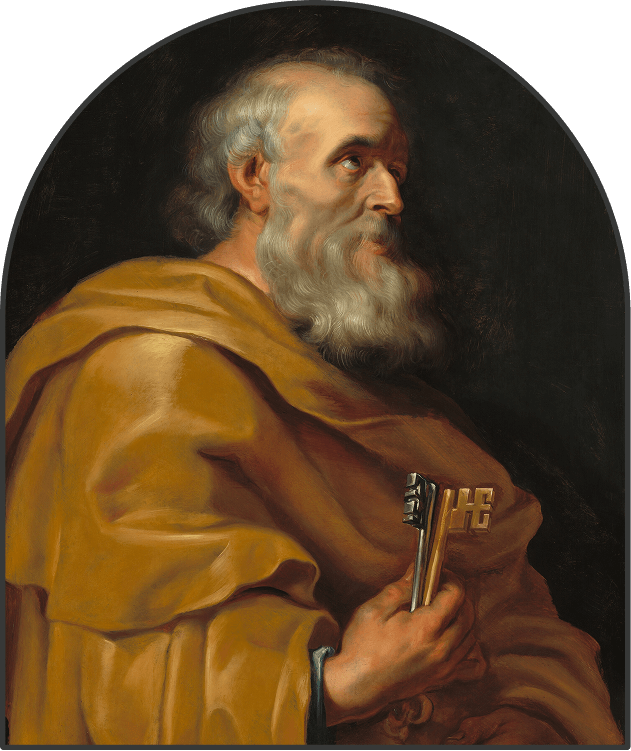
The Prayer Life of Saint Jerome: The Scholar-Hermit Who Gave Us God’s Word

Introduction
Saint Jerome (c. 347-420 AD), brilliant scholar, fierce controversialist, biblical translator, and desert hermit, stands as one of Christianity’s most complex and influential figures. His irascible temperament, legendary scholarship, and passionate devotion to Scripture created a paradox—a man whose contemplative depth produced both sublime biblical translation and sharp-tongued polemics. Jerome’s life demonstrates that authentic spirituality doesn’t eliminate personality flaws but channels human gifts, including intellectual brilliance and strong emotion, toward divine purposes. His prayer life reveals how rigorous scholarship and mystical contemplation can unite in service to God’s Word.
Early Life: The Scholar’s Formation
Jerome was born Eusebius Sophronius Hieronymus (c. 347-420 AD), in Stridon, a town that straddled the borders of Dalmatia and Pannonia (modern-day Croatia and Slovenia). With parents that were wealthy Christians, he had a privileged background and was sent to Rome to study rhetoric, grammar, and classic literature under the renowned teacher Aelius Donatus.
While Jerome was in Rome, he was also encompassed by the pagan classics including Cicero, Virgil, Plautus, and Terence and as a result of this exposure developed an immense appreciation of the artistry and beauty of these classical authors and the exact communicator quality of those narratives. This literary exposure coupled with his zeal for accumulating books began the foundation for the creation of a magnificent personal library.
However, in this educational experience Jerome encountered a duality within himself that would remain through his entire life—the duality between his intellectual and spiritual cravings. When presented with the possibility of reading and forming an appreciation for classical literature, he quickly developed a deep admiration for the persuasive eloquence of Cicero along with the graceful rhythms and structures of Virgil. However, in using the same perspective to judge the Biblical books, the elegantly structured and content-rich prose in the classical texts greatly surpassed Scripture’s comparatively simple prose. Therefore, at this critical juncture in Jerome’s life, God would have to intervene and humble his spirit to permit his intellectual gifts to be used for God’s glory.
Jerome’s study of literature was one of the fundamental elements to the formation of his mind but at the same time, he was active in constructing an understanding of the differing practices of the Christian faith in the various countries he visited through his studies in Gaul (France) and northern Italy. His many travels provided opportunities for him to become acquainted with the many different Christian communities across Europe and other countries, and many different Christian manuscripts.
Baptism and Conversion
Unlike most Christians of the day in Rome, Jerome was not baptized until he had reached about nineteen years of age because it was a common practice in the early Church to delay baptism until a person reached maturity. After Jerome’s baptism, he was completely transformed and awakened to a much deeper thirst for God than what he had previously understood.
He later recorded the transformation as follows:
When I was a boy at school and learning earthly wisdom, I used to fast often that I might more easily learn, but then I was not aware of the deep spiritual benefits of fasting.
Jerome had fasted as a youth in order to improve his ability to retain information, not for spirituality.
Upon being baptized Jerome transitioned from performing acts of Christian faith for cultural reasons to seeking to be spiritually transformed. Similar to the numerous other conversions of the early Christians, Jerome’s baptism resulted in more than simply a change in physical appearance and actions; it was the commencement of a tremendous shift from an external individual to one of true inner transformation.
The Dream: Divine Interruption
Jerome had experienced the turning point in his spiritual formation during a time of illness when traveling toward the east around 374 AD. Jerome had a vision caused by fever that subsequently changed his relationship with classical literature and the Scriptures.
Jerome insisted his dream experience was more than a dream, and in the dream, he found himself standing before God’s judgment seat. When asked his identity, Jerome answered:
“I am a Christian.” The Judge responded: “You lie. You are a Ciceronian, not a Christian. For where your treasure is, there will your heart be also.”
When Jerome received this answer, he was scourged and felt the blows so vividly, it left marks on his body. He cried out: “Lord, if ever again I possess worldly books or read them, I have denied You.” This led to an avoidance of all pagan literature, dedicating himself to the Scriptures and causing a rearrangement of his priorities.
The Significance of the Vision
In this experience, several spiritual realities are revealed:
Divine pedagogy: God used dramatic intervention to break Jerome’s intellectual idolatry. Where gentler methods might have failed, this severe mercy succeeded.
Interior divided loyalties: The dividedness of one’s heart between classical literature versus Christian scriptures. This dividedness was painful but intentional.
The “treasure principle” : Jesus taught: “Where your treasure is, there your heart will be also” (Matthew 6:21). Jerome’s treasure was Cicero’s eloquence more than Christ’s truth.
Physical manifestation: That there were marks on Jerome’s body after that dream was parallel to Jacob’s limp after wrestling with God (Genesis 32:31). Said marks on the body would later, after the dream, have to do with their lifelong spiritual warfare.
Vow-making: In desperation, Jerome vowed to abandon classical literature—a vow he later modified (continuing to use classical knowledge in service of Scripture) but which permanently reordered his priorities.
Enduring this vision illustrates that authentic contemplation can sometimes necessitate a divine rupture where God must break through our complacency and redirect misplaced affections.
The Syrian Desert: Hermit Years
Due to his desire for solitude and increased ascetical discipline, Jerome spent the next five years (375-380 AD) as a hermit in the Syrian desert near Chalcis, and these five years were the years of prayer, spiritual combat, and ascetical discipline. Thus prepared, he would eventually fulfill his life’s calling.
The Harshness of Desert Life
Jerome’s letters from this period reveal the desert’s brutal reality:
How often, when I was living in the desert, in the vast solitude which gives to hermits a savage dwelling-place, parched by a burning sun, how often did I fancy myself among the pleasures of Rome! I used to sit alone because I was filled with bitterness. My rough sackcloth disfigured my misshapen limbs and my skin from long neglect had become as rough as an Ethiopian's. Tears and groans were every day my portion.
In Jerome’s mind, the desert was not a romanticized escape but rather a painful confronting of oneself, temptation, and physical hardship. The desert stripped away all comfortable, unacknowledged illusions and exposed to Jerome the very reality of his heart’s condition.
Battling Temptation
During the years of his hermit life in the desert, Jerome’s most well-known confession is concerning his sexual temptations:
Although in my fear of hell I had consigned myself to this prison where my only companions were scorpions and wild beasts, I often found myself amid bevies of dancing girls. My face was pale with fasting, yet my mind was burning with desires, and the fires of lust kept bubbling up before me when my flesh was as good as dead.
The truth of his admission confirms what Amma Sarah later testifies to concerning combating the demon of fornication… like Jerome: a geographical separation does not necessarily eliminate an internal temptation; the monk must take with him his heart into the desert and must fight whatever lurks inside him.
Jerome made the same discoveries as Sarah—he did not give up running away from the desert, but instead, he fortified his disciplines in the desert:
When my mind was filled with these vain imaginations, I would throw myself at Jesus' feet, watering them with my tears, wiping them with my hair, struggling to subdue my rebellious flesh with weeks of fasting. I remember often joining day to night with my wailings and ceasing not from beating my breast till tranquility returned at the Lord's rebuke.
Jerome’s description of his prayers during his combat with evil provides us insight into how we can approach God through prayer during temptation:
Physical prostration: Throwing himself at Jesus’s feet (in contemplative imagination)
Tears: Weeping during prayer as emotional expression of spiritual intensity
Extended fasting: Using bodily discipline to weaken flesh’s tyranny
Day-and-night prayer: Continuous seeking of God through crisis
Self-flagellation: Beating his breast as physical expression of contrition
Perseverance: Continuing until “tranquility returned at the Lord’s rebuke”
Hebrew Study: Discipline as Prayer
To combat his temptation and constructively occupy his mind, Jerome undertook a rigorous study of Hebrew—an extraordinarily difficult challenge for someone whose native language was Latin and Greek.
He later wrote:
In order to subdue my body, I placed myself under the tutelage of a converted Jew who taught me the Hebrew language.
This study served multiple purposes:
Distraction from temptation: Learning Hebrew serves to occupy the mind so as not to dwell on worldly temptation.
Access to Scripture: By understanding Hebrew he was able to read and understand the Old Testament in its original language.
Humility training: Using this way of learning,he gained back the humility of becoming a beginner once again after being an accomplished and established scholar.
Penance and discipline: The difficulty itself serving as ascetic practice
Jerome found what later contemplatives would validate—rigorous intellectual study offered as an act of worship can be an effective means of gaining spiritual discipline; thus Jerome’s studies of Hebrew were, at once, both scholarly work and an inward contemplative, spiritual discipline.
Scriptural Meditation
During his five years in the desert, Jerome also set himself to meditate intensively on the Scriptures. Having memorized many portions of the Scriptures and now studying the Scripture in Hebrew, he would reflect on the biblical texts for hours, turning them over in his mind searching for greater meaning, and allowing God’s Word to change the way he thought.
Jerome’s meditation on the Scriptures demonstrated to him that the Lord God has truly made the Scriptures His very own Word. Thus, from the time of his early years until the end of his days, he fulfilled the psalmist’s testimony:
Oh, how I love Your law! It is my meditation all the day
Psalm 119:97
Jerome’s desert cell became a laboratory where Scripture was not merely studied but absorbed, not merely analyzed but internalized.
Ordination and Controversy
Jerome initially became a priest in Antioch (around 379 AD) against his will, and he stipulated that he would not have any liturgical responsibilities, as he preferred to be a scholar and monk rather than serve as a parish priest.
This unwillingness to become a priest reflects an awareness of the fact that Jerome’s gifts lay more in scholarship and writing, rather than in pastoral ministry. Jerome’s sharp tongue and impatient style suited him more for theological debate than for giving kindness and compassion to parishioners.
Constantinople and Gregory of Nazianzus
Jerome spent time in Constantinople from (381-382 AD) studying under Gregory of Nazianzus, who is one of the Cappadocian Fathers, and one of the greatest theologians of Christianity. This mentorship had a great impact on Jerome’s understanding of scripture and theology.
Gregory modeled the integration of classical education with Christian faith, having rigorous scholarship and the deepest spirituality, the highest intellectual capability and a very humble personality. The experiences that Jerome received through Gregory were important in helping Jerome develop the skills necessary for doing translations of Greek works into Latin, and would be the foundation for Jerome’s later work on translating the Bible.
The example of this discipleship illustrates the biblical principle of learning through association with those who are more advanced spiritually, as Proverbs states:
He who walks with wise men will be wise
Proverbs 13:20
Jerome’s time with Gregory shaped his approach to Scripture, prayer, and theological controversy.
Rome: Secretary to Pope Damasus
Jerome came to Rome in 382 AD as a secretary to Pope Damasus, who saw Jerome’s reputation for scholarship and appointed him as his secretary and requested that Jerome revise current Latin translations of scripture.
The Prayer of Translation
Jerome’s commission from Pope Damasus to translate the Old Testament and New Testament into Latin was the beginning of Jerome’s life work—the creation of the Latin Vulgate Bible. Jerome viewed translation not only as a technical job, but as an opportunity for spiritual contemplation.
Prayer for illumination: Asking the Holy Spirit to help him understand the original text and convey it accurately in Latin.
Meditation on meaning: Thinking about the meaning of every word and every phrase to determine the divine intention.
Linguistic precision: Maintaining the balance between literal accurate translation and a literary readable style.
Theological discernment: Recognizing the theological implications of translation choices.
Humility before the text: Submitting personal preferences to Scripture’s authority
Jerome later wrote about translation’s spiritual demands:
It is one thing to be a prophet and another to be a translator. In the first case the Spirit foretells things to come; in the second, learning and wealth of vocabulary transfer into one's own language what one has understood in another.
The distinction between prophecy and translation shows that Jerome understood that translation does not need to be a prophetically inspired task; therefore, he saw the need to offer the highest quality translation with the assistance of divine grace through prayer.
Spiritual Direction of Roman Noblewomen
During his years in Rome, Jerome was spiritual director to several wealthy Christian women, including Paula and her daughter Eustochium. Jerome’s relationship with these women provided an example of how Jerome’s temper could be softened into the kind of compassion and care he would show to these women, who were sincerely searching for spiritual depth.
Jerome’s letters to Paula and Eustochium demonstrate the contemplative-style of teaching, as well as the seriousness of the teacher for helping his disciples:
On Scripture meditation: Teaching memorization of scripture and guiding them to meditate upon scripture.
On virginity and celibacy: Encouraging their consecrated lives
On pilgrimage: Directing them on a physical and spiritual pilgrimage toward holiness
On practical asceticism: Guiding appropriate disciplines for their circumstances
The letters reveal a blend of rigorous theological teaching and sincere pastoral care on the part of Jerome toward these wealthy Christian women, and an understanding of the power of friendship and spiritual friendship—as well as Jerome’s disagreements with the orthodox views of his time.
Bethlehem: The Final Stage
After the death of Pope Damasus (384 AD), Jerome’s enemies forced him to leave Rome, driving him east to Bethlehem (around 386 AD) to live out the last 34 years of his life in a monastery he built at that site, plus a life devoted to biblical research and monastic living through contemplation.
The Monastery and Cave
In Bethlehem, Jerome established a monastery for men while Paula and Eustochium (who had followed him from Rome) established monasteries for women. Jerome lived in a cave near the traditional site of Jesus’s birth—a location rich with symbolic significance.
Living in a cave connected Jerome to biblical tradition:
- Elijah’s refuge: Finding God in the cave at Horeb (1 Kings 19:9)
- David’s hiding places: Caves as places of prayer and psalm-writing (Psalm 57, 142)
- Jesus’s birth: Born in a cave-stable (according to tradition)
- Jesus’s burial: Laid in a rock-hewn tomb (Matthew 27:60)
Jerome’s cave was also a symbol for spiritual death and resurrection: coming into the tomb and going into darkness until God illuminated the way to Him
The Rhythm of Monastic Life
Jerome’s monastery in Bethlehem fulfilled many aspects of monastic life.
Night vigils: Rising for prayer at midnight and before dawn
Psalm-singing: Chanting the entire Psalter regularly
Scripture reading: Daily exposure to God’s Word during meals and services
Manual labor: Supporting the monastery through work
Hospitality: Welcoming pilgrims to the Holy Land
Scholarship: Jerome’s particular charism, supported by the community
While these patterns for monastic life provided a guide for Jerome’s individual and group contemplative practices, through these regular patterns he kept himself connected to the community and inspired.
The Vulgate: Scripture in Prayer
Jerome’s biggest accomplishment was the Latin Vulgate— his translated Bible from the Hebrew and Greek to a Latin version. The work of translating the entire Bible from its original language into Latin in its entirety required Jerome to invest many years and significant linguistic, textual, theological and spiritual discipline.
Translating the Old Testament from Hebrew
Jerome was very controversial for how he translated the Old Testament; He translated directly from the Hebrew and not from the Greek Septuagint (the version most Western Christians read and had read).
It was necessary for Jerome to defend this choice against many who believed that the Septuagint was divinely inspired. Additionally, those same defenders would see Jerome as an influenced Jew, and therefore wrong to consult the Hebrew text.
He argued that using the Hebrew Bible (Hebraica veritas— “Hebrew truth” ) allowed for the more accurate transmission of God’s Word. Despite severe opposition, Jerome’s convictions to provide the best scholarship to yield scriptural benefits demonstrated that Scripture should have the best possible scholarly effort behind it.
Jerome invested spiritual energy into the translating process:
Before beginning each book: He would pray for the Holy Spirit’s blessing
During difficult passages: He would pray for wisdom in his approach to translating the difficult text.
When facing decisions: He would pray for guidance on which approach (literal or dynamic) to use
Amid criticism: Maintaining confidence in his calling despite attacks
Jerome’s letters from this period reveal someone who experienced translation as spiritual warfare—battling not just linguistic challenges but spiritual opposition to accurate Scripture transmission.
The Prayer of Accuracy
Jerome approached his translational work with the mindset that producing an accurate translation was an act of worship.
Jerome stated:
The same Spirit who inspired the writers of Holy Scripture must be implored to enable us to understand them.
Therefore, Jerome’s approach to the translation process included both the rigor of scholarship and praying for the guiding presence of the Holy Spirit; in other words, Jerome did not separate the developing of and providing scholarship from praying for the Holy Spirit’s guidance.
Thus, explaining how the Reformers had both previous and future generations benefit through the production of careful biblical translations (Luther and Tyndale, etc.) because of a strong biblical tradition of producing careful translations of God’s Word and demonstrated that praying for precision in language is an act of devotion.
Biblical Commentary: Contemplative Scholarship
In addition to producing the Latin Vulgate, Jerome wrote extensive commentaries (detailed analyses) on many of the Old Testament and New Testament books; not from a point of view of academics, but rather a comprehensive commentary. He used the gift of study and learning to both provide intellectual understanding and spiritual transformation to the reader.
Multiple Levels of Meaning
Following the influence of Origen, Jerome acknowledged that the Scriptures can be understood in multiple ways:
Literal/Historical: What actually happened or was said
Allegorical: How the text points toward Christ and spiritual realities
Moral: What the text teaches about righteous living
Anagogical: How the text directs us toward heavenly realities
The multidimensional nature of Scripture prevents reducing the beautiful, richly purposeful and instructive historical aspects of Scripture down to mere historical accounts and the making of wild allegorical assertions. Jerome’s desire was to honor both the literal and deeper realities of what Scripture teaches.
Contemplative Reading
Jerome’s commentaries demonstrate Jerome’s use of lectio divina (praying for God to open my eyes to see what He wants me to understand through His Word).
Jerome related how he would read each word slowly on many occasions, and he would reflect on what he saw, how that was to encourage him and what questions were provoked by each word; the more questions he had and after meditating on the text, the more confident he became that God was leading him to his understanding of the Scriptures.
Jerome fulfilled Paul’s communication in 2 Timothy 3:16-17 that Scripture is
profitable for doctrine, for reproof, for correction, for instruction in righteousness, that the man of God may be complete, thoroughly equipped for every good work
2 Timothy 3:16-17
Christ-Centered Interpretation
Jerome followed the teachings of Christ that “the Scriptures…testify of Me” (John 5:39). Jerome believed that the Old Testament had many examples that pointed to Jesus (Christ Himself). Most modern readers may call some of Jerome’s Old Testament Christological connections forced, but they will have a better understanding of the intent that Jerome had; he clearly understood that the entire Bible reveals who and what Christ is; and the fulfillment of His purpose is found in Christ—everything relates to Him.
Prayer and Controversy
While there is a contradiction between Jerome’s sharp tongue or writing style and the discipline of contemplative spirituality, they both present an aspect of true prayer. Authentic prayer does not destroy who you are; rather, it diverts it to God. Jerome’s passionate character, expressed through prayer, transformed into a ferocious defense of orthodoxy and the integrity of the Scriptures.
The Origenist Controversy
Jerome engaged in a harsh controversy regarding the theology of Origen. Initially, he respected Origen’s scholarship and supported him. However, Jerome’s perspective changed when he believed Origen’s speculative approach posed a threat to orthodox Christianity. He then reacted vehemently to Origen and Origen’s supporters, including his former friend Rufinus.
This abrasive controversy illustrates Jerome’s shadow side of having the capacity to judge others harshly, alienate friends, and speak uncharitably. However, it does illustrate Jerome’s sincere concern about protecting the integrity of doctrine. He believed that the salvation of souls was being threatened by heretical teachings, and as a result, he passionately opposed them.
Whether the justification for Jerome’s accusations against Origen and Origen’s supporters is valid is a matter of debate. However, this controversy illustrates that even contemplatives face challenges with anger, pride, and harsh speech toward those they believe are wrong. Spiritual maturity does not equate to perfect behavior; instead, it refers to the desire to repent from wrongs committed and strive for holiness despite present failures.
Pelagianism
Jerome vehemently disagreed with Pelagius in his later years. Pelagius was a theologian who taught that humans could attain righteousness through their own natural effort without God’s grace. Jerome correctly believed that Pelagius’s teaching denied the essence of the Gospel, which is that salvation is by God’s grace and is received through faith.
Jerome’s anti-Pelagian writings reflect his clear theological understanding baked through years of contemplation of human nature and God’s grace. Jerome’s years of prayer and self-understanding revealed to him that he was completely dependent upon the mercy of God, which led to his believing that Pelagius’s view of free will was completely incorrect.
Spiritual Direction: Letters of Guidance
Even though Jerome considered himself to be a spiritual director to many people, his prolific letter writing illustrates how he assisted many men and women in their spiritual lives. Even in letters where he may have been less than charitable toward his opponents, he demonstrated pastoral sensitivity toward those who truly seek spiritual guidance.
Guidance for Different Vocations
Jerome tailored his counsel to specific types of vocation, including:
Virgins and celibates: Encouraging perseverance in their consecration
Married Christians: Teaching how to honor God within marriage
Widows: Guiding decisions about remarriage or devoted service
Parents: Instructing how to raise children in faith
Scholars: Directing intellectual gifts toward Scripture study
Jerome’s letters illustrate that a variety of different vocational calls require a variety of different counsels. Consequently, there are different ways to follow the contemplative lifestyle; while all contemplatives must maintain the basic principles of their vocation, they must adapt to the specific circumstance of the person who is following a contemplative lifestyle.
Exegetical Letters
Jerome’s letters of counsel include many letters that can be characterized as mini-commentaries answering specific questions regarding difficult Bible passages. Jerome’s willingness to share the fruits of his years of study demonstrates the generous nature of Jerome as he demonstrated his belief that he was serving the spiritual growth of others by sharing his knowledge of the Scriptures.
Jerome did not hoard knowledge for himself; he freely passed on his knowledge to anyone who was sincere in wanting to understand the Scriptures, believing:
Freely you have received, freely give
Matthew 10:8
Ascetic Practices: Disciplining the Body
For most of his life, Jerome emphasized austerity, with practices such as fasting, limited sleep, minimal clothing and possessions, and bodily mortification. Practicing asceticism weakened the power of the flesh over the spirit and strengthened the nature of contemplative prayer.
Fasting
Jerome fasted many days and often fasted once a day and on very little food each day. He felt that fasting did the following things:
Clarified spiritual vision: Reducing the “fog” created by excessive eating
Weakened temptation: Depriving the flesh that serves as sin’s ally
Increased prayer intensity: Hunger keeping attention focused
Identified with Christ’s suffering: Participating in Jesus’s sacrificial life
Jerome followed biblical precepts for fasting as demonstrated by Moses (Exodus 34:28), David (Psalm 109:24), Daniel (Daniel 10:3), Jesus (Matthew 4:2), and the early church (Acts 13:2-3, 14:23).
Sleep Deprivation
As with fasting, Jerome limited his sleep to have as much time as possible for prayer and study. Jerome trained himself to function effectively while getting very little sleep. Although this practice can cause harm if done excessively, it reflected Jerome’s understanding of the value of time and thus, he limited hours sleeping to maximize the hours he spent on prayer and studying the Word of God.
Simple Living
Despite coming from a wealthy background and having wealthy benefactors, Jerome lived in simplicity, evidenced by his cave dwelling in Bethlehem, plain clothing, and almost no possessions. Jerome believed this lifestyle was representative of his belief that material things distract from the pursuit of spiritual things.
As Jesus said:
Take heed and beware of covetousness, for one's life does not consist in the abundance of the things he possesses
Luke 12:15
Jerome embodied this principle, finding his treasure in Scripture study and prayer rather than material comfort.
The Lion and the Donkey: Legendary Compassion
One famous legend (likely apocryphal but symbolically significant) tells of Jerome removing a thorn from a lion’s paw. The grateful lion became his companion, protecting the monastery’s donkey. When the donkey was stolen, the lion retrieved it, and both animals served the monastery.
Whether literal or legendary, this story reveals something true about Jerome—beneath his harsh exterior beats a compassionate heart capable of gentle kindness. His fierce defense of truth coexisted with tender care for those genuinely seeking God.
The story also symbolizes Jerome’s life work—removing the “thorns” (textual errors, mistranslations, theological confusions) from God’s Word so it could serve the church faithfully.
Death: The Scholar’s Rest
Jerome passed away on September 30, 420 AD, when he was about 73 years old. He spent most of his last years suffering from health issues and bedridden but did not stop writing, praying and directing his monastery. He died a scholar’s death— peacefully, after so many trials that he went through to serve as an example of how one seeks God.
Last Words and Testament
Jerome’s final recorded words emphasized Scripture’s centrality:
I have loved Your law
Psalm 119:97
This statement confirms that throughout his life of translating, studying and meditating on God’s Word, God’s Word stayed in his heart and spirit, which is the way he died.
His testament included instructions for his library’s preservation, ensuring that the manuscripts he had laboriously copied and collected would serve future generations. Even in death, Jerome served Scripture’s transmission.
Burial in Bethlehem
In order for Jerome to be buried in Bethlehem, where Jesus was born, shows that he had a profound love for God’s Word and for the service of making sure that as many people had access to God’s Word as possible. Even after the Reformation, while the focus shifted back to the original languages, the Vulgate remained important.
Legacy: Scripture for the Church
Jerome’s legacy is incalculable. His Latin Vulgate became Western Christianity’s standard Bible for over a millennium, shaping theology, spirituality, and culture throughout medieval and early modern periods. Even after the Reformation’s emphasis on original languages, the Vulgate remained enormously influential.
Doctor of the Church
The Catholic Church honors Jerome as one of the four original Doctors (teachers) of the Western Church, alongside Ambrose, Augustine, and Gregory the Great. This recognition acknowledges his profound contribution to biblical scholarship and Christian theology.
Patron Saint of Scholars
Jerome is patron saint of translators, librarians, and biblical scholars—appropriate for one who dedicated his life to Scripture’s accurate transmission and interpretation. His example challenges scholars to pursue excellence in service of God’s Word while maintaining humility before it.
Model of Integration
Perhaps Jerome’s greatest lesson is demonstrating that rigorous scholarship and deep spirituality aren’t opposing paths. His life integrated:
Intellectual brilliance and spiritual depth: Never choosing between rigorous thinking and fervent prayer
Classical learning and Christian faith: Using pagan education in Scripture’s service
Contemplative solitude and controversial engagement: Balancing desert prayer with theological combat
Ascetic discipline and scholarly productivity: Letting bodily discipline enhance mental clarity
Personality flaws and faithful service: Serving God powerfully despite temperamental weaknesses
Practical Applications from Jerome’s Example
Pursue Excellence in Your Calling
No matter what you do—whether you translate documents, study scripture, serve others—always do it with as much dedication to excellence as that which Jerome had in offering his work to God.
Integrate Faith and Learning
Intellectual development and spiritual formation should not be seen as two separate entities. All of your studies and learning should be approached as prayer, inviting the Holy Spirit to illuminate the truth.
Discipline the Body to Serve the Spirit
Fast appropriately, practice simplicity and self-denial for the purpose of weakening the flesh and strengthening the spirit according to your personal health and circumstances.
Saturate Your Mind with Scripture
Memorize, study and meditate on Scripture continually. Allow it to affect the way you think and behave.
Persist Through Opposition
When you serve the Lord you may face criticism and opposition. Be faithful like Jerome and persist in your service despite the trials you face.
Maintain Night Prayer
If possible, get out of bed at least occasionally each night to pray like the psalmist and Jerome did.
Channel Your Personality for God’s Purposes
When you serve God, don’t try to suppress your personality; instead channel your personality traits toward serving God. Strong emotions, a sharp intellect, and passionate devotion toward God’s work can all be utilized.
Seek Spiritual Mentors
Learn from others who are more spiritually mature than you are, just as Jerome learned from Gregory of Nazianzus.
Practice Contemplative Reading
When you read Scripture, read it slowly and prayerfully seeking not only information but also transformation. Let God speak through His Word.
Accept Your Limitations
Jerome struggled with anger, pride and harshness throughout his life. Acknowledge the challenges that you face as you continue your pursuit of holiness.
Use Your Resources Generously
If you are wealthy, educated or talented, put those resources to work in service of His Word and Kingdom just as Jerome did with his many gifts in multiple languages.
Create Space for Solitude
No matter how busy your life may become, make time regularly for solitude and prayer according to the example of both Jesus and Jerome.
Conclusion: The Scholar’s Prayer
Through the life of Saint Jerome we see that the life of the mind and the life of spirit are not two conflicting paths but instead they complement one another in expressing our love for God with our entire being. The passion Jerome demonstrated in pursuing linguistic accuracy in translating Scripture was also a form of prayer as he used his intellectual gifts in service to God through the study of His Word.
The fiery temperament, sharp tongue, and controversial writings of Jerome should be a reminder that by pursuing holiness we will not erase our personality but redeem it in order to be used by God. God will use who you are, despite your flaws, when you offer yourself and your desires to God through prayer and service.
The most important point that Jerome makes is that we should have the highest regard for Scripture. If we acknowledge that the Bible is the Word of God, we must study it with the highest levels of diligence, translate it as accurately as possible, and interpret it with the highest levels of care.
Enter into all of your engagement with Scripture—whether devotionally, academically or in between—the same way that Jerome did: with the intellectual rigor that reflects a strong desire for spirituality and the dependence upon prayer and God’s guidance in all your efforts and works.
Your word is a lamp to my feet and a light to my path
Psalm 119:105
May we, like Jerome, spend our lives serving that Word—making it accessible, studying it deeply, meditating on it constantly, and allowing it to transform us from glory to glory into Christ’s image.
For in the end, Jerome’s greatest achievement wasn’t his brilliant scholarship, his extensive writings, or even his monumental translation, but his life itself—a living demonstration that loving God with all our mind means offering our intellectual gifts in humble service of His revealed truth.
Forever, O Lord, Your word is settled in heaven
Psalm 119:89
Our Editorial Standards:
All our content on Christian meditation traditions, prayers, and spiritual practices is reviewed by Dr. Megan Remington, PhD, ensuring theological soundness and spiritual depth.
We draw from centuries of Christian contemplative tradition, citing respected theological sources, biblical references, and established spiritual practices.
Our team understands that spiritual struggles are deeply personal. We approach topics of anxiety, strength, healing, and peace with compassion and biblical wisdom.
We continuously review and update our spiritual resources to ensure they remain relevant and aligned with orthodox Christian teaching.
Each article clearly identifies our writers and reviewers, along with the theological sources and biblical foundations used.
 To guarantee that all of our information is accurate, we ensure that all our sources are reputable. That means every source is authenticated and verified to be backed only by medical science.