


 App Store
  Google Play
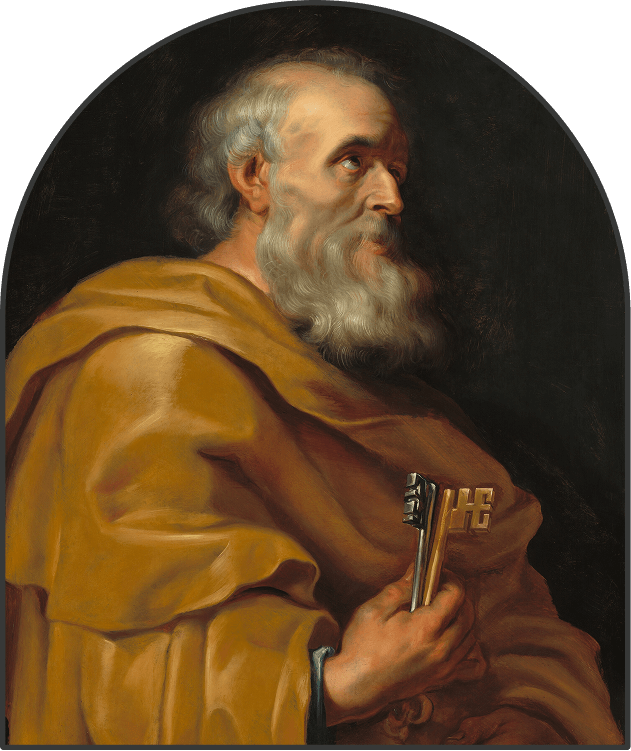
The Ladder of Divine Ascent: The Mystical Prayer Life of St. John Climacus

Introduction
John Climacus (c. 579-649 AD), whose name means “John of the Ladder”, lived on the very mountain where Moses met God in the burning bush and received the Law and was one of the earliest monastics to take up the steep road of mystical prayer with Jesus. John spent his life learning and teaching the heights and depths of contemplative prayer, and he has left us an enduring testimony that continues to be one of Christianity’s most treasured resources for spiritual development.
The Call to Ascend
The first step in John’s journey into the depths of prayer was a radical response: At age sixteen, he heard Jesus’ call through the ages:
If anyone would come after me, let him deny himself and take up his cross daily and follow me
Luke 9:23
He obeyed the call, leaving behind everything worldly, and becoming a monk under the guidance of Elder Martyrius at Mount Sinai.
He spent the first nineteen years of his monastic life learning the three essential foundations of monasticism: obedience, humility, and constant prayer. John understood something that modern Christians often forget: that mystical prayer is not a shortcut to become like Christ, but stems from faithful walking with God over long periods of time. The author of Hebrews wrote:
No discipline seems pleasant at the time, but painful. Later on, however, it produces a harvest of righteousness and peace for those who have been trained by it
Hebrews 12:11
Into the Desert of Silence
After Elder Martyrius died, John made a decision that would shape his entire life: At the age of thirty-five, he withdrew entirely into the desert to live in solitude for the next forty years in Tholas, a remote hermitage at the foot of Mount Sinai.
A biblically significant number—forty—was associated with the wilderness of Moses, the forty years the Israelites were lost, and the forty days the Lord stayed in the wilderness before starting His ministry. John’s forty years in the desert were not simply an escape from life, but rather, they prepared him thoroughly for the exercise of spiritual authority.
John practiced hesychia—inner stillness, peace, and tranquility—in the silence of the desert for forty years. The Scripture describes it as:
Be still, and know that I am God
Psalm 46:10
The Hebrew word for “be still” (raphah) means to let go, to release, to cease striving. Therefore, in the desert’s extraordinary stillness, John learned to cease from all the noise of his soul—his anxious thoughts, debilitating fantasies, and desires driven by ego, and just to rest in God.
The Prayer of the Heart
Essential to John’s mystical prayer life was his understanding of the “prayer of the heart” or “remembrance of God”. This was the practice of bringing one’s attention down from the head to the heart. More than the physical organ or the seat of emotions, the heart is the spiritual center of the person—where we experience God intimately.
The Bible emphasizes that the heart is at the center of our being:
Above all else, guard your heart, for everything you do flows from it
Proverbs 4:23
Jesus taught that “out of the abundance of the heart the mouth speaks” (Matthew 12:34), and that true worship must come from the heart:
God is spirit, and his worshipers must worship in the Spirit and in truth
John 4:24
John taught his disciples how to connect the name of Jesus with their breath, thus creating a continual rhythm of prayer. As part of their silent repeating of prayers like: “Lord Jesus Christ, Son of God, have mercy on me, a sinner” with each breath, allowing them to unite their prayers with the natural rhythm of their breathing. It fulfilled the command of Paul to “pray without ceasing” (1 Thessalonians 5:17) in a beautifully practical way.
The purpose of this practice was not just to repeat the prayer name, but rather to allow God’s name to transform our hearts. As we call upon the holy name of Jesus in our prayer, our hearts gradually become purified, enlightened, and joined together with God.
Everyone who calls on the name of the Lord will be saved
Romans 10:13
John discovered that this salvation was not just a future hope, but a transformation that began during this lifetime.
Tears as Prayer
John is one of the earliest Christians to teach us about the spiritual grace of tears. In his book The Ladder of Divine Ascent, John dedicates an entire step to what he considered one of the most important aspects of prayer: the “gift of tears” , which John describes as a second baptism, cleansing the soul.
John’s teaching about the gift of tears is well-supported in the Bible. The Psalms tell us:
The LORD is close to the brokenhearted and saves those who are crushed in spirit
Psalm 34:18
David prayed, “Record my misery; list my tears on your scroll—are they not in your record?”(Psalm 56:8). Jesus himself wept over Jerusalem (Luke 19:41) and at the tomb of Lazarus (John 11:35), and He blessed “those who mourn, for they will be comforted” (Matthew 5:4).
While John states that tears are different types of prayer, they all flow from our relationship with God. Some tears are based upon our sinful actions and the grief that accompanies them. These tears are signs of true repentance and are like Peter’s after he denied Christ:
He went outside and wept bitterly
Matthew 26:75
These tears will purify our consciences and restore our relationship with God.
Some tears come from immense joy from God’s love and beauty. These tears are like the tears we shed when we reunite with someone we have not seen for a long time; these tears are tears of spiritual delight. Others come from longing to be close to God, which the psalmist expressed when he said:
My soul thirsts for God, for the living God. When can I go and meet with God?
Psalm 42:2
John did not teach that we can force tears to come, nor did he say that tears are an essential part of prayer. Instead, he taught that they are gifts of grace that we will receive from God if we are open to receiving them.
The Three Stages of Spiritual Growth
John drew upon the wisdom of early Church Fathers such as Origen and Evagrius to outline three stages of spiritual growth and the forms of prayer that characterize those stages. These stages are Purification, Illumination, and Union, also known as Theosis.
Purification: The Beginning of Prayer
Purification (the beginning of prayer), the first stage, is about the cleansing of the heart from sinful passions or developing virtue. Purification is much more than moral development; it is a complete internal transformation. Jesus stated:
Blessed are the pure in heart, for they will see God
Matthew 5:8
Unless we are free of the impurity of the heart, we will not be able to move into or advance to contemplative prayer.
John teaches that both God’s grace and our cooperation are necessary for purification. At this stage, prayer consists of confessing our sins, meditating on scripture, and battling against temptation. This stage of prayer is generally very difficult and filled with spiritual dryness and distractions. However, if you persevere through the challenges of this stage, you will experience the transformation that will come from praying:
Create in me a pure heart, O God, and renew a steadfast spirit within me
Psalm 51:10
For a monk or someone in their early stages of spiritual development, he must therefore engage in the “warfare” that the Desert Fathers referred to as the “eight evil thoughts” or passions (gluttony, lust, greed, anger, sadness, acedia, vainglory, and pride) and that Paul spoke of in his letter to the Colossians:
Put to death, therefore, whatever belongs to your earthly nature: sexual immorality, impurity, lust, evil desires and greed
Colossians 3:5
Becoming victorious over these passions is accomplished through prayer, fasting, vigilance of God, and His grace.
Illumination: The Deepening of Prayer
As we continue to purify our hearts of the evil passions that we’ve committed, we will cross the transition that will lead into the second stage—Illumination. This stage begins when our mind begins to experience a beautiful, divine light and our prayer has become much more effortless than before. As Jesus stated:
I am the light of the world. Whoever follows me will never walk in darkness, but will have the light of life
John 8:12
We begin to perceive the scriptures in new ways and we start to experience new depths of meaning from the Holy Spirit. The Holy Spirit will begin to give us deeper spiritual truths; as Jesus stated:
The Advocate, the Holy Spirit, whom the Father will send in my name, will teach you all things and will remind you of everything I have said to you
John 14:26
During this stage of illumination, our prayers will become more contemplative than before. Our minds will rest with loving attention to God without the use of words. Divine grace has now opened our minds to receive insight into the things of God and experience profound periods of peacefulness, as Paul writes, this is when we begin to “comprehend with all the saints what is the breadth and length and height and depth, and to know the love of Christ that surpasses knowledge” (Ephesians 3:18-19).
Union: The Summit of Prayer
Union with God, or Theosis, which Eastern Christian tradition uses to define prayer at the highest and final stage, is the fullest union with God. Union does not mean that we become God, rather, we are participating in God’s divine nature through grace.
As Peter wrote:
He has given us his very great and precious promises, so that through them you may participate in the divine nature
2 Peter 1:4
The goal of this Union with God will be that we will no longer be able to put names to, as Paul describes as being “caught up to the third heaven” where he “heard inexpressible things, things that no one is permitted to tell” (2 Corinthians 12:2-4).
While John wrote about the Union stage, he was limited in writing about the mysteries of God. He did, however, acknowledge that Union is a pure gift of grace from God and therefore, we cannot do anything that would earn us this. As Jesus said:
Apart from me you can do nothing
John 15:5
But anyone who continually seeks to be intimate and close with God will receive this higher stage of intimacy:
You will seek me and find me when you seek me with all your heart
Jeremiah 29:13
Watchfulness and Guarding the Mind
To practice this discipline well, the inner sense of contemplation exists as a form of vigilance. In the same way that Paul admonished the Christian: “We demolish arguments and every pretension that sets itself up against the knowledge of God, and we take captive every thought to make it obedient to Christ” (2 Corinthians 10:5), the same concept exists for John.
John taught that the contemplative must stand guard at the door of the heart like a sentinel, examining every thought that approaches. Does this thought lead me toward God or away from Him? Does it promote love, humility, and peace, or does it feed pride, anger, or lust? This practice flows from the wisdom of Proverbs:
Above all else, guard your heart, for everything you do flows from it
Proverbs 4:23
Through constant vigilance, combined with calling upon the name of Jesus, the monk develops a sense of knowledge to both reject the suggestions of Satan and accept those thoughts directed by the Holy Spirit. Ultimately, through the establishment of a “silent” or “quiet” inner environment, the monk has created space for an intense level of concentration during intentional prayer.
John also cautioned monks regarding the nature of demonic attacks while one is engaged in prayer. These attacks may take the form of distracting thoughts, memories of past sins, worries about what the future may hold, or hints at pride that may come upon the mind. The remedy for the monk is always the same: return to a state of focus on God and call upon the name of Jesus while refusing to acknowledge the distracting thought. In the words of James’ letter:
Submit yourselves, then, to God. Resist the devil, and he will flee from you
James 4:7
The Role of Scripture in Contemplation
While John emphasized Prayer of the Heart Beyond Words, he would never negate the Use of the Bible. His whole teaching is filled with References to and Illustrations from the Bible. He believed in order for our experience of Mysticism to be Authentic, we must focus our attention on The Word of God.
John would practice lectio divina. He would slowly read the Bible and spend time meditating on the phrases that spoke to his heart and wait for The Holy Spirit to speak to him through the text.This mirrors Mary’s response to the words spoken about Jesus:
Mary treasured up all these things and pondered them in her heart
Luke 2:19
The goal was not intellectual analysis but spiritual communion. Through meditative reading, the words of Scripture became living and active (Hebrews 4:12), speaking directly to the monk’s condition and revealing Christ. The Psalms, in particular, became John’s prayer book, giving voice to every spiritual state—repentance, longing, joy, warfare, and praise.
John taught that the deeper one goes into prayer, the deeper the scripture meaning becomes. The same passage that may have been read early on may simply have been a moral instruction, but after years of meditation it may reveal spiritual treasures that were not previously discernible. This reveals that “the person without the Spirit does not accept the things that come from the Spirit of God but considers them foolishness, and cannot understand them because they are discerned only through the Spirit” (1 Corinthians 2:14).
Humility: The Foundation of Mystical Prayer
If one were to try to identify, in John’s teachings, the single most important quality, it would be humility. He devoted far more of The Ladder discussing humility than any other condition of the soul and taught that humility is the “foundation of spiritual life” and “the doorway into heaven”.
John taught that God’s instruction on humility writings in the Bible: “Blessed are the poor in spirit, for theirs is the kingdom of heaven” (Matthew 5:3) and “Whoever exalts himself will be humbled, and whoever humbles himself will be exalted” (Matthew 23:12). James wrote,
God opposes the proud but shows favor to the humble
James 4:6
John stated that without humility, every experience of the divine will be missed, and that the monk who has received a vision or the consolation of God without humility would be proud, only to be deceived by the same spirit that deceived Lucifer:
How you have fallen from heaven, morning star, son of the dawn!
Isaiah 14:12
On the other hand, the humble soul acknowledges that every grace is given without justification, and everything good comes only from God.
The humble monks accept limitations, willingly confess their sins, gratefully receive corrective discipline, and never criticize others. John encouraged monks to see themselves as the least of all men, acknowledging Paul as an example of true humility:
I am the least of the apostles and do not even deserve to be called an apostle
1 Corinthians 15:9
On a paradoxical note, humility is also the foundation of authentic spiritual authority and authentic mystical experience. The proud will not see God because themselves are blocking the way; however, the Lord promises “to this one I will look: he who is humble and contrite in spirit, and who trembles at My word” (Isaiah 66:2).
The Jesus Prayer and Contemplative Tradition
The specific form of the Jesus Prayer: “Lord Jesus Christ, Son of God, have mercy on me, a sinner” was not established until after the time of John Climacus. However, his teachings laid the foundation for what has become known as the Jesus Prayer and the most enduring practice of Eastern Christian Mysticism. John taught the use of prayer repetitively, harmonizing it with breath and focusing the heart on Christ, so that the name of Jesus would be drawn down from the mind into the heart, transforming the whole person.
This prayer combines several biblical elements: the invocation of Jesus’ name (Acts 4:12), recognition of His divine sonship (Matthew 16:16), a plea for mercy (Luke 18:13), and confession of sin (1 John 1:9). Its simplicity allows it to be prayed continuously, while its depth prevents it from becoming merely mechanical.
John taught that through constant repetition of such prayer, synchronized with breathing and attention of the heart, the name of Jesus descends from the mind into the heart, transforming one’s entire being. The prayer becomes spontaneous, arising naturally like breathing itself. This fulfills Paul’s teaching that “the Spirit you received brought about your adoption to sonship. And by him we cry, ‘Abba, Father'” (Romans 8:15).
The purpose of praying the Jesus Prayer is not for the sake of the prayer itself but for communion with Jesus Christ. As we grow in prayer, the words may drop away and leave only loving awareness of God’s presence. Pure contemplation is resting in God beyond all thought images, experiencing Paul’s peace of God, “the peace of God, which transcends all understanding” (Philippians 4:7).
Spiritual Warfare in the Desert
John spent forty years in the wilderness, not as a peaceful recluse, but fighting intensely in spiritual warfare. He understood what Paul taught:
For our struggle is not against flesh and blood, but against the rulers, against the authorities, against the powers of this dark world and against the spiritual forces of evil in the heavenly realms
Ephesians 6:12
John taught that the demonic was especially against contemplative prayer because it directly threatens the power they have over our hearts and minds. When a person is moving into prayer, the temptations increase disproportionately. There are greater temptations than usual, blasphemous thoughts that come to the mind, and desolation will come over the soul like a cloud of darkness.
His weapon was always the same: the name of Jesus: “Smite your enemies with the name of Jesus,” he wrote, “for there is no more powerful weapon in heaven or on earth.” This agrees with the authority given to John’s teachings through the New Testament:
The one who is in you is greater than the one who is in the world
1 John 4:4
He also taught that we are not to engage with evil thoughts when they come to us; we should not discuss them, analyze them, or look to determine where they come from. Rather, we are to return to prayer and invoke the name of Jesus. The demonic flee from it as darkness escapes from light:
Submit yourselves, then, to God. Resist the devil, and he will flee from you
James 4:7
John also taught that we should be careful about becoming spiritually prideful if we have been able to resist temptations. Our victories must be attributed to Christ. We are completely dependent upon the grace of Christ:
I can do all this through him who gives me strength
Philippians 4:13
The Abbot of Sinai: Contemplation and Community
After forty years in solitude, John was called back to serve as abbot of the monastery of Mount Sinai. While this appointment could be viewed as contradictory to a contemplative life, St. John demonstrated that mystical prayer and active service are not opposed but complementary.
The Monastery at Mount Sinai produced many monks who were called to live as mystical believers in their daily lives. John instructed the monks that genuine mystical prayer produces practical love in the real world. As John the Apostle wrote,
Whoever claims to love God yet hates a brother or sister is a liar. For whoever does not love their brother and sister, whom they have seen, cannot love God, whom they have not seen
1 John 4:20
His Ladder of Divine Ascent, written during this period at the request of another abbot, represents the fruit of his contemplative life offered for the benefit of others. The book is not an abstract theological treatise; it is practical spiritual wisdom that has been proven in the crucible of John’s personal spiritual life.
John taught that although he was responsible for providing direction for the monks under his care, he could maintain an attitude of prayer by observing God at work in the hearts and minds of the monks and their community. It does not matter whether someone is by themselves in prayer or serving in a community, a person’s heart can remain attentive to God.
Whatever you do, work at it with all your heart, as working for the Lord, not for human masters
Colossians 3:23
The Transfiguration of Daily Life
One of John’s most significant teachings is the transfiguration of ordinary people in all their daily activities through prayer. Every activity, including eating, drinking, sleeping, speaking, and working, can be turned into a prayer by being aware of God’s presence with us.
What John describes as the transfiguration of daily living is consistent with the teaching of Paul:
So whether you eat or drink or whatever you do, do it all for the glory of God
1 Corinthians 10:31
Even in our most common of tasks, when done with the intent of glorifying God, we participate as a holy act of worship when we remember God as we sweep or clean our homes.
John specifically stressed the sanctification of sleep and awakening. He taught the monks to fall asleep with the name of Jesus on their lips, and to make that name their first thought upon awakening. This reflects the psalmist’s understanding:
When I awake, I am still with you
Psalm 139:18
The goal of life is to integrate prayer into our lives so that we become a living prayer. This is what Paul wrote:
Pray continually
1 Thessalonians 5:17
It is not necessarily praying continually verbally but having a disposition of prayer within our hearts at all times.
Divine Light and Mystical Vision
Like many contemplatives, John had divinities in his life, usually from divine light or vibrant power, but not by choice. They came as gifts of grace to someone whose heart was purified. The Bible contains many stories of divinity lights, such as a glorified God appearing at the new temple (Exodus 40:34), Moses at the burning bush (Exodus 3:2), and the apostles when Jesus transfigured and appeared in brightness (Matthew 17:2).
John described these moments as being fleeting glimpses of the future when people are transformed by God into glorious beings and “shine like the sun in the kingdom of their Father” (Matthew 13:43). He pointed out that these visions are glimpses into the one divine uncreated light that exists in heaven, not a created phenomenon but a manifestation of God’s energy and light in a state of holiness to those who have purified themselves in their hearts.
Additionally, John was extremely careful regarding these prophetic visions. He cautioned all against seeking prophetic and mystical visions as divine endorsements, because if done for consolation, they will create pride in someone who has not been spiritually soundly grounded in humility. In addition, demons can create false visions to mislead spiritually immature people.
As always, one can tell a true mystical experience by its fruits. If it creates humility, love, and holiness, then it is coming from God. If it creates pride, a lack of love for God’s creation or for others, or any other odd or bizarre behavior, then it is likely either a delusion or demonic in nature.
By their fruit you will recognize them
Matthew 7:20
The Final Ascent
John Climacus died around 649 A.D. After having spent nearly his entire life climbing the ladder of divine ascent, his last words, according to his students, were simply:
The Lord is my light and my salvation; whom shall I fear?
Psalm 27:1
John faced death as he entered the depths of prayer with peace and courage in Christ.
St. John Climacus is known for being the first person to write a comprehensive guide for Christians focused on the action of climbing the spiritual ladder to holiness. His most notable entry was The Ladder of Divine Ascent, which has inspired many Christians to grow deeper in prayer over the last 1400+ years. In the Orthodox Church, the Ladder is used as part of the reading of Great Lent, and John is commemorated on the fourth Sunday of Lent.
Lessons for Contemporary Christians
St. John Climacus gives significant insight regarding how Christians today can continue to live a more contemplative life:
1. Embrace Silence and Solitude
We live in a loud world, but our souls need to be able to hear God’s voice. Following Jesus’ example:— “After he had dismissed them, he went up on a mountainside by himself to pray” (Matthew 14:23)— we also need space in our lives where we can have silence..
2. Practice the Prayer of the Heart
Having a short prayer, such as the Jesus Prayer, helps change our awareness throughout the day and keeps us connected to God. Start off by making an effort for just a few minutes every day, and eventually, it will be natural.
3. Guard Your Thoughts
Establish “watchfulness” (nepsis) as a part of your daily routine by paying attention to the incoming thoughts in your mind and assessing them. Focus on those thoughts that bring you closer to God and get rid of those that steer you away from God.
4. Root Prayer in Scripture
Do not abandon reading and meditating on the Scriptures for more elevated types of prayers. Reading the Scriptures should be part of how you process your time of meditative prayer and the way you live your life through prayer.
5. Cultivate Humility
Recognize that any experience of spirituality is a gift of grace; nothing is earned by technique. Always remain humble, thankful, and use your faith-based community.
6. Persevere Through Dryness
Prayer is not always comforting and you will have times of being spiritually dry. These times of being spiritually dry are not a sign of failure; they are an opportunity to grow your faith.
Let us not become weary in doing good, for at the proper time we will reap a harvest if we do not give up
Galatians 2:9
7. Integrate Prayer and Life
Your daily activities and prayer can be experienced together as one. Offer everything you do to God and allow those activities to become moments to be in communion with God.
Conclusion: Climbing Toward God
St. John’s images of the ladder symbolize our journey from sinful earth to heaven through Christ. Each rung of the ladder represents a virtue we either need to develop, or the thing we must overcome to be that virtuous person. Climbing the ladder can be both physically challenging, but also spiritually painful.
John referred to the metaphorical ladder in the same way that Jesus refers to being:
I am the way and the truth and the life. No one comes to the Father except through me
John 14:6
Each time we connect with God in prayer, we will grow closer to having an intimate connection with Jesus—the Savior who comes to earth so that we, too, have the opportunity to ascend to heaven.
John spent forty years in the silence of the desert. But he wasn’t inactive—he found value in learning how to love and serve God with all his heart, soul, mind, and strength (Mark 12:30) and to embrace daily time spent with God in prayer. John reminds Christians to evaluate what is most important to us in our life: How much will we continue to pursue greater dependency and dedication to prayer? What distractions will we remove? How sincerely do we approach the invitation given by Jesus: “Come to me, all you who are weary and burdened, and I will give you rest” (Matthew 11:28)?
The ladder that St. John Climacus gave is still available today. The same God that met him in the desert’s silence waits for us in prayer. Just as God’s grace purified John’s heart, so God’s grace is readily available to purify our hearts. The same divine light and illumination that exhibited itself as a radiance and an experience in John’s heart is the same light that is available today. The same actual union and oneness with God that St. John experienced on the mountain is still available to those who are completely devoted to God.
St. John Climacus’s legacy serves as an example for every Christian, and will inspire Christians to grow in prayer and deepen their relationships with God through a continuing steady ascent towards God, allowing them to see Him face to face, as St. John did, and to become like Him, “for we shall see him as he is” (1 John 3:2).
Our Editorial Standards:
All our content on Christian meditation traditions, prayers, and spiritual practices is reviewed by Dr. Megan Remington, PhD, ensuring theological soundness and spiritual depth.
We draw from centuries of Christian contemplative tradition, citing respected theological sources, biblical references, and established spiritual practices.
Our team understands that spiritual struggles are deeply personal. We approach topics of anxiety, strength, healing, and peace with compassion and biblical wisdom.
We continuously review and update our spiritual resources to ensure they remain relevant and aligned with orthodox Christian teaching.
Each article clearly identifies our writers and reviewers, along with the theological sources and biblical foundations used.
 To guarantee that all of our information is accurate, we ensure that all our sources are reputable. That means every source is authenticated and verified to be backed only by medical science.