


 App Store
  Google Play
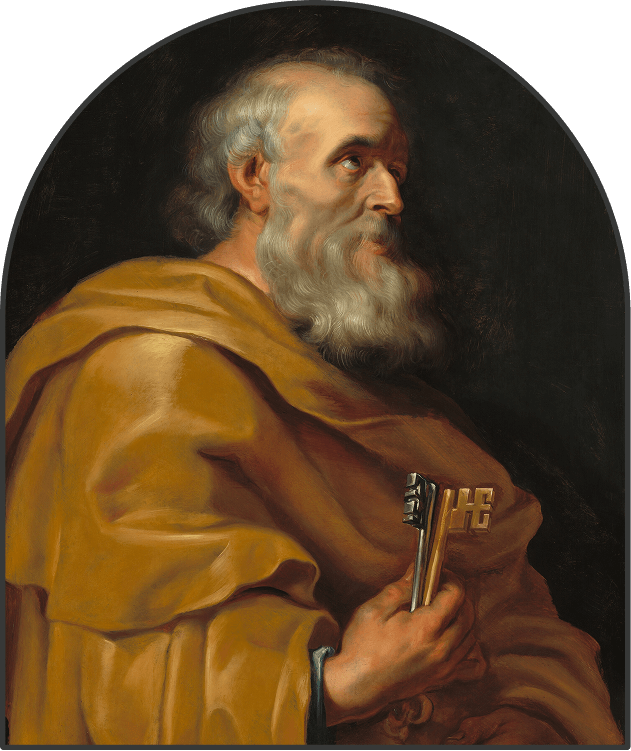
The Prayer Life of Saint John of Damascus: The Monk Who Defended the Image of God

Introuction
Saint John of Damascus (c. 675-749 AD) lived during a period in history when Christianity faced an unprecedented challenge; Islam rapidly expanded, supplanting it as the predominant faith in the Middle East. John’s life provides an experiential understanding of the fact that contemplative existence is the result of an interior transformation through authentic contemplation. The theological clarity resulting from this transformation is complementary to the intellectual rigor associated with mystical prayer, and at the same time allows contemplatives to effectively lay claim to the truth of God amid controversy. The integration of contemplative depth, poetic beauty, and theological prowess of John’s spiritual life created a legacy that continues shaping the spiritual life of Christians today, in every Christian tradition.
Born Into Two Worlds: Christian Under Islamic Rule
John was born somewhere in Damascus in 675 AD, about 40 years after the Islamic conquest of the mid 600s AD. His birth name, Mansur ibn Sarjun (Mansur son of Sergius), indicates his Arab Christian heritage. He was from a wealthy and influential family who served in Byzantine administration and continued serving the new Umayyad caliphs .
A Privileged Education
John’s grandfather and father held high-ranking positions within the administration of Damascus, responsible for Christian affairs and taxes. These positions provided the family with wealth, power, and, most importantly for John’s future ministry, access to the best education available at that time.
According to tradition, John’s father adopted an Italian monk named Cosmas who had been taken captive by Arab raiders. A well-educated scholar who had been trained in Greek philosophy and theology, Cosmas, became the most important tutor to John, teaching him about:
Greek philosophy: Plato, Aristotle, and the Neoplatonic tradition that would shape his theological thinking.
Classical rhetoric: The art of persuasive communication, evident in his later polemical writings.
Mathematics and music: DDisciplines that developed logical thinking and aesthetic sensitivity.
Christian theology: Systematic study of patristic writings, particularly the Cappadocian Fathers (Basil, Gregory of Nazianzus, Gregory of Nyssa)
Scripture: Intensive biblical study, memorization, and meditation
This type of well-rounded education equipped John’s mind to be able to perform highly sophisticated theological reasoning; at the same time, he was instructed in the principles and practices of monasticism to create a spirit of contemplation and spirituality. During prayer to God, he was able to clarify how to think about God. This would remain true throughout John’s entire life.
Living Under Islamic Rule
John spent his entire formative years as a Christian living under Islamic rule. Unlike Christians who lived in Byzantine areas and who would later suffer from iconoclastic persecution (the destruction of icons), Christians living under the early Islamic empire experienced great tolerance. Although they had to pay higher taxes than Muslims and were considered to hold second-class status, they were allowed to worship as they wished, maintain churches, and have certain governmental offices.
There are several ways in which this experience fostered John’s Christian spirituality:
Minority consciousness: Viewed Christianity not as a dominant religion, but as a witness in a non-Christian-dominated society.
Interfaith awareness: Daily relationship with Muslims necessitating the ability to explain the distinctive Christian differences.
Appreciation for religious freedom: Growing up in an environment of tolerance was a source of gratitude for the ability to publicly worship.
Theological precision: Defending Christianity from Islamic objections enhanced John’s theological clarity.
Providence theology: Recognizing God’s sovereignty over all peoples, even when external conditions appear to be contrary to God’s will.
Being a Christian minority provided John with unique opportunities to engage in contemplation and prayer throughout his life. Without the support of a culture that provided conformity to Christianity, the Christian faith became a conscious choice rather than a product of social conformity. In times of trials, prayer was a way to draw tenaciously to the Lord like a warrior who was visiting a refuge, however the Lord was publicly denied by the culture at that time .
The Court Official: Worldly Success and Spiritual Hunger
Similar to his father, John was an official in the Umayyad government and the position he held gave him great power, wealth and prestige, but it did not fill his spiritual thirst.
The Tension
John’s court position created profound interior tension:
Success without satisfaction: John lacked inner peace even though he was externally successful.
Wealth without peace: Worldly success did not meet the needs of his spiritual hunger.
Influence without meaning: Power that seemed increasingly empty
Public life obscuring prayer: Administrative demands crowding out contemplative depth
This is a common theme throughout Christian history—Anthony fleeing wealth for the desert, Augustine abandoning his rhetoric career, Francis renouncing his merchant father’s business. Souls created for God find earthly success ultimately hollow.
Jesus warned:
What profit is it to a man if he gains the whole world, and loses his own soul?
Matthew 16:26
John’s life is especially significant in this regard since he gained much of the world, but still had not achieved true fulfillment.
The Yearning for Monasticism
While serving in the Umayyad government, John developed many spiritual habits through prayer and meditation:
Morning and evening prayer: John’s early mornings began and ended with prayerful time spent with God.
Scripture memorization: He memorized verses from Scriptures so that he could reflect on them throughout the day.
Liturgical participation: As much as possible, John would attend Divine Liturgy for worship.
Theological study: He studied theology and the church fathers in his spare time.
Hymn composition: Beginning to write the poetry that would later enrich Christian worship
Through these various practices, John was developing spiritually, but he still had a desire for growth through the monastic lifestyle. In short, John developed a way to practice his spiritual life while serving in the government, but he felt a great need to completely fulfill that desire for a monastic, contemplative prayer life.
The Monastic Conversion: Leaving All for Christ
Around 717-718 AD, John made an irreversible break from the government and power that were part of his position. He sold all of his possessions and distributed the money to those in need and entered the monastery of Mar Saba in the Judean desert where many monks had lived since its founding around 483 AD; their main focus was on achieving their spirituality through the rigors of living in a desert.
The Sacrifice
John’s decision meant abandoning:
Wealth: Exchanging his wealth for a lifestyle of poverty, which was a major sacrifice.
Power: He surrendered his power to a monastic superior, which was a significant sacrifice.
Status: His status was changed from one who was highly regarded in the government to that of a monk in a hidden place.
Security: Giving up stability and security in return for total dependence upon God and the community of monks.
Family expectations: Disappointing relatives who had brought him up with the expectation of continued success and prestige.
John’s radical renunciation echoes the words of Jesus:
If anyone comes to Me and does not hate his father and mother, wife and children, brothers and sisters, yes, and his own life also, he cannot be My disciple.
Luke 14:26
John “hated” (prioritized less than Christ) everything—his family, his job, his wealth—in order to obey God’s call to a contemplative life .
Mar Saba: The School of Prayer
Mar Saba monastery provided the environment John’s soul craved:
Solitude: Each monk lived in a separate cave cell, maintaining silence except during corporate worship
Liturgy: The community gathered for the Divine Office throughout the day and night
Manual labor: Simple work keeping the body occupied while the mind prayed
Fasting: Rigorous dietary restrictions, particularly during Lent and other penitential seasons
Poverty: Owning only bare essentials—a mat, a garment, perhaps a few books
Obedience: Submitting will to the abbot and the monastic rule
Simplicity: Life stripped to fundamentals—prayer, work, sleep, repeat
This structured life created optimal conditions for contemplative prayer. The regular rhythms prevented spiritual drift; the silence enabled interior attention; the simplicity eliminated distractions; the obedience crushed self-will .
The Humiliation: A Lesson in Submission
A famous story (possibly legendary but spiritually significant) recounts that when John entered Mar Saba, he was assigned to an elderly, strict spiritual father who forbade him from writing, teaching, or any intellectual activity—requiring only manual labor, prayer, and silence.
John’s experience at the monastery was meant to be pedagogical, not just humiliating. When John first came to the monastery, he was a highly educated intellectual, employed at court, and a published theologian; therefore, he possessed a great deal of pride in his accomplishments, and the older monk’s treatment of John was intended to bring an end to that pride by humiliating him.
The lack of intellectual involvement in the monastic community served four primary purposes:
Destroy intellectual pride: John’s academic achievements were of no value at the monastery.
Test obedience: Requiring submission even when instructions seem illogical.
Develop humility: Learning that true depth of spiritual understanding is more important than intellectual understanding.
Purify motivation: Ensuring John sought God alone, not the opportunity to display his gifts
Build character: Patient endurance under unjust treatment developing spiritual maturity
According to tradition, John’s breaking point occurred when one of his fellow monks lost a brother. John felt compassion for the monk and wrote a funeral hymn for his brother . By doing this, John showed that he was willing to defy his superior’s instruction. He received severe punishment from the superior. But the Virgin Mary appeared to the older monk and told him to release John from his punishment so he could serve the larger community .
While the story can either be viewed as literal truth or a creation of hagiography, it serves to show that even though John was initially held back from doing what God was calling him to do, his calling would eventually come to fruition. It also demonstrates that true humility does not inhibit effective ministry, but rather allows for it.
The Iconoclast Controversy: Contemplation Producing Theological Defense
The defining controversy of John’s era was iconoclasm—the movement to destroy religious images, claiming they violated the second commandment’s prohibition of graven images (Exodus 20:4-6).
The Crisis
In 726 AD, Byzantine Emperor Leo III began the iconoclastic movement, ordering all religious icons within the Byzantine Empire to be destroyed. Leo had many reasons for taking this action:
Theological concerns: Leo had true theological fears that the veneration of religious images was a form of idolatry or worship of created things rather than worship to God.
Islamic influence: The aniconic model of Islam created a cultural pressure toward the destruction of religious imagery in the Byzantine Empire.
Political control: Emperor Leo utilized the controversy over iconoclasm to build and strengthen the political authority of the Byzantine Empire.
Military superstition: Leo believed that God’s anger over idols was the primary reason for military defeat.
Because of these issues, iconoclasts and iconodules were separated in their beliefs and opinions about the veneration of icons. In addition, many churches were vandalized and many works of beauty were destroyed. Monks were also persecuted and their once loving views of icon veneration became hardened into closed and hostile views against one another.
John’s Unique Position
Crucially, John lived outside Byzantine jurisdiction, in Islamic-controlled Damascus. John was therefore able to write theological works against iconoclasm free from the fear of persecution that was silencing other voices within the empire. He wrote three great theological treatises, In Defense of Holy Images (Contra imaginum calumniatores) from his monastery at Mar Saba. These treatises eventually became a triumph of the iconodules at the Second Council of Nicaea in 787 AD.
The Theological Defense
John’s theology of icon veneration is found in his contemplative understanding of Christ and in his understanding the Incarnation.
The Incarnation Validates Material Images
John argued:
In former times, God, who is without form or body, could never be depicted. But now when God is seen in the flesh conversing with men, I make an image of the God whom I see.
His logic was:
Old Testament prohibition was appropriate: Before the Incarnation, depicting the invisible God was impossible and idolatrous
The Incarnation changed everything: When God took visible form in Christ, depicting Him became possible.
Christ’s humanity is real: Denying we can depict Christ implies His humanity isn’t real—the heresy of docetism
Matter has been redeemed: The Incarnation sanctified material creation, making it capable of bearing divine presence
John’s insight regarding the Incarnation and, thus, justification for icon veneration, is derived from John’s contemplative meditation and prayer concerning the meaning of “the Word became flesh” (John 1:14), John perceived implications that iconoclasts missed.
Icons as Windows to Spiritual Reality
John taught that icons and religious images were not simply instruments of worship, but rather are ‘windows’ to spiritual realities. He wrote:
The honor given to the image passes to its prototype. This is said by Basil the Great in his treatise on the Holy Spirit.
When we honor the image of Christ, we are not honoring the wood or the paint; rather, we are directing our honor upward toward the divine Person of Christ. Thus, in this respect, the veneration of an icon is akin to an encounter with God, through Jesus Christ, who is the fullness of the divine presence in physical form. Icons are an encounter, not a substitute for the divine Person.
John’s beliefs about the relationship between matter and spirit derive from his personal experiences in his contemplative and mystical experience of God, as he perceived all of matter around him and how the holy materiality of existence reveals the divine presence, or as John called it, ‘sacramental vision.’
Sacramental Vision of Creation
Underlying John’s icon defense is sophisticated sacramental theology:
Matter can bear grace: For example, baptism through water, or the bread and wine of the Eucharist, contain the divine.
Creation is good: God declared creation “very good” (Genesis 1:31); therefore, matter cannot be viewed as being evil.
Incarnation sanctified materiality: Christ’s physical body bore infinite deity, validating matter’s capacity to hold within it the infinite God.
Everything can become icon: All creation potentially mediates encounter with Creator
This sacramental vision comes from contemplative prayer that perceives the world as an icon—visible surface revealing invisible God, material form bearing spiritual reality.
The Exact Exposition of the Orthodox Faith: Systematic Theology from Contemplation
John’s magnum opus, The Exact Exposition of the Orthodox Faith (Expositio Fidei), provides Catholics with a systematic account of all Christian beliefs. This wasn’t merely academic theology but contemplative wisdom distilled into clear propositions.
The Trinity: Mystery Beyond Comprehension
John wrote extensively about the Holy Trinity, distinguishing what was knowable about God and what still remains a mystery:
The deity is perfect and lacking in nothing...The Father is Father and not Son. The Son is Son and not Father. The Holy Spirit is Spirit and not Father or Son.
This definition represents a combination of views; it clearly delineates the three hypostases from the commonalities that bind them together.
Three distinct persons: Father, Son, and Holy Spirit are genuinely different, not merely modes of one person
One essence: Yet they share one divine nature, one will, one operation
Mutual indwelling: Each person fully contains the others (perichoresis)
Incomprehensibility: The Trinity infinitely transcends human understanding
This understanding was formed through contemplative prayer, especially prayer to the Father through Jesus Christ by means of the Holy Spirit.
Christology: The God-Man
John’s Christology, which was developed through contemplative meditation upon Scripture and the writings of the Church Fathers, adhered to the definition of Chalcedon concerning the person of Christ:
Two natures: Christ is fully God and fully human, without confusion or mixture
One person: These natures unite in one divine person (hypostatic union)
Each nature retains its properties: Divinity remains divine; humanity remains human
Communication of attributes: What’s true of either nature can be predicated of the one person
John wrote:
We confess one and the same Son, our Lord Jesus Christ, perfect in Godhead and perfect in manhood, truly God and truly man.
The Christological definition of Chalcedon does not contain abstract speculation, but contemplative truth, and through John’s prayer experience, he encountered Christ as both God and Man, experiencing the mystery of the two united natures in Christ.
Mariology: The Theotokos
John vigorously defended Mary’s title Theotokos (God-bearer/Mother of God):
The holy Virgin is truly Theotokos, because she gave birth to God made flesh.
This title safeguards Christology—f Mary bore only the human nature of Jesus, then Christ was not born of God.
However, since Mary was the Mother of God by virtue of her motherhood of the divine person of Christ—who assumed human nature—Mary is truly the Mother of God. In addition to John’s defense of the title of Theotokos, John’s devotion to Mary reflected contemplative spirituality. He composed some of the most beautiful hymns of praise for Mary in all of Christendom and served as a model for human receptivity to God—the greatest example of one who rightly said “yes” to God’s will.
The Real Presence: Eucharistic Mystery
John taught that Christ, through the Eucharist, is actually and really present. He stated:
The bread and wine are not merely figures of the body and blood of Christ—God forbid!—but the deified body of the Lord itself...The bread and the wine are changed by the power of the Holy Spirit into the body and blood of God.
This teaching regarding the presence of Jesus Christ in the Eucharist reflects John’s firm belief, grounded in contemplative prayer. Through the reception of the Eucharist, John’s experience of the risen Lord created a mystical union between himself and Christ through the consecrated elements .
Hymnography: Prayer in Poetry
John’s creativity as a hymnographer produced some of the most beautiful hymns in all of Christendom, and these hymns continue to enrich and elevate Christian worship even today..
The Octoechos
John organized (and possibly composed much of) the Octoechos—an eight-week cycle of hymns for the Byzantine liturgy. This enormous collection provides texts for every day of the liturgical year, rotating through eight musical modes (tones).
The Octoechos includes:
Resurrection hymns: Celebrating Christ’s victory over death
Theotokia: Hymns honoring Mary
Stichera: Short poetic hymns
Canons: Lengthy odes structured around biblical canticles
This liturgical poetry serves contemplative prayer by:
Engaging emotion: Beautiful language touching the heart
Teaching theology: Hymns transmitting doctrine through memorable verse
Creating rhythm: Regular patterns supporting memorization
Fostering participation: Congregational singing uniting worshipers
Mediating mystery: Poetry expressing what prose cannot
The Paschal Canon
John’s best-known composition is the Paschal Canon, which is sung by all eastern Christian Churches on Easter Sunday. The hymn opens with the triumphant proclamation:
Christ is risen from the dead, trampling down death by death, and upon those in the tombs bestowing life.
In the Paschal Canon, John’s theological understanding is clearly articulated, demonstrating his ability to unite:
Doctrinal precision: Orthodox Christology expressed accurately
Biblical allusion: Scripture references woven throughout
Poetic beauty: Memorable, moving language
Theological depth: Profound insights into resurrection’s meaning
Liturgical function: Texts that work within worship context
Contemplative wisdom: Truth arising from prayer
John’s entire theological corpus is characterized by a deep integration of theology, poetry, liturgy, and contemplation.
Other Liturgical Contributions
John also composed or compiled numerous other liturgical texts that have continued to shape the worship of Christians:
Funeral hymns: Addressing death with hope rooted in resurrection
Feast day hymns: Celebrating particular saints or events
Penitential hymns: Expressing contrition and seeking mercy
Marian hymns: Honoring the Theotokos with theological sophistication
Many of these texts remain significant components of the liturgy of Eastern Orthodox Churches, and many Western Christian Churches have translated and adopted them into Latin and the vernacular.
The Fount of Knowledge: Comprehensive Wisdom
John’s book The Fount of Knowledge (Pege gnoseos) is an effort, at once, to combine every kind of mankind’s knowledge: Philosophical, Biblical, and Practical. The book’s three parts articulate John’s belief that true contemplation perfects reason instead of denying it.
Part One: Philosophical Chapters
The first section examines the Greek philosophers, especially Aristotle’s philosophy, which included his logic and categories. John believed that:
Philosophy serves theology: Philosophy aids in articulating the Christian faith with clarity
Reason is gift: Since logic is God’s gift, one should not reject it, but rather use it as He intended.
Precision matters: Accurate definitions guard against theological misinterpretations.
Understanding deepens worship: The better you understand God with your mind, the more deeply you love Him with your heart.
By skilfully integrating philosophy and theology, John firmly believed the same God who disclosed Himself through the Bible was also the God who gave us reason. Thus both God’s gift of reason and God’s revelation point the way toward truth.
Part Two: On Heresies
The second section lists several heresies, describing and refuting the various errors that threatened the truth of Christianity. John’s goal to refute heresies was not simply a theoretical exercise. It was his pastoral duty to protect the Church and the souls of its members from being led astray by these erroneous teachings.
The list of heresies shows that, for John, contemplative prayer leads to theological clarity. By remaining with God, John could clearly discern between truth and error, orthodoxy and heresy.
Part Three: The Exact Exposition
The third section is John’s Exact Exposition of the Orthodox Faith. It follows as a continuation of the theological doctrines mentioned in Part Two.
John’s writing in The Fount of Knowledge shows that John’s mind incorporated many kinds of knowledge into one:
Integrated diverse knowledge: Philosophy, theology, and practical wisdom united
Served the church: Knowledge pursued not for pride but for edification
Flowed from prayer: Intellectual work rooted in contemplative depth
Communicated clearly: Complex ideas expressed accessibly
Built on tradition: Respecting patristic wisdom while making original contributions
The Contemplative Practice: Daily Rhythm
Although John did not leave a personal diary of his spiritual journey, each of the works that were produced through him give us insight into John as a man of prayer and contemplation.
The Liturgy of the Hours
As a monk, John prayed during the entire daily schedule, including:
Midnight Office: Rising during the night for prayer
Matins: Pre-dawn prayer welcoming the new day First Hour: Early morning prayer
Third Hour: Mid-morning (9 AM)
Sixth Hour: Noon
Ninth Hour: Mid-afternoon (3 PM)
Vespers: Evening prayer as daylight fades
Compline: Night prayer before sleep
Through this structure, John followed the Apostle Paul’s instruction to “pray without ceasing” (1 Thessalonians 5:17) by punctuating every hour of the day with formal prayer, thus remaining aware of God throughout the day.
Scripture Meditation
John’s works contain many citations from the Bible, which indicate:
Extensive memorization: He memorized large sections of the Bible.
Constant meditation: He continually thought about and meditated upon the Scriptures throughout the day.
Contemplative reading: Approaching Scripture prayerfully, to help him grow into the image of God.
Integration: Biblical language becoming his natural vocabulary
The psalmist’s testimony described John’s practice:
Oh, how I love Your law! It is my meditation all the day.
Psalm 119:97
Theological Study as Prayer
John viewed theology as a form of prayer rather than separate from it—it is thinking about God while in the presence of God and being illuminated by God, using your intellectual ability to worship Him.
When he encountered philosophical questions, he approached each with prayer:
Beginning with prayer: He prayed before studying, asking for guidance from the Holy Spirit.
Studying in God’s presence: He studied in God’s presence and assistance.
Ending with prayer: He concluded each by returning his conclusions to God for His approval.
Applying personally: He applied teachings of theology to his own life as opposed to just knowing them intellectually.
This integration exemplified Christ’s teaching: “You shall love the Lord your God with all your heart, with all your soul, and with all your mind” (Matthew 22:37). He had a love for God intellectually by thinking about Him through a rigorous, methodical approach and offering this as worship.
Iconographic Meditation
With his defense of icons, it’s no surprise that John practiced iconographic contemplation—he prayed before sacred images, looking through them as if they were windows to spiritual realities.
He did this through:
Gazing contemplatively: Looking at an icon of Christ and being present with Him in a mystical way.
Visual lectio divina: Looking for a theological message in the icon.
Kinesthetic prayer: Kissing the icon, prostrating himself before it as a way of expressing his personal devotion.
Sacramental awareness: Recognizing that the material image serves as a medium through which the spiritual person can interact with .
All of these practices illustrate John’s theological understanding that the material world can, in fact, mediate contact with God.
Hymnographic Prayer
John’s activity as a hymn composer is also an illustrative example of his contemplative nature.
The creative meditative process occurred when:
Meditating until words came: John would meditate on a theological concept until a word came to him.
Crafting carefully: When the word came, he would then craft them into a repetitive quality.
Testing liturgically: After he completed his hymn, he would test its ability to be used during worship.
Offering humbly: Finally, he presented the hymn as a gift not as an accomplishment.
The beauty of John’s hymnody was not something he merely created, but something he contemplated on for hours prior to creating poetry that communicated to others the beauty of God’s glory.
The Integration: Contemplation, Theology, and Art
Neither of these two fields, mystic theology and holy art, had their own separate exits. And one of John’s greatest achievements was to integrate two areas that had been separated previously.
Prayer and Theology
Unlike some mystics who viewed theology as dry intellectualism, or some theologians who viewed mysticism as anti-intellectual emotionalism, John united both:
Theology from prayer: His doctrinal insights emerged from contemplative encounter
Prayer informed by theology: His prayers reflected sophisticated Christology and Trinitarian understanding
Each enriching the other: Theology deepening prayer; prayer clarifying theology
This integration anticipates Evagrius Ponticus’s dictum: “If you are a theologian, you will pray truly. And if you pray truly, you are a theologian.”
Reason and Revelation
John refused false dichotomies between reason and revelation:
Revelation provides content: Scripture discloses truths reason couldn’t discover alone
Reason provides structure: Logic helps articulate revealed truth clearly
Both from God: The same God who reveals in Scripture created rational minds
Complementary tools: Revelation and reason cooperate in understanding truth
This balanced approach avoided both rationalism (trusting reason alone) and fideism (rejecting reason entirely).
Beauty and Truth
John’s hymnography demonstrates that beauty serves truth:
Beauty attracts: Drawing souls toward truth through aesthetic appeal
Truth expressed beautifully: Doctrine communicated through poetic language
Form serving content: Aesthetic excellence honoring theological substance
Worship integrating both: Liturgy engaging mind (doctrine) and heart (beauty)
This integration reflects the biblical pattern—Psalms combining theological truth with poetic beauty, worship engaging whole person.
Practical Applications from John of Damascus’s Example
Integrate Contemplation and Intellect
The use of liturgical prayer and the style of worship helps to provide discipline to your life through regular prayer.
Use Sacred Images Contemplatively
Icons, sacred images are for prayerful gazing. Focus on the visual beauty, draw your heart to God through the beauty of God.
Practice Liturgical Prayer
Through structured liturgy, daily liturgical rhythms will help you shape your day around prayerful acts of worship.
Study Theology Prayerfully
By beginning your doctrine study in prayer, studying in God’s presence and applying the truths that you have studied to your life.
Develop Sacramental Vision
All creation, or material creation is to be viewed by us as a potential window into God’s presence. As we practice perceiving God’s image through all things, we then will remember who we are.
Express Faith Creatively
Artistic gifts and talents (writing, music, visual art, etc.) should be offered to God in an act of worship and used to serve as a form of contemplation.
Memorize Scripture and Hymns
Both Scripture and hymns are to be permanently stored in your memory to be used as your vocabulary in your prayer life and meditation.
Balance Solitude and Community
While pursuing personal prayer, also participate in corporate worship. Both individual and communal prayer matter.
Defend Truth Charitably
Through compassionate rigorousness, respond with doctrine clarity with charity.
Pursue Systematic Understanding
Fragmentary knowledge may not be enough; it must be systematic and comprehensive.
Let Suffering Deepen Prayer
Let John’s life of suffering, iconoclasts, and the experiences of monastic life serve you in understanding.
Maintain Orthodox Tradition
Our spiritual path should be rooted in the apostolic teachings and patristic wisdom.
The Legacy: Doctor of the Church
John of Damascus is one of the foremost Doctors of the Church—the Catholic Church’s highest honor given to someone who has made a substantial contribution to Christian spirituality and theology. The Eastern Orthodox Church recognizes him as both a saint and a teacher; he is still very much honored today—his hymns are sung publicly in Orthodox services all over the world.
Many areas of theology were greatly influenced by John::
Icon theology: He defended Iconography, so he created a theological basis for Sacred Art.
Christology: He articulated very clearly how there are two natures, but one person.
Mariology: He defended the titles, as well as devotion toward Mary.
Liturgy: His hymns continue to enhance worship, regardless of tradition.
Systematic theology: His work “Exposition” became an important source for medieval scholasticism.
Contemplative tradition: He successfully integrated prayer with theology.
The most significant point may be John’s demonstration of how Christians can grow spiritually, even in non-Christian environments and cultures. He demonstrated how having a clear understanding of the theological framework enhances the contemplative depth of any experience, and he teaches us that the highest form of theology comes from the deepest form of prayer.
Conclusion: The Contemplative Theologian
In conclusion, John serves as an example of the true contemplative theologian. He demonstrated the futility of seeing prayer, study, contemplation, and theology as being dichotomous. All four elements serve the same purpose—seeking to love God.
He taught that the word “Love” (as in the commandment to Love our neighbor) expresses the fullest possible meaning in relation to our relationship with God (in terms of Love). The true contemplatives may very well be the most articulate theologians because they have spent hours gazing on God through prayer, and therefore have a precise understanding of God, and His nature. Contemplative prayer does not produce vague feelings; it produces a clear understanding of what we are trying to say about God. Furthermore, the deeper someone prays, the more clearly he/she thinks.
Perhaps the most important thing John teaches us is that we can fully love God with our entire being—our heart, soul, mind, and strength (Mark 12:30). Through our affections, we engage our hearts in contemplative prayer; through our intellects, we engage in theological study; through physical participation in worship/liturgy, we engage in body; and through creativity, we engage in imagination. All of the above serve the same purpose—growing in love for God and for our neighbors.
For God, who commanded light to shine out of darkness, is the One who has shone in our hearts to give the light of the knowledge of the glory of God in the face of Jesus Christ.
2 Corinthians 4:6
May we follow John’s example, seek this light—through contemplative prayer, rigorous theological study, beautiful and worshipful attitude, and integrative discipleship. May we find out that the same God who reveals Himself to us in the Scriptures through revelation, also abides in our hearts through prayer and contemplative experience. May we discover that beauty serves truth; reason serves revelation; theology serves love; and love serves God.
And may we find, as John did, that the Incarnation changes everything—making matter capable of bearing spirit, earth capable of touching heaven, theology capable of becoming doxology, and human beings capable of mystical union with the God who created, redeems, and sanctifies them.
O come, let us worship and bow down; let us kneel before the Lord our Maker.
Psalm 95:6
Until we see Him face to face, may we worship Him through every faculty—contemplating in prayer, thinking in theology, creating in beauty, and living in love. For this is the integration John modeled, the wisdom he taught, and the gift he offers to the church universal across all generations.
Christ is risen from the dead, trampling down death by death, and upon those in the tombs bestowing life!
Our Editorial Standards:
All our content on Christian meditation traditions, prayers, and spiritual practices is reviewed by Dr. Megan Remington, PhD, ensuring theological soundness and spiritual depth.
We draw from centuries of Christian contemplative tradition, citing respected theological sources, biblical references, and established spiritual practices.
Our team understands that spiritual struggles are deeply personal. We approach topics of anxiety, strength, healing, and peace with compassion and biblical wisdom.
We continuously review and update our spiritual resources to ensure they remain relevant and aligned with orthodox Christian teaching.
Each article clearly identifies our writers and reviewers, along with the theological sources and biblical foundations used.
 To guarantee that all of our information is accurate, we ensure that all our sources are reputable. That means every source is authenticated and verified to be backed only by medical science.