


 App Store
  Google Play
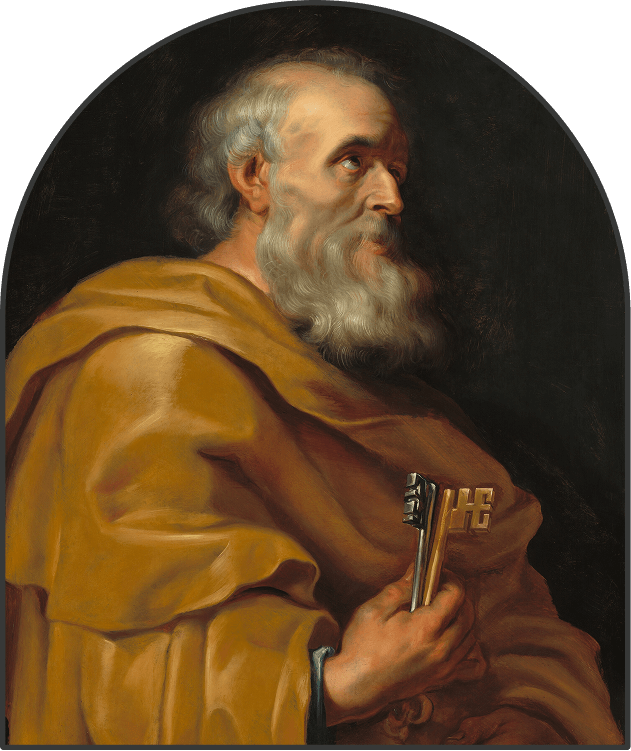
The Beloved Disciple: St. John the Apostle’s Journey from Thunder to Love

Introduction
Of the twelve apostles called by Jesus to follow Him, one is the most notable as the ultimate contemplative disciple, St. John the Apostle, known as the “disciple whom Jesus loved.” St. John’s intimate friendship with Christ is demonstrated by his position resting on Jesus’ breast during the Last Supper. Through this special bond with Christ, St. John was able to see divine mysteries and became the Church’s most revered mystical theologian. In his Gospel, three Epistles, and The Book of Revelation, St. John reveals that through deep and extended contemplation of the Word Incarnate, he had changed completely; he lived to an advanced age still filled with fire from God’s love.
St. John’s transition from being a hot-headed “Son of Thunder” to the apostle of love exemplifies the power of contemplation and the transformation of a person’s soul through intimate communion with Christ. The writings of St. John show us that he was not merely detached from his surroundings or other people; rather, St. John was motivated by his mystical insights to proclaim the truth of God’s message with passion and fervently defend His message of true faith. From the writings of St. John, we see that true Christian mysticism does not produce a vague, other-life-type mentality, but instead produces the ability to discern and make decisions based on grounded wisdom, creates courage to bear witness to the truth, and provides the authority to lead God’s Church outward, proclaiming Him as Lord and King.
The Call: Leaving Everything for the Unknown
John was the son of Zebedee and the brother of James. When Jesus called John, he was at work as a fisherman on the Sea of Galilee. The Gospels indicate that John and James were partners with Peter in a successful fishing business. Together, they owned their own boats, had hired help to work for them, and appeared to have decent livelihoods; however, when Jesus said to John and James, “Follow me,” they “immediately left the boat and their father and followed him.” (Matthew 4:22).
This immediate response to Christ’s call reveals something essential about contemplative vocation. John didn’t fully understand who Jesus was or where following Him would lead, but he recognized divine authority and responded with radical trust. This pattern would characterize his entire relationship with Christ – a willingness to enter mystery before understanding it, to follow before seeing the destination.
Prior to following Christ, John was a disciple of John the Baptist, a bold prophet who called Israel to repentance and prepared the way for the Messiah. John the Baptist directed John to Jesus, saying, “Behold, the Lamb of God, who takes away the sin of the world!” (John 1:29). Being a disciple of John the Baptist prepared John to anticipate God’s intervention in his life and to be aware of God’s presence so that he was prepared to recognize Jesus when He arrived.
The testimony of John the Baptist—“I have seen and have borne witness that this is the Son of God,” (John 1:34) was the foundation for John’s contemplative journey. During the rest of his life, John would continually be gazing upon the Son of God, as he progressively entered into a deeper understanding of the mystery of the Incarnation and ultimately would bring his testimony as an illumination for the Church throughout all generations.
From Thunder to Love: The Transformation
Jesus nicknamed John and James, along with their father Zebedee, “Boanerges,” meaning “Sons of Thunder” (Mark 3:17). This nickname accurately describes their personalities, as evidenced by an incident in which a Samaritan town refused to receive Jesus. Upon being rebuffed, they asked Jesus, “Lord, do you want us to tell fire to come down from heaven and consume them?” (Luke 9:54). Jesus rebuked them, but the incident reveals their natural intensity.
Another incident exemplified the vanity and ambition of the brothers when they requested the highest place of honor in Christ’s kingdom—one at His right hand and one at His left (Mark 10:35-37). The rest of the disciples disapproved of their request, and thus, Jesus had to teach them that true greatness in God’s kingdom is found in service and sacrifice, not status.
John’s transformation from a hotheaded, ambitious “Son of Thunder” to the loving apostle, who wrote “God is love” (1 John 4:8), is evidence of the transforming power of prolonged contemplative exposure to God’s love. John’s transformation illustrates that contemplation, which is not passive, was an active transformation of his soul, progressively changed to be more like Christ (2 Corinthians 3:18).
St John’s transformation came about as a result of his close relationship with Jesus Christ. Rather than following at a distance, St John became a member of Jesus’ inner circle of friends; therefore, St John had the opportunity to have the most direct contemplative observation of God’s works, words, and Person.
The Inner Circle: Witnessing Glory
Three apostles – John, Peter and James – made up Jesus’ closest circle of disciples and were allowed access to events where all other apostles were prohibited. Through these events, John gained insights into the nature of Jesus and the purpose He came to accomplish.
The Transfiguration: Beholding Divine Glory
John’s experience of Jesus’ glory transcended ordinary human understanding. As recorded in Matthew 17:2, “His face shone like the sun, and his clothes became white as light.” At this event Moses and Elijah were present, speaking to Jesus regarding His impending death in Jerusalem. A cloud then obscured the three disciples and the voice of the Father said, “This is my beloved Son, with whom I am well pleased; listen to him” (Matthew 17:5).
For John, the Transfiguration provided a clear glimpse into who Jesus was and what He came to do. He experienced that the human nature of Jesus did not hide the divine glory but illuminated it. The same body that walked the dusty roads of Palestine, experienced hunger and thirst, and endured fatigue was now radiating light that God alone created. The light revealed the Word, who “was in the beginning with God” and who “was God” (John 1:1-2).
Years later in his first epistle, John referred back to the event, saying, “That which was from the beginning, which we have heard, which we have seen with our eyes, which we looked upon and have touched with our hands, concerning the word of life—the life was made manifest, and we have seen it” (1 John 1:1-2). The Transfiguration represents the pinnacle moment of “seeing” and “looking upon” the word of God manifest in flesh.
John’s understanding taught him that Jesus’ humanity does not obscure his divinity; rather, Jesus’ humanity reveals His divinity. John’s contemplative insight into this truth will come to serve as the central element of John’s Gospel and remain foundational to all Christian mysticism. Our knowledge of God does not come from our own efforts to rise above creation; instead, we know God through contemplation of Jesus as the incarnate Word. Jesus is “the way to the Father” (John 14:6) now – and forever will be – the means for creation to enjoy communion with God.
Jairus’s Daughter: Witnessing Power Over Death
John witnessed Jesus raise Jairus’s twelve-year-old daughter from death (Mark 5:35-43). While a crowd pressed around Jesus, only Peter, James, and John were permitted to enter the room where the dead girl lay. There they saw Jesus take her hand and say, “Little girl, I say to you, arise.” Immediately she got up and walked.
This miracle revealed Jesus’s authority over death itself—a preview of His own resurrection and the future resurrection of all believers. For John the contemplative, it wasn’t merely a spectacular wonder but a window into Jesus’s identity as “the resurrection and the life” (John 11:25). He was beholding the Word through whom “all things were made” (John 1:3) now commanding creation itself, and creation obeying.
The experience planted seeds that would flower in John’s mature theology. His Gospel emphasizes that Jesus is life itself—”In him was life, and the life was the light of men” (John 1:4). His first epistle repeatedly proclaims Jesus as “eternal life” (1 John 1:2, 5:20). What John saw in Jairus’s house was life-giving power exercised by the one who would later declare, “I am the way, and the truth, and the life” (John 14:6).
Gethsemane: Witnessing Agony
In the most sobering of John’s contemplative experiences, he witnessed the suffering of Jesus, as He prayed in extreme anguish, sweating drops of blood, crying out to the Father, “Let this cup pass from me; nevertheless, not as I will, but as you will” (Matthew 26:39).
The disciples failed miserably—they fell asleep while Jesus agonized. Yet even in their weakness, they witnessed something profound: the Incarnate Son’s complete humanity embracing suffering in obedience to the Father’s will. John saw that the same Jesus who radiated glory on Tabor also experienced crushing sorrow in Gethsemane—the full spectrum of human experience embraced by divinity.
John’s experience of Jesus’ suffering informs his spiritual development; John’s contemplative vision of Jesus’ suffering clarifies John’s theology. Unlike the many mystical disciplines that equally emphasize the divine and the glory of God and the transcendence of God, John’s theology holds both sides of the tension – Jesus was glorious on Tabor and suffered in the Garden of Gethsemane.
The Last Supper: Resting on Jesus’s Breast
The Fourth Gospel provides our only account of John reclining next to Jesus at the Last Supper, leaning back against His chest in the position of intimate friendship. When Peter wanted to know which disciple would betray Jesus, he signaled to John, “who was reclining at table at Jesus’s side,” to ask (John 13:23-25). John “leaned back against Jesus” and asked the question directly.
John’s act of resting his head on Jesus’ chest manifested what the Church Fathers saw as the depth of the intimacy of his connection to Christ. They observed that just as John’s body rested on the physical breast of Jesus, John’s spiritual self was resting in the deepest depths of the Heart of Christ, experiencing the heartbeat of Divine Love and pondering hidden mysteries unknown to others.
St. Augustine stated it best when he wrote: “John lay on the Lord’s breast: there he drank in the secret of His heavenly doctrine, that in the beginning was the Word, and the Word was with God, and the Word was God.”
The position in which John reclined was also a physical reality that expressed his spiritual reality, indicating John’s unique access to the interior life of the Trinity, and that he was able to penetrate the veil of Divine mysteries through his contemplative intimacy with Christ.
The resting position is indicative of the primary posture of a contemplative person; that is, not doing, but receiving. Because John was invited to lay on Jesus’ breast—he didn’t climb up to Him—he did not have to strive to know those secrets of Christ; they were freely shared with him. Therefore, this demonstrates for us what true Christian contemplation is; it is not a technique to manipulate Divine experience, but rather a willingness to be open to receive the gifts of Divine Grace.
The entire discourse that Jesus gave at the Last Supper as found in John 13-17 (the most intimate teachings of Jesus to the disciples) takes on additional significance in light of John’s closeness to Christ. He listened to Christ’s heart as He was speaking these words. These chapters contain the deepest revelations about the Trinity, about mutual indwelling (“abide in me, and I in you”), about the Holy Spirit, about prayer in Jesus’s name, and about the glory believers will share. John heard these words while physically connected to their source, his ear literally at Christ’s heart.
At the Cross: The Contemplative Witness
While the other apostles fled when Jesus was arrested, John alone among the Twelve remained with Jesus through His Passion and stood at the foot of the cross.
Standing by the cross of Jesus were his mother and his mother's sister, Mary the wife of Clopas, and Mary Magdalene. When Jesus saw his mother and the disciple whom he loved standing nearby, he said to his mother, 'Woman, behold, your son!' Then he said to the disciple, 'Behold, your mother!' And from that hour the disciple took her to his own home.
John 19:25-27
John’s experience at the Cross allowed him to see the depth of Jesus. It was this depth that gave him the strength to remain faithful to the teachings of Jesus throughout Jesus’ greatest suffering. For John had seen Jesus transfigured, and thus had faith to face the Crucifixion, knowing the connection between human suffering and God’s glory. John’s experience of being a witness at the Cross affected how he viewed God and God’s glory is manifested through human suffering.
John’s experience at the Cross also played an important role in the development of his theology concerning sacramental grace. He saw Jesus refuse the wine mixed with myrrh that would dull pain (Mark 15:23)—demonstrating Jesus’ choice to suffer fully aware of what He was experiencing. He heard Jesus speak from the Cross, “I thirst” and “It is finished.” He watched as “one of the soldiers pierced his side with a spear, and at once there came out blood and water” (John 19:34).
John believed that the piercing of Jesus’ side had a significant implication for understanding sacramental grace and stated, “He who saw it has borne witness—his testimony is true, and he knows that he is telling the truth—that you also may believe” (John 19:35). John placed considerable importance upon this experience because he believed that the blood represented the Eucharist and that the water represented Baptism, or how believers could participate in Christ’s Death and Resurrection and receive sacramental grace through Christ’s wounded side.
Later when writing his New Testament epistles, John wrote about how “This is he who came by water and blood—Jesus Christ; not by the water only but by the water and the blood” (1 John 5:6). One of the ways that John understood God’s grace, by way of the sacraments, was because of his experience at the Cross.
Another source of contemplation was the gift of Mary to John and John to Mary. Mary had pondered God’s promises in her heart (Luke 2:19). Being John’s spiritual mother, Mary would have shared with John her memories of the Incarnation of Jesus, the childhood and youth of Jesus and the early miracles performed by Jesus. In addition, John took care of Mary until her death—thus John was blessed with contemplation by the first and finest contemplative of the mysteries of Christ.
The Empty Tomb: Faith Born from Love
Mary Magdalene went to the tomb early on the first day of the week, but finding it empty, she ran to tell Peter and John. John outran Peter and reached the tomb first, but did not enter until Peter saw the linen cloths and the napkin folded separately. Then John entered, “and he saw and believed” (John 20:8).
What did John base his faith upon? He had no physical proof because neither apostle had yet seen the risen Christ. John simply saw the burial garments, and this evidence caused him to believe. Perhaps the way the garments were folded indicated no grave robber had taken Jesus’ body. Or perhaps, through his intimate relationship with Jesus, John simply recognized the signature of resurrection even in absence.
John’s faith indicates that contemplative knowing is deeper than physical observation. He knew through spiritual insight that this was God’s promise. Although the disciples had heard Jesus prophesy His resurrection, they had not understood (John 20:9); yet John’s contemplative intuition grasped the truth immediately. John believed without seeing or touching Jesus, becoming the first of those blessed people who believe without physical proof.
John’s faith at the empty tomb contrasts with Thomas’s later doubt. Thomas demanded physical proof—to see and touch Jesus’s wounds before believing (John 20:24-25). While John possessed the gift of faith, Thomas possessed physical doubt. He demanded to see physical evidence—specifically Jesus’ wounds—before believing (John 20:24-25). Jesus validated the faith of those who believe without seeing, promising to bless “who have not seen and yet have believed” (John 20:29). John represents this blessed category; believing without seeing the risen Lord, faith emerging from love rather than demanding proof before trusting.
Appearances of the Risen Christ: Deepening Vision
John observed several appearances of the Risen Christ that deepened his contemplative understanding. For example, when the Risen Christ appeared to the disciples in the Upper Room, He showed them His wounds, breathed on them, and gave them the Holy Spirit (John 20:19-23). John saw that resurrection does not erase the scars of crucifixion. The glorified body of the Risen Christ bore the scars of His crucifixion and was now a source of grace and healing.
After the Risen Christ appeared to the disciples on the shore of the Sea of Galilee, when they had been fishing all night and caught nothing, the Risen Christ prepared breakfast for them and instructed them to cast their nets on the right side of the boat. When they did, they caught one 153 large fish, so many fish yet the nets did not break (John 21:1-11). John immediately recognized Jesus and ran to tell Peter, saying, “It is the Lord!” The contemplative love of John allowed him to recognize Jesus immediately; others were unsure and thought that it might be another person.
This scene also contains the beautiful threefold restoration of Peter after his threefold denial. Jesus asked three times, “Simon, son of John, do you love me?” Each time Peter affirmed his love, and Jesus commissioned him to “feed His sheep” (John 21:15-17). John witnessed this restoration, learning that divine love doesn’t reject those who fail but restores them with mercy.
At the end of this account, Jesus prophesied that Peter would be martyred and gave a glimpse of John’s long life. When Peter asked Jesus what would happen to John, Jesus answered, “If it is my will that he remain until I come, what is that to you? You follow me!” (John 21:22). Because of this statement, people began to speculate that John would never die, but he clarified that it was not what Jesus said (John 21:23). Through this experience, John, as well as we, learned that each disciple has his own unique calling; that we should not compare ourselves to other disciples, but rather, follow Jesus as faithfully as possible within our unique vocation.
Pentecost: Fire and Wind
John was one of the 120 people in the Upper Room on the Day of Pentecost when “suddenly there came from heaven a sound like a mighty rushing wind” and “divided tongues as of fire appeared to them and rested on each one of them. And they were all filled with the Holy Spirit” (Acts 2:2-4).
The outpouring of the Holy Spirit on the Day of Pentecost transformed John into a bold witness. The same John who saw the Transfiguration of Jesus now experienced the transforming fire of the Holy Spirit descending on him personally. The Spirit whom Jesus had promised—”He will teach you all things and bring to your remembrance all that I have said to you” (John 14:26)—now indwelt John, illuminating the mysteries he had witnessed, opening their deeper meanings, empowering him for mission.
To John, the outpouring of the Holy Spirit on Pentecost confirmed to him that contemplation and action are intertwined. The same Holy Spirit that provided John with a mystical insight into the person of Christ and His mission, also gave John the ability to be an apostolic witness to others. Although a contemplative, John was called to share the fruits of his contemplation with others; therefore, he was to invite others to have the same cleansing and transforming encounter with Christ.
Partner with Peter: Contemplative and Active
The Acts of the Apostles records that John accompanied Peter in the mission of the early Church. They healed a lame man at the temple, which resulted in their arrest and trial before the Sanhedrin (Acts 3:1-4:22). John accompanied Peter when they were sent to Samaria in order to lay hands on the new believers in order for them to receive the Holy Spirit (Acts 8:14-17).
The collaboration of Peter (representing the active administrative leadership) and John (representing the contemplative and theological depth of the Church) shows how the Church has both forms of leadership. Understanding the difference between Peter’s and John’s ministries demonstrates that we need both ministries in the Church today; every discipleship and every Christian should function according to their own unique calling from God.
When John and Peter were arrested due to the healing and preaching that they performed with the lame man, John demonstrated that contemplation produces courage. Before the Sanhedrin that had condemned Jesus, they stated, “We cannot but speak of what we have seen and heard” (Acts 4:20). John received the mystical vision of Christ’s glory, therefore, he was compelled to have the courage to preach the Good News of Christ, even to the point of being persecuted for it. True contemplatives cannot remain silent concerning what they have seen and been a part of.
Paul later recognized Peter, James, and John as pillars of the Church at Jerusalem (Galatians 2:9). The term “pillar” indicates that John’s contemplative wisdom served as the foundation for the faith of the community. Although John may not have been either the primary leader or the most well-known preacher, the vast depth of his knowledge and understanding of Christ’s true identity and teaching provided the theological groundwork for the early Christian community’s theology.
Exile on Patmos: Mystical Vision
The Apostle John was severely persecuted during the reign of Emperor Domitian around AD 95, and was exiled to the rocky island of Patmos in the Aegean Sea – a known prison place for Christians or Christian offenders in the Roman Empire. It was on this rock island, isolated and suffering, that he received the visions of what is now the Book of Revelations.
John himself testifies, “I, John, your brother and partner in the tribulation and the kingdom and the patient endurance that are in Jesus, was on the island called Patmos on account of the word of God and the testimony of Jesus. I was in the Spirit on the Lord’s day” (Revelation 1:9-10). Exile became the setting for the Church’s greatest apocalyptic vision—proof that God uses even persecution to grant mystical revelation.
The phrase “In the Spirit” signifies John’s mystical experience. John’s elevated awareness was not drug-induced or the result of mental confusion or dissociation from reality. Rather than being connected with the latter, John’s prophetic insight into what he was experiencing was experienced through the Spirit. John’s experiences of the Spirit through his prophetic vision was similar to how Old Testament prophets like Ezekiel and Daniel saw “in the Spirit.”
The Vision of Christ Glorified
The risen Christ appeared to John in terrifying glory:
One like a son of man, clothed with a long robe and with a golden sash around his chest. The hairs of his head were white, like white wool, like snow. His eyes were like a flame of fire, his feet were like burnished bronze, refined in a furnace, and his voice was like the roar of many waters. In his right hand he held seven stars, from his mouth came a sharp two-edged sword, and his face was like the sun shining in full strength.
Revelation 1:13-16
This vision of the glorified Christ surpasses even the Transfiguration. John, who had leaned on Jesus’s breast, now falls at His feet “as though dead” (Revelation 1:17). The intimacy of earthly friendship doesn’t diminish appropriate awe before divine majesty. Jesus touches John and says,”Fear not, I am the first and the last, and the living one. I died, and behold I am alive forevermore, and I have the keys of Death and Hades” (Revelation 1:17-18).
This encounter reveals progression in John’s contemplative journey. The earthly Jesus invited intimate friendship; the risen Jesus commands worship and service. Both are authentic, neither negates the other. Contemplative intimacy with Christ never degenerates into presumption or familiarity that loses reverence.
The Throne Room of Heaven
In Revelation 4-5, John sees “a door standing open in heaven” and hears a voice saying, “Come up here, and I will show you what must take place after this.” Immediately he was “in the Spirit,” and behold, “a throne stood in heaven, with one seated on the throne” (Revelation 4:1-2).
John’s vision demonstrates that God is the object of heaven’s worship. John observes twenty-four elders, four living creatures, the glassy sea, and the seven fiery lamps representing the seven spirits of God surrounding the Throne. They all continue to offer worship and glory to God, crying out, “Holy, holy, holy, is the Lord God Almighty, who was and is and is to come!” (Revelation 4:8).
John then saw “a Lamb standing, as though it had been slain” (Revelation 5:6) Jesus Christ, after His resurrection, continues to carry the marks of His crucifixion. This Lamb is “worthy to take the scroll and to open its seals, for you were slain, and by your blood you ransomed people for God from every tribe and language and people and nation” (Revelation 5:9).
John’s vision reveals the liturgical dimension of mystical contemplation. Heaven’s reality is worship—all creatures praising God, glorifying the Lamb, offering their crowns before the throne. Earthly liturgy participates in this heavenly reality. John’s experience on “the Lord’s day” (Sunday, the day of resurrection and Eucharistic assembly) connects earthly and heavenly worship in mystical unity.
The Symbolic Visions
The rest of Revelation unfolds in symbolic visions: seven seals, seven trumpets, seven bowls of wrath; the woman clothed with the sun, the great red dragon, the beast from the sea, the false prophet; the fall of Babylon, the binding of Satan, the millennial kingdom, the final judgment, the new heaven and new earth, the New Jerusalem descending from heaven.
Throughout many centuries, Christians have wrestled with and continue to wrestle with completely different interpretations of the revelations. However, all Christians across denominations can agree on four key truths regarding revelations: (1) Christ has conquered and defeated all evil, (2) Those who suffer for Jesus will ultimately be vindicated through His resurrection, (3) Earthly persecutors will be held accountable before God, and finally (4) The History of mankind is moving towards the ultimate establishment of God’s Kingdom on earth.
For John the contemplative, these visions weren’t primarily predictions of future events (though they may include that dimension) but revelations of spiritual realities already present though hidden. They clearly depict a more immediate and actual portrayal of the Spirit of God that was given to the church at that time. Christ is continually fighting against Satan and the governments of this world to establish His Truth within His Church, and John, through his contemplative experiences, envisioned the way that Christ through His Truth would confirm and honor his Church.
Mystical vision penetrates appearances to reveal hidden realities. John sees beneath the surface of Roman imperial power to the demonic forces animating it. He sees behind the Church’s apparent weakness to her true glory as the Bride of Christ. He sees beyond present suffering to coming vindication. This is contemplative wisdom—perceiving with spiritual eyes what physical eyes cannot see.
The New Jerusalem
The conclusion of John’s Revelations will be the New Jerusalem. John describes the Holy City coming down from Heaven “prepared as a bride adorned for her husband” (Revelation 21:2). “Behold, the dwelling place of God is with man. He will dwell with them, and they will be his people, and God himself will be with them as their God” (Revelation 21:3).
This is the ultimate fulfillment of all contemplative longing—permanent, unmediated communion with God. The city has no temple “for its temple is the Lord God the Almighty and the Lamb” (Revelation 21:22). It needs no sun or moon “for the glory of God gives it light, and its lamp is the Lamb” (Revelation 21:23). The river of life flows from God’s throne, and the tree of life grows there, its leaves “for the healing of the nations” (Revelation 22:2).
“No longer will there be anything accursed, but the throne of God and of the Lamb will be in it, and his servants will worship him. They will see his face, and his name will be on their foreheads” (Revelation 22:3-4). Here is the beatific vision promised to all who persevere—seeing God face to face, which is eternal life itself (John 17:3).
John the contemplative has been granted preview of this ultimate reality. What he glimpsed in the Transfiguration, what he tasted in intimate friendship with Jesus, what he experienced in the Spirit on Patmos—all point toward this final, complete union with God that awaits all believers.
The Fourth Gospel: Contemplative Theology
The Gospel of John, written by an aged John (probably around 90-100 AD) represents a culmination of almost three decades of contemplation concerning Jesus Christ. The major theme throughout the Book of John is Christ’s nature, rather than Christ’s actions and words as are presented in the Synoptic Gospels (Matthew, Mark and Luke). Thus, John’s work tends to be highly theological and provides an understanding of Christ’s true nature (who he was) and how he became, through Christ, in full communion with God and has therefore given us eternal life and made God known unto us.
The Prologue: Contemplating the Word
The Prologue of John’s Gospel has some of the most beautiful verses in Scripture, which are included in its opening:
In the beginning was the Word, and the Word was with God, and the Word was God. He was in the beginning with God. All things were made through him, and without him was not any thing made that was made. In him was life, and the life was the light of men
John 1:1-4
John’s opening statement contains the essence of contemplative theology, and he had reflected over the years concerning Christ’s identity, and he shares with the reader the essence of that which has been revealed to him over the decades: Rather than merely being a great teacher and miracle worker, Jesus is the eternal Word, through whom God created the universe and has existed with God in the beginning from eternity and therefore was God.
The early Christian Church recognized a similar passage from the Old Testament (Genesis 1:1) —”In the beginning, God created“—but John goes beyond the account of creation and returns to the time before creation by contemplating upon God in His fullness (mystical vision) before time began. In fact, only one who has laid their head upon the breast of Jesus and deeply contemplated Christ’s person could write such a theological statement.
The prologue of John’s Gospel establishes the central mystery of the book: “The Word became flesh and dwelt among us, and we have seen his glory, glory as of the only Son from the Father, full of grace and truth” (John 1:14). John testifies to having “seen” this glory—not just with physical eyes but with contemplative vision that recognized divine glory shining through human flesh.
The “I Am” Sayings: Revealing Divine Identity
John includes in the Gospel distinctive claims made by Jesus Christ in the form of “I am” (Greek: ego eimi).—the divine name God revealed to Moses at the burning bush: “I am who I am” (Exodus 3:14). Jesus declares:
- “I am the bread of life” (John 6:35)
- “I am the light of the world” (John 8:12)
- “I am the door” (John 10:9)
- “I am the good shepherd” (John 10:11)
- “I am the resurrection and the life” (John 11:25)
- “I am the way, and the truth, and the life” (John 14:6)
- “I am the true vine” (John 15:1)
Furthermore, while Jesus was being interrogated by the religious leaders, he stated, “Before Abraham was, I am” (John 8:58)—thereby, making a declaration that he had eternal pre-existence and had divine identity. The religious leaders understood the essence of his statement and picked up stones to stone him for making a claim of blasphemy.
John preserves these sayings because he recognized their profound significance. His contemplation of Christ had revealed that Jesus doesn’t merely teach about life, truth, light—He is these realities. He doesn’t show the way to God—He is the way. This is contemplative insight—seeing that Jesus’s person is inseparable from His message, that He embodies what He proclaims.
The Farewell Discourse: Mystical Teaching
The farewell address of Jesus to his disciples as conveyed in John Chapters 13-17 is perhaps the best example of Jesus’ internal thoughts and understanding of who he is and showing how intimate those thoughts were between him and his closest friends who had shared in the relationship that he had with his Father. Chapters 13-17 read like a mystical theology-from Jesus teaching on mutual indwelling to how Christians remain/abide in Christ to the importance of the Holy Spirit in the Christian’s life and in how to pray.
Abide in me, and I in you. As the branch cannot bear fruit by itself, unless it abides in the vine, neither can you, unless you abide in me. I am the vine; you are the branches. Whoever abides in me and I in him, he it is that bears much fruit, for apart from me you can do nothing.
John 15:4-5
This teaching on mutual indwelling—Christ in believers, believers in Christ—expresses the goal of all Christian contemplation. It isn’t merely moral imitation of Jesus or intellectual acceptance of doctrine but mystical union, actual participation in Christ’s life. This union is as organic and vital as branches connected to a vine, sap flowing from vine into branches, branches living only by virtue of connection to vine.
Later, during the farewell address, Jesus prayed for his disciples and expressed his desire “that they may all be one, just as you, Father, are in me, and I in you, that they also may be in us… I in them and you in me, that they may become perfectly one” (John 17:21, 23). Jesus revealed the ultimate goal of the believer being drawn into a complete union with the Trinity, and for believers and Christ to participate in the fullness of the mutual love between Christ and His Father.
In conclusion, a contemplative person who has participated in such a union would have experienced the transformative power of being connected wholly and completely to Christ. It is clear that John did not write these chapters because he was speculating philosophically or from mere intellectual understanding, but rather through personal experience. John experienced being “in Christ” through the indwelling of the Holy Spirit, experienced and tasted the reality of being one with the Trinity, and now bears witness to the same invitation extended to all who desire to enter into intimate communion with Jesus.
Signs and Testimony: Faith Building Vision
The structure of John’s Gospel primarily outlines seven “signs” (miracles) that have been performed by Jesus, which serve as evidence for Christ’s greatness and that he is, indeed who He says he is. Each of the seven “signs” calls for a meditative response on some level of who Jesus is; it is intended to evoke a contemplative response.
A perfect example of this response can be seen by the healing of the man born blind (John 9). The healing of a blind man is not simply a miraculous story; it provides the reader with an opportunity to meditate on spiritual blindness and the steps the blind man took in coming to the knowledge of Jesus Christ. The man’s physical healing mirrors spiritual enlightenment—he progressively recognizes Jesus as “a man,” then “a prophet,” then “from God,” finally worshiping Him as “Lord.” This models the contemplative journey from initial encounter to full recognition of Christ’s divinity.
Additionally, the miracle of the raising of Lazarus (John 11) provides occasion for Jesus to declare, “I am the resurrection and the life. Whoever believes in me, though he die, yet shall he live” (John 11:25). The raising of Lazarus is a strong prophetic sign of what was to come as Jesus was killed and was to rise again. Both the respective miracles provide believers in Jesus each an opportunity to develop their faith.
John openly stated his purpose for writing down these seven signs: “These are written so that you may believe that Jesus is the Christ, the Son of God, and that by believing you may have life in his name” (John 20:31). John, as a witness, wishes to elicit faith in the readers of his writings and to draw them into the same life-giving relationship with Christ that was experienced by him.
The Johannine Epistles: Love as Contemplative Fruit
These three epistles, written by John in his extreme old age as a pastor to a number of congregations, contain the culmination of his contemplative wisdom into practical teachings. The first epistle offers particular insight into love as the distinguishing characteristic of a true Christian existence.
“God Is Love”
The most well-known of John’s statements is contained in 1 John 4:8, “Anyone who does not love does not know God, because God is love.” However, John is not merely being sentimental; he is offering profound metaphysical theology. The essence of the Divine is love; God does not have love or simply give love to others; God is love. Accordingly, the relationship of the Triune God is an eternal relationship of love between the Father, the Son, and the Holy Spirit.
The contemplative understanding of God as love gives us an entirely different view of God. To know God means to experience love, and to know God means to produce love in the one who knows God. John adds:
In this the love of God was made manifest among us, that God sent his only Son into the world, so that we might live through him. In this is love, not that we have loved God but that he loved us and sent his Son to be the propitiation for our sins.
1 John 4:9-10
.
(1 John 4:9-10)
The evidence of God’s love is eternally revealed in the incarnate Jesus Christ and the sacrifice of Jesus on the cross. God’s love is not a mere abstract concept; rather, it is a gift of tremendous value that was fully given to humanity through the death of Jesus on the cross. John’s contemplation of the crucifixion of Christ led him to understand:”By this we know love, that he laid down his life for us, and we ought to lay down our lives for the brothers” (1 John 3:16). Christ’s self-sacrifice defines what love means and establishes the pattern Christians must follow.
The Test of Authentic Spirituality
John makes the assertion that a true understanding of God produces a visible expression of love, like that expressed towards others. Therefore, to have a mystical experience and yet not produce a gift of charity towards others would mean that such an experience is false. He states: “If anyone says, ‘I love God,’ and hates his brother, he is a liar; for he who does not love his brother whom he has seen cannot love God whom he has not seen” (1 John 4:20).
This assertion is a challenge to false mysticism, a spiritual experience that produces pride, exclusive attitudes towards others or indifference towards those around them. Therefore, the experience of authentic contemplation of God’s love produces in the believer a loving spirit towards others. Therefore, the measure of whether a believer has had an authentic spiritual experience would not be found in their dramatic spiritual experiences, but in the genuine expressions of charity towards their neighbours, especially other believers.
John states that the expression of love for God is evidenced in obedience to His commands: “For this is the love of God, that we keep his commandments. And his commandments are not burdensome” (1 John 5:3). Love and obedience aren’t opposites but inseparable. Those who truly love God delight to do His will, finding His commands not oppressive but liberating.
Walking in the Light
John uses a metaphor of “walking in the light” as opposed to “walking in darkness” to describe the Christian life (1 John 1:5-7). This use of light and darkness is also found in John’s Gospel, where he states that Jesus is “the light of the world” (John 8:12) and that those who follow Him “will not walk in darkness, but will have the light of life.”
To walk in the light is to live a life of honesty before God and others, to acknowledge one’s sin, to avoid hiding one’s sin, and instead to practice righteousness rather than to pretend to practice righteousness. John states, “If we say we have no sin, we deceive ourselves, and the truth is not in us. If we confess our sins, he is faithful and just to forgive us our sins and to cleanse us from all unrighteousness” (1 John 1:8-9).
John teaches us that contemplation entails both experiencing the light of God and allowing the light of God to reveal the darkness within us. Without the light of God, our own sin is hidden from us; therefore, it is only when we are illuminated by God’s light that we are able to see ourselves as we truly are. However, the result of seeing one’s sin is to come to a place of confession; and out of confession flows the experience of forgiveness and cleansing.
“Little Children”
In his old age, John’s customary way of addressing believers was by referring to them as “little children” (teknia); he used this term to express his love and concern for them as a pastor. According to tradition, when John was too weak to deliver full sermons, he would simply repeat the phrase, “Little children, love one another.” When someone would ask him why he kept saying the same thing, he would respond that “Because it is the Lord’s command, and if this alone be done, it is enough.”
In reducing Christianity to one sole command—love—John was demonstrating the maturity of contemplative wisdom. In spite of being an eyewitness to the public ministry of Jesus, having experienced the Transfiguration, standing at the foot of the cross, and having received the Holy Spirit on the Day of Pentecost, John was able after all that to reduce the essence of the Christian life to love God and love one another. Everything else must be subservient to the paramount reality of love.
The Contemplative’s Prayer Life
While the Scriptures do not give a good account of John’s prayer life, we can infer much from John’s own writings as well as from the early Church tradition.
Continuous Meditation on Christ
Throughout the entirety of John’s Gospel and the letters he wrote, we see someone who put a great deal of thought into everything about Jesus’ life, words, and deeds. He had repeatedly gone over everything and had reached many different levels of meaning for these events. John may have been able to reflect on the earlier mysteries and later understand the completed truths of those mysteries through progressive learning and prayer.
The way John prayed, meditated, and prayed when the Gospels were not published is probably best described as “meditation on memories.” For the most part, the foundation of what we refer to as lectio divina, or prayerful reading followed by meditation, is probably the foundation for many spiritual masters to develop prayer through meditative processes, which allows the Holy Spirit to progressively open our understanding of what we are reading and meditating upon. While John did not meditate on written texts, he meditated on memories while allowing the Holy Spirit to lead him closer to understanding the meaning of what he experienced.
Eucharistic Worship
The Gospel of John, written after all three of the Synoptic Gospels, excludes the institution of the Eucharist but does include the “Bread of Life” teaching (John 6) with Jesus’s shocking statement: “Unless you eat the flesh of the Son of Man and drink his blood, you have no life in you” (John 6:53). Because of this, many disciples left following Him. The Twelve walked away, but Peter’s reply to Jesus’ question “Lord, to whom shall we go? You have the words of eternal life” (John 6:68).
John must have participated in the “breaking of bread,” as referenced in Acts 2:42. John’s physical closeness to Jesus would cause communion to be a source of deep meditation as he continued to feel the closeness in Christ after the last supper. In doing this, John showed a deep understanding of the presence of Christ during the breaking of bread and recognized that the Eucharist was more than a mere symbol; it was truly Christ and His Real Presence and thus fulfilled John’s high Christology.
The contemplative especially recognizes that the Eucharist is what it claims to be—not mere symbol but reality, not memorial only but real presence. John’s high Christology (Jesus as eternal Word made flesh) finds perfect expression in Eucharistic faith—the Word still taking flesh, still offering Himself, still inviting intimate communion.
Intercession and Spiritual Warfare
John’s letters also contain letters of intercession for those facing false teaching and spiritual danger. John writes about “antichrists” (1 John 2:18), “false prophets” (1 John 4:1) and those who deny that Jesus Christ came in the flesh (2 John 7). This pastoral vigilance would naturally flow into intercession.
Revelation also shows John’s understanding of the spiritual battles that happen daily in our world. He viewed earthly powers as demonic, and he wrote letters of encouragement to his followers to remain steadfast through the persecution they would face. This spiritual discernment of John’s came from prayerful contemplation.
The early tradition suggests that John was the pastor and protector of the churches of Asia Minor (Ephesus especially). Therefore, it is safe to assume he would pray without ceasing for all the Churches and their faith, their love, and their ability to persevere. Like Paul who carried “the daily pressure… of my anxiety for all the churches” (2 Corinthians 11:28), John surely prayed constantly for those under his spiritual care.
The Prayer of Union
John’s teachings regarding “abiding” in Christ (John 15:1-11) demonstrate John’s approach to prayer. He had developed a means to maintain consciousness of Christ throughout his daily activities, to draw energy from Christ as a branch draws energy from its vine and to remain in a state of communion throughout his daily life including resting.
This contemplative abiding transcends formal prayer times to become a continuous state of being. It fulfills Paul’s command to “pray without ceasing” (1 Thessalonians 5:17)—not by constantly speaking prayers but by maintaining interior connection to Christ throughout daily life.
The most profound form of prayer is simply being in the presence of the Lord without having to use words or pictures to communicate. This experience is called either “the prayer of quiet” or “contemplative prayer.” For John, because of the time he spent in meditation upon Jesus as one of the Beloved, as he was transformed from “son of thunder” to “son of love,” it is reasonable to conclude that John experienced this most profound form of prayer where our soul rests and dwells in contemplation upon the Beloved.
Mystical Transformation: From Thunder to Love
The course of John’s life gives evidence that contemplation may lead to transformation. The young man with a fiery temper (who wanted to call down fire from Heaven) eventually became the Apostle John who in his later years wrote about the love of God. His initial anger towards Samaritans did not mellow naturally with time, but was the result of John’s continual contact with Christ, which led to a supernatural transformation in heart and mind.
Several factors contributed to John’s transformation:
Witnessing Jesus’s love in action. It was John’s observation of how Jesus treated outcasts, sinners and enemies of God, and because of his continual observation of the actions of Christ, John’s own capacity to love was transformed.
Experiencing Jesus’s personal love. John recognized and accepted the love which Jesus had for him (as did all the other disciples). While the other disciples all had equal love from Jesus, John was the one disciple who opened himself up to receiving God’s love and returning it back to God. This mutual relationship of love became the crucible of John’s transformation.
The Cross. Standing at Calvary, watching the One who is Love itself suffer and die for sinners, permanently marked John’s soul. He understood viscerally that “God shows his love for us in that while we were still sinners, Christ died for us” (Romans 5:8). This love—costly, sacrificial, unconditional—became John’s standard and source.
The Resurrection. John learned through Jesus’s victory over death the truth of the power of love, that love is stronger than death, that God’s self-giving love would result in glorification and not annihilation. The risen Christ bore His wounds (wounds that became sources of grace), teaching John that all suffering endured in love ultimately leads to eternal glory.
Pentecost. On the Day of Pentecost, Jesus completed His external teaching to the disciples with the indwelling Holy Spirit. The Holy Spirit poured out “God’s love… into our hearts” (Romans 5:5), and made it possible for the disciples to experience actual participation in divine love, to love with God’s own love.
Mary’s influence. John’s living in the same household with Mary (the mother of Jesus) enabled him to absorb her contemplative and prayerful nature. Mary was one who pondered all things in her heart, who said “yes” to God’s will, and who was faithful in standing with Jesus at the foot of the Cross. These qualities of Mary’s character would have had a profound impact on John’s development as he matured in his relationship with Christ.
Decades of meditation. John’s transformation did not occur rapidly, but instead it took place over a period of over sixty years. John spent that time meditating and reflecting on how Christ’s life and ministry affected him, and as John continued to meditate on the life of Christ and became more and more engrossed in understanding the deeper meanings of the Gospel, he ultimately was conformed to the likeness of Christ.
Pastor and Theologian: Contemplation Serving the Church
In his final decades, John served as pastor-bishop for churches in Asia Minor, particularly Ephesus. According to tradition, he had the overall supervision of the churches in the area and appointed Pastors for all of those churches, provided training for them, and wrote letters to all of the churches offering authoritative direction and guidance for all of them through periods of theological confusion and spiritual persecution.
This pastoral role serves to illustrate that the contemplative life does not necessarily remove one from their responsibilities to others, rather the contemplative life prepares and equips one to take on the added responsibilities that come with being a Pastor. John’s close relationship with Christ as a contemplative believer, gave him the authority to teach with confidence, discernment to identify false teaching and to courageously confront heresy, and the compassion and wisdom to shepherd those who believed in the Lord Jesus Christ. The depth of John’s contemplation of Christ enabled him to be a successful Pastor.
The Early Church writings of John demonstrate that he was both a gentle and kind teacher yet uncompromising on truth. For example, the Early Church writings tell of the time when a man by the name of Cerinthus (a heretic who denied Christ’s humanity) entered a public bath-house where John was present. As Cerinthus entered the building, it is said that John quickly exited the bath-house, calling loudly for others to “flee,” and stating that the building was going to collapse, because Cerinthus was inside. Whether this is an accurate account of John’s reaction to Cerinthus is not as important as the fact that John loved people too much to allow them to continue to be deceived by heretical teaching that could lead them away from God.
A similar example that illustrates John’s pastoral heart is that of John and the young man who became a robber. It is said that John had entrusted a young man, who had been under John’s mentoring, to a church leader for further training. Years later, after learning that the young man had become a robber, John went into the mountains to search for him. When John found him, he wept over him until he repented and returned to Christ. Whether or not this story is historically accurate, it does capture John’s heart—compassionate love seeking the restoration of someone who had lost his way.
The Final Years: Completing the Race
John the Apostle is believed to have lived to old age—possibly into his nineties, dying around 100 AD in Ephesus. The last surviving apostle, he served as a living link to Jesus’s earthly ministry, his testimony carrying unique authority because he had witnessed events firsthand.
For much of the final years of his life he was too weak to walk, so his disciples carried him into the assembly where he lived. Because he could no longer preach or teach for long, he would simply repeatedly say, “Little children, love one another.” This wasn’t senility but distillation of truth to its essence. After decades of contemplation, after writing profound theological works, after plumbing the depths of divine mysteries—all reduced to one command: love.
This simplification of the principles of contemplation demonstrates the power of contemplative wisdom. As a beginner understanding how to contemplate, you will need to learn a great deal about it with detailed instructions and complex explanations. However, as you progress to being a more mature contemplative, you start to recognize the one thing that is most important. After years of reflecting, writing, and contemplating the divine mysteries of God, this is what John discovered: love is all-encompassing—love God, love neighbor, and you fulfill the whole law (Matthew 22:37-40).
It is written in tradition that, when John was asked why he repeated the same phrase over and over, he captured the purpose of Christ’s command—”Because it is the Lord’s command, and if this alone be done, it is enough.” He was echoing Jesus’s final command at the Last Supper: “A new commandment I give to you, that you love one another: just as I have loved you, you also are to love one another” (John 13:34).
According to tradition, John’s death was peaceful; he fell asleep in the Lord and transitioned from his contemplation of God to his beatific vision. Jerome, the Church Father, wrote about the tomb of John in Ephesus, and he described it as breathing; dust was rising and descending from the tomb quite gently, indicating that John was not truly dead, but, rather, sleeping until his resurrection.
The Beloved Disciple’s Legacy
St. John the Apostle left the Church multiple interrelated gifts:
The Fourth Gospel has provided the deepest theological understanding of who Jesus is—His identity as the Eternal Word of God Made Flesh. Its contemplative theology provides nourishment to the mystical Christians of the last twenty centuries.
The Johannine Epistles provide practical wisdom about love, truth, and authentic Christian friendship; they provide tests to distinguish authentic faith from false faith.
The Book of Revelation is a book of hope for suffering Christians, as it tells them that, despite what they may seem to experience, Jesus reigns as King and will ultimately be faithful to His followers. The symbolic visions of the Book of Revelation continue to inspire Christian art, worship, and eschatological hope.
The example of transformation from the “Son of Thunder” to a man of love is an inspiration for all Christians; like John, as you grow in your relationship with Jesus, you, too, can change your character through a relationship with Him. You are not limited by your temperament or by previous failures; through contemplative intimacy with Jesus, even the unlikeliest of candidates can be transformed.
The model of contemplation and action integrated shows that deep prayer life and active ministry are not opposites, but rather complementary areas that work together. All of John’s gifts empowered him to be an effective Pastor, a theologian, and a capable witness.
The emphasis on divine love as the foundation of Christianity, John has shaped the path for Christian spirituality. The concept that “God is love,” and that we must love one another, is the foundation for Christian identity.
Lessons for Contemporary Contemplatives
St. John’s life and teaching offer modern Christians several vital lessons:
Intimacy with Christ is available to all. Although we do not physically rest on the breast of Jesus as John did, we do have access to the same spiritual intimacy through our prayers, through the sacraments, and through the Holy Spirit who lives in us. The promise of Jesus:
If anyone loves me, he will keep my word, and my Father will love him, and we will come to him and make our home with him.
John 14:23
Contemplation requires sustained commitment. It is important to remember that, although John was recognized as a theologian, his depth of understanding came after years of meditation, not because he had any brief insights. There are no shortcuts to mystical maturity—the ability to practice faithfully, patiently staying in the presence of Christ allows you to attain mystical maturity.
Authentic mysticism produces love. Experiences that lead to ego development, produce a lack of respect for others, or create a dividing line between so-called “elite” spirituality and regular spirituality are false experiences. The test of genuine contemplation is an increased capacity to love God and love neighbors in concrete ways.
Scripture is meant for meditation. Not for rapid reading. If you do the former, you will find there are layers of depth in each verse of his writing that cannot be seen except through reflection and prayer.
Community provides context for contemplation. John often wrote to the believers in the Church, and many times he wrote to provide guidance to correct false teaching; ultimately, John was an example of how contemplative insight can’t just be about the individual but serves the larger community.
The Cross remains central. Even in glory, Jesus has wounds. In the life of a Christian mystic, the mysticism of the Cross is continually present, for you must always be contemplating what the Cross represents.
Suffering has meaning. While John was exiled in Patmos, he received his purpose; while he had a long life filled with persecution, loss of his fellow apostles, and challenges to the truth, he interpreted all through the lens of Christ’s victory. The suffering demonstrated for John that all can participate in the love of redemption.
The goal is union with God. All Christian prayer aims at the reality Jesus described: “I in them and you in me, that they may become perfectly one” (John 17:23). This isn’t absorption into divinity that destroys personality but union in love that perfects it.
Conclusion: The Disciple Jesus Loved
St. John is Christianity’s most perfect example of the transformation that is possible through contemplation. From Galilee to the Throne Room of Heaven, from a youth who periodically spoke without thinking to the old man who became a beloved disciple, John’s life and example of a true contemplative provide direction for all who want to continue their journey of faith.
He teaches us that contemplation begins with responding to Jesus’s call, continues through faithful discipleship in good times and bad, deepens through meditation on Christ’s person and work, and culminates in the vision of God face to face. Along the way, mystical intimacy produces not otherworldly irrelevance but grounded wisdom, pastoral care, theological depth, and above all, love.
John’s final message echoes still: “Little children, love one another.” This isn’t simplistic sentimentality but the fruit of profound contemplation. Having gazed into divine love’s depths for a lifetime, having rested on Love’s breast, having witnessed Love crucified and risen, having been transformed by Love’s fire at Pentecost, having spent decades abiding in Love—John emerged with one essential message: love as you have been loved.
Beloved, let us love one another, for love is from God, and whoever loves has been born of God and knows God. Anyone who does not love does not know God, because God is love. In this the love of God was made manifest among us, that God sent his only Son into the world, so that we might live through him. In this is love, not that we have loved God but that he loved us and sent his Son to be the propitiation for our sins. Beloved, if God so loved us, we also ought to love one another.
1 John 4:7-11
This is the contemplative wisdom of John, the beloved disciple—the wisdom of one who knew Jesus intimately, who contemplated Him deeply, who was transformed completely, and who now invites all believers into the same life-giving communion with the Word made flesh, full of grace and truth.
Our Editorial Standards:
All our content on Christian meditation traditions, prayers, and spiritual practices is reviewed by Dr. Megan Remington, PhD, ensuring theological soundness and spiritual depth.
We draw from centuries of Christian contemplative tradition, citing respected theological sources, biblical references, and established spiritual practices.
Our team understands that spiritual struggles are deeply personal. We approach topics of anxiety, strength, healing, and peace with compassion and biblical wisdom.
We continuously review and update our spiritual resources to ensure they remain relevant and aligned with orthodox Christian teaching.
Each article clearly identifies our writers and reviewers, along with the theological sources and biblical foundations used.
 To guarantee that all of our information is accurate, we ensure that all our sources are reputable. That means every source is authenticated and verified to be backed only by medical science.