


 App Store
  Google Play
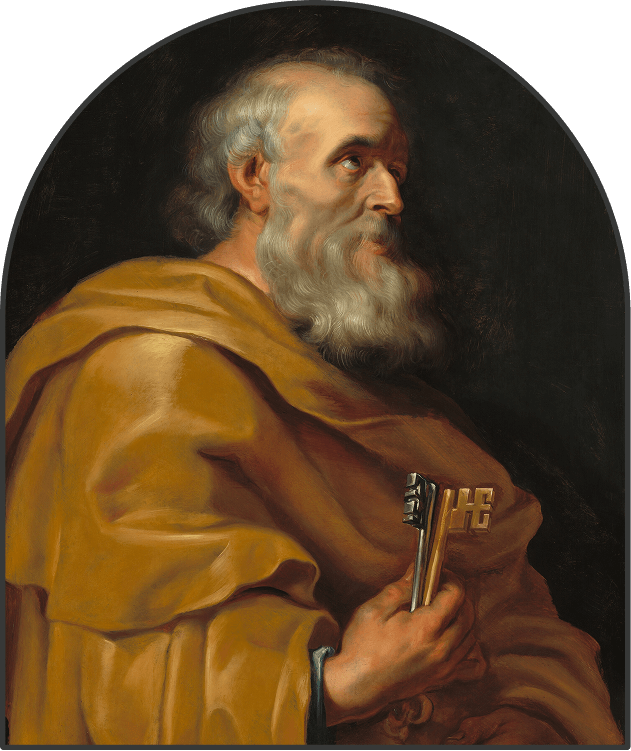
The Prayer and Contemplative Life of St. Justin Martyr

Introduction
Known as one of the greatest philosophical minds and earliest apologists of Christianity, St. Justin Martyr (c. 100–165 AD) became a contemplative seeker throughout his life. His progression from pagan philosophy to Christian faith displays a man whose prayer life consisted of the constant pursuit of divine truth and meaning, meditation on the Scriptures, and a mystical encounter with the Logos — the Word that became flesh.
The Philosopher’s Quest for God
The pre-conversion life of Justin was a time of intense seeking after God spiritually. He studied under the Stoics, Peripatetics, Pythagoreanists, and Platonists in his search for ultimate truths in reality; this relentless search echoed the cry of the Psalmist: “As the deer pants for streams of water, so my soul pants for you, my God” (Psalm 42:1).
The philosophical journey of Justin wasn’t just academic in nature; he was seeking to understand ultimate truth with a holy purpose like Solomon when he prayed asking God to “Give your servant a discerning heart” (1 Kings 3:9). This disposition prepared his soul for the transformative encounter that would redirect his entire life.
Mystical Encounter by the Sea
One of many turning points in Justin’s spiritual development occurred through a mysterious encounter with an older Christian man at a seaside location. The man challenged Justin’s Platonist views and introduced him to the Hebrew prophets. Justin later recalled that the man’s challenge created a “fire in his soul” — a mystical awakening to truth beyond mere philosophy.
This encounter is similar to the encounter of Philip and the Ethiopian (Acts 8:26-39) where Scripture was opened to the men’s understanding. For Justin, the prophetic writings came alive through contemplative meditation. He discovered the truth in Jesus’s statement:
You study the Scriptures diligently because you think that in them you have eternal life. These are the very Scriptures that testify about me.
John 5:39
The elder’s words created “a fire” in Justin’s soul. It was not just intellectual conviction, but rather, it was a mystical transformation, much like the fire in the heart of the disciples on the road to Emmaus (Luke 24:32).
Meditation on the Logos
The central focus of Justin’s contemplative theology was the contemplation of Jesus Christ as the Logos—the eternal Word of God. In generations of stories, Justin devoted himself to contemplating the opening passage of John’s Gospel:
In the beginning was the Word, and the Word was with God, and the Word was God.
John 1:1
Justin’s mysticism revolved around understanding how the infinite God communicated with finite humanity through the Logos. His prayer life became an extended meditation on this mystery: the Word who existed before creation, through whom all things were made, who enlightens every person coming into the world.
He taught that the Logos had scattered “seeds” of truth throughout human philosophy and wisdom, but that full revelation came only in Jesus Christ. This understanding transformed his contemplation—he now saw all truth as leading to Christ, all wisdom as pointing toward the incarnate Word.
Prayer as Philosophical Dialogue with God
Because of Justin’s background in philosophy, he used a unique approach to prayer. He did not separate prayer from reasoned contemplation; rather, he saw prayer as a reasoned dialogue with God. Therefore, Justin understood the true meaning of what Paul wrote:
We demolish arguments and every pretension that sets itself up against the knowledge of God, and we take captive every thought to make it obedient to Christ.
2 Corinthians 10:5
reveal a man who seeks answers to questions through prayer; who approaches intellectual struggles through prayer; and who contemplates deeply over conflicting and mysterious philosophical statements. Therefore, Justin’s contemplation identically parallels Mary’s relationship with the angel and how she “treasured up all these things and pondered them in her heart” (Luke 2:19), Justin contemplated with a combination of philosophical rigor, spiritual devotion, and ambition.
Contemplation of Scripture
After Justin’s conversion to Christianity, he became an extensive student of the Hebrew Scriptures and apostolic writings. Justin’s writings are filled with an abundance of biblical verses and allusions to the Scripture as the written Word of God. He adheres to the principles outlined in Psalm 1:2-3:
But whose delight is in the law of the LORD, and who meditates on his law day and night... whatever they do prospers.
The meditation by Justin on the written Word was not a superficial reading. Rather, Justin’s contemplation was a form of deep meditation. Justin read the prophetic books of the prophets, but particularly the servant passages in Isaiah. In these passages, Justin sees specific prophecies that relate to the passion (death and resurrection) of Christ. He also meditated upon orthodox Christian worship from Old Testament days and how it related to New Testament reality.
This approach to the written Word of God embodies the principles taught by Paul: “Let the word of Christ dwell in you richly” (Colossians 3:16). In Justin’s mind, it is not enough to simply have a good understanding of Scripture. He saw the written Word of God as his prayer language, and the framework of his contemplation.
The Mystery of the Incarnation
The contemplative approach of Saint Justin centered on the mystery of the Incarnation. Throughout the course of his life, he directed his intellectual and spiritual life to investigate the mystery of how the eternal Logos became flesh, how God united with man and became one person, and how the Infinite One entered into the finite creation without ceasing to be infinite in love and compassion.
This meditation drew him into the same wonder expressed in 1 Timothy 3:16: “Beyond all question, the mystery from which true godliness springs is great: He appeared in the flesh, was vindicated by the Spirit, was seen by angels, was preached among the nations, was believed on in the world, was taken up in glory.”
In Justin’s writings, he examines the virgin birth as not simply a historical fact but rather an experience of the transcendent possibilities of God’s power to accomplish the impossible. His contemplation of the response of Mary to the Angel Gabriel when she said, “may your word to me be fulfilled” (Luke 1:38) helped shape Justin’s understanding of the way God works in the world, through cooperation with humanity by Divine Grace, to fulfil His divine plan.
Eucharistic Contemplation
Justin gave us the earliest detailed account of Christian worship and the place of the Eucharist at the very center of the spiritual lives of early Christians. Justin describes this communal worship, in which, by prayer and thanksgiving, bread and wine became the body and blood of Jesus Christ, as actualized by the mystical means of transubstantiation.
His meditation on the Eucharist connected directly to Jesus’s words: “This is my body given for you; do this in remembrance of me” (Luke 22:19). For Justin, “remembrance” wasn’t casual recollection but anamnesis—mystical participation in the once-for-all sacrifice of Christ, making it present in the worshipping community.
He taught that just as the Logos took on flesh through Mary, so bread and wine are transformed through the prayer of thanksgiving. This contemplation shaped Justin’s entire spirituality—union with Christ through sacramental mystery, divine life communicated through material means.
Prayer for Understanding
Justin’s writings demonstrate that he was continually in prayer for the illumination of God. He prayed continually for knowledge, as in Paul’s letters to the Ephesians: “I keep asking that the God of our Lord Jesus Christ, the glorious Father, may give you the Spirit of wisdom and revelation, so that you may know him better” (Ephesians 1:17).
His philosophical training taught him the limits of human reason; his Christian faith taught him to pray for what transcends reason. This created a contemplative approach that united rigorous thinking with humble dependence on the Holy Spirit. He understood Jesus’s promise: “When he, the Spirit of truth, comes, he will guide you into all the truth” (John 16:13).
Contemplative Apologetics
What distinguished Justin from other apologists was how his defense of Christianity flowed from contemplative prayer. His famous “Apologies” weren’t merely intellectual arguments but the fruit of deep meditation on how God had revealed himself in history.
Justin would meditate on the objections to the Christian Faith as presented by the pagans, bring them to God in contemplation and seek to know the answer through God’s wisdom. In this way, Justin followed the wisdom of Solomon, who wrote: “The fear of the LORD is the beginning of knowledge” (Proverbs 1:7). His prayer experience formed the basis for his Apologies for Christianity and its customs. Justin would pray, then meditate, and then come to know through them, how to lead others to have a contemplative experience with the truth.
Silence and Study
Justin established a school in Rome where he began teaching Christian philosophy, developing his teaching method through his experience of contemplative silence. He understood that wisdom comes not from constant talking but from listening to God, to Scripture, and to the Holy Spirit’s promptings.
He practiced what would later be called lectio divina—sacred reading that moves from text to meditation to prayer to contemplation. His written works show someone who had absorbed Scripture so deeply that biblical language became his native tongue, scriptural concepts his mental framework.
This pattern reflects Jesus’s own practice of withdrawing to solitary places to pray (Luke 5:16). Even as a public teacher, Justin maintained an inner life hidden with Christ in God (Colossians 3:3).
Martyrdom as Prayer
Justin did not view dying for the faith as the final goal of his spiritual journey. His clarity of mind during the trial and the process of facing martyrdom was a result of years of prayer and contemplation. His written accounts of his trial demonstrate his calm confidence, unwavering stance on what he believed in, and complete trust in God.
In the view of his impending execution, Justin demonstrated Jesus’ teaching:
Do not worry about what to say or how to say it. At that time you will be given what to say, for it will not be you speaking, but the Spirit of your Father speaking through you.
Matthew 10:19-20
His martyrdom was not a passive acceptance of his death. Justin’s offer of his life as the ultimate sacrifice was an act of worship to God. As St. Paul wrote “I urge you, brothers and sisters, in view of God’s mercy, to offer your bodies as a living sacrifice, holy and pleasing to God—this is your true and proper worship” (Romans 12:1). Justin made this ultimate act of worship to God.
The Vision of Heavenly Worship
Justin contemplated the eternity of life and resurrection. He believed that the worship of God on earth is the same as participation in the perpetual worship of God in Heaven, through the Angels and Saints, to the end of time.
His vision connected to John’s revelation: “Then I heard every creature in heaven and on earth and under the earth and on the sea, and all that is in them, saying:
To him who sits on the throne and to the Lamb be praise and honor and glory and power, for ever and ever.
Revelation 5:13
This mystical understanding transformed Justin’s approach to prayer. He wasn’t merely reciting words or performing rituals but joining the cosmic worship that transcends time and space—entering into the eternal “now” of God’s presence.
Contemplation of Creation
Justin’s praying included his understanding of God through the things of this earth. As a philosopher, he had been trained as such to pay attention to what he saw around him, and through the Scriptures he was taught that creation revealed the Creator. “The heavens declare the glory of God; the skies proclaim the work of his hands” (Psalm 19:1).
He taught that the Logos had impressed divine reason upon creation, making the universe intelligible. This belief shaped his contemplative practice—seeing God’s wisdom in the order of nature, God’s beauty in created forms, God’s power in natural processes.
Yet Justin always pointed beyond nature to nature’s God. His contemplation of the material things never permitted him to believe in pantheism but rather to see that God revealed Himself by His actions in a sacramental way.
Prayer for His Persecutors
Justin believed in praying for those who opposed and persecuted him for being a Christians. His writing shows just how deeply he believed when Jesus commanded, “Love your enemies and pray for those who persecute you” (Matthew 5:44). In Justin’s heartfelt method of writing he expressed his love for those who were in error.
Justin’s prayers were that the pagans would see the truth and receive Christ as their Savior, that the Jews would believe in Jesus as the Messiah and that the persecutors would come to experience Christ and see how they were living in darkness needing the Light of Jesus.
The Practice of Fasting
Historical sources indicate that Justin practiced regular fasting as part of his spiritual discipline. He understood fasting not as mere physical deprivation but as contemplative practice—clearing away distractions to focus more fully on God.
This practice aligned with Jesus’s teaching that some spiritual breakthroughs come only through “prayer and fasting” (Matthew 17:21, in some manuscripts). For Justin, fasting heightened spiritual sensitivity, deepened prayer, and increased awareness of dependence on God.
Vigilance in Prayer
During his life Justin lived under difficult times while the Church was facing severe persecution. Those elements played a major part in one of the themes of Justin’s life of daily vigilance in the importance of praying—being constantly alert, aware, and ready for God to call him to respond.
Justin applied Jesus’s type of prayer to his life: “Watch and pray so that you will not fall into temptation” (Matthew 26:41). His contemplative life was not a diversion from the world but a real-life engagement and awareness of the spiritual warfare behind those that persecuted him.
The Unity of Faith and Reason
One of the more extraordinary elements of Justin’s contemplative prayer life is his integration of faith with reason. Justin did not separate philosophical reflection from contemplative prayer or mystical experience from rational thought; true philosophy was an act of worship, and true worship involved one’s mind as well as one’s heart.
Justin’s contemplative prayer life exemplified the ultimate element of the greatest commandment: “Love the Lord your God with all your heart and with all your soul and with all your mind” (Matthew 22:37). Justin’s contemplative life engaged every faculty—emotions, will, intellect—in unified devotion to Christ.
Teaching Others to Pray
Justin taught many followers about the practice of prayer and contemplation through his writings. As a teacher, he felt obligated to give his students a dependable means by which they could develop spirituality, but he was also very aware that there was a marriage between philosophy and spiritual development.
Justin demonstrated this through the personal training of Timothy:”The things you have heard me say in the presence of many witnesses entrust to reliable people who will also be qualified to teach others” (2 Timothy 2:2). Justin did not just teach his students doctrine, but he trained them to know how to encounter Christ through prayer and meditation.
A Legacy of Contemplative Intellectualism
St. Justin Martyr demonstrates the idea that we can do both: deep thinking and deep praying. He was a challenge to those false separations between the Head and the Heart; between Reason and Mysticism; between Philosophy and Faith.
He shows us at present that we have the privilege and freedom to take our questions to God, that the honest struggle of the mind can also be the prayer of the heart, that contemplation does not replace the mind but engages it. His Mysticism was extremely biblical; very philosophically sound and transforming in its application.
Conclusion
St. Justin Martyr’s prayer life reveals a seeker who found what he sought—not abstract truth but Truth incarnate in Jesus Christ. His contemplation of the Logos, meditation on Scripture, Eucharistic devotion, and philosophical prayer created a distinctive Christian mysticism that honored both divine revelation and human reason.
As we navigate a world that often divorces faith from reason, Justin calls us to contemplative integration. He reminds us that the greatest questions deserve our deepest prayers, that mystery invites meditation, that God welcomes our honest seeking.
May we be like St. Justin Martyr and seek after the utter truth with passion and intensity. May we meditate upon the Scriptures with both intellect and devotion to the spiritual aspects of who Christ is. May we recognize that all truth is ultimately rooted in Jesus Christ, the eternal Logos through which everything was created.
Let us pray with the same confidence as St. Justin Martyr:
We have been taught that Christ is the first-born of God, and we have declared above that He is the Word of whom every race of men were partakers; and those who lived reasonably are Christians, even though they have been thought atheists.
Our Editorial Standards:
All our content on Christian meditation traditions, prayers, and spiritual practices is reviewed by Dr. Megan Remington, PhD, ensuring theological soundness and spiritual depth.
We draw from centuries of Christian contemplative tradition, citing respected theological sources, biblical references, and established spiritual practices.
Our team understands that spiritual struggles are deeply personal. We approach topics of anxiety, strength, healing, and peace with compassion and biblical wisdom.
We continuously review and update our spiritual resources to ensure they remain relevant and aligned with orthodox Christian teaching.
Each article clearly identifies our writers and reviewers, along with the theological sources and biblical foundations used.
 To guarantee that all of our information is accurate, we ensure that all our sources are reputable. That means every source is authenticated and verified to be backed only by medical science.