


 App Store
  Google Play
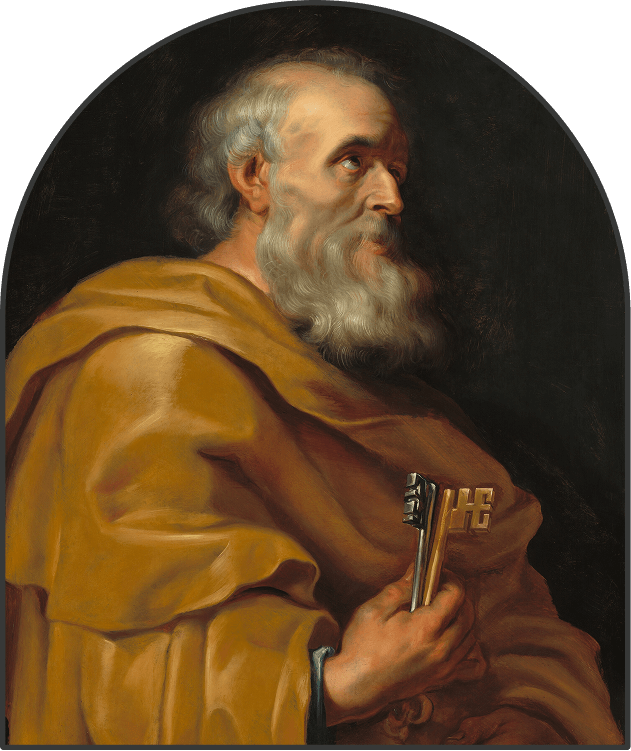
The Prayer Life of Saint Luke the Evangelist: The Beloved Physician Who Contemplated Christ

Introduction
Saint Luke the Evangelist stands as a unique figure among biblical writers—a Gentile convert who became one of Christianity’s most eloquent witnesses to Christ.
Saint Luke is the author of the Gospel of Luke and the Acts of the Apostles, which gives him a unique position among the writers of the Bible. While we have fewer records of the personal prayer practices of this Saint compared to those of later saints, his writings reveal a man deeply immersed in contemplative attention to the Holy Spirit, meticulous in preserving sacred memories, and profoundly attuned to the movements of God in human history.
The method Luke used to document Christ’s life and the early Church offers modern believers a model of prayerful attention, spiritual discernment, and devotion to truth.
Luke: The Contemplative Historian
In the opening of his Gospel, Luke identifies himself as one who “having had perfect understanding of all things from the very first” decided to write “an orderly account” so that his reader Theophilus might “know the certainty of those things in which you were instructed” (Luke 1:3-4). This careful, methodical approach reveals a contemplative mind—one that doesn’t rush but patiently gathers, reflects, weighs, and preserves.
The way Luke wrote indicates a contemplative mind—one that doesn’t rush but patiently gathers, reflects, weighs, and preserves. The Greek word Luke uses for “having had perfect understanding” is parekolouthekoti, which carries the sense of following closely, accompanying, and tracing carefully.
Luke wasn’t merely collecting information; he was contemplatively walking alongside the story of Jesus, allowing it to unfold before his mind’s eye as he interviewed witnesses and reflected on their testimonies. This patient, attentive approach to truth mirrors the psalmist’s meditation:
I will meditate on Your precepts, and contemplate Your ways.
Psalm 119:15
For Luke, writing itself was an act of prayer—a sacred task of preserving divine revelation for future generations.
The Physician’s Eye: Observing the Details
Paul calls Luke “the beloved physician” (Colossians 4:14),and this medical training shaped Luke’s contemplative approach. Physicians must observe carefully, notice subtle details, and discern patterns others might miss.This same attentiveness permeates Luke’s Gospel.
Luke notices details the other evangelists overlook: the precise measurements of time (“in those days,” “when the days were completed“), specific medical conditions (“the man with dropsy” in Luke 14:2, the “great drops of blood” in Jesus’s Gethsemane prayer in Luke 22:44), and careful chronological markers connecting sacred history to secular events (Luke 3:1-2).
This attentiveness reflects contemplative practice at its best—present, aware, noticing what God is doing in the particulars of life. As Jesus taught:
Consider the lilies, how they grow.
Luke 12:27
Luke considered everything carefully, seeing God’s hand in the details.
Companion to Paul: A Life of Prayer and Mission
The apostle Paul was Luke’s most important associate in the Bible. He traveled with him on multiple missionary journeys and was with him during the “we” passages in Acts (16:10-17, 20:5-21:18, 27:1-28:16) indicating Luke’s personal presence during key moments of Paul’s ministry.
Luke’s relationship with Paul—one of Christianity’s greatest prayer warriors—undoubtedly shaped his spiritual life. Paul wrote extensively about prayer: “pray without ceasing” (1 Thessalonians 5:17), “praying always with all prayer and supplication in the Spirit” (Ephesians 6:18), “continue earnestly in prayer, being vigilant in it with thanksgiving” (Colossians 4:2).
Traveling with Paul meant participating in his prayer rhythm. Acts records Paul praying at midnight with Silas in the Philippian jail (Acts 16:25), kneeling on the beach with the Ephesian elders (Acts 20:36), and constantly interceding for the churches. Luke witnessed and undoubtedly shared in this lifestyle of continuous prayer.
A Gospel Born from Prayer and Inquiry
Luke explicitly states he gained his information through careful investigation: “having had perfect understanding of all things from the very first” (Luke 1:3). However, this investigation was not merely journalistic but deeply spiritual—a prayerful quest to understand and accurately convey the truth about Jesus.
Tradition holds that Luke interviewed Mary, the mother of Jesus, which would explain the unique infancy narratives found only in his Gospel. If true, imagine the contemplative patience required: sitting with the Lord’s mother, listening as she shared sacred memories, recording with reverence the words of the Magnificat (Luke 1:46-55) and the intimate details of Jesus’s birth.
This kind of listening is itself a form of prayer—what the Benedictine tradition calls lectio divina applied to lived experience. Luke listened with his whole being, allowing Mary’s memories to shape his understanding of Christ’s identity and mission.
The Gospel of Prayer
More than any other evangelist, Luke emphasizes Jesus’s prayer life. Luke alone records:
- Jesus praying at His baptism (Luke 3:21)
- Jesus withdrawing to wilderness places to pray (Luke 5:16)
- Jesus spending the whole night in prayer before choosing the twelve apostles (Luke 6:12)
- Jesus praying alone before asking “Who do you say that I am?” (Luke 9:18)
- Jesus praying at the Transfiguration (Luke 9:28-29)
- Jesus teaching the Lord’s Prayer (Luke 11:1-4)
- Jesus praying for Peter’s faith not to fail (Luke 22:32)
- Jesus’s prayer of forgiveness from the cross:
Father, forgive them, for they do not know what they do.
Luke 23:34
This emphasis reveals Luke’s own contemplative focus. He noticed and preserved what others might have overlooked—the prayer life that fueled Jesus’s ministry. Luke understood that Jesus’s power flowed from His communion with the Father, demonstrating the truth that “the effective, fervent prayer of a righteous man avails much” (James 5:16).
The Parables of Prayer
Luke shares three unique parables about prayer:
The Friend at Midnight (Luke 11:5-8): Use this parable to encourage persevering in prayer (calling for something) until it is answered. As Jesus concluded:
Ask, and it will be given to you; seek, and you will find; knock, and it will be opened to you.
Luke 11:9
The Persistent Widow (Luke 18:1-8): Use this parable to teach about continuing to pray until your prayers are answered. Jesus concludes with the specific purpose “that men always ought to pray and not lose heart” (Luke 18:1). The parable assures us that if an unjust judge eventually grants justice, how much more will our loving Father answer His children’s prayers.
The Pharisee and the Tax Collector (Luke 18:9-14): Teaching humility in prayer. The tax collector, beating his breast and crying “God, be merciful to me a sinner!” goes home justified rather than the self-righteous Pharisee. Jesus concludes:
Everyone who exalts himself will be humbled, and he who humbles himself will be exalted.
Luke 18:14
The parables in this section demonstrate that for Luke and for Christians, the primary characteristics of authentic prayer are persistence, humility, faith, and reliance upon God’s character and power. The preservation of these parables indicates that they were an important part of Luke’s prayer life.
The Contemplative Witness to Mary
The Gospel According to Luke presents Mary uniquely as a model for contemplative discipleship. The Gospel gives more emphasis to Mary in this regard than any of the other Evangelists:
- The Annunciation and Mary’s surrender:
Let it be to me according to your word.
Luke 1:38
- Mary’s contemplative response to shepherds’ testimony:
Mary kept all these things and pondered them in her heart.
Luke 2:19
- Mary’s ongoing meditation:
His mother kept all these things in her heart.
Luke 2:51
- Mary continued to be present with a group of disciples who prayed together after Christ’s ascension (Acts 1:14).
Mary’s contemplation is described by Luke with the Greek word sumballousa, which means “to bring together, to confer, or to consider carefully.” Mary did not just “remember things,” but rather she “meditated on them.” She reflected on her life and the events of her life without rushing to judgment as to their significance. The contemplation described in this passage models meditation in Scripture:
This Book of the Law shall not depart from your mouth, but you shall meditate in it day and night.
Joshua 1:8
Luke’s emphasis on Mary’s practice of contemplation indicates that Luke himself was contemplative and reflective; he reflected on significant events in his own life to find their meaning from the Lord, and through careful review and consideration, God’s revelation progressed gradually.
The Holy Spirit: Luke’s Mystical Focus
Luke is the Gospel writer who focuses most on the Holy Spirit. He states:
- John the Baptist filled with the Spirit from the womb (Luke 1:15)
- The Spirit coming upon Mary at the Annunciation (Luke 1:35)
- Elizabeth filled with the Spirit (Luke 1:41)
- Zechariah filled with the Spirit (Luke 1:67)
- The Spirit upon Simeon, revealing Christ’s identity (Luke 2:25-27)
- The Spirit descending on Jesus at baptism (Luke 3:22)
- Jesus “full of the Holy Spirit” and “led by the Spirit” (Luke 4:1)
- Jesus rejoicing in the Spirit (Luke 10:21)
The Holy Spirit’s continued involvement in the life of Jesus showed Luke’s contemplation on the theme of God’s unseen action through the Holy Spirit to direct and empower Him in the early parts of His earthly ministry.
The same contemplative awareness of Jesus’s active engagement with the Holy Spirit continues throughout the Book of Acts. In writing about the Holy Spirit’s role, Luke demonstrated how to understand and apply the promise given to the apostles by Jesus:
When He, the Spirit of truth, has come, He will guide you into all truth.
John 16:13
His writing demonstrates what it means to walk “in step with the Spirit” (Galatians 5:25).
The Magnificat and Benedictus: Prayers Preserved
Luke preserves two magnificent prayers from the infancy narratives—Mary’s Magnificat (Luke 1:46-55) and Zechariah’s Benedictus (Luke 1:68-79). Luke did not personally write either of these prayers but was careful to preserve them because he respected the way other people express themselves in prayer, and he valued the spiritual expression of prayer by others.
The Magnificat is a contemplative masterpiece that combines elements of two different prayers from 1 Samuel 2:1-10 and several other psalms. Mary’s Magnificat shows that she was well acquainted with the Scriptures and that her meditation on God’s Word had filled her heart to overflowing. When someone meditates on God’s Word to the extent Mary did, they will naturally express the experience they have as a result of the presence of this Word in the heart, through worship.
The Benedictus also reflects the prophetic heritage of Israel, which indicates that Zechariah had a deep understanding of the way Jesus would fulfill the promises made to Abraham and the patriarchs.
Luke’s desire to preserve the Magnificat and the Benedictus in their original poetry instead of paraphrasing them reflects his deep reverence for God’s Word. The prayers were treated with the same care and attention that a jeweler would give to a diamond.
Luke’s Attentiveness to Women
Luke’s Gospel shows an unusual sensitivity to women’s faith and spirituality:
- Elizabeth’s prophetic welcome of Mary (Luke 1:39-45)
- Anna the prophetess, who “served God with fastings and prayers night and day” (Luke 2:37)
- The widow of Nain (Luke 7:11-17)
- The sinful woman who anointed Jesus (Luke 7:36-50)
- Mary and Martha (Luke 10:38-42)
- The women who financially supported Jesus’s ministry (Luke 8:1-3)
- The women at the crucifixion and resurrection (Luke 23:27, 49, 55-56; 24:1-11)
This sensitivity to the faith, prayer, and witness of women shows that Luke was contemplative about how God uses every person, no matter their social standing. Because Luke was contemplatively looking, he perceived what others did not.
Mary and Martha: A Lesson in Contemplation
Luke alone records the account of Mary and Martha (Luke 10:38-42), and within that account is one of the most powerful teachings from Jesus about contemplation. When Martha complains because Mary is sitting at the feet of Jesus instead of helping her, Jesus replies:
Martha, Martha, you are worried and troubled about many things. But one thing is needed, and Mary has chosen that good part, which will not be taken away from her.
Luke 10:41-42
The fact that Luke recorded this story suggests that it was of personal importance to him. The contemplative life, or sitting at Jesus’ feet and listening to Him, is the “good part,” which nothing else should displace. Although there is a role for service and work, the work and service must be the result of contemplation.
This teaching influenced Christian spirituality for centuries, establishing the contemplative life’s primacy. Yet Luke’s own life demonstrates the balance—he was actively investigating, writing, traveling, and serving while maintaining contemplative attention to the Spirit’s leading.
The Road to Emmaus: Contemplative Recognition
Luke tells the story of Jesus walking along the road to Emmaus in Luke 24:13-35. Though the disciples walked with the risen Christ, they did not recognize Him until He broke bread.
As Luke 24:16 tells us, their “eyes were restrained” so that they did not know Him. This statement gives evidence to the fact that spiritual sight comes from God’s enlightenment. While Jesus was walking with the disciples, He was “expounding to them in all the Scriptures the things concerning Himself” (Luke 24:27). Their hearts burned within them while He was explaining the Scriptures to them, which is a demonstration of the heat that comes with the true perspective of God.
Eventually, Jesus was revealed to the disciples through the breaking of the bread (Luke 24:30-31)—a Eucharistic experience showing that Jesus may be in all of the mundane experiences of earthly life. The point of this story is to show the contemplative understanding that even if we fail to recognize God, He is with us, as shown through Scriptures and the Sacraments.
That Luke recorded this story so beautifully suggests its significance for his own spiritual experience—learning to recognize Christ’s presence in unexpected places through contemplative attention.
The Acts of the Apostles: Prayer in the Early Church
Luke’s second volume, Acts, continues emphasizing prayer as central to Christian life:
- The disciples “continued steadfastly in prayer” awaiting Pentecost (Acts 1:14)
- Peter and John going to the temple “at the hour of prayer” (Acts 3:1)
- The apostles devoting themselves “to prayer and to the ministry of the word” (Acts 6:4)
- The church praying for Peter’s release from prison (Acts 12:5, 12)
- Paul and Silas praying and singing in prison (Acts 16:25)
- Paul kneeling to pray with the Ephesian elders (Acts 20:36)
- Paul encouraged by a vision during prayer (Acts 18:9-10, 23:11)
This sustained attention to the early church’s prayer life wasn’t accidental. Luke understood that the church’s growth and power flowed from prayer. He documented what he witnessed: communities transformed by the Holy Spirit, received through persistent, unified prayer.
Luke’s Medical Metaphor: Spiritual Healing
As a physician, Luke had a clear understanding of both the physical and spiritual aspects of healing. Luke presents Jesus as a healer more than the other Gospel writers. In fact, Luke records Jesus saying:
Those who are well have no need of a physician, but those who are sick. I have not come to call the righteous, but sinners, to repentance.
Luke 5:31-32
Luke’s understanding as a physician shaped his understanding of contemplative spirituality. Because he believed sin is a type of spiritual sickness which needs divine healing, Luke thought that Jesus provided to people the medicines of repentance and prayer, as preventative care, to maintain spiritual health through a continual, regular relationship with the Great Physician.
The prophet Jeremiah stated:
Heal me, O Lord, and I shall be healed; save me, and I shall be saved, for You are my praise.
Jeremiah 17:14
God is the ultimate source for all healing, whether it is physical or spiritual.
Luke’s Martyrdom: The Ultimate Prayer
According to church tradition, Luke died a martyr on an olive tree in Greece about A.D. 84. Although it cannot be established with certainty, church tradition reflects the early church’s belief that the end of Luke’s life was a faithful witness to Christ.
If indeed Luke’s martyrdom was his last prayer (total surrender of himself to God), Jesus’s teaching in Luke’s gospel points out how this is accomplished by taking up one’s own cross and following Christ. Jesus taught:
Whoever desires to come after Me, let him deny himself, and take up his cross, and follow Me. For whoever desires to save his life will lose it, but whoever loses his life for My sake and the gospel's will save it.
Mark 8:34-35, a teaching Luke also records in Luke 9:23-24
Martyrdom is the ultimate act of contemplation—the total surrender to God—the perfect unification of God’s will and Christ’s will—ultimately saying “yes” to God’s love.
The Contemplative Writer
In writing, Luke expresses the depth of his contemplation through literary artistry. His Greek is beautiful, his accounts are structured, and his portrayal of the people he encounters is psychologically astute. Luke’s artistic ability in writing is not merely for aesthetics, but is a reflection of his love for what he writes about—sacred truths. Therefore, he had an unusual concern for how he presented these truths.
Writing requires contemplative attention to every aspect of your work: from choosing every word carefully to considering the rhythm of your writing to revising until the expression matches the vision of what you wish to communicate to your audience. In fact, Luke’s writing was an act of worship and service to the Church .
The tradition of writing as a form of worship in medieval times (associated with scriptorium work) has its roots in how Luke took time to preserve the Gospel. Every word that you write in order to communicate the truth of God ultimately brings glory to God:
Whatever you do, do all to the glory of God.
1 Corinthians 10:31
Practical Applications from Luke’s Example
Practice Patient Investigation
Don’t rush to conclusions. Take the time to thoroughly investigate before making a decision. As did Luke, be thorough in your searching for multiple witnesses, gather all of the evidence that you can, and weigh it carefully before coming to a conclusion. This same patient contemplation should be applied to your study of Scripture, your decisions, and understanding of the people around you.
Keep a Spiritual Journal
Just as Luke recorded certain events in the lives of the saints for the purpose of reference and preservation, keep a journal where you record how you have observed God working in your life, the answers to your prayers, and the things you have learned from God. Periodically review this. As you review the things you have recorded in your journal, “ponder these things in your heart,” just as Mary did .
Attend to the Holy Spirit
Be sensitive to the promptings of the Holy Spirit in the lives of others. Pay attention to how God leads you in your life. Review the course of your life on a daily basis in order to determine how God is leading you through the promptings of the Holy Spirit .
Emphasize Prayer in Community
Luke placed a high importance on prayer; therefore, make corporate prayer a top priority in your church’s ministry. Just as Luke spent time in prayer, we can do the same .
Practice Contemplative Listening
When others are sharing their faith journeys with you, listen to them the same way that Luke listened to Mary and the Apostles—with reverence and attention, and with an open mind to learn.
Meditate on Jesus’s Prayers
Use Luke’s Gospel to study Jesus’s prayer life. What can you learn from His practice? How can you imitate His rhythm of solitude and service?
Cultivate Humility
Remember the tax collector’s prayer: “God, be merciful to me, a sinner!” (Luke 18:13). Let this humble posture characterize your prayer life.
Persist in Prayer
Use the Gospel of Luke to read the stories of how Jesus prayed in the New Testament. What patterns can you learn from the way Jesus prayed? How will you imitate Jesus in His solitude, His prayerfulness, and His service? .
Luke and the Contemplative Tradition
Although Luke would have been familiar with the teachings of Jesus, during his lifetime, there had not yet been the formalized contemplative traditions that we know today. However, in his writings, he did influence how future generations of Christians practiced mystical spirituality. Specifically:
- Careful attention to God’s action became the examen of Ignatius
- Scripture meditation developed into lectio divina
- Pondering in the heart evolved into the Jesus Prayer and centering prayer
- Spirit-led living informed Pentecostal and charismatic spirituality
Luke’s legacy lives in every Christian who seeks to notice God’s presence, meditate on Scripture, and document their spiritual journey.
Conclusion: The Call to Contemplative Witness
Saint Luke the Evangelist invites us into a spirituality of attentive presence—noticing God’s action, meditating on His Word, listening to others’ testimonies, and faithfully recording truth for future generations.
In today’s fast-paced and heavily distracted world, the example set forth by Luke is a challenge for many, because we generally move too quickly, lack attention to detail, and therefore fall short of experiencing the depth of life to which Luke was so attentive. Like Luke, we can slow down our pace, take time to be present with God and each other, and practice contemplative listening.
Luke indicates that God is present in our everyday lives. The Holy Spirit operates in our everyday moments. Jesus reveals Himself through Scripture and fellowship. Through prayer, God gives us hope and strength while working for us in our ministries. The humble see God, while the proud miss God’s presence .
Thus, by practicing the contemplative disciplines of prayer and meditative listening to God’s Word (in addition to hearing the testimonies of wise believers, discerning God’s voice through the inner whisper of the Holy Spirit, and listening to the groaning of creation as it awaits its redemption, as Paul mentions in Romans 8:22), we can develop the same attitudes that Luke portrayed in his writings, with Mary by his side.
Incline your ear, and come to Me. Hear, and your soul shall live.
Isaiah 55:3
May we, following Luke’s example, become people who:
- Notice God’s presence in the details
- Ponder divine mysteries in our hearts
- Walk in step with the Spirit
- Preserve and pass on sacred truth
- Pray persistently and humbly
- Witness faithfully, even unto death
Luke the beloved physician heals us still—not with medicine for the body but with the Gospel narrative that heals souls. His contemplative attention to Christ’s life, death, and resurrection, carefully recorded for all generations, remains the Church’s treasure.
As we read Luke’s Gospel and Acts, may we encounter not merely ancient history but living truth. May we see with Luke’s contemplative eyes, hear with his attentive ears, and ponder with Mary’s meditative heart.
For “the word of the Lord endures forever” (1 Peter 1:25), preserved through faithful witnesses like Luke, who gave their lives to ensure that we might know “the certainty of those things” in which we have been instructed (Luke 1:4).
Soli Deo Gloria—To God alone be the glory.
Our Editorial Standards:
All our content on Christian meditation traditions, prayers, and spiritual practices is reviewed by Dr. Megan Remington, PhD, ensuring theological soundness and spiritual depth.
We draw from centuries of Christian contemplative tradition, citing respected theological sources, biblical references, and established spiritual practices.
Our team understands that spiritual struggles are deeply personal. We approach topics of anxiety, strength, healing, and peace with compassion and biblical wisdom.
We continuously review and update our spiritual resources to ensure they remain relevant and aligned with orthodox Christian teaching.
Each article clearly identifies our writers and reviewers, along with the theological sources and biblical foundations used.
 To guarantee that all of our information is accurate, we ensure that all our sources are reputable. That means every source is authenticated and verified to be backed only by medical science.