


 App Store
  Google Play
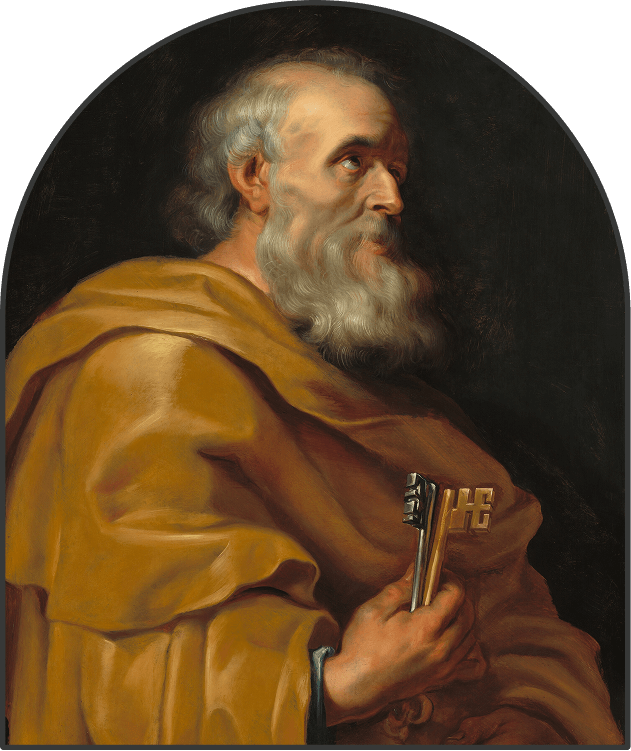
St. Nicholas of Myra: The Hidden Life of Prayer Behind the Generous Saint

Introduction
The life of St. Nicholas of Myra shows us the kind of hidden prayer that is behind so much of his giving as a bishop who has inspired people to celebrate the giving spirit of Christmas for hundreds of years. St. Nicholas lived a life marked by a great deal of charity, and that charity came as a result of his contemplation, as he fully experienced God’s love. His legendary acts of kindness—his secret gift of dowries for the poor bride-to-be, his protecting of sailors, and feeding the hungry—are just a small glimpse of the hidden fruit of a life completely in prayer and God’s Word.
The Foundation: Devoted from Infancy
From the earliest days of his life, Nicholas had a strong devotion to God. During his baptism as an infant and for many days after, he stood for long periods of time in the baptismal waters; this was seen by the early church as a prophetic sign of his future dedication to God. While these accounts should be understood in the wider hagiographical context, they provide insight into the prayer life of Nicholas from a very early age and shape the entirety of his life.
As we find in the Scriptures, Samuel (1 Samuel 2:18) and Timothy (2 Timothy 3:15) were both raised in faith and service in their youth. Like these men, Nicholas was raised in a culture where the Scriptures were read and taught regularly in the home. Nicholas’ parents were devout and understood that “training up a child in the way he should go” (Proverbs 22:6) meant teaching the child to have a relationship with God.
It is told in early accounts that Nicholas would fast every Wednesday and Friday and partake of his meals only after having prayed in the evenings. His early discipline of fasting was not a form of legalistic asceticism, but rather an early understanding of what Jesus taught when He said:
Man shall not live by bread alone, but by every word that comes from the mouth of God
Matthew 4:4
Thus, as a young man, Nicholas understood the importance of spiritual sustenance being more meaningful than physical sustenance.
Orphaned into Deeper Dependence
The influence of Nicholas’ childhood and adolescent years was further demonstrated through his experiences as an orphan. At a young age, Nicholas experienced the death of both parents due to the plague. Instead of being overwhelmed by the loss, Nicholas devoted himself to God as the ultimate Father. He demonstrated his faith in Psalm 27:10:
Though my father and mother forsake me, the LORD will receive me
Psalm 27:10
This period of deep anguish forced Nicholas into further prayer. He meditated on the Word of God and remembered the verses God spoke regarding those who were fatherless. He likely read and contemplated verses such as “Father of the fatherless and protector of widows is God in his holy habitation” (Psalm 68:5) and “The LORD watches over the sojourners; he upholds the widow and the fatherless” (Psalm 146:9).
Through prayer and meditation, Nicholas came to understand what James later wrote:
Religion that is pure and undefiled before God the Father is this: to visit orphans and widows in their affliction
James 1:27
HNicholas’ loss gave him a heart of compassion towards those who have suffered loss. Nicholas learned through his contemplative prayer life to see Christ in those who are in need.
Nicholas’ substantial estate created a new opportunity for him to develop a deeper relationship with God. Instead of treating his wealth as a form of security or status, Nicholas spent many hours in prayer seeking the will of God regarding how to use his riches. His understanding of the biblical teaching on wealth and Christ’s teaching to “sell your possessions” and “give to the needy” (Luke 12:33), guided Nicholas to use his inheritance for the work of the Kingdom.
The Secret Giver: Prayer as the Root of Charity
The most famous account of Nicholas giving charity also demonstrates how prayer influenced his acts of charity. The early church tradition tells the account of a poor family that had three daughters and could not afford a dowry for each daughter, which would lead to one of the daughters being sold into either slavery or prostitution.
Before acting on the information he received, Nicholas sought guidance from God. He followed Jesus’ model of “pray first, act second” (Luke 6:12-13). His prayer led Nicholas to not only act but also to find a means to assist the family and give in a way that would not take away the family’s dignity and honor. Therefore, Nicholas threw bags of gold into the house where the family lived. This act of charity was in complete adherence to the teaching of Jesus:
When you give to the needy, do not let your left hand know what your right hand is doing, so that your giving may be in secret. And your Father who sees in secret will reward you
Matthew 6:3-4
It is important to point out that giving in this manner does not mean that Nicholas was being falsely modest; he was being spiritually disciplined. Nicholas understood that giving for public recognition can corrupt an act of charity, turning love into pride. Nicholas maintained the dignity of the family receiving help and the honor of his own life by giving in secret. More importantly, Nicholas was able to keep his relationship with God pure; he sought God’s praise and reward rather than the praise and acceptance of his fellow men.
We see from the life of St. Nicholas that every act of charity was the result of a life of prayer. His many years of devotion, meditation on the Scriptures, and prayer life allowed him to carry out many acts of love for others. Nicholas’ hands became the hands of God in all of his charitable acts of giving; the resources he used were mere channels through which he could provide for God’s children.
Monastic Years: The Hidden Life with God
Nicholas spent many years in the monastic community before he became bishop. During his time in the community, he developed contemplation techniques that supported him as a bishop. These were probably the beginning of Nicholas’ life as an ordered man, which was structured by his monastic community’s schedule of prayer and devotion.
In monasticism, the community set specific times throughout the day and night for communal and private prayers. These times were called ‘liturgical hours’. Nicholas would rise for Matins shortly before dawn while it was still dark outside and pray through the Book of Psalms. This was similar to King David’s statement in his psalm when he said:
O God, you are my God; earnestly I seek you; my soul thirsts for you; my flesh faints for you, as in a dry and weary land where there is no water. So I have looked upon you in the sanctuary, beholding your power and glory
Psalm 63:1-2
Nicholas participated in the prayers of the community at the different prayer hours (Lauds, Prime, Terce, Sext, None, Vespers, and Compline), and continued to fulfil the injunction to “pray without ceasing” (1 Thessalonians 5:17) through this cycle of prayer. In between these communal prayers, Nicholas would practice lectio divina, which is sacred reading of Scripture, a practice he learned in the monastery whereas it begins with reading, meditation, and then culminates in prayer or contemplation.
Through lectio divina, Nicholas read and reread portions of the Bible slowly. He allowed the Word of God to enter into his heart. Once Nicholas read the Scripture he would begin meditating on the meaning of the passage, considering what this passage revealed to him about God, and how he could apply the passage to righteous living. His meditation would then be directed toward prayer as he spoke back to God about what the Scripture revealed in the reading. Finally, Nicholas would find silence in prayer, resting in God’s presence, without words.
In this journey of lectio divina (Reading, Meditating, Praying, and Contemplating), Nicholas became transformed through the Word of God. It changed the way he lived out his life as a Christ-follower and fulfilled God’s promise,
The law of the LORD is perfect, reviving the soul
Psalm 19:7
The Pilgrim’s Journey: Prayer in the Holy Land
Nicholas made a pilgrimage to the Holy Land according to tradition. He walked where Jesus walked, prayed where He prayed. This was a pilgrimage, not a tourist trip; it was a travel for spiritual purposes with prayer being at the center of the journey.
In Bethlehem, Nicholas would have knelt at the site of Christ’s birth, reflecting on the wonder of God becoming man,
The Word became flesh and dwelt among us
John 1:14
In Nazareth, Nicholas reflected on Christ’s hidden years of normal, ordinary life and work, and His ultimate ascension. Nicholas recalled the journey of Jesus along the Via Dolorosa, where he followed the steps of Jesus on the way to Calvary; and prayed at the site of Christ’s burial, and saw the empty tomb where Resurrection brought victory over death.
Nicholas prayed where Jesus prayed, and therefore, at these sites Nicholas had a deeper union with Jesus Christ, revealing more insight into the meaning of Jesus’ life, death and resurrection. Nicholas could identify with how Paul explained his union with Christ:
I have been crucified with Christ. It is no longer I who live, but Christ who lives in me
Galatians 2:20
One account describes Nicholas spending the night praying and weeping on Golgotha, reflecting on Christ’s suffering for us. His time alone with God meditating on the cross would not have been a morbid obsession. This was an avenue for Nicholas to understand God’s love toward sinners as Paul explains:
God shows his love for us in that while we were still sinners, Christ died for us
Romans 5:8
Meditation on the Passion changed Nicholas’ heart to express sacrificial love, just like Christ expressed sacrificial love on His way to the cross.
The pilgrimage culminated in the Garden of Gethsemane, where Nicholas spent hours in prayer. There, where Jesus sweat drops of blood in agonized prayer (Luke 22:44), Nicholas learned submission to God’s will even when it cost everything. This meditation on Christ’s “Not my will, but yours, be done” (Luke 22:42) became the foundation for Nicholas’s own sacrificial ministry.
The Reluctant Bishop: Called from Contemplation
Nicholas’s elevation to Bishop of Myra interrupted his preferred life of contemplative seclusion. According to tradition, Nicholas initially fled from the responsibility, preferring the hidden life of prayer to public leadership. Like Moses, who protested his calling (Exodus 3:11), or Jeremiah, who claimed inadequacy (Jeremiah 1:6), Nicholas resisted—not from false humility but from genuine recognition that contemplative solitude felt like his true vocation.
Yet in prayer, God made clear that Nicholas’s contemplation must bear fruit in action. His years of hidden communion had prepared him not for comfortable withdrawal but for costly service. Jesus taught that disciples are “the light of the world” and that “a city set on a hill cannot be hidden” (Matthew 5:14). Nicholas’s light, kindled in prayer’s secret place, was meant to shine publicly.
Nicholas finally accepted the bishopric in obedience to God’s will, demonstrating the principle that authentic mysticism leads to mission, not escape. True contemplation doesn’t withdraw from the world’s needs but equips believers to address them with supernatural wisdom and compassion.
However, Nicholas never abandoned his contemplative foundation. As bishop, he maintained rigorous prayer disciplines, rising before dawn for private prayer even as pastoral responsibilities consumed his days. He understood that ministry without prayer becomes mere activism, lacking the power that comes only from abiding in Christ (John 15:4-5).
The Bishop’s Daily Prayer Discipline
As Bishop of Myra, Nicholas structured his day around prayer. His regular weekday activity was supplemented with a time set aside early in the morning to pray before the sun rises. While he prays, he uses the time before the city stirs to pray in solitude without being disturbed. He spends this time praying for forgiveness, asking God for direction, and praying for his flock. This early morning time for prayer is similar to Jesus’ practice of finding an empty place to commune with God in prayer (Luke 5:16).
Each week, Nicholas prayed through the entire Psalms both systematically, completing the Psalter at least once a week. He understood that the Psalms are not only a reliable way to learn about prayer but also a means of expressing every emotion that humans feel and every experience that humans can have. When Nicholas prayed Psalm 23, he was listening for the voice of the Good Shepherd. When Nicholas prayed through the penitential Psalms, God was cleansing him as he asked for forgiveness. When Nicholas prayed the praise Psalms, his spirit experienced ecstasy in worship.
During the day, Nicholas practiced praying periodically throughout the day with very short prayers that were directed toward God while he was doing his job as a bishop. When he was meeting with someone who was struggling with his faith or with something else, he silently prayed for God to give him wisdom. When faced with a difficult decision, Nicholas would take a breath and pray for guidance. When someone was suffering in body, mind, or spirit, Nicholas immediately interceded on behalf of the sufferer. His constant communion with God fulfilled the command from Paul to “pray without ceasing” (1 Thessalonians 5:17).
Nicholas celebrated the Eucharist on a daily basis, believing that it was the highest form of prayer because it allows him to experience the true presence of Christ and participate most completely in communion with God. In the breaking of the bread and the blessing of the cup, Nicholas mystically participated in Christ’s death and resurrection by receiving grace to die to self and live for the sake of others.
In the evenings, Nicholas participated in extended meditation on the Scriptures. He would frequently focus on a particular passage or verse for several hours, moving slowly through the text, reading the passage several times out loud, and allowing the Holy Spirit to sink the verses into his mind and heart. He particularly enjoyed reading John’s Gospel and focusing on abiding in Christ’s love (John 15:9) and in many of Paul’s letters, especially the letters discussing love as the greatest gift (1 Corinthians 13).
Prior to going to sleep, Nicholas would review the day before God. This practice today is called The Examen. Nicholas would thank God for the ways God showed Himself to Nicholas throughout the day, for Nicholas’s cooperation with grace, and for his failures to love perfectly. Nicholas thanked God for His unmerited mercy, asked God to forgive him for his past failures, and committed the next day into God’s hands. This practice protected Nicholas’s heart and kept his ministry grounded on grace rather than by his own efforts.
Contemplating the Trinity: Nicholas’s Deepest Devotion
Nicholas lived at a time when there was much confusion around the theology of Jesus and His deity. When Arius began teaching that Jesus was created and not eternally divine, Nicholas recognized this was an attack on the foundation of Christianity. Nicholas’s response came as a direct result of his contemplative prayer life.
For Nicholas, the Trinity was not just an abstract doctrine to be debated, but a reality he experienced in his prayer life. In prayer, Nicholas experienced the Father’s love, the grace of Jesus, and the fellowship of the Holy Spirit (2 Corinthians 13:14). Nicholas contemplated the Scriptures to understand how there is One God eternally existing in three Persons — the Father, the Son and the Holy Spirit.
Nicholas built much of his understanding on John’s Gospel and the declarations made declaring Jesus as Lord:
In the beginning was the Word, and the Word was with God, and the Word was God
John 1:1
Nicholas meditated on Thomas’s confession, “My Lord and my God!” (John 20:28), and considered Jesus’s statement, “I and the Father are one” (John 10:30).
Nicholas’s contemplation was not just an intellectual exercise but rather a form of worship. He understood that true prayer is prayed to the Triune God revealed in the Scriptures. Nicholas prayed to God the Father, by way of God the Son, in the power of the Holy Spirit. His mystical experience with the Triune God allowed him to see God as Three — eternity exists in One.
At the Council of Nicaea in 325 AD, Nicholas sought to defend Christ’s full divinity with great conviction. Although there are many parts of this story that are historically unverified, the story of Nicholas’s striking Arius is an example of how Nicholas felt about Arius’s position. Nicholas may have lost his temper when he hit Arius; on the other hand, even if Nicholas hit Arius, we know Nicholas repented for losing his temper. Most importantly, however, Nicholas defended the Nicene orthodoxy based on the reality of his prayer life, not philosophical speculation.
For Nicholas, denying that Christ was God means denying the possibility of salvation. If Jesus is not fully God, He cannot redeem any person. If Jesus is a creature, He cannot pay for the infinite debt of humanity’s sin. Only an eternal God can redeem infinite sin. Contemplation of this carved out for Nicholas an understanding of the words of Scripture, “Salvation belongs to the LORD” (Psalm 3:8), and Jesus is “God our Savior” (1 Timothy 1:1).
Nicholas’s Trinitarian contemplation also expressed itself through Nicholas’s charitable works. Nicholas helped the poor because he saw Jesus in the poor (Matthew 25:40). Nicholas defended the oppressed because God the Father “executes justice for the fatherless and the widow” (Deuteronomy 10:18). Nicholas served with the power of the Holy Spirit, not his own strength (Zechariah 4:6).
Mystical Experiences: Visions and Divine Encounters
While Nicholas chose not to emphasize his mystical experiences, early Christian tradition provides examples of visions and divine encounters that are frequently attributed to him. While these accounts were not sought for their own sake, but rather came to Nicholas during intense periods of prayer and were given to him as blessings of grace.
Perhaps the most prominent story concerning Nicholas tells of his appearing to Emperor Constantine during the emperor’s dreams, warning him to not execute three innocent men who were military officers. Naturally, we must take care when considering stories of this nature, acknowledging the legends that have been attached to them and examining them critically; nonetheless, such stories illustrate the early Christian belief that, through deep prayer, individuals can experience a connection to the supernatural that transcends their physical location.
In the same way that these accounts are rooted in the Bible, the Bible provides evidence to support Nicholas’ accounts. For example, Peter was told that he would be ministering to gentiles and his vision of the rooftop (Acts 10:9-16) served as preparation for that role. In addition, Paul received visions which guided him on his missionary journeys (Acts 16:9-10). Finally, John’s vision on the island of Patmos produced the Book of Revelation. God has always utilized visions as a means of communicating with His servants, allowing for the testing of all mystical experiences by virtue of their alignment with Scripture (1 John 4:1).
Like Peter’s vision, Nicholas’ mystical experiences produced humility rather than pride, impelled attention to Christ rather than the vision, and produced fruit in holiness and service. All mysticism should align itself with the teachings of Scripture and produce within the believer a greater love for both God and their neighbors.
Some accounts of Nicholas describe his ineffable joy during prayer—an anticipation of forever joys that await each faithful servant at God’s right hand (Psalm 16:11). These moments of consolation would serve to strengthen Nicholas in his ministry and offer him a glimpse of the glory awaiting faith. Ultimately, however, Nicholas never allowed these experiences to define him or to determine his spirituality. He understood what came to be articulated by mystics of later centuries: That at times God will withdraw His consolation from His faithful servant in order to test their faith and to develop greater trust in Him. Therefore, Nicholas served faithfully regardless of the presence or absence of God’s spiritual joys. Like Job, he declared of God:
Though he slay me, I will hope in him
Job 13:15
Prayer in Crisis: The Imprisoned Bishop
During the time of Emperor Diocletian’s persecutions, Nicholas would be imprisoned for his faith. Upon being imprisoned, Nicholas would use his cloistered surroundings as an extended retreat for the purpose of intensive prayer. Thus, the prison cell became a sanctuary for Nicholas.
Imprisoned, Nicholas followed Daniel’s example of praying toward Jerusalem three times daily in spite of the danger (Daniel 6:10). Nicholas had no liturgical books available to him; however, through years of memorization, Nicholas carried within himself the entire Scriptures. He prayed the Psalms from memory and in particular, found comfort in Psalm 142:
I cry to the LORD with my voice; with my voice I make supplication to the LORD... Attend to my cry, for I am brought very low.
In addition to praying for himself, Nicholas interceded on behalf of his fellow prisoners. In doing so, Nicholas not only prayed for them, but also encouraged them. Thus, Nicholas embodied the teaching of Paul, encouraging other Christians to “rejoice with those who rejoice, weep with those who weep” (Romans 12:15). Nicholas was able to help fellow prisoners remain faithful in faith, through encouragement and prayers of hope. Nicholas’ presence in the prison turned the prison into a church where suffering believers prayed and supported one another.
This season revealed prayer’s sustaining power. Without regular Eucharist, without books, without freedom, Nicholas discovered that prayer required nothing external—only a willing heart and God’s gracious presence. He learned experientially what Brother Lawrence would later articulate:
The time of business does not with me differ from the time of prayer; and in the noise and clatter of my kitchen... I possess God in as great tranquility as if I were upon my knees.
When Constantine’s Edict of Milan brought release, Nicholas emerged from imprisonment not embittered but deepened. Suffering had burned away dross, purifying his devotion. He returned to Myra with renewed commitment to prayer and service, having proven that neither bars nor chains could separate him from Christ’s love (Romans 8:38-39).
Intercessory Prayer: Standing in the Gap
Nicholas’s ministry centered on intercession—standing before God on behalf of those in need. This practice reflected biblical precedent: Abraham interceding for Sodom (Genesis 18:22-33), Moses pleading for rebellious Israel (Exodus 32:11-14), and supremely, Christ who “always lives to make intercession” for believers (Hebrews 7:25).
Many acts of intercession were performed by Nicholas, the most notable of which were the saving of sailors, preventing the execution of guilty men, and saving individuals from the hands of their abusers. To truly save someone physically from danger, Nicholas also believed that it was very important for that person to first be saved spiritually through the power of prayer. He referred to Ephesians 6 as the basis for giving intercessory prayers:
We do not wrestle against flesh and blood, but against the rulers, against the authorities, against the cosmic powers over this present darkness
Ephesians 6:12
When sailors were in distress because of violent storms at sea, Nicholas would be praying to God simultaneously for their deliverance. Through his intercessory prayers, God worked miracles, providing physical deliverance to the sailors during the storm and saving them through His grace. Nicholas did not use any kind of supernatural powers or use magic. He was merely cooperating with God in the ministry of intercessory prayer.
Nicholas particularly interceded for children, the poor, and the falsely accused—those most vulnerable and voiceless. His advocacy reflected God’s own character:
The LORD is a stronghold for the oppressed, a stronghold in times of trouble
Psalm 9:9
By interceding for the vulnerable, Nicholas aligned his prayers with God’s heart.
His intercession was specific and persistent. Rather than vague generalities— “God bless everyone” —Nicholas prayed for particular people facing particular struggles, naming them before God and wrestling in prayer until breakthrough came. This reflected Jesus’ teaching about persistent prayer through the parable of the persistent widow (Luke 18:1-8).
Contemplative Silence: Beyond Words
Nicholas’s mature prayer life increasingly included wordless contemplation—simply abiding in God’s presence without speaking. This silent prayer acknowledged that
the Spirit helps us in our weakness. For we do not know what to pray for as we ought, but the Spirit himself intercedes for us with groanings too deep for words
Romans 8:26
Nicholas used “contemplative silence” to be with God. Like Mary, who was consumed by staying close to Jesus by sitting at His feet (Luke 10:38-42), Nicholas chose the “one thing necessary” —simply being with God.
This wasn’t emptying the mind (as in Eastern meditation) it was filling the mind with Godly thoughts. Nicholas would often use phrases such as — “The LORD is my shepherd” or “Be still and know that I am God.” Nicholas allowed the phrases to leave his mind and reach his heart so that he could be completely aware of God’s love for him, without thinking of the phrase or any thoughts. Contemplative silence has produced a greater sense of peace, more wisdom, and greater authenticity in Nicholas’ walking in the Holy Spirit than the frenetic, Martha-like activity that characterized Nicholas during the early years of his life.
Such contemplation bore fruit in deeper peace, greater wisdom, and more authentic love. The Martha-like activism that once characterized Nicholas’s younger years gave way to a Mary-like attentiveness that paradoxically made his service more effective. As he learned to simply be with God, his doing for God became more aligned with divine purposes.
In moving beyond the intellectual, Nicholas experienced an intimate knowledge of God through personal experience, as the psalmist states in Psalm 46:10 “Be still, and know that I am God” (Psalm 46:10). In stillness, knowledge deepens beyond intellectual understanding into intimate knowing—the experiential awareness of God’s presence that transforms the soul.
Fasting as Prayer: The Body’s Intercession
Nicholas practiced fasting on a regular basis during his life, having fasted on Wednesdays and Fridays since his childhood and having faithfully adhered to the Church’s liturgical fast.
He understood that the purpose of fasting was to redirect the energy of his body towards spiritual things and that fasting was not merely for the sake of discipline, or as a type of legalism; rather, fasting should be a spiritual discipline that is based on biblical teachings. In the same manner as Moses fasted for 40 days prior to receiving the written Law (Exodus 34:28), Elijah fasted before meeting God at Horeb (1 Kings 19:8), and Jesus fasted before beginning His earthly ministry (Matthew 4:2), fasting was a practice of the early Church, who fasted when making major decisions (Acts 13:2-3).
Nicholas appears to have accomplished multiple benefits through his fasting practices:
- It heightened spiritual sensitivity, making him more aware of God’s presence and leading.
- It practiced self-denial, training the will to choose God over comfort.
- It reminded him that “man shall not live by bread alone” but by God’s Word (Matthew 4:4). And it united his prayers with bodily sacrifice, making his entire being—not just his words—an offering to God.
Nicholas also fasted as intercession, denying himself for others’ sake. When praying for someone’s conversion, healing, or deliverance, he would fast, adding physical sacrifice to verbal petition. This reflected Jesus’ teaching that some spiritual battles require “prayer and fasting” (Matthew 17:21, though this phrase is absent from some manuscripts).
In contrast with the view of fasting portrayed by the Pharisees that Jesus condemned in Matthew 6:16-18, Nicholas consistently viewed fasting in private so that no one could recognize him as a “faster.” For this reason, it can probably be said that Nicholas sought to continue to be perceived by people, as he had always been; more importantly, he sought to get God’s approval rather than man’s appreciation.
Teaching Others to Pray: The Bishop as Prayer Guide
Bishop Nicholas was much more than just someone who prayed for his followers, he also taught them how to pray for themselves. To Nicholas a significant part of being a bishop was helping to develop disciples that communicate directly with God vs. creating followers who would be totally dependent upon Nicholas’ intercessory prayers.
Nicholas taught his followers that the Lord’s Prayer was the model for all prayers and would preach entire homilies unpacking phrases such as “Our Father,” which described God’s loving fatherhood or “hallowed be thy name,” which taught his followers how to exhibit reverence while approaching God. He taught that “give us this day our daily bread” was not only for physical sustenance but also for providing spiritual nourishment by way of God’s Word and Sacrament.
Nicholas encouraged his followers to pray from the Psalms and taught that the Psalms encompass all human experiences—joy, suffering, guilt, etc. He taught joy-filled believers to pray the Praise Psalms, sufferers to pray from the Lament Psalms and guilty to pray from the Penitential Psalms. He taught that the Psalter offered believers authentic language for praying through the seasons of life.
Bishop Nicholas taught his followers practical ways of praying by establishing regular times to pray, creating sacred spaces for devotional prayer at home, memorizing Scripture so that the Word of God would reside in their hearts and making brief prayers during all hours of the day. These methods were not burdensome regulations, but instead provided a fresh rhythm for creating space for God.
Most of all, Nicholas taught by example. He showed his followers that he rose early to pray. He spent hours kneeling before the altar praying for all who suffered and remained at peace in times of crisis because his heart was anchored in prayer. Nicholas’ actions showed more than his prayers; they illustrated that he did not see prayer merely as a religious duty, but as a relationship with the living God.
The Mystery of Divine Generosity
Bishop Nicholas was extraordinarily generous because he had contemplated the generosity of God. His meditation on Scripture showed him that God loves us and demonstrates that He “so loved the world that he gave his only Son” (John 3:16), who “did not spare his own Son but gave him up for us all” (Romans 8:32), and who “richly provides us with everything to enjoy” (1 Timothy 6:17).
In prayer, Nicholas experienced God’s lavish grace firsthand—unearned, abundant, freely given. This experiential knowledge of divine generosity transformed him into a conduit of that same generosity toward others. As Jesus taught:
Freely you have received; freely give
Matthew 10:8
Nicholas understood that his wealth was stewardship, not ownership. The parable of the talents (Matthew 25:14-30) taught him that God entrusts resources expecting multiplication for Kingdom purposes. His secret giving reflected not personal virtue but grateful response to the God who gives all good gifts (James 1:17).
This contemplative root prevented Nicholas’s charity from becoming mere philanthropy. He didn’t give to feel good about himself or earn salvation but because communion with the generous God produced generosity in him. As John wrote:
We love because he first loved us
1 John 4:19
Nicholas could have added:
We give because He first gave to us.
Miracles and Prayer: The Supernatural Dimension
Nicholas was associated with many miracles including multiplying grain during famine; calming storms; healing sick people; raising dead people; etc., but the most common element in every miracle attributed to Nicholas was that he prayed fervently before performing those miracles, he did not perform miracles by virtue of having ‘magical powers’, but rather because of his faith in and knowledge of God, who “is able to do far more abundantly than all that we ask or think” (Ephesians 3:20).
When sailors were about to drown in a storm at sea, Nicholas prayed, and the sea calmed (as a parallel to Jesus calming the storm at the Sea of Galilee in Mark 4:39 ). When Myra was facing famine, Nicholas prayed, and ships loaded with grain redirected to bring relief (as a parallel to God providing manna in the wilderness to Israel in Exodus 16). These were not Nicholas’ miracles, but God’s responses to Nicholas’ prayers.
It is important to emphasize that Nicholas was not drawing attention to himself; he was drawing attention to God. When people were amazed by the miraculous nature of God’s intervention, Nicholas always directed people back to God and reminded them that God “does wondrous things” (Psalm 72:18). His humility prevented him from taking credit for what God accomplished.
Nicholas’ confidence that God would perform miracles grew through his prayer life. Nicholas spent every day for hours at a time in God’s presence and had gained an intimate understanding of God’s nature. That knowledge provided Nicholas with the faith and confidence to pray boldly that “all things are possible with God” (Mark 10:27).
Nicholas, on the other hand, never imposed his will on God and always prayed according to God’s will. Each prayer for a miracle was also a prayer in submission to God and followed the pattern established by Jesus when praying in the Gethsemane:
Not my will, but yours, be done
Luke 22:42
Nicholas prayed for miracles, but he accepted God’s wisdom even when the miracle did not come.
The Final Prayer: Entering Eternal Rest
Nicholas passed away on December 6, possibly around 343 AD, in the presence of his clergy after spending his last hours in prayer. He continued to pray the Psalms until his last breath, reciting Psalm 23:
Surely goodness and mercy shall follow me all the days of my life, and I shall dwell in the house of the LORD forever.
Nicholas had experienced a life of prayer, so when it came time for him to die, he had no fear because after countless years of prayer and communion with God, the next life was much more real to him than his current life was. He knew what the apostle Paul said
To live is Christ, and to die is gain
Philippians 1:21
As Nicholas was dying, he prayed three final prayers: intercession for his beloved flock, blessing his successor, and committing his spirit into the care of God. Just as Stephen had done in Acts 7:59 and Jesus had done in Luke 23:46, Nicholas entrusted his soul to the Father’s faithful hands.
The peace present at Nicholas’s deathbed testified to the transformational power of prayer. Nicholas’s years of seeking God’s face prepared him for the moment when faith became sight, prayer became conversation, and the veil between heaven and earth fell away.
Legacy: A Life That Speaks Through Centuries
The honor given to Nicholas immediately after he died, and still today, recognizes that his life was a testament to the transformational power of prayer. People honored him not because he was superhuman, but because through extraordinary devotion to prayer ordinary human beings can become vessels of divine grace.
Nicholas’s legacy is demonstrated in countless churches named after him, the traditions associated with his feast day on December 6, and even the secularized figure of Santa Claus. All these things testify to one reality: The fruits of Nicholas’s life have outlasted his physical existence on Earth. In John 15:8 Jesus teaches us,
By this my Father is glorified, that you bear much fruit
John 15:8
Nicholas’s fruit—charity, compassion, courage, faith—continues bearing seeds centuries later.
Yet Nicholas himself would redirect all honor to God. His life’s purpose wasn’t personal sanctity but bringing glory to the Father through the Son in the Spirit’s power. Everything Nicholas was and did pointed beyond himself to the God he served.
Lessons for Contemporary Christians
Nicholas’s prayer life should offer today’s believers a model for developing intimate communion with God:
Establish non-negotiable prayer time: Nicholas’s pre-dawn prayers weren’t optional but essential. Despite pastoral demands, he protected this sacred time. We too must guard daily space for unhurried communion with God, recognizing that “the urgent” often crowds out “the essential” unless we prioritize deliberately.
Develop liturgical rhythm: Nicholas used the Psalms and the liturgical hours (morning prayer, midday pause, evening prayer) to establish a sustainable pattern for daily prayer. We also should explore this structure by establishing a morning prayer, a midday pause, and evening reflection; so we maintain a daily awareness of God, and we do not end up taking occasional marathon prayer sessions sporadically.
Let contemplation birth action: Nicholas’s charity towards others flowed out of his contemplation of God’s generosity. We also must see to it that our actions come forth out of our closeness to God rather than guilt or mere humanitarianism; because love received in prayer produces love given to others through our acts of service.
Practice secret generosity: Nicholas gave anonymously, seeking God’s approval alone. We should examine our charitable giving: do we need recognition, or can we give quietly, trusting that “your Father who sees in secret will reward you” (Matthew 6:4)?
Intercede specifically and persistently: Nicholas prayed for specific people and their specific needs. We must go beyond the generic blanket prayer “bless everyone” and pray specifically for the individuals we are interceding for and wrestle in prayer until either the breakthrough occurs or we receive peace from the Lord to release our burden.
Cultivate contemplative silence: Nicholas incorporated periods of wordless communion into his mature prayer life. We also should incorporate periods of silence into our prayer time to simply rest in God’s presence without an agenda; so the Spirit can intercede for us with “groanings too deep for words” (Romans 8:26).
Fast regularly: Nicholas maintained regular fasting as spiritual discipline. We can adopt periodic fasting—weekly, monthly, or seasonally—to heighten spiritual sensitivity and demonstrate that God matters more than physical comfort.
Meditate on Scripture deeply: Nicholas would dedicate hours each day to thinking deeply on the passages of Scripture. This is something we should strive to emulate. Instead of just reading our Bible as a checklist item, we should practice a method of meditation called lectio divina; which is to slowly savor every word in Scripture to allow its transforming power to work within us.
Defend biblical truth: Nicholas’s commitment to Trinitarian orthodoxy was rooted in his contemplation of those elements that Scripture reveals to us about God. We also must keep the foundation of our prayer lives built upon biblical truth in order to prevent becoming either dry intellectualists or emotionally unanchored.
Maintain prayer amid crisis: Nicholas maintained a faithful prayer life in freedom as well as being imprisoned, in comfort as well as in suffering. We must build habits of prayer that will carry us through whatever situations we find ourselves in, rather than just when we feel inspired to pray spiritually.
The Perpetual Gift
Nicholas of Myra, known today as St. Nicholas, had an understanding of prayer that was very different from the way we often view it. Nicholas saw that the gift of prayer comes from God, and he viewed prayer as a response to God’s grace. The way Nicholas prayed—whether or not he had a right to pray, was because God had already given him all of the tools necessary to pray. It was the grace of God that allowed Nicholas to pray, and Nicholas responded to that grace by praying.
Through this understanding, Nicholas was able to turn prayer from an obligation that he had to do into a joyful privilege he received access to; that is, he didn’t pray because he had to pray, he got to pray. When he prayed, Nicholas had direct access to the Creator of the universe, he had a relationship with the Almighty God as a friend, and he was involved in the work of redemption by interceding for others.
His life demonstrates that such friendship with God isn’t reserved for rare spiritual elites but offered to all who “draw near with a true heart in full assurance of faith” (Hebrews 10:22). The invitation stands:
Come to me, all who labor and are heavy laden, and I will give you rest
Matthew 11:28
Conclusion: The Prayer of a Hidden Life
In the end, the example Nicholas left us was that he showed everyone that it is through our secret prayer life, often at the darkest times of the day, that we can put that into practice and those good deeds will be visible to others. That secret prayer life resulted in doing public ministry helping people, feeding the hungry, defending the innocent and proclaiming truth.
People around the world remember the generosity of Nicholas, but in heaven there is a deeper understanding of Nicholas’ generosity; it was born out of intimate friendship with God. His hands provided with generosity to others, because his heart was filled with that generous heart of God. His courage arose not only from his own spirit but from God’s spirit revealing truth to him. He had compassion for those in need because in his time of prayer he was able to see the face of Christ in each person he helped (Matthew 25:40).
For modern-day followers of Christ, we are often overwhelmed with demands, distractions and noise; Nicholas shows us there is a better way, the way of prayer, to bring all of our activities into a communion, in that rhythm of contemplation to sustain all our actions and in that hidden life with God produces visible fruit for all to see.
Nicholas’s life raises some thought-provoking questions: How would our generosity be different if we thought about God’s generosity before we acted? How would our courage grow if we were praying first? How much would we be accomplishing in life if we had a strong commitment to the communion with God above all else?
The LORD is near to all who call on him, to all who call on him in truth
Psalm 145:18
St. Nicholas proved this promise across eighty years of faithful prayer. His life still whispers an invitation: come, learn to pray, discover the God who hides treasures in secret places and rewards those who seek Him diligently.
May we, like Nicholas, become people whose visible lives bear witness to invisible communion, whose generous actions flow from contemplative depths, whose courage rests on prayer’s foundation, and whose legacy points not to ourselves but to the God who graciously meets all who seek Him with sincere hearts.
Let us then with confidence draw near to the throne of grace, that we may receive mercy and find grace to help in time of need
Hebrews 4:16
This was Nicholas’s daily practice and eternal joy. May it be the same for us.
Our Editorial Standards:
All our content on Christian meditation traditions, prayers, and spiritual practices is reviewed by Dr. Megan Remington, PhD, ensuring theological soundness and spiritual depth.
We draw from centuries of Christian contemplative tradition, citing respected theological sources, biblical references, and established spiritual practices.
Our team understands that spiritual struggles are deeply personal. We approach topics of anxiety, strength, healing, and peace with compassion and biblical wisdom.
We continuously review and update our spiritual resources to ensure they remain relevant and aligned with orthodox Christian teaching.
Each article clearly identifies our writers and reviewers, along with the theological sources and biblical foundations used.
 To guarantee that all of our information is accurate, we ensure that all our sources are reputable. That means every source is authenticated and verified to be backed only by medical science.