


 App Store
  Google Play
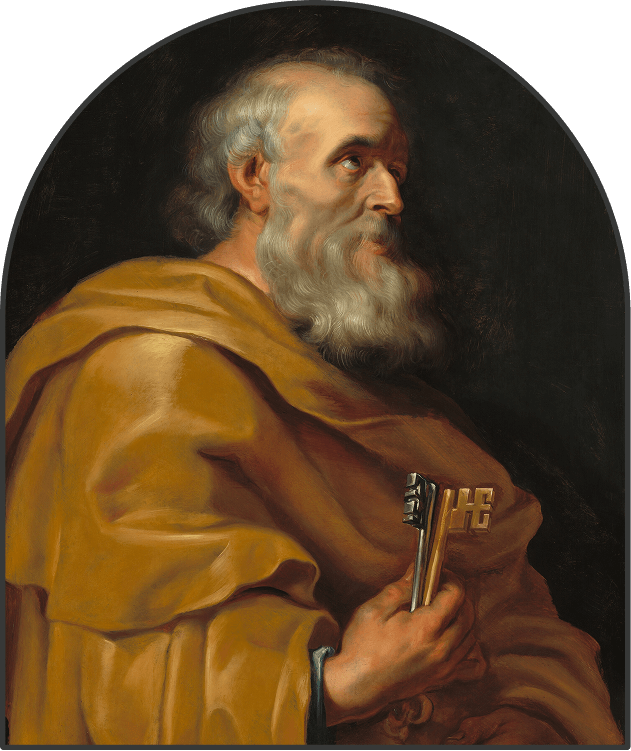
The Prayer Life of Saint Pachomius: The Soldier Who Forged a Praying Army

Introduction
Saint Pachomius (c. 292 – 348), who founded Cenobitic (communal) monasticism, radically altered Christian spirituality by showing that the contemplative depth of a solitary hermit could be kept intact and even augmented in the context of an organized community that embodies those qualities.
A Roman soldier, he became a monk who initiated what he called a “spiritual army,” which thousands of monks learned to pray with, to work with, and to pursue holiness in concert. His life reveals that authentic contemplation is possible in a disciplined non-isolated community, and that while individual prayer has limitations, corporate prayer can achieve what individual prayer cannot.
From Military Service to Divine Service
Pachomius became an example of someone who transitioned from militaristic service into the service of God Almighty. Like many others in Upper Egypt at that time, Pachomius was born to a pagan family. He was drafted by the Roman Army into military service because of the civil wars plaguing the empire at that time. Out of this military service (not by choice), Pachomius found his vision for monasticism. He took the principles of military organization and applied them to spiritual warfare in the creation of disciplined, regimented monastic communities of prayer-warrior monks.
While serving in the army, Pachomius experienced a moment that would convert him to Christianity. When he and his fellow soldiers found themselves imprisoned in Thebes (Luxor), local Christians brought food, water, and comfort to the soldiers. Pachomius was moved by the kindness and love given to him by complete strangers, who were also his enemies. When Pachomius asked who these people were, he found out that the Christians were simply obeying the commandment that Christ gave to love their neighbors as themselves. A “light” went off in Pachomius’s heart and caused him to realize his call to be a Christian, which was a great change for him.
Thus through the power of incarnate love, the Christians demonstrated the practical application of the Gospel. More than merely preaching the Gospel, their actions spoke louder than words. As John stated:
Let us not love in word or in tongue, but in deed and in truth.
1 John 3:18
He determined that if he survived, he would serve that God who produced such selfless love. Upon his release from the military he made good on his vow and became baptized and trained in the Christian faith.
Apprenticeship with Palamon: Learning Contemplative Foundations
After his baptism around 314 AD, Pachomius sought an apprenticeship with the Elder Palamon, which allowed him to develop an essential foundation in contemplative spirituality prior to leading monks in the Antonian style of monasticism.
The Hermit’s Rigorous Life
While learning under Palamon, Pachomius practiced extreme asceticism. Palamon ate but once daily (living of bread and salt), prayed nearly all night long, memorized Scripture, and continued in manual labor. When Pachomius came to Palamon asking to be taught, he was informed that
Many have come seeking this life but have not endured, for it is hard.
Pachomius persisted and through his steadfastness demonstrated the perseverance that characterizes his monastic communities. By learning to accept the method of Palamon in regard to the discipline of asceticism, he realized that authentic spirituality encompasses not only the early faith but sustained perseverance through trials.
The requirement for apprenticeship is repeated in the Old Testament and New Testament:
- Joshua with Moses: Learning leadership through long service (Exodus 24:13)
- Elisha with Elijah: Refusing to leave his master (2 Kings 2:2)
- Timothy with Paul: Being trained through shared ministry (Acts 16:1-3)
The seven years Pachomius spent with Palamon were not wasted time in his spiritual maturation; they were essential to his training as a future Spiritual Father. Just as David learned to shepherd sheep before he was qualified to shepherd a nation, so also Pachomius learned to shepherd his own soul before shepherding a multitude.
The Night of Unceasing Prayer
Pachomius was taught to develop a habit of continuous prayer during the night. This became central to Pachomius’s practice of spirituality. According to Palamon, Pachomius awakened the monks at midnight and recited back the Scriptures he memorized. After recitation and prayer individually and together, they continued until daybreak.
This form of continuous nightly prayer follows the example of Jesus who, “went out to the mountain to pray, and continued all night in prayer to God” (Luke 6:12). It also fulfilled the psalmist’s testimony:
At midnight I will rise to give thanks to You, because of Your righteous judgments.
Psalm 119:62
Night prayer offered unique benefits:
- Silence: The world slept, providing uninterrupted communion with God
- Sacrifice: Surrendering natural rest demonstrated devotion’s priority
- Spiritual warfare: Engaging battle when demonic activity intensifies
- Preparation: Strengthening the soul before daily challenges
The practice of continuous nightly prayer revealed to Pachomius what many other monks throughout the ages would also learn: Engaging in nightly prayer develops an awareness of spiritual dimension not received during the distractions of daytime.
Scripture Memorization: The Foundation
During Pachomius’s formation, he memorized extensive portions of Scripture. Palamon taught Pachomius to “keep” the Word of God in his heart, according to the psalmist, who declared,
Your word I have hidden in my heart, that I might not sin against You.
Psalm 119:11
Memorizing large portions of Scripture served at least four ways:
Meditation material: Providing texts for contemplative rumination during work or wakeful hours.
Spiritual warfare: Equipping the mind with truth to counter temptation, as Jesus quoted Scripture against Satan (Matthew 4:1-11).
Prayer vocabulary: Supplying language for addressing God, particularly when personal words failed.
Identity formation: Shaping thinking patterns according to divine truth rather than cultural lies.
Pachomius later required every monk who entered into his monasteries to memorize at least the Psalms and portions of the New Testament. He recognized that treating God’s Word as our sole source would be the foundation upon which to build a contemplative life.
The Divine Call: Vision at Tabennisi
Around the year 320 AD, in the desert village of Tabennisi, Pachomius received a divine vision while praying that changed the course of Christian history. An angel of God appeared and instructed him to start a monastic community and also provided him with a structure (Rules) to organize and regulate communal monastic life.
The angel’s appearance was a similar commissioning event described in Scripture such as:
- Moses at the burning bush: Receiving his mission to liberate Israel (Exodus 3)
- Isaiah in the temple: Seeing God’s glory and accepting prophetic calling (Isaiah 6)
- Paul on the Damascus road: Encountering Christ and receiving apostolic commission (Acts 9)
- Peter’s rooftop vision: Being prepared for ministry to Gentiles (Acts 10)
The divine message given to Pachomius was specific, telling him to establish a monastery where those who were searching for holiness would be able to dwell together, helping one another through prayer and virtue. The vision included practical guidelines about organizing, disciplining, and establishing the daily routine of monks.
This divine calling illustrates an important spiritual principle—God commissions before He sends. Pachomius’s establishment of a new form of monasticism was not birthed out of an ambition to create something for himself. Instead, he was responding to a calling which had been confirmed to him by the Holy Spirit through prayer, counsel, and divinely given experience.
Tabennisi: The First Monastery
After receiving the vision, Pachomius established his first monastery in the village of Tabennisi in approximately 323 AD. It was different from the hermit-style monasticism which had developed in Egypt, as the hermits were commonly known as solitary individuals; this monastery was organized and operated as a community living under rules, praying, working, and pursuing holiness together.
The Rule: Structure for Spiritual Life
The Rule that Pachomius established (was likely influenced by Pachomius’s Angelic vision and military experience) was an extensive set of guidelines pertaining to every conceivable aspect of monastic living. The purpose of the Rule was not an attempt to establish legalism, rather to reveal the wisdom of God in recognizing that man thrives when there is a suitable structure to live by.
There were some main points concerning the Rule for Pachomius Monastery:
Common prayer times: Gathering at set hours for corporate worship, ensuring the community maintained unified rhythm.
Manual labor: Working to support the community and prevent idleness, Paul’s enemy: “If anyone will not work, neither shall he eat” (2 Thessalonians 3:10)
Scripture reading: Daily exposure to God’s Word during meals and teaching sessions
Obedience: Submitting to superiors as training in humility and dying to self-will
Silence: Maintaining quiet during work and certain hours to facilitate interior prayer
Simplicity: Owning minimal possessions, freeing the heart from material attachments
Service: Caring for the sick, elderly, and those struggling spiritually
By establishing and using the comprehensive structure that the Rule contained, it created a supportive community in which monks could follow a path to grow contemplatively. Like a greenhouse protects tender plants, the Rule provides all monks with a means of sheltering them from the spiritual dangers around them and provides a condition of being optimal for the monks to grow and thrive.
The Organization: Spiritual Military Strategy
Pachomius utilized his wartime experiences as a Roman soldier and utilized effective techniques for the efficient organization of his new monastery. The monks lived in houses with approximately forty members and the monks were divided into houses according to their trades or work assignments. Each house had a superior; a group of superiors formed a single monastery under the leadership of an abbot.
The use of a hierarchical structure created an atmosphere in which:
- Accountability: Everyone under supervision, preventing isolated failure
- Efficiency: Clear lines of authority facilitating quick decision-making
- Training: More experienced guiding less experienced in graduated mentorship
- Unity: Coordinated action toward common goals
Critics sometimes perceive a well-organized monastery as a dull and sterile place where the presence of the Spirit of God is absent; however, Pachomius knew that order serves love. Without order, a monastic community can expect to suffer some chaos; with order, individual monks can focus on the development of their hearts rather than negotiating external environments and processes.
The teaching of Paul concerning the body of Christ (1 Corinthians 12) supports this principle; there is a single body with diverse members, different functions, and a common purpose, and the members of this body work together and support one another through coordinated activities.
Corporate Prayer: The Heart of Pachomian Spirituality
At the core of Pachomian spirituality is the idea of corporate prayer; Pachomius saw something more than a convenience in this practice. It was a theological conviction that
Where two or three are gathered together in My name, I am there in the midst of them.
Matthew 18:20
The Daily Office: Sanctifying Time
Pachomian communities prayed at multiple specified times of day:
Morning Prayer: Beginning the day acknowledging God’s sovereignty and seeking His guidance
Third Hour (9 AM): Remembering the Holy Spirit’s descent at Pentecost (Acts 2:15)
Sixth Hour (Noon): Recalling Peter’s rooftop prayer (Acts 10:9) and Jesus’s crucifixion
Ninth Hour (3 PM): Commemorating Jesus’s death (Matthew 27:46) and Peter and John’s temple prayer (Acts 3:1)
Evening Prayer: Giving thanks as daylight fades, committing night hours to God
Night Office: Rising at set hours for vigils, following the psalmist’s pattern (Psalm 119:62, 148)
By incorporating specific prayer times into each day, these rhythms helped fulfil Paul’s exhortation to “pray without ceasing” (1 Thessalonians 5:17) and created a continual awareness of God.
Psalm Singing: The Prayer Book
The Psalms provided the primary means for Pachomian worship. Monks memorized and then chanted these sacred words of prayer at various moments of their lives. Through the Psalms, monks had access to a word made available for each of the many conditions of the human soul: joy, sadness, confession, worship, supplication, thanks, and lament.
Pachomius valued the Psalms for a variety of reasons:
Divinely inspired: God’s own words given for our prayers back to Him
Emotionally comprehensive: Expressing the full range of human experience
Christ-centered: Prophetically pointing toward the Messiah (Luke 24:44)
Memorably poetic: Facilitating memorization through rhythm and imagery
Communally unifying: Providing common language for corporate worship
The creation of spiritual unity among monks through the practice of singing the Psalms requires a single song with many voices, many hearts singing the same song to God. It memorializes Paul’s vision of “speaking to one another in psalms and hymns and spiritual songs, singing and making melody in your heart to the Lord” (Ephesians 5:19).
Scripture Reading: Contemplative Listening
During the prayer times, when reading the Scriptures, monks stood in silence while the reading took place. The monks were not engaged in an academic search for information but were preparing themselves to receive God’s Word as a living word for their lives, not simply a historical document to be referred to.
After each reading, a time of silence was provided to give the monks an opportunity to meditate upon what they had heard in order that they may allow God’s word to be planted in their hearts in a manner similar to Mary when she “pondered these things in her heart” (Luke 2:19). The response of contemplation takes the information received and transforms it into formation, and the knowledge received into wisdom.
Pachomius taught that when reading Scriptures one should have these four preparations:
Humility: Approaching as students, not critics
Faith: Believing God speaks through the text
Attention: Focusing completely on what’s being read
Application: Asking how the passage should shape belief and behavior
Obedience: Committing to live according to what’s revealed
Manual Labor: Work as Prayer
How does the practice of manual labor through hard physical work serve as an act of worship to God? Is manual labor also an act of prayer to God?
A key characteristic of the Pachomian Monastic life is to engage in the practice of prayer and service to others through hard manual labor. This is in stark contrast to many (though not all) hermit-style monasteries of “solitaire” monks who attempt to reduce the time they spend working so they can increase the time they spend on their knees in prayer.
The Theology of Work
Pachomius’s approach reflected biblical teaching on work’s dignity and spiritual value:
Creation mandate: God worked in creating (Genesis 2:2) and commanded human cultivation of creation (Genesis 2:15)
Jesus’s example: The incarnate Son worked as carpenter (Mark 6:3), validating manual labor’s nobility
Paul’s instruction: The apostle worked to support himself (Acts 18:3) and commanded: “Work with your own hands” (1 Thessalonians 4:11)
Practical necessity: Communities needed material support; work provided it without depending on others’ charity
Types of Work
Pachomian monasteries engaged diverse activities:
Agriculture: Growing food for community consumption and surplus for charity
Weaving: Producing mats, baskets, and rope for sale
Construction: Building and maintaining monastery facilities
Copying manuscripts: Preserving Scripture and Christian writings
Baking: Providing daily bread for the community
Various crafts: Serving practical needs while generating income
- Various crafts: Serving practical needs while generating income.
Each monk worked according to his ability and training, as well as in a way that contributed to the overall good of the community. This variety of work types parallels, and is based on, Paul’s metaphor of the body, as described in 1 Corinthians 12:12-27, which depicts many different working parts of one cohesive organism.
Work as Contemplative Practice
Pachomius used hard manual labor as an opportunity to engage each monk’s spiritual life. Men were taught to engage their minds in interior prayer while they engaged in the physical act of manual labor. As they worked with their hands, they were encouraged to meditate on the Scriptures with their minds, worship God with their hearts, and practice living in the presence of God with their souls.
Pachomius’s teachings regarding the unity of prayer and work foreshadowed the Practice of the Presence of God by Brother Lawrence and the motto of monastic communities—”Ora Et Labora” (Prayer and Work). He taught that the act of contemplation did not have to be in isolation from the physical, but could take place even when engaging in manual labor. Engaging in hard manual labor can provide a rhythm for one’s mind while contemplating God, and the transformation of a mundane manual task into a sacred offering.
He taught: “When you work, pray. Let your heart be lifted to God even as your hands accomplish the task before you.” This practical mysticism made every moment potentially contemplative, every activity potentially worshipful.
Community Life: Corporate Contemplation
One of the most revolutionary aspects of Pachomian spirituality is that it demonstrated how communal living did not hinder religious contemplation; rather, it enhanced one’s ability to be more deeply engaged in the practice of contemplation. While the hermit tradition emphasized solitude, Pachomius demonstrated that communal living was equally valid as a spiritual expression of one’s faith, and perhaps more important than solitude in some ways.
The Crucible of Charity
Pachomius believed that community life creates “grinding” friction in one’s soul, like polishing stones in a tumbler. The “grinding” process causes us to deal with our own selfishness, impatience, pride, and so forth, and produces an opportunity for us to gain spiritual growth through exposure to the faults of others. In this way, we cannot maintain illusions of our sanctity and self-righteousness when living in community as we can when we live in solitude. Our faults are exposed for all to see, including ourselves and those around us.
The process of being exposed to the faults of others provides us with many opportunities to spiritually grow through the “refining fire” of living in community with other believers who challenge us to become better Christians through the daily exercise of patience and forgiveness. Proverbs states that; “As iron sharpens iron, so a man sharpens the countenance of his friend” (Proverbs 27:17). Therefore, a community can serve as a place of iron sharpening iron, through the daily tests of patience, forgiveness, and acts of service for one another.
Jesus’s teaching validates this path: “By this all will know that you are My disciples, if you have love for one another” (John 13:35). Love tested in daily community life proves more reliable than feelings generated in solitary meditation.
Bearing One Another’s Burdens
Paul commanded: “Bear one another’s burdens, and so fulfill the law of Christ” (Galatians 6:2). The types of relationships that existed among the members of Pachomian communities fulfilled this principle through mutual support and prayer.
When monks faced difficult struggles, examples of temptation, or even experienced illness or death, the members of the community performed the most powerful action of all: They prayed for them. Through this action, they expressed the love of God through their willingness to care for one another. The act of praying for the other members of their community was an essential aspect of their contemplative practice. This act of “Intercessory Prayer” enabled them to expand their hearts beyond self-concern and develop a love that reflects the self-giving love of God.
Unity in Diversity
Pachomian monasteries were made up of a group of men from diverse backgrounds, such as highly educated, uneducated, wealthy, poor, youthful, and aged; Egyptian and non-Egyptian. This provided opportunities for a number of learning experiences and challenges to all involved in this process of community. Furthermore, this type of community forced members of the group to develop the virtues of patience and humility in their interaction with one another.
The Pachomian Community ultimately demonstrated Paul’s vision that “There is neither Jew nor Greek, there is neither slave nor free, there is neither male nor female; for you are all one in Christ Jesus” (Galatians 3:28). Social distinctions that divided the outside world dissolved within the monastery walls.
This radical unity required constant prayer—asking God for patience, grace, and love toward those different from oneself. Community life thus became advanced contemplative practice, continuously pushing monks beyond comfortable boundaries.
Spiritual Warfare: The Battle in Prayer
Pachomius saw the Christian Way of Life as one of spiritual warfare; however, there are Biblical references confirming his view that the Christian life is a battle of “spiritual forces” (Ephesians 6:12).
Demonic Opposition
Pachomius and his followers were subjected to extreme levels of demonic harassment as shown in records of Early Monastic Literature, such as being tempted by demonic thoughts, experiencing terrors in dreams, seeing visions of evil spirits, being physically assaulted, etc. People today might think that the monks were just experiencing psychological realities, but for the monks, they were living through a divine conflict.
Whether the attacks they faced were real in a spiritual sense or just psychological in reality works to defend the same principle; when we strive for holiness, we will face opposition. Peter warned us to:
Be sober, be vigilant; because your adversary the devil walks about like a roaring lion, seeking whom he may devour.
1 Peter 5:8
Prayer as Weapon
Pachomius taught that our primary weapon against the Devil’s attack was prayer, which would be an automatic response when they were tempted. Not only did they call on the name of Jesus to help overcome temptation, but they also quoted memorized scriptures or shouted out for divine assistance.
Many people are familiar with Christ’s statement, “watch and pray, lest you enter into temptation” (Matthew 26:41). Prayer will not remove the temptation from our lives, but prayer gives us strength to withstand the temptation.
Another way to increase the strength of your prayers is through corporate prayer, as when one monk was being attacked by demons, the prayers from the entire community were used to support him. This supports Christ’s statement that corporate prayer is unique (Matthew 18:19-20).
Fasting and Vigilance
Pachomius linked prayer with fasting, recognizing that disciplining the body strengthens the spirit. When facing particularly intense spiritual battles, communities would engage in extended fasting and prayer, following the disciples’ practice when unable to cast out certain demons (Mark 9:29).
Vigilance—remaining spiritually alert—was equally emphasized. Monks were trained to notice subtle temptations before they gained strength, to discern demonic deception masked as good, and to resist evil’s first approaches rather than waiting until deeply entangled.
Mystical Experiences: Visions and Prophecy
Though Pachomius emphasized practical spirituality over exotic experiences, he and his monks occasionally received mystical visions, prophecies, and divine communications.
Pachomius’s Visions
Beyond his initial angelic visitation, Pachomius reportedly received:
Warning visions: Foreseeing dangers threatening the community
Instructional visions: Receiving divine guidance on practical and spiritual matters
Prophetic visions: Discerning individuals’ spiritual states and future paths
Christological visions: Encountering Christ in prayer, though specific details were rarely shared
These experiences, while real, weren’t sought for their own sake. Pachomius warned against desiring visions or valuing them above obedience and charity. He knew that Satan could counterfeit spiritual experiences (2 Corinthians 11:14) and that pursuing mystical phenomena for their own sake was spiritual pride.
Discernment of Spirits
Following John’s command to “test the spirits, whether they are of God” (1 John 4:1), Pachomius developed sophisticated discernment practices. Potential visions or prophecies were evaluated by:
Scriptural consistency: Did they align with biblical teaching?
Moral fruit: Did they produce humility or pride, love or fear?
Community confirmation: Did wise elders recognize them as genuine?
Practical wisdom: Did they lead to constructive action or spiritual confusion?
This balanced approach prevented both gullibility (accepting every spiritual experience uncritically) and skepticism (dismissing all mystical phenomena as delusion).
The Gift of Tears
Pachomius and his monks frequently experienced the “gift of tears”—weeping during prayer not from sadness but from spiritual intensity. These tears expressed:
Contrition: Grief over personal sin
Compassion: Empathy for others’ suffering
Gratitude: Overwhelming thankfulness for God’s mercy
Longing: Homesickness for heaven
Love: Heart overwhelmed by encounter with divine love
This phenomenon, common in Christian mystical tradition, demonstrates authentic spiritual emotion. God created us as feeling beings; genuine encounter with Him naturally evokes emotional response.
Women’s Monasticism: Mary and Tabennisi
Pachomius’s sister Mary wanted to join her brother’s monastic community. Initially hesitating, Pachomius eventually built a women’s monastery on the opposite bank of the Nile River from Tabennisi following his own Rule of Life and giving Mary the authority to lead.
These developments established that the contemplative way of life was not restricted to men, and therefore women could attain holiness in the same manner as men, pray with the same intensity, and develop the same level of spiritual maturity.
The structure of women’s monasteries was similar to that of men’s monasteries:
- Regular prayer times
- Manual labor supporting the community
- Scripture memorization and meditation
- Obedience to the rule
- Corporate discernment and support
Establishing women’s monasteries in this way was relatively progressive during this time, but there remained a strict separation between the two communities (monk and nun visiting each other only on rare occasions).
There was biblical support for this statement regarding the equality of women in spiritual abilities and opportunities:
- Joel’s prophecy: “Your sons and your daughters shall prophesy” (Joel 2:28)
- Paul’s recognition: In Christ, “there is neither male nor female” (Galatians 3:28)
- Jesus’s treatment: Welcoming women as disciples and witnesses
Expansion: A Movement of Prayer
Pachomius’ influence had created an incredible growth in the monastic movement, and by 348 AD, there were nine male monasteries and two female monasteries containing nearly 3,000 male monks and 400 female nuns. Within the next century, the house of Pachomius would have several hundred houses and tens of thousands of monks and nuns, thus demonstrating the success of the monastic model as people were searching for a means of authentic Christian living. The Pachomian Monasteries were a practical approach to holiness, as those who sought to be serious about their Christian faith did not want to live in the extreme isolation of solitude hermits, nor did they want to live the laxness of just being a nominal church member.
The Federation: Unity in Diversity
Rather than establishing individual communities, Pachomius instead established a federation of monasteries, which maintained the identity of individual communities, but shared in a mutual support structure through common rule and unified leadership. Pachomius restored leaders through an annual gathering where they would do corporate discernment on behalf of the Federation of Monasteries.
This was a precursor to the organizational structure of modern religious orders, demonstrating that each monastery could develop a specific Charism (spirituality) while remaining connected to other communities by way of common governance and vision.
Furthermore, as a result of being a federation of monasteries, the individual communities were also able to establish an economic support system for one another. When one house prospered, and another house suffered hardship due to famine or other crises, the prosperous house shared its resources to support the struggling house; likewise, during times of famine and other crises, the respective houses coordinated their charitable efforts.
The Plague: Prayer in Crisis
In 348 AD, the plague came to Egypt, and Pachomius and his communities immediately responded with increased prayer and practical service to care for the sick and bury the dead.
Eventually, the Plague affected the Monasteries, where numerous monks died of illness. Pachomius too fell ill and, despite his own physical suffering, continued to pray and encourage his monks until the time of his death.
Death as Victory
After many weeks of illness, Pachomius died at about 56 years of age. He died surrounded by the Sons of his Spirit. The death of Pachomius was not defeat, but instead his life had come to an end, and he had been faithful to God. He was like a soldier being released from service; a runner who had completed his race, and a servant hearing
Well done, good and faithful servant.
Matthew 25:21
His final instructions emphasized perseverance in prayer, faithfulness to the rule, love for one another, and confidence in God’s providence. Like Paul’s farewell to the Ephesian elders (Acts 20:17-38), Pachomius entrusted his life’s work to God and to those continuing it.
Pachomius’ death did not result in the demise of this movement. Rather, it continued to grow over the years because he laid the foundation of the movement on Christ (1 Corinthians 3:11) rather than on the person of Pachomius. Thus the organizational structure, practices and spiritual nature of the Pachomian Monasticism model were enduring because they reflected biblical wisdom, not personal charisma.
Legacy: The Praying Community
Saint Pachomius’s legacy teaches us that prayer and community can coexist as complementary parts of the Christian faith. Through his creative ideas he helped change the way Christians view prayer:
Democratizing monasticism: Making contemplative life accessible to ordinary people, not just spiritual athletes
Balancing prayer and work: Showing that manual labor and contemplation can coexist harmoniously
Structuring community: Providing organizational frameworks that prevent chaos while preserving freedom
Emphasizing Scripture: Making biblical saturation foundational to monastic formation
Corporate prayer: Validating communal worship as equally valuable to solitary meditation
Practical mysticism: Grounding spirituality in daily discipline rather than exotic experiences
St. Pachomius’ influence continues to shape modern monasticism; Basil the Great adopted his teaching about the New Testament and applied it to Eastern Monasticism, Benedict took what Pachomius taught and applied it to Western Monasticism, many other communities around the world draw inspiration from Pachomius’s teachings.
Practical Applications from Pachomius’s Example
Embrace Structured Prayer
Create regular times for you to pray every day. These times should occur during the morning, noon and evening.
Memorize Scripture
Begin to memorize passages of the bible—psalms, gospels, epistles. Let God’s Word dwell richly within you (Colossians 3:16).
Integrate Work and Prayer
Keep your focus on God’s presence in your daily tasks and view your work as an extension of your worship.
Value Community
Engage with a faith community to serve and be served; encourage and be encouraged.
Practice Mutual Accountability
Build relationships with other believers that encourage your growth toward Christ. Be ready to offer encouragement and prayer support to others.
Develop Daily Rhythms
Establish consistent spiritual disciplines – prayer, studying Scripture, meditation and service.
Serve Practical Needs
Let your times of prayer lead you to an expression of compassion; bring relief from suffering through acts of service.
Maintain Balance
Avoid the extremes of rigorous asceticism and self-indulgence; seek a balanced approach to your spiritual growth.
Submit to Spiritual Authority
Place yourself under the spiritual leadership of someone who has more experience than you in navigating your way toward Jesus Christ..
Pray Corporately
In addition to your individual prayer time, be an active participant in the corporate worship of your faith community.
Test Experiences
Before you accept any essence of spiritual experience, test it through the Holy Scriptures and seek wise counsel before you believe it is from God. (1 Thessalonians 5:21).
Persevere Through Difficulty
If you feel empty during prayer or disconnected from your faith, don’t quit. Continue to pursue a faithful relationship with God and others; your spiritual progress will not happen overnight.
Conclusion: The Soldier’s Final Victory
The conclusion to Pachomius’ military journey is his spiritual journey. The transition from Soldier to Monk is a demonstration of the redemptive nature of God using anything to fulfill His purpose. Discipline learned through the military helped Pachomius develop a spiritual discipline and direction for the establishment of his Monasteries. The organization skills and knowledge obtained while serving in the Roman Legions helped him establish the Kingdom of Christ on Orthodox principles. The combat experiences he gained in the military prepared him for spiritual combat against the forces of darkness that were attacking believers.
Pachomius’ life challenges the common assumption that action and contemplative life cannot coexist, which states that those who are able to serve are those who are most contemplative. He teaches that community structure is an avenue to foster individual spirituality and develop an overall corporate body. He further teaches that in a community when prayed for there is strength in numbers and multiplied power of God who answers prayers.
Pachomius demonstrates that true contemplation does not mean to stop from life’s demands and be in a place of solitude but to take that same contemplation into the world and to change the way we look at our world. He teaches that prayer does not take us away from our jobs but provides sanctity to them as a daily vocation. He teaches that community fosters spiritual growth, and should not hinder it when it is sufficiently structured. He teaches that mystical spirituality is not reserved for the “holy hermit”, but that any person has the ability to attain mystic spirituality, when they follow the guidelines of discipline, humility, and love for their fellow man inside the body of Christ.
As we travel on our own spiritual journey, balancing prayer and the responsibilities of everyday life and being in a state of solitude and community, let us use Pachomius as an example and create a rhythm of unity, surround ourselves with a supportive community, fill our hearts and mind with the Word of God, maintain consistent prayer and trust in God who called us to likewise equip us.
I can do all things through Christ who strengthens me.
Philippians 4:13
May we, like Pachomius and his spiritual army, discover that prayer’s power multiplies when believers stand together, work together, and seek God together. That the contemplative life isn’t fundamentally about isolation but about communion—with God and with one another in Him.
For in the end, Pachomius’s monasteries were training grounds for the greatest battle—the spiritual warfare that determines eternal destinies. And prayer, both individual and corporate, was the weapon that ensured victory.
Fight the good fight of faith, lay hold on eternal life, to which you were also called.
1 Timothy 6:12
Our Editorial Standards:
All our content on Christian meditation traditions, prayers, and spiritual practices is reviewed by Dr. Megan Remington, PhD, ensuring theological soundness and spiritual depth.
We draw from centuries of Christian contemplative tradition, citing respected theological sources, biblical references, and established spiritual practices.
Our team understands that spiritual struggles are deeply personal. We approach topics of anxiety, strength, healing, and peace with compassion and biblical wisdom.
We continuously review and update our spiritual resources to ensure they remain relevant and aligned with orthodox Christian teaching.
Each article clearly identifies our writers and reviewers, along with the theological sources and biblical foundations used.
 To guarantee that all of our information is accurate, we ensure that all our sources are reputable. That means every source is authenticated and verified to be backed only by medical science.