


 App Store
  Google Play
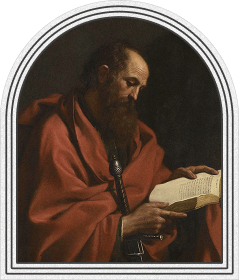
St. Paul: Apostle of Mystical Union with Christ

Introduction
St. Paul is one of the most prominent and influential figures in Christianity. While St. Paul did not spend time with Jesus when he was physically on this earth, he was one of the few people who received a direct revelation about Jesus from the risen Christ himself and penetrated more deeply into the mystery of union with God than perhaps any other biblical writer. His letters comprise nearly half of the New Testament and provide the theological foundation for understanding Christian contemplation.
Paul’s writings reveal a man who lived in constant awareness of Christ’s presence, who experienced extraordinary mystical revelations, and who understood the Christian life as participation in Christ’s death and resurrection. His teaching on prayer, meditation, and spiritual transformation offers essential guidance for believers seeking deeper communion with God through biblically grounded contemplative practice.
Saul of Tarsus: The Zealous Persecutor
Saul (his Hebrew name), known before his conversion to Christ, was born in the city of Tarsus in the region of Cilicia in modern-day Turkey to a very devout family of Pharisees. Saul was born to a family of Pharisees but was a Roman citizen by birth, therefore affording him a special privilege that would later be utilized by God to aid in spreading His message.
Saul’s entire view of God prior to his conversion to Christianity was characterized by his zealous devotion, which he showed in the following way:
If someone else thinks they have reasons to put confidence in the flesh, I have more: circumcised on the eighth day, of the people of Israel, of the tribe of Benjamin, a Hebrew of Hebrews; in regard to the law, a Pharisee; as for zeal, persecuting the church; as for righteousness based on the law, faultless.
Philippians 3:4-6
This passage clearly shows the extreme level of religious devotion that Saul possessed and the degree of his discipline when it came to the practice of his faith. He practiced the forms of Jewish meditation and prayer, including memorization of Scripture, recitation of the Shema, and regular temple worship. Yet despite this religious devotion, he was spiritually blind to God’s true work in Christ.
Saul’s persecution of Christians was not on a casual basis; rather, he did so with violent zeal. He “began to destroy the church. Going from house to house, he dragged off both men and women and put them in prison” (Acts 8:3). He “was still breathing out murderous threats against the Lord’s disciples” (Acts 9:1). This also illustrates that Saul, thinking his persecution of Jesus’ followers was out of his love for God, was driven by what he believed was devotion.
It is also interesting to note that this is another illustration of the fact that one’s religious activity or very high level of spiritual activity does not guarantee an authentic relationship with God. For a person to experience a genuine and authentic form of contemplation requires the direct revelation of Christ, and not simply through human means or membership within a religious tradition.
The Damascus Road: Mystical Encounter with the Risen Christ
Paul’s transformation began with one of the most intense mystical experiences recorded in scripture. While traveling to Damascus to bring Christians into custody, Saul received a life-altering revelation:
As he neared Damascus on his journey, suddenly a light from heaven flashed around him. He fell to the ground and heard a voice say to him, 'Saul, Saul, why do you persecute me?' 'Who are you, Lord?' Saul asked. 'I am Jesus, whom you are persecuting,' he replied. 'Now get up and go into the city, and you will be told what you must do.' The men traveling with Saul stood there speechless; they heard the sound but did not see anyone. Saul got up from the ground, but when he opened his eyes he could see nothing. So they led him by the hand into Damascus. For three days he was blind, and did not eat or drink anything.
Acts 9:3-9
This encounter contained all of the basic components of genuine Christian mysticism:
1. Divine Initiative
Saul was not looking for this type of encounter. Instead, God intervened in Saul’s life with a divine revelation. Paul would later write:
But when God, who set me apart from my mother's womb and called me by his grace, was pleased to reveal his Son in me so that I might preach him among the Gentiles..... (.
Galatians 1:15-16
True mystical encounters originate with God’s grace, not through human effort.
2. Christocentric Focus
The entire revelation was centered around Jesus Christ. The risen Jesus revealed himself to Saul and expressed that He (Jesus) was one with the persecuted church:
I am Jesus, whom you are persecuting.
3. Physical Manifestation
The experience was manifested physically through the blinding light, the voice, and physical blindness. To have an authentic biblical mystical experience, there are usually physical, sensory aspects involved, and are not limited to internal psychological states.
4. Witness Confirmation
Everybody who was with Saul heard the sound, verifying that this was not subjective in nature but truly an objective occurrence (Acts 9:7).
5. Transformative Impact
Saul’s experience changed him radically. Instead of being the persecutor of Christ, Saul became a preacher and an apostle.
6. Period of Withdrawal and Prayer
Saul’s experience of three days of fasting, praying, and being blind helped him to prepare for his commission; he was praying constantly (Acts 9:11) as he processed the revelation he received.
Then Ananias went to the house and entered it. Placing his hands on Saul, he said, 'Brother Saul, the Lord—Jesus, who appeared to you on the road as you were coming here—has sent me so that you may see again and be filled with the Holy Spirit.
Acts 9:17
As a result of Ananias’s ministry to Saul, he regained his sight, received the Holy Spirit and was baptized—thus completely transforming from persecutor to disciple.
Arabia: Paul’s Contemplative Retreat
Paul’s conversion did not result in an immediate commencement of his ministry. After his conversion, Paul spent a lengthy period in solitude in Arabia to prepare himself for ministry work:
I did not go up to Jerusalem to see those who were apostles before I was, but I went into Arabia. Later I returned to Damascus. Then after three years, I went up to Jerusalem.
Galatians 1:17-18
While scripture does not give specific details about this time, there are some things that we can conclude from it:
1. Solitude for Revelation
Paul needed time alone with God to process his experience with Christ and receive other revelations. This follows the biblical pattern that God’s servants withdrew to prepare; for example, Moses went to Midian, Elijah to the brook Cherith, and Jesus to the wilderness.
2. Reorientation of Understanding
Everything that Paul had believed about God, the Messiah, righteousness, and salvation had been radically challenged through his encounter. Therefore, Paul needed time to allow the Holy Spirit to re-interpret Scripture through the eyes of Christ’s righteousness.
3. Development of Contemplative Practice
During this time, Paul likely developed the practices of prayer and the mystical awareness he would later have in his writing and ministry:
Be still, and know that I am God.
Psalm 46:10
In this time in Arabia, even though Paul had experienced a direct revelation from God, he needed to process through praying, meditating, and allowing the Holy Spirit to continue to lead him toward understanding his revelation.
Paul’s Mystical Theology: Union with Christ
The Central Mystery: Christ in You
The foundation of Paul’s contemplative theology is the mystery of Christ dwelling in believers:
To them God has chosen to make known among the Gentiles the glorious riches of this mystery, which is Christ in you, the hope of glory.
Colossians 1:27
The meaning of this scripture should not be limited to that of seeing Christ as an example: an external source. Christ, in his infinite mercy and grace, has become the indwelling Spirit, the very love of God, that He’s chosen to indwell within the believer’s heart and soul.
Participation in Christ’s Death and Resurrection
For Paul, the basis of Christian mysticism is the spiritual union of the believer with the death and resurrection of Christ.
I have been crucified with Christ and I no longer live, but Christ lives in me. The life I now live in the body, I live by faith in the Son of God, who loved me and gave himself for me.
Galatians 2:20
This verse contains layers of contemplative truth:
- Death to self: “I have been crucified with Christ”
- New identity: “I no longer live, but Christ lives in me”
- Faith relationship: “I live by faith in the Son of God”
- Personal love: “who loved me and gave himself for me”
Paul understood that authentic Christian contemplation involves identifying with Christ’s death (dying to sin and self) and experiencing His resurrection life (living by His power and presence).
Baptism as Mystical Union
Paul presents baptism as sacramental participation in Christ’s death and resurrection:
Or don't you know that all of us who were baptized into Christ Jesus were baptized into his death? We were therefore buried with him through baptism into death in order that, just as Christ was raised from the dead through the glory of the Father, we too may live a new life. For if we have been united with him in a death like his, we will certainly also be united with him in a resurrection like his.
Romans 6:3-5
This is mystical theology at its most profound—believers are “united with” Christ, sharing in His death and resurrection. The Greek word symphytoi (united/planted together) suggests organic, living connection, like a branch grafted into a vine.
Being “In Christ”
The phrase “in Christ” is used more than 160 times by Paul in his letters, and it describes our a total of all aspects of our spiritual location:
Therefore, if anyone is in Christ, the new creation has come: The old has gone, the new is here!
2 Corinthians 5:17
To be “in Christ” means:
- Our identity is found in Him
- Our position before God rests on His righteousness
- Our life flows from His life
- Our destiny is bound to His glory
This allows us to experience a sense of true identity in Christ, through the righteousness of God, as we live and move and have our being. We also see through Paul’s writings that as believers we are bound to His glory.
Remain in me, as I also remain in you. No branch can bear fruit by itself; it must remain in the vine. Neither can you bear fruit unless you remain in me.
John 15:4
Paul’s Prayer Life and Practices
Unceasing Prayer
Paul had developed a heart of prayer that would not cease. Paul not only encouraged but demonstrated how to be in constant – and constant communion with God. Paul taught many principles of prayer throughout his ministry.
Rejoice always, pray continually, give thanks in all circumstances; for this is God's will for you in Christ Jesus.
1 Thessalonians 5:16-18
To “pray without ceasing” means to be in a constant mindset of prayer while doing other things during daily activities. Paul has also demonstrated this mindset of prayer through the book of
Philippians, where he stated:
I thank my God every time I remember you. In all my prayers for all of you, I always pray with joy.
Philippians 1:3-4
Night and day we pray most earnestly that we may see you again and supply what is lacking in your faith.
1 Thessalonians 3:10
His prayers were not limited to scheduled times but overflowed from a heart constantly turned toward God.
Praying in the Spirit
Paul taught that true prayer flows from the Holy Spirit’s work within us:
In the same way, the Spirit helps us in our weakness. We do not know what we ought to pray for, but the Spirit himself intercedes for us through wordless groans. And he who searches our hearts knows the mind of the Spirit, because the Spirit intercedes for God's people in accordance with the will of God.
Romans 8:26-27
The following four truths demonstrate what contemplative prayer may be:
1. Our Weakness in Prayer Frequently we do not understand how to pray or what to request from God, which requires humility and represents a necessary step to truly enter into a deeper level of prayer .
2. The Spirit’s Intercession When we pray, the Holy Spirit will intercede for us by praying through us even when we lack the ability to articulate the situation in words.
3. Heart-Level Communication God knows your heart, and he knows how to interpret your prayer requests through the Spirit, so your prayers reach beyond spoken word.
4. Alignment with God’s Will Since the Spirit intercedes on our behalf from God’s perspective, our prayer requests will reflect God’s Will and Divine Plan for us.
This teaches us that contemplative prayer involves yielding to the Spirit’s work within us, allowing Him to pray through us when we don’t know how to pray.
Praying with the Spirit and the Mind
When we pray to God, we must pray with both our spirit and our intellect, as Paul emphasized in 1 Corinthians 14:15:
So what shall I do? I will pray with my spirit, but I will also pray with my understanding; I will sing with my spirit, but I will also sing with my understanding.
1 Corinthians 14:15
Contemplative prayer does not lead to a state of being devoid of thought or reason, but it does positively engage the individual—spirit, mind, and will—in the process of connecting to God.
Paul’s Intercessory Prayers
Paul’s intercessory prayers, as found in the letters to the churches, serve as an excellent example of contemplative prayer and intercession:
For Spiritual Wisdom:
I keep asking that the God of our Lord Jesus Christ, the glorious Father, may give you the Spirit of wisdom and revelation, so that you may know him better. I pray that the eyes of your heart may be enlightened in order that you may know the hope to which he has called you, the riches of his glorious inheritance in his holy people, and his incomparably great power for us who believe.
Ephesians 1:17-19
For Love Rooted in Christ:
And I pray that you, being rooted and established in love, may have power, together with all the Lord's holy people, to grasp how wide and long and high and deep is the love of Christ, and to know this love that surpasses knowledge—that you may be filled to the measure of all the fullness of God.
Ephesians 3:17-19
For Fruitful Living:
And this is my prayer: that your love may abound more and more in knowledge and depth of insight, so that you may be able to discern what is best and may be pure and blameless for the day of Christ, filled with the fruit of righteousness that comes through Jesus Christ—to the glory and praise of God.
Philippians 1:9-11
These prayers reveal Paul’s contemplative priorities:
- Knowing God more deeply
- Spiritual enlightenment
- Experiencing Christ’s love
- Being filled with God’s fullness
- Growing in discernment and righteousness
Notice that Paul prays for spiritual realities, not merely physical needs. His contemplative focus centers on believers’ inner transformation and deepening relationship with God.
Paul’s Mystical Experiences
The Third Heaven Vision
Throughout his ministry, Paul had numerous mystically significant moments, including the one outlined below:
I know a man in Christ who fourteen years ago was caught up to the third heaven. Whether it was in the body or out of the body I do not know—God knows. And I know that this man—whether in the body or apart from the body I do not know, but God knows—was caught up to paradise and heard inexpressible things, things that no one is permitted to tell.
2 Corinthians 12:2-4
There are five things we learn about Paul’s mystical experiences through this event:
1. Genuine Mystical Transportation
The fact that he mentioned being “caught up” (harpazo in Greek—the same word used for the rapture in 1 Thessalonians 4:17). This supports the claim that Paul had some form of actual experience of being in the third heaven, rather than mere imagination .
2. Uncertainty About Physical State
Paul couldn’t determine whether this occurred in his body or was an out-of-body experience. This humility and uncertainty characterize authentic mystical experience—the person receives revelation but doesn’t claim complete understanding of the mechanics.
3. The Third Heaven/Paradise
The fact that Paul spoke of the two heavens (paradise and the third heaven) as synonymous provides insight into the concept of where God is present and the area of residence for those who are righteous after departing from this life .
4. Inexpressible Revelations
Paul described things that cannot be expressed in human terms and were forbidden to be made known. This presents a contrast between the inner transformation of oneself versus the outward manifestation of knowledge, as these truths were for personal transformation rather than public display .
5. Delayed Disclosure
Paul waited fourteen years to reveal this direct revelation. Paul did not immediately broadcast his mystical experiences but waited until circumstances required mentioning them to defend his apostolic authority .
The Thorn in the Flesh
Paul spoke about having the messenger of Satan, a “thorn in the flesh,” provided to him by God for the purpose of keeping him from becoming prideful after receiving all of the prior revelations. Paul prayed three different times asking God to take this messenger of Satan from him, but God was determined not to remove this messenger of Satan but rather to provide him with grace.
Therefore, in order to keep me from becoming conceited, I was given a thorn in my flesh, a messenger of Satan, to torment me. Three times I pleaded with the Lord to take it away from me. But he said to me, 'My grace is sufficient for you, for my power is made perfect in weakness.' Therefore I will boast all the more gladly about my weaknesses, so that Christ's power may rest on me.
2 Corinthians 12:7-9
Thus Paul teaches us four truths about understanding Christian mysticism:
1. Humility Guards Against Spiritual Pride Through spiritual experiences, God often permits suffering so that we might maintain our humility .
2. Unanswered Prayer Serves Divine Purposes Only some of our prayers are answered as asked. Not every prayer is answered as we wish, even for apostles with profound spiritual experiences .
3. Grace Is Sufficient God’s grace is found to be sufficient to provide support and sustenance through suffering. The Christian contemplative life doesn’t guarantee comfort but promises God’s presence .
4. Power Perfected in Weakness God uses our weaknesses to accomplish greater demonstrations of His power through our bodies
He must become greater; I must become less.
John 3:30
Christ’s Revelation on the Road
The revelation Paul received from Jesus about his Damascus experience continues to serve as an example receiving revelations directly from Christ, as Paul acknowledged in Galatians:
I want you to know, brothers and sisters, that the gospel I preached is not of human origin. I did not receive it from any man, nor was I taught it; rather, I received it by revelation from Jesus Christ.
Galatians 1:11-12
Thus, although Paul affirmed the teachings from the other apostles and the written Scriptures, Paul came to this understanding through the continual, authentic mystical experiences he experienced through the working of the Holy Spirit and Jesus
Paul’s Teaching on Spiritual Transformation
Beholding and Being Transformed
Paul taught that contemplating Christ’s glory transforms us:
And we all, who with unveiled faces contemplate the Lord's glory, are being transformed into his image with ever-increasing glory, which comes from the Lord, who is the Spirit.
2 Corinthians 3:18
This verse is central to Christian contemplative practice. The Greek word katoptrizomenoi (contemplate/behold/reflect) suggests looking intently at something, as in a mirror. As we gaze upon Christ’s glory through Scripture, prayer, and spiritual awareness, the Holy Spirit progressively transforms us into Christ’s likeness.
This is not self-improvement through effort but transformation through beholding. What we behold, we become. Fix your contemplative attention on Christ, and you will grow to reflect His character.
This transformation is possible because of the Holy Spirit. The Greek term katoptrizomenoi (to contemplate/behold/reflect) suggests intently staring at something, like the act of looking into a mirror. As you gaze and reflect on Jesus’ splendour, through the Word, prayer and being led by the Spirit, you will be continually transformed to be more like Him.
This transformation originates through contemplation and is not created by self-improvement. Therefore, you will possess an ever-increasing spiritual character by fixing your contemplative attention on Jesus.
The Renewal of the Mind
Consequently, Paul teaches that for spiritual transformation to occur, our minds must undergo renewal”
Do not conform to the pattern of this world, but be transformed by the renewing of your mind. Then you will be able to test and approve what God's will is—his good, pleasing and perfect will.
Romans 12:2
Christian meditation involves actively renewing our thoughts with God’s truth to replace the world’s lower truth and thus allow our thoughts to become progressively new. Thus, throughout the process of spiritual transformation, fill our minds with what is true, right, just, pure, lovely, worthy of praise:
Finally, brothers and sisters, whatever is true, whatever is noble, whatever is right, whatever is pure, whatever is lovely, whatever is admirable—if anything is excellent or praiseworthy—think about such things..
Philippians 4:8
The phrase “think about” (logizomai) means to consider carefully, to meditate upon. This is biblical meditation—filling our minds with truth, righteousness, and beauty.
Putting Off and Putting On
Through Paul’s teaching on spiritual transformation, Paul uses clothing imagery to illustrate how we remove our old self and put on our new self:
You were taught, with regard to your former way of life, to put off your old self, which is being corrupted by its deceitful desires; to be made new in the attitude of your minds; and to put on the new self, created to be like God in true righteousness and holiness.
Ephesians 4:22-24
The act of removing old clothing and putting on new clothing is a continual process and requires contemplation. You must meditate on what your old patterns were, renounce them and then consciously replace those patterns with Christ-like patterns to gain the identity that now fully engages your life.
Paul on the Inner Life and Outer Circumstances
Hidden Life with Christ
Paul believed a Christian’s identity or spiritual self is hidden from view, in that it is in union with Jesus Christ in the heavenlies:
For you died, and your life is now hidden with Christ in God. When Christ, who is your life, appears, then you also will appear with him in glory.
Colossians 3:3-4
You will note that Christians, like everyone else in the world, exist in earthly bodies. However, the true spiritual self of the Christian and their relationship with God is separate from the physical space. Thus, developing contemplative life requires the individual to be aware that they exist in the heavenly realm with Christ.
Inner Renewal Amid Outward Decay
Paul maintained the practice of contemplation in despite of the reality of his suffering:
Therefore we do not lose heart. Though outwardly we are wasting away, yet inwardly we are being renewed day by day. For our light and momentary troubles are achieving for us an eternal glory that far outweighs them all. So we fix our eyes not on what is seen, but on what is unseen, since what is seen is temporary, but what is unseen is eternal.
2 Corinthians 4:16-18
In this passage, Paul illustrates how as the outward body deteriorates, the inner person is renewed, focusing his attention on the unseen realm instead of temporary circumstances. Thus, meditating on God’s Word and heavenly presence is an act of spiritual transformation.
But our citizenship is in heaven. And we eagerly await a Savior from there, the Lord Jesus Christ.
Philippians 3:20
Paul’s Prison Prayers: Contemplation in Suffering
During his imprisonment, the Apostle Paul used this experience to gain some of the greatest insights into his relationship with God. Instead of becoming discouraged about his situation, Paul used prayer, communication, and worship to turn his prison cell into a sanctuary.
Joy in Chains
The result was a prayer of joy. The Apostle Paul was able to see that even being in chains actually helped spread the Gospel of Jesus Christ:
Now I want you to know, brothers and sisters, that what has happened to me has actually served to advance the gospel. As a result, it has become clear throughout the whole palace guard and to everyone else that I am in chains for Christ. And because of my chains, most of the brothers and sisters have become confident in the Lord and dare all the more to proclaim the gospel without fear.
Philippians 1:12-14
Paul’s contemplative perspective enabled him to see God’s purposes even in imprisonment. The letter to the Philippians, written from prison, is one of the most joy-filled books in the Bible.
Rejoice in the Lord always. I will say it again: Rejoice.
Philippians 4:4
Peace That Transcends Understanding
Paul’s famous teaching on peace came from his prison experience:
Do not be anxious about anything, but in every situation, by prayer and petition, with thanksgiving, present your requests to God. And the peace of God, which transcends all understanding, will guard your hearts and your minds in Christ Jesus.
Philippians 4:6-7
When we are in prayer and surrendering all of our worries and concerns to God, God will give us this peace. The peace that Paul received through the Holy Spirit while in prison was beyond all that human reason could explain.
Contentment in All Circumstances
Paul achieved a contemplative state of inner contentment independent of external circumstances:
I am not saying this because I am in need, for I have learned to be content whatever the circumstances. I know what it is to be in need, and I know what it is to have plenty. I have learned the secret of being content in any and every situation, whether well fed or hungry, whether living in plenty or in want. I can do all this through him who gives me strength.
Philippians 4:11-13
Paul learned how to find contentment in his relationship to God through Christ, because it was through God’s strength that he was able to do everything he did. Through his experience and the gifts of the Holy Spirit, the Apostle Paul understood that we can all be content in everything that we experience.
Paul on Spiritual Gifts and Manifestations
Varieties of Spiritual Experiences
One of Paul’s other principal beliefs concerns the manifestations of the Holy Spirit and the gifts of the Spirit. He boldly affirms that God did give a variety of gifts, but he also called for them to be exercised together and not separately for individual gain. Paul also admonished all believers to exercise their gifts for the benefit of others. Paul describes a number of spiritual gifts, such as wisdom and knowledge, by using his own personal experience and adds:
Now to each one the manifestation of the Spirit is given for the common good. To one there is given through the Spirit a message of wisdom, to another a message of knowledge by means of the same Spirit, to another faith by the same Spirit, to another gifts of healing by that one Spirit, to another miraculous powers, to another prophecy, to another distinguishing between spirits, to another speaking in different kinds of tongues, and to still another the interpretation of tongues.
1 Corinthians 12:7-10
Paul explains that there are a variety of spiritual experiences; however, through the Holy Spirit, all spiritual experiences are to be exercised for the benefit of others.
Love as the Greatest Way
Despite his own mystical experiences and spiritual gifts, Paul insisted that love surpasses all:
If I speak in the tongues of men or of angels, but do not have love, I am only a resounding gong or a clanging cymbal. If I have the gift of prophecy and can fathom all mysteries and all knowledge, and if I have a faith that can move mountains, but do not have love, I am nothing. If I give all I possess to the poor and give over my body to hardship that I may boast, but do not have love, I gain nothing.
1 Corinthians 13:1-3
This crucial passage guards against mystical elitism. One can speak in tongues, fathom mysteries, possess supernatural knowledge, exercise miracle-working faith—yet without love, gain nothing.
Christian mysticism must produce love, or it is worthless.
Paul continues by describing love’s characteristics (1 Corinthians 13:4-7), then concludes:
And now these three remain: faith, hope and love. But the greatest of these is love.
1 Corinthians 13:13
Love is the ultimate fruit of authentic contemplation. Any spiritual practice that doesn’t increase our love for God and others fails the biblical test.
Paul’s Eschatological Contemplation
Longing for Resurrection
Through Paul’s contemplative awareness, he became aware of the resurrection:
Meanwhile we groan, longing to be clothed instead with our heavenly dwelling, because when we are clothed, we will not be found naked. For while we are in this tent, we groan and are burdened, because we do not wish to be unclothed but to be clothed instead with our heavenly dwelling, so that what is mortal may be swallowed up by life.
2 Corinthians 5:2-4
Paul’s journey of mystical experiences gave him a sense of hope for the continued development of his relationship with God and for the hope of a resurrected body.
The Mind Set on the Spirit
By teaching that the way we focus our thoughts and the way we are directed in our thoughts is of utmost importance to our spiritual health and growth, Paul set himself apart from many principalities of his day who taught otherwise. Paul, therefore, distinguished his teachings from those of the religious rulers of the day, by declaring:
The mind governed by the flesh is death, but the mind governed by the Spirit is life and peace.
Romans 8:6
Since, then, you have been raised with Christ, set your hearts on things above, where Christ is, seated at the right hand of God. Set your minds on things above, not on earthly things.
Colossians 3:1-2
Setting our hearts and minds on “things above” is the practice of contemplative awareness—consciously directing our thoughts toward eternal, spiritual realities rather than being consumed by temporal concerns.
Paul’s Final Days: Contemplating the Prize
Ready to Depart
As Paul sat in prison waiting to be executed, he had great peace because of how he contemplated his life:
For I am already being poured out like a drink offering, and the time for my departure is near. I have fought the good fight, I have finished the race, I have kept the faith. Now there is in store for me the crown of righteousness, which the Lord, the righteous Judge, will award to me on that day—and not only to me, but also to all who have longed for his appearing.
2 Timothy 4:6-8
Paul thought of death not as a tragedy, but as a “departure” from all earthly things to be with Christ. As Paul reflected on his life of thinking about and abiding in Christ, he developed a confident hope to face death.
Desire to Depart and Be with Christ
Earlier, Paul had expressed this longing:
For to me, to live is Christ and to die is gain. If I am to go on living in the body, this will mean fruitful labor for me. Yet what shall I choose? I do not know! I am torn between the two: I desire to depart and be with Christ, which is better by far; but it is more necessary for you that I remain in the body.
Philippians 1:21-24
This is an example of mystical theology applied—he saw that dying was “gain” because it provides unhindered time with Christ; however, he chose to live to help others. That relationship was always with a view to eternity, but also providing a basis of service in the here and now.
Paul’s Model for Christian Contemplation
The letters and life of Paul give us a comprehensive framework of the Christian side of contemplation.
1. Founded on Divine Revelation
Paul’s mysticism was established from a direct revelation from Christ, rather than a human initiative. True contemplative experience is based entirely on God’s initiative and self-revelation.
2. Centered on Christ Crucified
Despite mystical experiences, Paul determined to know nothing except “Jesus Christ and him crucified” (1 Corinthians 2:2). The cross remains central to Christian mysticism.
3. Empowered by the Holy Spirit
The Spirit was constantly providing for Paul, and so he lived out a contemplative life by the Holy Spirit; this was a work of God through Paul.
4. Grounded in Scripture
The New Testament writings of Paul are filled with Old Testament references, and Paul constantly uses the Old Testament in his arguments for faith. The mystical experience must line up with the Scriptures.
5. Expressed in Love
Paul told us that love is greater than any of the spiritual gifts or the experiences of these gifts. Contemplation must be manifested through love.
6. Integrated with Suffering
Paul’s mysticism did not remove him from the challenges of life. He found meaning and purpose in his sufferings through the contemplation of his union with God.
7. Missionally Focused
Paul’s contemplation aided him in fulfilling his mission. His mystical experience led him to becoming a missionary, and to starting the Church.
8. Communally Oriented
Paul never engaged in solitary, individualistic spirituality but continually lived in community with the churches and fellow labourers he worked with .
Practical Applications for Today
In a contemporary context, Paul’s model demonstrates practical applications of Christian meditation:
Practice Unceasing Prayer
Instead of waiting until Sunday to pray, practice unceasing prayer every day by becoming aware of how God is with you in everything you do. Begin with breath prayers, simple phrases repeated throughout the day that turn your heart toward God.
Meditate on Scripture
To grow spiritually, you need to meditate on the Word of God daily until you allow Him to transform who you are. The goal of meditation is to not stop at just memorizing Bible passages, but rather to constantly reflect on them through your thoughts throughout the day:
Let the message of Christ dwell among you richly as you teach and admonish one another with all wisdom.
Colossians 3:16
Seek Spirit-Empowered Understanding
Don’t rely on intellectual effort alone. Pray for the Spirit to grant wisdom and revelation as you study Scripture and seek God.
Contemplate Christ’s Glory
Take time twice daily to focus on who Jesus is—the earthly man who resisted sin, the heavenly man who is love in action, the sacrificial man whose death was the final sacrifice for all of our sins, and the resurrected man who will come back for us—and let that focus transform who you are.
Fix Your Mind on Things Above
Shift your mindset away from earthly worries to focus on eternal realities. Do not become so heavily focused on daily responsibilities that you do not maintain eternal perspective.
Embrace Weakness
Recognize that your weakness creates an open space for the Lord’s power to be working. The Lord wishes to use your weakness to manifest His power.
Let Prayer Flow from Love
Let love be the source for all other spiritual practices we do. If your spiritual practices are not producing more love for God and for others, you need to re-evaluate why you practice them.
Maintain Humility
Do not allow any spiritual pride acquired from mystical experiences or spiritual growth to overtake your life. It is all grace.
Conclusion
St. Paul exemplifies the fact that through mystical union with Jesus Christ and the knowledge of biblical revelation, God’s power can transform people. From the time of St. Paul—from his conversion at Damascus, his plan for ministry, and with God’s grace through Christ—the Revealer can do great things with your earthly life.
His teaching provides the theological framework for Christian contemplation:
- Union with Christ through death and resurrection
- Transformation through beholding Christ’s glory
- Spirit-empowered prayer that transcends our weakness
- Renewal of the mind through biblical meditation
- Love as the greatest fruit of spiritual experience
- Eternal perspective that relativizes earthly suffering
- Mission flowing from contemplative intimacy with God
Paul demonstrates that mystical union is not an escape from the world, but a redemption using supernatural power to activate the world around us. It is not about our ability to achieve mystical union through technique, but rather a mechanism to receive from the grace of God through faith. It is not about having individual spiritual experiences but about every believer’s responsibility to know what it means to be a believer and to know Christ and the power behind His resurrection.
As we continue to pursue our deeper intimacy with God, may we continue to learn from Paul: quick to admit our weakness; hungry for empowerment from the Spirit; saturated with the Bible; contemplating on the glory of Christ; producing love in our relationships; maintaining eternal perspective; and serving in God’s mission.
I want to know Christ—yes, to know the power of his resurrection and participation in his sufferings, becoming like him in his death, and so, somehow, attaining to the resurrection from the dead.
Philippians 3:10-11
May the example of St. Paul inspire us to pursue mystical union with Christ, to practice Spirit-empowered prayer and meditation, and to allow God’s transforming grace to conform us to the image of Christ for the glory of God.
Our Editorial Standards:
All our content on Christian meditation traditions, prayers, and spiritual practices is reviewed by Dr. Megan Remington, PhD, ensuring theological soundness and spiritual depth.
We draw from centuries of Christian contemplative tradition, citing respected theological sources, biblical references, and established spiritual practices.
Our team understands that spiritual struggles are deeply personal. We approach topics of anxiety, strength, healing, and peace with compassion and biblical wisdom.
We continuously review and update our spiritual resources to ensure they remain relevant and aligned with orthodox Christian teaching.
Each article clearly identifies our writers and reviewers, along with the theological sources and biblical foundations used.
 To guarantee that all of our information is accurate, we ensure that all our sources are reputable. That means every source is authenticated and verified to be backed only by medical science.