


 App Store
  Google Play
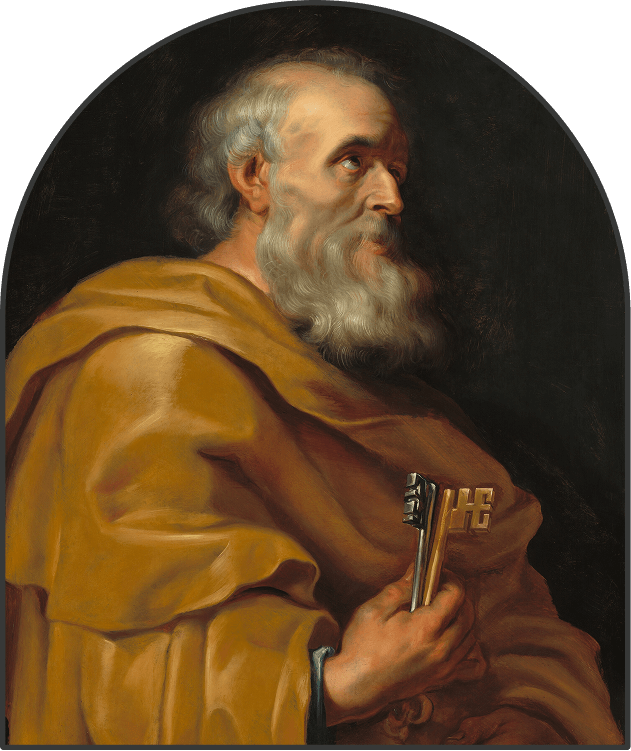
St. Peter: Apostolic Foundation of Christian Prayer and Contemplation


Introduction
St. Peter, as a central figure in Christian tradition—the apostle whom Jesus called “the rock” upon which He would build His church (Matthew 16:18). Unlike later Saints who had developed their practices after the time of Jesus Christ, St. Peter walked with Jesus Christ throughout His life on earth, during which time St. Peter witnessed the Glorification of Christ, Christ’s rise from the dead, and was also a recipient of the outpouring of the Holy Spirit at the day of Pentecost. St. Peter transitioned from an impulsive fisherman to a man who was filled with the Holy Spirit and gives extraordinary insight as to how prayer, mysticism, and the experience of God as primarily for the life of Christ allow for the transformation of those who surrender their lives to Jesus Christ.
Peter Before Christ: The Fisherman’s Life
Born Simon, son of Jonah (John 21:15-17), St. Peter was a fisherman, both as a vocation and a way of life. He was thus able to develop the trait of patient persistence, the belief in things unseen (and that God provides for those things), and a comfort with solitude during the long hours he spent being on the water.
The life of a fisherman also allowed for ample opportunity for contemplation. St. Peter had many opportunities throughout his early mornings and evenings spent at the sea to meditate on God’s creation as he tossed his nets into the sea or waited for their return, as well as on the things that were beyond his control. From this time spent as a fisherman, a foundation was built in St. Peter’s heart to build a prayerful relationship with God.
The LORD is my shepherd, I lack nothing. He makes me lie down in green pastures, he leads me beside quiet waters, he refreshes my soul.
Psalm 23:1-3
The Call: Peter’s First Encounter with Christ
St. Peter’s journey of personal transformation began when he was brought to Jesus Christ by his brother, Andrew. When Andrew brought Simon to Jesus Christ, Jesus immediately gave Simon the name of Cephas (Aramaic) or Peter (Greek) which means “rock”:
You are Simon son of John. You will be called Cephas.
John 1:42
The significance of the name change for St. Peter was not merely a name change but a change in destiny or purpose for St. Peter (and, this can be true for all people as a part of God’s call for special purpose). Other examples are seen in the lives of Abram who became Abraham, Jacob who became Israel, and Saul who became Paul. For St. Peter, the fulfillment of this new name would come over a period of many years of prayer, testing, failing, and, ultimately, being transformed through the power of the Holy Spirit.
St. Peter was called by Jesus in a dramatic way after a long and strenuous night of unsuccessful fishing on the Sea of Galilee. Jesus instructed St. Peter to cast his nets out into the sea again. St. Peter, tired and doubtful, complied with Jesus’ request when he said,
Master, we've worked hard all night and haven't caught anything. But because you say so, I will let down the nets.
Luke 5:5
The miraculous catch of fish that followed was a demonstration of God revealing Himself and His power to St. Peter. St. Peter’s immediate response to this experience was one of deep conviction: “Go away from me, Lord; I am a sinful man!” (Luke 5:8) . This acknowledgment of unworthiness when in the presence of God refers to the beginning of true contemplative prayer and acknowledging God’s sovereignty and our need for His grace.
In response to this revelation, Jesus said, “Don’t be afraid; from now on you will fish for people” (Luke 5:10) . St. Peter’s obedience to the voice of God in response to the revelation of Jesus was the result of a process of radical transformation through contemplative prayer,
They pulled their boats up on shore, left everything and followed him.
Luke 5:11
Learning to Pray: Peter’s Three Years with Jesus
Observing the Master at Prayer
As it states in the Bible, through all the 3 years Peter was with Jesus, he experienced what an importance prayer was to Christ. The Gospels repeatedly state how Jesus took the time often throughout His ministry to pray alone in silence:
But Jesus often withdrew to lonely places and prayed.
Luke 5:16
In addition to that, during Peter’s time with Jesus he experienced all of the following:
- Jesus prayed before making major decisions (Luke 6:12-13).
- Jesus was in the presence of God after a long day of ministry (Mark 1:35).
- Jesus spent whole nights in prayer (Luke 6:12).
- Jesus prayed for his Disciples (John 17).
- Jesus prayed in a time of crisis (Luke 22:41-44).
The above indicated to Peter the foundation upon which Apostolic Prayer is to be built. Peter learned from these things that all effective ministry flows from intimate communion with God the Father.
The Transfiguration: Peter’s Mystical Vision
One of Peter’s most powerful spiritual visions was the Mount of Transfiguration, Jesus took Peter, James, and John with Him up a high mountain to pray. At that moment, Peter, James, and John witnessed one of the most glorious revelation:
As he was praying, the appearance of his face changed, and his clothes became as bright as a flash of lightning. Two men, Moses and Elijah, appeared in glorious splendor, talking with Jesus.
Luke 9:29-30
This vision had revealed multiple aspects of spiritual truth:
1. The Glory of Christ’s Divine Nature Peter witnessed Jesus unveiled in His heavenly glory, confirming His deity. This vision would sustain Peter through future trials and persecutions.
2. The Fulfillment of Scripture Moses (representing the Law) and Elijah (representing the Prophets) testified that Jesus was the culmination of all God’s promises.
3. The Voice of the Father God the Father spoke directly: “This is my Son, whom I have chosen; listen to him” (Luke 9:35). This divine affirmation established Jesus’ authority and Peter’s lifelong commitment to proclaiming Him.
Peter’s impulsive reaction—to build three shelters—shows the typical temptation when one has a spiritual experience, that is to hold onto, thereby controlling the mystical encounter rather than allowing the encounter to transform the individual. God interrupted Peter’s thought because God had a direct command for Peter, “Listen to Him“.
Years later, Peter will reflect on his spiritual experience, writing in his 2nd Epistle:
We did not follow cleverly devised stories when we told you about the coming of our Lord Jesus Christ in power, but we were eyewitnesses of his majesty. He received honor and glory from God the Father when the voice came to him from the Majestic Glory, saying, 'This is my Son, whom I love; with him I am well pleased.' We ourselves heard this voice that came from heaven when we were with him on the sacred mountain .
2 Peter 1:16-18
This passage demonstrates that true Christian mysticism is grounded in historical experience, not imagination. Peter’s encounter demonstrated the established tributes of objective truth about Jesus Christ .
Peter’s Walking on Water: Faith and Focus
Another experience in Peter’s spiritual development was when Jesus walked on water toward his disciples while they were on a boat during a storm. Upon recognizing Jesus, Peter asked permission to come to Him on the water:
'Lord, if it's you,' Peter replied, 'tell me to come to you on the water.' 'Come,' he said. Then Peter got down out of the boat, walked on the water and came toward Jesus.
Matthew 14:28-29
This episode illustrates essential principles of contemplative prayer:
1. Faith Enables Supernatural Encounter: Peter had enough Faith to believe that God’s Word is able to overcome the natural Impossibilities.
2. Focused Attention on Christ Is Essential Peter succeeded as long as his eyes remained on Jesus: “But when he saw the wind, he was afraid and, beginning to sink, cried out, ‘Lord, save me!‘” (Matthew 14:30). The moment his focus shifted to circumstances rather than Christ, he faltered.
3. Christ Immediately Responds to Cries for Help “Immediately Jesus reached out his hand and caught him” (Matthew 14:31). Christ is there for all of us, in prayer and contemplation, when our faith has doubt Christ is always there to carry us.
This experience taught Peter that contemplative focus on Christ enables us to transcend natural limitations. It also revealed that even imperfect faith—faith that wavers—still brings us into Christ’s presence and receives His mercy.
The Garden of Gethsemane: Peter’s Failure and Christ’s Intercession
The Garden of Gethsemane demonstrates both Christ interceding for Peter, and both Peter’s failure in praying, as well as how Peter’s failure foreshadowed his denial of Christ, and Christ’s intercession. Jesus asked Peter, James, and John to watch and pray with Him while He was in agony. After He returned and found Peter asleep, He asked:
Then he returned to his disciples and found them sleeping. 'Couldn't you men keep watch with me for one hour?' he asked Peter. 'Watch and pray so that you will not fall into temptation. The spirit is willing, but the flesh is weak.
Matthew 26:40-41
Jesus was telling Peter and the other disciples that if they did not watch and pray during this time, they would fail spiritually. Without the vigilance of continual prayer, the spirit will be willing, but the flesh will succumb to temptation.
Later that night, Peter’s prayerlessness manifested in his denying of Christ three times—just as Jesus had prophesied would happen. But even in those failures, Peter was sustained by Christ through prayer:
Simon, Simon, Satan has asked to sift all of you as wheat. But I have prayed for you, Simon, that your faith may not fail. And when you have turned back, strengthen your brothers.
Luke 22:31-32
This passage points to how powerful Christ’s intercession for Peter was—not only had Peter failed, but Christ’s prayer kept Peter’s faith from ultimately failing, and that Christ’s prayer would restore Peter so that he could strengthen others. This is the essence of biblical mysticism, not our perfection, but Christ’s faithfulness in praying for us.
Christ Jesus who died—more than that, who was raised to life—is at the right hand of God and is also interceding for us.
Romans 8:34
Pentecost: The Transforming Power of the Holy Spirit
The Upper Room: Corporate Prayer and Waiting
After Christ’s ascension, Peter led the disciples in prayer while waiting for the Holy Spirit.
They all joined together constantly in prayer, along with the women and Mary the mother of Jesus, and with his brothers.
Acts 1:14
That period of constant prayer prepared them for the day of Pentecost. In Greek, the word for “constantly” (proskartereō) means to be steadfast, to keep on keeping on, and to remain fervent. Contemplative waiting on God in unity with each other prepares people to receive spiritual empowerment.
The Day of Pentecost: Mystical Encounter with the Holy Spirit
On the day of Pentecost, the disciples experienced a deep mystical encounter with God:
Suddenly a sound like the blowing of a violent wind came from heaven and filled the whole house where they were sitting. They saw what seemed to be tongues of fire that separated and came to rest on each of them. All of them were filled with the Holy Spirit and began to speak in other tongues as the Spirit enabled them.
Acts 2:2-4
This supernatural experience transformed Peter from a fearful denier into a bold proclaimer. The Pentecost experience demonstrates that authentic Christian mysticism produces:
- Boldness in witness rather than self-focused experiences.
- Clarity of truth rather than confusion.
- Unity of believers rather than elitism.
- Fruit for God’s kingdom rather than personal spiritual pride.
Are you ready to deepen your spiritual journey?
Start your meditation journey today - download the app.
 Download on the App Store
 Get it on Google Play
Peter’s Apostolic Prayer Life
The Priority of Prayer in Ministry
After the day of Pentecost, Peter and the apostles established prayer as the foundation of all ministry. When administrative needs threatened to distract them from this priority, they responded:
It would not be right for us to neglect the ministry of the word of God in order to wait on tables. Brothers and sisters, choose seven men from among you who are known to be full of the Spirit and wisdom. We will turn this responsibility over to them and will give our attention to prayer and the ministry of the word.
Acts 6:2-4
This passage reveals the apostolic understanding that prayer and the Word are inseparable foundations for effective ministry.
Prayer and Miraculous Healing
Peter’s prayer life was marked by supernatural manifestations of God’s power. When he encountered a lame beggar at the temple gate, Peter declared:
Silver or gold I do not have, but what I do have I give you. In the name of Jesus Christ of Nazareth, walk.
Acts 3:6
The man was immediately healed. Peter’s subsequent sermon made clear that this miracle resulted not from his own power or piety, but from faith in Jesus’ name and the resurrection power of Christ (Acts 3:12-16).
Later, when confronted with Tabitha’s (Dorcas’s) death, Peter’s response demonstrates contemplative prayer in action:
Peter sent them all out of the room; then he got down on his knees and prayed. Turning toward the dead woman, he said, 'Tabitha, get up.' She opened her eyes, and seeing Peter she sat up.
Acts 9:40
Notice Peter’s pattern: he created a quiet space, knelt in prayer, and then spoke Christ’s life-giving word before acting in His authority.
The Rooftop Vision: Contemplative Prayer and Divine Revelation
Peter’s prayer experience on the rooftop in Joppa is an example of a major mystical experience:
About noon the following day as they were on their journey and approaching the city, Peter went up on the roof to pray. He became hungry and wanted something to eat, and while the meal was being prepared, he fell into a trance. He saw heaven opened and something like a large sheet being let down to earth by its four corners. It contained all kinds of four-footed animals, as well as reptiles and birds. Then a voice told him, 'Get up, Peter. Kill and eat.' 'Surely not, Lord!' Peter replied. 'I have never eaten anything impure or unclean.' The voice spoke to him a second time, 'Do not call anything impure that God has made clean.
Acts 10:9-15
Through this mystical vision, Peter learned that God had revealed His plan for the church to include Gentiles, and as a result, Peter now had a different way of thinking about God’s plans.
1. Regular, Scheduled Prayer Peter was following the Jewish practice of prayer at the sixth hour (noon), demonstrating disciplined prayer habits.
2. The Trance State The Greek word ekstasis indicates Peter entered an altered state of consciousness—not through human technique, but by God’s sovereign action. This was a genuine mystical experience initiated by the Holy Spirit.
3. Symbolic Communication God communicated through symbolic imagery that required interpretation, engaging Peter’s mind and heart together.
4. Challenge to Existing Understanding The vision confronted Peter’s theological assumptions, demonstrating that authentic mystical experiences often challenge our comfortable categories rather than merely confirming what we already believe.
5. Confirmation Through Circumstances The vision was immediately confirmed by the arrival of Gentile messengers, showing that genuine mystical revelation aligns with external providence.
6. Fruit for God’s Kingdom This mystical experience led directly to the gospel spreading to the Gentiles, beginning with Cornelius’s household (Acts 10:24-48).
Peter’s visionary experience establishes the following principles for Christian mysticism:
- Christians have authentic mystical experiences when they regularly pray.
- God initiates mystical experiences according to His plan.
- Visions require discernment and interpretation.
- Authentic revelations are confirmed through Scripture, events, and results.
- Individual mystical experiences serve God’s greater purposes rather than simply the spiritual enrichment of the individual.
Peter’s Teaching on Prayer and Spiritual Life
First Peter: Instructions for Holy Living
In Peter’s first epistle, he has provided a detailed explanation of prayer, spiritual discipline, and the spiritual life in God’s presence.
On Vigilance and Prayer:
The end of all things is near. Therefore be alert and of sober mind so that you may pray.
1 Peter 4:7
A sober, alert mind is the foundation for effective prayer. Christian contemplation/meditation is not an escape to a peaceful or tranquil environment, but it allows us to be spiritually clear and engaged in the fullness of life; the Greek word (nepho) means that Christians are to be free from all forms of mental and spiritual intoxication and to keep a clear, eternal perspective.
On Spiritual Warfare Through Prayer:
Be alert and of sober mind. Your enemy the devil prowls around like a roaring lion looking for someone to devour. Resist him, standing firm in the faith.
1 Peter 5:8-9
Peter teaches that being contemplatively aware of life and God also requires being vigilant against the powers of darkness. Prayer is not a passive withdrawal from the real world, but it is an active response to the works of evil or the enemy.
On Hindrances to Prayer:
Husbands, in the same way be considerate as you live with your wives, and treat them with respect as the weaker partner and as heirs with you of the gracious gift of life, so that nothing will hinder your prayers.
1 Peter 3:7
Peter states that relational sin eliminates the possibility of prayer. Thus, for Christians, contemplative fellowship with God requires recreating right relationships with others; therefore, there cannot be a separation between our vertical and horizontal dimensions of spirituality.
Second Peter: Growing in Grace and Knowledge
In his second epistle, Peter talks about spiritual disciplines that will lead to the maturity of Christians:
His divine power has given us everything we need for a godly life through our knowledge of him who called us by his own glory and goodness. Through these he has given us his very great and precious promises, so that through them you may participate in the divine nature, having escaped the corruption in the world caused by evil desires.
2 Peter 1:3-4
This passage speaks to the act of becoming one with God (being partakers of the divine nature). This concept of becoming God-like is often referred to by the Church Fathers as theosis, or becoming one with God. It means we are not part of God’s identity but that we are progressively formed by His perfect character into becoming like Christ.
Peter continues by describing the progression of spiritual growth:
For this very reason, make every effort to add to your faith goodness; and to goodness, knowledge; and to knowledge, self-control; and to self-control, perseverance; and to perseverance, godliness; and to godliness, mutual affection; and to mutual affection, love. For if you possess these qualities in increasing measure, they will keep you from being ineffective and unproductive in your knowledge of our Lord Jesus Christ.
2 Peter 1:5-8
This progression demonstrates that individuals grow in spiritual knowledge of Christ and demonstrate this knowledge through totally transformed lives. Peter was not a mystic, but he was practical, and through his mystical encounters with God, he was progressively changed to be more like Christ in character.
Peter’s View of Scripture and Meditation
Peter gives critical teaching on Scripture and meditation:
Above all, you must understand that no prophecy of Scripture came about by the prophet's own interpretation of things. For prophecy never had its origin in the human will, but prophets, though human, spoke from God as they were carried along by the Holy Spirit.
2 Peter 1:20-21
Thus, the Scripture is God-breathed and authoritative. For our meditation practice to be one of authenticity, it must be anchored in God’s Word, not in human imagination or feeling.
Peter also affirms Paul’s writings as Scripture:
Bear in mind that our Lord's patience means salvation, just as our dear brother Paul also wrote you with the wisdom that God gave him. He writes the same way in all his letters, speaking in them of these matters. His letters contain some things that are hard to understand, which ignorant and unstable people distort, as they do the other Scriptures, to their own destruction.
2 Peter 3:15-16
From this passage, we can observe both Peter being humble (acknowledging that some of the teachings of Paul were difficult) and he also showed us that he strongly believed that Scripture is the true source of all truth, and thus, our contemplative practice must be rooted in Scripture.
Peter’s Imprisonment and Angelic Deliverance
Another mystical experience in Peter’s life occurred during his imprisonment by Herod:
The night before Herod was to bring him to trial, Peter was sleeping between two soldiers, bound with two chains, and sentries stood guard at the entrance. Suddenly an angel of the Lord appeared and a light shone in the cell. He struck Peter on the side and woke him up. 'Quick, get up!' he said, and the chains fell off Peter's wrists.
Acts 12:6-7
Peter’s response to being rescued by the angel of God gives us an insight as to how we should respond after being delivered from a difficult situation.
Peter followed him out of the prison, but he had no idea that what the angel was doing was really happening; he thought he was seeing a vision. They passed the first and second guards and came to the iron gate leading to the city. It opened for them by itself, and they went through it. When they had walked the length of one street, suddenly the angel left him. Then Peter came to himself and said, 'Now I know without a doubt that the Lord has sent his angel and rescued me from Herod's clutches and from everything the Jewish people were hoping would happen.
Acts 12:9-11
This account reveals several important truths:
1. God Initiates Supernatural Encounters God causes us to experience the supernatural. Peter did not pursue a supernatural experience; rather, he was just sleeping, and God intervened.
2. Initial Uncertainty Is Normal At first Peter believed that he was experiencing a vision. This should encourage Christians to realize that even apostles have difficulty distinguishing the difference between the various forms of spiritual experiences .
3. Confirmation Brings Clarity When Peter was outside of the prison, he had complete assurance that God had intervened supernaturally on his behalf.
4. Peace in Persecution Peter was sleeping soundly despite facing execution the next day, demonstrating the peace that comes from communion with God.
You will keep in perfect peace those whose minds are steadfast, because they trust in you.
Isaiah 26:3
Peter’s Final Days: Contemplating His Death
By tradition, the church indicates that Peter was martyred in Rome during the time of persecution under Nero, likely around A.D. 64-68. Prior to his death, Jesus foretold of Peter’s death:
Very truly I tell you, when you were younger you dressed yourself and went where you wanted; but when you are old you will stretch out your hands, and someone else will dress you and lead you where you do not want to go.' Jesus said this to indicate the kind of death by which Peter would glorify God.
John 21:18-19
Peter himself contemplated his coming death in his second epistle:
I think it is right to refresh your memory as long as I live in the tent of this body, because I know that I will soon put it aside, as our Lord Jesus Christ has made clear to me. And I will make every effort to see that after my departure you will always be able to remember these things.
2 Peter 1:13-15
This passage gives us Peter’s perspective on his death:
- He saw his body as a temporary “tent”
- He had received divine revelation about his death
- He focused on serving others until the end
- He viewed death not as tragedy but as departure to be with Christ
According to church tradition, Peter requested to be crucified upside down, believing he was not worthy of being crucified in the same manner that his Master was crucified. Regardless of whether this tradition holds true, it does illustrate Peter’s attitude of humility towards his relationship with Christ throughout his life.
Peter’s Model for Christian Contemplation
From Peter’s life and through his teaching we have a complete picture of what the practice of Christian Contemplation should be:
1. Christ-Centered Focus
All of Peter’s experiences pointed to Christ, not to him. The transfiguration, Pentecost and the vision of the rooftop all pointed to the authority of Christ and His mission.
And we all, who with unveiled faces contemplate the Lord's glory, are being transformed into his image with ever-increasing glory, which comes from the Lord, who is the Spirit.
2 Corinthians 3:18
2. Scripture as Foundation
Peter’s messages and letters contain an abundance of verses from the Old Testament. The ministry of contemplation was rooted in the Word of God for Peter.
“How can a young person stay on the path of purity? By living according to your word. I seek you with all my heart; do not let me stray from your commands. I have hidden your word in my heart that I might not sin against you” (Psalm 119:9-11).
3. Holy Spirit Dependence
Peter’s transformation from being fearfully self-denying to being the bold apostle was due to the power of the Holy Spirit at Pentecost. Similarly, the work of the Holy Spirit is what empowers Christian contemplation, not human effort.
But the Advocate, the Holy Spirit, whom the Father will send in my name, will teach you all things and will remind you of everything I have said to you.
John 14:26
4. Corporate Prayer
Peter consistently prayed with other believers, in the upper room, along with John at the temple, and with the church during his time of imprisonment. Christian contemplation is not supposed to be done alone; rather, it is to be done in the context of community.
For where two or three gather in my name, there am I with them.
Matthew 18:20
5. Practical Application
Peter’s mystical experiences always resulted in action; Peter preached, healed and expanded the ministry based on his mystical experiences. Contemplation and action go together in the spiritual life.
Do not merely listen to the word, and so deceive yourselves. Do what it says.
James 1:22
6. Humility and Repentance
Even though Peter was an influential leader in the early church, he never forgot about his failures and how he had been forgiven through Christ’s grace. Peter’s humility, due to the experience of sin and grace, allowed him to have a realistic view of his spiritual life.
God opposes the proud but shows favor to the humble.
James 4:6
7. Eschatological Perspective
Peter’s mystical contemplations included his awareness of Jesus’ Second Coming and his eventual judgment by Christ, which served to promote holy living and a desire to share the Gospel.
Since everything will be destroyed in this way, what kind of people ought you to be? You ought to live holy and godly lives as you look forward to the day of God and speed its coming.
2 Peter 3:11-12
Practical Applications for Today
The prayer and contemplative habits exhibited by Peter can provide contemporary Christians with practical direction and guidance in their own prayer and contemplative lives.
Establish Regular Prayer Times
As in Peter’s example of praying at the 6th hour of the day, discipline to pray at set times of the day, as well as on a regular basis to read & meditate in the Bible will help build a foundation for deeper spiritual encounters.
Evening, morning and noon I cry out in distress, and he hears my voice.
Psalm 55:17
Seek Solitary Places
Just as Jesus did during His prayer times, and Peter did early in the establishment of His apostolic ministry, withdraw from all activity to spend time alone with God to pray and meditate. Create a “space” free of distractions in order to have an uninterrupted time of communicating with God.
Remain Vigilant
Peter learned through failure the importance of maintaining a prayerful watchfulness over his spiritual life. Remain awake to the spiritual life around you and the need of God’s grace to sustain you.
Be alert and always keep on praying for all the Lord's people.
Ephesians 6:18
Pray in Community
While personal prayer is important, corporate intercessory prayer is also very important. Join other Christians in seeking the face of God.
Meditate on Scripture
Be filled with (or stay immersed in) the Word of God; to contemplate means to think deeply about what the Scriptures teach continuously..
Expect the Holy Spirit’s Work
Use the Spirit to help you to see and become what the Lord has created you to be. Do not try to do it by means of your own strength; rely completely upon the work of the Holy Spirit.
Let Prayer Flow into Action
Allows for your contemplation to result in practical obedience and action. The purpose of the mystical encounter is to result in action (missional commitment).
Conclusion
St. Peter’s journey from fisherman to apostle demonstrates the transformative power of walking with Christ through prayer, contemplation, and Spirit-empowered ministry. The mystical experiences that Peter had—the Transfiguration, the Spirit-filled Church at Pentecost, the vision from God on the rooftop, being rescued from prison — all were done for the purpose of God’s redemptive plan and not just for the sake of Peter having a remarkable experience.
Peter teaches us that Christian contemplation is:
- Christocentric – focused entirely on Jesus
- Biblical – anchored in Scripture’s authority
- Spirit-empowered – dependent on divine initiative
- Communal – practiced in fellowship with believers
- Transformative – producing Christlike character
- Missional – resulting in kingdom advancement
Peter also serves to remind us that all of the mystical experiences that one can have with God are always God’s gifts of grace and never something that can be accomplished through a person’s own effort. Those experiences will come to those people who purposely seek the Lord through the act of prayer, meditating upon His Word, and serving Him in obedience to His Word.
All of us should follow the example of Peter. We should be quick to repent, eager to obey, continually dependent on the Holy Spirit, saturated with the Word, and completely committed to Christ our Lord.
Though you have not seen him, you love him; and even though you do not see him now, you believe in him and are filled with an inexpressible and glorious joy, for you are receiving the end result of your faith, the salvation of your souls.
1 Peter 1:8-9
May the example of St. Peter encourage us to pursue Christ with wholehearted devotion, to practice biblical meditation and prayer with faithfulness, and to allow the Holy Spirit to transform us into witnesses of the Risen Lord for the glory of God.
Our Editorial Standards:
All our content on Christian meditation traditions, prayers, and spiritual practices is reviewed by Dr. Megan Remington, PhD, ensuring theological soundness and spiritual depth.
We draw from centuries of Christian contemplative tradition, citing respected theological sources, biblical references, and established spiritual practices.
Our team understands that spiritual struggles are deeply personal. We approach topics of anxiety, strength, healing, and peace with compassion and biblical wisdom.
We continuously review and update our spiritual resources to ensure they remain relevant and aligned with orthodox Christian teaching.
Each article clearly identifies our writers and reviewers, along with the theological sources and biblical foundations used.
 To guarantee that all of our information is accurate, we ensure that all our sources are reputable. That means every source is authenticated and verified to be backed only by medical science.
Join The Saints That Have Gone Before In Meditation
Be infused with grace to experience a transformation in God and become one with the divine. Begin your meditation journey today.
FAQ’s About Christian Meditation
Is meditation safe for Christians?
Absolutely! There is much confusion and suspicion surrounding meditation for Christians, and it is often miscategorized as a pagan or new-age practice. However, through much Biblical study and research into ancient Christian traditions, it is apparent that meditation, contemplative prayer, and mindfulness are all accepted practices that align with Scripture and enhance the believer’s life.
What are your academic qualifications?
Absolutely! There is much confusion and suspicion surrounding meditation for Christians, and it is often miscategorized as a pagan or new-age practice. However, through much Biblical study and research into ancient Christian traditions, it is apparent that meditation, contemplative prayer, and mindfulness are all accepted practices that align with Scripture and enhance the believer’s life.
Is the Christian Meditation App appropriate for beginners?
Absolutely! There is much confusion and suspicion surrounding meditation for Christians, and it is often miscategorized as a pagan or new-age practice. However, through much Biblical study and research into ancient Christian traditions, it is apparent that meditation, contemplative prayer, and mindfulness are all accepted practices that align with Scripture and enhance the believer’s life.
What is the first session like?
Absolutely! There is much confusion and suspicion surrounding meditation for Christians, and it is often miscategorized as a pagan or new-age practice. However, through much Biblical study and research into ancient Christian traditions, it is apparent that meditation, contemplative prayer, and mindfulness are all accepted practices that align with Scripture and enhance the believer’s life.
Sources

All Catechism references were cited from: Catholic Cross Reference. https://www.catholiccrossreference.online/catechism/
- The anonymous sayings of the desert fathers. Internet Archive. (n.d.). https://ia800408.us.archive.org/25/items/TheAnonymousSayingsOfTheDWortleyJohn5090/The%20Anonymous%20Sayings%20of%20the%20D%20-%20Wortley,%20John_5090.pdf
- Meditation and reflection. Catholic Identity. (n.d.-a). https://catholicidentity.bne.catholic.edu.au/scripture/SitePages/Meditation-and-reflection.aspx?csf=1&e=aGrw1c
- Ascent of mount carmel. christian classics ethereal library. (n.d.). https://www.ccel.org/ccel/j/john_cross/ascent/cache/ascent.pdf
- Accepting the embrace of god: The ancient art of lectio divina. Saint Andrew’s Abbey. (2021a, November 10). https://saintandrewsabbey.com/our-daily-life/accepting-the-embrace-of-god-the-ancient-art-of-lectio-divina/?gad_source=1&gclid=EAIaIQobChMIvsWpl7jQiwMVSgCtBh20QQ3TEAAYASAAEgK0Z_D_BwE
- Meditation and reflection. Catholic Identity. (n.d.-a). https://catholicidentity.bne.catholic.edu.au/scripture/SitePages/Meditation-and-reflection.aspx?csf=1&e=aGrw1c
- The Cloud of Unknowing. catholic spiritual direction. (n.d.). https://www.catholicspiritualdirection .org/cloudunknowing.pdf