


 App Store
  Google Play
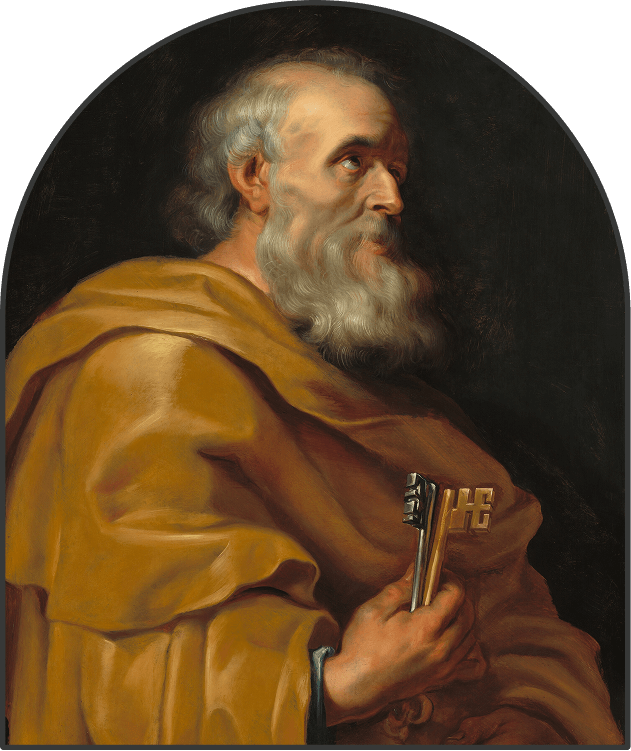
The Prayer Life of Saint Polycarp of Smyrna: The Bishop Who Prayed Without Ceasing

Introduction
St. Polycarp (c. 69-155) was a Bishop of Smyrna and a disciple of the Apostle John, who stood out as an important bridge between the apostolic period and early church fathers. Polycarp’s life of prayer and contemplative devotion to Jesus Christ culminated in one of the most touching martyrdoms in Christianity. Polycarp illustrates that a continuous life of prayer leads to faith, divine peace and confidence in dying joyfully.
A Living Link to the Apostles
Polycarp’s greatest credential was his direct connection to the Apostle John. According to Irenaeus, who knew Polycarp personally, the elderly bishop “was instructed by apostles, and conversed with many who had seen Christ.” Specifically, Polycarp was “appointed bishop of the Church in Smyrna by apostles in Asia” and had been “taught by John” himself.
The spirituality of Polycarp had been substantially influenced through this direct link to the Apostle John. Polycarp not only read about Jesus from the letters but was instructed by someone who had reclined on Jesus’ breast at the Last Supper (John 13:23), stood at the foot of the cross (John 19:26-27), and encountered the risen Lord (John 20:19-29). The theology of John, focusing on love, light and having communion with Christ, greatly impacted Polycarp’s spirituality.
Imagine Polycarp as a young man, sitting at John’s feet. Here, he listened to the elderly Apostle recall the life of Jesus—His teachings, miracles, prayers and death and resurrection. These were not abstract ideas of Jesus; they were experiences of Polycarp. They informed his prayer life and provided him with an understanding of how to be a disciple of Christ.
The things you saw, heard and learned from me, Paul said, “The things which you learned and received and heard and saw in me, these do” (Philippians 4:9). Polycarp learned about prayer not from reading books, but from the example of a man who had walked with Jesus, thus creating a direct spiritual line from Christ to John to Polycarp to untold numbers of others who were ultimately disciples of Jesus.
Bishop and Shepherd: Prayer as Leadership
As Bishop of Smyrna for decades, Polycarp exemplified the importance of intimacy with God to the role of leadership within the church. All of the ancient writers noted that Polycarp was in perpetual prayer and prayed for his flock so regularly that he carried their needs before God’s throne of grace.
The apostolic pattern for church leadership was established in Acts. As the Apostles wrote, they recognized the necessity of prayer in ministry above and beyond anything administrative:”We will give ourselves continually to prayer and to the ministry of the word” (Acts 6:4). The apostles understood that effective ministry requires prioritizing prayer above all administrative duties.
Polycarp’s letters and the accounts of him reveal him to be a pastor who prayed for his people by name, who prayed for their growth in spirit and who relied on God for wisdom concerning shepherd’s decisions. Paul writes,
I bow my knees to the Father of our Lord Jesus Christ...that He would grant you, according to the riches of His glory, to be strengthened with might through His Spirit in the inner man.
Ephesians 3:14-16
According to Irenaeus, a pastoral father, Polycarp had a powerful presence; he stood out spiritually, a direct result of many years in prayer with God. People knew that Polycarp was blessed and anointed by God because of a life that had been hidden with Christ in God (Colossians 3:3).
The Letter to the Philippians: A Window into Polycarp’s Soul
The letter Polycarp wrote to the church of Philippi offers a glimpse of Polycarp’s prayer and contemplative theology. Although short, the letter contains many references and quotations of Scripture indicating that his mind was saturated with God’s Word.
Writing to the Philippians, he regards them as being very familiar with the Sacred Scriptures. Polycarp made the statement to them: “I trust that you are well versed in the Sacred Scriptures, and that nothing is hid from you.” He was not complimenting them; rather, he was expecting that they would meditate deeply on the Word and that God’s Word would finally govern their understanding and behaviour.
The letter from Polycarp to the Philippians is filled with Polycarp’s belief in the importance of prayer for spiritual growth. Polycarp encourages them:”Let us therefore so serve Him with fear and all reverence…praying without ceasing, and watching with perseverance”—echoing Paul’s instruction to “pray without ceasing” (1 Thessalonians 5:17).
Meditation on righteousness: “If we please Him in this present world, we shall receive also the future world, according as He has promised to us that He will raise us again from the dead, and that if we live worthyly of Him, we shall also reign together with Him.”
Contemplation of Christ’s example: Polycarp frequently returns to Christ’s suffering and resurrection as the pattern for Christian life, showing his meditative focus on Christ’s passion.
The practice of love: “He who has love is far from all sin”—reflecting John’s teaching that “perfect love casts out fear” (1 John 4:18).
This letter to the Philippians reveals him to be a contemplative Bishop. He has a theology developed out of prayer, not just through intellectual studies. The words he wrote in his letter carry the weight of experience and spiritual depth.
Fasting and Self-Discipline
Throughout the history of the early church, fasting was an important aspect of spiritual discipline. Polycarp undoubtedly participated in this type of discipline. However, as far as information regarding Polycarp’s fasting habits, little has been disclosed. Nevertheless, during the period of Polycarp’s life, the custom was to fast on each Wednesday and Friday as a form of spiritual preparation for baptism and communion, as well as during the Lenten season.
For many different purposes, the practice of fasting was an essential part of early Christian spirituality:
- Spiritual warfare: Weakening the flesh’s dominion to strengthen the spirit
- Focused prayer: Creating space free from physical distractions
- Solidarity with the poor: Experiencing hunger to increase compassion
- Preparation for revelation: Following biblical examples of those who fasted before receiving divine insight
Jesus declared: “When you fast” (Matthew 6:16), assuming His disciples would practice this discipline. He Himself fasted forty days before beginning His ministry (Matthew 4:2), and the early church fasted when seeking God’s direction (Acts 13:2-3, 14:23).
According to the early church, fasting was not considered a legalistic requirement to be fulfilled; instead it was the loving will of God expressed through His statement,
Can the friends of the bridegroom mourn as long as the bridegroom is with them? But the days will come when the bridegroom will be taken away from them, and then they will fast.
Matthew 9:15
The Eucharist: Center of Contemplative Life
The greatest act of worship within the early church was to participate in Holy Communion (Eucharist) and the culmination of the contemplative life. St. Ignatius, one of Polycarp’s contemporaries, called the Eucharist “the medicine of immortality, the antidote that we should not die but live forever in Jesus Christ.”
Polycarp regularly celebrated the Eucharist, perceiving it as a mystical union with Christ through His crucifixion and resurrection. This was not merely an act of remembrance; Polycarp believed that through the Eucharist, the believer entered into a personal communion with the Risen Lord.
Jesus instructed the apostles: “Do this in remembrance of Me” (Luke 22:19). The Greek word anamnesis (remembrance) means more than mental recall—it signifies making present, bringing the past event into current reality. For Polycarp, celebrating Eucharist meant mystically participating in the Last Supper, Calvary, and the resurrection.
In the writings of Paul, he wrote:
The cup of blessing which we bless, is it not the communion of the blood of Christ? The bread which we break, is it not the communion of the body of Christ?
1 Corinthians 10:16
The Eucharist was understood by Polycarp to be the same type of communion as experienced by the early Christians: a profound personal connection with Jesus Christ—not only His education. Through this understanding of sacramental mysticism, Polycarp expressed all his spirituality. As a result, Polycarp celebrated the Eucharist in a way requiring meticulous preparation through prayer, confession and spiritual readiness.
Night Prayer and Vigils
Like the early Christians described in Acts who “continued steadfastly…in prayers” (Acts 2:42), Polycarp appears to have also practiced a consistent prayer life that included prayers that were offered at night. The habit of rising at night to pray has its roots in the Scriptures, as illustrated by:
- David’s example: “At midnight I will rise to give thanks to You” (Psalm 119:62)
- Jesus’s pattern: “He went out to the mountain to pray, and continued all night in prayer to God” (Luke 6:12)
- Paul’s practice: “At midnight Paul and Silas were praying and singing hymns to God” (Acts 16:25)
The Martyrdom of Polycarp, which is an eye-witness account of Polycarp’s martyrdom that was written shortly after the event took place, says that when the soldiers came to arrest Polycarp, Polycarp, “he ordered that a table should be spread for them…and he asked for an hour that he might pray undisturbed.” According to the same account: “When he was given permission, he stood up and prayed—and he was so full of the grace of God that he could not be silent for two hours.”
Two hours of prayer at the time of his arrest is given as an example, but it was a common practice for Polycarp. From this information, it appears that this is not an exception but that Polycarp continually had long periods of communion with God. It took years of developing all of that inner capacity to spend a full two hours in prayer.
The Gift of Tears
recognized that Polycarp frequently wept during prayer. This wasn’t a sign of sadness, but rather evidence of the depth of their love of God. He received the “gift of tears” from God and this appears throughout the Christian mystical tradition.
Jeremiah wept for his people and exclaimed, “Oh, that my head were waters, and my eyes a fountain of tears, that I might weep day and night” (Jeremiah 9:1). Jesus wept at Lazarus’s tomb (John 11:35) and over Jerusalem (Luke 19:41). Paul wrote to the Philippians “with many tears” (Philippians 3:18).
These tears were not tears of weakness, but rather the expression of a heart touched by the love of God, which grieves over sin and judges others with the compassion of God. The tears reflect the emotional reality before God. A heart expressed from a personal experience with Jesus is the opposite of an intellectual religion that lacks emotion.
David prayed, “Put my tears into Your bottle; are they not in Your book?” (Psalm 56:8). God treasures our tears, seeing them as precious expressions of authentic devotion.
Polycarp’s tears during prayer revealed the fact he was sensitive to the Spirit of God and had remained sensitive through many years of ministry and continued to maintain that sensitivity to God by never allowing himself to get hardened either as a professional minister or through a routine approach to God.
Prophetic Dreams and Visions
Three days before Polycarp’s martyrdom, he was praying and had a prophetic vision. As recorded in The Martyrdom of Polycarp, “While he was praying, he fell into a trance and saw his pillow burning with fire. He turned and said to those who were with him, ‘I must be burned alive.'”
The vision was similar to those that God gave to various persons throughout the Scriptures regarding events yet to take place:
- Joseph’s dreams: Warning of danger, directing escape to Egypt (Matthew 2:13)
- Peter’s vision: The sheet with animals, preparing him to visit Gentiles (Acts 10:9-16)
- Paul’s visions: The Macedonian call (Acts 16:9), encouragement during storms (Acts 27:23-24)
- Ananias’s vision: Directing him to pray for Saul (Acts 9:10-12)
God promised through Joel: “I will pour out My Spirit on all flesh; your sons and your daughters shall prophesy, your old men shall dream dreams, your young men shall see visions” (Joel 2:28). Peter affirmed this prophecy’s fulfillment at Pentecost (Acts 2:17).
Polycarp’s prophetic vision was while praying and was a divine revelation, not a coincidence from sleep. He understood immediately the meaning of the vision and demonstrated a familiarity with God’s voice through his maturity in the Spirit. Polycarp was prepared both emotionally and spiritually for his upcoming martyrdom by knowing of his death before he died. He had the time to relinquish his will to follow God’s purpose for his life and complete his last witness of Jesus instead of giving a last human weakness.
The Arrest: Prayer Amid Crisis
Polycarp did not try to flee or to resist. His response when soldiers came to arrest him demonstrated the continual effect of being a man of prayer. Polycarp:
- Showed hospitality: Ordered food prepared for the arresting soldiers
- Requested time to pray: Asked for one hour undisturbed
- Prayed for two hours: Was “so full of the grace of God that he could not be silent”
- Prayed for everyone: “He prayed for all men everywhere and for the churches throughout the world, as was his custom”
The last sentence of the text—”as was his custom”—tells us that Polycarp’s frequent prayer for all the churches was not something new: he had prayed for the churches as a normal way of life, just as Daniel “went home. And in his upper room, with his windows open toward Jerusalem, he knelt down on his knees three times that day, and prayed and gave thanks before his God, as was his custom since early days” (Daniel 6:10), Polycarp continued to pray the same way every day, regardless of his circumstances.
His two-hour prayer at arrest illustrates several important contemplative principles:
Intimacy with God transcends circumstances: Polycarp was able to maintain his close relationship with God, even during the most critical time of his life.
Intercessory love: He prayed when he was not surrounded by family and friends, and he prayed for all the churches throughout the entire world, for all of the soldiers who had come to arrest him, and for all of mankind. Polycarp’s unconditional love for others is similar to the way Jesus prayed for his own loved ones when they crucified him: “Father, forgive them” (Luke 23:34).
The fruit of long cultivation: It is impossible to pray for two hours spontaneously without praying frequently throughout one’s entire life. Because of Polycarp’s continued dedication to establishing a personal relationship with God through prayer, he was able to pray this long at his time of arrest.
Grace-filled expression: Polycarp is described as being “full of the grace of God.” His prayer wasn’t human effort but divine grace flowing through a yielded vessel—fulfilling Paul’s promise that “the Spirit also helps in our weaknesses. For we do not know what we should pray for as we ought, but the Spirit Himself makes intercession for us” (Romans 8:26).
The Journey to Martyrdom: Contemplative Surrender
When Polycarp was being taken to the arena where he would die, he was offered an opportunity to recant his statement of faith. Officials were quoted as saying, “What harm is there in saying, ‘Caesar is Lord,’ and offering incense…and so saving yourself?”
Polycarp remained silent while he reflected on this matter—not from uncertainty but from contemplative composure. He was not panicking or trying to think of what to say or do. Polycarp had such peace and strength, after praying for most of his life, that he was not concerned about whether he would be killed or not, but simply trusted in God’s will for his life. When he spoke to the officials, he said simply that he would not deny Christ.
When he finally spoke, he calmly refused to deny Christ. This calm reflects the psalmist’s testimony:
I have set the Lord always before me; because He is at my right hand I shall not be moved. Therefore my heart is glad, and my glory rejoices; my flesh also will rest in hope.
Psalm 16:8-9
Polycarp practiced His presence every day of his life, so when he was taken to die, he was able to be near God. He did not prepare for this moment using fear; he prepared daily by surrendering and trusting his life to God.
In the Stadium: A Public Prayer
As Polycarp entered the crowded house of prayer, there was a voice from Heaven that spoke and was heard by many people, which was: “Be strong, Polycarp, and play the man!” This divine encouragement parallels God’s words to Joshua:
Be strong and of good courage; do not be afraid, nor be dismayed, for the Lord your God is with you wherever you go.
Joshua 1:9
The proconsul asked Polycarp to take an oath to worship Caesar’s fortune, and to renounce God. Polycarp’s response is one that has been repeated over and over for hundreds of years: “Eighty-six years I have served Him, and He has done me no wrong. How can I blaspheme my King who saved me?”
What Polycarp said was the product of many, many years of being in thoughtful consideration of the faithfulness of Jesus as he experienced God answer his many prayers, and extend His grace through the ups and downs of life, and have close fellowship with the Lord Jesus Christ for eighty-six years.
The proconsul was angry and said: “I have wild beasts.” Polycarp replied: “Call for them.” When threatened with fire, Polycarp responded: “You threaten me with fire that burns for an hour and then is quenched, but you are ignorant of the fire of the coming judgment and eternal punishment reserved for the ungodly. But why do you delay? Come, do what you will.”
This fearless response demonstrates the fruit of contemplative meditation on eternal realities. Polycarp had so deeply pondered heaven and hell, judgment and mercy, temporal and eternal, that earthly threats seemed insignificant by comparison.
Jesus promised: “Do not fear those who kill the body but cannot kill the soul. But rather fear Him who is able to destroy both soul and body in hell” (Matthew 10:28). Polycarp’s contemplative life made this truth more real than physical circumstances.
The Martyrdom Prayer: A Mystical Offering
The Pyre was built by Executioners while attempting to nail Polycarp to the stake. Polycarp told them: “Leave me as I am. For He who gives me strength to endure the fire will also enable me to remain on the pyre unmoved, without being secured by nails.”
At that moment, as Polycarp stood amid the wood to be consumed by the flames, he prayed aloud, and a precious prayer that the eyewitnesses of the time preserved, was as follows:
O Lord God Almighty, Father of Your beloved and blessed Son Jesus Christ, through whom we have received knowledge of You, the God of angels and powers and of all creation and of the whole race of the righteous who live in Your presence: I bless You that You have considered me worthy of this day and hour, to take my part in the number of the martyrs, in the cup of Your Christ, for 'resurrection to eternal life' of soul and body in the incorruptibility of the Holy Spirit. May I be received among them in Your presence today as a rich and acceptable sacrifice, just as You prepared and revealed beforehand and have now accomplished, You who are the true God without any falsehood. For this reason and for all things I praise You, I bless You, I glorify You, through the eternal and heavenly High Priest, Jesus Christ, Your beloved Son, through whom be glory to You with Him and the Holy Spirit both now and for the ages to come. Amen.
This remarkable prayer reveals to us through the depths of Polycarp’s contemplative Theology:
Trinitarian Focus
The prayer is directed to the Father, acknowledges the Son, and invokes the Holy Spirit. Polycarp’s relationship with the Holy Trinity and His theological understanding of the Trinity is demonstrated in this prayer. Follows the instructions of Jesus at Baptism: “baptizing them in the name of the Father and of the Son and of the Holy Spirit” (Matthew 28:19).
Eucharistic Language
Polycarp equated his martyrdom with a “a rich and acceptable sacrifice”—language drawn directly from eucharistic prayers. He saw his death as participating in Christ’s sacrificial offering, fulfilling Paul’s exhortation: “Present your bodies a living sacrifice, holy, acceptable to God” (Romans 12:1).
Mystical Union with Christ
Polycarp mentions “the cup of Your Christ” and echoes the question Christ asked when, the mother of James and John came to Him wanting their sons to have a place in heaven with Christ saying,”Are you able to drink the cup that I drink, and be baptized with the baptism that I am baptized with?” (Mark 10:38). Polycarp’s view of martyrdom was the same as Paul’s when he said,”I now rejoice in my sufferings for you, and fill up in my flesh what is lacking in the afflictions of Christ” (Colossians 1:24).
Contemplation of Resurrection
Polycarp was confident of his “resurrection to eternal life of soul and body.” This is not only a theoretical belief, but a hoped-for experienced fact based upon decades of growing in contemplation of Christ’s resurrection and the reality of His resurrection and all its affects. As Paul says,
If we have been united together in the likeness of His death, certainly we also shall be in the likeness of His resurrection.
Romans 6:5
Gratitude and Worship
Polycarp continually praises and thanks God, even though he faced imminent death, saying: “I praise You, I bless You, I glorify You.” This echoes Paul’s instruction: “In everything give thanks; for this is the will of God in Christ Jesus for you” (1 Thessalonians 5:18).Polycarp developed and cultivated such a habitual attitude of gratitude that even death was an opportunity to worship.
Divine Sovereignty
Polycarp acknowledges God’s sovereignty: “You prepared and revealed beforehand and have now accomplished.” Polycarp viewed his martyrdom as not being a random accident, but rather the fulfillment of divine purpose, through faith and total trust in God’s providence.
The Fire and the Vision: Mystical Signs
Executioners lit the fire and witnesses to Polycarp’s martyrdom recorded: “The fire took the shape of a room, like a ship’s sail filled with wind, and it made a wall around the body of the martyr. And he was within it, not like flesh burning, but like bread baking, or like gold and silver being refined in a furnace. And we perceived such a sweet aroma, as if it were the scent of incense or some other precious spice.”
This miraculous event parallels God’s Protection as seen in the following biblical accounts:
- Shadrach, Meshach, and Abednego: The fire didn’t burn them, and they walked with a fourth figure in the flames (Daniel 3:25)
- Moses and the burning bush: The bush burned but wasn’t consumed (Exodus 3:2)
- Isaiah’s vision: The seraph touched his lips with a coal from the altar (Isaiah 6:6-7)
The sweet fragrance recalls Paul’s teaching:
Now thanks be to God who always leads us in triumph in Christ, and through us diffuses the fragrance of His knowledge in every place. For we are to God the fragrance of Christ among those who are being saved and among those who are perishing.
2 Corinthians 2:14-15
Polycarp’s death became “a fragrance of Christ”—his martyrdom releasing spiritual perfume that testified to God’s presence and power. This mystical sign confirmed that Polycarp’s offering was an acceptable act of Worship unto God.
When the flames did not consume him, the Executioners stabbed him with a Dagger. The record shows: “When he did this, there came out a dove, and much blood, so that the fire was quenched and the whole crowd marveled.”
The dove symbolizes the Holy Spirit’s presence, confirming Polycarp’s sanctity. The abundant blood recalls Christ’s crucifixion and the water and blood that flowed from His pierced side (John 19:34), suggesting mystical participation in Christ’s death.
The Legacy: Contemplation Producing Courage
The martyrdom of Polycarp has been an encouragement for countless lives throughout history. The eyewitness account sums it up: “This blessed Polycarp was martyred…he having been a most prominent teacher in our own time and an apostolic and prophetic teacher…In following him, we may also come to have a part in his kingdom.”
Polycarp through his contemplation of God received and was empowered to face death joyfully, and with absolute confidence in his resurrection and with Christ-like love and compassion for his executioners.The words of Jesus come to mind; “He who abides in Me, and I in him, bears much fruit” (John 15:5).
Practical Applications from Polycarp’s Example
Cultivate Apostolic Connection
Look for mentors to spiritually guide you and give you their time-tested approach to wise living from their life experience. Physically, we cannot visit with the Apostles, but we can read their teachings in the Scriptures and learn from the knowledge and experience of those who have matured in their faith.
Practice Extended Prayer
Try to start with a period of prayer that is shorter and then build upon it until your established prayer time is a period of time that you can commit to for the long haul. Polycarp is said to have taken two hours for prayer, but it took him many years to develop that as a practice. Just start where you are today and build from there.
Intercede for the Universal Church
When Polycarp prayed, he said prayers “for all men everywhere and for the churches throughout the world.” Be certain to include a broader view of prayer, beyond your personal needs to pray to God for His will to be fulfilled around the world.
Maintain Prayer Rhythms Regardless of Circumstances
Daniel set an example for us by establishing a pattern to pray on a regular basis even during times of crisis. Establishing a consistent pattern of prayer strengthens the spirit for difficult times.
Meditate on Eternal Realities
Continually think about heaven and hell, judgment and resurrection, until they become more real than your physical circumstances. With this thought process, you will have supernatural courage.
Practice Gratitude Continually
Make gratitude a habit in your life. Polycarp said that even in his time of martyrdom, he continued to live a life of praise, and it was not simply a last resort to emergency situations.
Prepare for Suffering Through Prayer
Don’t wait until you are in crisis and need to connect with God to deepen your prayer life. Develop an ongoing connection with God in times of peace, so that you can build up your storehouse of spiritual resources for difficult times.
See Suffering as Participation in Christ
Polycarp viewed the trials he faced through the Eucharistic view of the Christian life. The trials he faced were seen as a way to participate in the suffering of Christ, and he offered himself as a living sacrifice.
Study Scripture Deeply
Polycarp was saturated with the Scripture of God, and he prayed and taught using the language and thoughts of the Word of God.
Practice Hospitality Even to Enemies
Polycarp showed love towards those who were arresting him by providing them with food. He demonstrated a love that extended even to those who sought to harm him.
Polycarp and Modern Spirituality
In our distracted age, Polycarp challenges us to:
- Depth over breadth: Rather than superficial knowledge of many things, pursue deep communion with God through sustained prayer.
- Quality over quantity: Two hours of Spirit-filled prayer surpasses rushed daily devotions performed as obligation.
- Eternal perspective: Keep your focus on what matters eternally—knowing Christ and making Him known—rather than temporal concerns.
- Courageous witness: Let your life speak so clearly for Christ that when tested, your testimony flows naturally from lived experience.
- Community connection: Root yourself in the church universal, praying for believers worldwide, recognizing your part in Christ’s global body.
Conclusion: The Contemplative Martyr’s Crown
Saint Polycarp of Smyrna is regarded to be one of the greatest contemplatives in all of Christianity; he was not a recluse but a person who engaged in society with continued and sustained experience of communion with God. The culmination of decades spent in prayer, meditating on the Scriptures, celebrating the Eucharist, and living out the teachings of the Apostles reached their peak in Polycarp’s martyrdom, which powerfully confirmed the reality of the resurrection of Jesus Christ and the power of a contemplative life of faith.
Polycarp received the promise of Christ shared in Revelation to the Church at Smyrna; “Be faithful until death, and I will give you the crown of life” (Revelation 2:10). He received his crown not merely because he died but because he lived faithfully—cultivating through daily prayer and contemplation the spiritual depth that enabled him to face death with joy, gratitude, and worship.
The final prayer of Polycarp, as he was surrounded by flames, shows the ultimate experience and result of the contemplative way of living—living in close communion with Christ to the point that suffering is offered up to God, death is the entryway to eternity, and martyrdom is viewed as an opportunity to worship God.
As you go through your trials, no matter if you are being physically persecuted or in spiritual warfare, being in a crisis situation or just going through daily struggles, look to Polycarp for an example of the way he continually prayed, meditated on the Word of God, celebrated Christ through the Eucharist, interceded for the global church, and had such an incredibly close connection and communion with God that nothing could separate him from God’s love.
For I am persuaded that neither death nor life, nor angels nor principalities nor powers, nor things present nor things to come, nor height nor depth, nor any other created thing, shall be able to separate us from the love of God which is in Christ Jesus our Lord.
Romans 8:38-39
May you abide in Christ through prayer and live your life as a witness for the reality of Christ, and may whatever times of death come in your life be your ultimate act of worship.
For as Polycarp prayed:
I praise You, I bless You, I glorify You, through the eternal and heavenly High Priest, Jesus Christ, Your beloved Son, through whom be glory to You with Him and the Holy Spirit both now and for the ages to come. Amen.
Well done, good and faithful servant...Enter into the joy of your lord.
Matthew 25:21
Our Editorial Standards:
All our content on Christian meditation traditions, prayers, and spiritual practices is reviewed by Dr. Megan Remington, PhD, ensuring theological soundness and spiritual depth.
We draw from centuries of Christian contemplative tradition, citing respected theological sources, biblical references, and established spiritual practices.
Our team understands that spiritual struggles are deeply personal. We approach topics of anxiety, strength, healing, and peace with compassion and biblical wisdom.
We continuously review and update our spiritual resources to ensure they remain relevant and aligned with orthodox Christian teaching.
Each article clearly identifies our writers and reviewers, along with the theological sources and biblical foundations used.
 To guarantee that all of our information is accurate, we ensure that all our sources are reputable. That means every source is authenticated and verified to be backed only by medical science.