


 App Store
  Google Play
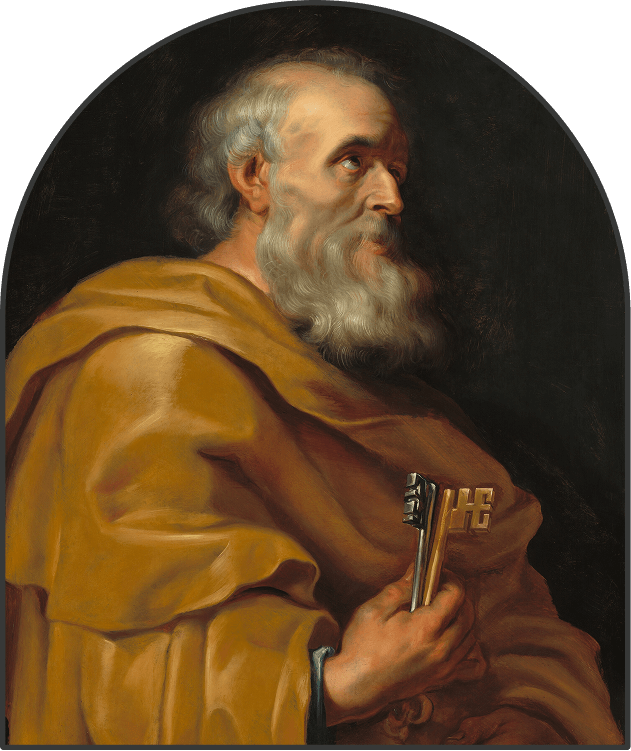
The Healing Bishop: Theodoret of Cyrus and the Mysticism of Pastoral Charity

Introduction
The fifth century was a time of significant turbulence in Christianity. The Church was being torn asunder by widespread controversies over basic issues over who Jesus was, His relationship with God, and how He should be worshipped. Many people were fleeing into the desert to escape persecution over these issues. During this time, God raised up a remarkable bishop whose life exemplified the integration of contemplative prayer, rigorous scholarship and passionate pastoral care. His name was Theodoret of Cyrus (c. 393-c. 458 AD), one of the last of the great theologians of the Antiochene school of thought. Theodoret was a highly sophisticated biblical exegete, an early church historian who provided invaluable resources on the history of monasticism and above all, a selfless shepherd whose love for his flock and compassion for the poor demonstrated how true mysticism is not the result of withdrawing from the distractions of life, but rather engaging with the human condition through compassion.
What makes Theodoret of Cyrus so important is the fact that he represents an authentic mysticism that is based on Scripture instead of philosophical speculation, directed toward charitableness instead of pursuing some ecstatic or transcendent experience, and expressed through pastoral ministry instead of monasticism. Despite Theodoret’s significant literary accomplishments and exceptional theological ability, what he is best remembered for by his contemporaries is his diligent service to the poor, his construction of bridges and aqueducts for the aid of the community, his active caregiving for those who suffered from illness, and his protection of orphans and widows. His mysticism, which consisted of intimacy with God through prayer, the meditation and study of Scripture and ascetic discipline, was not a separate compartment of life for him, but rather the unseen source from which flowed all of his public activities.
The suffering that can accompany theological fidelity is exemplified in Theodoret’s life. His commitment to the Antiochene understanding of Christ’s two natures—God’s divine and human nature—brought him into opposition with Cyril of Alexandria and ultimately resulted in Theodoret being condemned by the so-called “Robber Council” of Ephesus (449 AD). Although later, he was vindicated by the Council of Chalcedon (451 AD), Theodoret was forced to endure the pain of being called a heretic (even though he had the orthodox faith)—this caused him to suffer for defending the truth while being accused of error, which in turn caused Theodoret to develop greater refinement in his spirituality than before.
Additionally, Theodoret administered the diocese of Cyrus, which consisted of approximately 800 villages in northern Syria, exceptionally and effectively for approximately 40 years (c. 423-c. 458 AD) and brought it from being an area riddled with heresy and paganism into a vibrant Christian community through prayer, preaching, examples of his life and charity—there was no element of coercion or political manipulation whatsoever. His pastoral leadership shows that the depth of one’s contemplation empowers one to exercise effective leadership. Theodoret’s mystical relationship with God afforded him the practical wisdom to be an effective leader to a large, complex, and multifaceted Episcopal jurisdiction. Theodoret, through his example of holy living, not only led people to embrace the Christian faith, but also drew them closer to Christ.
Formation in Faith and Learning
Theodoret was born around 393 AD in the city of Antioch, Syria. Antioch was one of the earliest and most important centers of Christianity in the world. It was at this location that followers of Jesus were first referred to as “Christians,” according to Acts 11:26; thus, Antioch was the center of the development of a specific theological viewpoint regarding the full humanity of Jesus Christ and the literal and historical interpretation of the Holy Scriptures. Theodoret’s parents were wealthy and very devoted to Jesus Christ. They patiently endured many years of childlessness, and, to them, Theodoret’s birth was the fulfillment of God’s promise, demonstrating that Theodoret’s life had been a prayer to God from his parents, and as a result, he belonged wholly to God.
Upon Theodoret’s birth, his parents dedicated him to the service of God. There are many modern concerns about the lack of religious freedom and the limitations of childhood autonomy; however, in the late antique world, the act of a Christian parent dedicating a child to the Lord represented an incredible expression of faith, recognizing that all children belong to God and are gifts from God. Like Hannah dedicating Samuel to God’s service, Theodoret’s parents considered him to be a blessing from God and knew that they were obligated to respond to Him with gratitude (1 Samuel 1:11, 27-28).
While growing up, Theodoret received an outstanding education, both before and during his formative years, in secular and Christian disciplines. Not only were there many established schools of rhetoric, philosophy, and biblical exegesis in Antioch, but there were also trained teachers in Antioch who offered students an opportunity to learn the classical literature and the philosophy of the time, as well as how to apply rhetorical skills. However, the most significant contribution was made by the teachers of Antioch who provided an in-depth study of the Holy Scriptures—they taught their students about the proper interpretation of the biblical texts from historical and grammatical perspectives. The teachers of Antioch developed the exegetical tradition; therefore, it was the belief of the teachers of Antioch that proper interpretation of the biblical texts would take place through an examination of the historical context of the biblical text itself and through attention to grammatical accuracy when interpreting that text.
The teachers of Antioch held a methodological position distinctly different from that of the teachers of Alexandrian thought who developed the theological school of Alexandria (such as Origen, Clement, Cyril). The Alexandria school of theological thought is known for having developed a method of allegorical/biblical interpretation, that is, to find spiritual meanings hidden beneath the literal interpretations of Scripture. While the teachers of Antioch maintained that the allegorical interpretations of Scripture were valid and valuable, they likewise asserted that all allegorical meanings must be grounded in the literal interpretation of Scripture; thus, the literal historical reference of the biblical text should always be the basis of the allegorical interpretation of that biblical text, as the allegorical meaning of a biblical text emerges from the literal biblical text and does not replace it. The methodology of the Antiochene school of thought from which Theodoret learned would ultimately shape all the theology of Theodoret and ultimately became the basis for his disagreements with Cyril of Alexandria.
Theodoret’s father died sometime around 416 AD when Theodoret was about 23 years old. As an independent wealthy man, Theodoret needed to choose whether to live a life of leisure and benefit from his inheritance by pursuing a secular career or to fulfill his parents’ pledge to dedicate him to God by living a monastic way of life. In making his choice, Theodoret displayed the same pattern of life he continued throughout his life—he sold all his possessions and gave to the poor and chose to enter the monastic community near the city of Apamea—thus demonstrating a pattern of Christian commitment to contemplation expressed through practical service to those in need.
Theodoret spent approximately seven years (416-423 AD) as a monk, where he developed and received an intense period of spiritual formation. He received thorough teaching in the disciplines of rigorous asceticism (fasting, vigils, manual labor, and the custody of the senses), and most importantly, he was trained in the discipline of the continual offering of prayers. He received a thorough education in the Holy Scriptures; he devoted himself to the study of Scriptures continually. He memorized large portions of the Holy Scriptures, and he continually meditated upon the Holy Scriptures day and night. Theodoret also viewed a living example of holiness—the monks he wrote about in his work, Religious History (also referred to as History of the Monks of Syria) provide us with an invaluable collection of biographical sketches that include contemporary eyewitness accounts of monks who lived during this time period in Syria.
The years Theodoret spent as a monk not only prepared him for his ministry; they also provided him with an opportunity to experience genuine contemplative formation through the monastic life. Theodoret did not participate in the practice of asceticism as a way of life in order to eventually return to a life of active ministry. Theodoret truly received the monastic calling and found in his solitude, silence, and prayer the fulfillment of the “one thing necessary” (Luke 10:42). When he eventually was called by duty from the monastic community to the episcopal office, Theodoret had the mental and spiritual depths of contemplation to continue in his ministry; thus, he did not abandon his spiritual life of prayer to engage in the administrative work of the church returned to the episcopal office.
Reluctant Bishop: Called from Contemplation
Theodoret was about 23 years old in approximately 423 AD, when the Christians of Cyrus—a city in northern Syria near Antioch, capital of a diocese containing about 800 villages—needed a new bishop. The former bishop of Cyrus had either died, or had been deposed (the intent of this former bishop had not been clearly defined); therefore, the church of Cyrus urgently needed leadership, and the clergy and laity desired their new bishop to be Theodoret because of his reputation and his extensive education in biblical literature.
The metropolitan bishop (most likely the bishop of Hierapolis) ordained Theodoret as Bishop of Cyrus despite his protests. Throughout the late antique history, it was a common occurrence for Christians to be inducted into positions of leadership through ordination na episcopal rank against their wishes. The cases of Ambrose, Augustine, Gregory Nazianzen, and numerous others reflect the same practice. Like these preceding examples, Theodoret loved the peace and tranquility of monastic life and the freedom to remain in continual prayer.
Bishopric of Cyrus was about to change Theodoret’s experience of the Christian monastic commitment forever—and it changed substantially; everything he loved and cherished about monasticism would be replaced by the reality of the duties associated with an episcopal office: constant interruptions, chaotic situations created by others, undue stress due to administrative headaches, theological dissension, and political entanglements—everything this brief period taught him about living in a monastic setting would become a memory lost forever.
But, similar to his predecessors, Theodoret realized that he could not avoid what he believed to be God’s providential will for him to serve as the Bishop of Cyrus, just as God had elected or raised others to serve through their ordinations. As Paul recorded in Acts 20:28, the Holy Spirit appoints overseers to “care for the church of God.” Additionally, Theodoret recognized that he received the same divine calling to pastoral service.
The Shepherd’s Heart: Practical Mysticism
Theodoret’s mysticism expressed itself primarily through pastoral charity—tireless work for his people’s spiritual and material welfare. His achievements in Cyrus demonstrate that contemplative depth generates practical effectiveness:
Evangelization
Theodoret found his diocese substantially pagan—perhaps more than half the population still worshiped the old gods. Rather than using coercion (as some Christian rulers did), he evangelized through preaching, example, and demonstration of Christianity’s practical benefits.
He preached regularly, expounding Scripture with clarity and vigor. His surviving sermons reveal sophisticated exegesis, profound theological insight, and pastoral sensitivity—addressing real questions his hearers faced, correcting errors gently, inviting rather than threatening.
He also used apologetic arguments, showing paganism’s intellectual bankruptcy while defending Christianity’s rational credibility. His Cure for Pagan Maladies (also called Therapy of Greek Diseases) presents systematic case for Christian truth against pagan philosophy, demonstrating that Christian doctrine answers questions philosophy raises but cannot resolve.
But most powerfully, he demonstrated Christianity’s superiority through charity. When floods devastated villages, Theodoret organized relief. When disease struck, he established care facilities. When famine threatened, he secured grain. Pagans saw Christians caring for all—including pagans themselves—and many were drawn to faith that produces such love. As Jesus taught,
By this all people will know that you are my disciples, if you have love for one another
John 13:35
The results were remarkable. Theodoret later wrote that when he became bishop, Cyrus contained perhaps 800 heretics; by the end of his episcopate, fewer than a dozen remained. While conversion numbers are notoriously unreliable in ancient sources, the substantial transformation is historically credible—Theodoret genuinely converted his region primarily through preaching and charity rather than force.
Building Projects
As a result of both of these expressions of Theodoret’s spiritual work, he had significant building projects throughout his diocese. Churches, aqueducts, bridges, and other publicly-owned structures were built due to the needs of the local population. Building projects were not intended to be an expression of arrogance or pride but rather to help meet the needs of those whom Theodoret ministered to.
For example, all communities needed places to worship, and therefore churches; isolated villages needed a means of connecting with neighboring communities via a bridge; and cities required water systems to promote public health through sewage disposal. Building projects were funded by a combination of Theodoret’s episcopal wealth and support of wealthy patrons who were appealed to for assistance, and Theodoret personally supervised the construction of each project to ensure quality and to prevent corruption. Some of the projects were small buildings, like churches that seated approximately 50 people, while others, such as aqueducts, served the needs of thousands of people.
Care for the Poor
All of these projects represented a practical and symbolic demonstration of Christian love. Christian love is not limited to fellow Christians. Theodoret demonstrated this through his charitable service to many pagans, Jews, and heretics.
Jesus Himself taught,
It is not enough to teach with words; we must teach by deeds. We must show the pagans and heretics that our God is truly the God of love by demonstrating love ourselves.
Theodoret not only taught this principle, but he lived it. Contemporaries testified that Theodoret gave away virtually all episcopal income beyond basic necessities, living simply while distributing resources to the needy.
He particularly championed widows and orphans—those most vulnerable in ancient society. Following James’s definition of “pure and undefiled religion” as visiting “orphans and widows in their affliction” (James 1:27), Theodoret ensured these vulnerable populations received Church protection. He intervened with civil authorities on their behalf, secured inheritances unjustly denied them, and provided material support.
His charity extended beyond Christians. He aided pagans, Jews, and heretics in need—demonstrating that Christian love isn’t tribal loyalty but universal compassion reflecting God’s own love for all humanity. Jesus taught,
Love your enemies and pray for those who persecute you, so that you may be sons of your Father who is in heaven, for he makes his sun rise on the evil and on the good
Matthew 5:44-45
Theodoret lived this teaching.
Reform of Clergy
Theodoret knew that many of the clergy who ministered in his diocese were either poorly educated or unqualified due to a lack of moral fortitude. He discovered that a large number of the clergy were barely able to read the Scriptures that they were to preach from. Many were morally lax, including those who drank heavily, fornicated, or embezzled money from the congregation. Many clergy also neglected the congregation and, therefore, the people of God had no pastoral provision.
To remedy this, Theodoret reformed the clergy in his diocese by developing systems of education for clergy, but he also removed those clergy who would not comply with the reforms and ordained other, more qualified candidates as clergy. Theodoret demonstrated to the clergy of his diocese that the clergy must set an example for their congregations (1 Peter 5:3), that their lives must be a reflection of the life of Jesus, and that they must continually seek God in order to be able to lead others to God.
Theodoret believed that individual priestly life should reflect a depth of contemplative engagement with God and the Scriptures, and priests were to develop disciplined spiritual practices of prayer and meditation on the Scriptures. Without such a contemplative depth, a priest will not be able to properly expound the Scriptures. Theodoret’s reform efforts were met with resistance and contempt by some clergy, but he persevered. The long-term reform of the clergy and overall spiritual transformation of the diocese attests to Theodoret’s efforts and success.
The Religious History: Chronicling Holiness
The Religious History (also called History of the Monks of Syria) is among Theodoret’s most important works. Containing thirty biographies of Syrian ascetics whom he personally knew or who he had researched extensively, the Religious History provides a unique insight into fifth-century monasticism and is therefore an important document for studying the era. Additionally, Theodoret’s views as an ascetic, or contemplative, are omnipresent throughout his work.
The Purpose
In writing the Religious History, Theodoret sought to preserve the memory of holy men, so that their examples might encourage others to follow Christ. He saw the importance of reading about the lives of saints and how it could assist the believer in growing in holiness through identifying with saints and imitating their lives. Paul’s writing: “Be imitators of me, as I am of Christ” (1 Corinthians 11:1), provides a similar context for Theodoret as he presents the monks featured in the Religious History as examples worthy of imitation.
Furthermore, Theodoret also wrote from an apologetical viewpoint to demonstrate to both pagans and heretics that true holiness comes from following Christ, that through the grace of God anyone can experience personal transformation as a result of Christ’s power, and that the examples of holiness produced from the Gospel far exceed the moral examples which occurred in classical antiquity. The miracles and examples of holiness demonstrated by these individuals should not only challenge one’s view of morality, but rather serve as indicators that the Gospel contains the life-transforming power of God.
The Subjects
Theodoret’s subjects included:
Hermits who lived solitary lives in caves, cells, and even on mountain tops, relying on very little food, while spending all day and night in prayer.
Stylites like Simeon Stylites, one of the most famous ascetics, who preached to thousands from atop a pillar for decades, performed miracles, and counseled Christians.
Coenobitic monks who lived together under an abbot, followed a Rule of Life, and engaged in communal worship and work.
Wandering ascetics who possessed nothing except for their faith and traveled wherever God led them.
Enclosed ascetics who closed themselves off from contact with others and received food through small openings in their cells.
Each of these described a different aspect of radical devotion to Christ and the pursuit of the “one thing necessary” (Luke 10:42). Theodoret does not seem to show preference toward any particular style of monasticism, but rather honors all who genuinely seek God.
Common Themes
While the various types of monks vary in lifestyle, the biographies of the monks reveal a number of common characteristics that point to the radical commitment that each made to serving God. Certain themes that are repeatedly present include:
Radical renunciation. Abandoning worldly wealth, comforts, family, and career opportunities to pursue God alone, as a literal interpretation of Jesus’ command:
If anyone comes to me and does not hate his own father and mother and wife and children and brothers and sisters, yes, and even his own life, he cannot be my disciple
Luke 14:26
Unceasing prayer. They prayed constantly—formally during specific times of each day, and informally throughout the rest of the day, continuous recitation of Psalms and deep meditation on them; praying is the one activity which permeated all they did.
Ascetic discipline. Rigorous fasting, little sleep, discomfort, and having custody of their senses; training bodies and minds for the spiritual realm, similar to how athletes prepare for competition (1 Corinthians 9:24-27). They do not view the body as an enemy, but rather view it as an instrument to serve and glorify the spirit.
Spiritual warfare. They experienced intense demonic attacks—temptations, deceptive visions, and physical attacks, they engage in prayer, Scripture, invocation of Jesus’ name, and the signing of the cross.
Miracles and healings. Many performed miraculous healings, exorcisms, and prophetic utterances—demonstrating that holiness connects believers to divine power.
These signs will accompany those who believe: in my name they will cast out demons
Mark 16:17
Pastoral ministry. Despite withdrawing physically, they exercised spiritual ministry—counseling visitors, teaching disciples, interceding for others. Their solitude served rather than abandoned the Church.
Humility. This is a defining characteristic of true ascetics; pride is always a potential temptation, but true ascetics attribute their success and holy living to God.
Charity. They served the poor generously by providing food for the hungry and have often been known to provide for large crowds through the miraculous multiplication of very little.
Theodoret’s Admiration
Theodoret expresses great admiration for the monks referred to in his Religious History; however, he recognizes that not all Christians are called to live extreme ascetic lives. In his biographies, he draws a distinction between counsels (forms of perfection that can be followed) and commandments that all Christians are obligated to follow (to love and be honest). Monks follow counsels, while all are obligated to follow commandments; however, the examples of holiness lived by monks can inspire and encourage others to pursue holiness, even if they do not have the same call to follow as monks.
The Religious History contains the ideals that Theodoret placed on the monastic view of theology and contemplative living, even though he was unable to physically follow the hermit lifestyle due to his responsibilities as a bishop. Theodoret remained a monk at heart and fulfilled that calling in his role as bishop.
Biblical Exegesis: Contemplative Reading
In addition to creating his Religious History, Theodoret wrote extensively on biblical texts. He produced a body of biblical commentaries that served not only to provide his fellow believers with an understanding of the Scriptures but also as a means of inspiring others to follow the example of Jesus Christ. His Commentaries were intended to provide a model for how to live according to God’s Word.
Antiochene Principles
Following Antiochene tradition, Theodoret insisted on:
Literal-historical meaning. Scripture refers to real historical events, people, and places. The Exodus really happened; David actually wrote psalms; Jesus truly walked in Galilee. Allegory doesn’t replace history but builds on it.
Grammatical precision. Careful attention to language—syntax, grammar, word meanings—is essential. The Holy Spirit inspired not just general ideas but specific words. Exegesis requires linguistic precision.
Authorial intent. We should ask what biblical authors intended to communicate to original audiences. This requires historical context, understanding cultural background, recognizing literary genres.
Christological reading. Old Testament genuinely prophesies Christ, not through arbitrary allegorizing but through types (divinely intended prefigurations) and direct prophecies. Theodoret identifies these carefully, distinguishing genuine fulfillment from forced connections.
Practical application. Scripture exists not just to inform but to transform. Exegesis should lead to prayer, virtue, and love. Mere intellectual mastery without life change misses Scripture’s purpose.
Commentary on the Psalms
Theodoret’s Commentary on the Psalms demonstrates these principles. He reads each psalm carefully:
Historical context: Who wrote it? What circumstances prompted it? Who were its original readers?
Literal meaning: What does the text say directly? What emotions does it express? What requests does it make?
Christological fulfillment: How does Christ fulfill this? Which verses prophesy His coming, suffering, or reign?
Application: How should Christians pray this psalm? What does it teach about God? What virtues does it encourage?
For example, in Theodoret’s interpretation of Psalm 22 (the psalm Jesus quotes from the cross— “My God, my God, why have you forsaken me?” ), Theodoret notes:
- Historically: David wrote it, perhaps fleeing from Saul or Absalom, experiencing desperate circumstances.
- Literally: It expresses deep suffering, feeling abandoned, yet maintaining trust in God who has delivered ancestors.
- Christologically: Jesus fulfills it supremely—His crucifixion matches details (hands and feet pierced, garments divided, mockers shaking heads).
- Application: Christians facing suffering can pray this psalm, identifying with Christ’s suffering and trusting God’s ultimate deliverance.
This multi-layered reading honors Scripture’s complexity without losing clarity. It’s simultaneously historically grounded, theologically rich, and practically applicable.
The Song of Songs
Theodoret’s work on the Song of Songs presents a spiritual approach for reading this love poetry—reading it as the love between Christ and His Church or as Christ’s love for each individual soul. In the modern day, the debate continues as to the validity of such an approach to interpreting this Scripture; however, Theodoret’s spiritual interpretation of the Song of Songs is consistent with the interpretation of the Song by the majority of ancient interpreters.
According to Theodoret:
The Bride is a picture of the Church or a believer seeking Christ.
The Bridegroom is Christ pursuing His people out of love.
The love between the Bride and Bridegroom represents the true spiritual union of Christ and believers; this is a loving relationship characterized by mutual affection, or passionate desire.
Obstacles and delays to their relationship are evidence of the trials that purify their faith and teach them to persevere and anticipate.
The Song of Songs teaches us that our relationship with God is not to be viewed as a duty; it should be viewed as the highest expression of love—an expression of warmth, joy, and closeness. Believers should desire God with corresponding intensity— “My soul thirsts for God, for the living God” (Psalm 42:2).
Those who read the Song of Songs using the understanding that God wants His people to experience His love and longing for them can find the Song of Songs to be a means of nourishment for their prayer life and for deepening their relationship with Christ. Therefore, contemplative readers of the Song of Songs can benefit from the experience of reading it slowly, meditating upon it, and applying it to their personal relationship with Christ.
Prophetic Books
Theodoret’s commentaries on Isaiah, Jeremiah, Ezekiel, and the Twelve (minor prophets) emphasize both historical meaning (prophets addressed specific situations in Israel/Judah) and prophetic fulfillment in Christ and the Church.
He’s particularly interested in messianic prophecies—Isaiah 53 (suffering servant), Isaiah 7:14 (virgin birth), Micah 5:2 (Bethlehem), Zechariah 9:9 (king on donkey). He defends these against Jewish interpretations denying Christian fulfillment and against overly allegorical readings disconnecting prophecy from history.
He also finds moral teaching—prophets’ emphasis on justice, mercy, true worship rather than empty ritual. These themes remain relevant: God still demands justice for the poor, mercy toward the vulnerable, authentic worship from the heart rather than mere external observance.
Reading Theodoret’s commentaries, one encounters not just scholar analyzing texts but pastor feeding his people, contemplative sharing fruits of meditation, believer encountering living God through His Word.
Christological Controversy: Suffering for Truth
Theodoret’s life in the latter half was primarily spent in theological debate over the dual nature of Jesus Christ, and this conflict provides insight into both the heights of theological debate and depths of ecclesiastical politics, i.e. centrality of truth is demonstrated through their great acts of injustice upon each other for the sake of pursuing truth.
The disagreement between the two philosophies of the Antiochene vs the Alexandrian Theological Schools:
The Antiochene-Alexandrian Divide
Two theological schools offered different Christological approaches:
Alexandria (represented by Cyril of Alexandria) emphasized Christ’s unity—the divine Word (Logos) united Himself to human nature, making one Christ. Alexandrians feared any language suggesting “two Christs” or dividing the Incarnate Son into separate divine and human persons. They favored the phrase “one nature of the Word incarnate” (though “nature” here meant something like “person” ).
Antioch (represented by Theodoret and his mentor Theodore of Mopsuestia) emphasized Christ’s two natures—fully divine and fully human, each complete and undiminished. Antiochenes feared any language suggesting Christ’s humanity was swallowed up by divinity or that He wasn’t completely human. They insisted on clearly distinguishing what belongs to each nature while confessing one person.
Both Theological Schools claimed to preserve biblical truth and rejected Apollinarianism (rejection that there was a human soul in Christ) but both maintained the belief of simultaneously being God and man (through the dual nature of Christ) while maintaining a distinct emphasis and suspicion toward each other.
The Nestorian Controversy
The Nestorian Controversy began with the objection of Nestorius (the patriarch of Constantinople and an Antiochene theologian) towards the appellation “Mother of God” ( Theotokos), preferring the title of “Mother of Christ” (Christotokos); his concern was that Mary merely gave physical birth to Jesus’ human form, but not the divine Logos, who existed before Mary did. Nestorius assumed that the application of the title Theotokos would confuse the two natures or imply that Mary had some supremacy over Jesus.
Cyril quickly attacked Nestorius, asserting that Mary would be the mother of only one individual (the incarnated God the Son) and therefore would create a heretical distinction between the two natures of Christ. The divide between Alexandria and Antioch quickly expanded beyond the theological implications into a wider battle for ecclesiastical authority between the two schools.
The Council of Ephesus in AD 431 condemned Nestorius and established the term Theotokos. Although Theodoret was absent from the council, he defended Nestorius believing his writings and teachings to be orthodox despite the poor wording which created confusion. Theodoret attacked Cyril’s terminology by calling it crypto-Apollinarianism, and thus began the bitter rivalry between Cyril and Theodoret.
Theological Precision
Theodoret had an orthodox Christology that was vindicated at Chalcedon in AD 451. The two-held doctrines upheld by Theodoret were as follows:
Two natures: Christ possesses complete divine nature and complete human nature—not a mixture or hybrid but each nature full and undiminished.
One person: The full Divine (Logos) assumed human nature in the incarnation and through this act the two natures become perfectly united in “one individual.”
Asymmetrical union: The asymmetrical union of Christ’s two natures does not alter or diminish the Divine, but instead elevates the status of the Humanity of Christ.
Real distinction: We can distinguish conceptually what belongs to each nature—divine attributes (omnipotence, omniscience, eternality) and human attributes (hunger, thirst, suffering, death). This isn’t dividing Christ but acknowledging both natures’ reality.
Communicatio idiomatum (communication of attributes): By personal union, attributes that belong to either nature can be described as being applicable to the one individual (i.e. we can say “God died” (God being a reference to the individual who is God in his human nature), or “that Man made the world,” (in reference to the individual who is Human, but only through the inclusion of the Divine).
This is essentially Chalcedonian Christology (defined in 451), but in 430s-440s it was controversial. Cyril and his supporters suspected the Antiochene language divided Christ. Theodoret and allies suspected Alexandrian language confused natures. Both sides genuinely feared heresy while sometimes unfairly caricaturing opponents.
The Robber Council
In AD 449, Emperor Theodosius II convened the council at Ephesus to address the continuing ecclesiastical tensions that had resulted from the Christological issues. The council, later named “Council of Robbers” (Latrocinium), was dominated by the supporters of Cyril of Alexandria and led by his successor, Dioscorus. Dioscorus and the members of the Alexandrian School refused to permit the leaders of the Antiochene School from providing any defense of themselves and instead relied upon intimidation through physical violence to force many to declare themselves to be “heretics,” including Theodoret.
As a result of this ecclesiastical result and his previous ecclesiastical position, Theodoret was stripped from his position and ordered not to leave Cyrus, and excommunicated. All of this occurred due to ecclesiastical politics, imperial favoritism and animosity towards Theodoret, even though Theodoret’s teaching was completely in agreement with the orthodox view of Christology.
In response to the Robber Council, Theodoret maintained Christian dignity and received the condemnation with great restraint. Theodoret wrote letters seeking redress for his excommunication, a detailed explanation of his viewpoint, and how his viewpoint was in complete agreement with Sacred Scripture and the decisions of the previous councils. Theodoret did not seek to create a schism nor did he attack the Church but rather recognized that although the ecclesiastical decision was unjust he was to be patient and await God’s time to rectify the decision.
Through this period of intense suffering, Theodoret developed and matured in his Christian walk and experiences; he would be one who, like Job was able to keep faith in God despite never knowing or understanding God’s purpose behind the suffering; likewise, even though his heart sank into his stomach due to failure of the Robber Council to recognize his orthodoxy, he was able to maintain his “rejoice in [his] sufferings” (Colossians 1:24), knowing they conformed him to Christ.
Vindication at Chalcedon
In 451 AD, the Council of Chalcedon—with new emperor Marcian’s support—reversed the Robber Council’s decisions. Theodoret was reinstated, his orthodoxy affirmed, his teaching recognized as faithful to apostolic tradition. The Council’s Christological definition essentially adopted Antiochene precision while incorporating Cyrilline concerns:
Christ is “acknowledged in two natures, without confusion, without change, without division, without separation” —the two natures retaining their properties yet united in one person. This vindicated Theodoret’s insistence on both natures’ reality and distinction while maintaining personal unity.
However, the vindication came with a price. To secure broader acceptance, Chalcedon anathematized Nestorius (whom Theodoret had defended) and condemned “Nestorianism” as heresy. Theodoret was required to anathematize Nestorius explicitly—which he did, though possibly reluctantly, recognizing that Nestorius’s language (however orthodox his intention) had caused scandal and confusion.
Some Antiochene bishops refused to accept Chalcedon’s anathemas, considering them betrayals of Theodore of Mopsuestia and Nestorius. This led to schism—the Church of the East (often called “Nestorian Church” ) separated, persisting in Persia and eventually reaching as far as China and India. Theodoret remained within the Orthodox communion, accepting Chalcedon’s decisions while privately perhaps regretting some political compromises.
Prayer Life: The Hidden Foundation
Even during times when he experienced public controversies and spent energy on his work as a pastor, Theodoret still followed a strict daily prayer routine that allowed him to continue all of the activities he participated in throughout the day. Although he did not write a formal book on his practice of prayer, he made multiple references to it in his writings, which provide insights into what this aspect of Theodoret’s life consisted of.
Liturgical Prayer
As bishop, he celebrated the daily Eucharist and prayed the canonical hours. This was not simply a list of duties for Theodoret but rather an act of worship, in which he was united with God through Jesus’s sacrifice made real in the liturgy of the church. He pointed out that the Eucharist is the central prayer of all Christians. The whole church, with Jesus Christ, offers herself to God the Father and receives Christ’s body and blood and anticipates the heavenly banquet. He taught that unless a person has a pure conscience and a faithful belief in the real presence of Christ in the Eucharist, and unless the person exhibits charity towards their neighbor, they could not come before God and live fully in Christ.
Scripture Meditation
Theodoret had a deep understanding of the Scriptures because he had been reading and reflecting on them for many years in a contemplative manner. Theodoret did not just read the Bible for intellectual knowledge, but allowed the Word of God to influence his thinking, his decisions, and to nourish his spirit through prayer and meditation. Theodoret used what would later be called lectio divina, which is a method of slow reading of the Bible, and to meditate on what was read and to pray for understanding, contemplation and inspiration.
For instance, Theodoret did not read the references of Jesus healing the blind man simply to know the events. He read the account and asked questions about it, like “What does this passage say about the love of God for mankind?” “In what way am I blind (spiritually)?” “What kind of healing do I need?” “Lord, let me see!”
Intercessory Prayer
As a shepherd, Theodoret continually prayed for his people. Just as Moses prayed for the children of Israel (Exodus 32:31-32) and as Paul prayed for the churches he founded (Philippians 1:3-4), Theodoret continually took the needs of the people to God, asking on their behalf for spiritual help, growth, protection from false teachings, and material assistance.
All of his extensive charitable activity was rooted in prayer. Before he began any building or construction projects, Theodoret prayed for the project. During times of famine and distress, he prayed for the food needed to feed the hungry. When faced with difficult decisions, he sought God’s wisdom. The great success of his administrative work was because it was founded on prayer.
Ascetic Discipline
Although Theodoret was living as a bishop rather than a monk, he participated in the practice of asceticism insofar as the circumstances of his life allowed him.
Fasting: He routinely abstained from food during most of the year to develop self-control and to develop a “place for prayer” .
Vigils: He prayed through vigils at night and therefore took time for extended prayer at night, as Jesus did (Luke 6:12).
Simplicity: He lived a simple life at the same time that he was a bishop and gave most of his income to the poor rather than using it for luxury and ostentation.
Celibacy: He lived celibately, choosing to devote his entire being to God and to doing the work of his bishopric while remaining pure.
All of these practices allowed the Holy Spirit to work in him as he cooperated with grace, creating conditions within himself that were conducive to growth in holiness and eliminating conditions that would prevent him from living in close communion with God.
Contemplative Silence
While Theodoret was busy, he made time in his life for moments of silence and solitude. Although these moments may have been short and usually happened just before or just after his daily workday, these moments allowed him to commune with God without interference from others.
Theodoret taught that our prayers become nothing but “action” if we do not take the time to “contemplate” on the prayers we offer up to God. Theodoret knew that our “effectiveness” is based upon our connection with God. He also taught that the “one thing necessary” (Luke 10:42) for all true believers is that they must know God “in spirit and in truth” .
Theology of Suffering: Finding God in Pain
Theodoret’s view of the importance of how to find God in suffering deepened through his unjust condemnation and exile, and became part of his theology of suffering. He had always taught that Christians should expect to suffer (John 16:33) and that the trials we suffer are for the purpose of growing our faith and sharpening our faith (James 1:2-4) and that any suffering we encounter now is a preparation for the glory we will experience in heaven (Romans 8:18). Although Theodoret had taught these theological concepts for many years, he gained a deeper understanding of the concept of suffering through the experience of suffering himself.
As Theodoret reflected on his experiences through his writings, he conveyed several major theological themes related to suffering:
Providence over all: Even though we may not understand the reason for suffering in the present, we can trust that God allowed us to suffer for His own purposes and, like Job, we may eventually come to understand. Although we may not be able to understand it, we must still trust that there is divine wisdom behind the suffering we are experiencing.
Conformity to Christ: Just as Christ suffered unjustly at the hands of men, so too did Theodoret share in His sufferings (albeit unjustly), and through these sufferings, he was conformed to the image of Christ Jesus by suffering with Him (1 Peter 4:13).
Purification through trial: Just as gold is refined by fire to remove the impurities in it (1 Peter 1:7), so will the dross of our lives be removed through suffering. The act of suffering serves to reveal the true nature of one’s character, strengthen the virtues of one’s character, and enable one to rely on God rather than man’s strength.
Witness to truth: By suffering for truth, the one who has true conviction is able to affirm their conviction through their actions and not just through words. Therefore, those who abandon their convictions when they are pressured to abandon them never truly possessed the conviction in the first place. Those who are able to endure suffering for their conviction are true witnesses to the value of truth.
Hope of vindication: God eventually vindicates the righteous, whether in this life (as happened when Chalcedon reversed the Robber Council) or in the next (when “God himself will be… judge,” 2 Timothy 4:8). Ultimate justice is certain even if delayed.
Spiritual warfare: Behind human conflict stand spiritual forces— “principalities and powers” (Ephesians 6:12). Theological disputes aren’t merely intellectual disagreements but spiritual battles for truth against error.
Theodoret’s patient endurance through these years demonstrates mature faith—not feeling-based spirituality that collapses under pressure but trust anchored in divine promises that remain steady through ultimate tests. He finished his race, kept the faith, and received vindication both temporal (at Chalcedon) and eternal (which we trust he now enjoys).
Final Years: Faithful Unto Death
When the Council of Chalcedon concluded in 451 AD, Theodoret returned to the City of Cyrus and resumed his pastoral work as a bishop. His last years (the period between 451 and approximately 458 AD) were relatively peaceful. The controversy regarding the person and work of Jesus Christ was still not completely resolved, but the official condemnation against Theodoret was removed. Theodoret was recognized to be an orthodox bishop of the Church and to have ministerial authority due to his pastoral work.
During this time, Theodoret continued to be active as a writer, producing biblical commentaries, theological writings, and letters of spiritual advice. He also continued his charitable works, taking care of the poor in the City of Cyrus, constructing churches, and building up the community.
In addition, Theodoret prepared clergy for ministry, defended the Christian faith, and prepared his successor. He died probably around 458 AD, although this is not certain. His passing was not marked by dramatic events or spectacular signs but was simply that of an orthodox bishop finishing his course and entering into eternal rest. Like the Apostle Paul, Theodoret could say:
I have fought the good fight, I have finished the race, I have kept the faith
2 Timothy 4:7
Theodoret’s death was felt by Christians throughout Syria. He had transformed the city of Cyrus from a stronghold of heresy into a thriving Christian community. He had been generous to the poor, defending the Christian faith courageously and suffering patiently for the sake of his faith. Theodoret is an example of what it means to be a bishop in the spirit of Christ, being the shepherd of Christ’s Church.
Legacy: The Healing Bishop
The Church has received a great legacy from Theodoret of Cyrus in that he has shown that contemplation and ministry can be two arms of the same body—the body of Christ. Thus, he serves as an excellent example of this principle for both the modern Church and for bishops.
Biblical exegesis: Theodoret’s biblical commentaries are models of how to interpret one passage literally-historically, and simultaneously find a Christological fulfillment, and practical relevance for the Church in the present. His commentaries are still valuable to today’s exegetes.
Christological precision: Theodoret’s insistence upon separating Jesus’ two natures, and his insistence that Jesus is one person, contributed to articulate Chalcedonian definitions of the person of Christ. Theodoret provided a centralized voice within the Church for maintaining Jesus’ dual natures.
Monastic history: Theodoret’s Religious History has preserved for us records and documentation of Syrian monasticism, giving us a glimpse into those spiritual practices that have had a profound impact on the development of Eastern Christianity.
Pastoral theology: Theodoret’s time as a bishop of the Church shows us that the principles of effective pastoral care can be found in the life of one who is committed to a life of prayer. Through prayer, a pastor will have a charitable heart and a generous spirit; likewise, when one loves God sincerely, that love and concern will lead one to serve one’s neighbor.
Courage in controversy: Theodoret’s example of direct and honest witness was an example for us all to trust in God’s vindication as more valuable than man’s opinion of us. Theodoret exemplifies how one can remain true to the confession of Christ’s orthodox faith in the face of unjust condemnations.
Integration of contemplation and action: Theodoret’s life and examples of meditation provide examples that contemplative monks may be called into an active ministry of serving others, while maintaining their prayer life and when possible governing the communities in which they minister. He also demonstrates how mystical contemplatives can work as effectively as administrators in the Church as long as they remain grounded in sacred Scripture and disciplined through asceticism.
Conclusion: The Prayer That Heals
Lastly, Theodoret invites modern Christians into a life of mysticism that is grounded in Jesus Christ through Scripture, expressed through the practice of charity and validated by their effectiveness in ministry. Theodoret presents a challenge to the false dichotomies created in Christian thought; these include:
Prayer versus action: Theodoret believed that prayer and action complement each other. Prayer is the same as doing good works, and doing good works is doing prayer.
Mysticism versus scholarship: Theodoret argued that the two cannot be separated; they are mutually beneficial, and they serve to keep the contemplative experience grounded in reality.
Spirituality versus social justice: Through prayer, Theodoret’s life demonstrated a passionate dedication to aid the needy. His desire to enter into fellowship with God in prayer encouraged him to care for and serve those whom Jesus described as “the least of these” (Matthew 25:40).
Contemplation versus administration: Even while managing a large number of parishes, social justice activities, and theological debates, Theodoret continued to pray and keep in communion with God. Therefore, contemplatives can serve effectively as leaders.
Truth versus charity: Theodoret affirms orthodoxy, demonstrates a strong commitment to the orthodox faith, and demonstrates the mercy of God toward others.
For pastors, Theodoret serves as a model, indicating that the office of bishop (and by extension, all pastoral ministry) is a contemplative vocation. Pastors are to be so intimately familiar with God that they can effectively serve His people; that is, they hear God’s Word, and preach God’s Word through prayer; and that they shepherd souls through communion with the Chief Shepherd.
Most importantly, Theodoret’s example of living out a life of mystical experience is grounded in practical love. Those who genuinely encounter God in prayer can do nothing less than love and serve their neighbors. Those who experience communion with Christ in the Eucharist must serve Christ in those who are poor. Those who receive God’s mercy must extend that same mercy to others.
Through Theodoret, we can see how God can turn unjust suffering into redemption; through Theodoret’s suffering and faith, he was also refined, and God’s ultimate reward will come at the right time:
Let us not grow weary of doing good, for in due season we will reap, if we do not give up
Galatians 6:9
Theodoret lived this exhortation—persevering in prayer, charity, and truth despite opposition, weariness, and injustice. He reaped vindication at Chalcedon and eternal reward in heaven. May his example inspire us to similar faithfulness.
I have learned to find God everywhere—in Scriptures read carefully, in the poor served lovingly, in suffering borne patiently, in the Eucharist celebrated faithfully, and in silence maintained humbly. He is always present to those who seek Him with sincere hearts.
Theodoret of Cyrus (paraphrase capturing his teaching)
Our Editorial Standards:
All our content on Christian meditation traditions, prayers, and spiritual practices is reviewed by Dr. Megan Remington, PhD, ensuring theological soundness and spiritual depth.
We draw from centuries of Christian contemplative tradition, citing respected theological sources, biblical references, and established spiritual practices.
Our team understands that spiritual struggles are deeply personal. We approach topics of anxiety, strength, healing, and peace with compassion and biblical wisdom.
We continuously review and update our spiritual resources to ensure they remain relevant and aligned with orthodox Christian teaching.
Each article clearly identifies our writers and reviewers, along with the theological sources and biblical foundations used.
 To guarantee that all of our information is accurate, we ensure that all our sources are reputable. That means every source is authenticated and verified to be backed only by medical science.