


 App Store
  Google Play
 Biblical Foundations of Christian Meditation

Christian meditation is deeply grounded in the teachings of the Bible, where believers are continually encouraged to reflect, ponder, and immerse themselves in God’s Word and His presence.
The practice is not just a modern innovation but is firmly rooted in Scripture, particularly in the Psalms and other books of the Bible, which call believers to meditate on God’s Word and His works.


The Teachings of Jesus and Paul
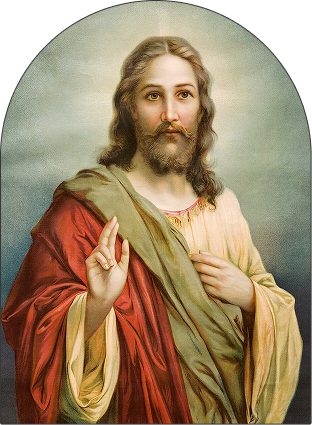
Jesus’ Example and Teachings
Jesus exemplified the practice of withdrawing to solitary places to pray and meditate, as seen in moments such as His 40 days in the wilderness (Matthew 4:1-11), His nights in prayer on mountainsides (Luke 6:12), and His time in Gethsemane (Mark 14:32-42). He also taught meditative prayer, giving the Lord’s Prayer (Matthew 6:9-13) as a model, which encourages believers to reflect deeply on God’s holiness, provision, and guidance.
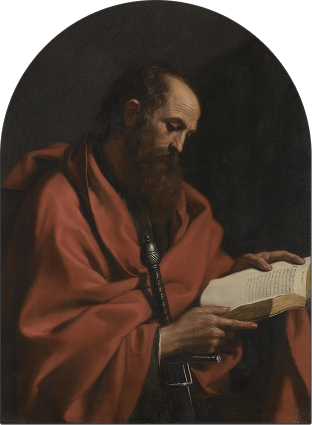
Paul’s Reflections and Instructions
Paul’s epistles emphasize the mental and spiritual focus that forms the foundation of Christian meditation:
III–V Centuries
III–V Centuries
The Desert Fathers
and Mothers
In the 3rd century, seeking a purer form of spiritual life, the Desert Fathers and Mothers retreated to the deserts of Egypt, Palestine, and Syria. These early Christian ascetics emphasized silence, solitude, and continuous prayer, laying the groundwork for Christian monasticism. Their practices included repetitive prayer and meditation on Scripture, aiming for an unceasing awareness of God’s presence.
V Centuries
V Centuries
John Cassian
and the Conferences
John Cassian, a monk and theologian, documented the wisdom of the Desert Fathers in his work ”The Conferences.” He emphasized the importance of ceaseless prayer and introduced the concept of “pure prayer,” a form of meditation focused entirely on God without distraction. Cassian’s writings significantly influenced Western monastic practices, promoting meditation as a means to attain spiritual purity. Lectio Divina and Monastic Practices (6th–12th Centuries) By the 6th century, monastic communities, particularly the Benedictines, formalized the practice of “Lectio Divina” (divine reading). This meditative approach to Scripture involves four steps: reading (lectio), meditation (meditatio), prayer (oratio), and contemplation (contemplatio). Guigo II, a Carthusian monk, articulated this method in the 12th century, providing a structured approach to meditative prayer that became central to monastic spirituality.
IV Centuries
IV Centuries
The Desert Fathers
and Mothers
These early Christian ascetics emphasized silence, solitude, and continuous prayer, laying the groundwork for Christian monasticism. Their practices included repetitive prayer and meditation on Scripture, aiming for an unceasing awareness of God’s presence.
III
III
John Cassian
and the Conferences
Cassian’s writings significantly influenced Western monastic practices, promoting meditation as a means to attain spiritual purity. Lectio Divina and Monastic Practices (6th–12th Centuries) By the 6th century, monastic communities, particularly the Benedictines, formalized the practice of “Lectio Divina” (divine reading). This meditative approach to Scripture involves four steps: reading (lectio), meditation (meditatio), prayer (oratio), and contemplation (contemplatio). Guigo II, a Carthusian monk, articulated this method in the 12th century, providing a structured approach to meditative prayer that became central to monastic spirituality.
II
II
The Desert Fathers
and Mothers
He emphasized the importance of ceaseless prayer and introduced the concept of “pure prayer,” a form of meditation focused entirely on God without distraction. Cassian’s writings significantly influenced Western monastic practices, promoting meditation as a means to attain spiritual purity. Lectio Divina and Monastic Practices (6th–12th Centuries) By the 6th century, monastic communities, particularly the Benedictines, formalized the practice of “Lectio Divina” (divine reading). This meditative approach to Scripture involves four steps: reading (lectio), meditation (meditatio), prayer (oratio)
I
I
John Cassian
and the Conferences
These early Christian ascetics emphasized silence, solitude, and continuous prayer, laying the groundwork for Christian monasticism. Their practices included repetitive prayer and meditation on Scripture, aiming for an unceasing awareness of God’s presence.
II
II
The Desert Fathers
and Mothers
Lectio Divina and Monastic Practices (6th–12th Centuries) By the 6th century, monastic communities, particularly the Benedictines, formalized the practice of “Lectio Divina” (divine reading). This meditative approach to Scripture involves four steps: reading (lectio), meditation (meditatio), prayer (oratio), and contemplation (contemplatio). Guigo II, a Carthusian monk, articulated this method in the 12th century, providing a structured approach to meditative prayer that became central to monastic spirituality.
III
III
John Cassian
and the Conferences
Cassian’s writings significantly influenced Western monastic practices, promoting meditation as a means to attain spiritual purity. Lectio Divina and Monastic Practices (6th–12th Centuries) By the 6th century, monastic communities, particularly the Benedictines, formalized the practice of “Lectio Divina” (divine reading). This meditative approach to Scripture involves four steps: reading (lectio), meditation (meditatio), prayer (oratio), and contemplation (contemplatio). Guigo II, a Carthusian monk, articulated this method in the 12th century, providing a structured approach to meditative prayer that became central to monastic spirituality.
IV
IV
The Desert Fathers
and Mothers
These early Christian ascetics emphasized silence, solitude, and continuous prayer, laying the groundwork for Christian monasticism. Their practices included repetitive prayer and meditation on Scripture, aiming for an unceasing awareness of God’s presence. Guigo II, a Carthusian monk, articulated this method in the 12th century, providing a structured approach to meditative prayer that became central to monastic spirituality.
V
V
John Cassian
and the Conferences
In the 3rd century, seeking a purer form of spiritual life, the Desert Fathers and Mothers retreated to the deserts of Egypt, Palestine, and Syria. These early Christian ascetics emphasized silence, solitude, and continuous prayer, laying the groundwork for Christian monasticism. Their practices included repetitive prayer and meditation on Scripture, aiming for an unceasing awareness of God’s presence.